The most important meal

Complex issues, simple solutions for a timed event


by Morgan Marley

December 13, 2019

The most important meal of each calf’s life is its first.

Colostrum serves as a loan of immunity from its mother until the calf has time to build its own, Brian Vander Ley said. Calves are born having “almost no antibodies,” but the ability to make them.

“Some of the immunity is short lived—which makes it critically important,” said the University of Nebraska veterinary epidemiologist. “Because if it doesn’t receive that passive transfer, it is without protection for about two weeks.”

Two weeks of at risk of damage that can never be made up.

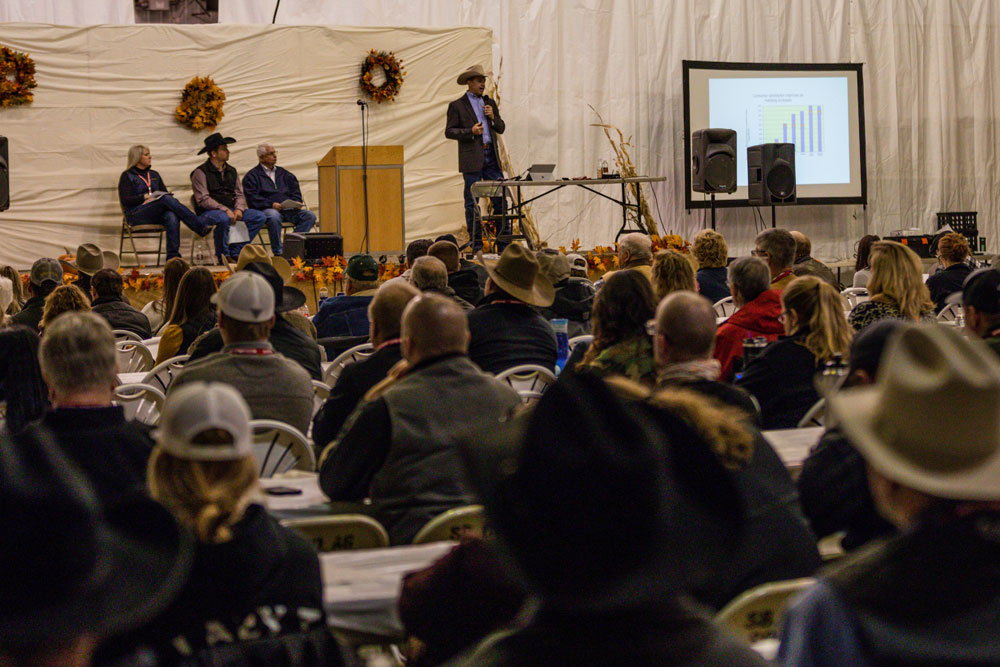
Vander Ley shared his take at the 2019 Range Beef Cow Symposium last month in Mitchell, Neb., based on his ongoing work at the Great Plains Veterinary Educational Center in Clay Center, Neb.

Ensuring your cows are prepared to produce adequate colostrum is just as important as their calves receiving it. Body condition scores are the top indicators.

“Cows that are in good condition, at least a five, give birth more quickly,” Vander Ley said. “They make better colostrum and their calves get up and nurse faster because they’re stronger and tend to have better immune function.”

Those aren’t the ones to worry about. It’s the calves you help bring into the world.

If a cow or heifer is experiencing dystocia, the chances of the newborn calf getting up and nursing decreases significantly.

“The longer a calf spends in anaerobic metabolism without oxygen, the lower its blood pH goes. So it goes into acidosis,” Vander Ley said. “Acidosis in calves has the direct effect of depressing their brain function.”

If you’re going to assist with a delivery, “then you better go through the trouble” of making sure the calf gets colostrum.

“If that calf isn’t standing in a half hour and nursing then you better get its mother in the chute and milk her out,” he said, adding it’s a missed opportunity to not guarantee the calf received colostrum.

While there is still absorptive capacity up to 24 hours, the most optimal timeframe is four hours. After that, their ability to absorb quickly declines.

And nursing is better than tubing. Calves have a reflex pathway called the esophageal groove. Whenever a calf nurses, it’s the reflex response in their forestomach that creates “a straight shot from the esophagus to the small intestine.”

“If we tube, that doesn’t happen,” he said. “When we tube, we think it pools in their rumen or in that forestomach, somewhere. Then they don’t access all of it.”

Even nursing a bottle is preferred to tubing if possible, though he acknowledged not all calves are up for it. In that case, it’s better to get colostrum in the calf.

“One of my favorite sayings is ‘don’t let perfect be the enemy of good,’” Vander Ley said. “This is a great example where to apply that.”

But if you are going to tube, there are two things to avoid. One is tubing a calf on its side, where a bad event is much more likely. Sit the calf up so its “sternal” side or chest is touching the ground.

The other error would be stretching a calf’s neck out so that the tip of the tube naturally wants to go into the trachea. Vander Ley suggested bending the calf’s head as much as 90 degrees to the right, which lets the tip of the tube bypass the trachea and go into the esophagus on the left side of the calf’s throat.

Sometimes you may suspect a calf didn’t nurse enough or soon enough and the window for absorption is closing. In that case it’s better to give it the whole dose of colostrum rather than just a “boost.”

“Because of gut closure, if we create any kind of satiety in calves, they don’t feel like they have to get up and nurse,” Vander Ley said. “And we’re going to miss that opportunity pretty quickly; it makes me feel a lot better to get that calf a full dose immediately,” he said, noting the satisfaction of doing everything possible.

If that means tubing a calf, do it preferably with its mother’s colostrum because “she makes as close to perfect antibodies that her calf needs.”

But if you can’t get the milk from the cow, replacer products are better than supplements, Vander Ley said. Replacer is made from dried colostrum from dairy cows, while supplements are often “spray-dried bovine plasma from slaughter plants.” Both have useable antibodies, but replacers contain more and from analogous origins.

Read the label of replacer products to make sure you give the calf an adequate amount, he directed. Most products recommend 100 to 120 grams of antibody for adequate passive transfer, but that can take two packages of a colostrum replacer.

Dairy industry research says calves that don’t get enough passive transfer have more pre-weaning problems like scours and infections. Other data suggest respiratory disease becomes a greater problem at the feedyard.

Vander Ley’s conclusion: The issues are complicated, but management is simple. Feed your spring calving herd well through the winter. Make a plan for when calving starts, so you know what you’re going to do. Have products and tools available.

Four hours comes and goes quickly for each calf, but those are the windows that get your calves off to the right start.

you may also like

Proactive animal health means a genetic approach

Proactive animal health means a genetic approach

In a world where producers select for any production traits, why not start focusing on health genetics? The American Angus Association is collaborating with scientists in Canada and Australia to get at the genetics of immunity.
Mindful management

Mindful management

Undetectable diseases are hard to cure. That’s why the industry is working to find new ways of treating liver abscesses. Tylan is effective, but as antibiotic-resistance concerns and conversations continue, its future is not assured.

What and why are they buying

What and why are they buying

In an era of skepticism consumers have trust issues, especially with those raising their food. The good news is demand is strong and taste is the main driver. Trust is going to be the key to gaining consumer confidence.
Capturing value for calves


by Morgan Marley

December 5, 2019

The way we market fed cattle has changed. Better formula and grid-based pricing structures channeled greater returns to cattlemen, which led to higher quality in the American cow herd.

It trickles down to the cow-calf producer and how they choose to sell calves. Consumer dollars favor adding value to the end product, and it pays to start down that road while still on the ranch.

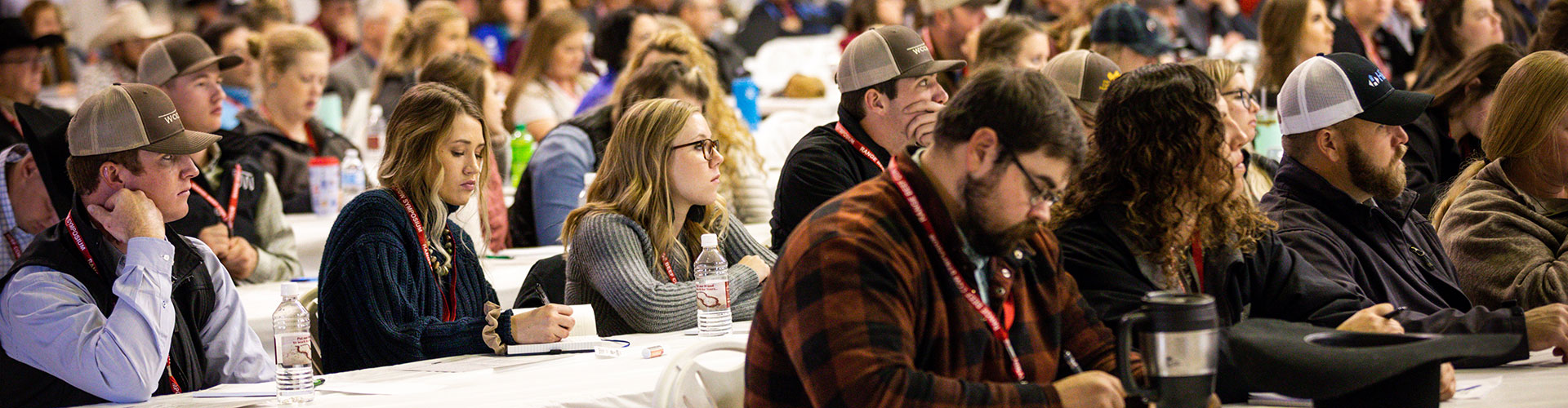
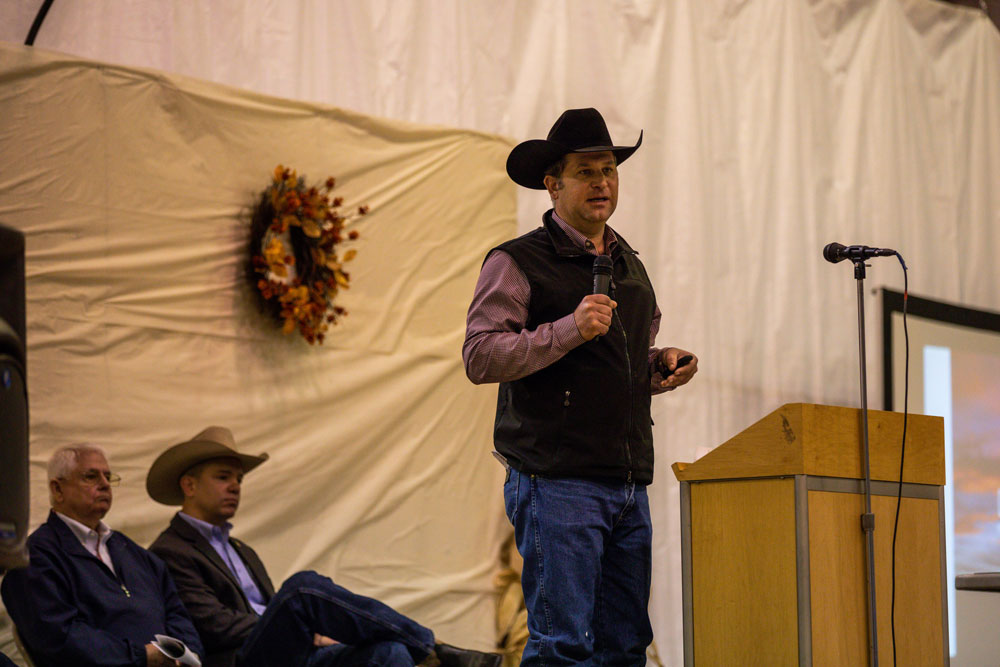
That’s the consensus of panelists at the 2019 Range Beef Cow Symposium in Mitchell, Neb. Those included the Certified Angus Beef ® (CAB®) brand’s Paul Dykstra, Nebraska feeder and rancher Gary Darnall and South Dakota Angus cattleman Britton Blair.

“As a cow-calf producer, we have more opportunities to receive value at different segments, or different points in our operation than any other segment in our industry,” Darnall said. “But we really find out when we retain ownership.”

All the panelists echoed that message. So why don’t more producers retain ownership of their calves all the way to the packer?

Risk.

There’s a higher death loss once calves leave your ranch. But Blair said, “that comes back on you” and making sure of your vaccination and management program.

“The longer you own the animal, the longer you’re at the mercy of the market,” Darnall said.

Market swings also bring opportunity to alert watchers who can hedge to lock in a profit.

“But you have to be ready to pull the trigger,” Blair said.

When you get past the risk, advantages await for those who try.

Many cattlemen don’t operate in commercial feeding areas, and it takes effort to contact feedyard managers. But there aren’t a lot of secrets in the cattle business, the panelists said. Just ask the right people the right questions. 

“The good part is, the livestock business is a people business,” Blair said. “And I think it’s easy to talk to those guys. And those guys want customers and they want to talk to you. They want the opportunity to do business with you.”

Deciding to retain ownership is a dynamic commitment involving how and when.

“The market is a moving target,” Blair said, and it may not fit every year. “It makes more sense to retain ownership in a bad market than a good one, even though that’s the hardest time.”

When the market is high, you’re going to be profitable no matter how you market your calves. But when times are tough, retaining ownership can buy time for the market to go up and capture more dollars.

“A lot of people don’t know that some feedyards will finance the cattle, the feed and the risk protection,” Blair said. “It makes it pretty easy when you send your cattle there. They’ll send you back around 75% of the value of your calves and keep 25% as essentially money down. They’ll finance the rest.”

That takes care of some cash-flow concerns, perhaps offering significant payment in the fall and another when calves are finished a few months later.

Another advantage is the information from packer harvest reports.

“The carcass data you get back can be very valuable to you,” Darnall said. “You can take it back home and use it in your management program to help increase whatever traits you want, to add more value to your product.”

Blair later said knowing both feedyard and carcass performance helps in choosing a packer grid to market through. After a few years of success, dollars may argue for staying the course.

“Once you’ve retained ownership, and if you have those above-average cattle, you’ll never get paid for their total value on a commodity market,” Blair said. “Whether you’ve sold them at the highest price at the sale that day or not.”

Adding value matters to your bottom line, but also to consumers. They expect the beef on their dinner table to be worth its relatively higher price.

“As we increase marbling and quality grade substantially, then we also increase the percentage of satisfied eating experiences for consumers,” Dykstra said.

Cattle have changed in recent years, he noted with a nod to the widespread drought several years ago.

“Since then, cow herds have built back with replacements that genetically improved quality grade,” Dykstra said, resulting in more Choice and higher grading carcasses than ever.

Demand, however, “remains robust.”

Grid pricing reflects a portion of the cutout values, which have increased dramatically for premium quality, he added. In early November, a typical Prime carcass was worth nearly $300 more than Select. The CAB premium was $218 and Choice was $127.

If you retained ownership, had above-average cattle and sold on a grid in fall 2019, you should have received a hefty paycheck.

“Packers will only add Choice premiums to our pocketbook if we beat the average of cattle harvested on a weekly basis,” Dykstra explained.

It’s natural to think of the individual animals, and grids even pay on a per-carcass basis, but some value calculations come from load and plant averages. The Choice premium is a case in point.

“When we talk about the Choice-Select spread at $25 and $26 here most recently, we don’t get all of that,” Dykstra explained. “We get 30% of it because the packer expects 70% Choice on a weekly basis.”

Producing average quality isn’t the goal.

In the last four years, 30% of CAB sales growth has come from Prime alone.

“Most of us don’t think about a grocery store as an area where we’re going to see a lot of folks wanting to pay for something like Prime quality grade product,” Dykstra said, “but we certainly have seen that happen.”

Consumer demand is there. Cattlemen just have to keep aiming for higher quality to meet it and reap the premiums.

Visit the Range Beef Cow Symposium website for more event coverage, http://www.rangebeefcow.com/2019/newsroom.html.

Read more about retained ownership here.

you may also like

Marketing Feeder Cattle: Begin with the End in Mind

Marketing Feeder Cattle: Begin with the End in Mind

Understanding what constitutes value takes an understanding of beef quality and yield thresholds that result in premiums and/or discounts. Generally, packers look for cattle that will garner a high quality grade and have excellent red meat yield, but realistically very few do both exceptionally well.

Nebraska Ranch Receives Certified Angus Beef Commercial Award

Nebraska Ranch Receives Certified Angus Beef Commercial Award

Troy Anderson, managing a Nebraska ranch, focuses on breeding thriving maternal cows that will grade premium Choice and Prime, while respecting livestock, people and land. Anderson Cattle receives the 2023 CAB Commitment to Excellence Award. Their journey includes improving genetics, feeding home-raised and purchased calves and using data for better breeding decisions, all with a bottom-line approach.

Magnum Feedyard Earns Certified Angus Beef Award

Magnum Feedyard Earns Certified Angus Beef Award

While Magnum hasn’t always had pens filled with Angus-influenced cattle, they’ve invested in infrastructure, improved quality-based marketing and sought better genetics. Their dedication to detail and employee appreciation drive their success to high-quality beef production.

The search for stockmen

By Kylee Kohls

The future of food is in our hands, but do we have enough hands to help feed the world?

Courtney Daigle, assistant professor of animal welfare at Texas A&M University, shares ideas on the narrowing supply of quality stockmen and how cattlemen might find more top hands.

“There are fewer people working in agriculture, so there’s a limited awareness that stockmanship is a potential occupation,” she says. “A lot of our workforce is made up of immigrants, and some of the challenges we have in retaining and recruiting are influenced by our current policies associated with immigration reform.”

Once a stockman is hired and gets good at their job, it’s hard to keep them because of the low pay and long workdays.

“But it’s really important to keep them in place because a critical component of quality care is consistent animal care,” Daigle says. “The animals notice whenever stock people change; not just who’s working, but what kind of relationship they had” and the individual animal history.

Quality and consistent care help drive profit and acceptance rates for the Certified Angus Beef ® brand, which climb highest for calves that never had a bad day.

“A good stock person is worth their weight in gold, but a bad one can break the bank,” Daigle says.

One issue is typically low pay for long, hard days, and it matters if one is paid by the hour or by the number of animals handled.

“Pay strategy can sometimes motivate people to perform quickly, not carefully,” which can lead to “sub-optimal handling” and negative perceptions of the occupation. Stock people can also suffer from “compassion fatigue.”

“They may have thousands of animals that they’re responsible for in a day – that can be overwhelming – and the people get tired themselves,” Daigle says.

Growing up in cities, she dreamt of working with animals, which is why her BS and early career was in zoology, working with African lions.

“It wasn’t until I started working at Texas A&M that I knew what a pen rider was, and I’ve worked with animals my whole life,” Daigle says. “People can’t help that they’re born in the cities and so even if they want to work with animals, they may not know there are other opportunities [besides the zoo].”

As her work continued at Texas A&M, she kept bumping into what she calls the “stockman/zookeeper conundrum.” With many similarities between the two occupations, the divide begins with the demand.

For every rural stock person available, there are two job openings; for every zookeeper position, there are 150 applicants.

“Although they are very different scenarios, the occupations and pay are very similar,” says Daigle, noting cities could be viable recruiting areas for those offering jobs in stockmanship.

“We are having a hard time finding people who will be stewards of our food animals. When we start looking around and asking ‘Where is everyone?’ –- they are in the cities.”

She suggests advertising in urban centers for positions such as animal technicians, opportunity to work with a large number of animals.

“Then provide incentive,” Daigle says. “Highlight quality of life based on pay structure, cost of living and geographical locations. By advertising in some of these areas and targeting people who want to work with animals, producers might find a more diverse and better-qualified suite of applicants to fill those open positions.”

you may also like

Magnum Feedyard Earns Certified Angus Beef Award

Magnum Feedyard Earns Certified Angus Beef Award

While Magnum hasn’t always had pens filled with Angus-influenced cattle, they’ve invested in infrastructure, improved quality-based marketing and sought better genetics. Their dedication to detail and employee appreciation drive their success to high-quality beef production.

Everything They Have

Everything They Have

Progress is a necessity on the Guide Rock, Nebraska, ranch where Troy Anderson manages a commercial Angus herd, small grower yard, his 10-year-old son, and a testing environment. Troy’s approach includes respect for his livestock, people and land. For that, Anderson Cattle was honored with the CAB 2023 Commercial Commitment to Excellence Award.

Showing Up, Every Day

Showing Up, Every Day

Thirty-five thousand cattle may fill these pens, but it’s the Gabel family who set the tone for each day. Steve and Audrey persistently create a people-first culture, echoed by their son Case and daughter Christie, who work alongside them in the yard office. The Gabel’s drive to effectively hit the high-quality beef target earned Magnum Feedyard the CAB 2023 Feedyard Commitment to Excellence award.

Fetus to feedyard

Immunometabolism’s impact on animal health


by Kylee Kohls

This isn’t a research topic you’d find at the middle-school science fair.

It’s so new, research is just beginning to explore this 16-letter term for immune cells sharing nutrients with major organs: immunometabolism. So far, there are still more questions than answers.

Barry Bradford, animal scientist at Kansas State University, presented his work with cattle at the American Society of Animal Scientists annual meetings in July. 

That interaction of cells competing, sharing and utilizing nutrients is especially key in times of illness, he said.

“The body makes a lot of adaptations to make sure the immune system has what it needs to combat infection,” Bradford said. The same systems collaborate with metabolism for growth, development and health throughout life – from fetus to feedyard or pasture.

The cost of disease, he said, includes increased metabolic activity, reduced nutrient availability, altered priorities for nutrient utilization, increased turnover rates in the immune system, damage to tissue and a “genetic loss” to offspring. Logic says easing the impact of stress helps more cattle realize their genetic potential for premium carcass merit, too.

Bradford’s research focus is the inflammatory response during times of stress and that impact on liver health.

“To combat potential invading organisms quickly, the immune system uses cells like macrophages,” he said. “These are the cells looking for any signs of bacteria.”

Unlike many immune cells, macrophages live in tissues – not swimming around the bloodstream – and they are present all the time, monitoring for abnormalities.

“What we are learning now is they’re not just looking for signs of bacteria or infection, but they’re also playing really important roles in regulating how the tissue works day to day,” Bradford said. “Turning on a breakdown of body fat when the animal doesn’t have enough energy is actually influenced by these immune cells.”

Traditionally only thought to play a role in infectious scenarios, Bradford said, “The interactions between normal organ function and the immune system are becoming much tighter than we used to think.”

Research animals faced with an immune challenge have a dramatic change in nutrient availability in the bloodstream. That affects the building blocks of protein synthesis available for normal growth and development.

“There’s interest in how this might affect a growing fetus, say a cow that’s carrying a calf,” the scientist noted. “But also, what nutrients might be important and effective in helping an animal fight off an immune challenge like scours.”

He said research doesn’t know exactly what those nutrients look like yet. The same questions surround the impacts on feedyard efficiency and nutritional supplements. 

“It’s tricky to nail down,” Bradford said. “When we see differences in efficiency, is it, to some extent, due to immune-system activation stealing nutrients?”

We know cattle become less efficient when they are sick. 

“What we don’t know as much is this: If you try to ramp up the immune system all the time so that they’re less likely to get sick, does that actually cost you enough calories and nutrients that it doesn’t pay off?” Bradford wonders. “Or does preventing disease have that benefit, enough benefit, to pay for the extra immune-system cost?”

It probably depends on the environment they’re in, he suggests.

“The low hanging fruit is nutritional support of sick animals,” Bradford said. “Obviously if you’ve got cows out on a thousand acres, you know it’s not that easy to go give one some supplement that’s specifically for her.” But preventing illness for the whole herd might be an option in the future.       

Take a feedlot for simpler example.

“If you’re pulling cattle to treat for respiratory disease, it wouldn’t be that hard to have a pen where you keep them for a while and maybe feed them a different diet that’s intended specifically to enhance immune response to that infection,” Bradford said.

By managing cattle through times of stress to reduce the effects of the immune system’s response to inflammation—linked to metabolic changes—producers can prepare cattle to perform. 

Researchers are continuing to dig into this “new” topic. Feedyard efficiency, fetus development, long-term cow health – all remain on Bradford’s radar. “It kind of amazes me, actually, that we haven’t dug into that to this day.”

you may also like

Get BQA’d, Meet Coach Tang at Hy-Plains Feedyard

Get BQA’d, Meet Coach Tang at Hy-Plains Feedyard

Get BQA’d, or renew an expired certification, on Wednesday afternoon, August 21, 2024, at Hy-Plains Feedyard in Montezuma, Kan. Hear from Jerome Tang, K-State’s men’s basketball coach, about how it takes every player on a team to win. The workshop is free to attend and will offer simultaneous Spanish interpretation.

Raised with Respect™ Cattle Care Campaign Launched This Fall

Raised with Respect™ Cattle Care Campaign Launched This Fall

Raised with Respect™ was developed as part of a strategic cattle care partnership between Sysco and CAB. The collaboration focuses on supporting farmers and ranchers, equipping them with continuing education to stay current on best management practices and helping to increase consumer confidence in beef production.

You, Your Cows and Their Feed

You, Your Cows and Their Feed

Expert guidance from Dusty Abney at Cargill Animal Nutrition shares essential strategies for optimizing cattle nutrition during droughts, leading to healthier herds and increased profitability in challenging conditions.

Plan, monitor and cool it


by Kylee Kohls

It’s a hot topic every summer.

“Heat stress is the largest impediment to efficient animal agriculture,” said Rob Rhoads, Virginia Tech. He presented with University of California-Davis colleague Frank Mitloehner for a symposium on the topic at the American Society of Animal Scientists annual meeting in July.

Rhoads focused on what happens inside cattle as they respond to a detrimental heat load.

“Cattle start to change their nutrient partitioning and their fuel selection, in terms of fatty acids versus carbohydrates or glucose,” he said. “It takes a lot of energy for muscle to grow and for lean tissue accretion—during heat stress, we’re seeing changes that prevent the animal from using fuel substrates for energy use and protein deposition appropriately.”

The metabolic impact of heat stress is more than reduced feed intake, once considered the main driver, Rhoads said.

Take gut health for example. Excessive panting and drooling from heat stress can upset the gut or even lead to internal leaks and rumen acidosis. Immune challenges initiate an inflammatory response and more injury risk.

Mitloehner addressed the impact on carcass characteristics.

“We found that animals provided with shade have a much higher quality grade,” he said of earlier research. “We see about twice as many Choice carcasses in shaded versus unshaded cattle.”    

Rhoads said preparing cattle for prolonged heat or heat waves involves thresholds drawn from resources such as the Temperature Humidity Index (THI) that predicts when that combination will affect animals.

The longtime established 72°F threshold for heat stress has been lowered to 68°F based on recent Arizona research, he noted, partly because more efficient animals produce more metabolic heat. 

Two resources developed in Australia include the heat load index for gauging environmental impacts, and the panting score system that correlates with body temperature.

“Right now the biggest thing that cattle producers can do to combat heat stress really revolves around infrastructure and management decisions,” Rhoads said.

Providing shade and cool water, and only feeding or working cattle in the cool of the day can prevent solar radiation and the damaging effects from an elevated heat load.

Cool water is especially critical, particularly if it warms to more than 95°F, Rhoads said. Such temperatures not only impair the ability to dissipate heat, “but then they also want to drink less…that’s going to negatively impact their heat load and affect how the animals respond to heat.”

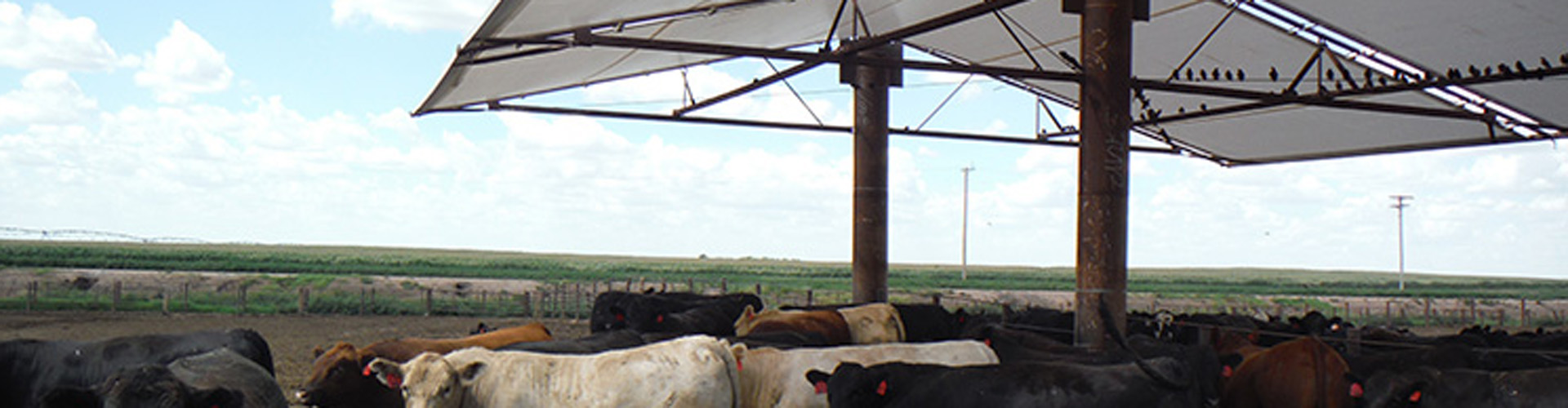
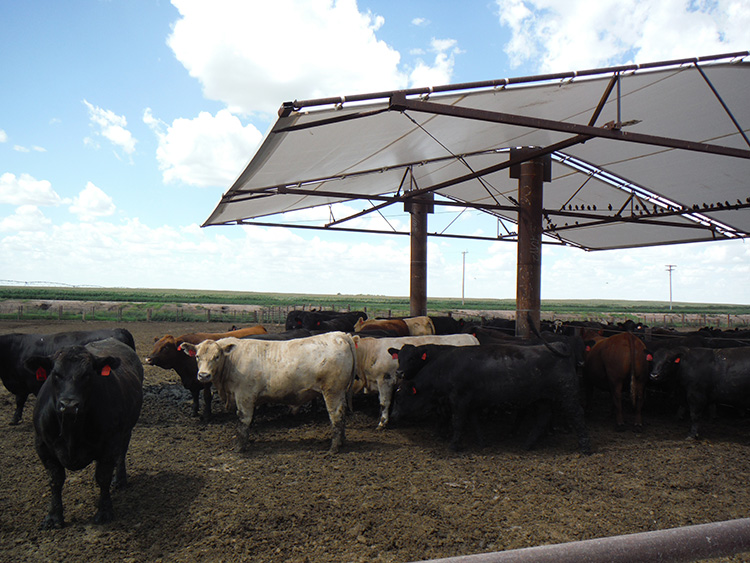
Shade and ventilation systems have a profound impact on feedyard cattle and profitability, Mitloehner said: “In fact, providing shade led to an $18 (per head) improvement in performance and carcass characteristics.”

While that dollar improvement is the same as the expense to set up, that cost only occurs once so the improvement breaks even after one year. The West Texas shade study showed decreased heat stress and increased performance of Angus cross cattle, and eventual financial advantage for feedyards.

“What’s more important than anything else is what these shades do to the soil surface temperature,” Mitloehner said. “Because what shades really do is not so much cooling the ambient air—the air you would measure with a normal thermometer—but what they do is they cool the surface temperature of the ground.”

Heat stressed cattle will stand to dissipate heat, but if the ground is half the air temperature because of shades, they will lay down. “That’s why they work—and dome shades do an even better job than the metal type shades,” Mitloehner said.

“When I did my PhD almost 20 years ago in West Texas, people felt that there’s no need for shades, and they found all different kinds of reasons as to why one wouldn’t need shade. I disagreed back then, and I even more disagree today because I find profound improvements,” he said.

Seeing shades benefit Arizona, New Mexico and some California feedyards, the researcher said he believes they could have great impact in Texas, Kansas, Nebraska and Oklahoma, too.

“If people have doubts, then there’s a very simple way of finding out. Install shades in four of your pens,” he suggested, “and you’ll see that not just your cattle, but you will like it as well.”

you may also like

Feeding Quality Forum Dates Set Earlier in August

Feeding Quality Forum Dates Set Earlier in August

When you’re feeding cattle, it counts to keep track of every calf, pound and dollar. Beyond the event’s educational sessions, networking between segments of the beef supply chain is invaluable—from feeders and cow-calf operators to allied industry and university researchers.

Every Issue Has Its Moment

Every Issue Has Its Moment

Progress happens when people are at the table, engaged and committed to action. With a vested interest in the industry’s future, CAB is leaning in on conversations surrounding evolutions in meat science.

Thriving with Shrinking Supply

Thriving with Shrinking Supply

Even as the nation’s cow herd contracts, “more pounds” and “higher quality” have been common themes. Specific to commercial cattlemen: It still pays to focus on carcass merit, in addition to other economically relevant traits.

Education, change: beneficial discomforts

Cargill nutritionist pushes producers to reach for more


by Laura Conaway

March 2019

Change is the new constant. A cowman’s response to the ebb and flow of the industry is entirely up to the individual – but a choice is imminent.

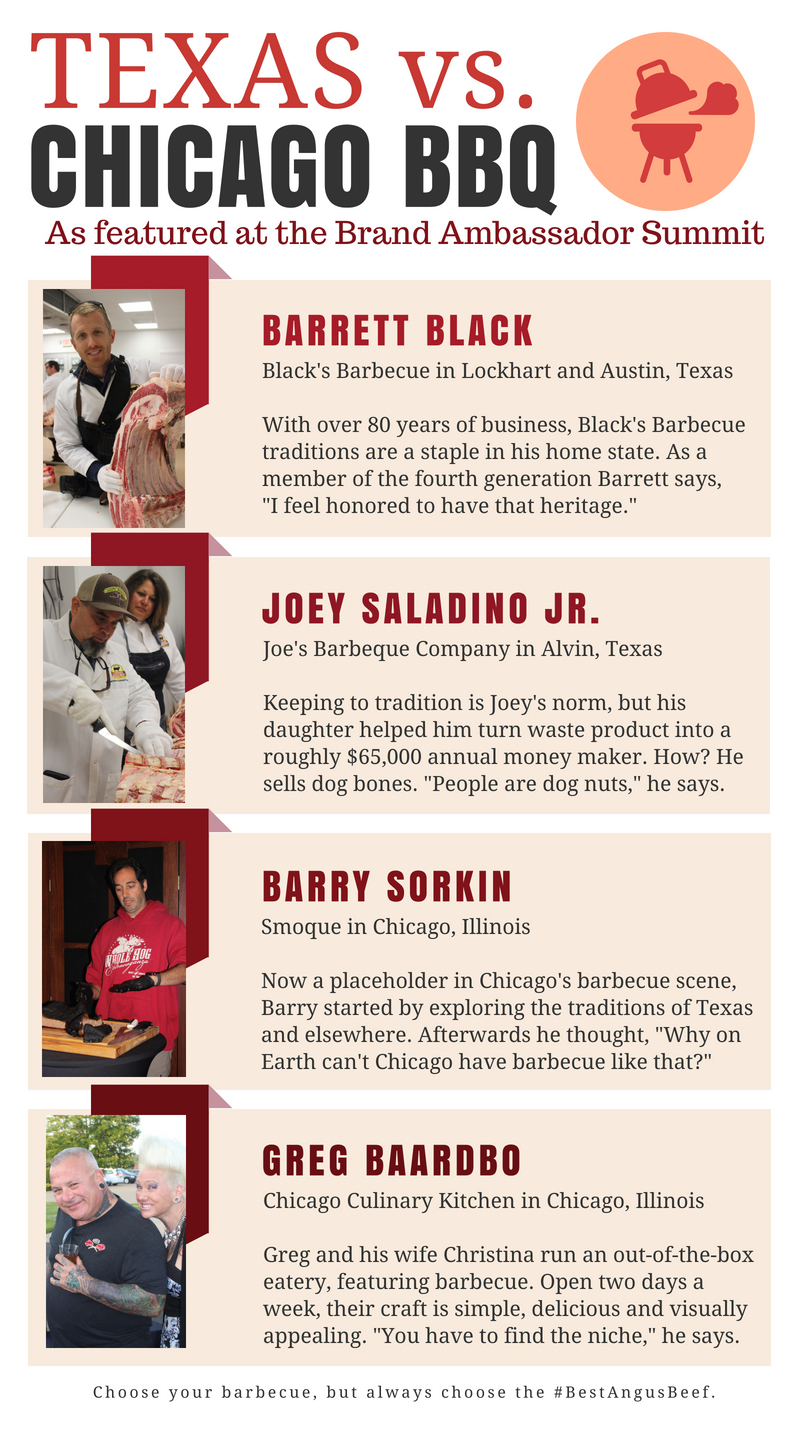
That’s why Dusty Abney, cow-calf and stocker nutritionist for Cargill Animal Nutrition, called out a few of the areas where producers have had to adapt through the years: volatile markets and regulations for starters. That was just before he presented a plan to tackle the looming beast.

At Cargill, he explained, the philosophy driving success is “change before you’re forced to. Don’t be that guy who changes just for the sake of it, just because it sounds fun.” And don’t be the last person to get on the wagon, either.

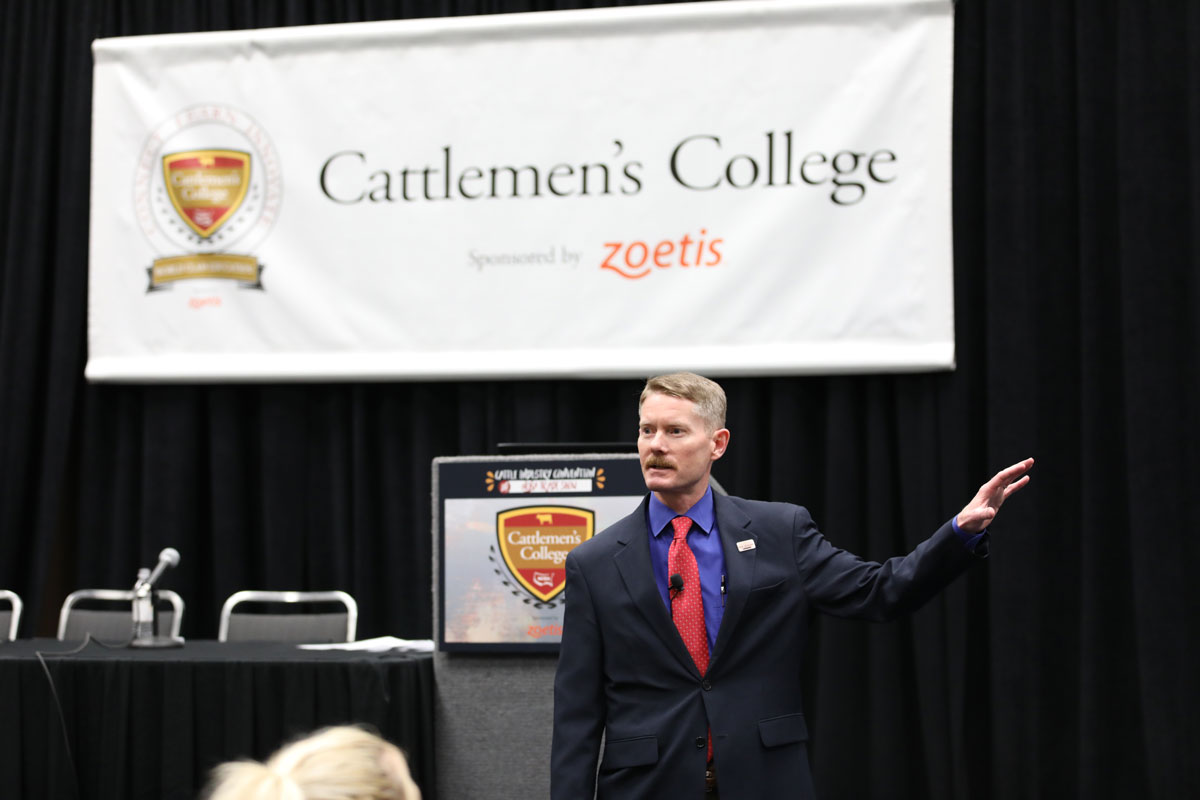
“Change when the time is right” because it can be hard to stick the landing, he told a Cattlemen’s College crowd at this winter’s Cattle Industry Convention and Trade Show in New Orleans.

“To know when to change, and to know what to change, you’ve got to do what may be the most difficult thing for any of you in the room to do, ever, and that’s ask for help.”

Stillness came from the seats.

“Do you do your own taxes?” Abney prodded. “Most of us don’t anymore, because it’s complicated. Hopefully you don’t do your own doctoring on yourselves. I know some of y’all do, and you need to quit it.”

Then came the laughter; the point resonating with it.

The same thing applies to the genetics you select for your cow herd, the management practices each one puts in place, he said.

dusty abney presenting

The bottom line is profitability, Abney said. If you’re not paying attention to the metrics that affect it, you don’t know if you are, in fact, accomplishing it.

Here are some traditions to break that Abney said can get in the way of that bottom line:

“When spending money on your program, don’t think of it as a necessary evil, rather what’s needed for your cattle to perform – an investment in future accomplishments.

“Don’t assume everything’s fine. If you’re happy with the status quo, you’re in the wrong session. Okay don’t get it done. Okay doesn’t make your heifers the ones people will pay top dollar for. Okay doesn’t produce the most pounds of beef per acre for the least amount of money. That’s what we should be trying to do.”

In the quest for profitability, it should be no surprise that a cow’s production takes top billing. Nutrition and health play a vital role in the process.

“Plain and simple, every 12 months we need a new calf hitting the ground. If she doesn’t do that, she needs to go to town,” Abney said. “If you love her, take her to McDonald’s and get her a Happy Meal, but don’t bring her home. Don’t make excuses about that.”

Seriously, the key to ensuring she’s not an after-school snack, Abney said, is to keep her nutrition up, particularly right after calving so her hormones can align, her uterus can shrink down and she begins to cycle.

“All you have to do is miss one breeding opportunity, and you’ve chewed up most of the margin in that cow,” – about $50-$60 lost for each cycle delayed – and if she’s open, “we just kept her all year for fun.”

It’s hugely important that she’s bred when she’s supposed to be bred, the nutritionist said.

“The best tradition to start right now is to get better.”

Specifically, that takes in what kind of beef will end up on someone’s table.

“Your name will literally be attached to what you make, soon,” he warned. “Get started producing quality now.”

Lastly, Abney urged cattlemen to keep records, and actually use them to make decisions.

“If you’re not doing anything with the records you take on your cow herd, you might as well fix fence or go fishing.”

You may also like…

Progress, Not Perfection

Progress, Not Perfection

It’s a labor of love, obvious in the way she lights up explaining their family’s 33-year effort to proactively adapt Angus cows to their land. A lifetime of telling stories from the pasture or kitchen has resonated with nonfarm consumers as much as fellow ranchers. “Everything we do is about cattle, but it’s also about family and connecting our kids to the land and to the cattle,” Debbie Lyons-Blythe says.

The Competitive Drive

The Competitive Drive

The Bootheel 7 brand that marks the hips of the Wasserburger’s cow herd could stand for the seven state wrestling titles held between three boys in the fourth generation, but that mark far predates their competitive drive. It’s been the brand carried by Wassserburgers looking for the ‘W’ since the homesteading era.

Following Second Dreams

Following Second Dreams

Cow work, genetic improvements and breeding plans are on the table for hours because building the perfect cow takes constant adjustments to the plans they lay out. The Larsons are working on a masterpiece that moves their families and customers closer to “best” every day. Their determined journey toward elusive perfection helped Larson Angus Ranch earn the CAB 2022 Seedstock Commitment to Excellence award.

Vitamins, part of doing the right thing

by Jera Pipkin

Like pieces of a puzzle, vitamins are essential in keeping cattle healthy year-round. Price spikes in the last year, however, have producers taking another look at how to fit savings into concerns about source and efficacy over time.

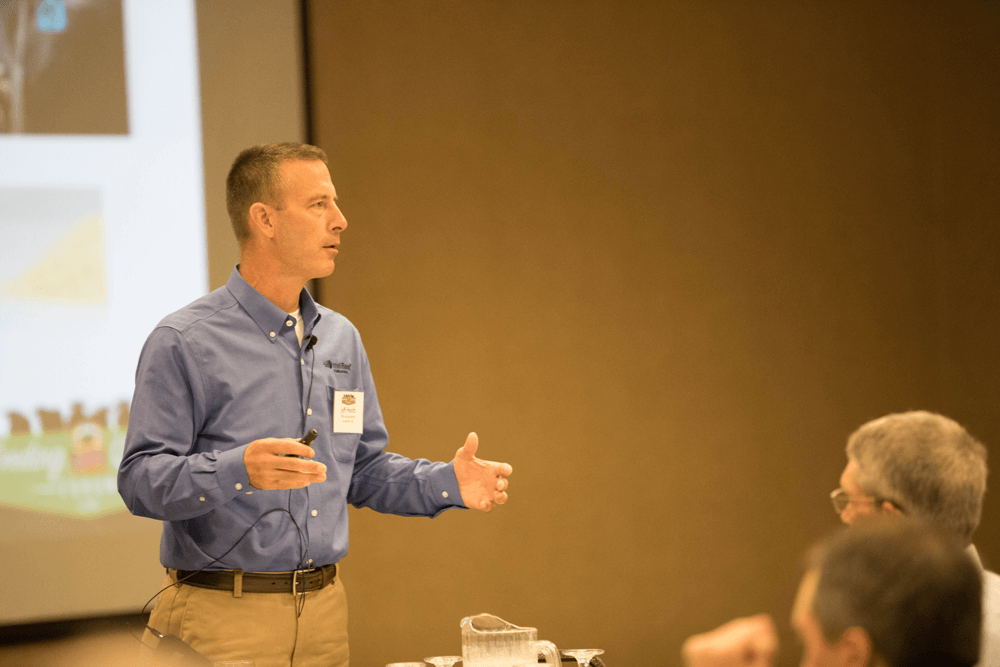
Jeff Heldt, with Micronutrients Intellibond, explored cost-effective vitamin and mineral strategies at the Certified Angus Beef ® (CAB®) brand’s Feeding Quality Forum this summer in Sioux City, Iowa.

“Obviously, we all want to take care of our animals and do the right thing,” he said. “But also, we need to think about our competitive advantage. Where can I save some dollars, or maybe where can I spend a few more dollars to make sure I’m doing the right thing?”

Heldt’s comments were against a backdrop of recent shortages. Vitamin A prices skyrocketed 10-fold last fall after fire damaged a German factory that made precursors of A and E. The market finally returned to normal, after much study of alternatives.

He drew a parallel to the industry’s rethinking phosphate mineral requirements after the ingredient price spiked about 10 years ago.

“Lo and behold, that 12% phosphorous mineral I’m feeding my cows got really expensive and I decided I better do something different,” Heldt said. “Now what’s the common phosphorous level in cow mineral supplements—4% to 6% maybe, and we seem to have gotten by just fine.”

The extra amount was seen as a safety factor, but a price spike drove home the point, “more is not always better.”

That’s true with vitamins as well, partly because the fat-soluble ones have a three- to six-month storage buffer in the liver, and the others, C and the B complex, cannot be stored in the body at all, Heldt explained.

Vitamin A is the most critical for cow-calf operations, with its connections to reproduction and immunity.

Particularly since the price spike, producers want to know what vitamins their feedstuffs are actually delivering and how to balance rations without unnecessary added cost, he said.

The National Research Council publishes recommendations but diets of “good green growing feeds” generally provide adequate vitamin A and E, Heldt noted, as does a ration of at least one-third corn silage and the rest grain. “If we’re just feeding all grain, we’re going to be short on the requirements.”

Vitamins are often part of a free-choice mineral supplement or premix where reading tags gives an accurate measure of the initial levels. Cattle need 40,000 IU of vitamin A each day and most mineral on the shelves today provides more than that.

“Again, more is not always better,” Heldt said, but he allowed the safety margins help compensate for storage losses over time.

Environmental factors like water and heat and light, from manufacturing to storage, pose a threat to vitamin efficacy.

“For example, potency loss can double for every 25-degree increase in temperature,” Heldt said.

Mineral source plays a role in the amount of vitamins delivered from the mix, too.

Vitamins that are organically sourced offer more stability, compared to those from oxide or sulfate trace minerals, he said. But storage time may be most critical.

“There could be some of those products that we’ve got in our warehouses that don’t get fed for three or four months,” he said. “Is that realistic?”

Producers should be aware of how long a product was warehoused before they buy and how long it may sit on their farm or ranch before it’s fed, Heldt reiterated. But first, evaluate quality and vitamin quantity of their forage.

“I want you to go home and as you’re driving back, think about what you’re doing and why you’re doing it,” he said in closing. “Make sure you’re doing the right thing.”

You may also like

Building Bridges for Better Beef

Building Bridges for Better Beef

As the clock ticked past 2:00 a.m., handshakes finally signaled a deal. History was made that Thanksgiving morning in 1997 when a group of producers bought a material interest in what was then Farmland National Beef Packing Company.

Seek answers for better beef


by Miranda Reiman

The world’s a changing. The nation’s cowherd is improving. What tweaks have you made in your own beef cattle operation?

Presenters at the Feeding Quality Forum, August 28 to 29 in Sioux City, Iowa, encouraged questioning the routine. More than 200 took in the two-day meetings, where they got practical tips to use now as well as the “10,000-foot view” to spur thought, said Justin Sexten, director of supply development for Certified Angus Beef LLC (CAB).

“People left with some knowledge they didn’t have before and hopefully more questions for their own team of experts, too.”

A dozen experts spoke to cattle feeders and their commercial cow-calf customers.

“We’re making genetic selections today that will impact your cattle herd for at least the next 10 years,” said Dan Moser, president of Angus Genetics Inc. There are more tools and data available than ever to create an animal that fits many environments while producing superior beef.

“Notice that word, ‘while’ – it’s not either/or,” Moser said. “We’ve got to think ahead to what the marketplace will demand.”

Rick Funston, University of Nebraska animal scientist, shared ways to develop heifers into long-lasting herd improvers.

Advanced genetics won’t live up to their reproductive efficiency potential without focused herd management, he said. “What if we expose more heifers than needed but for 30 days only? What if we keep late-calving cows by using CIDRs and a shot of prostaglandin to move them up one, two, even three cycles?”

“Keep in mind we need well-rounded feeder cattle,” said CAB’s Paul Dykstra. The No. 1 reason cattle don’t make the brand is because they lack adequate marbling, but feedlot performance and yield on the rail are part of a calf’s value to buyers.

“At a time when we have dramatically more quality supply than ever before, we’ve increased the premiums because the cattle perform well on several levels,” he said.

John Gerber and Kevin Hueser of Tyson Fresh Meats talked about the source of all of those premiums: consumer demand.

“At Tyson we’re not going to say ‘no.’ That’s how we give the consumer what they want,” said Gerber, the packer’s head of cattle buying.

The trend includes more transparency and higher quality. All cattle Tyson sources are required to come from Beef Quality Assurance (BQA) certified suppliers by January 1, 2019.

“We’ve got to be transparent. We’ve got nothing to hide,” Gerber said.

Nigel Gopie, of IBM Food Trust, said sharing will get easier.

“A transparent food system matters,” he said. “Today we’re seeing a blurry view—80% of the world’s data is locked up in organizations’ databases. Only 20% is available through things like Google.”

The IBM Food Trust looks to change that using blockchain technology to assign each data point a fingerprint, or “hash,” so users know the information source and that it’s in its original form.

A handful of large food companies from Walmart to Dole currently use blockchain, but it will take innovative thinking to get the masses onboard.

That’s exactly what veterinarian Sam Barringer, a commander on the Air Force Reserves medical team, suggested we need more of: out-of-the-box thinking.

“We’ve been doing the same things the same way for 20 years and we don’t even know why we’re doing it,” he said, drawing on his experience in Middle East war theaters.

Cattlemen can’t look at health and vaccination as synonymous, Barringer said. “If we were to vaccinate for every pathogen facing cattle, it would be 32 vaccines upon arrival. That’s not viable.”

Even the standard health protocols need some scrutiny, said Paul Walz, Auburn University veterinarian.

“We are at a point with evolving BVD that some of our vaccines no longer provide the same amount of protection,” he said, noting a survey of Nebraska calves showed 82% of BVD strains were outside of those on which vaccines are based. Risk varies from herd to herd and strategies may need to vary year to year.

Regardless of vaccine strain, the stress on newly arrived cattle at any feedyard can hinder efficacy, said Brian Vander Ley, epidemiologist at Nebraska’s Great Plains Veterinary Education Center.

“Vaccines are intended for use in healthy cattle,” he said. On arrival, some calves are too stressed to meet that practical definition. University of Arkansas data on high-risk calves showed an advantage to waiting a couple of weeks before administering those shots.

“Go home and talk to your folks, and make sure you’re doing the right things,” said nutritionist Jeff Heldt, with Micronutrients.

Referring to conversations about cattle supplement timing, storage and delivery, he said vitamins are finicky. They don’t like environments that are too hot, acidic, light or wet.

“Feed manufacturers do a good job meeting mineral needs, but storage time of our products is pretty critical,” Heldt said.

Nutrition on the ranch, must be continued with a solid plan in the feedyard.

Dale Blasi, Kansas State University animal scientist, suggested feeders ask their consultants about limit feeding a grain-based ration to calves at 2.2% of their body weight.

K-State work shows many benefits, from decreased cost of gain and better health to reduced labor and manure management.

It was common practice two or three decades ago. It might be time to revisit the strategy, Blasi said: “Something that’s been so in vogue for so long, working, why didn’t we stay with it?”

The world of nutrition may change slowly over time, but markets are the opposite.

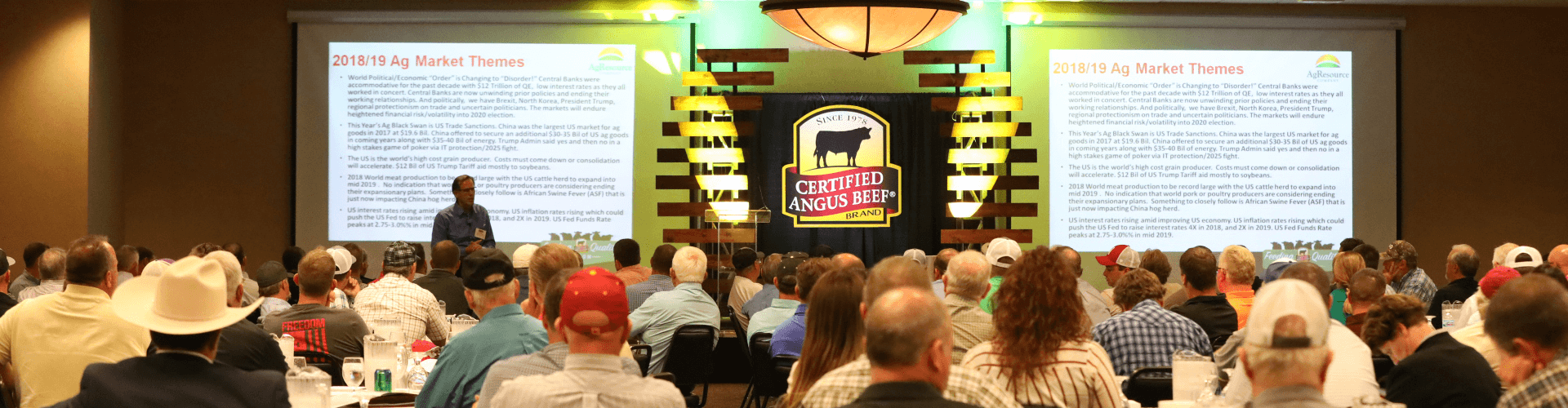
Dan Basse, president of AgResource Co., returned to the forum to talk global markets and the causes of volatility.

“The world is really, really focused today on politics,” he said. He predicted fed cattle prices of up to $120 per hundredweight in the fourth quarter, nothing the model did not account for a trade deal with China in the near future. “If that happens, it changes a lot,” he said. “That’s our big hope in terms of the U.S. opportunity, to build demand and really get back to a bull market longer term.”

During the evening reception, longtime Nebraska cattle feeder Gerald Timmerman accepted the Industry Achievement Award.

“Gerald has a long history of putting the consumer first, and using technology and innovation to do it,” said Mark McCully, CAB vice president of production. “We’re proud to honor him.”

You may also like 

Quality Wins, Again

Quality Wins, Again

Sara Scott, Vice President of Foodservice for Certified Angus Beef, emphasizes the importance of taste over price in the beef market during the Feeding Quality Forum. As consumer demand for high-quality beef grows, Scott highlights the need for increased supply and encourages communication with packer partners to meet the demand for Prime beef.

Bigwigs in barbecue

With the Fourth of July quickly approaching, it’s prime time for barbecue. Many pit masters pick beef as their meat of choice — think classic, smokey brisket and tasty beef ribs. Yum!

The Culinary Center recently hosted the annual Brand Ambassador Summit, welcoming chefs from all over the country, including a handful of barbecue specialists who sat on a panel with our resident meat scientist, Diana Clark.

What might have been most compelling about the panel was a comment made by Clark. She spoke about getting started with barbecue, because it is still a community despite regional differences. “You ask a question,” she says, “and people are willing to give you all their secrets because they know you can’t do it as well as them.”

How can cattlemen become such good herdsmen and so well-versed in their programs that they can’t wait to share their management or genetic “secrets?” I think that attitude is already in the mix, but how can the beef community continue to embrace it as a young, up-and-coming generation finds the balance between tradition and innovation?

That’s some barbecue food for thought.

Comments below feature a snippet of other discussions had among chefs during the panel.

The balance between tradition and innovation is something that Black’s Barbecue is challenged by and the Chicago Culinary Kitchen writes its own rules for.

Towards the end of the panel, moderator Chef Michael held a speed round. The consensus on those quick-fire questions was that the most popular sides dishes are beans and mac & cheese, everyone prefers low-and-slow cooking with dry woodsmoke, and whether the fat side should be up or down is smoker dependent.

Finally, the debate on sauce or no sauce was simple.

“It has to taste great both ways,” Barrett Black says. “It’s the customers choice.”

Texas, Chicago, Kansas City, Carolina, Memphis or whatever it is — choose your barbecue, but always choose to aim for your best Angus beef. It’s what the customer really wants, and hopefully you see them become a patron like you might be at the local barbecue joint.

Doing my best by beef,

Sarah


headshot

Sarah Moyer interns at the headquarters office in Wooster, Ohio. The senior in ag communications at Kansas State University aims to improve her writing by sharing stories of high-quality beef producers, as they work to improve their herds.

You may also like 

Raised with Respect™ Cattle Care Campaign Launched This Fall

Raised with Respect™ Cattle Care Campaign Launched This Fall

Raised with Respect™ was developed as part of a strategic cattle care partnership between Sysco and CAB. The collaboration focuses on supporting farmers and ranchers, equipping them with continuing education to stay current on best management practices and helping to increase consumer confidence in beef production.

Quality Wins, Again

Quality Wins, Again

Sara Scott, Vice President of Foodservice for Certified Angus Beef, emphasizes the importance of taste over price in the beef market during the Feeding Quality Forum. As consumer demand for high-quality beef grows, Scott highlights the need for increased supply and encourages communication with packer partners to meet the demand for Prime beef.

Connecting With Consumers at the Meat Case

Connecting With Consumers at the Meat Case

CAB is committed to prioritizing consumers’ evolving expectations for high-quality beef, sustainability and connecting the next generation. Explore our Ranch to Table program and learn how we connect the next generation of ranchers and culinarians for a brighter, more sustainable future for the beef industry.

Cost-free quality drives beef demand


by Miranda Reiman

“Is marbling a free trait?”

The question was put to Mark McCully, vice president of production for the Certified Angus Beef ® (CAB®) brand at last week’s Beef Improvement Federation meeting in Loveland, Colo.

His answer? Basically.

“The data that’s out there from a cow standpoint says we’re really in a pretty good spot,” McCully said, adding he’d like to see even more research.

There are a few correlations between marbling and some other traits such as milk production, but cattlemen can select accordingly, he said. “It’s a pretty positive story for us as an industry: there’s not going to be a sacrifice of cow function in our pursuit of improving the quality of our end product.”

The cost must show up in the feedyard, critics say, but performance and quality are more simultaneous than mutually exclusive, McCully said.

He shared an analysis of 600 pens of high- and low-grading cattle (10% Prime and 0.6% Prime) fed at Five Rivers Cattle Feeding yards across the High Plains. The June-to-October 2017 closeouts showed feed efficiency and average daily gains were the same with the higher grading pens having a slight cost of feed (COF) advantage at $0.70 per pound of gain compared to $0.72.  The lower quality cattle finished at 1,358 lb., giving up more than 40 lb. of final weight to their higher quality counterparts.

“I hear that a lot, ‘These high grading cattle…you’re going to have to sacrifice performance,’” McCully said. “Data we see every day would definitely dispel that idea.”

That’s good news for those trying to match their cattle to market signals.

The National Beef Quality Audit (NBQA) suggests the industry should produce 5% Prime and 35% upper two-thirds Choice, but McCully said, “Maybe that’s too low.”

So far in 2018, beef across the United States is grading 7.6% Prime, 23% upper two-thirds Choice and just 17% Select.

“When you think about our competitive advantage, what we can do with genetics today and what the demand signals are,” he ventured, “I believe they’re telling us we need to ratchet those up a little bit.”

Today, packers market more boxes of Prime and branded beef than they do Select. The amount of Prime has nearly doubled from 2010 to 2018, going from 13 million lb. to 25 million per week. At the same time, Select has dropped 40% in eight years.

That “dramatic shift” in the marketplace came while premiums remained steady. The Prime to Select cutout spread was around $40 last year.

The trends hold true for CAB, too, which will certify more than 5 million head of cattle, or 16% to18% of the total fed-cattle supply.

“Packers reported $75 million paid back to the cattle owners on grid premiums [in 2017], specifically for CAB,” McCully said.

He expects the quality trend to continue, because it’s good for all segments.

High-marbling cattle offer feeders marketing flexibility.

“We’ve been dealing with low feed costs for the last handful of years, but if we get into where we need to shorten days on feed, we’ll be able to keep sending a high-quality product out to our consumers while dealing with that,” McCully said.

The changing retail landscape demands more of the best beef in its pipeline.  Costco has sold Prime beef for several years and Wal-Mart now carries an upper two-thirds Choice program, for example.

Larger supplies give retailers the confidence to feature beef in ads and “get very aggressive promoting high quality,” McCully said. “I don’t get the sense that they want to go backwards.”

Ground beef sales have expanded with more than 100 million lb. of CAB branded grinds sold annually.

“It’s no longer quality grade neutral,” he said. “That whole burger category is significantly different than it was five to ten years ago. I think that’s a demand driver.”

Together, the increased focus on ground beef and innovative fabrication of end meats have helped elevate the value of those primals.

“The more carcasses we merchandize into those steak items and away from low-and-slow cookery methods, marbling obviously has a bigger benefit,” he said.

In export markets, it’s U.S. beef’s “high-quality, grain-fed” reputation that keeps global consumers coming back, McCully said.

It’s hard to make predictions 25 or 50 years out, but all the clues point in the same direction.

“I have a hard time finding a business model that doesn’t say if you increase the quality of your product, you’re going to increase demand,” he said. “We have the tools available to do this all while improving efficiency and reducing our cost of production.”

You may also like

$100,000 Up for Grabs with 2024 Colvin Scholarships

$100,000 Up for Grabs with 2024 Colvin Scholarships

Certified Angus Beef is offering $100,000 in scholarships for agricultural college students through the 2024 Colvin Scholarship Fund. Aspiring students passionate about agriculture and innovation, who live in the U.S. or Canada, are encouraged to apply before the April 30 deadline. With the Colvin Scholarship Fund honoring Louis M. “Mick” Colvin’s legacy, Certified Angus Beef continues its commitment to cultivating future leaders in the beef industry.