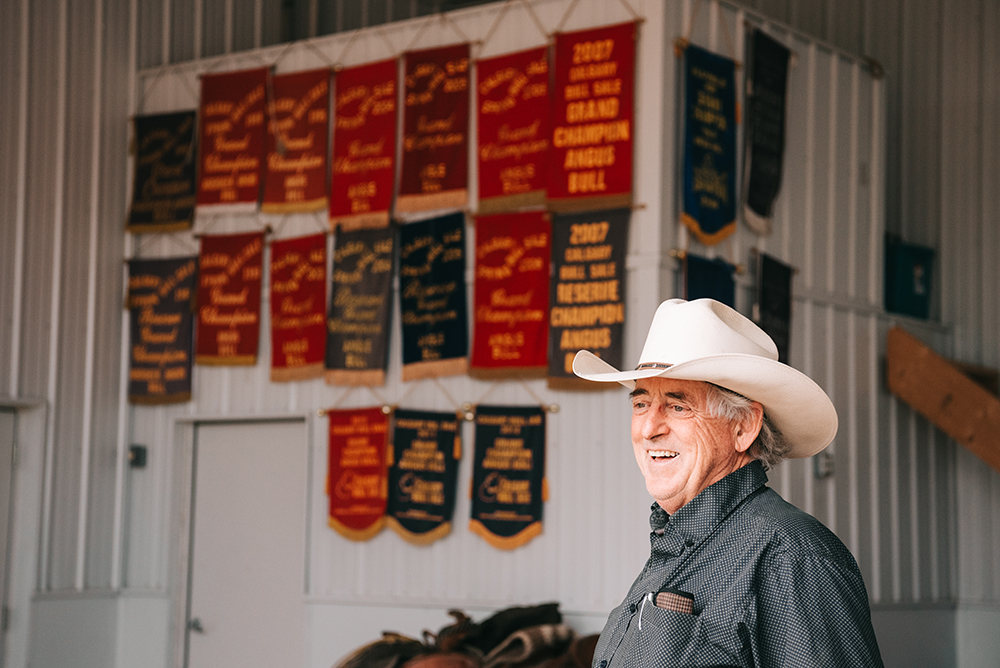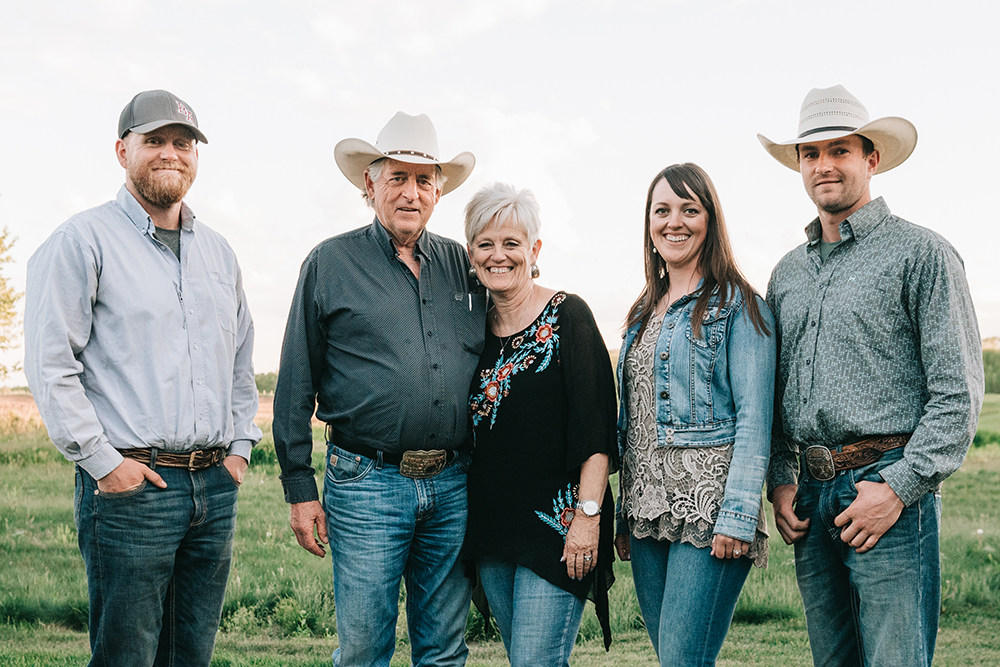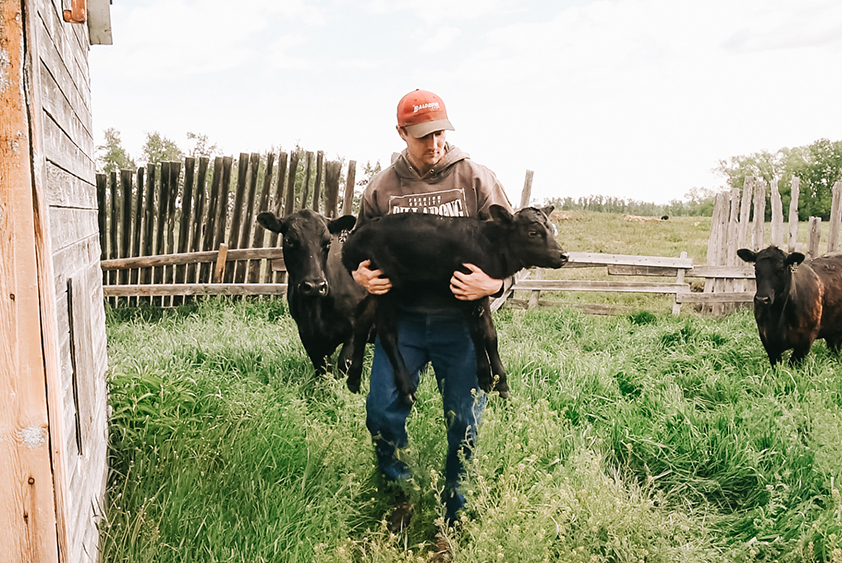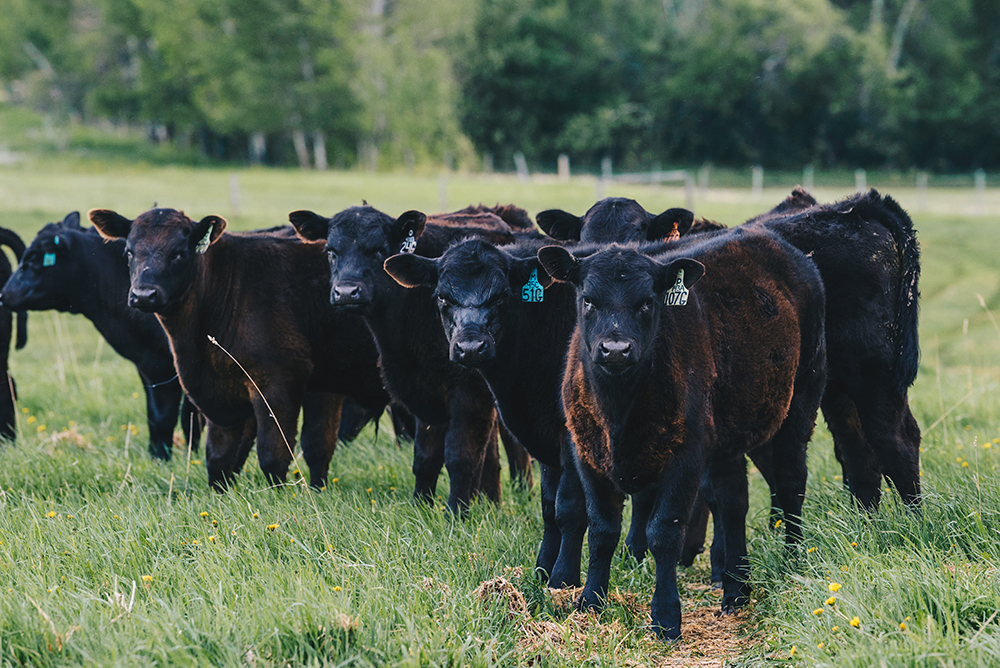
2019 Commercial Commitment to Excellence

Century of focus

Colorado ranch earns top commercial honors

Story and photos by Morgan Marley

September 25, 2019

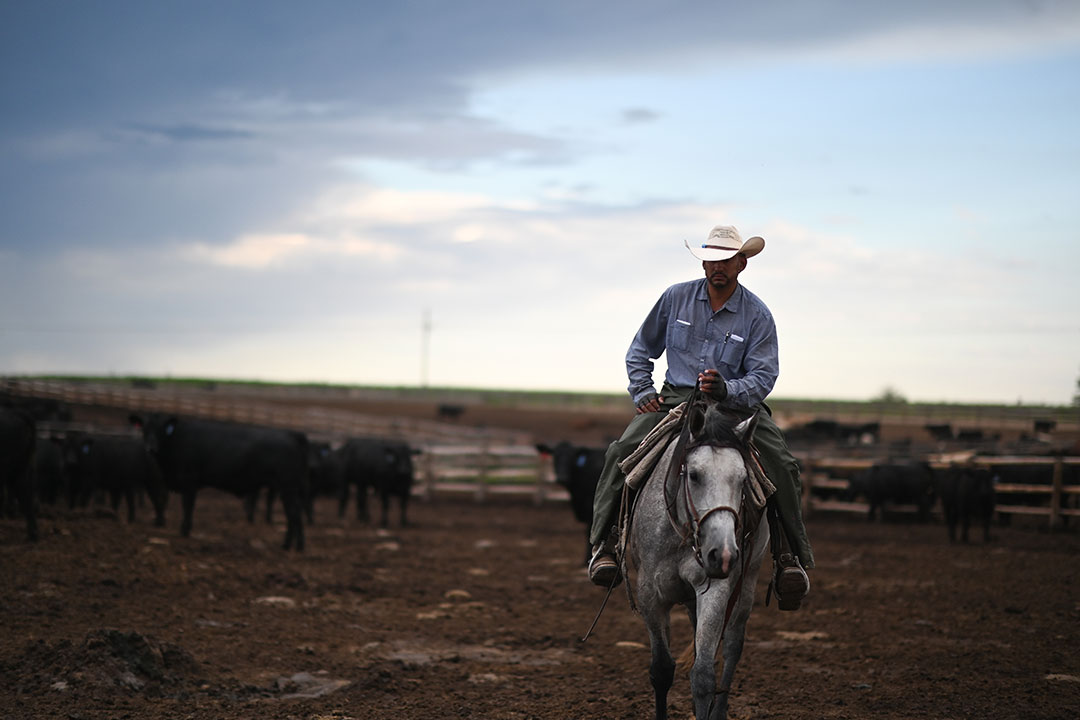
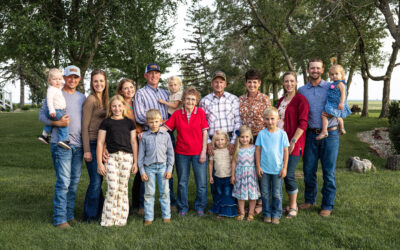
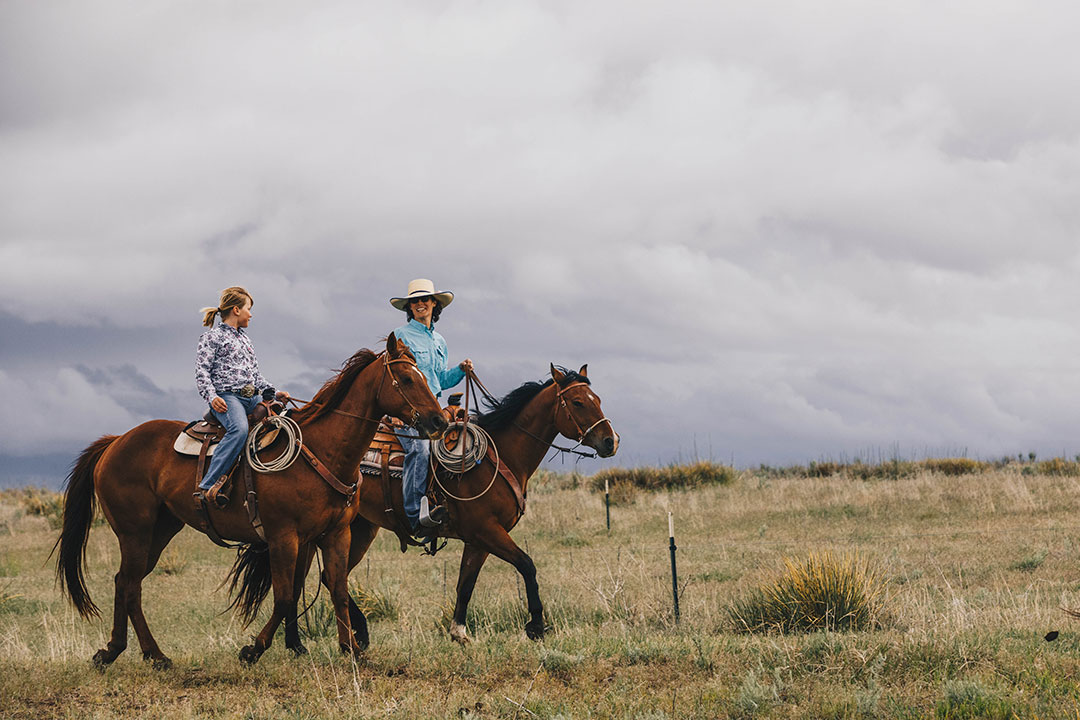
It take endless hard work to make it in the ranching business, sometimes success is built upon for a century. For one Colorado ranch, this is certainly the case.

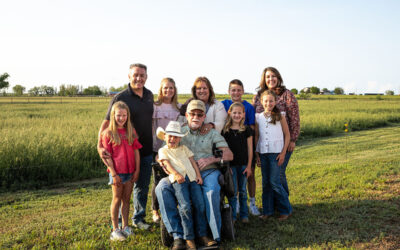
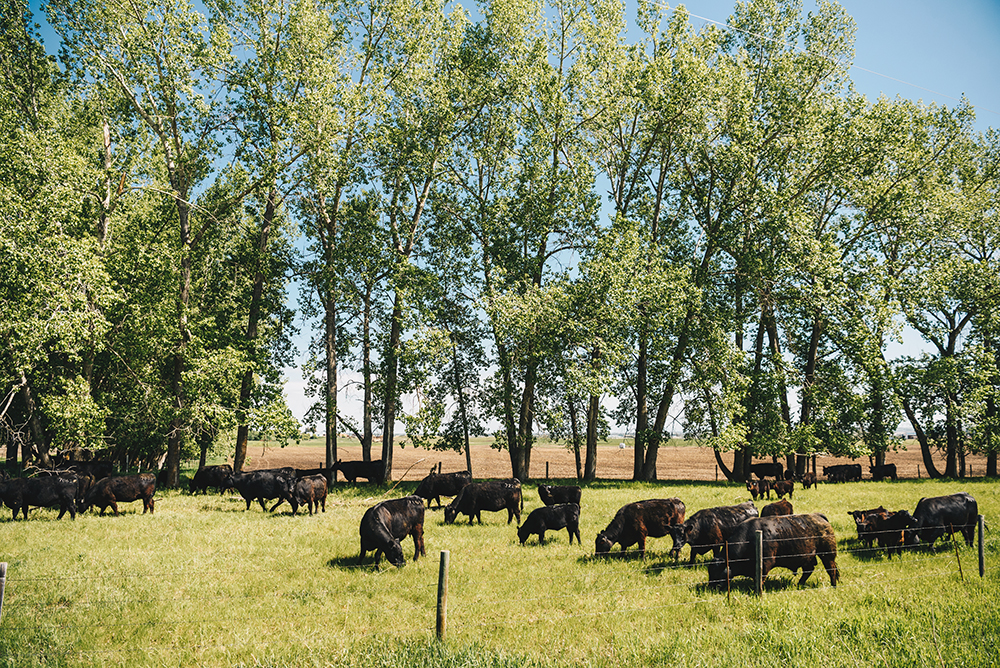
More than 100 years the same family has operated Noble Ranch.

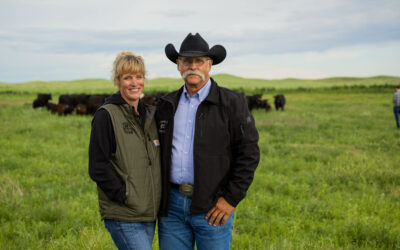
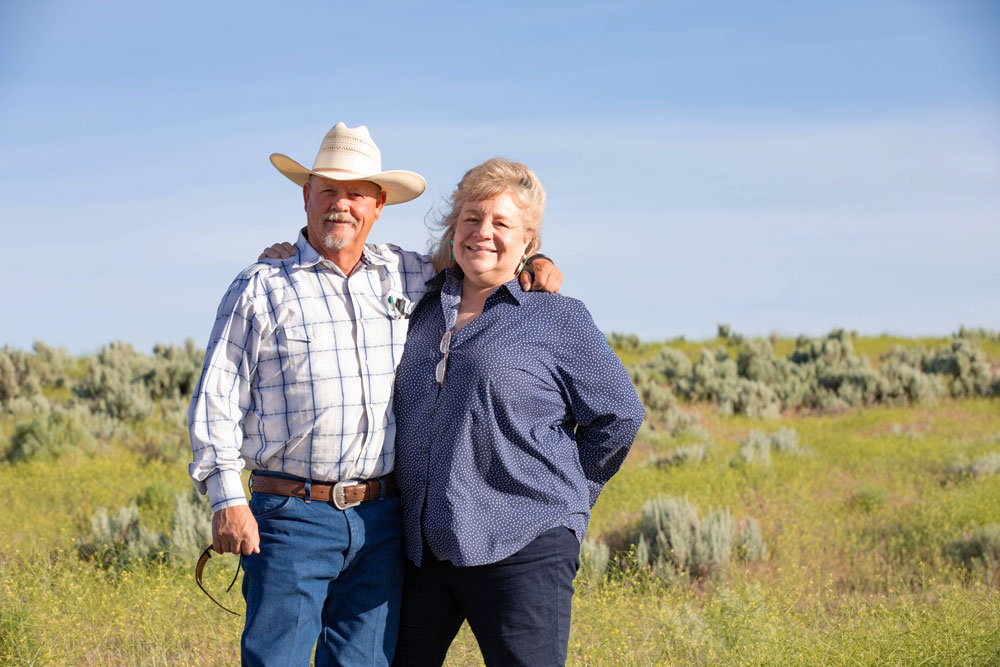
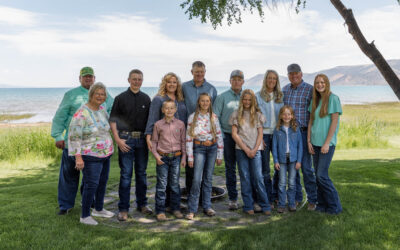
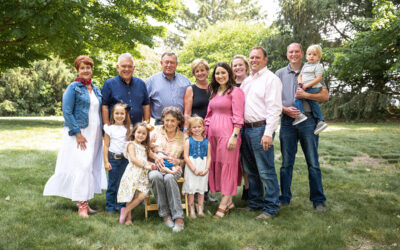
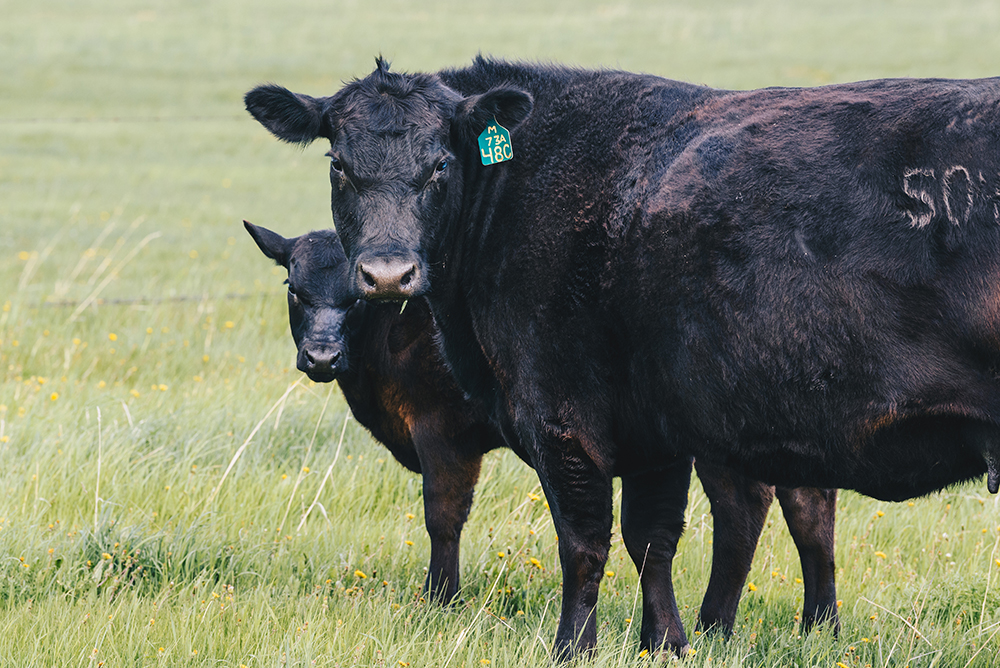
In everything he does, Ryan Noble pushes the limits of success to what some would call overachieving. To everyone else, it’s no surprise Noble Ranch accepted the Certified Angus Beef ® (CAB®) 2019 Commercial Commitment to Excellence Award during the brand’s annual conference in Asheville, N.C.

Humble to their core, whatever the Nobles have achieved only comes with the job.

“We are just us,” Ronella says, “and it just feels normal. Sometimes it doesn’t feel like we are doing anything special, it just feels like what we should be doing and the way that we should be doing it.”

For a son and husband of teachers, education is a natural priority, with an open invitation to the ranch for any person or group who wants to learn. They have hosted many ag education and end-user groups, including CAB’s Master of Brand Advantages.

“The passion Ryan and Ronella have for education and business growth is immediately apparent,” says Kara Lee, CAB production brand manager. “Whether they are in the company of other ranchers or hosting a group of foodservice professionals, they are swapping experiences, successes and failures all in the name of continued improvement. They have a progressive mindset about business management and investment in employees that transcends all industries, offering guests with a culinary background a fresh perspective on some of their own challenges.”
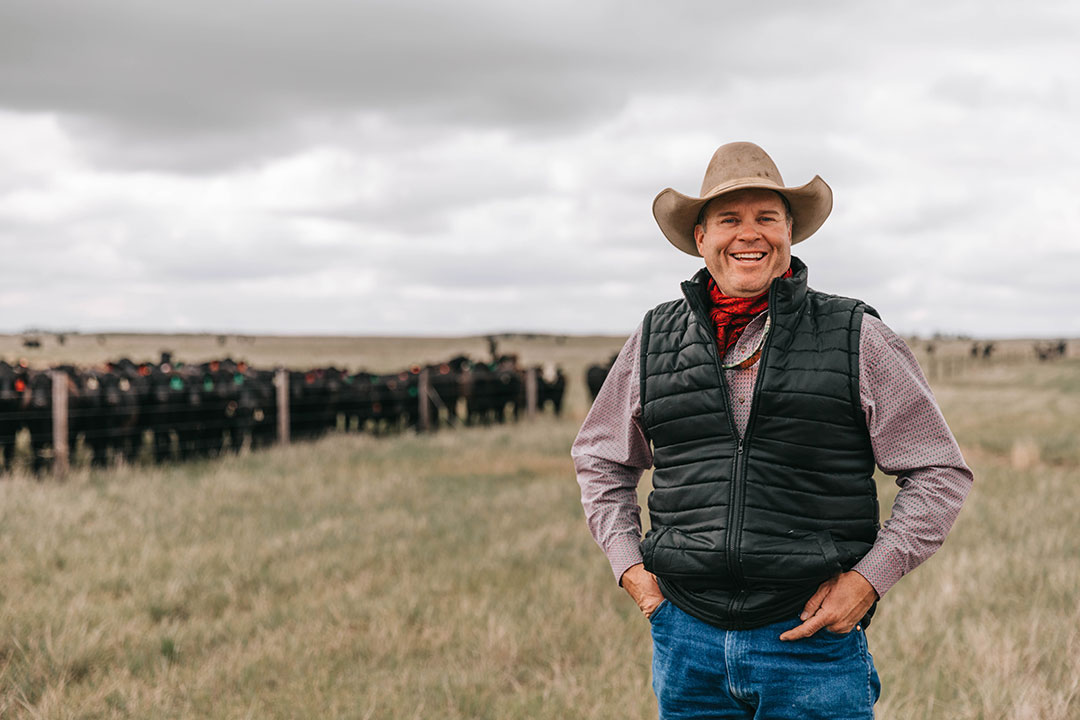
The Nobles hold service high—Ronella volunteers with hospice, the elementary school and church groups. Ryan leads services at the church and coaches his kids’ sport teams. Together Ryan and Ronella are 4-H leaders.

Still they find time to focus on their own continued education. A few years ago the couple completed a Ranching for Profit course, an investment they say constantly pays its way.

“We’re constantly going through our gross margins and looking at the economics of ranching,” Ryan says.

Through that process, the ranch quickly embraced the opportunity for a heifer development program that has made an impact on nearly 6,500 cows in all. It’s a progressive initiative to help Basin Angus Ranch customers reach their maternal and terminal goals through selective breeding and GeneMax™ genomic testing.

“It’s very profitable,” Ryan says. “We also enjoy interacting with other ranchers, and it gives us an opportunity to have a hand in helping them better their genetics.”

The Nobles haven’t always bred Angus genetics. Thirty years ago the ranch focused on the continental breeds and that’s about when Ryan began noticing changes in the Angus breed. Expected progeny differences (EPDs) were gaining momentum, especially within Angus.

When he began making decisions, he didn’t hesitate to start using the business breed.

“Angus just covers every base that we need covered, and with fantastic results,” he says.

Ryan found what worked for their operation, and made it thrive. The bottom line: his cattle must have minimal inputs, along with docility, longevity and fertility.

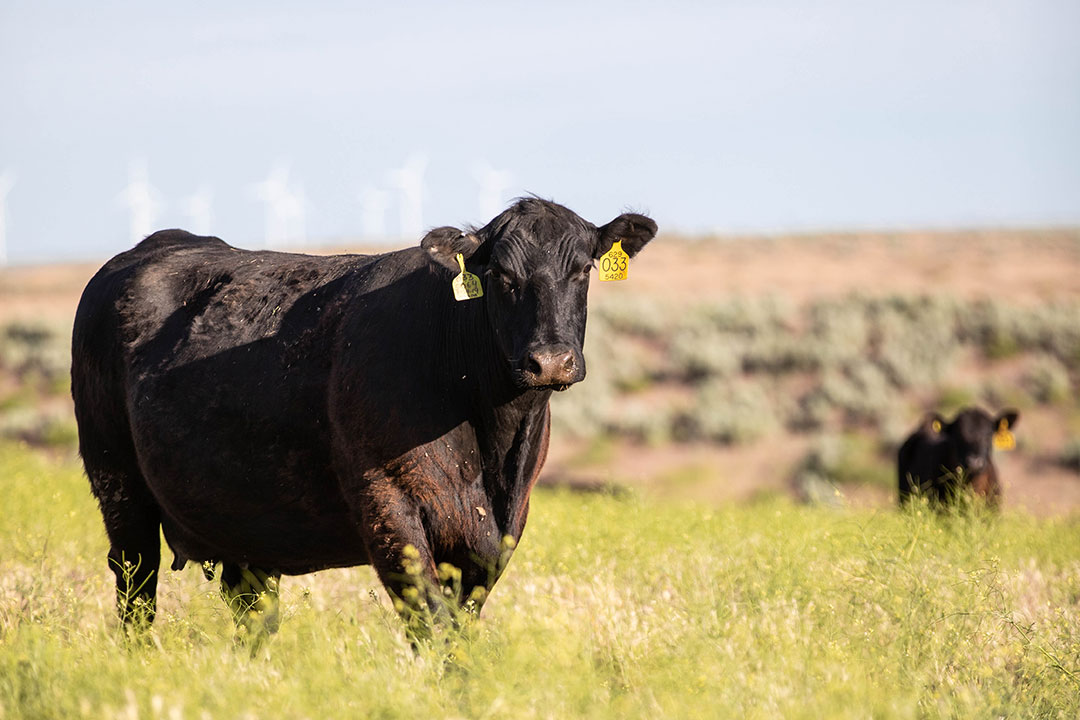
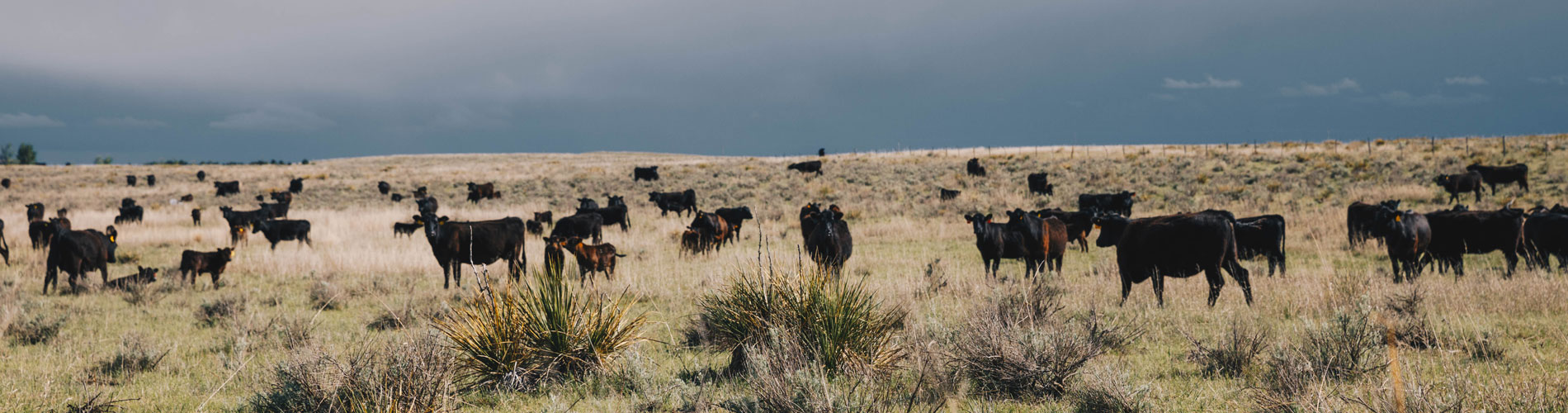
“Economically, the Angus cow covers a lot of bases for us,” Ryan says. “She can make a living out here in our semi-arid, tough environment. She can use some resources that nothing else is really going to use and she can upscale protein like crazy.”

Watch the video to learn more about why we love the Noble family.

Average isn’t an option. Their philosophy is to build cattle in the upper 25% for the breed. That’s why he has partnered with Basin Angus Ranch on bull studs selling semen. This allows him to select the best animals and invest in highly heritable traits to bring into his calf crop and following cow herd.

“We don’t like to leave things to chance,” he says. “So let’s bet on a sure thing and let’s bet on the best thing. Right now, that’s Angus cattle and it probably always will be.”

The carcass quality his herd achieves meets his standards as a beef consumer.

“The Certified Angus Beef brand has always stood for quality and doing the right thing every chance you get,” he says. “That mirrors what we’re trying to do out here on the ranch.”

Retaining ownership of steer calves and marketing them on the grid proves their strict breeding standards are paying off.

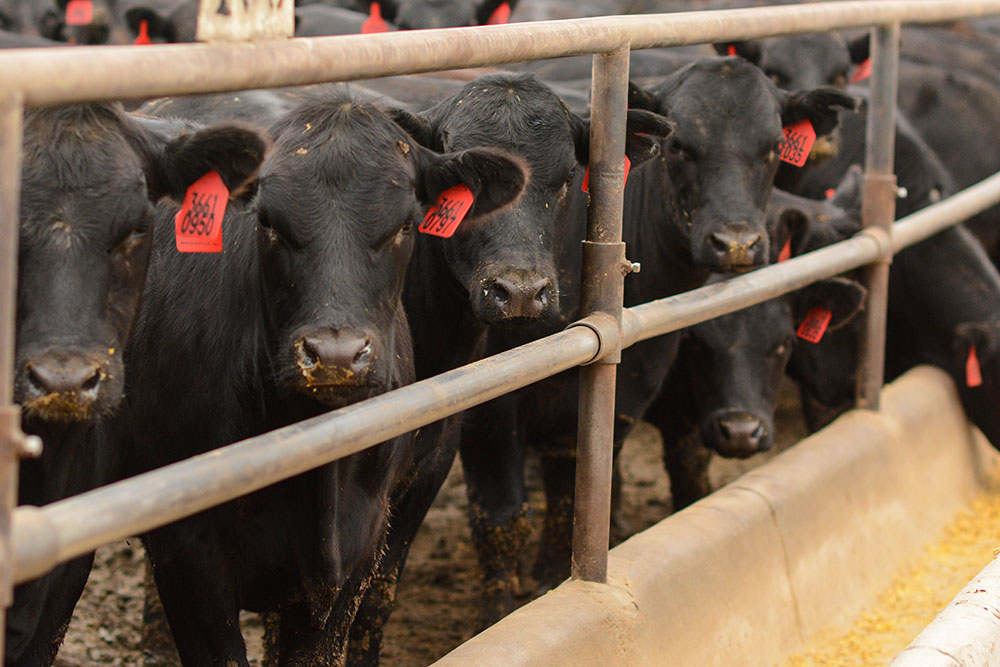
“When I got back the carcass data on our 2018 steers, we crowded 70% Certified Angus Beef,” Ryan says. “They yielded about 63%. They were almost 30% (low) Choice and there was zero Select in the whole pen. That’s on 14 month old calves. The pay weight was around 1340 pounds. I think we’re doing okay.”

Ryan is interested in long-term relationships, sustained partnerships that result in repeat business.

“I guess everything in the beef industry and life in general is all about relationships,” he says. “If you hold your end of the bargain up and the other person does, too, you will have a fantastic relationship and it will work every time. It’s all about the people.”
you may also like
Certified Angus Beef Launches Direct-to-Consumer Program

Certified Angus Beef Launches Direct-to-Consumer Program

Could your freezer beef carry the CAB logo? Perhaps. With the launch of a new program. Ranch to Table, a direct partnership program between CAB and cattle operations using Angus genetics, allows ranchers to use the brand’s trusted reputation for increased gain.
Certified Angus Beef Expands Offering with Grass-Fed Beef

Certified Angus Beef Expands Offering with Grass-Fed Beef

Certified Angus Beef ® Grass-Fed by Niman Ranch product will make up less than 1% of it’s total supply. A niche product, it will initially only be available through a few, exclusive restaurants and grocery stores. Consistent with all CAB products, the grass-fed beef must meet all 10 specifications to qualify for the brand.
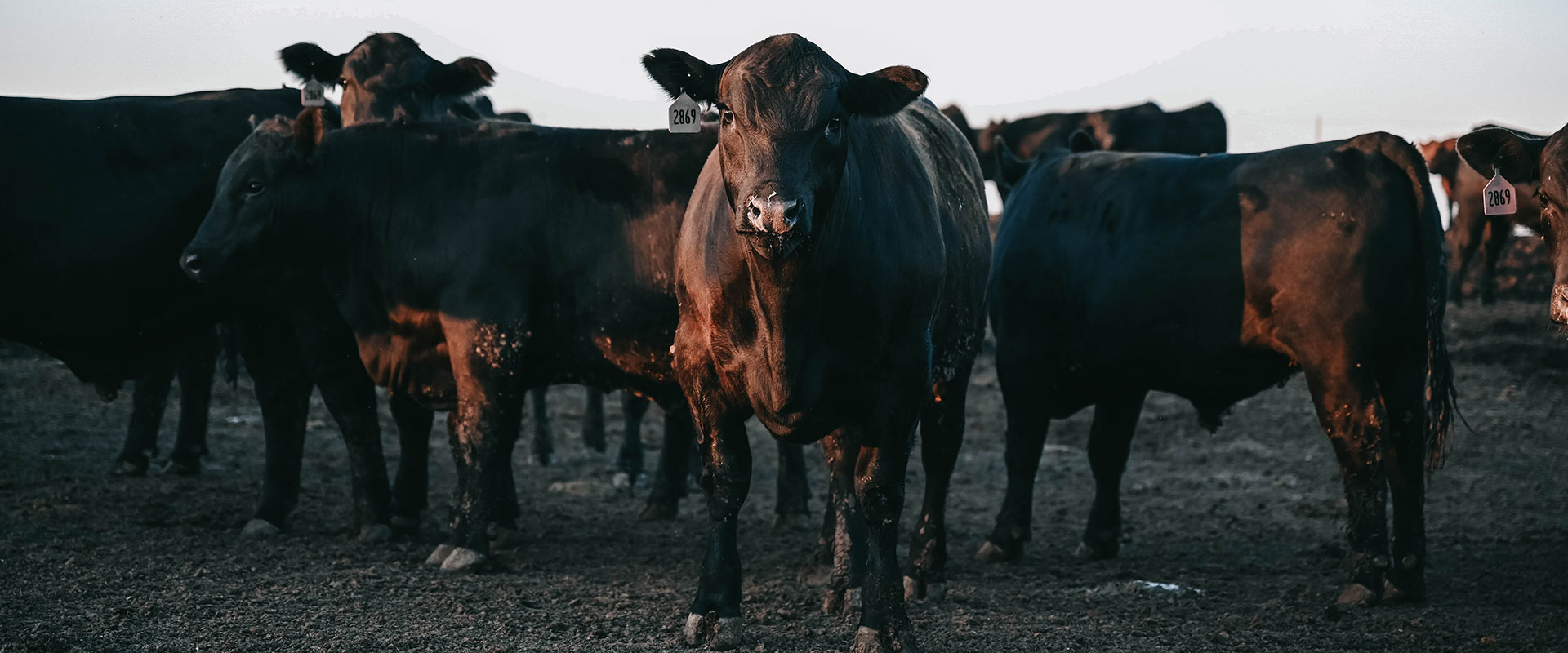
All-in cattle feeding

Timmerman family receives CAB honors

Story and photos by

Miranda Reiman

September 25, 2019

While Jason Timmerman was playing in the dirt, building pens and mounds with a toy loader, his sister Kristin was probably in the house reading an old classic.

If he chose an outside chore, she preferred the intellectual challenge.

With each passing year, Jason grew a little more into the boots of the cattle feeders he idolized. He scooped bunks, drove the feed truck and rode around with Grandpa Leo, making deals and looking at cattle.

“What do I love about cattle feeding? Everything,” Jason says. If it was true then, it’s true tenfold today.

Kristin imagined a future as a librarian and helped her mom fill out ledger books by hand.

Ryan was born 15 ½ years after his older brother, and when at the feedyard, he wished he were shooting hoops or throwing a football instead. If the Broncos business office had an opening, he might have applied.

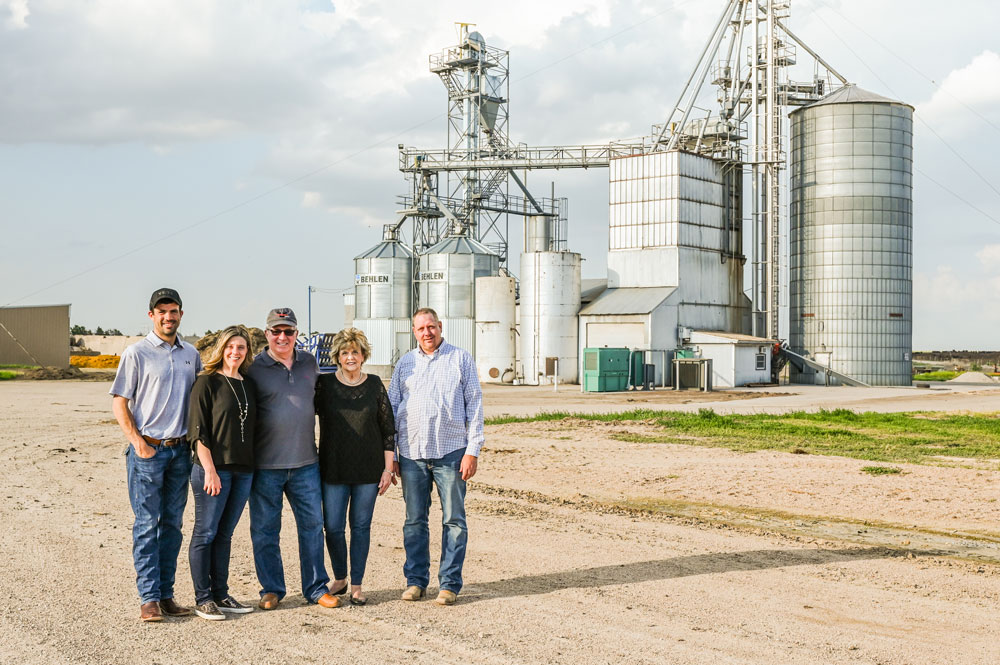
Veteran cattle feeders Norm and Sharon Timmerman, of McCook, Neb., encouraged their children to follow their own passions, and they did. After college, Jason started with Timmerman Feeding near Omaha, while CPA Kristin ran her own accounting firm and Ryan pursued a degree in business management with a sports and recreation option.

Then came the opportunity that first allowed Kristin and husband Jeff Stagemeyer, and later Ryan and wife Nicole, to be involved in the family business. Jason and his wife, Wendy, were already living near the Colby, Kan., yard.

“Proud.” It’s the only word that comes to mind, when Norm thinks of how it all turned out. Not the bragging kind of pride, but joy and satisfaction.  

“It’s nice to be that good of friends with your family members, who like to work together,” he says. “It all fell into place.”

Each day, the family brings diverse interests and skillsets, a shared trust and camaraderie to the work they do for the feeding company they jointly own: NA Timmerman Inc. They started in 2012 with yards at Indianola, Neb., and McDonald and Colby, Kan., now also including locations near Holyoke and Sterling, Colo., with a one-time feeding capacity of 80,000 head.  

For their dedication to grid marketing, feeding premium cattle and a call to doing the best job every time, the Norm Timmerman family received the 2019 Feedyard Commitment to Excellence Award from the Certified Angus Beef ® (CAB®) brand. They were recognized at the CAB annual conference in Asheville, N.C., in September.

The quality kind

“There are a lot of small feedlots that specialize in the high-quality type, but larger feeders don’t always have the benefit of picking and choosing what cattle they feed. They need to keep the pens full and often feed a wide variety,” says Paul Dykstra, beef cattle specialist for the brand. “They’ve really evolved over the last 20 years or so, under Jason’s vision, to procure cattle that will do well on a grid.”
When producers see a focus on quality at that scale, it sends a message to the industry, he says.

In 2005, the Timmermans tested grid marketing with sales of 2,100 head on a Cargill formula. Today that number is closer to 150,000 annually.

Without that focus, Jason says, “We wouldn’t be feeding as good of cattle today.”

It’s changed their procurement and it’s changed their harvest targets. The animals are fed to their potential, not based on the whims of one day’s market.

“We keep the feedyard full and we manage our risk and we try to maximize our performance to the best of the ability of our cattle,” he says, “versus the old cash system: hurry and sell, or wait and make them too big. When they’re ready, they’re ready, we just keep rolling and just manage the risk on the other side of it.”

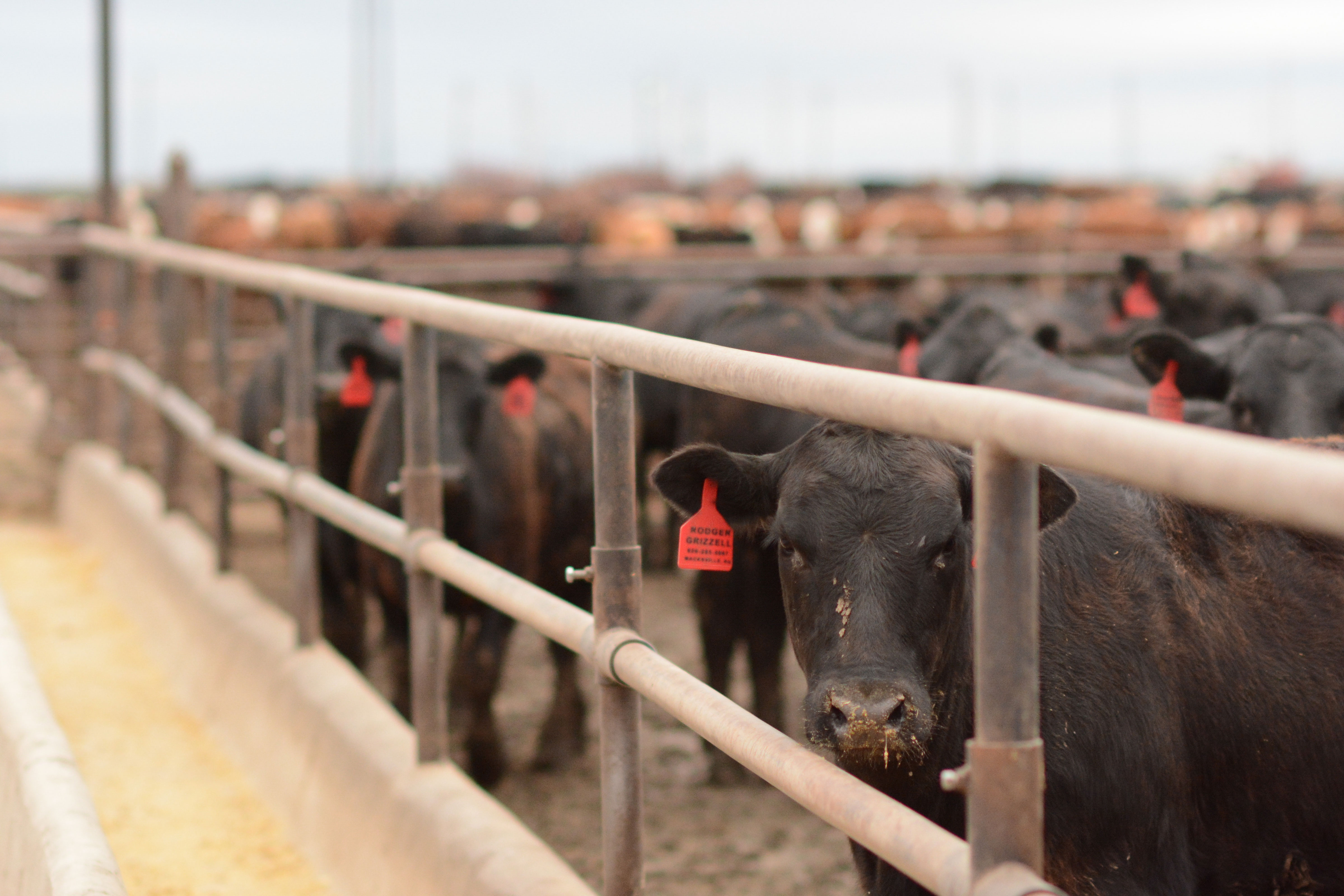
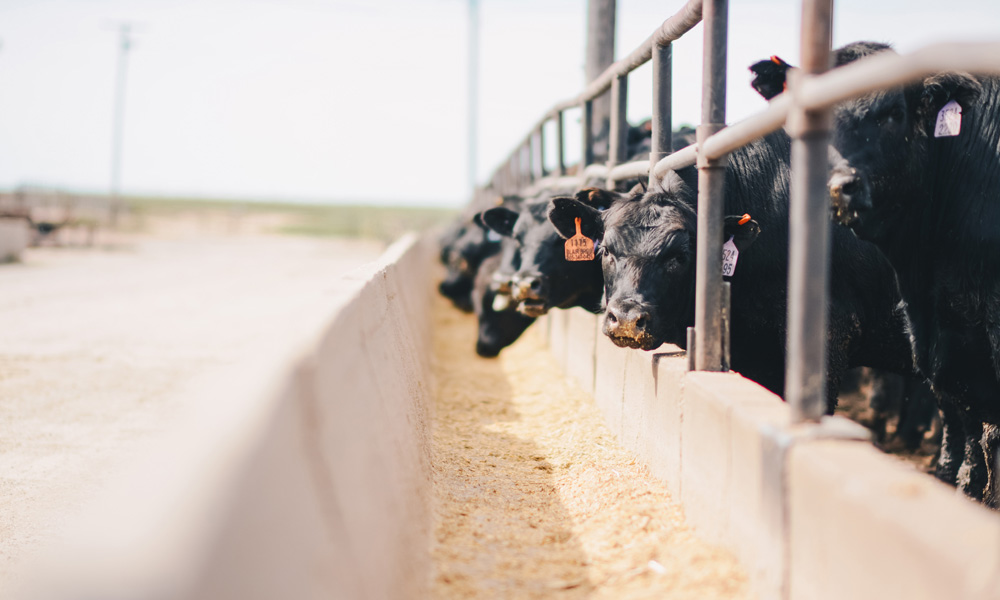
Despite a difficult winter and early spring for Great Plains cattle feeding, the Timmerman marketings still hit 38% Certified Angus Beef ® (CAB ®) brand and Prime for a three-month average into this summer. In recent years with more cooperation from Mother Nature, their branded quality numbers have been significantly higher across the board.

Jason and Jeff have been extensively using artificial insemination on the 700-head cow herd they own together, which shows them the impact of genetics on the final results. Three years of feedyard data on the progeny reveals more than half of them grade Certified Angus Beef ® (CAB®) brand and Prime.

Those cattle make more.

“When we get a pen of high-grading cattle that have a lot of CABs, it directly affects us,” Jason says, “because it’s money in our pocket.”

Those cattle also signify a mark of achievement.

“I like the self-satisfaction of knowing I did the best I could do,” he says.

Extra effort

That’s a shared Timmerman trait often expressed as extra hours at the yard and office, doing whatever it takes to keep cattle performing and comfortable.

“Hard work will give you a lot of luck,” Norm says.

When the family beats Norm to work, the father knows he passed on that important value.

“I love mornings before everyone shows up, before the sun comes up,” Jason says. He goes through pen by pen. “Which cattle are these? How are they doing?”

It’s his time. Before the calls come and he’s making fast-but-calculated decisions on risk management and cattle marketing. He’s directing employees and checking in with his siblings.

“If you do all the little things consistently, the cattle will do as projected,” Jason says. “We want to do as projected because people are hedging in their margins based on that.”

Pen maintenance, feed delivery and cattle health monitoring—they all add up.

“There is no room for error. It’s a sole responsibility,” Ryan says. “The job we do at the feedlot impacts our customers. There’s a lot of money involved…it’s their livelihood.”

When he went out to manage the new Sterling yard, Ryan didn’t want to take a day off for several months. “That’s when I felt the weight of the responsibility. We had expectations and a good customer base…”

It’s not like a Timmerman to let people down.

Late into a Friday night, Norm might go by Kristin and Jeff’s neighboring offices in McCook and see lights still on in the back, a lone car parked out front. That’s when he knows they’ve got it, too.

“These are the things that are important to the Timmerman family: their faith, being a good family member, working hard at what you’re doing,” Kristin says.

She and Jeff bring a fresh perspective to the finances, giving purchasing advice and making insurance decisions.

“My dad and I knew the outside very well, but needed someone in the back that could complement us–luckily we had family that could do that,” Jason says.

There’s no CFO he’d trust more.

Leo’s legacy

They had a good example of seeing partnership in action. Timmerman Feeding of Springfield, Neb., started by Leo Timmerman, was into the hands of the next generation, brothers Gerald, James, Ronnie and Norm, when they expanded to Indianola, some 250 miles west.

“This was a farm and we built it from scratch,” Norm says. “We came here in March 1973 and in October 1973, we had cattle in here already.”

There was no mill, no chute, no scale house.

“The office started in our trailer house, where we lived. The office was our kitchen table,” Norm says, giving credit to his wife, Sharon. She kept the books there by day and made it a home by night.

“I say my mother was the glue for my father, and Sharon’s the glue for me,” he says. “I think she just listens better than I do sometimes.”

Then there was the support of the brothers in their own locations, managing finances, business development and risk.

“I’ve only had two jobs in my life, the Marine Corps and Timmerman feedlots,” Norm says. After school and the service he joined the brothers who worked together for the next 50 years. “We felt like this is where they needed us, and this is where we wanted to be.”

By this decade, with the third generation involved, there were dads and uncles working with sons and nephews. Roles were getting harder to define and rather than set limits on who traded out of what account or trying to come up with a consensus on big decisions, it was a natural time to let each Timmerman branch individually exercise their entrepreneurial spirit.

They gave their children the opportunity Leo Timmerman gave them.

“He was really a person that showed a lot of confidence in us boys, and he was the one who gave us the chance and it’s where it all started,” Norm says.

“The boys” learned as they went. Norm fed cattle off a team of horses, and drove semis loaded with hay through Omaha at just 16.

Handing over responsibilities to Jason felt like the natural chain of events.

“It evolved to where I was doing more, more and more,” Jason says, noting the risk management shifted to him through the years. “Then it’s how do you keep it organized? Trial and error. Mistakes, mistakes, mistakes.”

Years like 2014 remind them it’s fun to make money. Years like 2015 keep them humble.

“I don’t think it will ever be easy. You’re in an environment dealing with people, dealing with Mother Nature. You’ve got the element of risk,” Jason says. “It will never be easy, it’s just about how you manage your way through it.”

History says they’ll do it. Being a Timmerman means they’ll do it well.

Originally published in the Angus Journal

you may also like

Kansas Ranchers Recognized for Sustainability Efforts

Kansas Ranchers Recognized for Sustainability Efforts

Kansas’ Wharton 3C Ranch thrives despite droughts, winning the CAB 2023 Sustainability award. The data-driven, quality-focused approach of first-generation ranchers, Shannon and Rusty Wharton, yields 100% CAB cattle. Their commitment to sustainability and industry collaboration sets a bright future for the cattle business.

Saskatchewan Angus Ranch Earns Certified Angus Beef Award

Saskatchewan Angus Ranch Earns Certified Angus Beef Award

JPM Farms in Canada quietly gained recognition for its dedication to environmental sustainability and quality cattle. The Monvoisin family earned the 2023 CAB Canadian Commitment to Excellence award for their outstanding results and partnership with Duck Unlimited, showcasing their commitment to improving the land, cattle and family daily.

Everything They Have

Everything They Have

Progress is a necessity on the Guide Rock, Nebraska, ranch where Troy Anderson manages a commercial Angus herd, small grower yard, his 10-year-old son, and a testing environment. Troy’s approach includes respect for his livestock, people and land. For that, Anderson Cattle was honored with the CAB 2023 Commercial Commitment to Excellence Award.

2019 Seedstock Commitment to Excellence

Built on a breed

A century of focus earns Spring Cove Ranch the CAB Seedstock Commitment to Excellence Award

Story and photos by Nicole Lane Erceg

September 25, 2019

When the first Angus sire arrived at Spring Cove Ranch in 1919, no one could have predicted his legacy. Old, handwritten herd books trace the first pedigrees of the Butler herd to a time when cattle were traded for a saddle and a good meal. The yellowed pages reveal registration numbers with only 4 digits, traced as forebears of cattle grazing these high desert ranges today.

Self-proclaimed “number nerds” Art and Stacy Butler inherited the craving for information documentation on their herd of 800 cows.

“Data collection, and specifically EPDs (expected progeny differences), are tools we’ve been able to use through the years to create the proper combination of marbling and function and form and maternal and feed—and whatever else it takes to make the Angus cow that’s going to survive on the western range and also produce a Certified Angus Beef ® (CAB®) steak,” Stacy says.

All Butler bulls are genomically tested with Angus GS and more than 60% of those in their annual sale earn the CAB Targeting the Brand™ logo, signifying breed average or above for the Marbling EPD and $Grid index. Each bull gets its own Spring Cove Ranch calving ease score that consolidates genetics, genomics and cow-family data to provide extra analysis on potential herd sires.

The main goal is an Angus bull whose progeny thrive on the western range and have the carcass traits and growth characteristics to generate premiums for commercial cattlemen while balancing a focus on breeding cows that “keep us all in business” with strong maternal values.

The philosophy isn’t new. It serves a vision the Butlers held long before the market directly justified it, and it earned them the 2019 CAB Seedstock Commitment to Excellence Award.

A student at the University of Idaho when USDA lowered the grading standards in the mid-1970s, Art saw the industry moving toward a leaner product but kept steering his herd the other way.

 “We were breeding to high marbling bulls, mainly because we wanted to improve the quality of the cattle and add value on the rail,” Art says. “When we started to market a few cattle on the rail in the ’90s, that’s what paid the bills, was marbling.”

It’s hard-earned knowledge he works to pass on to his bull customers today.

“Marbling is something that you can add to these cattle no matter what size and what your goals are as far as productivity,” Art says.

Form, function and fertility come first. They don’t preach single-trait selection, but say those necessary traits are already built into the Angus cow. “It’s what has made her ‘King’” Art says.

Some say great cows and exceptional terminal traits don’t happen in one package. Art and Stacy prove they do.

“The Angus cow has provided a living for the Butler family for 100 years,” says Stacy. “She has done so through droughts and storms and floods and diseases and generational differences and different genetics.”

They lay the accolades of what they’ve built at her feet, but credit data and targeted selection as vital tools along the way.

The couple encourage connections between each link of the beef production chain, working to help feeders understand the value of their customer cattle and their customers understand the needs of the beef consumer.

“Helping our customers market their cattle, and more than that, trying to help them get a premium for the genetics that they’ve invested in,” says Stacy. “The premium paid by the consumer at the end needs to trickle down to the cow-calf man that is actually producing that calf.”

A Western Video sales representative, Art guides his customers through capturing premiums without retained ownership. Program feeder cattle bring added value and Spring Cove Ranch genetics help carry a reputation for paychecks from the packing plant.

“Cattle with credentials” like carcass genetics, source- and process verification or Natural and other certification can help Western commercial cattlemen capture another bid and dollar, Art says. Historically, his program cattle bring as much as $67 per cwt. over the average black calf.

The dollars add up, for one customer all the way to $169,000 for a truckload headed east.

“I think a lot of people are thinking that maybe we’re going to saturate this market with high-quality cattle, but I think the demand is only growing and worldwide,” Art says. “A small part of this world today eats the premium product like we do and the others are now finding how tasty it is. They’re going to want more of it.”

The Butlers will be here with a ready supply of carefully selected Angus seedstock, continuing the work of converting forage from non-tillable lands into valuable protein.

A century after the first Butlers partnered with this land, it’s become a place few would dispute as a perfect home for ranching. The cattle are better and the land looks refreshed and invigorated compared to the black-and-white photos of times past. The next generation of Butler cowboys are learning the ropes as so many times before.

Learn more about the Butlers and why they earned the Commitment to Excellence Award. Watch the video that played on stage at Annual Conference.

2019 Progressive Partner Award

Own what you do

Tom Jones and his Hy-Plains team keep feeding, learning and showing the way to better


Story and photos by Miranda Reiman

September 25, 2019

If they set the bar there today, by tomorrow, they’ll raise it higher.

That’s the kind of feedyard Tom Jones manages. It’s the kind of person Jones is.

In 1999, he and investors bought a 28,000-head yard near Montezuma, Kan., and immediately began doing business as Hy-Plains Feedyard LLC. Two decades later he still makes his living on the business, but that looks different today than it did then. It may look different next year, or even next month.

“We have cattle grading 100% Choice and now we are working on the Prime, so what is the next demand driver going to be?” Jones asks. “We have to look to our new customers and they are looking for transparency, wholesome food. They are looking for traceability, so those are some of the things I’m looking for in the future.”

That attitude, and the actions behind it, earned Hy-Plains Feedyard the 2019 Certified Angus Beef ® (CAB®) Progressive Partner Award.

For the good of the industry 

Coming off a good year in 2014, the business was in a strong financial position. Having expanded twice before—first to 35,000, then to the current 50,000 head—Jones wasn’t interested in building more pens or buying new feed trucks. Instead of traditional capital outlays, he decided to make a long-term, far-reaching investment.

 It took some time to get it just right but in 2017, the company opened its Hy-Plains Education and Research Center.

“We felt it was time. The industry has changed over the last seven years, the genetics have changed. Our ability to study cattle, collect data and see how that affects performance has changed,” Jones says.

The center is part research, part demonstration facility, part communal office space, but all grounded in sharing knowledge and growing more of it. “If we can study our lessons, we can make a huge difference,” he says. Jones enjoys feeding cattle for commercial and registered Angus customers because they’re the ones who “influence change in the industry.”

On any given day, staff from ABS might use one office, while next door, veterinary professionals analyze data they’re gathering at the yard. Those would be staff from the Hays, Kan.,-based Veterinary Research and Consulting Services (VRCS).

“The facility, with the managers and Tom’s visionary thinking and ability to think outside the box, it allows us the avenue to try different things, different products and different management strategies to give us valid results that will help us make improvements all along the production chain,” says Miles Theurer, research director for VRCS and Hy-Plains Feedyard.

Watch why we love Tom Jones and everything he’s doing at Hy-Plains Feedyard.

Cattle feeder turned tour guide

They’re able to find new answers, while externally sharing answers the industry already knows.

“We do have a great story to tell, it’s just hard to find the time to do it,” Jones says.

So they make time. 

“My biggest desire was to be able to bring in a busload of fourth graders and have them watch us process cattle,” he says.

Jones hosts the leadership from McDonald’s and Carl’s Jr. in the same place where 120 elementary students from neighboring schools come out for a field day. One day he’s tackling global environmental challenges as a member of the U.S. Roundtable on Sustainable Beef and the next he’s training college-age interns.

They all get the same version of Jones, someone who is focused, competitive and serious about providing the best care he can for the cattle in his yard.

A push to get better

Don’t ask how many cattle they can work in an hour.

“Processing cattle is not a timed event,” Jones says definitively. “When we spend time teaching stockmanship skills to our employees, the cattle are not stressed. They are more comfortable so they perform better. We work as quietly as possible.”

It takes extra work and hours to collect data and to do it right.

“These people we have on staff are very interested in making a difference,” Jones says.

His push to get better and desire to win are as much a part of how he was raised—and people who mentored him along the way—as they are a personal philosophy.

From his own dad, the farm boy learned hard work and getting by with less. As a cattle buyer for IBP (now Tyson) and then Hy-Plains Dressed Beef, Jones learned about business. Working for feeding pioneer Earl Brookover, first as a pen rider when he was young and later managing Brookover Ranch Feedyard, Jones saw the importance of setting an example worth following.

“You have to own something in your life. It doesn’t matter if you own the job where you are working or you buy land or own your business. Own what you do,” he says.

When cattle leave Hy-Plains Feedyard, Tom Jones knows his name is on every single one. It weighs on him to reach a little higher each day.          

you may also like

Saskatchewan Angus Ranch Earns Certified Angus Beef Award

Saskatchewan Angus Ranch Earns Certified Angus Beef Award

JPM Farms in Canada quietly gained recognition for its dedication to environmental sustainability and quality cattle. The Monvoisin family earned the 2023 CAB Canadian Commitment to Excellence award for their outstanding results and partnership with Duck Unlimited, showcasing their commitment to improving the land, cattle and family daily.

Everything They Have

Everything They Have

Progress is a necessity on the Guide Rock, Nebraska, ranch where Troy Anderson manages a commercial Angus herd, small grower yard, his 10-year-old son, and a testing environment. Troy’s approach includes respect for his livestock, people and land. For that, Anderson Cattle was honored with the CAB 2023 Commercial Commitment to Excellence Award.

Showing Up, Every Day

Showing Up, Every Day

Thirty-five thousand cattle may fill these pens, but it’s the Gabel family who set the tone for each day. Steve and Audrey persistently create a people-first culture, echoed by their son Case and daughter Christie, who work alongside them in the yard office. The Gabel’s drive to effectively hit the high-quality beef target earned Magnum Feedyard the CAB 2023 Feedyard Commitment to Excellence award.

2019 Feedlot Commitment to Excellence

All-in cattle feeding

Timmerman family receives CAB honors


Story and photos by Miranda Reiman

September 25, 2019

They were raising children with diverse skillsets and diverging dreams.

Veteran cattle feeders Norm and Sharon Timmerman, of McCook, Neb., encouraged their children to follow their own passions, and they did. After college, Jason started with Timmerman Feeding near Omaha, while CPA Kristin ran her own accounting firm and Ryan pursued a degree in business management with a sports and recreation option.

Today, they have all returned to the family business that now includes, Jason and Wendy, Kristin and husband Jeff Stagemeyer, and later Ryan and wife Nicole.

“It’s nice to be that good of friends with your family members, who like to work together,” Norm says. “It all fell into place.”

The family brings a shared trust and camaraderie to the work they do for the feeding company they jointly own: NA Timmerman Inc. They started in 2012 with yards at Indianola, Neb., and McDonald and Colby, Kan., now also including locations near Holyoke and Sterling, Colo., with a one-time feeding capacity of 80,000 head. 

For their dedication to grid marketing, feeding premium cattle and a call to doing the best job every time, the Norm Timmerman family received the 2019 Feedyard Commitment to Excellence Award from the Certified Angus Beef ® (CAB®) brand.

The quality kind

“There are a lot of small feedlots that specialize in the high-quality type, but larger feeders don’t always have the benefit of picking and choosing what cattle they feed. They need to keep the pens full and often feed a wide variety,” says Paul Dykstra, beef cattle specialist for the brand. “They’ve really evolved over the last 20 years or so, under Jason’s vision, to procure cattle that will do well on a grid.”
In 2005, the Timmermans tested grid marketing with sales of 2,100 head on a Cargill formula. Today that number is closer to 150,000 annually. It’s changed their procurement and it’s changed their harvest targets.

“We keep the feedyard full and we manage our risk and we try to maximize our performance to the best of the ability of our cattle,” he says, “versus the old cash system: hurry and sell, or wait and make them too big. When they’re ready, they’re ready, we just keep rolling and just manage the risk on the other side of it.”

Despite a difficult winter and early spring for Great Plains cattle feeding, the Timmerman marketings still hit 38% CAB and Prime for a three-month average into this summer. In recent years with more cooperation from Mother Nature, their branded quality numbers have been significantly higher across the board.

Jason and Jeff have extensively used artificial insemination on the 700-head cow herd they own together, which shows them the impact of genetics on the final results. Three years of feedyard data on the progeny reveals more than half of make CAB and Prime.

“When we get a pen of high-grading cattle that have a lot of CABs, it directly affects us,” Jason says, “because it’s money in our pocket.”

The entire Timmerman family is committed to excellence. See why we love them and their quest for quality.

Extra effort

“Hard work will give you a lot of luck,” Norm says.

Pen maintenance, feed delivery and cattle health monitoring—they all add up.

“There is no room for error. It’s a sole responsibility,” Ryan says. “The job we do at the feedlot impacts our customers. There’s a lot of money involved…it’s their livelihood.”

It’s not like a Timmerman to let people down.

“These are the things that are important to the Timmerman family: their faith, being a good family member, working hard at what you’re doing,” Kristin says.

She and Jeff bring a fresh perspective to the finances, giving purchasing advice and making insurance decisions.

“My dad and I knew the outside very well, but needed someone in the back that could complement us–luckily we had family that could do that,” Jason says.

Leo’s legacy

They had a good example of seeing partnership in action. Timmerman Feeding of Springfield, Neb., started by Leo Timmerman, was into the hands of the next generation, brothers Gerald, James, Ronnie and Norm, when they expanded to Indianola, some 250 miles west.

“This was a farm and we built it from scratch. The office started in our trailer house, where we lived,” Norm says, giving credit to Sharon. She kept the books there by day and made it a home by night.

By this decade, with the third generation involved, it was a natural time to let each Timmerman branch individually exercise their entrepreneurial spirit.

They gave their children the opportunity Leo Timmerman gave them.

“It evolved to where I was doing more, more and more,” Jason says, noting the risk management shifted to him through the years. “Then it’s how do you keep it organized? Trial and error. Mistakes, mistakes, mistakes.”

Years like 2014 remind them it’s fun to make money. Years like 2015 keep them humble.

“I don’t think it will ever be easy. You’re in an environment dealing with people, dealing with Mother Nature. You’ve got the element of risk,” Jason says. “It will never be easy, it’s just about how you manage your way through it.”

History says they’ll do it. Being a Timmerman means they’ll do it well.

As good as his word

Bohn receives FQF Industry Achievement Award

Some statements are easy to make, harder to live.

“I hope I’m known as someone who keeps his word and does what I say I’m going to do.”

For Jerry Bohn, longtime manager at Pratt Feeders, it’s not a flippant remark, but an honest assessment of the career he’s had. It was never plastered on a wall or written in a planner, but it’s the motto he’s tried to model his life around, both personally and professionally.

“You don’t run a business for practice, so obviously making a profit and doing it right was important for us,” says Bohn, who recently moved into part-time retirement after 34 years at the helm of Pratt (Kan.) Feeders. “That allowed us to be successful because we did focus on doing things the right way, being honest and having integrity. We did what we said we’d do.”

Every time. No exceptions.

For his leadership to the beef industry and dedication to raising quality cattle, Bohn was named 2019 Feeding Quality Forum (FQF) Industry Achievement Award winner in August at Amarillo, Texas. Past recipients selected the honoree for the Certified Angus Beef LLC (CAB)-sponsored award.

“Being recognized by your peers is the ultimate compliment,” Bohn says.

During his tenure at Pratt Feeders, it grew from one yard operating at half capacity to as many as four, with an Oklahoma yard at Buffalo and other Kansas locations at Ashland and Hays (sold in 2014), with close to 120,000-head total capacity.

“It’s treated us really well, as far as the investment,” Bohn says. In 1980, local businessmen purchased the yard, but when Jerry brought his wife Julie and their young family to Pratt a few years later, he took immediate ownership in its success. Since then he’s literally bought into the company, serving on its board now with some second-generation stockholders.

“We had a lot of interaction, but at the same time they weren’t micromanagers,” Bohn says. “They laugh when I describe them as ‘bottom-line oriented.’”

He took his job seriously and personally: “Did everything always go well? No. Were their challenges? Sure.” There’s no sugar coating droughts like 2012 or winters like 1993.

“That was the worst of my career,” Bohn says. “And when you’re going through something like that you’re saying, ‘Man, did I really want to get involved in this?’”

Price challenges weigh heavy, and sometimes a “cow that stole Christmas” rocks an industry.

“I don’t miss the day-to-day headaches, the weather and the markets dropping out,” Bohn says. “I do really miss the interaction with the customers.”

Florida, South Dakota, Kansas—the calls still come from across the country, even though he doesn’t have to relay marketing dates or pen conditions.

“It’s a relationship business,” Bohn says. “It takes a pretty big trust for someone to put a load of cattle, that’s worth $40-, $50-, $60,000 on the road, send them to people you might not have met and trust that they’re going to take care of them.”

Bohn’s name was on the line, but everybody from pen rider to trucker to office clerk played a role.

“It takes a team to run an operation like this,” Bohn says. His 80-some employees probably knew him as particular, but level-headed and fair.

“Some of that I had to grow into,” he says. “You learn by doing. You learn by making mistakes and correcting them, and by surrounding yourself with good people.”

Bohn wanted his crew to do the work as if he were personally feeding, doctoring or loading each head himself.

Anything out of place at Pratt Feeders didn’t stay that way for long. If there was a way to improve, they were doing it.

The company was an early member of U.S. Premium Beef (USPB) and became a partner in the long-running CAB Feedlot Licensing Program in the early 2000s.

“It caused us to do a paradigm shift a little bit, with more focus on quality and we became more active in looking for ranch cattle, particularly Angus,” Bohn says. “It was something that we needed to do to change our direction.”

The industry is catching up, but Bohn set that in motion at Pratt nearly 20 years ago. That’s when his path crossed with Paul Dykstra, beef cattle specialist for the brand.
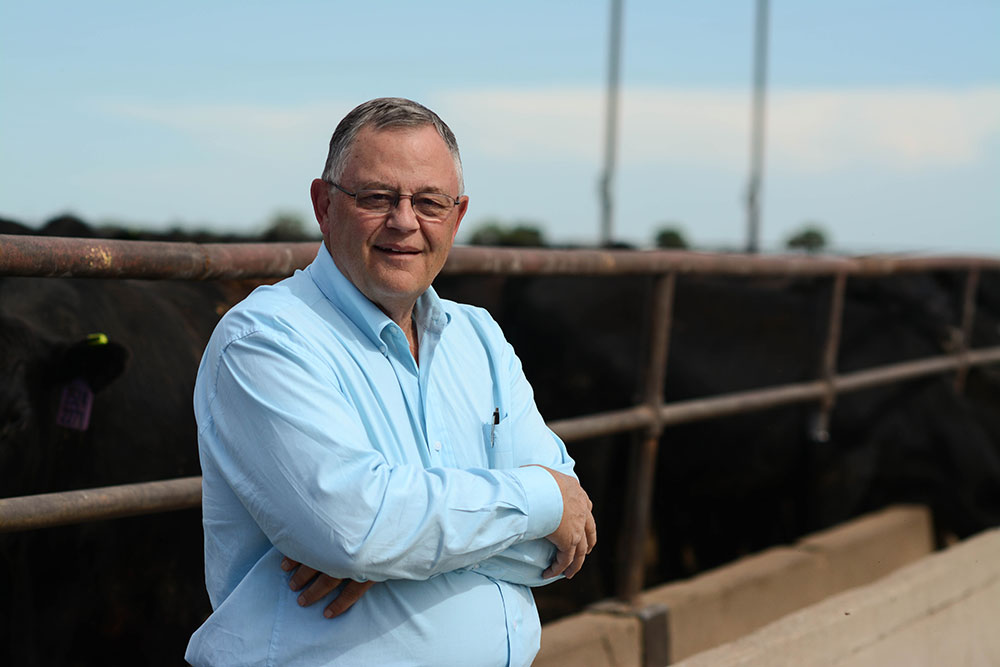
“Over time, working with Jerry personally and with the other managers in the Pratt group I really gained an appreciation for his analytical style and approach to business,” Dykstra says, remembering many meetings spent poring over data in the Pratt boardroom. “Together we measured the progression of carcass quality in the cattle they were feeding.  As the industry embraced carcass quality and what that meant for the economics of cattle marketing, Jerry was on top of that, finding better and better cattle as well as customers who wanted to feed the ‘grid kind.’”

The feeding company implemented individual animal management early on. Pens are still sorted into three or four outcome groups, each one marketed at an optimum finish.

“Today almost everything we sell is based on a grid,” Bohn says. “There’s a risk ratio when you get paid for actually what you have, and sometimes people didn’t really want to find out what they had. More of them are becoming comfortable with that and it’s a way that we can supply more quality to our end user to keep them coming back.”

Doing right for the cattle, the customer and the bottom line—it seems to come natural, but it wasn’t a mapped career path for the farm boy from Wabaunsee County, Kansas. He grew up baling hay, raising pigs, cattle and corn.

“You had to go out when it was raining and snowing and cold, and I guess it didn’t deter me enough that I decided I wanted something different,” he says.

Thanks to an area farmer-turned-coach, Bohn judged livestock all over the country, his high school team winning the National FFA contest at the American Royal in 1968 and the National Western Stock Show the following year. That experience followed him to Kansas State University, where he competed under livestock judging coach Bill Able and earned his animal science degree.

That period also holds memories of a sorority girl who caught his eye, and a first date spent sledding. He and Julie will celebrate 47 years of marriage this fall.

“She’s been so supportive.” But he doesn’t have to say it; actions already tell that tale. Where he went, she followed.

The first stop was Austin, Minn., for a brief experience with Hormel before he was back in Kansas to fulfill a commitment with the National Guard. After a start in the feeding business with an eastern Kansas yard, he moved on to seven years as an analyst for CattleFax in the Denver area.

“I turned the Pratt job down once before we made the decision to come here. It was a hard move,” Bohn says. “When I first came, we

They raised three children in the bustling farm town, had a church family and were active community members. For 36 years, they called Pratt home.

“It was hard because our days here were relatively long, but as our children became more involved in school activities and athletics, we always tried to make an effort to be there,” Bohn says. There were days spent on bleachers and in 4-H horseshow barns. “It’s something you really have to focus on or you can let your work become the main focus.”

As a 21-year member and lieutenant colonel in the Guard, the cattleman had drill assembly once a month and two weeks of service in the summer. He wasn’t home for everything.                  

“My goal is to leave a legacy, not only for my family but also with my involvement in the industry,” Bohn says. “You owe it to the industry you’re involved in to work with it and promote it and be involved.”

He’s served as Kansas Livestock Association president and volunteered with the National Cattlemen’s Beef Association, which put him on track to become president there in 2021.

 “I’m not sure that I thought when I came into this job here that we’d accomplish everything we’ve been able to accomplish,” he says. “It’s been a good career.”

He did what he said he was going to do…and then some.

Story and photos by Miranda Reiman

You Also Might Like…

Heavy Lifting Ahead for Cutout Values

Heavy Lifting Ahead for Cutout Values

The typical October beef market is marked by a strong swing in carcass cutout values as a lull in demand follows Labor Day, sending cutout values to a seasonal low beginning in October.

Not one for small talk

Uncomfortable silence.

If you don’t like it, you know the kind. Perhaps you’re just getting to know somebody, and you reach a point in the conversation where that silence hangs heavy and it makes you uneasy.

I’m a talker by nature and profession, so I usually fill that space with idle chatter. I find one more question to ask or one more observation to make.

But after spending half a day with Jerry Bohn, longtime manager at Pratt Feeders in Kansas, I realized sometimes silence isn’t uncomfortable. It’s necessary. It’s beneficial.

Jerry isn’t the type of guy who talks just for the sake of talking. His words carry weight.

People have said that about him. (See Mark Gardiner’s comments as he won the Kansas State University Stockman of the Year award in February.) And I have interviewed Jerry before, but something about riding around, looking at cattle and talking about a career devoted to raising the best—that really cements it in my mind.

I ask about the ups and downs of decades in the business, more than three of them at the helm of Pratt Feeders. He doesn’t give me any rose-colored version. It didn’t really start out as a “dream job” or some higher calling; it was just a good opportunity that stuck.

“I was ready for a new challenge and these guys were looking for someone to run this facility,” Jerry says. “But it was a hard move.”

He turned down the position the first time the owners sought him out. He’d spent seven years as a CattleFax analyst and he and his wife, Julie, liked the Denver area.

“I tease that when you see a ditch along I-70, that was her feet dragging the whole time.”

But the couple grew to love Pratt and people they found there.

I ask about how his family life and career coincided. He doesn’t make use of any false pretenses there, either.

“It was hard because our days here were relatively long, but as our children became more involved in school activities and athletics, we always tried to make an effort to be there,” Jerry says.

As a 21-year member and officer in the National Guard, the cattleman had drill assembly once a month and two weeks of service in the summer. He wasn’t home for everything.

“It’s something you really have to focus on or you can let your work become the main focus,” Jerry says.

They are coming up on 47 years of marriage—a fact that stands to tell me they got the balance figured out.

There have been many changes over time, both personal, like raising three kids and now enjoying five grandkids, and professional, like improving genetics and marketing methods. They added more yards to the Pratt Feeders umbrella, became members of U.S. Premium Beef, partnered with the  Certified Angus Beef ® brand, and he bought into the feeding company. Jerry grew his influence as a Kansas Livestock Association president and volunteering with the National Cattlemen’s Beef Association put him on track to become president there in 2021.

But no matter the role or where you meet him, whether he’s shaking your hand over a cattle deal or greeting you in church, Jerry’s steady. Solid.

“When people think about your career someday, what do you hope they’ll remember?”

There’s a pause.

I resist the urge to rephrase the question or keep talking.

“I hope I’m known as someone who keeps his word and does what I say I’m going to do,” he replies. “I think that’s important.”

May your bottom line be filled with black ink,

Miranda


P.S. Jerry will receive a special recognition at this year’s Feeding Quality Forum in Amarillo, Texas, Aug. 27 to 28. Register now to take in some top-notch educational sessions and see that award presentation.


About the author: Miranda Reiman

I love this life. Things that top my list? God, my family, rural life, agriculture and working for the brand. I’m officially the director of producer communications, which basically means I get to learn from lots of smart people and pass that information along to other smart people: YOU. I’m fortunate to work with producers and others in the beef community from my Nebraska-based home office here in the heart of cattle country. (One other delicious job perk? Any time we meet, there’s sure to be good beef involved.) 
you may also like

Michigan Angus Family Earns Ambassador Award

Michigan Angus Family Earns Ambassador Award

Seldom Rest Farms in Michigan, known for show-ring success, receives the CAB 2023 Ambassador Award for sharing their beef production story with Meijer grocery communications team and other CAB partners. The Foster family shares their passion for Angus cattle while fostering connections within the beef supply chain and promoting the Angus breed and CAB’s role in the industry.

North Dakota Partnership Earns CAB Progressive Partner Award

North Dakota Partnership Earns CAB Progressive Partner Award

The Bruner and Wendel families earned the 2023 CAB Progressive Partner award by selling high-quality beef through Dakota Angus, LLC, as part of the CAB Ranch To Table program. They focus on their commitment to quality, data-driven decisions, achieve impressive CAB and Prime percentages and offer high-quality beef directly to consumers in their communities.

Everything They Have

Everything They Have

Progress is a necessity on the Guide Rock, Nebraska, ranch where Troy Anderson manages a commercial Angus herd, small grower yard, his 10-year-old son, and a testing environment. Troy’s approach includes respect for his livestock, people and land. For that, Anderson Cattle was honored with the CAB 2023 Commercial Commitment to Excellence Award.

Coming Home

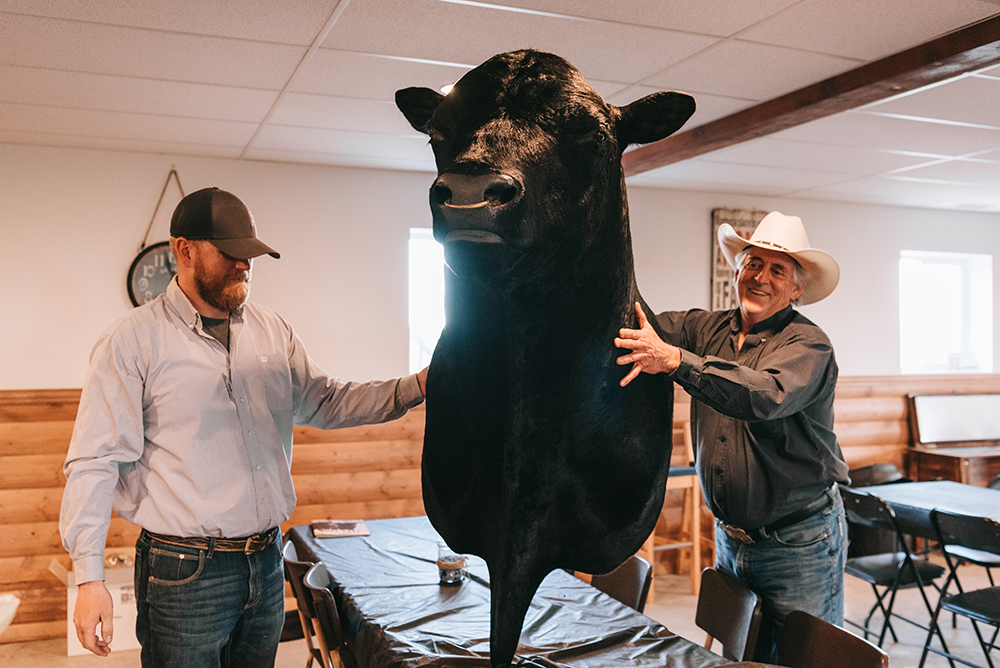
“His name is Panic Switch,” says Colton Hamilton with a grin. His father Gavin helps hold the stuffed bull’s head nearly their height.

But I didn’t hear the word “panic” clearly. I don’t know what I heard, even after asking a couple more times. Maybe the Canadian accent was fooling me.

I was a long way from home. The Hamiltons operate Belvin Angus near Innisfail, Alberta, and I was having this aside while on a story visit there. The seedstock ranch recently received the Certified Angus Beef ® (CAB®) brand’s Canadian Commitment to Excellence Award. 

Learning their story, I knew they deserved the honor. It was no big deal if I had a minor moment of panic …

Fearing I’d be made out as unable to track with them, I stopped asking about that name and typed into my phone what it sounded like: a rhyme with paddock, maybe “pannock?”

Colton looked over my shoulder and began laughing… “No, no. It’s spelled P-A-N-I-C.”

Two seconds later, a flash of recognition had me bellowing with laughter. Father and son joined in, chuckling at my mistake.

I felt like I was home.

See, I grew up on a cotton farm north of Lubbock, Texas. I’m used to terms if not details surrounding row- and cash crops. The extent of my cattle knowledge centered around nine years of stock showing.

I always felt removed from the farm because my dad and uncle raised their four daughters to grow up, get an education and leave. I didn’t know much about crops, much less cattle production.

The Hamiltons didn’t want their kids to feel pressure about coming back to the ranch, either.

“I don’t think we ever really talked about [them coming home] because I never wanted to make them feel like they had to,” says Mabel, Colton’s mom. “It just sort of happened.”

And not before he and his sister Quinn tried other paths.

Colton worked just outside Vancouver for a while after getting a degree in economics. Once his boss came over, looked in his employee’s empty fridge, and told Gavin he knew Colton wouldn’t be sticking around for long.

“Where I was living was very urban, and you start to miss [home] a lot more when you’re living somewhere like that,” Colton says.

Quinn was working at a bank after school and would come home nearly every weekend like her brother. “I never really established other roots,” she says. “I think it was just getting tired of sitting in the office all day…and I was thinking, I think I’d rather be home.”

The move to CAB was my first big move outside of college. When I left the family farm to go to school, I thought I would be leaving agriculture behind. But like Colton and Quinn, leaving made me realize how much I loved where I grew up – and the industry behind it.

The Hamiltons made me feel like family – like I was home.

Because their 40-year operation is very much a family operation.

Laughing in their new sale barn where Panic Switch would reside, I knew that I had made the right choice to join the CAB family. I’ll get to meet with families like the Hamiltons all over North America and feel just at home, as if I were on my dad’s front porch watching the sun set over the cotton crop.

That day, I just happened to watch the sun set over the Angus cattle in the rolling hills of Alberta.

Talk to you soon,


Abbie

About the author: Abbie Burnett

I grew up among the cotton fields of Texas, loving God, my family and a camera in my hand. As a 2018 graduate from Texas Tech, I jumped at the chance to be a CAB storyteller because I know it’s the farmers and ranchers who have the greatest stories to tell. I look forward to meeting you and telling your story while snapping a few (OK, maybe a lot) of sunset pictures along the way!
you may also like

Premium positioning

Premium positioning

I’m not all that fancy. I grew up wearing second-hand clothes and riding in farm trucks. My siblings and I thought the Super 8 was an upscale motel because they had a pool. Still today, I rarely find myself in a town with a five-star restaurant. So when I get the opportunity to attend an event like our Certified Angus Beef ® (CAB®) brand annual conference, I often find myself in awe. The food, the venue….the hoopla!

Bringing the value back home

Bringing the value back home

When I was a young girl, if you’d have asked me if I would be starting my career in ag communications in 10 or 15 years, I would’ve probably called you crazy for asking. A tomboy with an intuitive brain, I loved feeding cows with my dad and not much else. I wanted to know how the cow business worked and how I could make our operation better for the future.

Consistency for the customer

Consistency for the customer

Consistency for the customer Keeping quality at the forefront since 1978 by Jera Pipkin This story is part of a special three-part series celebrating the 40th anniversary of the Certified Angus Beef ® brand Practice makes perfect. Growing up, I have fond memories of...

Where they're going, where they've been

Focus, commitment and work pay off for Belvin Angus

Sometimes there is no formal succession plan. There are no conversations about what might come to be.      

Sometimes there are just little clues as to what the future might hold.

When Gavin and Mabel Hamilton’s children grew up and left their ranch near Innisfail, Alberta, the couple were on their own for daily chores. Still, Colton would jump on a plane from Vancouver to Calgary and then drive north another hour just to help with processing calves or clipping bulls.

During busy seasons, their firstborn was home more weekends than he was in the city where he worked in finance but spent nights wondering what was going on at the ranch. Would he come back for more than weekends?

“I don’t think we ever really talked about it because I never wanted to make them feel like they had to,” Mabel says.

Colton and younger sister Quinn grew up in the cattle business, first showing alongside their parents and later blazing their own path as members of the Canadian Junior Angus Association. Then each went off to college and started their careers and volunteered time back in the industry.

There were no formal discussions or lawyer meetings.

“It just sort of happened,” Colton says.

But sometimes the heart knows before anyone even speaks it out loud.

After it sort of happened, Colton’s boss told Gavin, “I looked in his fridge once and I knew that kid wasn’t sticking around.”

Quinn admits her homemaking wasn’t much better.

She enjoyed her work as an ag lender but says, “I never put down roots anywhere. You just get sick of being in an office every day.”

Eight years after Colton made the move, Quinn—then engaged and now married to Brendyn Elliot—returned.

After their August 2018 wedding, they likely became some of the very few who can claim Whitman, Neb., as their honeymoon destination.

“We wanted to go to Connealy’s and we’d never been,” Quinn says. A well-known bull sale, in a remote corner of the Beef State seems fitting for a couple whose work and recreation both often revolve around the ranch.

“Colton and Quinn have always gotten along so well, and now Brendyn fits right in,” Mabel says. “Those three are really lucky to have each other.”

They make up the next generation at Belvin Angus. That’s the beginning of Chapter 2, the one being written right now.

Shorthorn + Hereford = Angus legacy

The first part of the ranch’s tale starts four decades earlier when the son of a Shorthorn breeder asked for the phone number of a Hereford girl who had caught his eye. Her brothers wouldn’t give it out.

So Gavin tried again.

With a keen ear for numbers and a solid memory, he caught what she flippantly rattled off, which led to the phone call that led to a first date. Their courtship was one of cattle shows—Gavin was quite the fitter—and rodeos—Mabel running barrels. They were married in 1975. Mabel earned her degree in elementary education and began teaching while Gavin worked his uncle’s ranch.

After a few years, it was time to get their own place and stock it with their own cattle. Angus cattle.

“We had to find some common ground,” Gavin laughs. “But I’d always liked Angus.”

The maternal function, the docility and the end-product merit all in one package—it was an easy choice, Gavin says. He’s not too proud to admit they dabbled in exotics in the early years, noting “they were hit and miss,” but they always came back to Angus.

“They were the best,” he says simply.

In 1978, the couple bought their original farmyard and a quarter-section of ground. Next came three Angus heifers they registered in 1979. This year they’re celebrating 40 years with the breed.

The last syllables of their first names blended together gave them a business name. Connections from their show ring experience gave them customers.

 “It was a good way to get our name out there,” Gavin says.

In the converted dairy barn that served as their sale barn, there’s a wall that still shows evidence of success on the shavings. Seventeen Calgary Bull Sale banners either read “Grand Champion” or “Reserve,” more than any other ranch in the history of the program.

They’ve been members of the American Angus Association for decades, partnering with breeders in the U.S. who run in similar conditions.

“We’ve sold a lot of bulls, sight unseen,” he says.

One long-time buyer called 28 years ago, and Gavin asked when he’d like to look at the bulls.

The answer? “You just sell me three bulls that will make me want to buy more,” Gavin retells. The next year that same cattleman bought 10. “He’s never bought bulls anywhere else since.”

Uniformity has always been important. “If he was going to like one, he was going to like them all,” Gavin says.

Today, what makes a bull stand out is his ability to move the program forward while still fitting in.

“Feet and structure is No. 1, but we’re always trying to improve carcass quality without sacrificing anything we need,” Brendyn says.

So they research new genetics that complement the herd that traces back to some of their original lines of Lady Blossoms and Boardwalks.

They recently purchased a bull in the top 1% for marbling as well as beef value ($B) in the American Angus Association registry, noting their genetics also have to work in “big country.”

“We want the commercial guys to be profitable,” Colton says. 

Growing into the market

Their customer base has changed. In the late 1970s, Angus was not the breed of choice and registrations were on a downtrend.

“We were discounted at market. It was not a popular breed,” Mabel says, noting she was on the board when that reversed. “It was a celebration when Angus was on top.”

For many of the early years, they consigned bulls to sales in the western U.S. and to the Calgary Bull Sale, drawing more than national attention.

Today, they hold a production sale on the ranch each March. They’ll get customers who plan to sell at weaning, but about half background them for some period or retain ownership through feeding.

“Our customers are keen on the value-added, so that means they’d like to have a branded-type product they can get a premium for,” Mabel says.

There isn’t a big market locally, so they draw producers from hundreds of miles away. If they’ve created cattle that work both in their fertile farming area and in the wide-open ranges of British Columbia, Alberta and Saskatchewan, they’ve succeeded.

“There’s some tough range so they’ve got to be efficient, and structure and calving ease is huge, but growth is obviously still important as well,” Colton says. Calving pastures are measured in sections and the summer pastures stretch up to half a million acres.

“When you go to a branding and you see hundreds of calves out of your bulls and when you see the people that use your genetics do well, that’s what you want,” Brendyn says.

Longtime bull buyer Larry Sears, Stavely, Alberta, relies on the Hamiltons’ judgement to help him reach his end-product goals.   

“They do the research and they’re aggressive” in moving ahead, says the rancher who has retained ownership for the past two decades. Profitability can be “hit or miss” without carcass premiums, Sears notes. “But selling on the grid has been lucrative enough to entice us to feeding more often.”

Recent carcass data reports show 90.9% AAA and above.

“We’re all in this together, so the consumer, at the end of the day, gets a product they’re happy with,” Mabel says.

beyond being in the black

That all-in approach is not only how the Hamiltons look at the wider beef industry, but also how they relate to their family business. Each one knows their strengths and each one contributes.

There are still no formal meetings, but they often gather at the main house for Mabel’s home cooking at lunch. They discuss the tasks of the day and who is going where when.

Maybe every so often they get a chance to reflect on how far they’ve come since the beginning.

“The bank told me I’d never be able to pay for it,” Gavin says with smile.

He now runs cattle on a two-thousand-acre land base, and also plants canola, barley and wheat. The business supports three families, and includes the farm his grandfather homesteaded in 1892.

But the new sale barn and the house that sits next door, the cattle that gain national and international attention…they didn’t just happen. They represent a lot of hard work.

“We waited a long time for this,” Gavin says as Colton quickly adds, “Now we’ve got to work to keep moving forward.”


Story by Miranda Reiman, photos by Abbie Burnett.


Belvin Angus wins CAB Commitment to Excellence Award


The Hamilton family has a business card and a standing invitation from a steakhouse owner in Vancouver. They’ve gotten a personal tour of a sushi restaurant in Calgary. On their ranch near Innisfail, Alberta, they’ve shared meals with a fishmonger turned meat salesman and some of the most renowned chefs in the country.

There are perhaps no better Certified Angus Beef ® (CAB®) brand ambassadors in Canada than Gavin and Mabel Hamilton, says CAB president John Stika. 

“They’ve always been willing to open up their gates and share their hospitality with people from all over the beef production chain,” Stika says.    “Those firsthand experiences are critical to giving these guys the knowledge they need to sell more beef.”

For their involvement with the brand, along with their focus on producing quality cattle that work for their commercial customers, Belvin Angus recently received the CAB Canadian Commitment to Excellence award.            

“We like to host the people CAB brings because it’s a way of telling our story,” Mabel Hamilton says, “and with any luck, getting rid of some of the misconceptions that are out there about what we do.”


You Also Might Like…

Heavy Lifting Ahead for Cutout Values

Heavy Lifting Ahead for Cutout Values

The typical October beef market is marked by a strong swing in carcass cutout values as a lull in demand follows Labor Day, sending cutout values to a seasonal low beginning in October.

From one overachiever to another

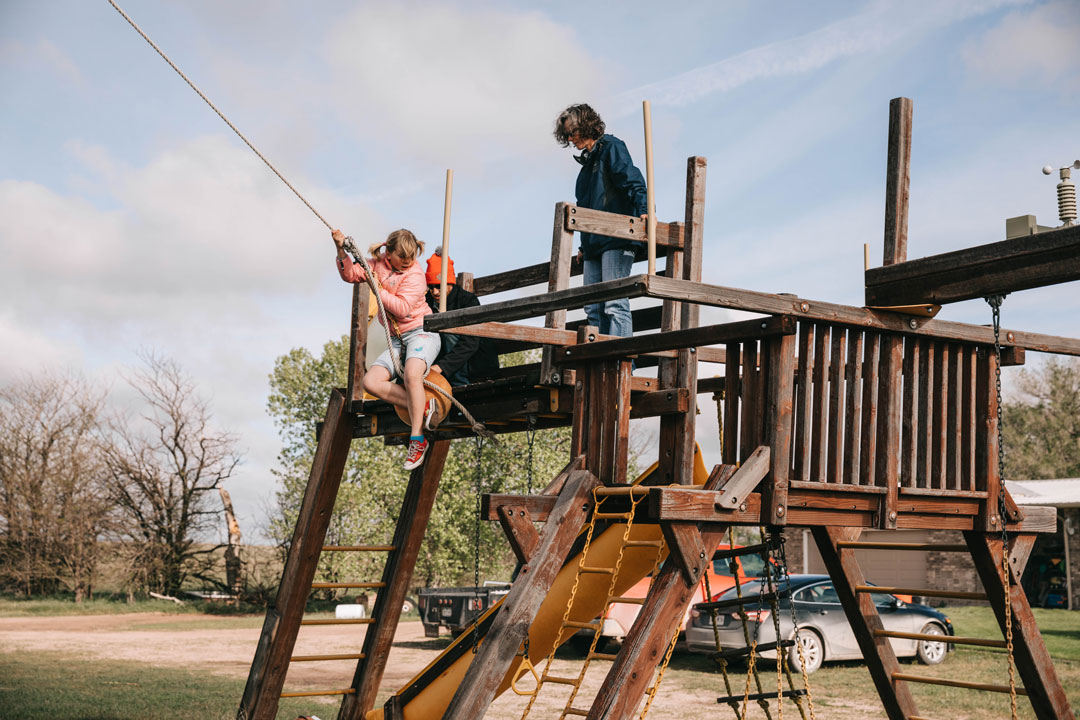
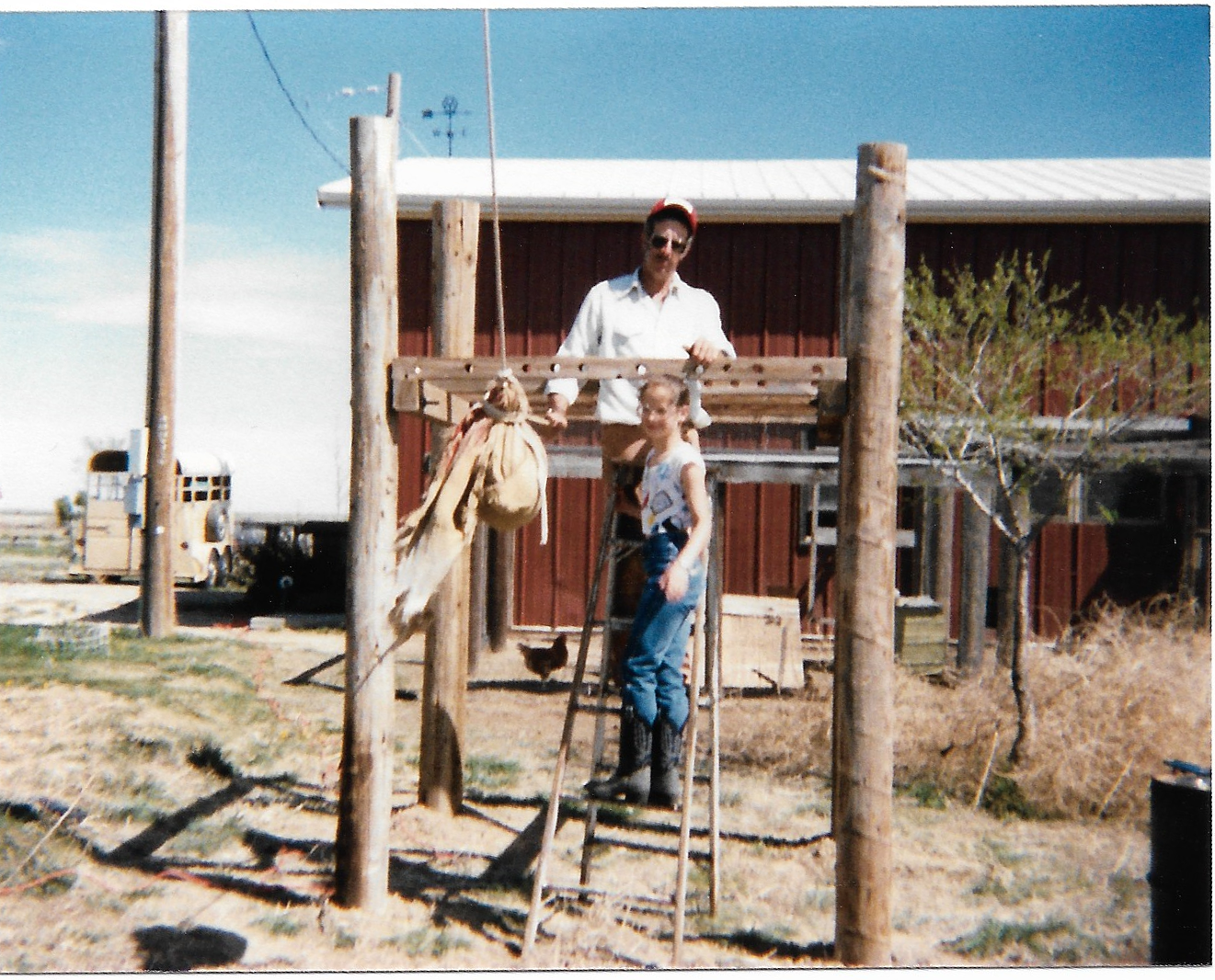
Picture this: Two sprinkler irrigation pipes standing nearly 30 feet tall made sturdy by a cross brace. A perfectly calculated swing hanging from the center of the brace. A 12-foot platform attached to every kid’s dream jungle gym.

Any guesses what this makes?

The largest sack swing in Yuma County, Colorado. Built by Ryan Noble.

I was fascinated by the contraption.

What started as a childhood adventure has been passed from his father-in-law to Ryan’s wife Ronella and now their children. When she first approached Ryan to build a sack swing for their children, all Ronella could remember was how big it was. The escalated height portrayed by holding her hand high above her head.

Once complete, Ryan saw a photo of his father-in-law next to the swing from his wife’s childhood. The original platform? Maybe a whopping 6 feet tall. Needless to say, when faced with a challenge Ryan goes far beyond expectations. 

The same is true on his ranch.

“If I’d taken this interview when I was 8 years old,” he said, “and you asked what I wanted to do, I would’ve said ‘run cows.’”  

The same answer his 12-year-old son Will gave us. A kid after my own heart.  

Ryan is smart. And goal oriented. For example, he set a goal to grow the herd from 120 to 300 cows, which quickly escalated to 750 cows and a large number of developing heifers.

Need I say again? He is an overachiever.  

Ryan, recalling the hard work and sacrifices he and Ronella made to reach their goals, instantly drew my reverence. For years he worked side jobs on harvest crews and artificially inseminated thousands of cattle.

“It was just burning a hole in me that we weren’t using that good of genetics,” Ryan said. For a time, they were just unaffordable.

After watching his neighbor’s herd transform by using Basin Angus Ranch bulls, Ryan promised Ronella as soon as they had the money, they would be headed to Montana for Basin bulls.

The time came when they made it to Montana and came back with five bulls. The next year they brought home 18 bulls.

And boy, does he have something to show for it now. The top Angus genetics are echoed throughout his ranch, proven through GeneMax testing. The entire Angus cow herd is made of females with maternal function and the ability to raise calves that go on to achieve Certified Angus Beef ® brand acceptance.

Though my time at the Noble’s was short, one thing was certain: this family business is made by everyone working together. I’d say it’s more than luck that there’s nowhere else Ryan would rather be than the pasture checking his cows, unless it’s the dinner table sharing beef with his family at the end of the day. They work hard, so they can play hard.

My last day at the Nobles, there was something I just couldn’t leave undone. I had to ride the sack swing. Well, to be honest I was a bit nervous after watching the kids ride it effortlessly and with no fear.

All I was thinking… “That platform is really high off the ground!”

My hesitation meant Miranda was the first one up the ladder to go sailing off the platform, hanging onto a rope while straddling the rubber ball. I couldn’t let her be the only brave one. So up the ladder I climbed. And yes, the platform was just as high as I anticipated it would feel. I’m not one to back down from a challenge, especially when my boss was about to show me up. So I stuck the seat between my legs and gently stepped off the platform. I only let out a little yelp and then enjoyed the ride.

Catch ya later!


Morgan

About the author: Morgan Marley

Nothing beats a medium-rare steak with family… or new acquaintances who quickly become like family. Lucky for me, my job presents the opportunity for both. Moving from my family’s ranch in northwest Arkansas to officially join the CAB Cattle Crew in May 2019, I love getting to tell stories about ranchers and what it takes to raise the best Angus beef.

you may also like

Hard work, luck and smarts

Hard work, luck and smarts

Sometimes it’s easy to see where a person is and forget where they’ve been. It’s easy to stare down the success in the here-and-now, without even a glance at their past. When I learned Gerald Timmerman won our Feeding Quality Forum Industry Achievement Award, I knew the family in generalities…for their feeding businesses spread across Nebraska and surrounding states. I knew they had some ranching and other beef industry interests.

A packer buyer’s favorite cross

A packer buyer’s favorite cross

A packer buyer’s favorite cross As the Brand the Barn intern, I’ve attended a lot of barn celebrations this summer (18 to be exact). Each time I’m struck by the variety of people in attendance. Sometimes, it’s a seedstock operation and bull buyers attend. Other times,...

Putting it in perspective

Putting it in perspective

The older I get, the more I realize perspective is important. What would be a drought in Minnesota might be a really good summer in west Texas; what is a lot of noise to one family might be an average day in our house full of kids; what might seem cheap to some would be a lifetime’s savings for another.