Denver great place for cattle and conversations
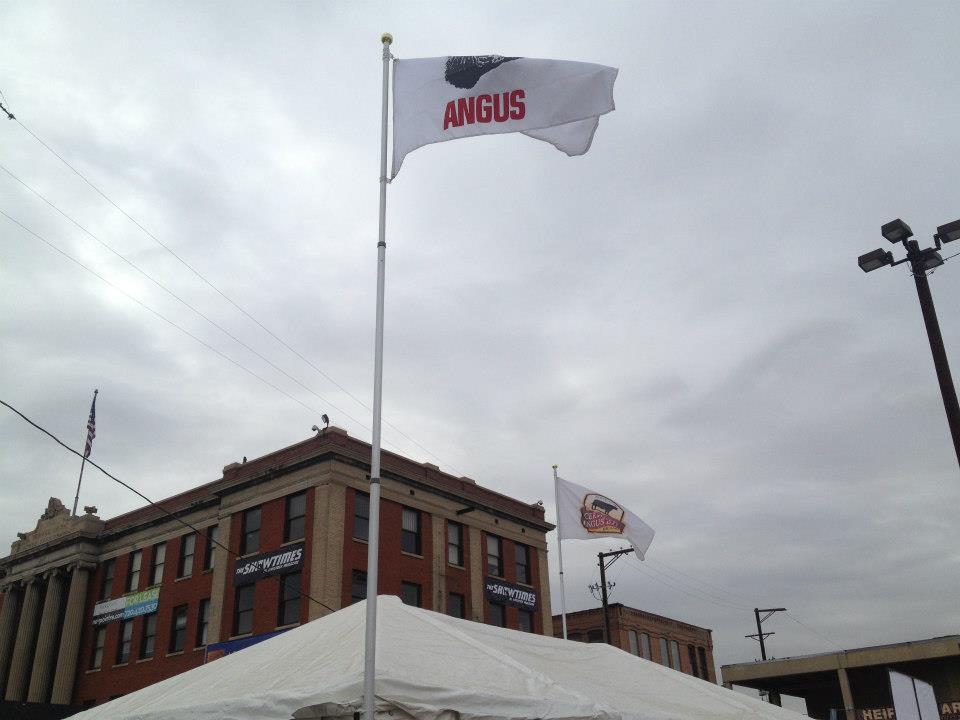
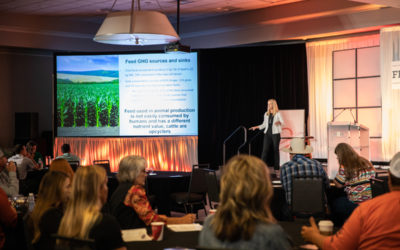
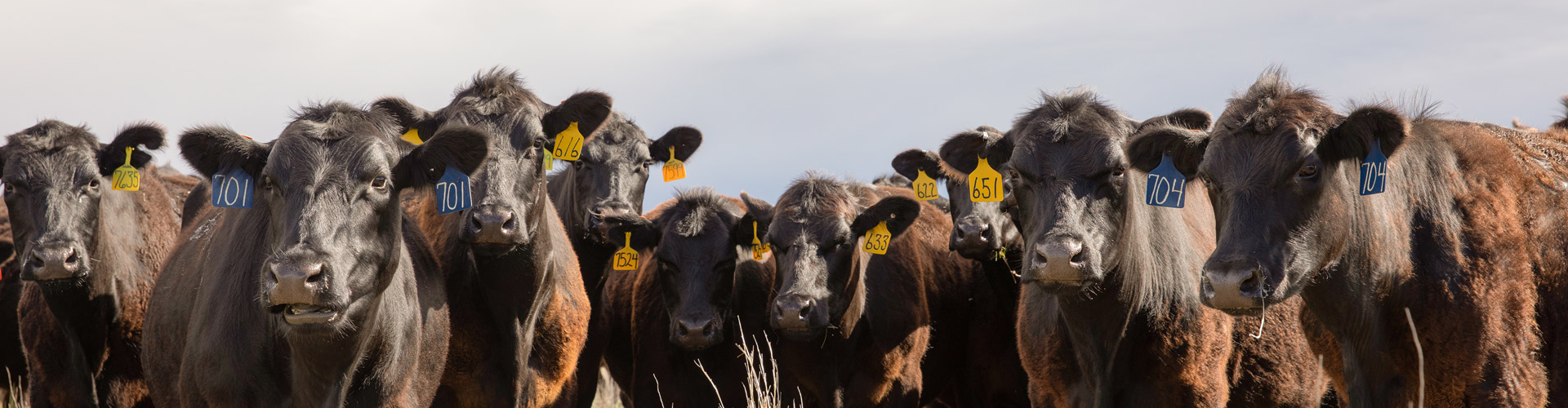
The American Angus Association and Certified Angus Beef brand flags flew high in the yards, marking the Angus tent (a.k.a. “Listening Post).

If you follow our social media efforts, you know Mark, Gary, Paul and Kara spent most of last week in the Mile High City at the National Western Stock Show.

Warmed with a good heater and stocked with plenty of coffee and CAB summer sausage, the Angus tent has evolved into a listening post.

So what did Mark and the rest of the Black Ink team hear? Here are a few common themes:

  • EPD recalibration. Just one week prior, the American Angus Association had recalibrated the genomically enhanced EPDs and, at the same time, updated the economic values that go into the dollar indexes.  Many seedstock producers stopped by the tent to ask questions and make sure they understood the new numbers. (Have questions about these changes? Visit angus.org.)
  • The weather. Of course, anytime people in agriculture gather, the weather will come up. How cold is it? How dry is it? Though most producers were optimistic, they also reported extremely dry conditions across most of cattle country.
  • The future of their cow herds. Would expansion be possible soon? How soon? Do they still need to cull in an attempt to combat dry conditions and limited feed supplies?
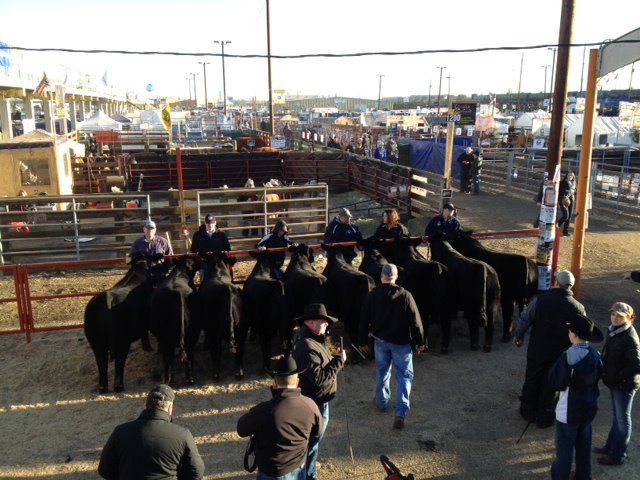


Saturday was a beautiful day in the Yards. Perfect for looking at Angus cattle!


It was a great few days visiting with cattlemen and taking in some shows and some very good Angus sales. If you make it to the Yards next year, be sure to look for the Angus flags and stop in for some conversation and hot coffee.

You may also like

The Taste, part II

The Taste, part II

Edd and Nina Hendee were out to dinner, three kids in tow. It was 35 years ago and Edd can still recall, “It was one of the worst meals I’ve ever put in my mouth. Not to mention the service was ghastly.”
The Taste, part I

The Taste, part I

Have you ever met the president? Me neither, but a trip to Houston’s Taste of Texas left me feeling like I had.
Nothing owed

Nothing owed

Groups more humble than cattlemen and women are few and far between, but I’ve often heard ranchers called “salt of the Earth” people.
premiums grid marketing BIF Bertelsen

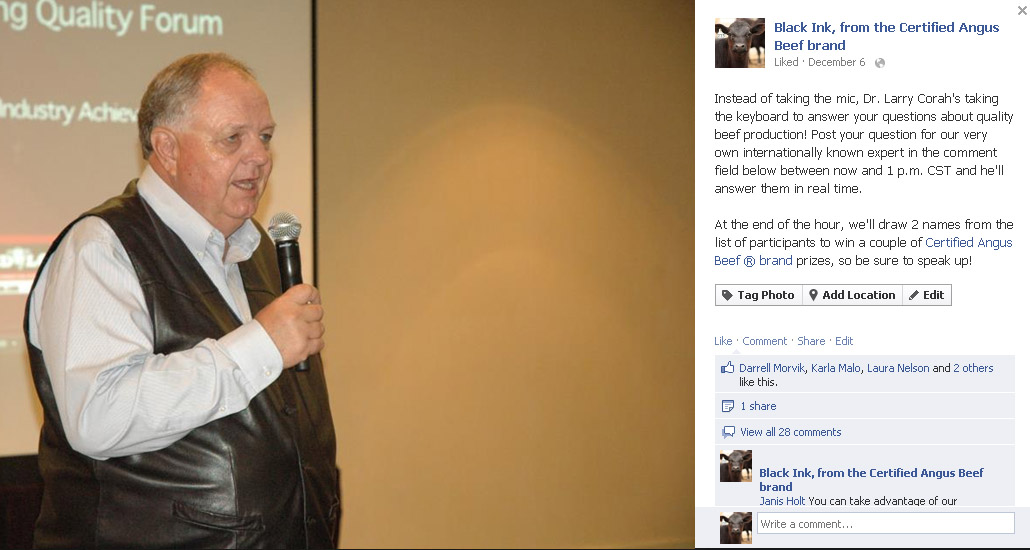
Wrapping up Dr. Corah live – Part II

When we kicked off our first-ever live Facebook chat, we didn’t know what to expect. But the hour flew by and we were impressed with the variety and depth of the questions our friends asked. Yesterday, we shared a partial transcript of Friday’s chat.

Today, we wrap up. Here’s Part II:

Dr. Larry Corah

Question: We’re trying to raise bulls that help cow-calf customers target the CAB brand. Are there any minimum marbling EPD thresholds that we use as seedstock producers?

Answer: There are not any minimum requirements but two things are especially important in the amount of marbling that will ultimately be present in the progeny resulting from using your bulls. The first is the actual marbling EPD and because marbling is so highly heritable the higher the marbling EPD the higher the probability the calf will qualify for the Certified Angus Beef program. The second that is really important is that the cow side also carries genetics for marbling potential and by stacking the genetics on both the cow and bull sides, we have seen tremendous CAB acceptance rates, often adding dollars to the pocket of the producer.

Question: In regards to hitting the CAB target of marbling…we have often heard the phrase, “Never let them have a bad day.” What impact does slowing weaned calves down (to around 1 pound average daily gain) in an over-wintering program awaiting spring grass have on their future potential to hit the CAB marbling target? And, is 1 pound of gain for a few months “having a bad day”?

Answer: As we learn more about how the production system impacts marbling, we are learning that we’ve got some flexibility in the stocker (grower) phase in how we develop cattle and whether they’ll qualify for the CAB brand. That research data is showing the cattle that gain about 1 pound a day during the growing period can still reach high CAB acceptance rates if they are properly finished during the feedlot phase. By properly finished we are referring to hitting a compositional endpoint of .5 to .6 inches of fat cover, and if that is achieved, generally the probability of hitting the high-quality target is still successful.

Question: What would you suggest to someone who is considering getting into the cattle business and wants to provide quality and not just quantity?

Answer: The 2 most important profit drivers on cattle sold on the grid are quality grade and weight. What needs to be the goal of cattle producers is they produce pounds but those pounds are of a high-quality product that creates a positive eating experience for the consumer. That is absolutely critical at the price we are selling beef for today and with the input costs that we have to produce product, we have to sell at higher prices.

Weren’t those some great questions? Next time we do a live chat, we hope you’ll join us!

You may also like

Beef up your cooking

Beef up your cooking

Before I started my job with Certified Angus Beef all I knew about steak is I wanted it medium-rare. My mom burns food and it doesn’t matter if it’s garlic toast or steak. So I was not used to getting medium-rare steak…

Innovations in health diagnostics

Innovations in health diagnostics

John Richeson presented on his research in BRD diagnostics at the 2019 Feeding Quality Forum. Focused on metaphylaxis and new technologies that may aid in faster identification of clinically-infected animals.

Own what you do

Own what you do

His push to get better and desire to win are as much a part of how he was raised—and people who mentored him along the way—as they are a personal philosophy. Probably why he earned the CAB 2019 Progressive Partner Award.

Seek answers for better beef


by Miranda Reiman

If you’ve ever tossed leftovers or overripe fruit without considering tomorrow’s lunch or creative baking, you’re part of the problem.

“We throw away 242 pounds of food per person per year,” said Brad Morgan, senior food safety and production efficiency specialist with Pfizer Animal Health.

That’s about 1,400 calories per person per day, and roughly 1.3 billion tons of food per year.

Morgan shared these facts at this year’s Feeding Quality Forum in Grand Island, Neb., and Amarillo, Texas.

“We spend about 7% of our disposable income to feed our families,” he said. “In Europe they spend anywhere from 13% to 28% of their income. What am I getting at? One, we take food for granted. Two, it’s cheap. And three, we always expect it to be there.”

But many have heard the stats pointing to the need to feed 9 to 10 billion people by 2050. That’ll take more technology for certain, he said, but also, “We’ve got to become less wasteful.”

That goes for every step of the chain, from harvest to distribution to the consumer level.

“In World War I, they talked about food as a weapon. Don’t waste it. Buy it wisely,” he said, “World War II they said it again. Rationing, grow your victory gardens, do your part.”

As prices escalate, the conversation turns in that direction again.

“Whenever we have times like this, I think it forces us to do things we never would have done before,” Morgan said.

Other countries provide examples. In South Korea, they charge citizens for food waste disposal. During the first year of implementation they cut food waste by 20%, or $4.3 billion worth.

Some European grocery stories have changed from “buy one get one free” marketing to “buy one now, get one free—later.” During a shopper’s return visit to the store, they can pick up the free item so it doesn’t go bad in the meantime.

Reducing waste is one part of the global food supply equation. “It’s just the right thing to do,” Morgan said. The other variable is increasing production, which requires new innovations. But Morgan cautioned that it can’t be at the expense of consumer satisfaction.

In this country, shoppers still have the luxury of being discerning.

“People buy beef for a reason, and it’s not because it’s cheap,” he said. “They buy it because they like the flavor of it.”

Technology that makes animals “stronger, faster, more efficient,” needs be used judiciously.

“There has got to be a balancing act, because it doesn’t matter how cheap or efficient it is to get it there if people don’t want to buy it,” Morgan said.

The seventh annual meetings were co-sponsored by Pfizer Animal Health, Purina Land O’ Lakes, Certified Angus Beef LLC (CAB) and Feedlot Magazine. For more information or event proceedings, visit www.cabcattle.com.

You may also like

Beef up the dinner table

Beef up the dinner table

Cattlemen respond to consumer demands, even as they evolve from the call for premium quality to transparent production practices. We know that, thanks to ongoing work from NCBA. Overall, beef is doing well and will continue while half of consumers rank it as a top source of protein.

Rising to the occasion

Rising to the occasion

We know what keeps an animal healthy, but do we know what they want? Lily Edwards-Callaway, of Colorado State University, shared animal welfare research during Cattlemen’s College session at the 2020 Cattle Industry Convention that she tag-teamed with NCBA’s Shawn Darcy.

Proactive animal health means a genetic approach

Proactive animal health means a genetic approach

In a world where producers select for any production traits, why not start focusing on health genetics? The American Angus Association is collaborating with scientists in Canada and Australia to get at the genetics of immunity.

Fewer cattle, more pressure

by Miranda Reiman

Getting cattle bought right. That’s normally a feeder’s first challenge, but today it’s just plain getting cattle.

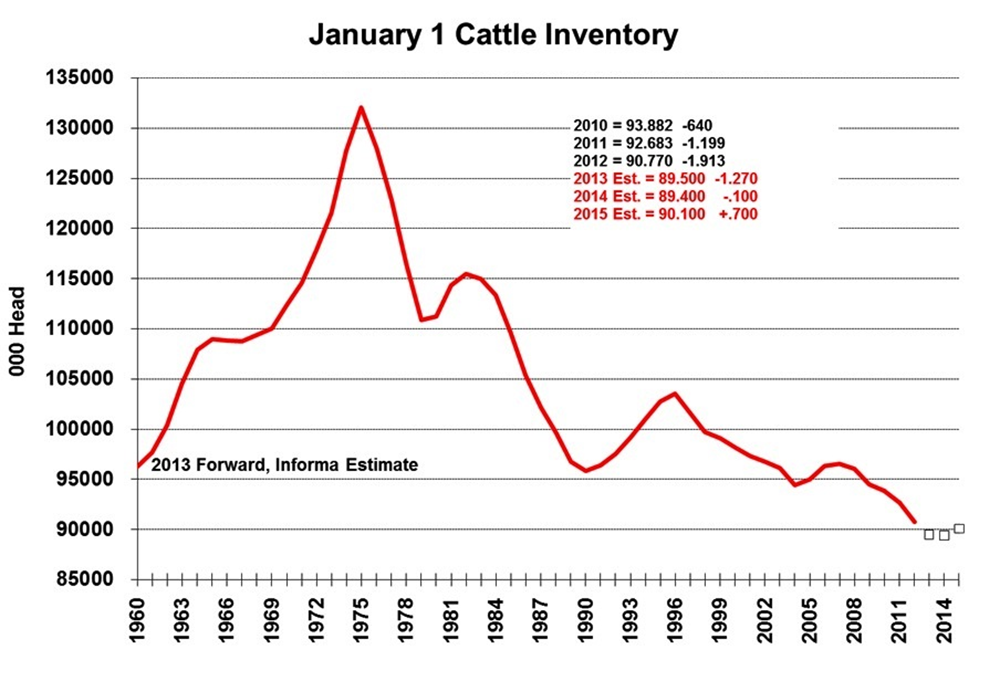
“The total size of the cattle industry has been shrinking, and shrinking rather abruptly for the last couple of years,” said Mike Sands, Informa Economics vice president.

The nation’s cowherd was at 90.8 million head to start 2012 (see chart). But as summer turned to fall, drought had hit three-fourths of that herd.

Speaking at the Feeding Quality Forum in Grand Island, Neb., and Amarillo, Texas, in late summer, Sands said he expects that to shrink another million head or more by January 2013.

“We’ve seen some extremely tight packer operator margins over the last year. That’s unsustainable. We’re looking at sizable cattle feeding losses at the present time. Those are unsustainable,” he said. “It probably boils down to some change of the structural capacity in the industry.”

Fewer cattle will eventually mean fewer yards to feed them and packers to process them.

“There’s not enough to go around,” he said. “There are going to be some empty pens. I want that guy to have an empty pen, not me.”

For the first time in five or six years, 2012 started out with some cattlemen in the central Plains retaining heifers above the previous year’s levels.

“And if the weather had cooperated, we’d probably be in the midst of cowherd [rebuilding],” he said.

But it didn’t. Forage availability trailed off as temperatures and feed prices went way up.

“Cow-calf margins obviously have shrunk,” he said. “So the incentives to hold back heifers and turn numbers around, right now, are pretty much nonexistent. Except that everybody recognizes there’s a carrot out there or a pot of gold somewhere at the end of the rainbow and, ‘I’m going to be there when this thing turns.’”

Throw in a still-sluggish economy and slower exports and the script for lower domestic beef demand has been put in motion.

“Consumers are still pretty reluctant to part with their dollars,” Sands said. “It’s going to be an ongoing challenge for us to get that beef price level up to the point where the higher cattle market works for us and for the packer.”

The U.S. has been a net exporter of beef the last two years, reaching 700 million pounds last year.

“That translates into something better than two pounds per capita that disappeared—that we didn’t have to find a home for domestically,” he said. “I think the odds are much higher over the next couple of years that we become a net importer again.”

The value of the dollar dropped about 35% in the last decade, giving U.S. beef a discount in international markets. An increase in that value, coupled with record high prices anyway, spells challenge, Sands said.

This scenario will pressure cattlemen to differentiate and form alliances.

“Not only marketing agreements with packers as a possibility, but also to access feeder cattle in terms of retained ownership programs,” he said. “We’re going to have to work out relationships to get access to those feeder cattle and calves.”

Everyone in the business is going to have to make sure the expensive product they’re touting is worth it.

“Despite declining cattle and beef supplies and rising prices, quality never goes out of style.  As price levels go up, there is going to be a quality expectation,” Sands said. “You pay more for a product, you expect a different set of attributes than when it were cheaper. And as a result I think there is a quality-value relationship there that is certainly going to come to the forefront over time.”

The forum was co-sponsored by Pfizer Animal Health, Purina Land O’ Lakes, Certified Angus Beef LLC (CAB) and Feedlot Magazine. For more information or event proceedings, visit www.cabcattle.com.

You may also like

A Look Ahead at Early 2022 Dynamics

A Look Ahead at Early 2022 Dynamics

December has started off on a high note in the fed cattle sector and all of us on the cattle side of the supply chain should be made well aware of what’s ahead in 2022.

How to Face Evolving Demands

How to Face Evolving Demands

In the rapid changing space of sustainability, finding clarity on what to do is challenging. At the 2021 Feeding Quality Forum, Dr. Kim Stackhouse-Lawson offered insights on what can be expected of producers moving forward.

The idea that worked

The idea that worked

“So, if we make sure the humans can be prosperous and survive, that’s what sustainability is,” Mark Gardiner says. “That is the opportunity that USPB gave our family and thousands more all across the United States.” It’s why USPB earned the 2021 CAB Progressive Partner award.

olson barn

Rock on

You were the rock stars at last week’s Certified Angus Beef annual conference.

Yes, you, the American cattleman. Among the business suits and loafers, cocktail dresses and stilettos, that are commonplace at The Greenbrier Resort, the ranchers and feeders stood out…and not just because of the cowboy hats they sported.

“They were the only award winners to receive a standing ovation,” Mark says. “There was a real appreciation by our end-users for the job they do every day.”

The couple dozen producers who traveled to West Virginia for the event were ambassadors of sorts for those of you who spent last week just like any other: caring for the herd, perhaps harvesting some crops or weaning calves.

Our award winners and a handful of producer board members were just a small subset of the 600-some people attending our conference, but they represented that iconic, hard-working, steward of the land and livestock.

Producers aren’t segregated into their own track, but rather immersed in the same sessions that the restaurant and retail trade takes in. They learn about the educational tools and marketing ideas we share with our partners, but it also gives them a chance to interact with all the people who use what they create: Certified Angus Beef.

These brave souls fielded questions about a typical day on the ranch, how they care for sick animals, and what effect the drought is having on them personally.

From my home office, I watched the twitter feed light up when four of the producers took the stage for a panel.

The producer panel also earned a standing ovation.

“Frank Scheilfelbein is my hero,” one tweet said. (Hey, I couldn’t agree more!) But the Cliff’s Notes on the real-time coverage: the cattlemen stole the show. Mark was there and he concurred.

“The producer panel was far more about getting to know the people than it was full of controversial questions,” he says. “When they know there are real people with a shared value system taking care of these animals, things like implants become almost a non-issue to them.”

Gary Darnall talked about how his son Lane was home hauling water to cattle. Frank talked about how big their farm is and why it has to be to support him, his eight sons and their families. Dale Moore shared how he and his wife packed up, moved states and jumped headfirst into the feedyard business.

The overall reaction? From those who cook, sell and present beef every day: a resounding THANK YOU!!

And since a remote, solo, standing ovation carries a little less weight, I’ll just say, “Ditto!”

May your bottom line be filled with black ink,

Miranda

PS—To read about any of our award-winning producers, check out their individual stories available here.

You may also like

Growing Marketability

Growing Marketability

Advertised as the “Best Angus Beef” and “If it’s not Certified, it’s not the Best,” Certified Angus Beef’s reputation claims elite category status. To remain in that position, the brand must continue to deliver on that promise as customer expectations of quality evolve.

Putting Premiums in the Cattleman’s Pocket

Putting Premiums in the Cattleman’s Pocket

While the competition is growing, the brand’s team of 150 diligently works to differentiate CAB from the rest of the pack. Consumers can feel confident purchasing the Certified Angus Beef ® brand, a high-quality product that is the result of Angus farmers’ and ranchers’ commitment to quality.

Certified Angus Beef Welcomes New Director of Producer Communications

Certified Angus Beef Welcomes New Director of Producer Communications

Genetics and management are at the forefront of targeting the Certified Angus Beef ® brand but communicating beef value propositions to cattlemen guides informed business decisions. To bring the most relevant production and economic information to cattlemen, CAB hired fifth-generation rancher Lindsay Graber Runft as director of producer communications.

Light at the end

Survive nine months of bad news, better days follow for feeders


by Miranda Reiman

Don’t expect corn values to get dramatically lower….this year.

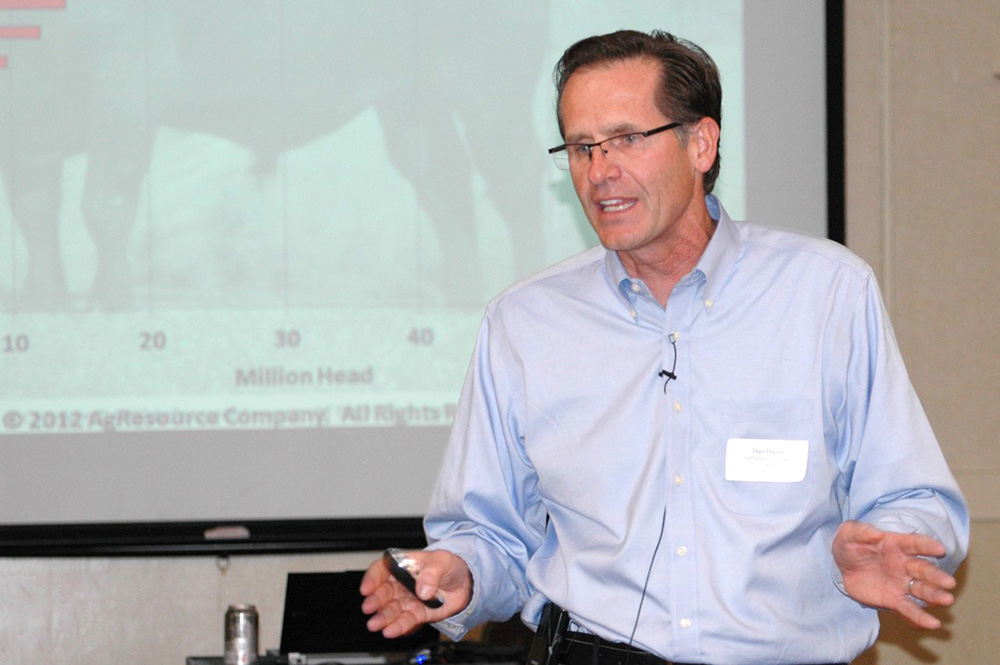
Feeding Quality Forum attendees were probably not surprised to hear Dan Basse, Ag Resource Company, say that pricing inputs would be their top challenge in the last quarter of 2012. But the fact that those costs could normalize in the latter part of next year surely piqued their interest.

The market analyst addressed feeders, allied industry and educators at the seventh annual meetings held in Grand Island, Neb., and Amarillo, Texas, last month.

“There aren’t too many years in my career that I’ve talked about surety of supply,” Basse said. “I want all of you to not only think of the cost of feed, but making sure you that you have it.”

He expects the U.S. corn crop to drop substantially from USDA’s estimates, which have not reflected any reduction in harvested acres. Ag Resource puts the average corn yield at the lower range of industry estimates, but their numbers are based on actual field research. If the average falls to 113 bushels per acre, it would move corn prices to above $11 per bushel.

That average is around 28% to 30% below trend, Basse said, also noting that ending stocks will be tight.

“I can’t show deficit stocks,” he said. “Someone has to go without. What is that last residual bushel of corn worth? I don’t know. I don’t know how high is high.”

Corn stocks will likely settle around 650 million to 700 million bushels. They’ve only been that low about 3% of the time since 1973. “Historically, this is unprecedented,” Basse said.

That doesn’t necessarily mean the beef business will have to deal with back-to-back record corn-price years.

Regardless of the status of the renewable fuels mandate, Basse says the “ethanol monster” is not the factor it has been the past five years.

“He’s not dead, but he is at least in hibernation. Ethanol has reached its zenith,” Basse said. More efficient cars and driving fewer miles, along with the lower ethanol exports, make that a reality.

“This will be the first year since 2005 in which the world per-capita grain use will decline,” he said. “That’s why this year was looking promising until Mother Nature dealt us this big blow in terms of heat and dryness.”

Digging into historical data, there have never been two consecutive years of widespread drought in the central U.S.

“Even in the 1930s, we had drought in 1934 and 1936, but in 1935 we had average rainfall,” Basse said. “So if I’m in the cattle feeding business, I’m very hopeful that next year’s weather will be normal.”

If farmers ratchet up corn acres to 98.5 million and get an average yield of 160 bushels per acre next year, that puts corn in the $4.50 to $5.00 per-bushel range.

“Won’t that be nice?” he asked. “But that’s three or four quarters away.”

To add to the immediate stress, hay production is forecast at 120 million metric tons, or the lowest level since 1976.

The poor corn crop may provide one saving grace: “The only good news for you is that this is really bad quality corn. There might be some nice discounts offered relative to poor quality.”

Low test weights and aflatoxin issues are some of the widespread concerns.

Herd liquidation is another factor as feeders look to source calves, but Basse says crop insurance might help. Some Midwestern farmers are looking to chop poor-quality corn and invest their payout in cows.

“What does that mean for the cowherd in the United States? I’m not quite certain, but I do believe it will allow it be more withstanding than I’ve seen in other drought years,” he said.

As the domestic population ages, beef demand is down slightly, but the worldwide trend contradicts that.

“When I look at consumption, it is still moving up, so the story of being a livestock producer is still relatively bullish longer term,” Basse said. “We’re also finding from our overseas customers that importing beef is less costly than importing the grain itself.”

That bodes well for trade.

Individual balance sheets are based not only on costs and inputs, but on getting the highest possible revenue. Supporting a branded program is one option: “That’s good for the farmer, and everybody up and down the chain gets the most value,” Basse said. “It helps everyone, including the consumer because he knows he’s getting a high-quality product, so I’m big on branding, going forward.”

Another thing he’s big on? Foresight.

“I want every cattleman to think forward, at least for three quarters, and then we can plan for the good times which will probably happen nine months from now.”

The forum was co-sponsored by Purina Land O’ Lakes, Certified Angus Beef ® brand, Feedlot Magazine and Pfizer Animal Health. Watch for more information in the weeks ahead at www.cabcattle.com.

You may also like

The buzz about beef

The buzz about beef

Anne-Marie Roerink with 210 Analytics talks about the “Power of Meat” as part of her annual surveys. American consumers are 86% meat eaters, yet fridges are empty. Producers are still seen as trustworthy and should work harder to tell their stories.

Innovations in health diagnostics

Innovations in health diagnostics

John Richeson presented on his research in BRD diagnostics at the 2019 Feeding Quality Forum. Focused on metaphylaxis and new technologies that may aid in faster identification of clinically-infected animals.

Rising to the challenge of ideal

Rising to the challenge of ideal

Certified Angus Beef LLC President asks the question, “Have we outpaced consumer demand for premium beef?” John Stika’s short answer is “no”. The ideal quality mix changes as consumers preferences change, but we are close to ideal as ever.

steers at bunk

Gimme the good news!

Our Feeding Quality Forum the week before last, was full of some kind of gloomy news for cattle feeders, like this:

Dan Basse, Ag Resource Company, talked about many challenges, but he also forecast an end date for some of those.

“I’d like to tell you here today that the corn market is acting tired and not doing well, but the problem is, every time it drops there are buyers.”

Or this:

“We do see over the next few years, something on the order of a 3-million-head drop in the size of the cowherd and a 4-million-head drop over the last four years. In three years we’re gonna see some empty pens; we’ve got excess capacity. We’re gonna have to deal with it.”

But I inherited optimism from a lady who does a crummy job with a smile on her face, because my mom is thinking, “Well, this is better than driving the rendering truck.”

So rather than go on and on with all the challenges facing y’all, I thought I’d capture one good news comment from each speaker:

  • “We are not in the camp that this corn crop is getting better.  The only good news that we have for all of you is that this is really bad quality corn. Test weights yesterday at several fields were as low as 37 pounds per bushel, for corn.  A lot of them are coming in between 49 and 52. Now if you are feeding corn, there might be some nice discounts that you are offered relative to that poor quality.”—Dan Basse, Ag Resource Company
  • “Those are record-high retail beef prices. We’ve set a record almost every month the better part of the last two years. And if you extend my comments over the next two or three years that’s going higher.”—Mike Sands, Informa Economics
  • Looking at the foodservice and retail side, there are positives there as well <related to the trend toward increasing carcass weights> because that retailer, distributor, they’re in the business of selling pounds of
    CAB meat scientist Phil Bass says you can have the best of both worlds.

    beef. They’re as concerned about a shrinking cowherd and less beef to sell as we are because their markets are very driven by beef sales. The increased carcass weight will help to keep the overall beef production up.” –Shawn Walter, Professional Cattle Consultants

  • “Can we have a high-quality animal and still have a lot of meat coming off that carcass? Absolutely. We’re seeing it today. In the past, the old paradigm in our brain was, ‘No, not really.’”-Phil Bass, Certified Angus Beef
  • “About 9% of our disposable income is what we spend on food in this country to feed our families. In some of the similar developed countries, Europe for instance, anywhere from 13% to 28% of their income is being spent on food. What am I getting at with this? One, we take it for granted. Two, it’s cheap.” –Brad Morgan, Pfizer Animaal Health

If you want the whole scoop, taking the good with the bad, feel free to check out the wrap up article . We’ll have more in-depth stories on each of the presentations in the coming weeks.

May your bottom line be filled with black ink,

Miranda

You may also like

Speaking of meat

Speaking of meat

CAB chefs and meat scientists are so good at sharing their know-how that a whole range of listeners will sign on from city streets to ranch sand hills and beyond. Now find their expertise in their new podcast “Meat Speak”.

The stories that barn could tell

The stories that barn could tell

Every barn means something to the people who spend so much of their lives in it, but it takes sharing those moments with the rest of the world. Sheltering Generations does that and gives back to rural communities.

Promoting growth and grade

Promoting growth and grade

When it comes to growth implants in cattle, animal scientist Robbi Pritchard only worries about three things: getting enough premium if you’re not use them, using them wrong and using them with too little insight.

Asheville perfect setting for N.C. field day

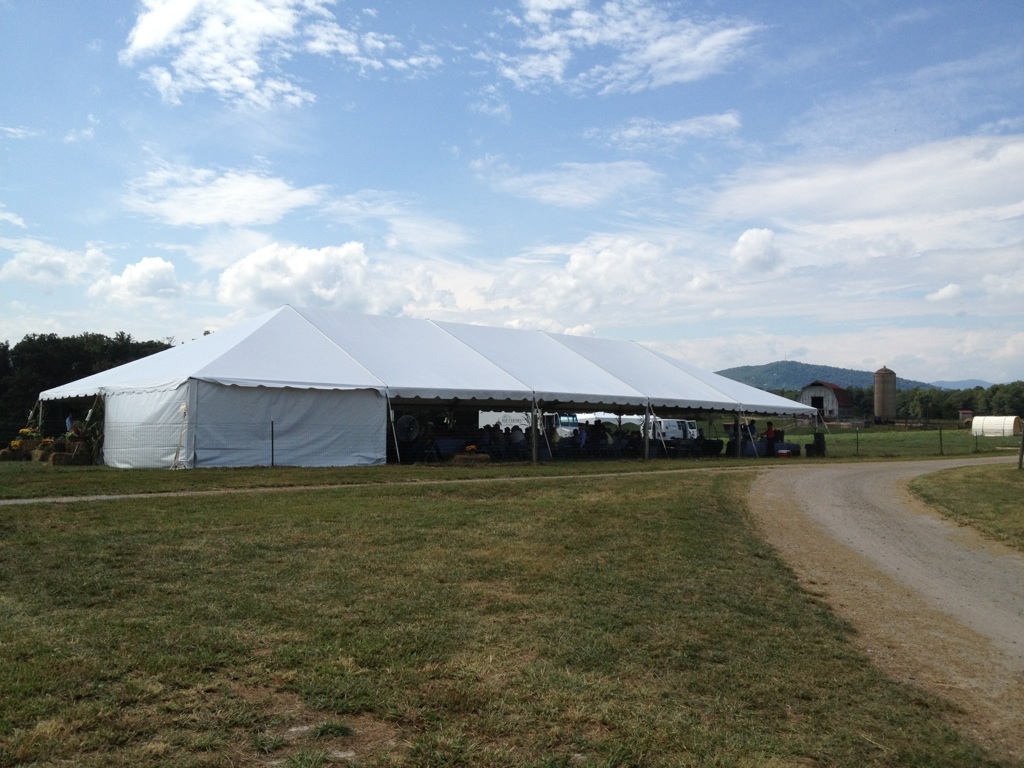
This tent was strategically placed in one of the most beautiful places in the country, Mark says.

Our crew gets to go to some pretty cool places, see lots of high-quality cattle and meet some great people.  Even so, Mark felt like he hit the jackpot with his weekend trip to the Biltmore Estate in Asheville, N.C., for the 2012 North Carolina Angus Association Field Day.

“In my opinion,” Mark says, “Asheville is one of the prettiest spots on the planet! For anyone who has never visited, you need to go.”

(Make a note to yourself: Add Asheville, N.C., to must-see list. Mark says.)

But back to the event.

Ted Katsigianis, vice president of agricultural and environmental sciences for the Biltmore Estate, organized the affair, which brought together more than 125 Angus enthusiasts from the Southeast, a roster of speakers — including Mark — to cover current industry topics and great cattle from the Biltmore program.

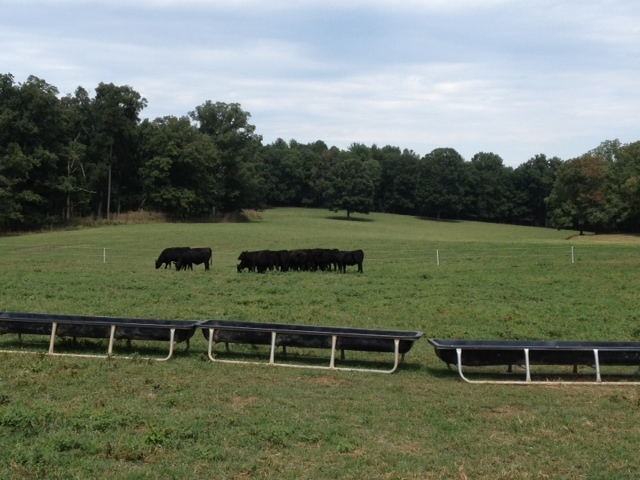
A quick glance at the Biltmore cattle.

The herd, which consists of several hundred registered Angus cattle bred to thrive in their environment and on a Southeast forage base, is quality- and efficiency-driven.

“Interestingly, Ted has recently used the GeneMax™ test on his steer calves to determine those with the highest marbling and gain potential,” Mark says.

The Biltmore farm finishes out those highest potential steers at their feedlot and that meat will be used by the foodservice team of the Biltmore properties.

The program kicked off with a joint presentation by Mark and Tonya Amen of Angus Genetics Inc. The duo gave an overview on the use of genomics and then introduced GeneMax™.

Mark was in good company. Here former AAA Board President, Joe Hampton, addresses the crowd.

American Angus Association (AAA) Past President Joe Hampton was also on the program, sharing insight from his time on the board.  AAA Regional Manager David Gazda provided association updates, too.

“All in all, a great turnout, wonderful hospitality, really good Angus cattle and a very educational field day,” Mark says.

Congratulations to Ted and his crew for pulling together such a successful event!

You may also like

The Taste, part II

The Taste, part II

Edd and Nina Hendee were out to dinner, three kids in tow. It was 35 years ago and Edd can still recall, “It was one of the worst meals I’ve ever put in my mouth. Not to mention the service was ghastly.”

The Taste, part I

The Taste, part I

Have you ever met the president? Me neither, but a trip to Houston’s Taste of Texas left me feeling like I had.

Nothing owed

Nothing owed

Groups more humble than cattlemen and women are few and far between, but I’ve often heard ranchers called “salt of the Earth” people.
angus cows

From Bluegrass to Switchgrass to not enough grass

Diversity Abounds

Yesterday I had the chance to return to my old college stomping ground of Lexington, KY to visit with the folks of the Kentucky Cattlemen’s Association. If you don’t have a personal tie to the bluegrass state, cattle probably aren’t the first four-legged critters that come to mind.

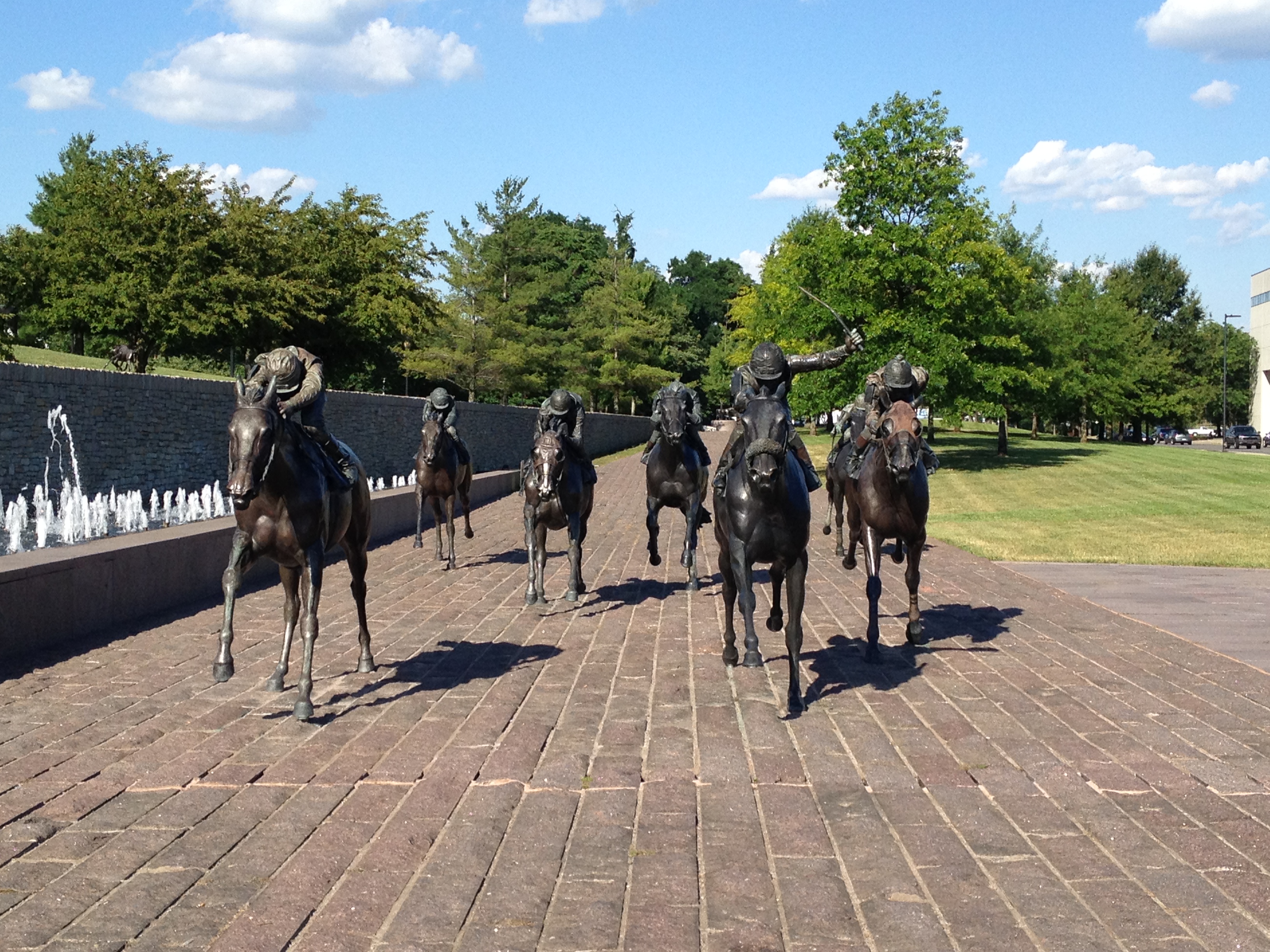
Horse racing fans know that tomorrow’s Belmont Stakes is the last leg of the Triple Crown. It’s been over 30 years since a horse has claimed the title, a streak that won’t be broken tomorrow due to the recent scratch of I’ll Have Another. It’s a sporting series that rivals the prestige of the Super Bowl and the World Series. Though the last chapter of the trifecta is written in New York, the Kentucky Derby is where it all starts.

The better part of my travels this year have taken me through the middle belt of the United States, from Montana to Texas. In most cases, horses are for stock and many of the towns have far more cattle than people. While Lexington is without question more of a concrete jungle than many of places I’ve been lately,  a couple hours of talking about cattle management in the bluegrass quickly reminded me of one of my favorite characteristics of the beef community – diversity.
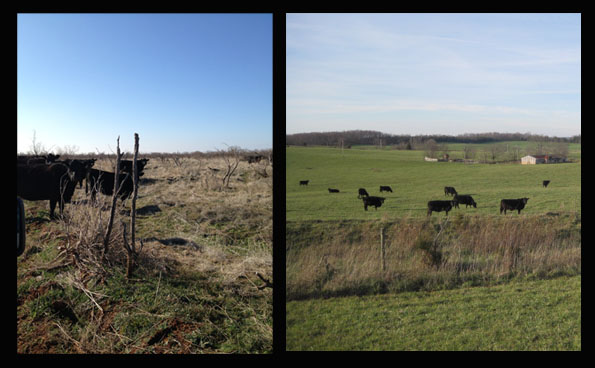
One of my choice topics to discuss with cattlemen and women is, “How do you manage cattle in your part of the world?” A simple question with so many different answers.  In Kentucky, you might get responses alluding to modest herd sizes and cooperatives that allow multiple small breeders to combine cattle for more effective marketing. On a good year in the Ohio River Valley, pasture management is referenced in cows per acre, not acres per cow.

From the Waggoner Ranch just south of Vernon, Texas where cattle, crops and horses span over a half-million acres, to my family’s farm in southern Indiana where just over 800 acres sustains our cow herd, cattlemen everywhere have diverse ways of growing and marketing cattle to meet their needs.

From where you are today, you may need 20,000 acres or 200 acres to maintain your herd. Your family may be fully supported by cattle production or you may diversify in farming or other business.

No matter how you do things in your part of the world, always remember that you are never too large or small to get better, aim for quality, and do what you can to add more black ink to your bottom line.
~Kara

You may also like

Champions on the hoof and under the hide

Champions on the hoof and under the hide

Alexis “Lexi” Koelling has been pulling a heifer around since she was three. Now 15, she’s no stranger to the winner’s circle, but you wouldn’t know by talking to her. You’d have to prod her a bit to find out she won Grand Champion in both the carcass steer and bred-and-owned carcass steer at the National Junior Angus Show this summer. It’s her 5th year in that competition, her second bred-and-owned.
The search for stockmen

The search for stockmen

The future of food is in our hands, but do we have enough hands to help feed the world? Courtney Daigle, assistant professor of animal welfare at Texas A&M University, shares ideas on the narrowing supply of quality stockmen and how cattlemen might find more top hands.

Sustaining common ground

Sustaining common ground

Steve knows that while consumers’ intentions are good, they aren’t always backed with the most accurate information. He explains points of sustainability on his ranch.

angus cows

From order takers to salesmen

“I want to be the beef expert when I walk in the room….no matter who is in the room.”

That’s the guy you want selling your final product. The expert. Not just the one who knows enough to be dangerous; not the guy who is selling beef because it pays the bills; not even the one who thinks he knows all about beef. Nope, you want the bona fide expert.

The MBA event kicked off at Rishel Angus.
CAB is helping to create a few more of those. Our third Master of Brand Advocacy (MBA) course kicked off at Rishel Angus near North Platte, Neb., earlier this week. And by central Nebraska standards, we’re practically neighbors (albeit 50+ miles apart) so I got to tag along.

That opening quote came from one of the attendees when they were asked to go around the room and tell why they’d applied to be part of this three-week, intensive education program. (There is a waiting list to get in, by the way.)

Another gentleman leads a team of foodservice salesmen (as many of them did) and said, “I want to become a resource for them, so they can learn how to sell beef, not just take orders for it.”

You know how a good auctioneer can really make an auction. Think about the power the protein sales force has. They can have a frontline impact on the price of beef, how your product is perceived by consumers and ultimately the demand for it.

We know that. So we invite these people to step into your world for a week. They learned about a seedstock producer’s role by visiting with Bill Rishel. They saw his cattle first hand and then even tried their hand at buying a few bulls.

Then they split it up and went to commercial Angus ranches for an even more personal “day in the life” experience. At the Pioneer Ranch, near Tryon, the smaller group got to know Rusty and Rachel Kemp. They tagged along while they turned on windmills and checked on the last of the herd yet to calve. They even got to pet a fresh calf. That may seem like a simple thing to those of you in the trenches, but it was a highlight for many who had never seen a cow in person, er, bovine before.

Pioneer Ranch, Rusty & Rachel Kemp, near Tryon, Neb.

Rachel told how she tags every single calf and talked about vaccinations and judicious use of antibiotics, saying, “They’re like my babies. You don’t ever want to see them sick.”

Rusty shared the ways they take care of the land and how that’s improved over the decades, often saying, “When I was a kid…” And all the while their two little cowboys tagged along, winning over everybody, myself included.

This might just seem like a “warm and fuzzy” day out on the range, but I heard many quote-worthy statements that were enough to prove it was worth it and it worked. I’ll share some of those next week, but in the meantime, you can hear from a few in their own words via a clip from the local TV station:

Pasture-to-Plate from KNOP

The week rounded out with a packing plant tour and a feedyard visit, but their education will continue with a weeklong meats lab and a sales session.

It all comes back to that one goal that CAB’s David MacVane summed up so nicely on day one: “You’re not here to be brainwashed Certified Angus Beef. You’re here to learn the beef industry.”

That should make YOU very happy.

May your bottom line be filled with black ink,

Miranda

You may also like

From insights to solutions

From insights to solutions

After the last 18 months, what we would pay for a crystal ball that could help us predict the future! They don’t have any magic prediction powers, but leading minds shared their outlook on key beef production areas at this year’s Feeding Quality Forum.

Progress from small steps

Progress from small steps

Every day is a chance to learn and get better. Thousands of others like my new friends in Alabama are taking steps to meet the shifts in consumer demand, and to know more. Small steps in the right direction can start now. Even if it’s just recording a snapshot of where you are today, a benchmark for tomorrow.

Pandemic underscores beef demand trends

Pandemic underscores beef demand trends

Retail beef sales during the pandemic displaced much of the trade usually enjoyed by foodservice. Grocery stores and restaurants around the world had their business plans radically changed in just a few days, but the demand for beef remained.