Telling our story in Texas

It’s no secret that consumers like to know where their food comes from, but you may be surprised that those who prepare and serve it like to know too.

And it’s a good thing they do, because it would be quite the task making it to all of those CAB licensed restaurants come suppertime.

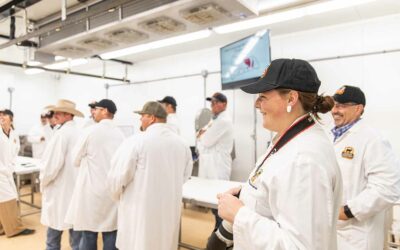
Linking arms along the supply chain, some of our CAB staffers joined 80 team members from longtime partner Saltgrass Steakhouse to gather at a Texas ranch for a day of learning and camaraderie.
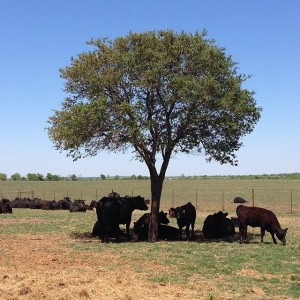
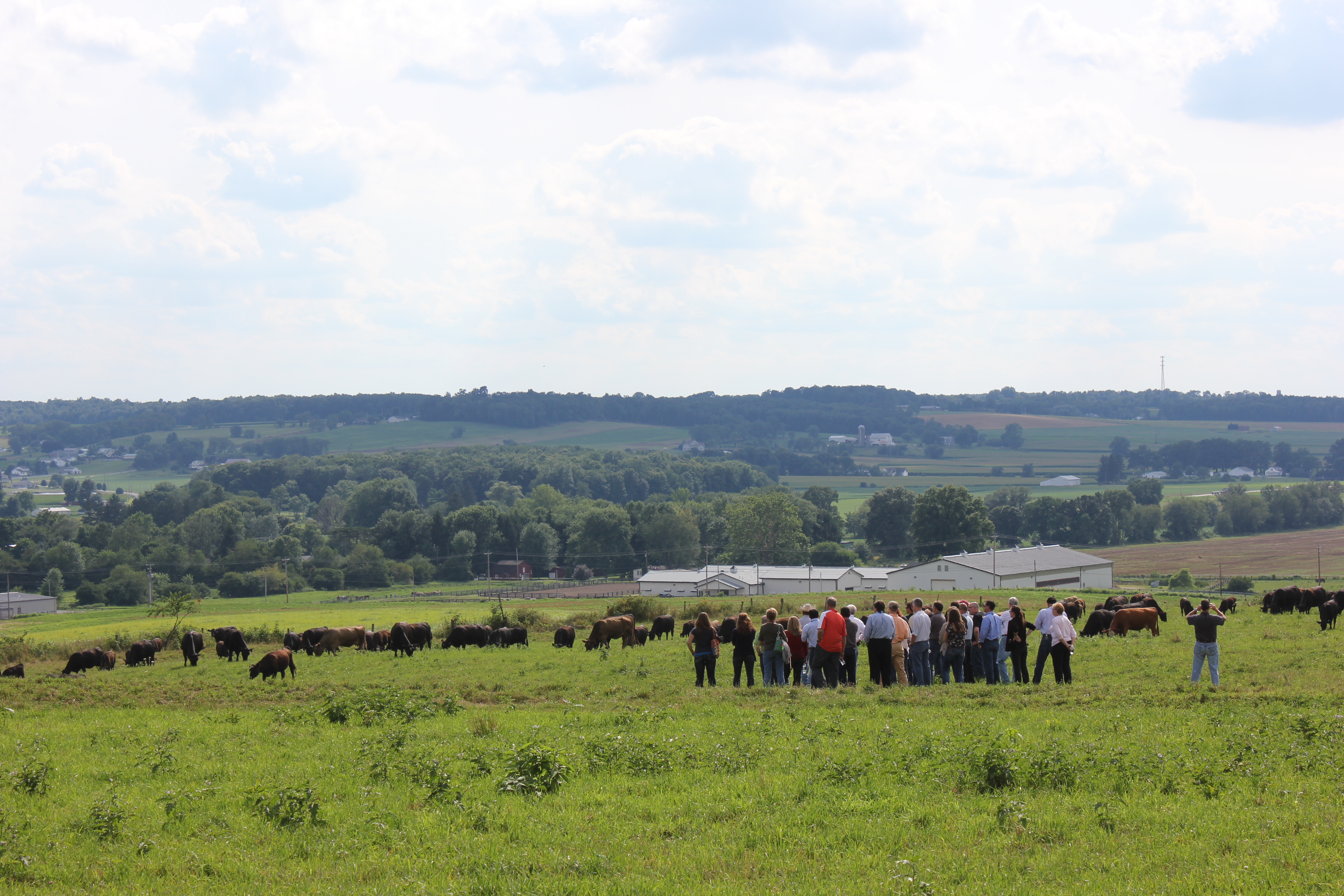
Cattlemen and restaurateurs gathered at Bodey Langford’s ranch near Lockhart, Texas.

The Saltgrass folks wanted to know our story, and we were excited to tell them.

The quintessential cowboy cookery is known for blending the latest food trends with tried-and-true western flavors. Respected from foodies and cattlemen alike, the Texas-based eatery draws in consumers from all parts of the country.

With locations in five states, the business requires a fearless leader. Enter Ric Rosser, executive chef and friend of the brand. He was there to share stories and serve delicious barbeque for all.

“This is such a great event because it allows us to educate our younger managers on what happens before this product ever comes in our back door,” Rosser said. “To be able to show them the real, live animal and talk to the people who raise them, you can’t quantify that.”

The daylong training kicked off with a brand overview, followed by rotations that covered topics from genetics and prediction tools to feedstuffs and sustainability.
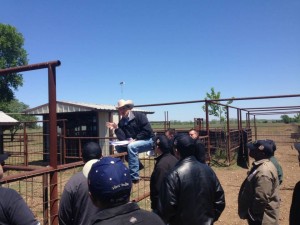
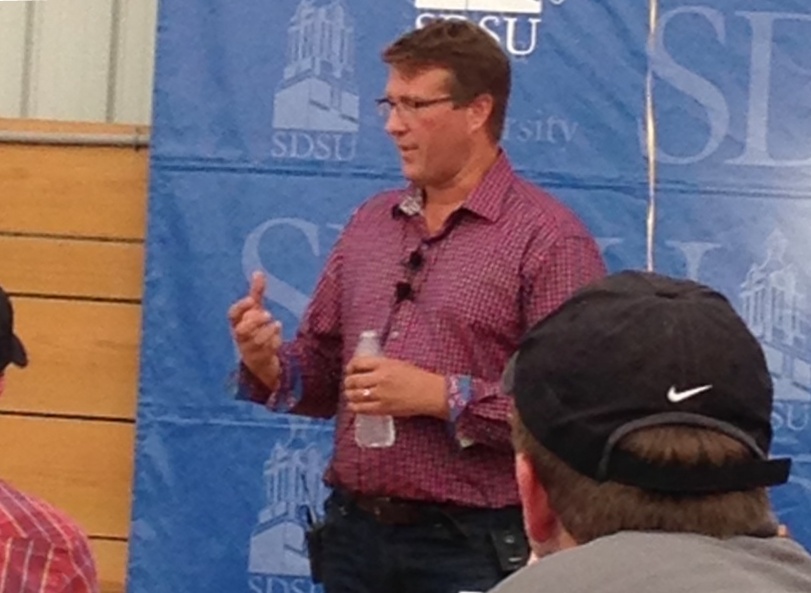
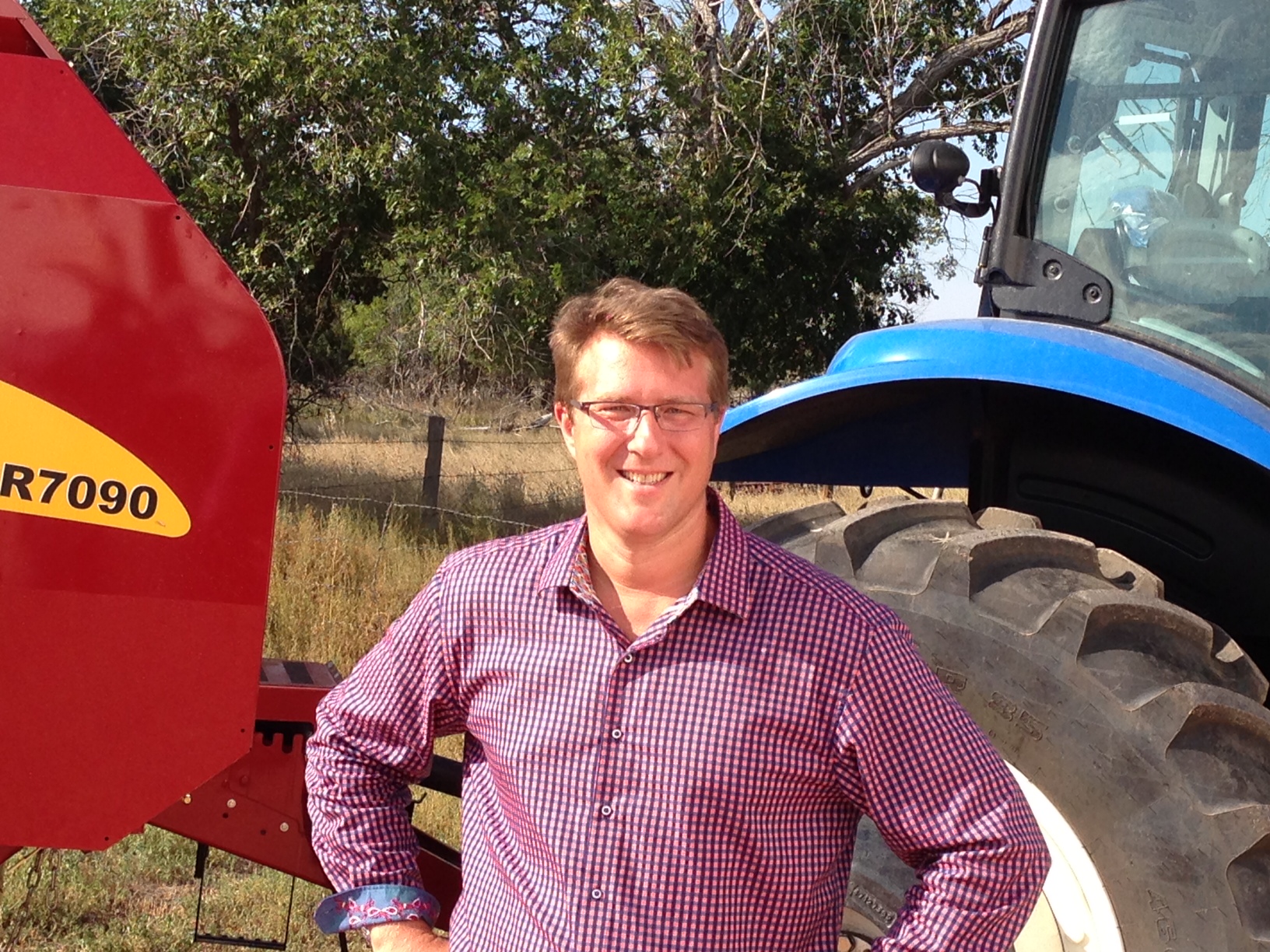
CAB Beef Cattle Specialist, Gary Fike, talks EPDs with the attendees.

Our own Gary Fike was on hand to lead an interactive seminar on genetic testing and its ability to increase the reliability of EPDs. Gary asked participants to compare two bulls from a phenotypic standpoint and then look at their respective data in order to rank calves they sired.

“You just can’t begin to imagine the impact,” Gary said.

Equally rewarding was interaction with the dozen Texas Angus Association (TAA) members who attended.

Each with their own background and experiences, together they represent what it means to be a cattle rancher today.
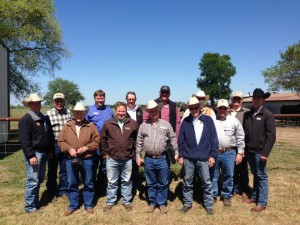
Members of the Texas Angus Association joined CAB staff in telling the ranching story.

“These ranchers have so much passion about what they do and how they raise these animals. We hope our managers share that passion and bring it back to Saltgrass,” Rosser said.

Current TAA president Rayford Pullen called the day an “irreplaceable” experience.

“One on one, face to face is still the best way to conduct business,” Pullen said. “Producer-consumer relations are one of the primary keys for a profitable future.”

Thanks for allowing me to tell your story,

Laura

You may also like
How to Face Evolving Demands

How to Face Evolving Demands

In the rapid changing space of sustainability, finding clarity on what to do is challenging. At the 2021 Feeding Quality Forum, Dr. Kim Stackhouse-Lawson offered insights on what can be expected of producers moving forward.
Change is a good thing

Change is a good thing

From the moment his boots hit the dirt on the way to the barn, to switching off the lights and locking the door of the Hickory House Restaurant, Jonathan Perry is committed to the beef business. The 2021 CAB Chairman brings a unique perspective to the table. By day, he’s a cattleman. By night, he’s a meat cutter.
One tour at a time

One tour at a time

Telling their story to the cattle curious was awkward at first for John and Gaye Pfeiffer. Now, they look forward to hosting hundreds of people every year, sharing everything about the beef cattle life cycle and why they choose Angus cattle on their central Oklahoma farm. Their dedication to teaching and connecting with those further down the supply chain earned them the 2021 CAB Ambassador Award.
See it to believe it 

The year was 1999. Paul Dykstra walked into a packing plant in southern Nebraska and walked out changed for the better.

Eyes brighter, passion brewing, he liked what he saw.

With a background in production, he knew the live side but was captivated by what took place after the cattle left the pens.

“Aside from avoiding getting lost,” he says with a grin, “the fabrication floor was probably the most amazing thing to me. The efficiency, the speed at which that all occurs. It’s a precision operation.”

Fast forward more than a decade later and Paul is still bright eyed and passionate. As one of our beef cattle specialists, he often leads folks through plant tours all across the country. For cattle ranchers with a deep understanding of the industry, he enjoys witnessing their reactions, seeing their eyes grow in admiration as his did years ago.

“I think we understand the process very well, conceptually,” he says. “But it’s one thing to know what happens, and it’s another to view it first hand.”

Last month a group of Montana ranchers did just that. In a winter calm between production sales and spring calving, they visited with partners in the Wheat State.

“Touring the National Beef Packing plants, they gained a new appreciation for the packers in our industry,” Paul says. “A highlight was the grading, when they get the mark of what the final quality level is, that’s where the efforts of all cattle production labor come to fruition.”

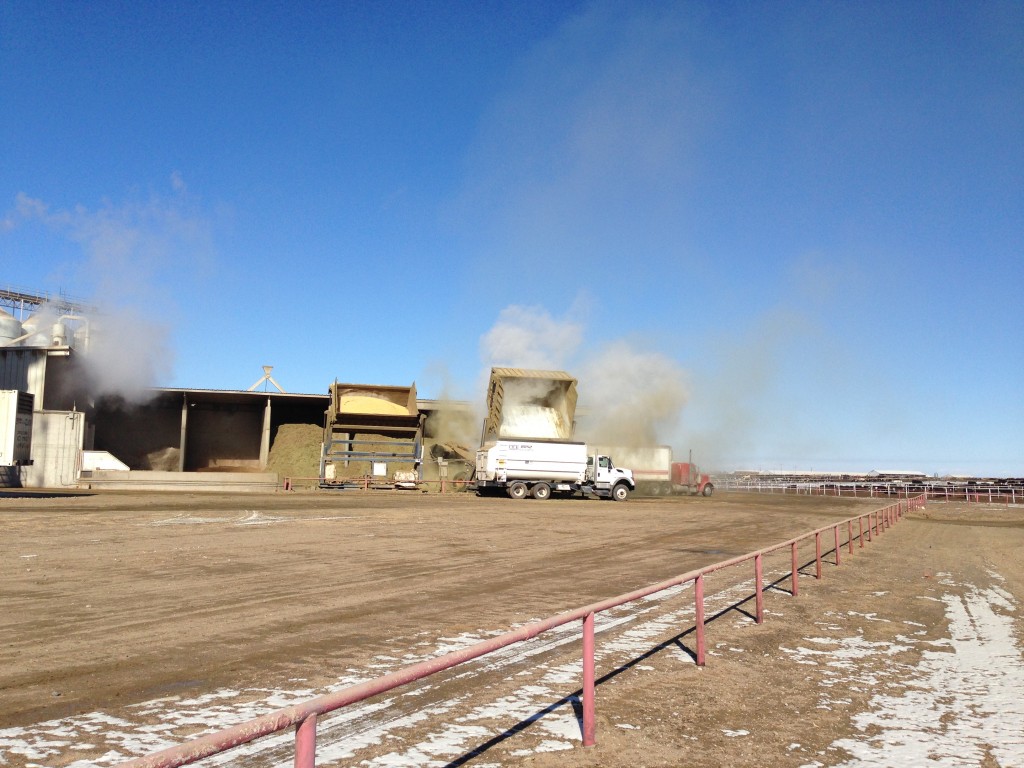
Shipwheel Cattle Company, Chinook, Mont., arranged the trip to Kansas, including this feedyard.

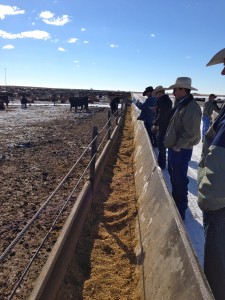
While in Kansas, it wasn’t all packing, though. A visit to Poky Feeders, near Scott City, provided many of the ranchers the opportunity to take a look at some cattle sourced to the yard last fall. They explored the pens, feed mill, hospital and processing barns of the 70,000-head feedlot.

The farmers and ranchers from Montana took a quick break to visit with some of their Kansas partners.

Education was at the forefront as guest speakers, representing Zoetis, Elanco Animal Health, Poky Feeders and a consulting veterinarian to the feedyard discussed topics from health and preconditioning to grid marketing. Paul was on hand to discuss the brand’s ten specifications and the use of DNA technology in production herds.

“We can never go wrong with educational opportunities,” Paul says. “By increasing the understanding of ranchers, particularly from non-feeding and packing regions, they are better prepared to raise cattle that fit the system and hit the premium points. It benefits the entire chain.”

As quickly as it began, the trip came to a close and it was time to head home to a new season and calf crop. As beef people, we understand the sacrifice and determination it takes to be successful in this industry we love, but oftentimes it can help to put a mental image to what we know to be true.

Because at the end of the day, sometimes you just need to see it to believe it.

Montana believes it, and so do I.

Laura


You may also like

How to Face Evolving Demands

How to Face Evolving Demands

In the rapid changing space of sustainability, finding clarity on what to do is challenging. At the 2021 Feeding Quality Forum, Dr. Kim Stackhouse-Lawson offered insights on what can be expected of producers moving forward.

Change is a good thing

Change is a good thing

From the moment his boots hit the dirt on the way to the barn, to switching off the lights and locking the door of the Hickory House Restaurant, Jonathan Perry is committed to the beef business. The 2021 CAB Chairman brings a unique perspective to the table. By day, he’s a cattleman. By night, he’s a meat cutter.

One tour at a time

One tour at a time

Telling their story to the cattle curious was awkward at first for John and Gaye Pfeiffer. Now, they look forward to hosting hundreds of people every year, sharing everything about the beef cattle life cycle and why they choose Angus cattle on their central Oklahoma farm. Their dedication to teaching and connecting with those further down the supply chain earned them the 2021 CAB Ambassador Award.
amelia woolums, antibiotics, antibiotic resistance, ncba

Cattle Industry Convention sets mood

It’s the difference in heading to the salebarn with a trailer-load of calves the day prices shoot up versus the long, trek up that same highway with mature cows that would have stayed put…if only it had rained.

When the weather warms, the grass greens up and all your critters have arrived safely; when you get a new tractor for feeding or a new tool to cut your workload; when you have one of those days where everything seems to go right—that’s when the feeling comes sneaking in. Call it optimism or happiness or a light-hearted spring in your step….the term doesn’t matter, last week at the Cattle Industry Convention and Trade Show you could feel it.

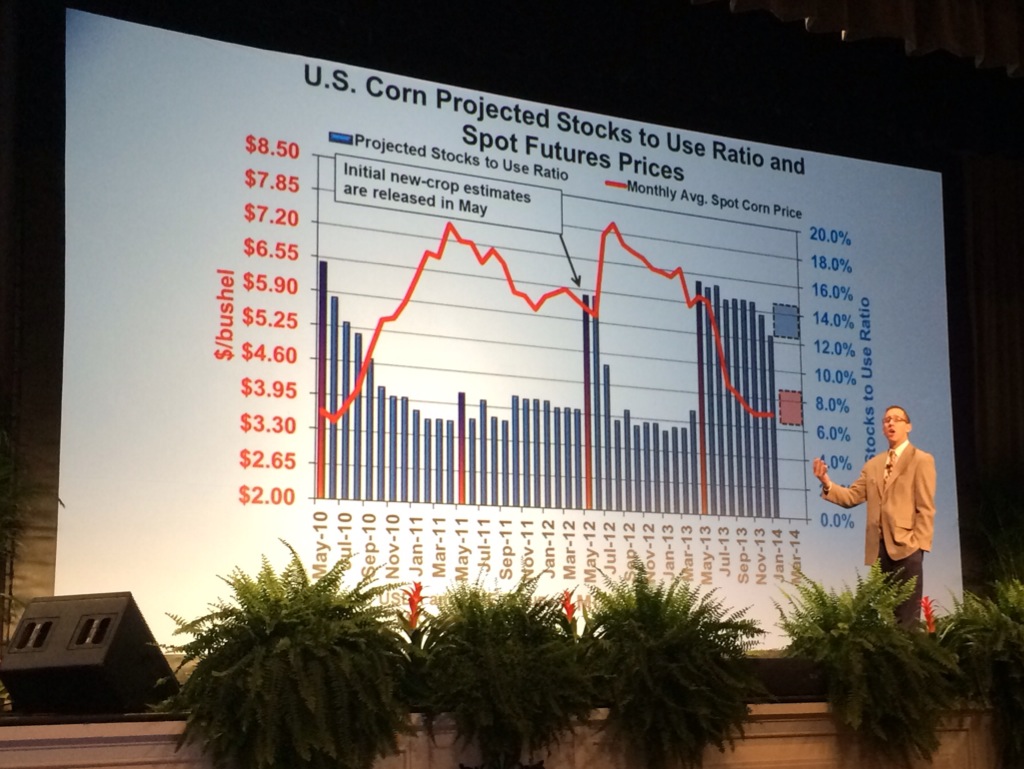
Higher cattle values and lower corn prices have a lot to do with it. Mike Murphy, CattleFax analyst, said when those in the beef industry look at this chart, they feel relief.


But it was about more than that. As Jolene Brown, family business consultant, told Cattlemen’s College attendees, “In ranching, we often forget to appreciate and celebrate what we have done. Take some time to enjoy it!”

And as a collective industry, we had a lot to celebrate this year.

Take the 2013 average value of beef exports, for example. It was $242 per head, up 13% over 2012. What a win! To add an exclamation point, there is potential to grow, too. Folks on the export scene are optimistic about our chances of China opening up to U.S. beef. The Chinese middle class is expected to grow from 300 million to 640 million in 6 years.

“This demand is for real in China,” Brett Stuart, CattleFax analyst, said. “Beef has become a consumer item in China.”

Domestic demand also gives us a reason to click our heels. Even though chicken consumption will increase in the U.S. during 2014, CattleFax’s Kevin Good said, “Let’s not confuse market share with demand.”

They’re buying less beef because there is less beef to buy. Americans will continue to pay more for every pound they do buy.

That brings up the often discussed price-value relationship. Consumers have very high expectations for beef, Bridgett Wasser, NCBA meat scientist, said. “They want it to taste good…every time.”

More good news? Many of you are providing that assurance. Our fiscal numbers are proof of that: The CAB acceptance rate (how many Angus-type cattle met the 10 specifications), rose to a record 24.2% last year.

It seems there was a general consensus that we have more tools and technology and more knowledge and data on consumer preference than ever before. We are in a position to expand, and we will.

There was plenty to celebrate at this year’s convention from good friends and good beef to good news!

I am optimistic about this next chapter in the beef business. Judging by the mood of most of the other 8,217 convention attendees, I’m not alone.

May your bottom line be filled with black ink,

Miranda


You may also like

Sustainability Cents

Sustainability Cents

Sustainability is an all-encompassing term for social, environmental and economic business needs. The popular, updated term describes many of the same best practices cattlemen have put to work for generations.

Meeting Demand with Better Beef in 2021

Meeting Demand with Better Beef in 2021

More than forty years after selling the first pound of branded beef on October 18, 1978, Certified Angus Beef continues to deliver for consumers and producers. The brand closed fiscal year 2021 with a few new records and another billion on the books.

How to Face Evolving Demands

How to Face Evolving Demands

In the rapid changing space of sustainability, finding clarity on what to do is challenging. At the 2021 Feeding Quality Forum, Dr. Kim Stackhouse-Lawson offered insights on what can be expected of producers moving forward.

Yon Angus cow

Expectations

“Record high cattle prices!” When you’re sharing news like that at a cattle industry outlook seminar, you’d expect the audience to be teeming with excitement.

That is if it’s a crowd of cow-calf producers.

Mark attended the CattleFax 2014 Outlook and Strategies Session last week where he said the mood was decidedly mixed.

“The audience is representative of who we work with —producers and end-users,” he says. “Depending on who you were talking to, they have a different opinion of record high prices.”

Among the ranchers there was “tons of optimism,” but cattle feeders are discouraged by the calf price predications. CattleFax expects a 550-lb. steer to settle at $190/cwt. in 2014. That compares to a previous high of $168/cwt., set in 2012. Yet, those feeders find the good news in the record high Choice cutouts (around $205/cwt.) and lower cost in terms of grain inputs.

The quality grade premiums matter to more feeders than ever. In 2013, 77.5% of cattle were sold on an alternative system versus 22.5% sold cash. Just over half of all fed cattle were sold cash in 2005.

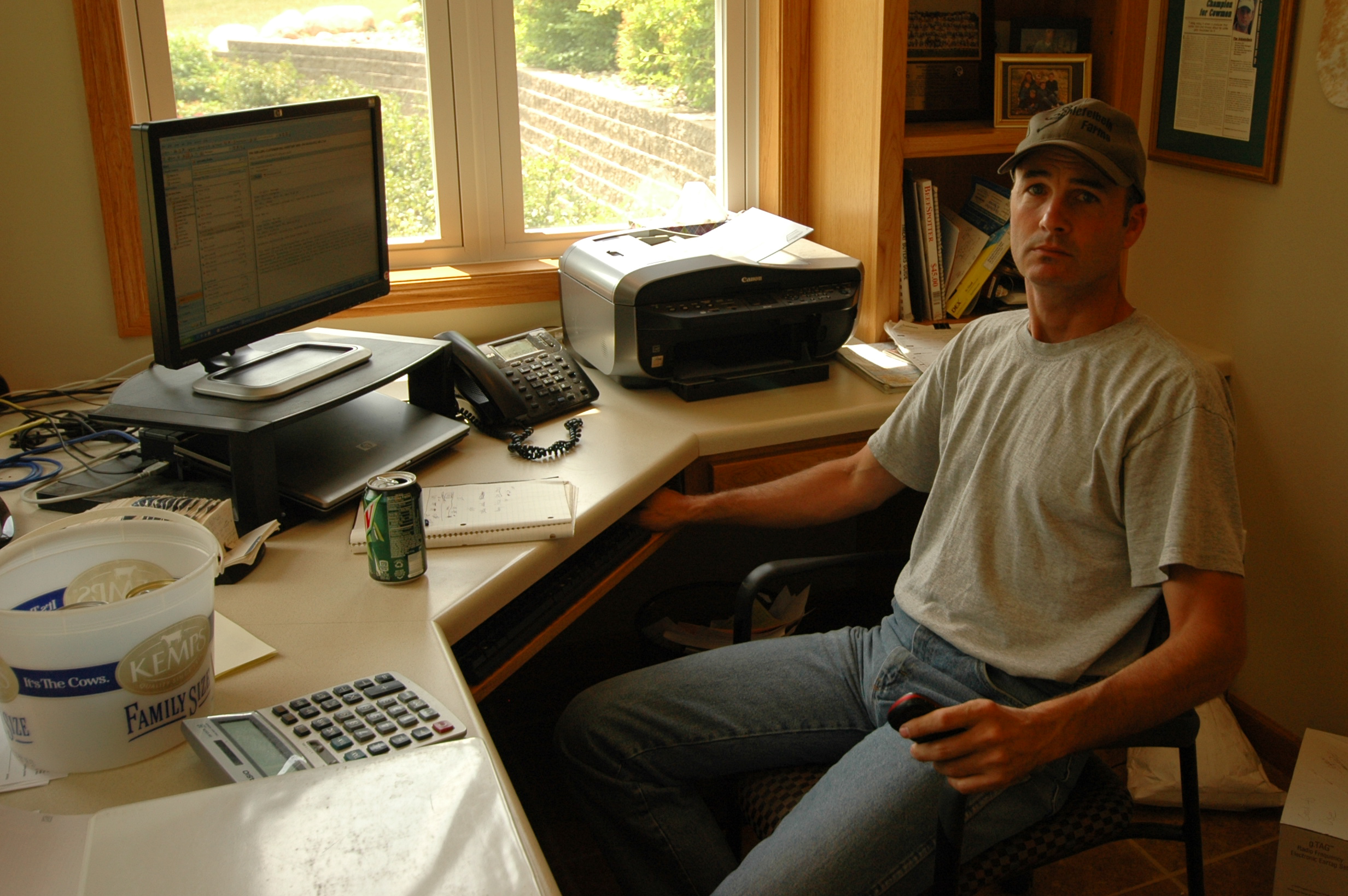
Tim Schiefelbein, packer-buyer and cattleman

What’s that matter to you? Well, I think Tim Schiefelbein summed it up best a few years back when he said, “Even if you don’t grid your cattle, you do.” (Get the whole scoop on what he was talking about here.)

Basically it all points to the fact that a marketing trend like that begs better cattle. So if you provide them, you’ll be well positioned to deal with this new reality.

At the seminar, it seemed there was little for end users to feel hopeful about, Mark said, unless you count the distant effect of herd rebuilding. Cow slaughter will see sharp decreases while heifer retention is expected to go up by 140,000 head next year and 250,000 in 2015.

Still, the supply situation and price projections worry some more than others.

“I sat by one of our CAB-licensed distributors and they realize prices are high, but as they deliver a quality product, they think they can manage them,” Mark said.

Did somebody say “price-value relationship”?

It all boils down to: It’s a great time to be in the cattle business, but much is expected of you.

May your bottom line be filled with black ink,

Miranda


You may also like

Greater eligibility assists CAB supply

Greater eligibility assists CAB supply

Fed cattle prices have stabilized and improved in the later part of July, but are still lower than a year ago. With a backlog of cattle on feed longer, greater eligibility is joining up with higher quality grades to increase July certified head counts above those seen a year ago.

50-14 legislation considerations

50-14 legislation considerations

The past couple of weeks have offered little excitement in the fed cattle trade. Consumer driven economic signals have been passed back to producers because the marketplace has been allowed to differentiate price for cattle and beef product based on quality specifications and other merits.

50-14 Letter

50-14 Letter

U.S. beef producers are facing difficult challenges thrust upon them through unprecedented events. Through much debate around fed-cattle marketing and price discovery opportunities, the 50-14 bill was born. Here the Certified Angus Beef® brand addresses the industry.

Where surf and turf meet

Chad Mackay, chief operating officer of CAB partner El Gaucho restaurants, traveled to Cottonwood Station west of Philip, South Dakota, last Saturday.

Chad came from his Seattle, Wash., base in the Pacific Northwest to share insights with ranchers about the high-end foodservice trade in both the Seattle and the Portland, Ore., markets where his family’s restaurant group operates. Selling CAB (Prime, Natural—exactly, right? Nothing better), he says people choose a great steak as the meal to “celebrate life.”

He hasn’t spent much time on farms or ranches, but last year’s Washington Restaurant Association Full-Service Operator of the Year says he’s happy to interact with beef producers: “It’s as a way to give back to the folks that make our business possible.”

For their part, the cattlemen appreciated Chad’s insight, spending 25 minutes or more in a Q&A session that covered everything from hospitality strategies to how the best beef competes with seafood alternatives. We enjoy a little surf and turf sometimes, but our focus will remain on the beef side!

You may also like

How to Face Evolving Demands

How to Face Evolving Demands

In the rapid changing space of sustainability, finding clarity on what to do is challenging. At the 2021 Feeding Quality Forum, Dr. Kim Stackhouse-Lawson offered insights on what can be expected of producers moving forward.

Change is a good thing

Change is a good thing

From the moment his boots hit the dirt on the way to the barn, to switching off the lights and locking the door of the Hickory House Restaurant, Jonathan Perry is committed to the beef business. The 2021 CAB Chairman brings a unique perspective to the table. By day, he’s a cattleman. By night, he’s a meat cutter.

One tour at a time

One tour at a time

Telling their story to the cattle curious was awkward at first for John and Gaye Pfeiffer. Now, they look forward to hosting hundreds of people every year, sharing everything about the beef cattle life cycle and why they choose Angus cattle on their central Oklahoma farm. Their dedication to teaching and connecting with those further down the supply chain earned them the 2021 CAB Ambassador Award.
Building blocks of CAB knowledge

Katie ended her summer internship with us on Friday, but not before we eked one more assignment out of her. She attended one of our company seminars designed to teach different brand stakeholders about the entire beef system and how CAB fits into that. Read on to see what Katie took away from the experience. –Miranda

It never ceases to amaze me is how many people do not know about Certified Angus Beef ®, but when shown the logo they can surely identify it. I must admit I was in that group prior to working here. I knew what CAB was, although I didn’t know much about the company or the brand in and of itself.

Even though I’d already been intern for three months, when I attended the company’s Building Blocks for Success Seminar last week, there were key points and facts I picked up along the way:

  • Although CAB is a non-profit organization they are funded by an average of $0.02 per pound of product sold. This commission is paid by the packing plants. I was always curious; something had to keep up the immaculate facilities, marketing resources directed at the product and the brand logo on everything.
  • Another cool aspect I didn’t realize was our staff knows exactly how many cattle are certified every day in the packing plants in the United States and Canada. Every step along the way from “field to plate” is tracked and recorded.
  • CAB accesses more than 85% of the North American packing base, and around 70% of the cattle harvested in the U.S. have Angus influence. Those cattle are evaluated under CAB’s 10 specifications.

All in all this experience has been incredible.

I have experienced many different states, met plenty of new faces, been able to tell the stories of farmers in the mid-eastern states, explore my photography passion and most importantly have made connections and friends that will last me a lifetime.

This company will always continue teaching me things.

~Katie


You may also like

Certified Angus Beef Expands Offering with Grass-Fed Beef

Certified Angus Beef Expands Offering with Grass-Fed Beef

Certified Angus Beef ® Grass-Fed by Niman Ranch product will make up less than 1% of it’s total supply. A niche product, it will initially only be available through a few, exclusive restaurants and grocery stores. Consistent with all CAB products, the grass-fed beef must meet all 10 specifications to qualify for the brand.

2022 Was as Predicted

2022 Was as Predicted

If there was a lesson in 2022, it was that the beef market is very sensitive to declines in quality grade, as evidenced through price signals. It’s the first time in recent history where we’ve gone backwards — albeit ever so slightly — and customers are telling us they have unfulfilled demand. That’s reflected in the premiums paid, and that’s saying something after two years of extremely high premiums.

South Dakota cows

But cattle don’t have wings…

A couple weekends ago, we let our summer intern, Katie Fisher, take off her Black Ink reporter hat and get a behind-the-scenes look (VERY hands on) at a unique event sponsorship for the brand.

And then we asked her to come back, put that hat back on and tell you all about it. So if you’re wondering what could get CAB excited about a chicken wing festival, read on.–Miranda

On Saturday, June 22nd, the first-ever Big Kahuna Wing Festival kicked off at The World’s Fair Park in downtown Knoxville, Tenn., just steps away from the historic Sunsphere.

The event had a full lineup of some of Knoxville’s best culinary talents, who cooked 54,000 wings for more than 5,000 visitors – and all in the name of charity. The festival benefitted the Empty Stocking Fund and the Ronald McDonald House.

Among the bevy of sponsors for the inaugural event was the Certified Angus Beef ® brand.

Does it seem odd that CAB sponsored a chicken wing festival? Yup.

But event organizer and BKW Seasonings founder Matt Beeler wanted a VIP tent, and realized that VIPs deserve a grand steak cooked by the experts – even among a sea of yard bird.

The brand partnered with local restaurant group Aubrey’s to give VIPs the royal treatment – and they didn’t disappoint.

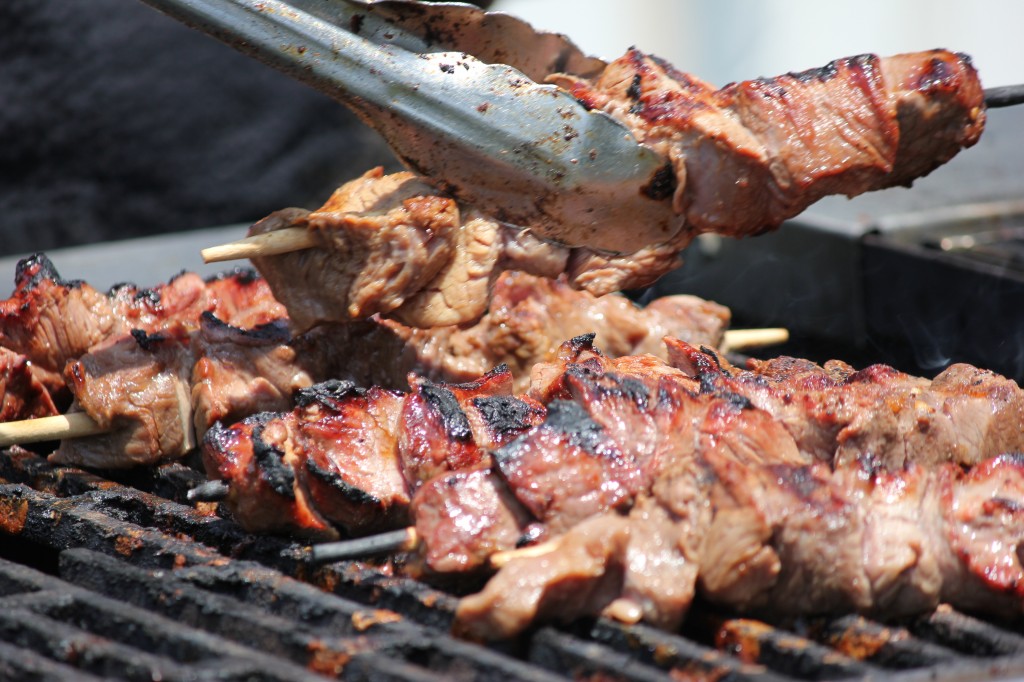
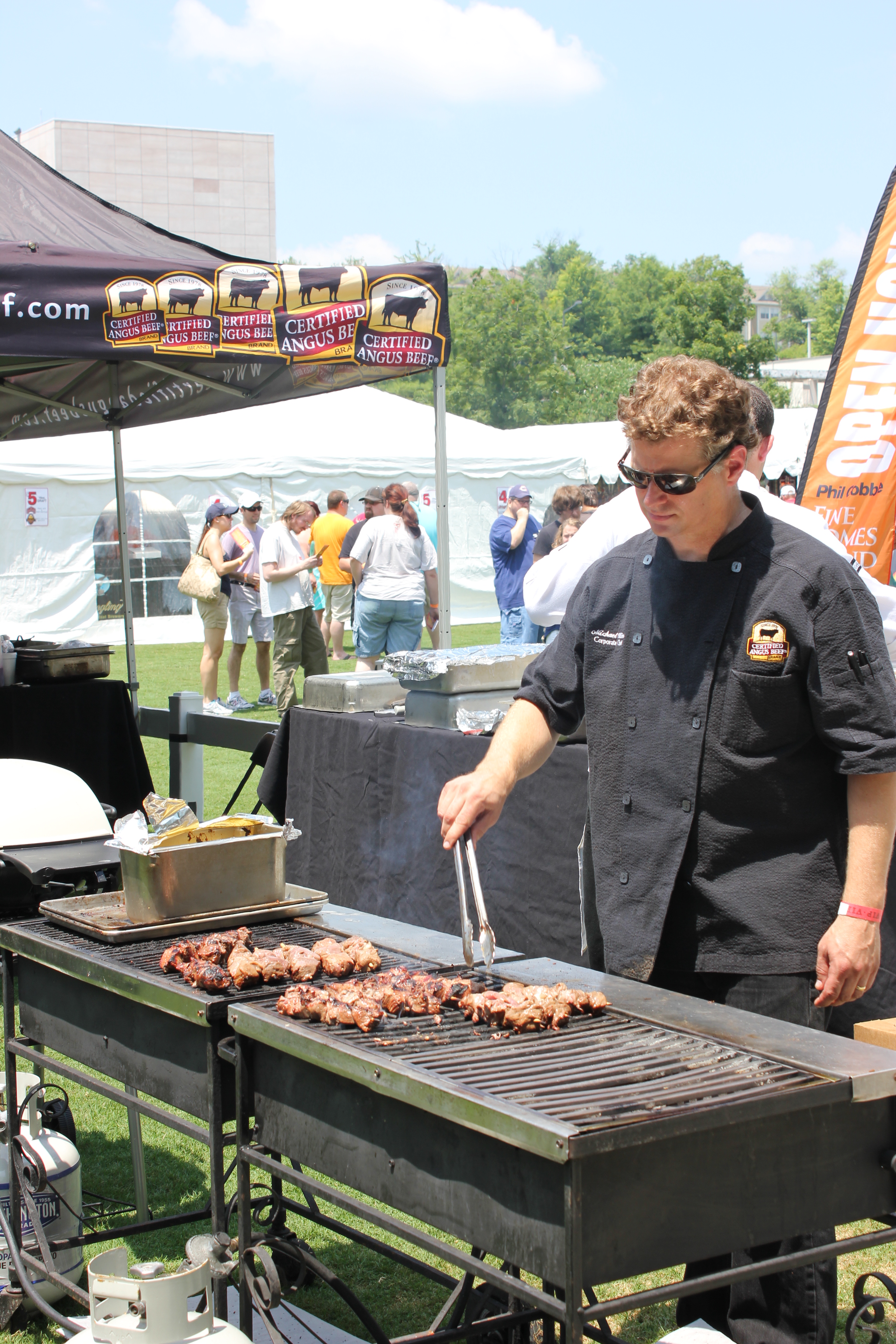
More than 180 pounds of Certified Angus Beef ® brand strip loin and petite tenders were perfectly cooked by corporate Chef Michael Ollier, and paired with succulent Aubrey’s sides.

The look on people’s faces passing by the roped-off VIP area was priceless. They were astonished at the giant juicy pieces of beef sizzling on the grills. Many of them asked over the fence, “Where do we purchase the tickets to get in there?”

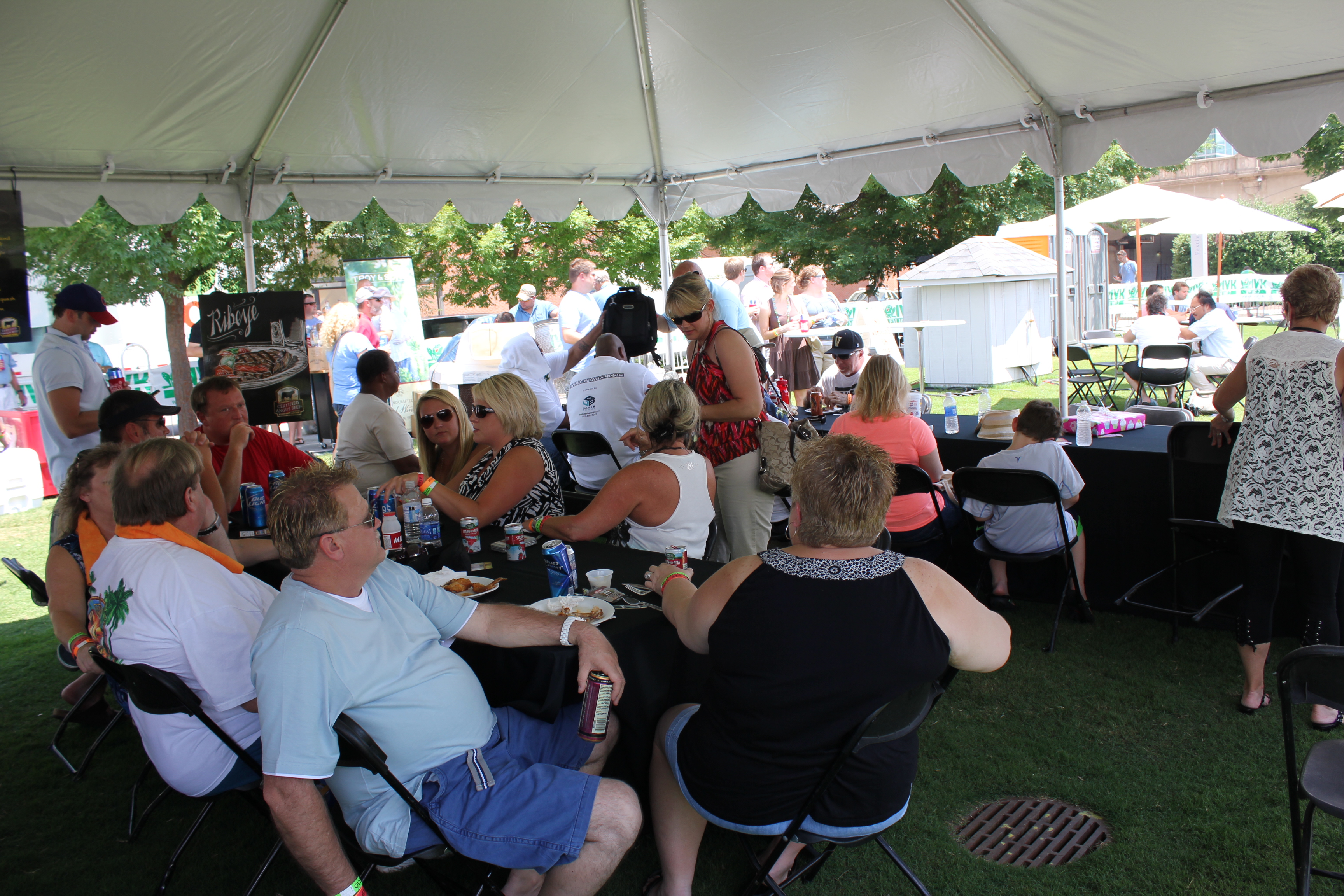
Soon after dropping $100 each for the special ticket, our tent was overflowing with 250 hungry guests.

I enjoyed going to each table and talking to the VIP attendees about the brand and where the beef comes from. I was proud to represent the farmers and the ranchers who create this amazing product for us to consume. There is nothing else quite like CAB and I wanted to ensure they could “Taste the Difference.”

It was a hot (and I mean HOT) weekend filled with helping Beeler set up the physical layout of the festival, taking Chef Ollier to a local TV station to talk about the brand, Aubrey’s restaurants, the event and manning the VIP tent o’ beef.

Although, we were constantly trying to keep up with the demand for beverages, ice, utensils and food, we made a great team: CAB, the Aubrey’s staff and chef.

The best part? Making beef a highlight at a chicken wing festival. That makes all the hard work worth it.

~Katie

You may also like

How to Face Evolving Demands

How to Face Evolving Demands

In the rapid changing space of sustainability, finding clarity on what to do is challenging. At the 2021 Feeding Quality Forum, Dr. Kim Stackhouse-Lawson offered insights on what can be expected of producers moving forward.

Change is a good thing

Change is a good thing

From the moment his boots hit the dirt on the way to the barn, to switching off the lights and locking the door of the Hickory House Restaurant, Jonathan Perry is committed to the beef business. The 2021 CAB Chairman brings a unique perspective to the table. By day, he’s a cattleman. By night, he’s a meat cutter.

One tour at a time

One tour at a time

Telling their story to the cattle curious was awkward at first for John and Gaye Pfeiffer. Now, they look forward to hosting hundreds of people every year, sharing everything about the beef cattle life cycle and why they choose Angus cattle on their central Oklahoma farm. Their dedication to teaching and connecting with those further down the supply chain earned them the 2021 CAB Ambassador Award.
Self interest, shared goal

Branded beef business model highlighted in Texas A&M class


by Anthony Pannone

Being good at what you do every time is no accident.

“My dad said anyone can sell something once,” Prof. John Siebert told his ag business class. “It’s selling something multiple times to the same person that takes a lot of work and expertise.”

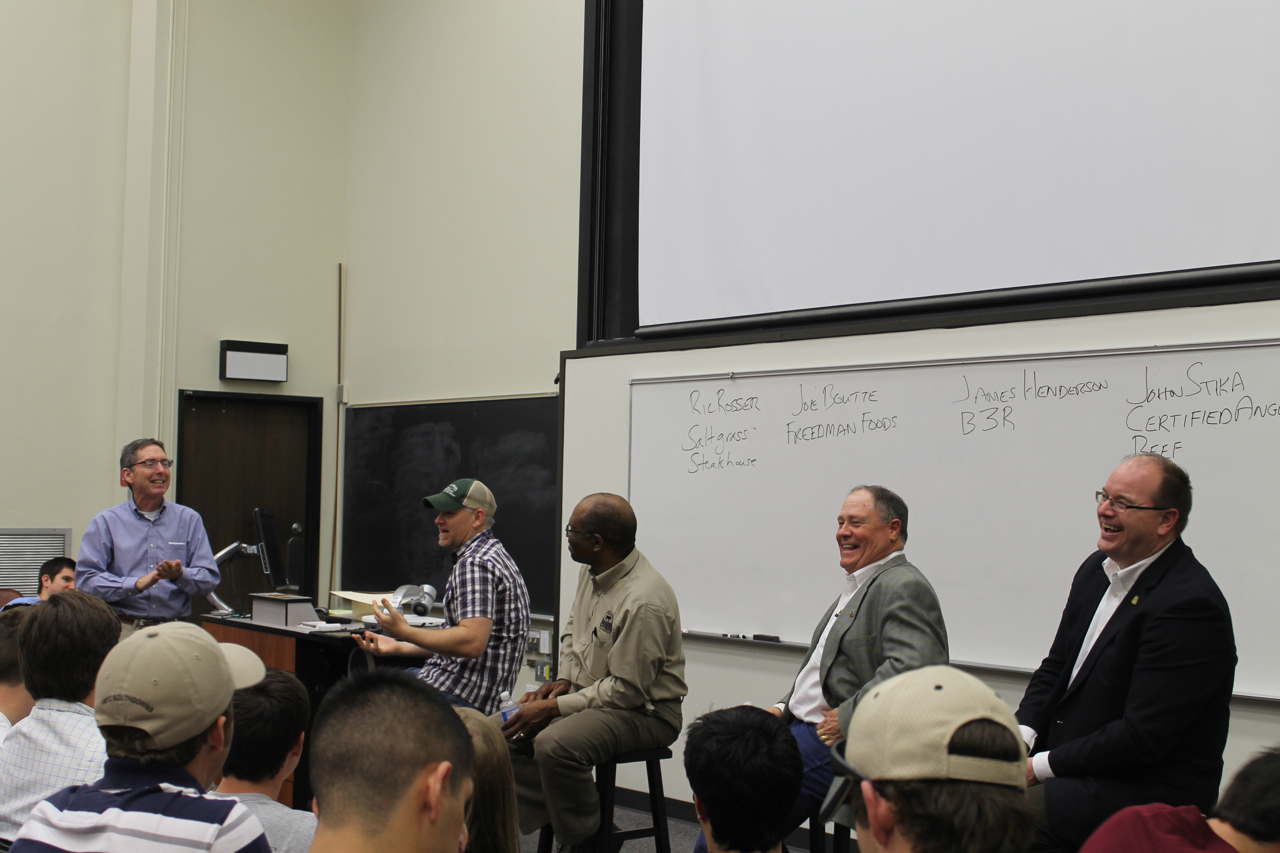
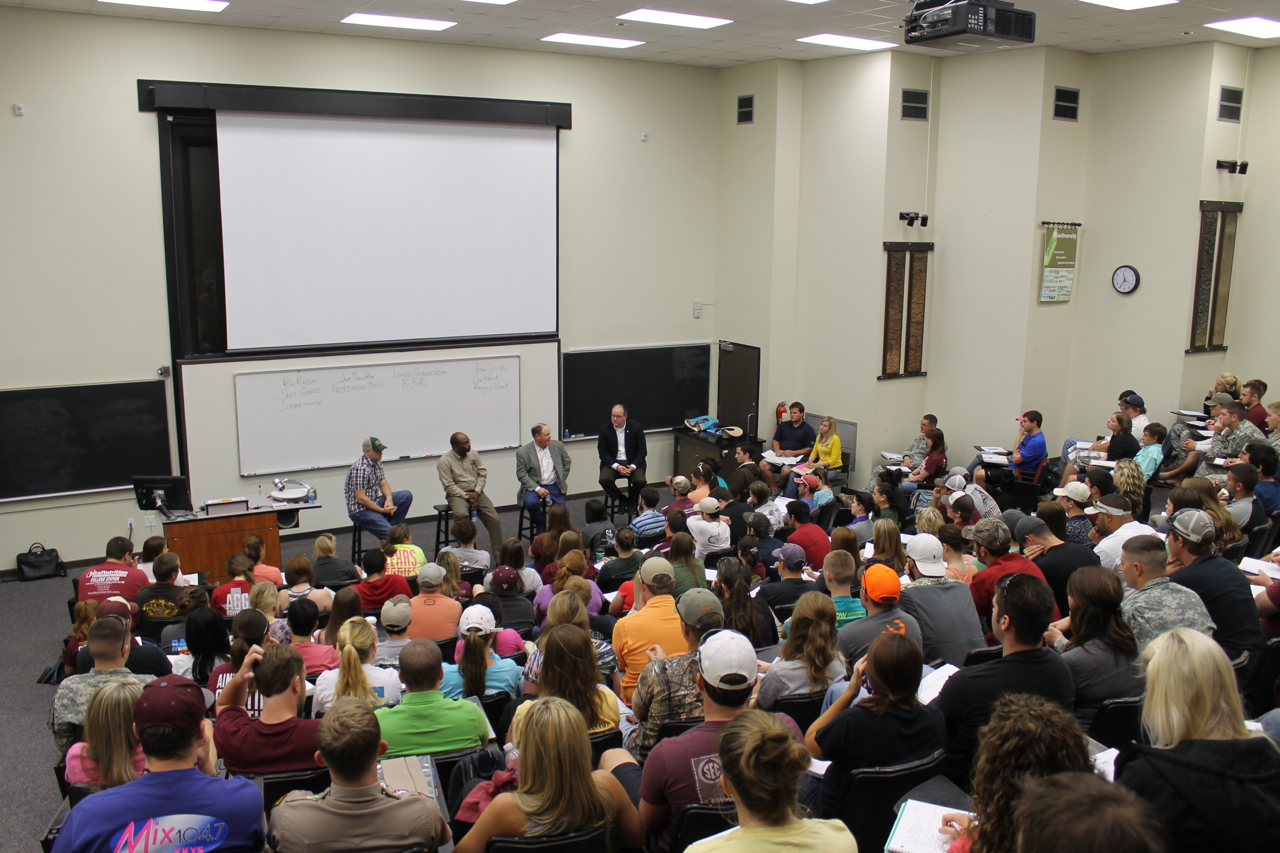
On March 19, the Texas A&M agricultural economist asked four links in the Certified Angus Beef ® (CAB®) brand supply chain to share their experiences: CAB president John Stika; rancher James Henderson of Bradley 3 Ranch; Joe Boutte, director of business development for Houston-based Freedman Meats Inc.; and Ric Rosser, concept/executive chef for Saltgrass Steakhouse and West Coast Claim Jumper.

Stika kicked off the forum, describing how CAB functions in a segmented industry.

“We don’t own any cattle. We don’t own any steaks, or roasts or ground beef. What we own is a building in Wooster, Ohio, three minivans, and this logo,” he said pointing to the CAB crown jewel.

“Everything that this brand is based on is determined by the value we create in your minds, or the minds of consumers,” Stika said. “Whether they’re at foodservice or retail, it’s the trust that they have that this brand is going to deliver beyond expectations for taste and quality.”

CAB has added value to the breed since 1978, but also helped created “Angus confusion,” he allowed.

“McDonald’s, Domino’s, Arby’s and other Angus beef programs—out of the leading brand’s success, Angus has become the embodiment of quality,” he said.

Siebert described the brand’s influence as a constant flow. “Picture Certified Angus Beef’s finished-product creation working like a stream of water,” he said. “This is called the food marketing chain. Upstream are the seedstock producers of high-quality Angus genetics.”

James Henderson is upstream, literally in the Panhandle’s High Plains near Memphis, Texas, where his family’s Bradley 3 Ranch has operated for 50 years. 

The registered Angus business has created far-reaching impacts on all cattle ranching, he said noting CAB’s first live-animal requirement: “How many black breeds of cattle did we have in 1978? Angus and Brangus were the two black breeds. Now, how many do we have today? All of ’em,” he said. “Because that’s where the economics have said, that’s where the money is.”

To achieve success in the future, Henderson said it’s all about creating relevance.

“Our challenge is, how are we relevant in 2032 when we’re trying to sell something to your kids? The challenge is to make sure we produce cattle that add value to the supply chain.”

Henderson’s relevance is evident to CAB-licensed distributor Boutte, who has managed the flow of beef from rancher to plate for 25 years. After Henderson spoke, Boutte shook his hand.

“We thank you, and all the work you guys do because we buy and expect it to be there,” Boutte said. “You guys have performed and given us good quality beef.”

He highlighted the importance of the beef aging process, saying it allows his product to reach its optimum flavor profile, even though that inventoried meat is a huge investment.

“In my years of selling CAB, I would sample product—and the best thing I could do at that point was just be quiet,” Boutte says. “I’ve sold more by being quiet than I ever thought. The product sells itself.”

Chef Rosser represented the end-user, where value is ultimately added.

“Things I need from a good quality cow or steak are, I need more of it and I need it to be smaller,” he said. “That goes contrary to what James [Henderson] spoke of because he needs his to be bigger so he can make more money, and I need it to be smaller. I think there’s probably middle ground there.”

He said he lives a different life than most chefs, paying attention to weather and different markets because “they affect the overall economics of this business.”

“Producers take 22 months to get it to me, and I can screw it up in 12 minutes, so I ask the cow-calf producer to focus on their 22 months, and I’m gonna focus on my 12 minutes,” he said, noting he sold 2.5 million 16-oz. ribeyes last year.

“The cool thing about being Ric Rosser is that I don’t have to worry too much about what I do to my steak, because it’s a good quality steak,” he said. “We shifted to CAB in 1981. Before then the world didn’t exist; we served horrible steaks, and our complaint levels were high. When we moved to CAB our complaints literally dropped off the face of the earth.”                     

He stressed that he’s not a paid advertiser, just a brand believer. And that’s why Siebert became so interested in the non-profit that consistently creates profit for partners that he decided to invite them to class.

“CAB is a completely unique organization in that all participants along this stream—by following their own best interests—ensure that downstream users get exactly what they want: a great eating experience,” the professor said. “I admire the fact that CAB has created over $300 million in premiums received by beef producers. Without CAB, beef producers would have less income.”

You may also like

Progress, Not Perfection

Progress, Not Perfection

It’s a labor of love, obvious in the way she lights up explaining their family’s 33-year effort to proactively adapt Angus cows to their land. A lifetime of telling stories from the pasture or kitchen has resonated with nonfarm consumers as much as fellow ranchers. “Everything we do is about cattle, but it’s also about family and connecting our kids to the land and to the cattle,” Debbie Lyons-Blythe says.

Walter Angus Recognized as 2022 CAB Ambassador Honoree

Walter Angus Recognized as 2022 CAB Ambassador Honoree

Hudson, Colo., provides awe-inspiring views of the pristine Rocky Mountains as a backdrop to their picture-perfect cattle. It’s the ideal spot to introduce visitors to the place where beef begins. Their spirit of hospitality and work to share how they raise high-quality beef earned the Walter family the 2022 CAB Ambassador Award.

The Cattle Market Teacher

The Cattle Market Teacher

Part intuition, part learned experience and a growing database gave Randy Blach the tools to communicate to producers what the market demands. The bottom line is consistently front and center, his mission is to keep more cattlemen and women on the land, doing what they do best.

angus cows in pasture

Schooled in Angus confusion

We love it when former interns keep in touch. It’s even better when we can tap into this growing network of informed young professionals to help us cover an event or story in their area. That recently happened when Anthony Pannone, now in grad school at Texas A&M University, sat in on a class session that we think you might find interesting. Read on to get his take on it. –Miranda

Knock knock . . . Who’s there?

Four businessmen and one professor . . . Four-businessmen-and-one-professor who?

President of Certified Angus Beef LLC (CAB), John Stika. Texas seedstock producer, James Henderson. CAB-licensed meat distributor, Joe Boutte. Concept executive-chef for Saltgrass Steakhouse and Claim Jumper, Ric Rosser. And Texas A&M University professor, John Siebert, who invited the businessmen to speak with his class.

On March 19th in College Station, Texas (a.k.a. Aggieland), I attended a forum set up by agricultural economics professor Dr. Siebert . Pumped to be there, I wondered why he invited the four links in CAB’s supply chain.

“CAB empowers participants to sustainably make more net income,” he said. “This is the most difficult thing to do in all of agriculture. I admire the fact that CAB has created over $300 million in premiums received by beef producers. Without CAB, beef producers would have less income.

Dr. Siebert is an energetic guy fueled by a passion for teaching and learning. His classroom delivery is similar to an inspirational Sunday sermon. In addition to watching him excite the students and encourage them to ask questions, it was cool to listen to the speakers—or as Dr. Siebert called them, “professors for the day.”

Going into the forum I knew the basics of supply chain. Though still not an expert, I came away from the forum with something I had known but to which I never devoted any critical thought. Stika mentioned one thing that currently does and will continue to affect CAB’s supply chain: Angus confusion.  You know you suffer from Angus confusion (scientists are looking for a cure) when anything labeled an Angus product leads you to assume it’s a CAB product.

For those familiar with the brand, for those fortunate to have eaten a CAB steak, burger or other beef product, Angus confusion is less severe or of zero concern. We know what to look for, and we know what we’re getting. But for non-CAB consumers, for consumers yet to wake up and cross into CAB eating-experience paradise, there is the risk of catching Angus confusion. The risk increases as more and more less-than-premium-quality Angus programs hit the market.

Angus confusion: either it leads to an unfulfilling, mediocre eating experience or a rocking party where taste buds celebrate high-quality standards proven to drive business bottom lines into the black. On this day in Aggieland, more than 150 young people were provided with a cure that is hoped to minimize the delirium caused by just-did-make-the-grade quality being confused with consistently-premium quality.


Adios,

Anthony

You may also like

How to Face Evolving Demands

How to Face Evolving Demands

In the rapid changing space of sustainability, finding clarity on what to do is challenging. At the 2021 Feeding Quality Forum, Dr. Kim Stackhouse-Lawson offered insights on what can be expected of producers moving forward.

Change is a good thing

Change is a good thing

From the moment his boots hit the dirt on the way to the barn, to switching off the lights and locking the door of the Hickory House Restaurant, Jonathan Perry is committed to the beef business. The 2021 CAB Chairman brings a unique perspective to the table. By day, he’s a cattleman. By night, he’s a meat cutter.

One tour at a time

One tour at a time

Telling their story to the cattle curious was awkward at first for John and Gaye Pfeiffer. Now, they look forward to hosting hundreds of people every year, sharing everything about the beef cattle life cycle and why they choose Angus cattle on their central Oklahoma farm. Their dedication to teaching and connecting with those further down the supply chain earned them the 2021 CAB Ambassador Award.
Good cattle news abounds

I’m not naïve enough to believe that the beef industry is always all about teamwork. But I am optimistic enough to believe that we’re working toward that, and gaining ground.

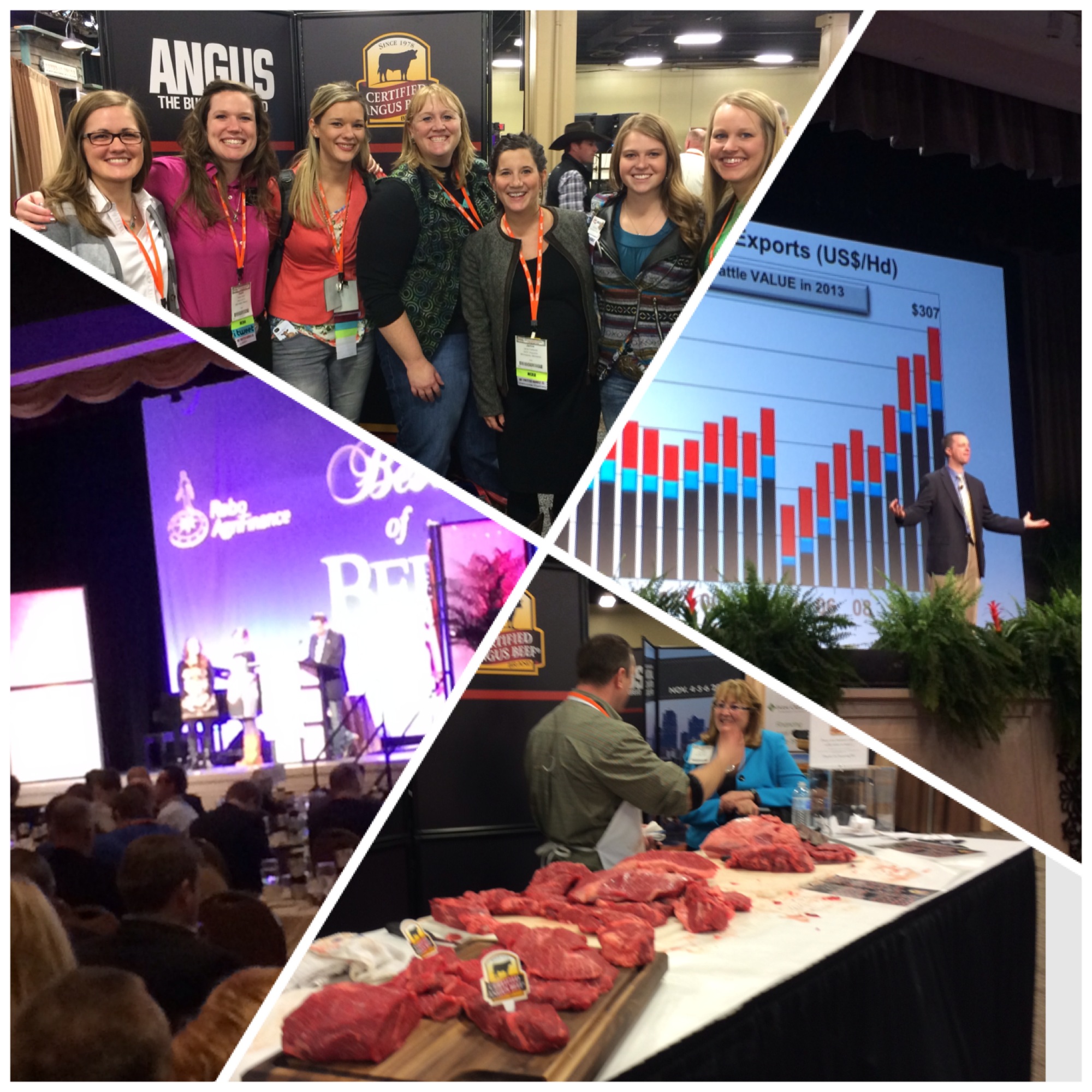
I’ve shared enough examples of how teamwork between rancher and feeder can create better beef, but this last week at the Cattle Industry Convention and Tradeshow I was reminded how cooperation between all stakeholders can really move the needle.

Heading into the convention, I asked you all to share your good news. I jotted down pages full of notes and came away feeling pretty proud of our industry.

In no particular order, here’s a list of some of the items I found both interesting and encouraging:

This roast cooked in the microwave during a presentation. We got to taste test the product, and I can say it was pretty darn good!

-We learned about new beef products coming down the pike (like microwaveable hamburger!) that will help build beef demand.

-John Lundeen, director of market research for NCBA, told us about consumer attitudes toward beef. One of my favorite observations: When consumers are asked if they think beef is safe, they say, “Yes!” He says, “We are winning here.”

-“The beef industry reduced its environmental impact by 9% from 2005 to 2011.” Way to go producers!

-Free Trade agreements give us better market access to market our high-quality beef. (That comment from Cattle-Fax reminded me of a recent story I did on South American beef demand, just one good example of that.)

-The difference between an ungraded beef carcass and a Prime one is $60/cwt. “That’s real money!,” Cattle-Fax told the crowd.

And the notes go on and on, and hopefully I can recap more of the week here later on.

But we not only picked up on good news from speakers and presentations, but also from talk in the hallways and Twitter chatter. Several people tweeted us their thoughts via #GoodCattleNews, covering everything from the weather at home (rain—halleluiah) to future beef demand.

When we got home, we threw all those participants in a virtual hat (random.org, that is) and found our steak package winner:

We can’t argue with that logic, Jennifer! We know health=more profitable, higher quality cattle.

Thanks for playing along. You may not be grilling in Tampa-like temps, but hopefully you’ll feel the same optimism we did last week as you enjoy your Certified Angus Beef (R) brand steaks!

May your bottom line be filled with black ink,

Miranda

You may also like

How to Face Evolving Demands

How to Face Evolving Demands

In the rapid changing space of sustainability, finding clarity on what to do is challenging. At the 2021 Feeding Quality Forum, Dr. Kim Stackhouse-Lawson offered insights on what can be expected of producers moving forward.
Change is a good thing

Change is a good thing

From the moment his boots hit the dirt on the way to the barn, to switching off the lights and locking the door of the Hickory House Restaurant, Jonathan Perry is committed to the beef business. The 2021 CAB Chairman brings a unique perspective to the table. By day, he’s a cattleman. By night, he’s a meat cutter.

One tour at a time

One tour at a time

Telling their story to the cattle curious was awkward at first for John and Gaye Pfeiffer. Now, they look forward to hosting hundreds of people every year, sharing everything about the beef cattle life cycle and why they choose Angus cattle on their central Oklahoma farm. Their dedication to teaching and connecting with those further down the supply chain earned them the 2021 CAB Ambassador Award.