amelia woolums, antibiotics, antibiotic resistance, ncba

Chef coats and cow pastures 

How many of you grew up on a farm?”

That was the first question Mary McMillen posed to a group of 19 culinary students, from the Charlotte, N.C., Johnson & Wales University (J&W), as they stood in their brand new chef coats under the barn at Back Creek in Mt. Ulla, N.C.

No hands moved.

“How many of you have ever eaten a hamburger?” Mary asked next.

All hands stretched high in the air.
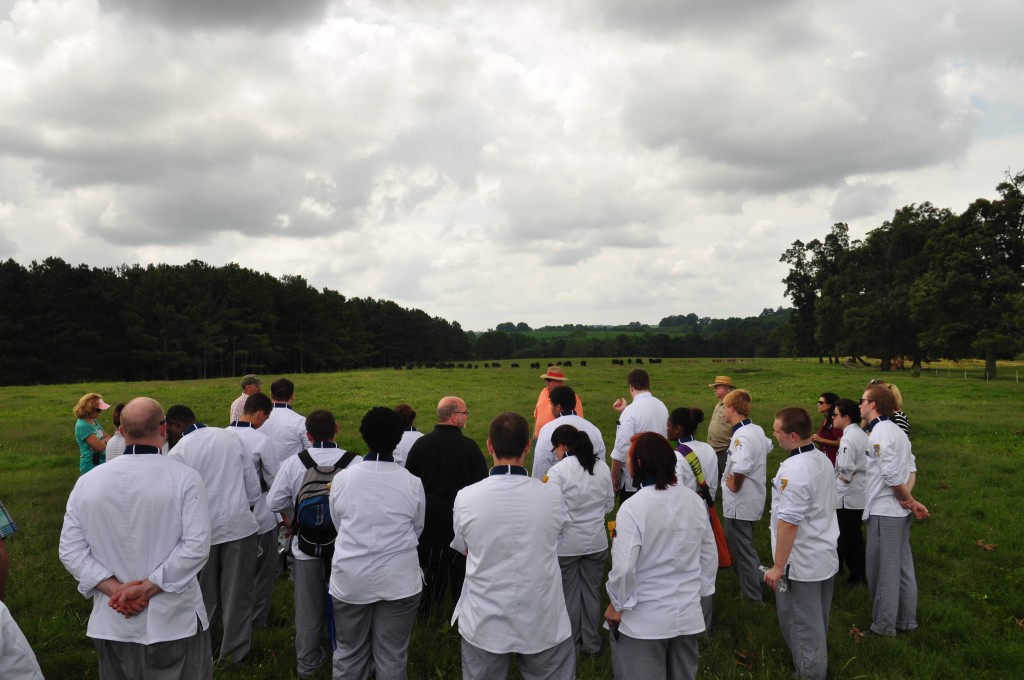
Hosts Joe and Robin Hampton began Back Creek in 1981.
Hosts Joe and Robin Hampton started Back Creek in 1981.


“They all eat hamburgers. They all know what a good hamburger or a good steak is,” Mary explained. “So that was the point of entrance into engaging them in what we were going to do. We had to interact with them in a way they would understand.”

Mary, CAB public relations director, continued the conversation by asking what makes that hamburger or steak stand out. She answered for them this time.

“It’s the beef.”
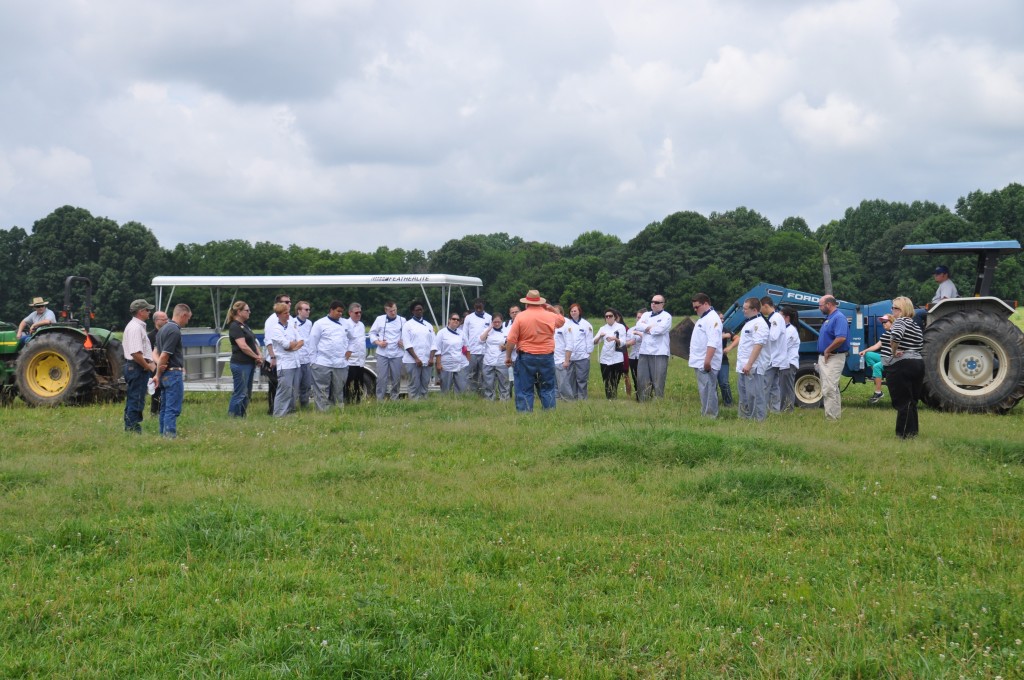
As the 2011 American Angus Association President, Joe traveled extensively sharing the story of CAB.
As the 2011 American Angus Association President, Joe traveled extensively sharing your story.


During a busy summer, full of events both in Wooster and afar, this one to Back Creek’s Angus Farm wasn’t exactly planned.

“It was a quick turnaround, a spur of the moment,” Mary said. “Two of the J&W staff went on our chef tour in May and came back charged up. One called me and said, ‘This is amazing. I want to take some students and faculty to a farm right now.’”

The next month the group was standing on one, just an hour outside of Charlotte.
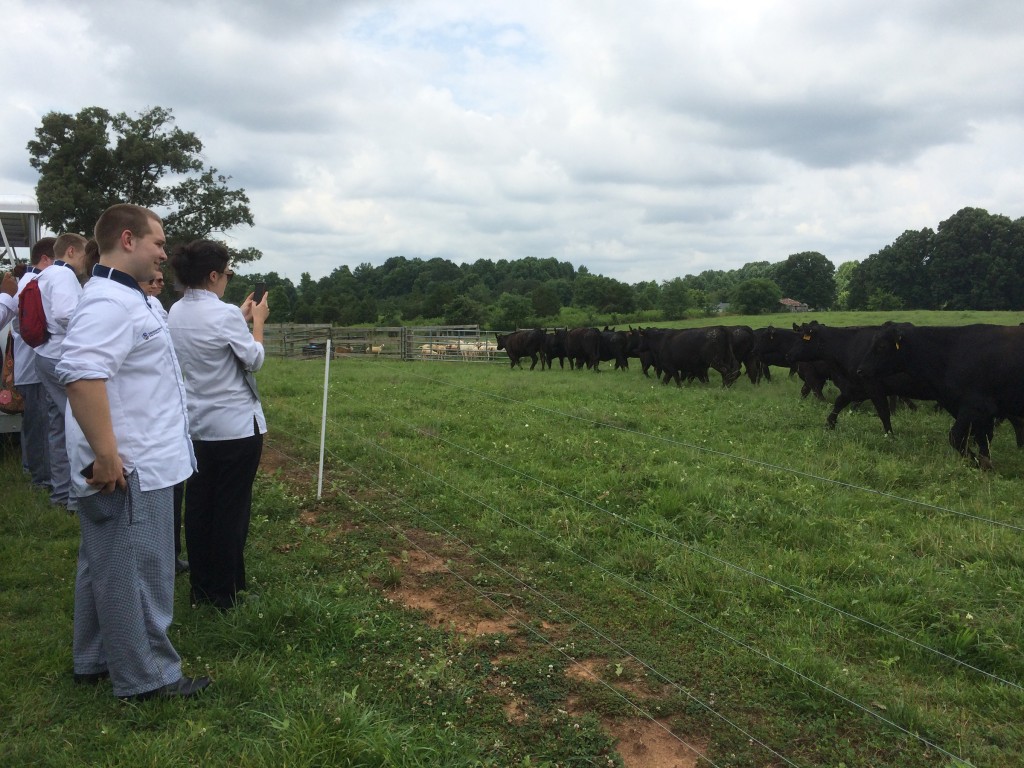
For the majority of the students, this was their first introduction to beef production.
The visit to Back Creek was the first glimpse into beef production for all of the J&W students.


While it’s typical for CAB to host staff from the esteemed academy to educate them on beef quality and production, working with students was a first. Having just begun their culinary expeditions, many questions were posed – and then answered through first-hand experience.

“It’s a special thing to catch them as they’re starting their careers,” Mary said. “These students had only been in their classes for two weeks. One kid had literally just graduated from high school. So it was a good thing.”

I’d tend to agree.
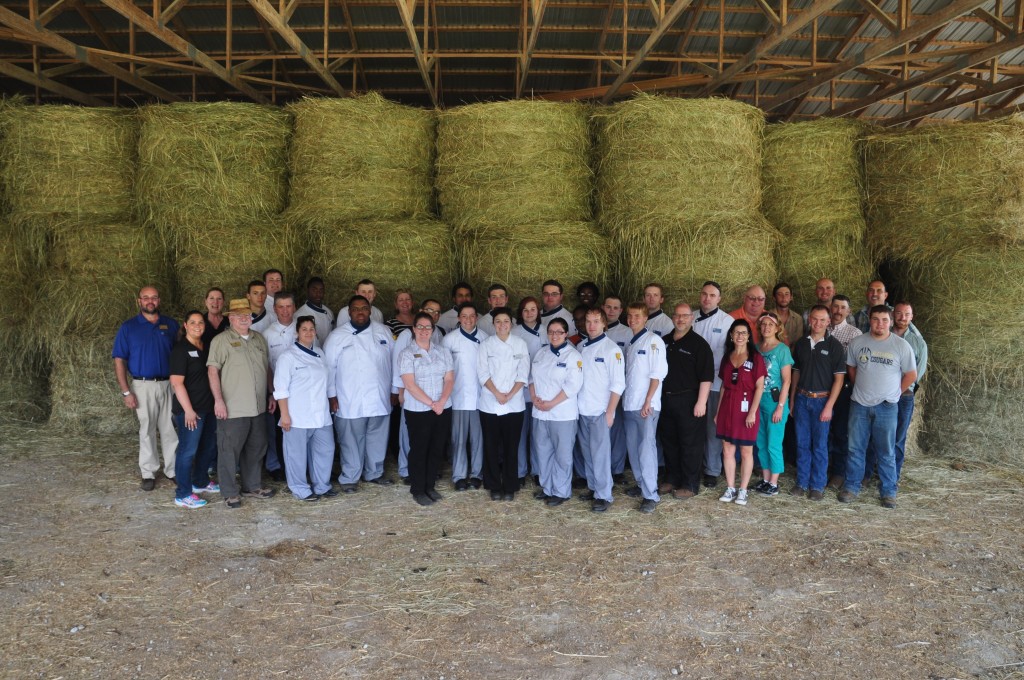
In addition to their culinary expertise, this group of J&W graduates will carry with them the story of the brand and those behind it.
As a result, the future chefs will carry more than culinary expertise into their new careers.


Thanks for allowing us to tell your story,

Laura

You may also like
Producers Can Influence Sustainability

Producers Can Influence Sustainability

Sustainability is a new target for producers. While there are no plans to meet these goals yet, there is interest in how cattle can be part of the solution. It comes down to the adage, “trust but verify,” and verification will need to come from those raising beef.
Sustainability Cents

Sustainability Cents

Sustainability is an all-encompassing term for social, environmental and economic business needs. The popular, updated term describes many of the same best practices cattlemen have put to work for generations.
Meeting Demand with Better Beef in 2021

Meeting Demand with Better Beef in 2021

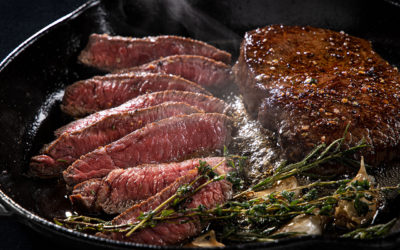
More than forty years after selling the first pound of branded beef on October 18, 1978, Certified Angus Beef continues to deliver for consumers and producers. The brand closed fiscal year 2021 with a few new records and another billion on the books.
cows walking

Back to school, part II

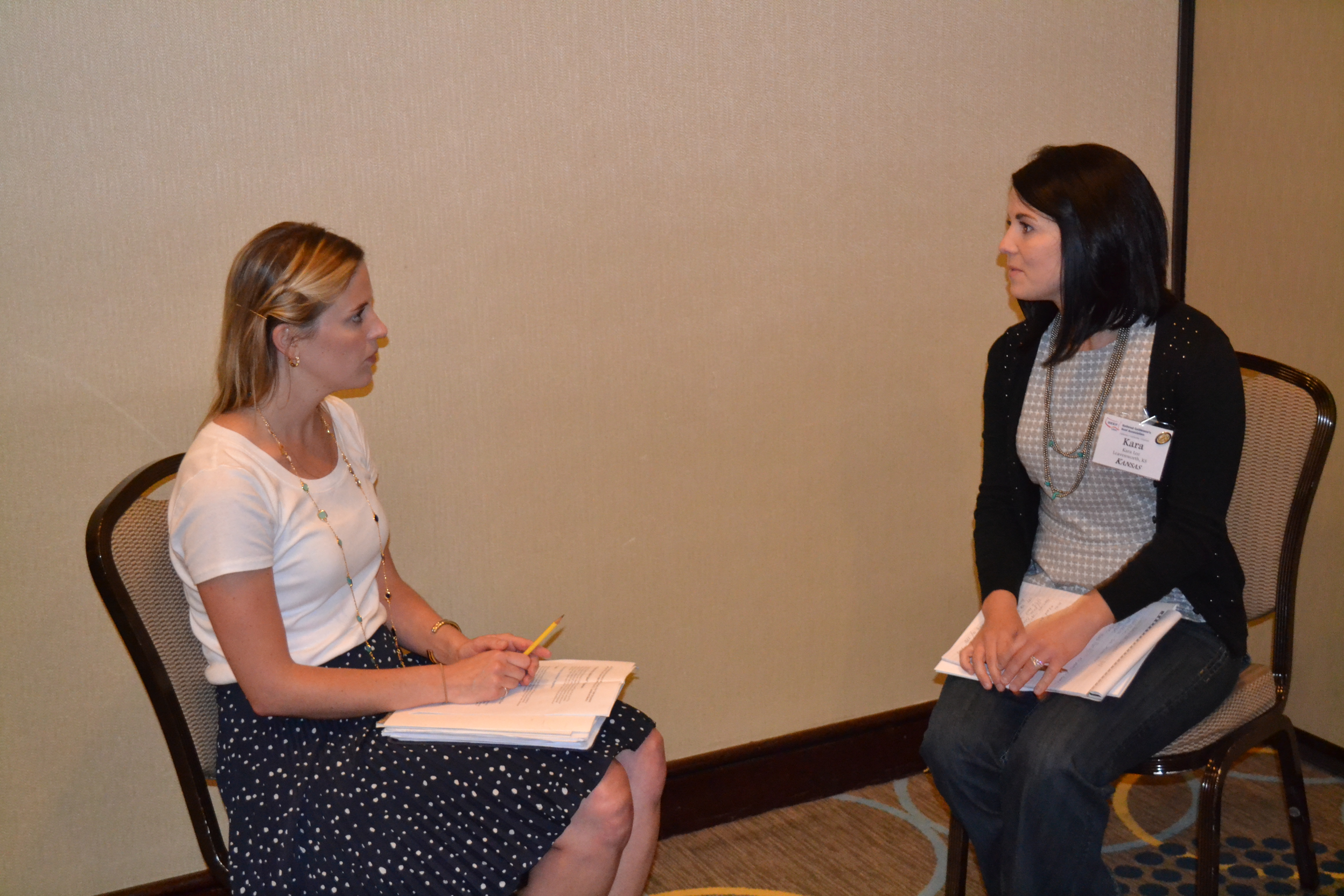
Yesterday Kara talked about seeing the familiar with a different perspective. Read on today as she discusses other valuable takeaways from her involvement in the Young Cattlemen’s Conference.

IMG_7809New Classmates & Professors

The networking and relationship-building I took home from YCC was one of the most valuable pieces. It made me stop and wonder: how many other seminars have I attended where I flock to the people in the audience I know and go home with very few (if any) new contacts? Since YCC, I have reached out to at least one classmate or presenter – who I never knew prior to the conference – at least once a week. It’s been a great way to build mentors and have industry peers for idea sharing.

My challenge: The next seminar you go to, seek out at least one new face. Find out what they do and try to find a way that you can learn from them and make your business better. Listen to a session with a speaker you’ve never heard (or heard of), and approach them afterwards with questions. You might want to reach out to that person in the future and they are more likely to remember the person that came up to talk to them afterwards.

Make Time

DSC_0454I know it’s easy for cattlemen to neglect off-site learning opportunities because you just don’t have time. Make time. It’s as simple as that. I am certain the workload I left behind for my 10 days at YCC was very light compared to many of my classmates and it’s easy to worry about what’s going on back home, but the long-term benefits for your business are counting on your professional development.

My challenge: Keep your eyes peeled for opportunities to make yourself better. Each summer the American Angus Association hosts their Beef Leaders’ Institute, which is a great week-long opportunity to broaden your horizons on high-quality beef production. Heading to San Antonio for the annual Cattle Industry Convention & Trade Show next February? Check in a day early and take in the Cattlemen’s College sessions. Find a new educational opportunity and take hold of it! For some, it may be as simple as formally completely a BQA certification that you never finished. Set a goal – maybe you think in semesters and choose two a year, but identify your opportunities and start today.

~Kara

You may also like

Doctor’s orders

Doctor’s orders

Doctor’s orders As a kid my family went on two trips a year. One to visit relatives up north (this one, not even a guarantee), the other to the Florida Cattlemen’s Association’s Annual Convention. What may have been work for my parents was vacation for us kids....

A packer buyer’s favorite cross

As the Brand the Barn intern, I’ve attended a lot of barn celebrations this summer (18 to be exact). Each time I’m struck by the variety of people in attendance. Sometimes, it’s a seedstock operation and bull buyers attend. Other times, it’s a closeknit group, just...

Putting it in perspective

Putting it in perspective

The older I get, the more I realize perspective is important. What would be a drought in Minnesota might be a really good summer in west Texas; what is a lot of noise to one family might be an average day in our house full of kids; what might seem cheap to some would be a lifetime’s savings for another.

Back to school

Brooklyns First Day of Big Presschol (1 of 1)
I enjoyed seeing many pictures in my newsfeed the past few weeks, including this one of Miranda’s oldest daughter.

Around our house the changing of the summer season is usually commemorated by the turning of crops, preparations for weaning, and a little relief from sweltering humidity. When you don’t live in a world that runs on semesters, it’s easy to forget that the end of summer also means back to school for so many families.

For the last few weeks it’s been impossible to overlook all the signs that school is back in session. Parents post photos of their kids, college students have moved back to campus, and my mother, a high school math teacher on Eastern Time, tends to be a little grumpier when I call her at 10:00 p.m. on a school night from my Central Time zone (Sorry, Mom!). It’s enough to make a person just a bit nostalgic about the days when you could dedicate the majority of your time to formal learning.

As cattlemen and women, it’s sure easy enough to get caught up in all of the chores and responsibilities around the farm and ranch. We try to keep up with the news and research articles as best we can. Although, if your coffee table is anything like ours, it carefully cradles every Ag magazine and newspaper published between the start of planting and the end of hay season. You know you’ll get to them eventually after you get those spring calves weaned.

photoSometimes there’s a lot of value in geographically removing yourself from your cattle business to take time and enhance your own learning. This summer, I had the opportunity to do just that through NCBA’s Young Cattlemen’s Conference (YCC).

It’s a big commitment to spend 10 days jet-setting between three different time zones, but the value was ten-fold the sacrifices to be there. Not every learning excursion can be so in-depth, but there are several fundamental lessons from off-the-ranch training beyond just the new material.

Reviewing Current

It’s true. Some of the material we covered in YCC wasn’t all that new to me. I had a relatively decent grasp on some of the consumer beef demand topics, but it was not a waste of my time to hear it again. It’s valuable to see someone new present familiar information. I learned new ways to explain answers to common questions, and likewise heard questions I’d never considered.

My challenge: Don’t let an old familiar topic deter you from attending a cattlemen’s meeting. You may have a great vaccination program in place for your herd. A public forum on herd health might have new research to make it even better. Never become complacent about the things you’re already really good at.

DSC_0196Perspective

All our tours were at operations that were “all in” for their segment of beef production. As it turns out, there’s a lot that ranchers can learn from burger processors, farm equipment developers can learn from legislators, and feedyard managers can learn from meat scientists. Spending time with people who are some of the best in their business is a great way to gain perspective. Even though we all have different jobs along the way, there are a lot of strategies that aren’t that different. While visiting with the JBS corporate team, one leader said the packing industry used to look at everything as one big pie and everyone was trying to get a bigger piece. He said today we need to challenge that thinking by figuring out how we can make the pie bigger. We can all put that logic to work.

My challenge: Chances are all your focus lies in whatever segment you’re in. If you’re a cow-calf operator, you spend the minimal amount of time necessary understanding the world of cattle feeding. When you head to a conference, take in a session that is targeted towards a different arm of the beef business.

New faces and making time—tune in tomorrow to read the rest of Kara’s lessons learned from YCC.


You may also like

Doctor’s orders

Doctor’s orders

Doctor’s orders As a kid my family went on two trips a year. One to visit relatives up north (this one, not even a guarantee), the other to the Florida Cattlemen’s Association’s Annual Convention. What may have been work for my parents was vacation for us kids....

A packer buyer’s favorite cross

As the Brand the Barn intern, I’ve attended a lot of barn celebrations this summer (18 to be exact). Each time I’m struck by the variety of people in attendance. Sometimes, it’s a seedstock operation and bull buyers attend. Other times, it’s a closeknit group, just...

Putting it in perspective

Putting it in perspective

The older I get, the more I realize perspective is important. What would be a drought in Minnesota might be a really good summer in west Texas; what is a lot of noise to one family might be an average day in our house full of kids; what might seem cheap to some would be a lifetime’s savings for another.

steers at bunk

Feed prices down, risk ever apparent

Dan Basse, AgResource Company
Dan Basse, AgResource Company 

“You must manage your risk.”

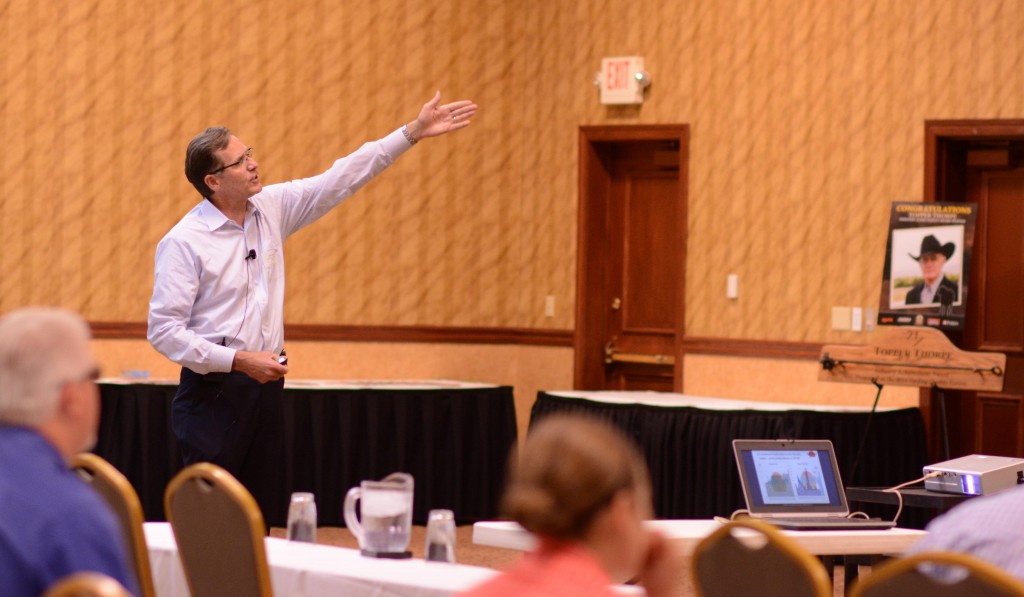
Dan Basse, president of AgResource Company, has headlined the Feeding Quality Forum for the past six or seven years. He’s covered $2 corn to $8 corn, but that message remains constant. Sure, the risk changes, but it’s important to manage it.

This year he told us the “bio boom” is over, exports are down and supplies are up. That all boils down to corn prices decidedly down, around $3.60 he predicts, with poor basis in the north due to infrastructure challenges.

“We’re back to waiting for a significant climatic event to cause a rally,” he says. We’ve spent so much time worrying about feed prices. Now they’re in check, so what’s the risk now?

Scott Brown, of the University of Missouri, told us about the real danger (makes economics sound fairly dramatic, doesn’t it?) that comes in producing low-quality beef.

Brown2
Scott Brown, University of Missouri 

“Statistically pork and chicken make better substitutions in the Select market,” he says. “We don’t see the same substitution competition for Choice and Prime.”

A 10% increase in Prime prices equates to very little change in consumption, but that same 10% increase in Select price moves the consumption down at a much quicker pace.

Lately the Choice-Select spread fluctuates wildly, but the Prime-Choice spread remains wide and fairly constant. Looking at demand curves and economics, Brown says the message is clear.

“Quality can become a risk management tool for the industry in the long run,” he says.

At the university-run Thompson Farm, the Angus-based herd provides an example. “The most profitable cows were those whose offspring graded Prime.”

Brown was almost urgent in pleading with the feeder-centric audience to take this message to their suppliers.

“If we don’t do it now, we never will,” he said. Drought has broken in many parts and herd rebuilding needs to include a focus on animals that will gain and grade. “Investment in the genetics of that herd will pay dividends.”

May your bottom line be filled with black ink,

Miranda

PS—Thanks to all the forum co-sponsors (Purina, Feedlot Magazine, Zoetis and Roto-Mix) who helped us bring this great set of experts to cattle feeding country.

You may also like

Better every day

Better every day

“Continuous improvement,” it’s what the beef industries does to demonstrate to consumers we’re committed to getting better. It’s how we measure progress. For Cargill Protein, the packing company puts the same pressure on themselves.

Mindful management

Mindful management

Undetectable diseases are hard to cure. That’s why the industry is working to find new ways of treating liver abscesses. Tylan is effective, but as antibiotic-resistance concerns and conversations continue, its future is not assured.

Promoting growth and grade

Promoting growth and grade

When it comes to growth implants in cattle, animal scientist Robbi Pritchard only worries about three things: getting enough premium if you’re not use them, using them wrong and using them with too little insight.

brand specifications evolve, spec change

Success in the Flesh

Abundant in rich soil and row crops, the north-central Ohio town of Ashland sees its fair share of Angus cattle. Ashland is also the home of a unique packer: compared to the larger industry plants in the West, family-owned and CAB-licensed E.R. Boliantz Packing Co. offers a different view to the folks who walk through its doors.

Recently a group of 22 high schoolers visited the plant, and walked out with a brighter perspective of the industry they already love.

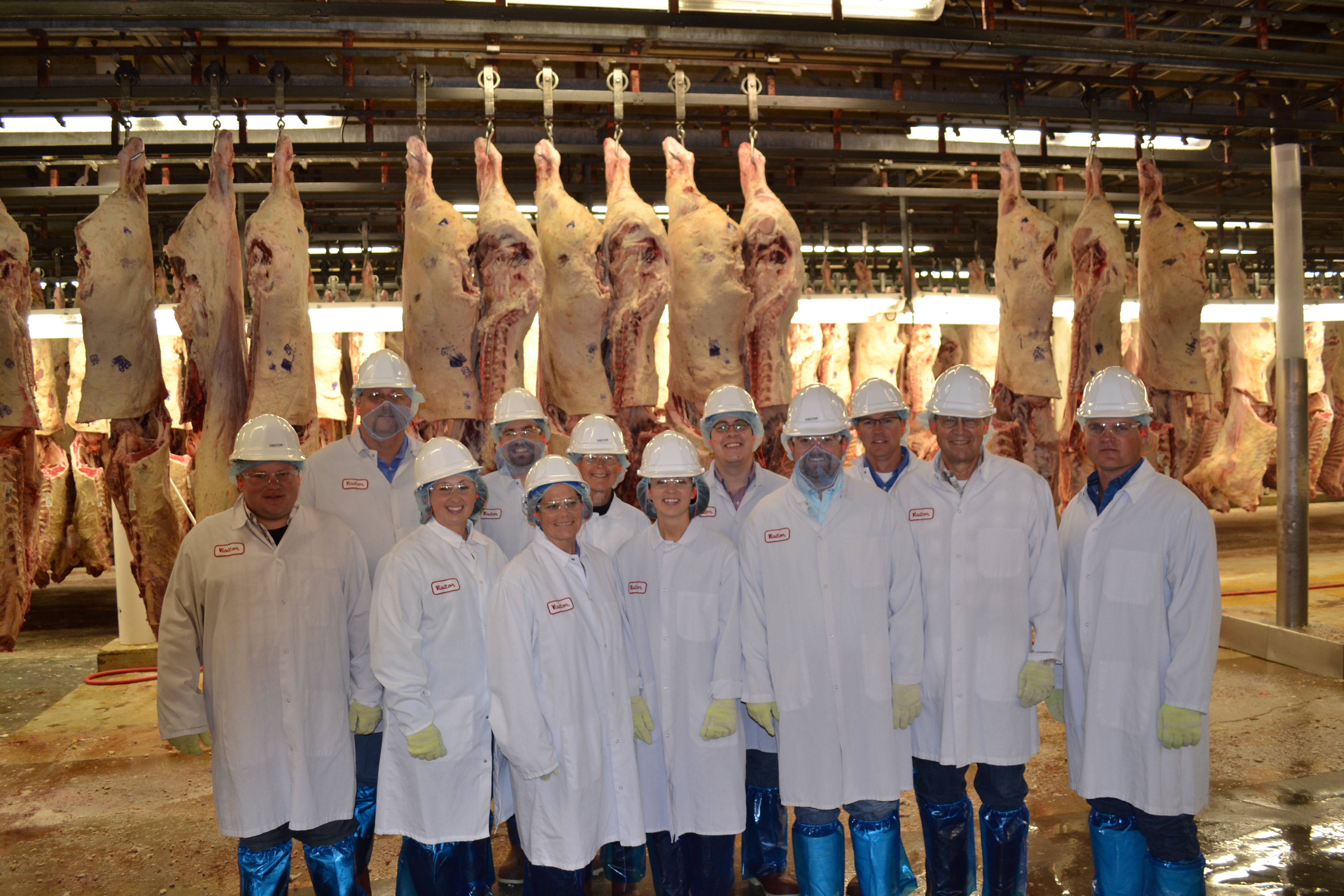
Students from R.G. Drage Careeer and Technical Center observe carcasses being processed.
Students from R.G. Drage Career and Technical Center observe carcasses being processed.

Accompanied by CAB meat scientist Dr. Phil Bass, the local tech class toured the plant and took a close look at the carcass results of cattle they fed while enrolled in their high school course.

“They have already chosen to have a career in agriculture, so it’s just really neat to see such a young group of folks with determination, ready to go in and grow the agricultural community,” Bass said.

After exploring the live side, students made their way to the cooler to see if their own animals met CAB’s specifications.

CAB meat scientist Phil Bass discussed the brand's 10 specifications as they applied to cattle the students fed throughout the year.
CAB’s Phil Bass discusses the brand’s 10 specifications as they apply to cattle the students fed.


“We started out looking at the harvest process,” Bass said. “We explained everything that goes on, all of the food safety measures and humane handling things, all the steps that it takes to turn a live animal into a carcass.”

The tour ended in the fabrication room where sides were broken down into primals and subprimals.

More than the fun, more than the camaraderie was the honor of educating the future generation, Bass said of his main takeaway.

“I love visiting with students who don’t realize all the different avenues that you can take with an animal science or agriculture background,” Bass said. “You can go into food science or the production side. It’s more than just being a veterinarian.”

Amidst the rows of carcasses, students were engaged, willing and ready to listen and learn. Challenged with the task of stumping Bass, they asked their fair share of questions from, “What do packers do with the udders” to “How many cuts of meat come off of each animal.”

Students enjoyed trying to stump Dr. Phil with the most difficult questions.


Asked whether any students wanted to follow in his footsteps, Dr. Phil chuckled and said indeed, many were inquiring about which colleges to attend.

As far as agriculture is concerned, I say the future looks bright.

Thanks for allowing me to tell your story,

Laura

You may also like

North Dakota Partnership Earns CAB Progressive Partner Award

North Dakota Partnership Earns CAB Progressive Partner Award

The Bruner and Wendel families earned the 2023 CAB Progressive Partner award by selling high-quality beef through Dakota Angus, LLC, as part of the CAB Ranch To Table program. They focus on their commitment to quality, data-driven decisions, achieve impressive CAB and Prime percentages and offer high-quality beef directly to consumers in their communities.

Certified Angus Beef Launches Direct-to-Consumer Program

Certified Angus Beef Launches Direct-to-Consumer Program

Could your freezer beef carry the CAB logo? Perhaps. With the launch of a new program. Ranch to Table, a direct partnership program between CAB and cattle operations using Angus genetics, allows ranchers to use the brand’s trusted reputation for increased gain.

A recipe for high-quality beef

I’m a meat-and-potatoes kind of girl. I like a good steak on the dinner plate. But what if I told you the key ingredients for that juicy steak aren’t found in a magic marinade or dry rub?

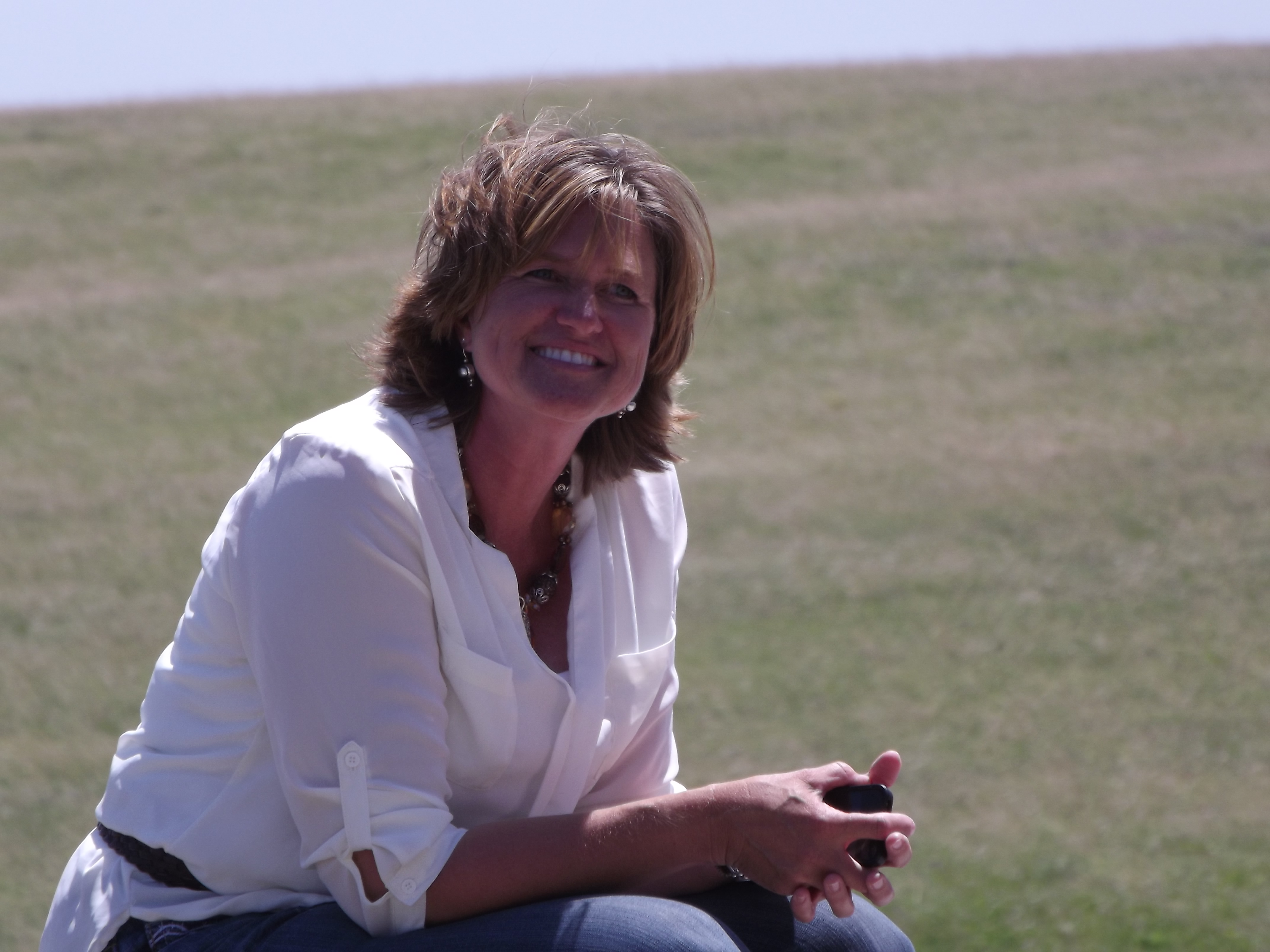
Our first stop on the recent CAB Master of Brand Advantages (MBA) tour was just south of White City, Kan., home to some superior Angus genetics as well as the 2012 Farm Mom of the Year, Debbie Lyons-Blythe. (You may also remember she guest blogged right here last year.)

Recognize Debbie? She was featured in Monsanto's "America's Farmers" ad, which debuted during Super Bowl XLVIII.
Recognize Debbie? She was featured in Monsanto’s “America’s Farmers” ad, which debuted during Super Bowl XLVIII.

Aside from her full-time duties as mom and  purebred producer, she writes a blog titled, “Life on a Kansas Cattle Ranch.” Haven’t heard of it? Look it up, you won’t be disappointed.

Every spring, when conditions allow for it, cattlemen (and cattlewomen) in the tall grass prairie use controlled burning to disrupt the natural progression of prairie grass into forests. This method kills the emerging shrubs and scrubby trees and removes the old, dead grass that holds very little nutrition.

Producers like Debbie don’t burn because they are all pyromaniacs, but because pasture health is important to raising high-quality beef.

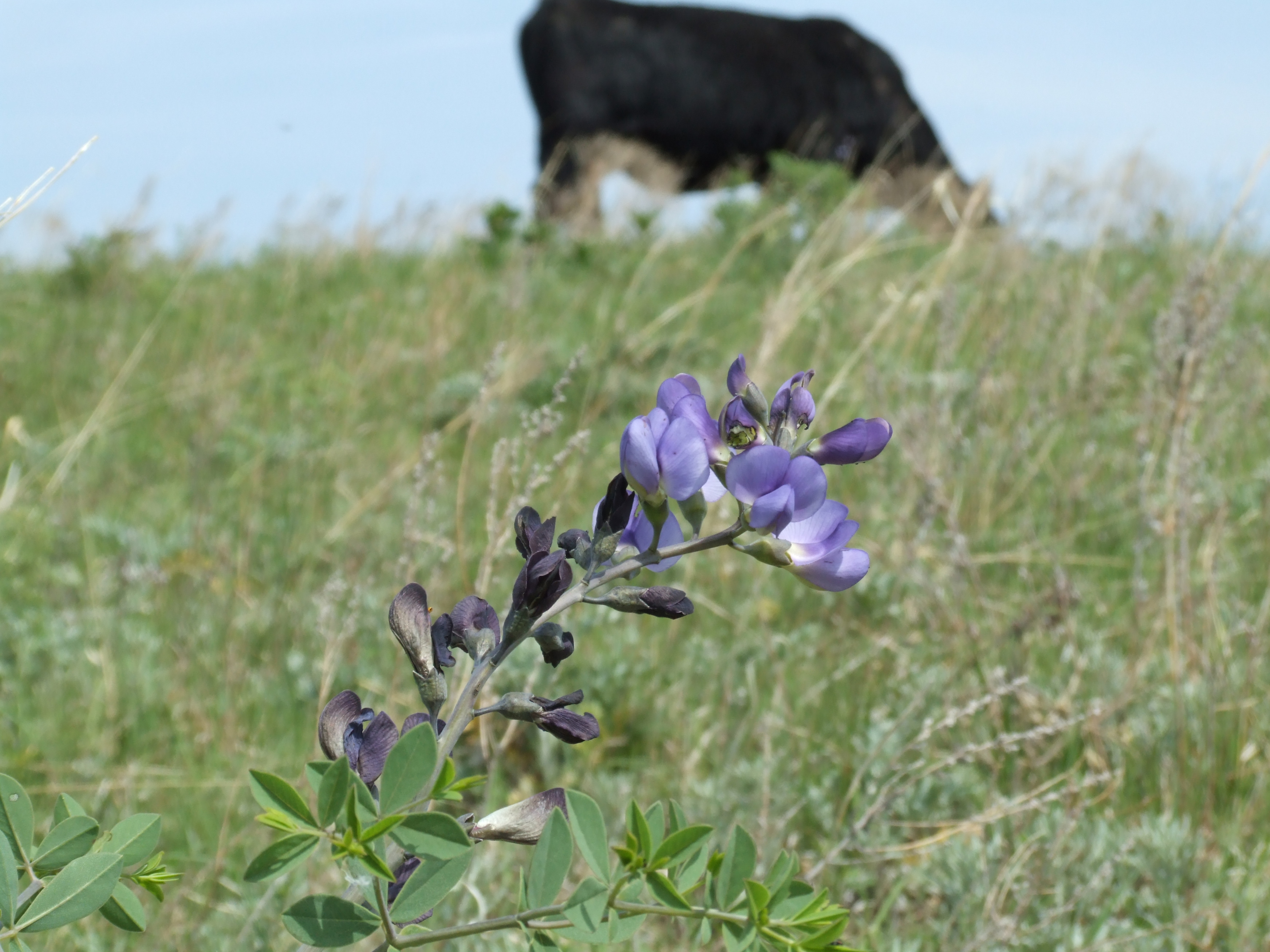
Blue indigo, the plant pictured above, is used by Debbie as an indicator of good pasture health.

“Environment and genetics go hand in hand,” says Debbie. She explained this to MBA participants through a story about her identical twin boys.

They came from the same embryo, so they hold the same genetic potential. But at the age of 3, one of the boys became very sick when his digestive system stopped utilizing nutrients, halting his growth.

Without the proper nutrition, he became much smaller and lighter weight than his brother.  His digestive disorder eventually cleared and he began to grow again.  The twins are now 18 with a difference of less than ¼ inch in height and 10 pounds in weight.

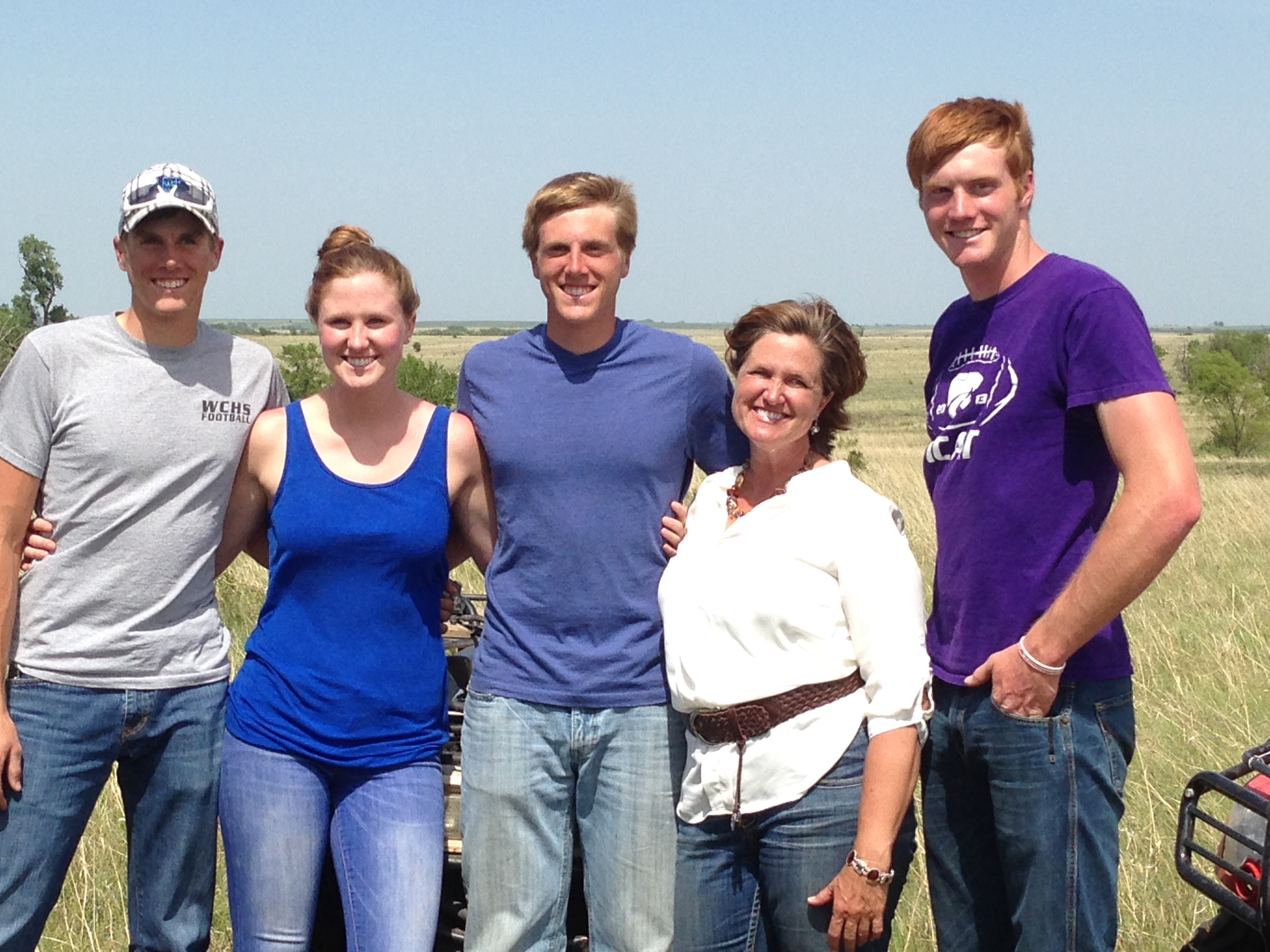
Debbie with four of her five kids, (left to right) Tyler, Allie, Eric, Debbie and Trent. Looking at Tyler and Eric now you would have any idea that one of them was sick.
Debbie with four of her five kids, (left to right) Tyler, Allie, Eric, Debbie and Trent. Looking at Tyler and Eric now you wouldn’t have any idea that one of them was sick.

“Because of our experience, I believe wholeheartedly in genomic testing of our breeding stock,” says Debbie. “We can work hard on the environment, but without the proper genetics, we won’t make much progress in the quality of the beef we serve. On the flip side, we can spend good money on high-quality genetics, but without good pasture and feed, the genetic potential may go unrealized.”

I was an active 4-Her for 11 years. Baking for the county fair was always a very delightful task. (That was sarcasm if you didn’t catch it. And this WILL come back around to cattle…)

One year I remember being so excited to bake a loaf of banana nut bread by myself. I followed the directions carefully, but when I took it out of the oven it looked horrible. It looked so bad I think my mom was scared to even feed it to the dogs. Retracing my steps, I learned that I forgot to include the bananas.

Like my banana nut bread, our cattle have a recipe for success. Imagine that their grazing environment is the banana and the other ingredients are the genetic traits we select. If you forget to put in the banana or stir in some old, dead grass and mix in some brush, then all the other ingredients don’t matter.

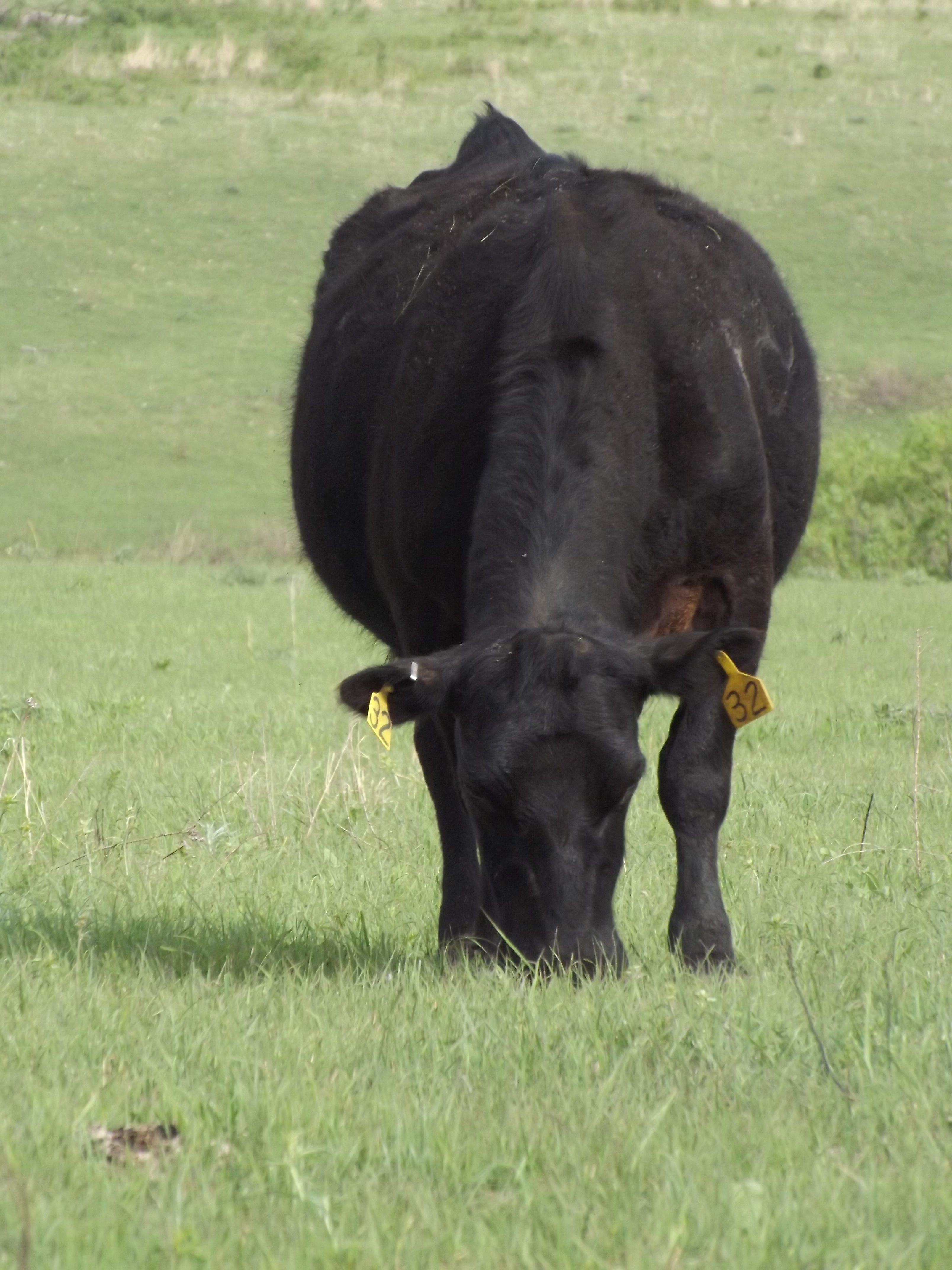
Nutrition for grazing cattle is especially important during late spring to get body condition scores where they need to be for breeding.
When pastures are properly cared for the nutrition they provide is perfect for grazing.

It takes both environment and genetics to raise high-quality beef, so next time you are planning pasture rotations or nutrition plans remember not to skimp on the “banana.” It’s pretty important to the recipe.

-Kaitlin

You may also like

Doctor’s orders

Doctor’s orders

Doctor’s orders As a kid my family went on two trips a year. One to visit relatives up north (this one, not even a guarantee), the other to the Florida Cattlemen’s Association’s Annual Convention. What may have been work for my parents was vacation for us kids....

A packer buyer’s favorite cross

As the Brand the Barn intern, I’ve attended a lot of barn celebrations this summer (18 to be exact). Each time I’m struck by the variety of people in attendance. Sometimes, it’s a seedstock operation and bull buyers attend. Other times, it’s a closeknit group, just...

Putting it in perspective

Putting it in perspective

The older I get, the more I realize perspective is important. What would be a drought in Minnesota might be a really good summer in west Texas; what is a lot of noise to one family might be an average day in our house full of kids; what might seem cheap to some would be a lifetime’s savings for another.

Cattle and chefs, bulls and Miami

As a native Floridian, one may find it interesting that I rarely venture south to the populous city that is Miami.

As a ranch kid, one likely understands.

Sysco_0

Long revered as a city booming with cultural flare and taste, Miami is vibrant and exciting. But home to many cattle, it is not.

As a girl who likes to keep her sights set on a cow trail, I often choose my rural town over the hustle and bustle of city life, but when a certain bovine made his way to the sunny streets, I did, too. For I go where the cattle go.

Sysco_1

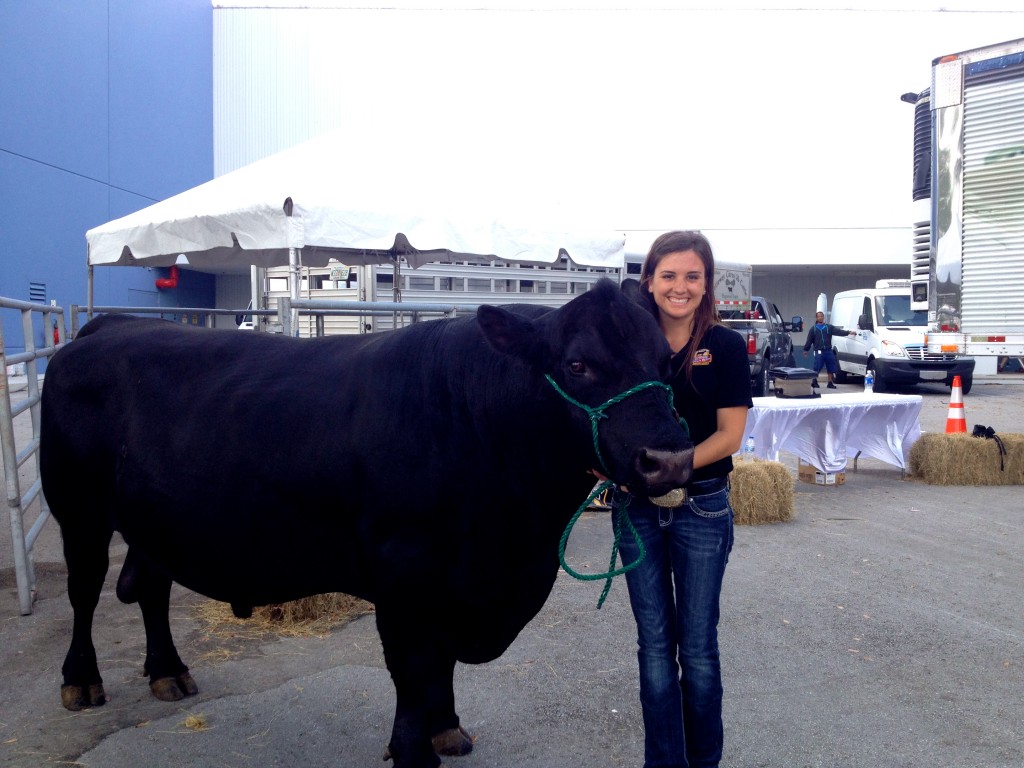
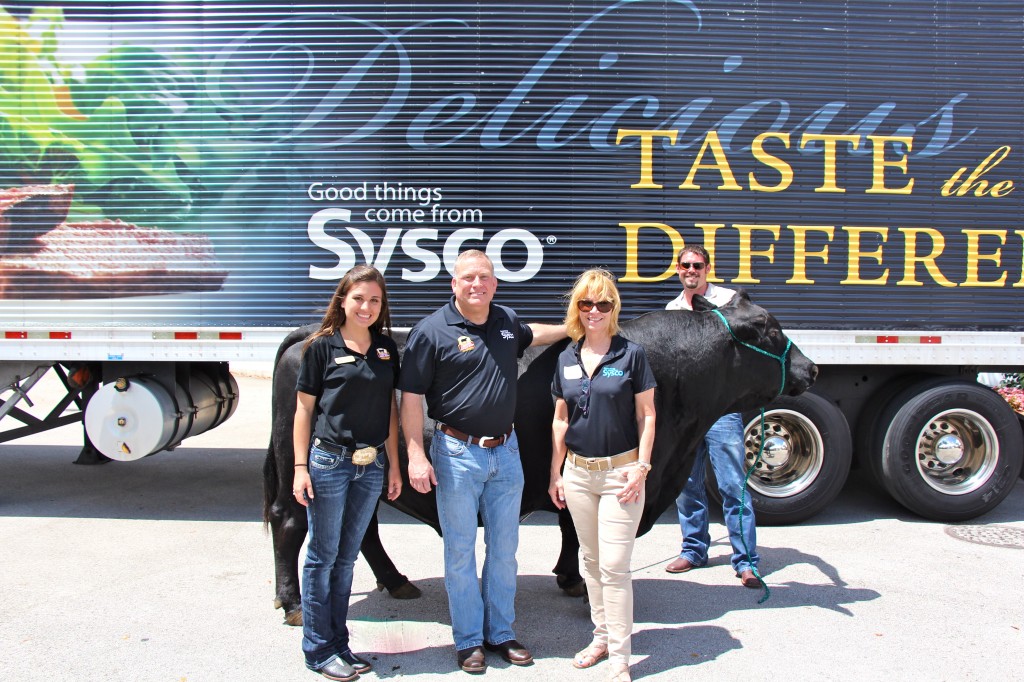
Meet JD. Weighing in at 2,620 pounds, he strutted his stuff down the streets of Miami, dismissing any and all preconceived notions of what it means to look good in black.

JD was the answer to what seemed like a crazy question at the time.

What if an Angus bull could make an appearance at a Sysco food show in the metropolis that is Miami?

“We jumped on the opportunity,” said Maggie O’Quinn, CAB executive account manager. “What better way to tell the story of our unique history, breed heritage and cattle production in the state of Florida?”

Sysco_3To a crowd of more than 1,000 restaurateurs, JD was the piece that made the puzzle complete. The show stealer helped chefs, restaurant owners and operators later tell the beef story to their interested customers. Food show guests not only got to meet JD but were able to spend time with local Florida Angus ranchers, ask questions and sample CAB product.
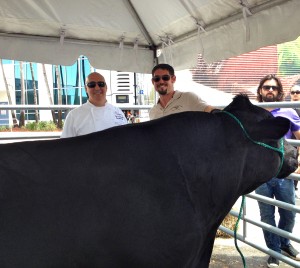
Chef Peter Vauthy, Red, The Steakhouse, says he likes having a connection with the people involved in putting the steaks on his table.

Peter Vauthy, CAB Brand Ambassador and Executive Chef at Miami’s Red, The Steakhouse, said bringing the two ends of the production spectrum together is an on-target strategy.

“There’s a trend where people want to hear a story behind a product,” he said.

Always amazed by the sheer size and magnitude of cattle, Vauthy said it’s the respect he has for the ranchers that always stands out the most.

“They show a lot of love for their animals, and then on my end, I show the same amount of care and dedication by the way the beef is aged and the way it’s cooked,” he shared. “It’s a lot of respect. Respect for something that’s been treated with the utmost care from start to finish.”

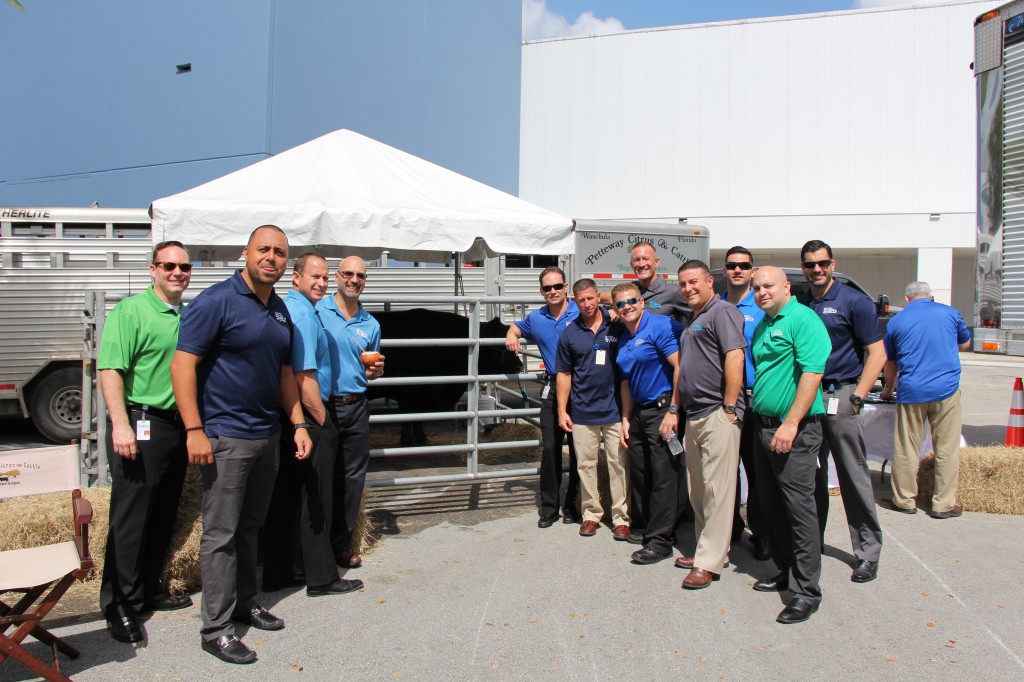
Executive Chef of Joe's Stone Crab, André Bienvenu, and colleagues visit with Roy Petteway, Petteway Citrus & Cattle, to discuss Florida ranching.
Executive Chef of Joe’s Stone Crab, André Bienvenu, and colleagues visit with Roy Petteway, Petteway Citrus & Cattle, to discuss Florida ranching.

O’Quinn echoed those sentiments.

“So many people travel to that area and their very first impression of our brand is made right there in a steakhouse in Miami,” she said. “We have such an opportunity to tell our story, not only to customers in South Florida, but our customers from all over the world. For those international customers to come to the food show and meet with a rancher from right there, three hours north of Miami, it means everything for us as we grow our global brand presence.”

A leader in finance, commerce and entertainment, the famous city tops the list in many categories, but when it comes to agriculture and beef production, Florida as a whole ranks, too.

“Perhaps there’s a lot of people who think there’s beaches on one side and beaches on the other and nothing in the middle except Disney World,” JD’s owner Roy Petteway said. “I think a lot of people forget that there is a great deal of land between the two sides of the state that produce a substantial amount of agriculture in its heartland.”

Sysco_6

So as the sun set and the crowds parted, JD made his way back home to his ranch, and I followed suit, but not short of a memory that will last a lifetime. One I know many will hold for years to come.

Thanks for allowing me to tell your story,

Laura

You may also like

Doctor’s orders

Doctor’s orders

Doctor’s orders As a kid my family went on two trips a year. One to visit relatives up north (this one, not even a guarantee), the other to the Florida Cattlemen’s Association’s Annual Convention. What may have been work for my parents was vacation for us kids....

A packer buyer’s favorite cross

As the Brand the Barn intern, I’ve attended a lot of barn celebrations this summer (18 to be exact). Each time I’m struck by the variety of people in attendance. Sometimes, it’s a seedstock operation and bull buyers attend. Other times, it’s a closeknit group, just...

Putting it in perspective

Putting it in perspective

The older I get, the more I realize perspective is important. What would be a drought in Minnesota might be a really good summer in west Texas; what is a lot of noise to one family might be an average day in our house full of kids; what might seem cheap to some would be a lifetime’s savings for another.

animal welfare, lily edwards-callaway, shawn darcy, ncba

Keeping it simple

I grew up on my family’s small commercial Angus operation in southwest Kansas, so that makes me an expert, right?  All operations are the same, right?

The MBA group that visited the ranch.

Wrong, but that is the magic behind the beef industry and the Angus breed. By tagging along with the MBA program a couple weeks ago, I learned that it’s okay not to be just like your neighbor or even your family, just do what works for you.

For more than 40 years, Bob and Becky Avery have run their Olsburg, Kan., ranch with the goal of keeping it simple.

For them it means just being ranchers, not farmers, and caring for the land.  The cows run year round on more than 1,000 acres of native grassland, supplemented in the winter with purchased feed.

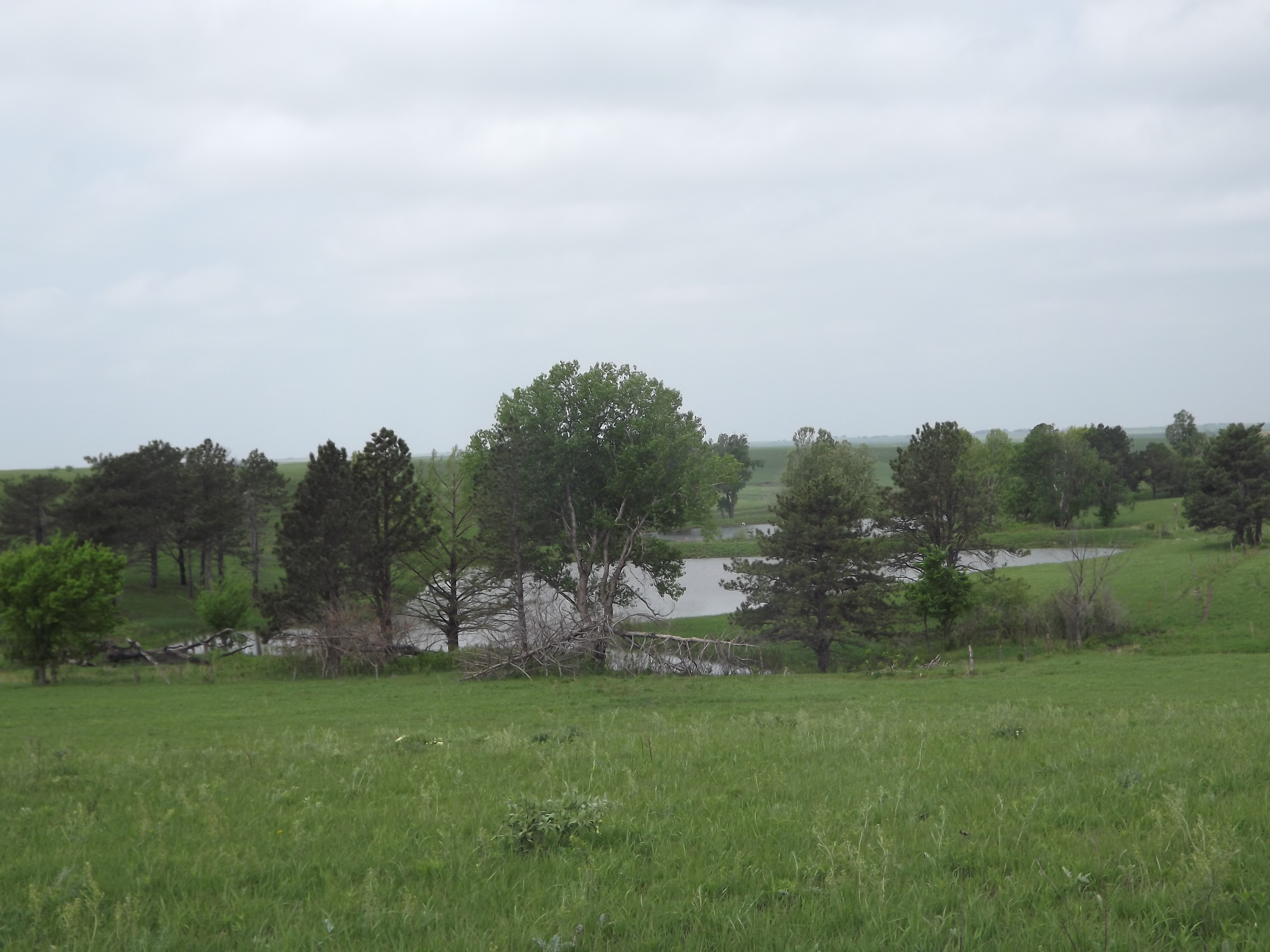
The Averys took us to one of the pastures that has been in the family for generations. It was Bob's father who built these ponds from a stream that Bob's grandfather used to water his cattle.
The Averys took us to a pasture that has been in the family for generations. It was Bob’s father who built these ponds from a stream that Bob’s grandfather used to water his cattle.


Bob says he loves his cattle, but they can come and go; the land gets top priority because it will be here forever.

With 140 Angus-based cows to breed this summer and calve out next spring, continuity is important. That doesn’t mean they’re afraid of change, and in fact they point to two big ones that worked.

The first was their switch from Hereford to Angus. Bob’s family goes back to the Poole Registered Hereford operation that once thrived near Manhattan, but he started breeding those bulls to Angus cows and found more dollars for Angus calves.

“Everyone wants everything to be black and financially that’s it, they just really are worth more,” says Bob. The breed organization has made his job easy, the calves so good “they sell themselves.”

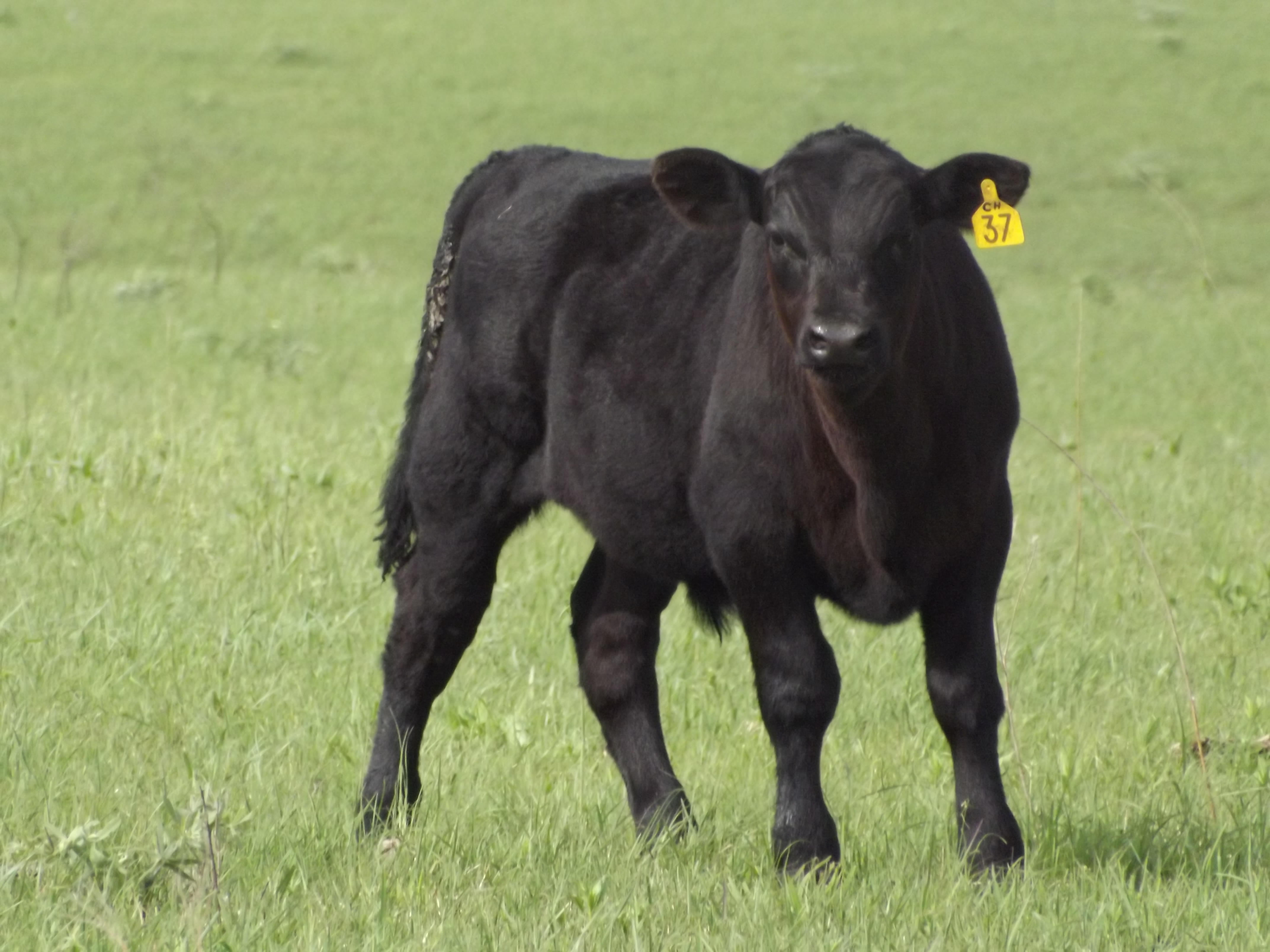
This good looking calf is evidence of the high quality Angus genetics used on the Averys' ranch.
This good looking calf is evidence of the high quality Angus genetics used on the Averys’ ranch.

The other reason was the diversity in cattle type. Angus genetics can provide just what any producer wants, Bob says. For the Averys, that’s an easy keeping cow that throws good calves and has a good disposition.

Bob swears he has never had to cull an Angus cow for poor disposition, but he’s not sure if that is due to genetics or environment.

We all have that one friend who really, “thinks outside of the bunk,” and comes up with some unique and sometimes insane ideas. For Bob, that friend is Wally Olson, a former neighbor who now ranches near Vinita, Okla.

“He calls me up with these oddball ideas and I adopt about one out of every four of them, and it works really well,” says Bob.

One of Wally’s “crazy ideas” was getting the couple to switch to the Bud Williams cattle handling philosophy.

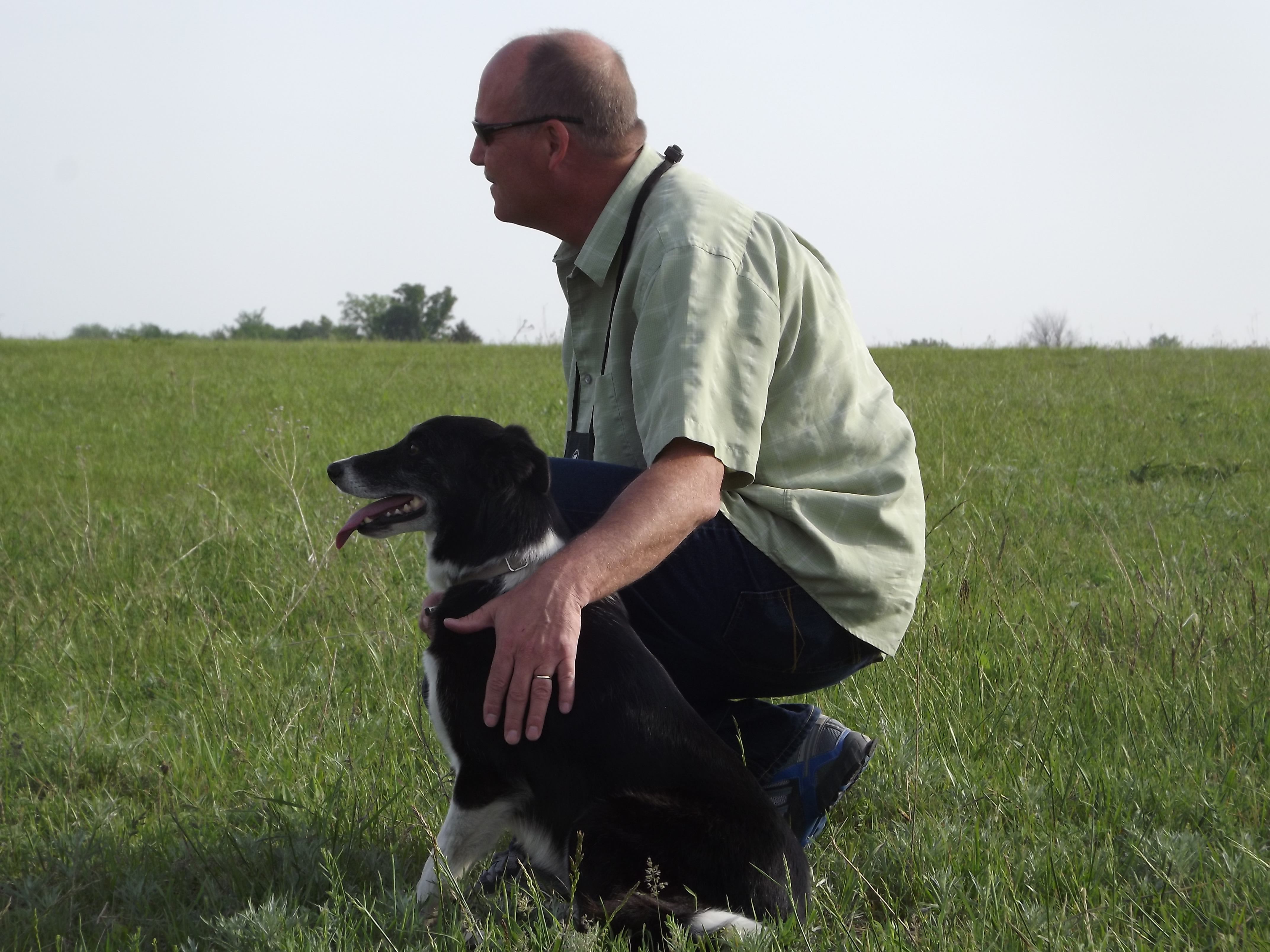
When she wasn't busy working the cattle, the Averys' border collie, Twig loved getting to know new people.
When she wasn’t busy working the cattle, the Averys’ border collie, Twig loved getting to know new people.

“I think changing the way we handle our cattle was one of the best things we did,” says Becky. “First of all, it makes the cattle calmer and they’re more trusting of us. Second of all, when we work cattle together we get along much better.”

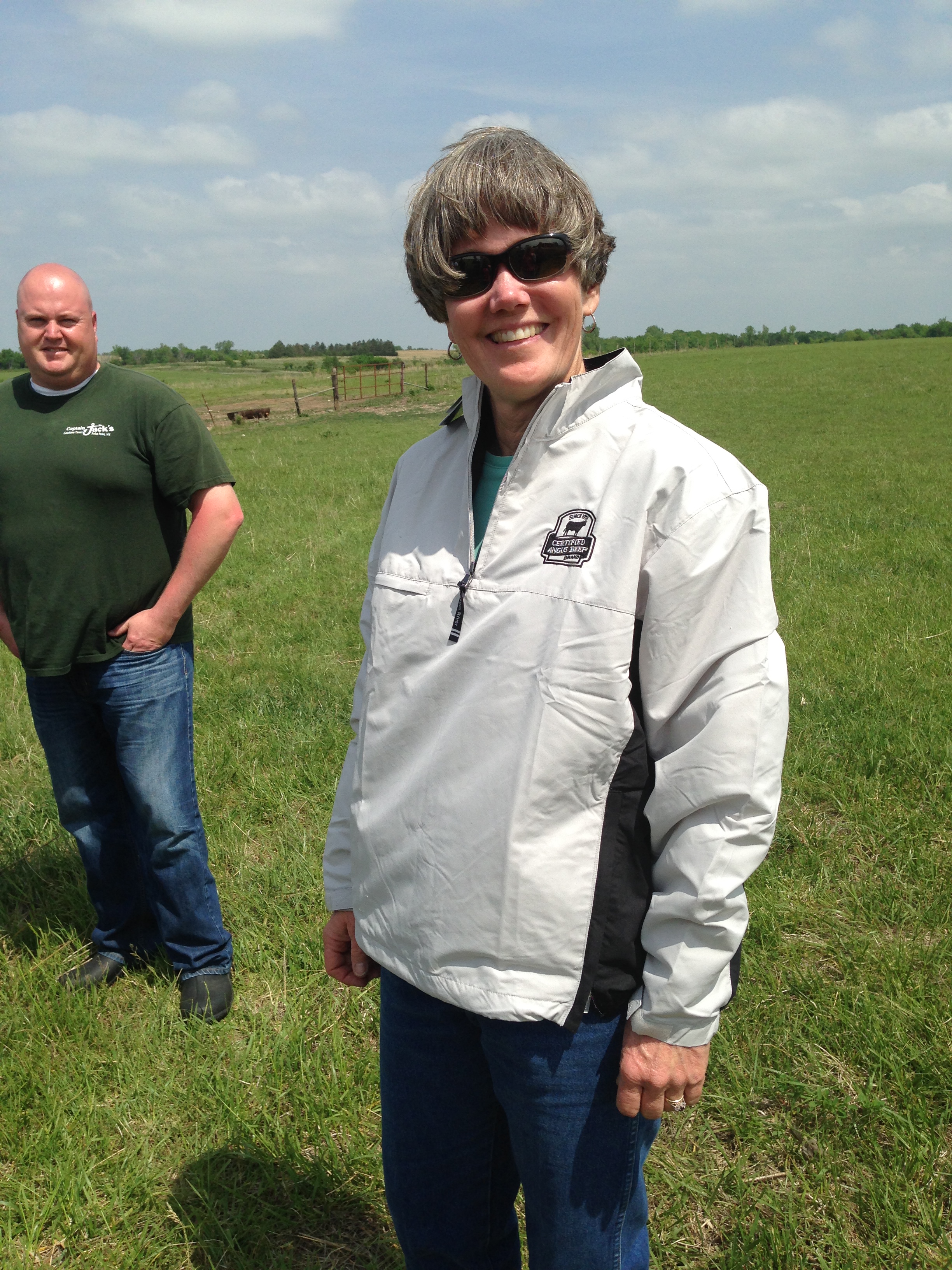
Becky Avery was in love with her new CAB swag!

Reducing stress, the Averys have seen improved herd health, easy calving seasons and improved carcass quality.

By keeping it simple, Bob and Becky have learned how to get the most out of their bottom dollar.

-Kaitlin

To catch up on our coverage of the other two Kansas ranches who hosted CAB guests, read “Connections” and “Incorporating a legacy of quality.”

You may also like

Building Bridges for Better Beef

Building Bridges for Better Beef

As the clock ticked past 2:00 a.m., handshakes finally signaled a deal. History was made that Thanksgiving morning in 1997 when a group of producers bought a material interest in what was then Farmland National Beef Packing Company.

When ‘Someday’ Becomes Today

When ‘Someday’ Becomes Today

Just a few years ago, Ranch Covey Hill showed no signs of an Angus destiny. It was a country estate in disrepair as owners stopped coming out from Montreal in the summers. The Chenails had been looking for land, a place where they could build a herd. They saw potential. That continual pursuit of the best and finding the right people to help caught the attention of the world’s premium beef brand.

A Drop of Hope, A Heap of Hard Work

A Drop of Hope, A Heap of Hard Work

For Manny and Corina Encinias’ family of nine, sustainability runs deep. They are stewards of a legacy, working the land dating back to 1777, when the first generation began herding sheep in the nearby Moriarty community. Today they focus on cows well suited to the harsh New Mexico desert, fostering community strength and creating opportunities for others to follow in their footsteps.

Incorporating a legacy of quality

Summer intern Nicole Lane

Summer intern Nicole Lane

Today our team coverage of the MBA class’s Kansas education continues with summer intern Nicole Lane, an Oregon native and current Kansas State University student. As the foodservice professionals broke up into smaller groups for a personal ranch experience, Steve, Kaitlin and Nicole each tagged along.  Read on for Nicole’s take on Rocky Hill Ranch.

Family farms. That seems like the gold standard for many people who don’t have agriculture experience. However, the foodservice pros on a field trip for our Masters of Brand Advantages (MBA) program got to take a look at a “corporate” farm. But it wasn’t at all what they (or I) expected.

Meet Paul and Nancy Miller, 4th generation ranchers whose family has been working the same land in the Flint Hills of Kansas since 1878. That’s a family legacy. But when there is no one who wants to be the next generation to run the operation, what is a producer to do?

Nancy and Paul Miller with Randall Debler owners of Rocky Hill Ranch.

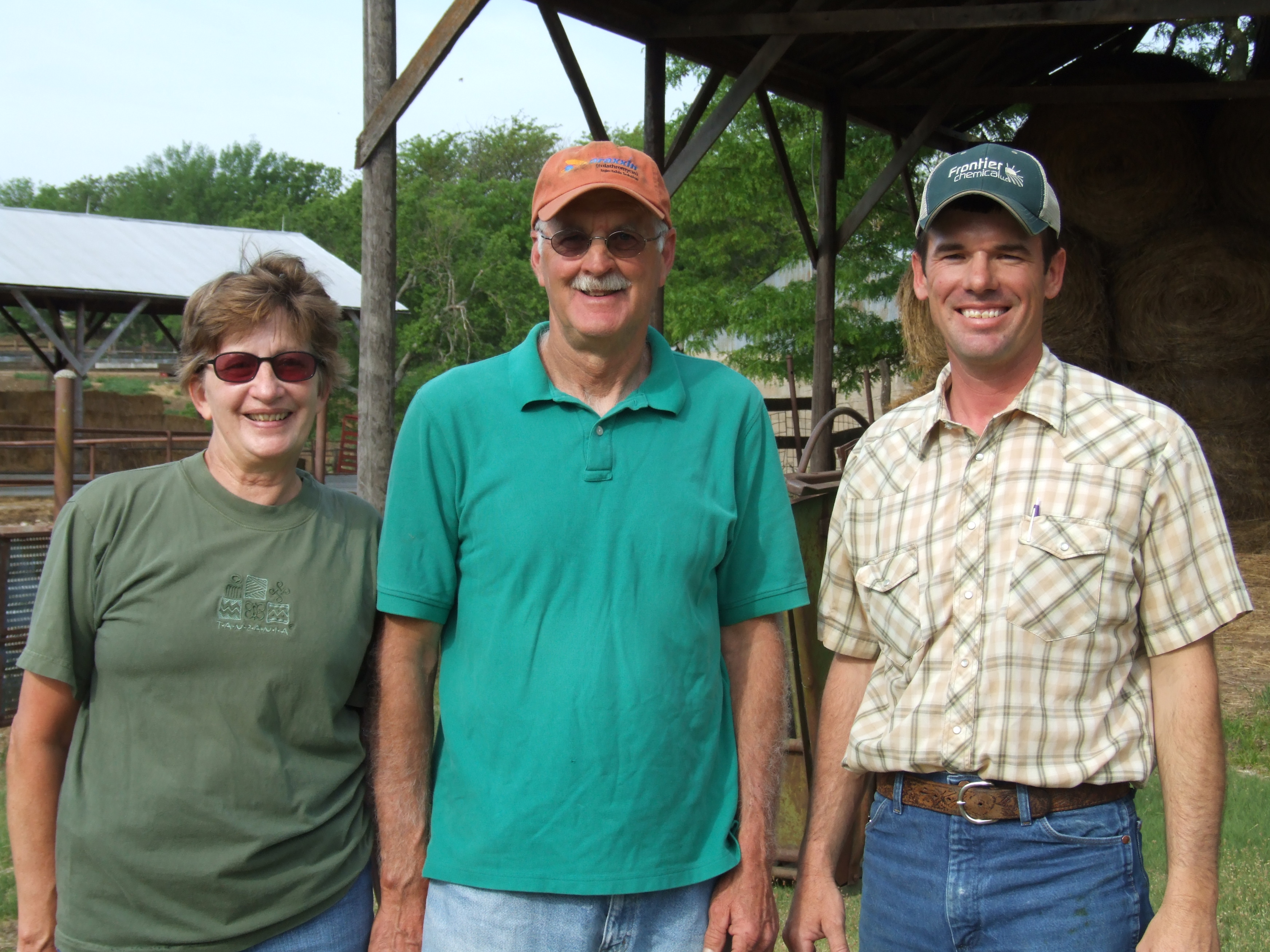
Rather than sell their land, Nancy and Paul found Randall Debler, a determined K-State grad who wanted to become a first-generation rancher.  While the start-up costs of breaking into production agriculture might deter some, Debler found a way around that obstacle.

He began working for the Millers and the partnership eventually led to the decision to turn Rocky Hill Ranch into a corporation so Debler and his wife Erin could buy the place in small shares.

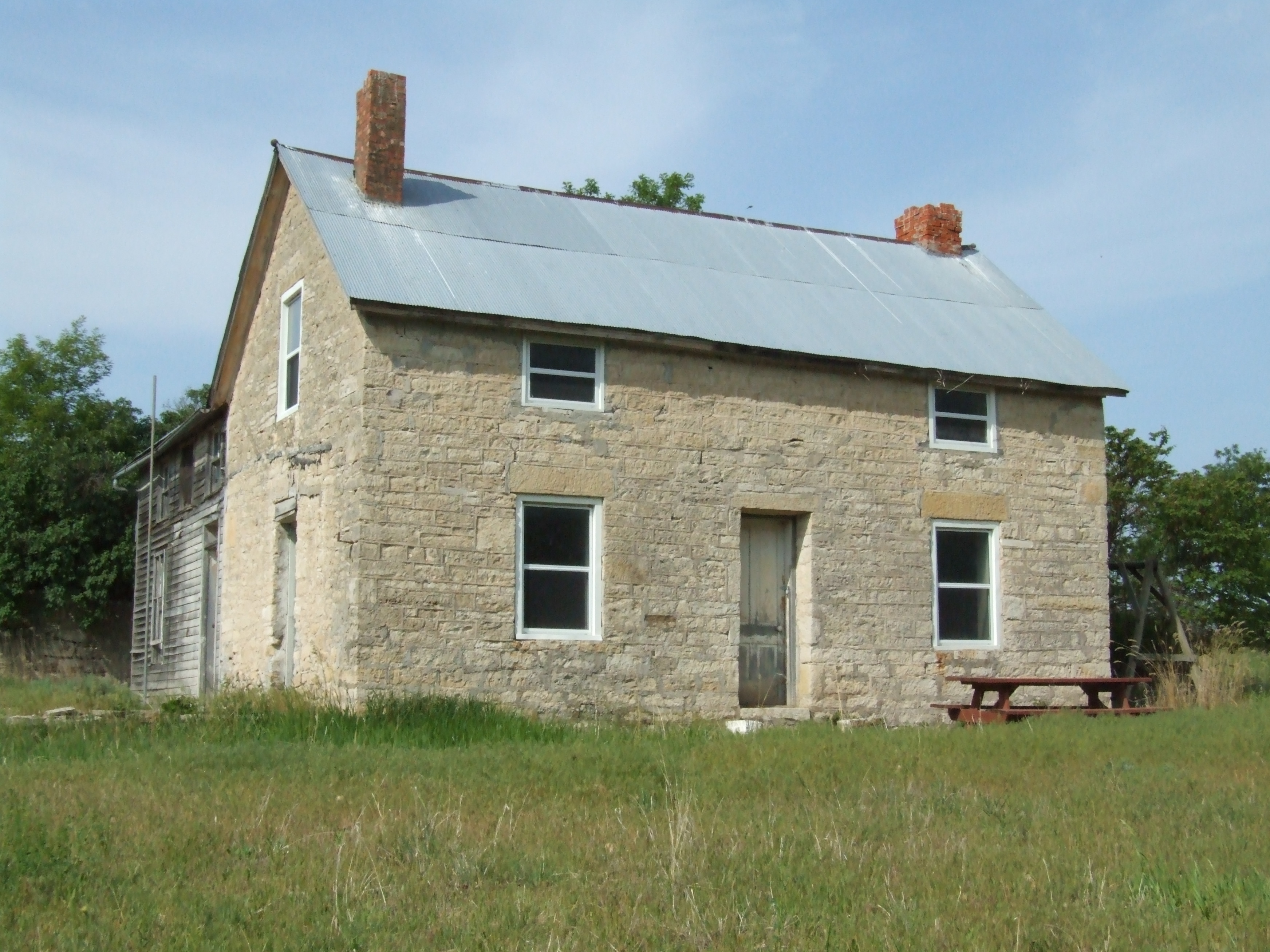
While visiting the ranch outside of Alma, Kan., MBA participants got to see more than just cattle. They snapped pictures of the original homestead that still stands on the property and learned about the history of Wabaunsee County stone fences on the farm. They also saw the sustainability of cattle being produced on the same land for more than 100 years and learned about alfalfa production while watching Paul rake hay on a tractor that his father bought brand-new the year Paul was born.

What Debler fondly refers to as "The Rock Place" is the site of the original homestead on Rocky Hill Ranch.

What Debler fondly refers to as “The Rock Place” is the site of the original homestead on Rocky Hill Ranch.


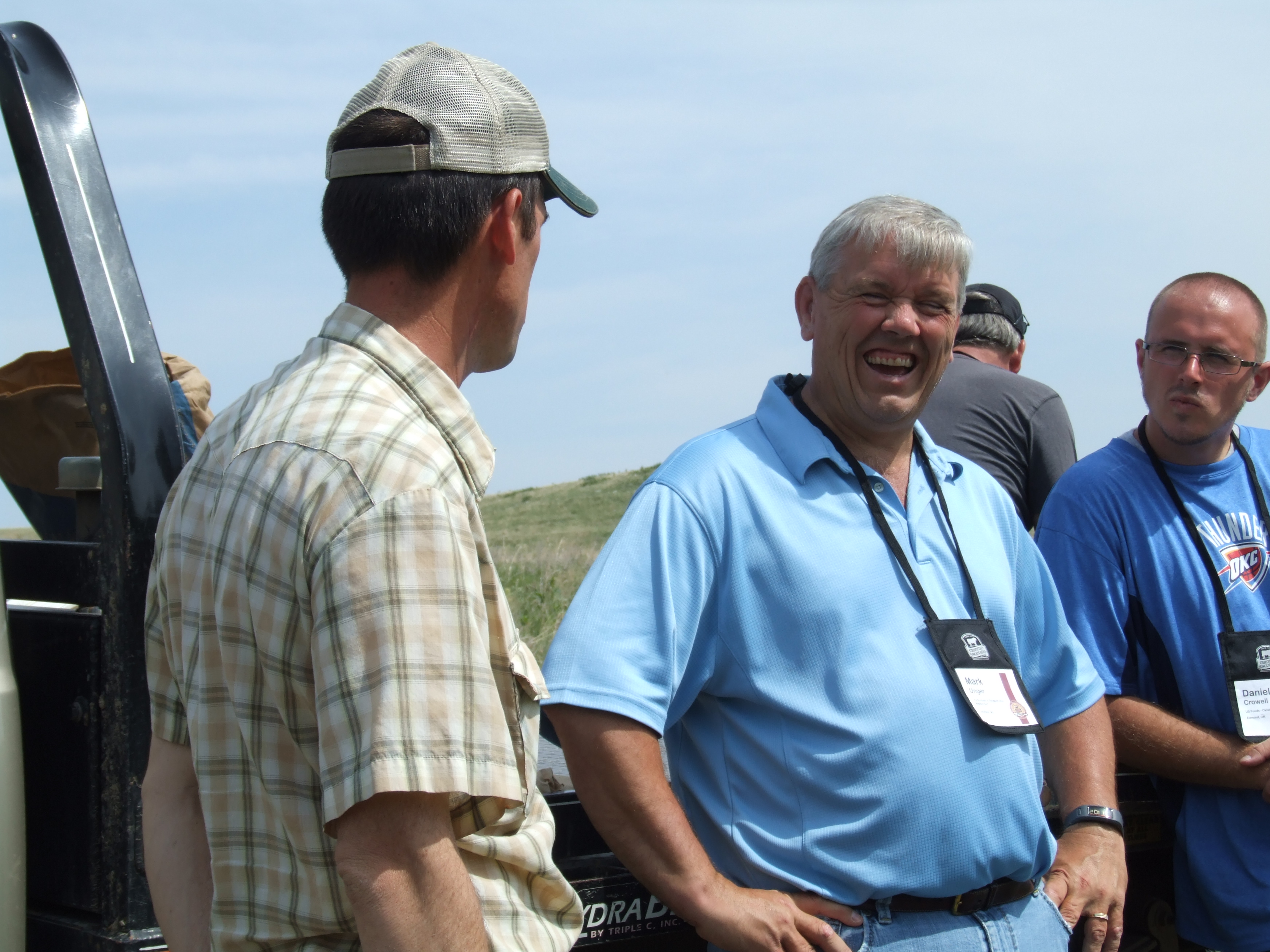
“It was amazing how passionate and dedicated these people are to their trade and how precise they are with each animal,” Mark Unger, MBA class member from Performance Food Group-Middendorf, St. Louis, Mo. said of Rocky Hill Ranch.

Unger and other MBA participants enjoy Debler's humor as he explains life as a commercial Angus producer.

MBA student Mark Unger (middle) chats with Randall Debler.

It goes to show that it doesn’t matter if it’s the fifth-generation family member to inherit the land, or a first-generation hopeful buying in, passing down the tradition of raising quality beef is what matters.

-Nicole

Look for more about Debler and Rocky Hill Ranch in a future edition of Angus Journal.

You may also like

Building Bridges for Better Beef

Building Bridges for Better Beef

As the clock ticked past 2:00 a.m., handshakes finally signaled a deal. History was made that Thanksgiving morning in 1997 when a group of producers bought a material interest in what was then Farmland National Beef Packing Company.

When ‘Someday’ Becomes Today

When ‘Someday’ Becomes Today

Just a few years ago, Ranch Covey Hill showed no signs of an Angus destiny. It was a country estate in disrepair as owners stopped coming out from Montreal in the summers. The Chenails had been looking for land, a place where they could build a herd. They saw potential. That continual pursuit of the best and finding the right people to help caught the attention of the world’s premium beef brand.

A Drop of Hope, A Heap of Hard Work

A Drop of Hope, A Heap of Hard Work

For Manny and Corina Encinias’ family of nine, sustainability runs deep. They are stewards of a legacy, working the land dating back to 1777, when the first generation began herding sheep in the nearby Moriarty community. Today they focus on cows well suited to the harsh New Mexico desert, fostering community strength and creating opportunities for others to follow in their footsteps.

steer

More than a taste of the beef industry

Meet Kaitlin Morgan, who is joining the Black Ink team for the summer.
Meet summer intern Kaitlin Morgan

Each year we’re lucky to get to work with bright young students at the beginnings of their communication careers. This year we have two Kansas State University students joining the Black Ink crew for the summer. Forget the chance to “get their feet wet,”—the second day on the job we threw them right into team coverage we had guests in cattle country. 

Today we hear from Kaitlin Morgan, who grew up on a livestock operation in southwest Kansas. Enjoy! –Miranda

Barren, flat and stormy; like a scene from the movie Twister. This is just one image participants of the Master’s of Brand Advantages (MBA) program may have expected with a trip to Kansas, but instead they got the bright sunshine, cooling breeze and lush green pastures of the Flint Hills.

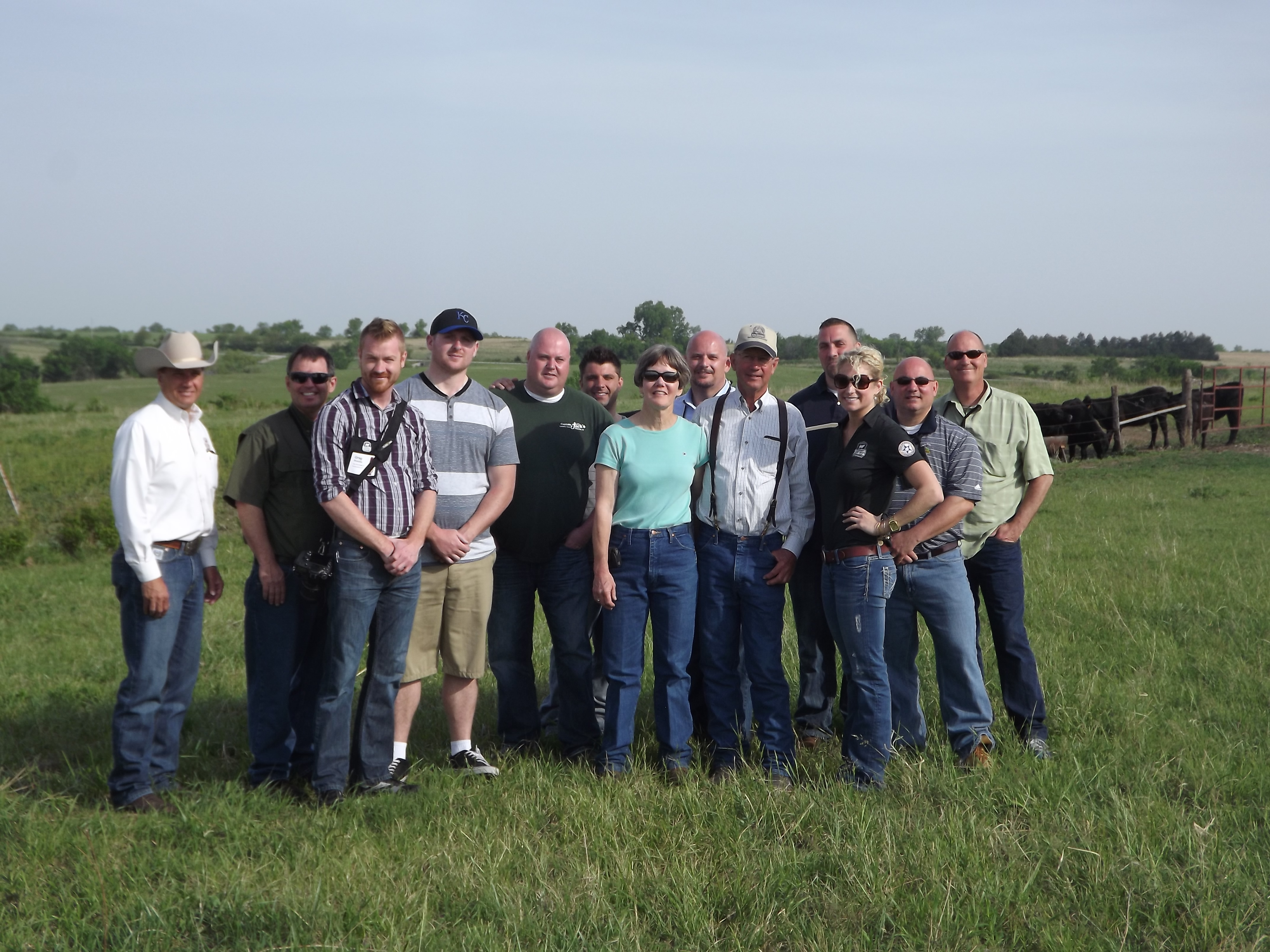
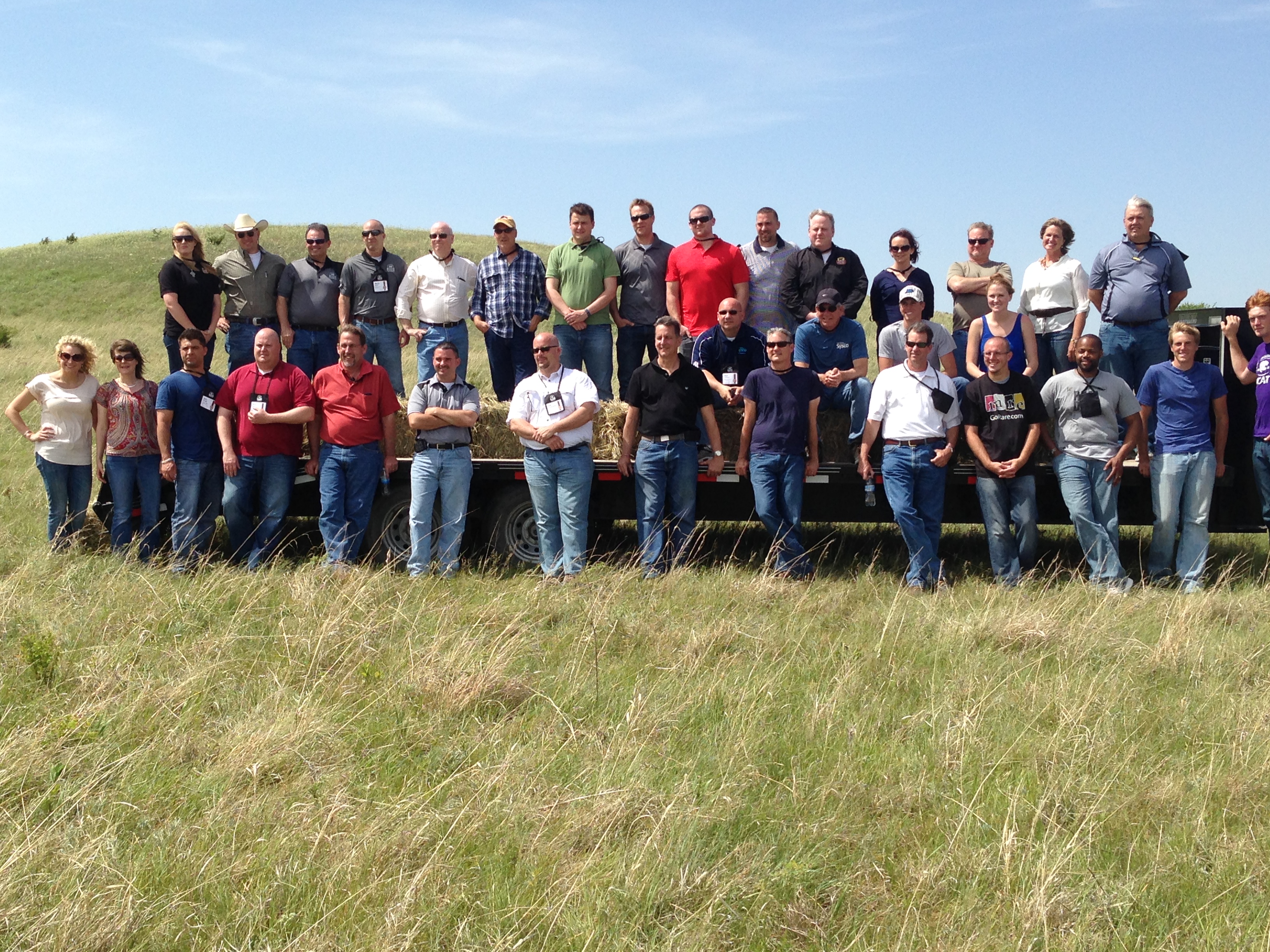
Participants came from all over the United States including Alaska, New York and Oregon.  We even had some of our partners along from Manitoba, Canada. But no matter where they came from, everyone had the same goal: to learn more about the beef industry so we can better serve the consumer.

This will be the seventh class to complete the Masters’ of Brand Advancement since the programs establishment in 2010.

This will be the seventh class to complete the MBA program since 2010.

Don Ellis works in Business Development for Sysco in Anchorage, Alaska; an area with more moose than cattle.  His job requires him to help train marketing associates, restaurant chefs and business owners.

“I hope to have a better understanding of where beef comes from, how it’s packed and why Certified Angus Beef is the best so when a customer asks me then I can tell them,” says Don. “I have a culinary background…I basically only know the bare bones of what beef is. I can identify it but as far as how it got to this package, I have no idea. That’s why I’m here to get a better understanding of what all that means.”

The MBA tours began at the purebred Angus ranch owned and operated by Dwayne and Debbie Blythe and their five children, where we learned about the genetics that form the foundation for high-quality beef.

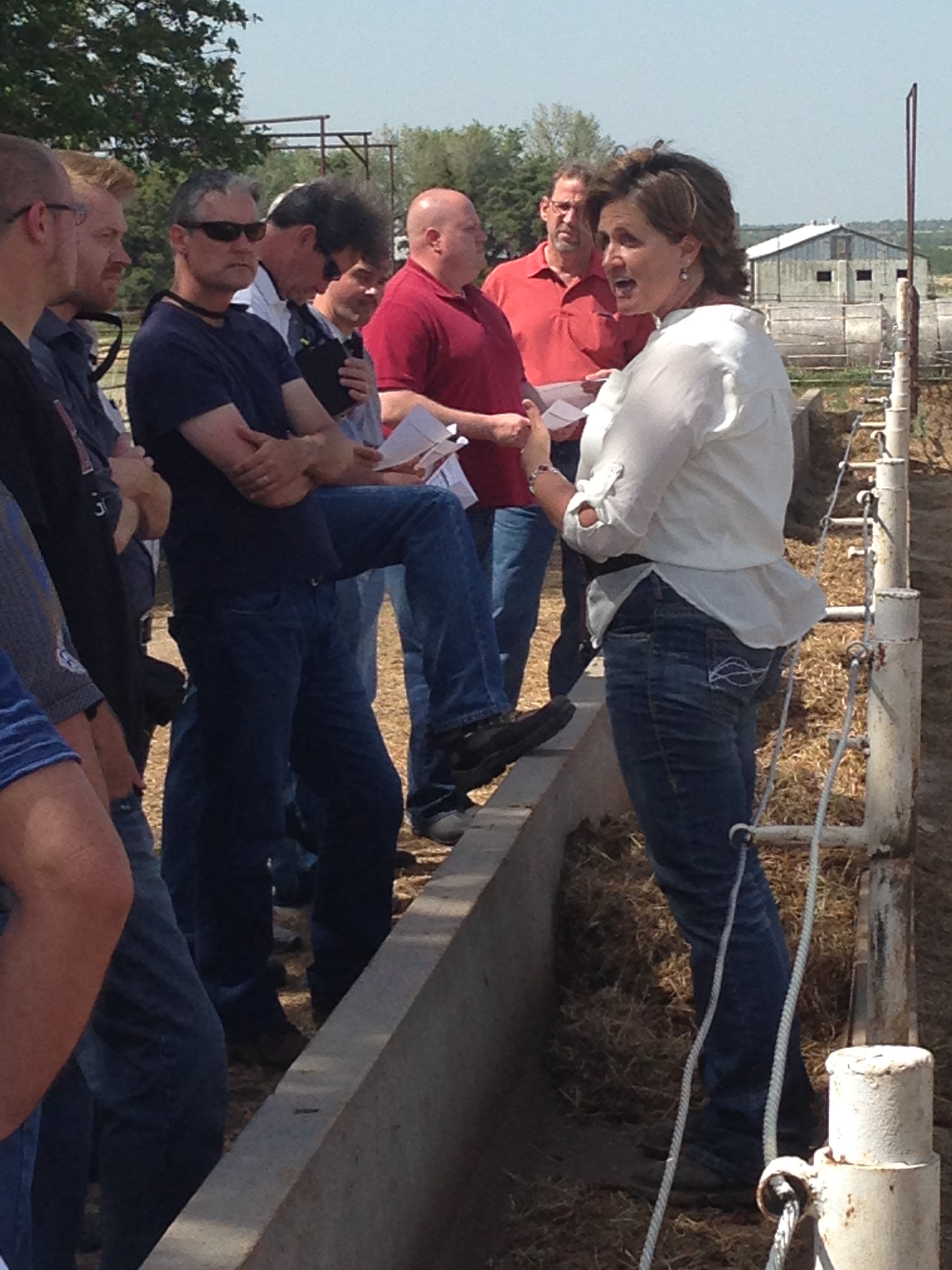
Debbie Lyons-Blythe explained to the group how she cares for her yearling bulls including how they are tested, what they are fed and how they are sold.

The next day we broke into smaller groups touring commercial cow-calf operations to learn how proper management practices, such as pre-conditioning and vaccination, lead to better adaptation in the feedyards and higher carcass quality.

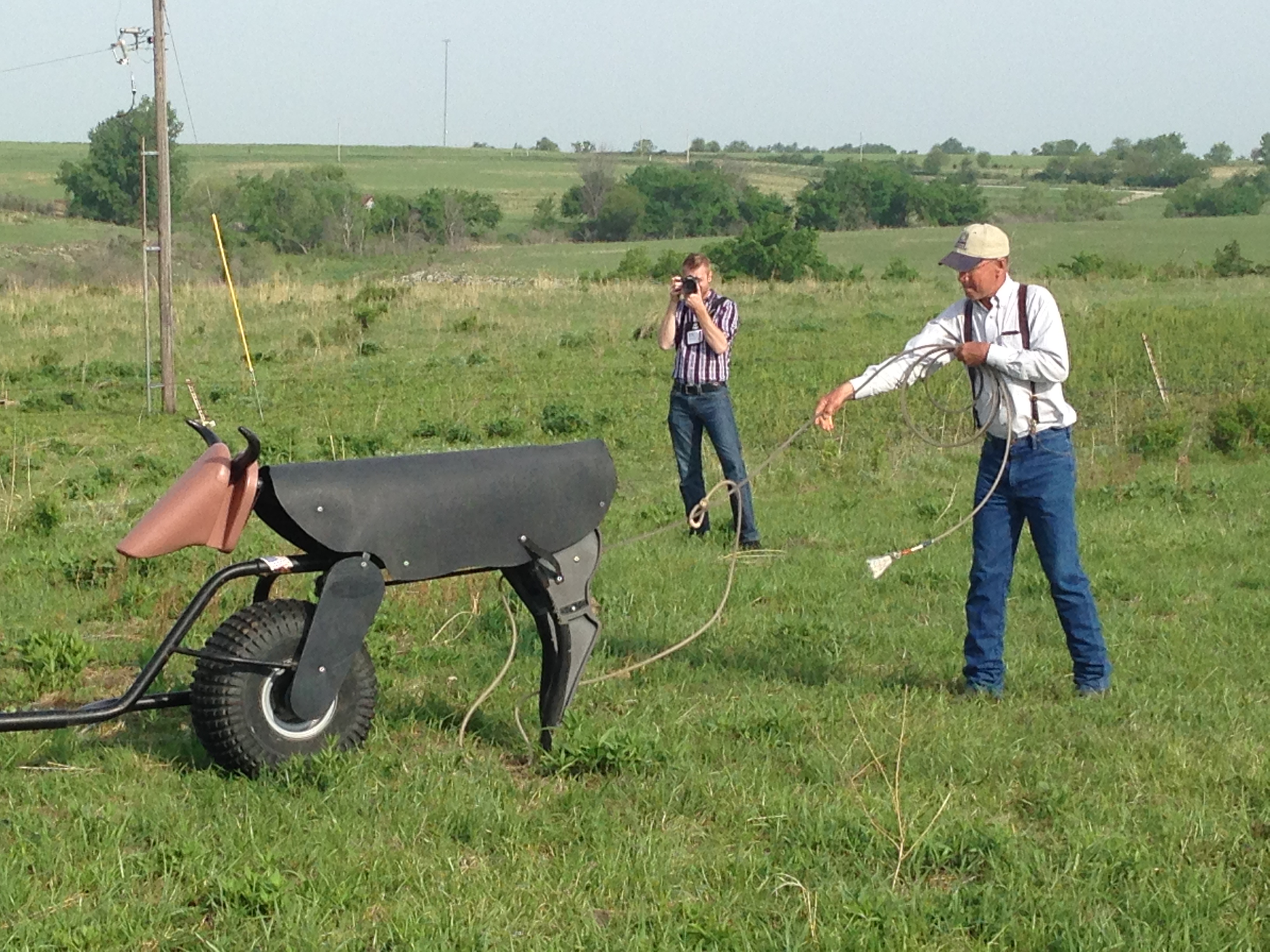
During the tour of his ranch, Bob Avery showed off his roping skills.
During the tour of his ranch, Bob Avery showed off his roping skills.
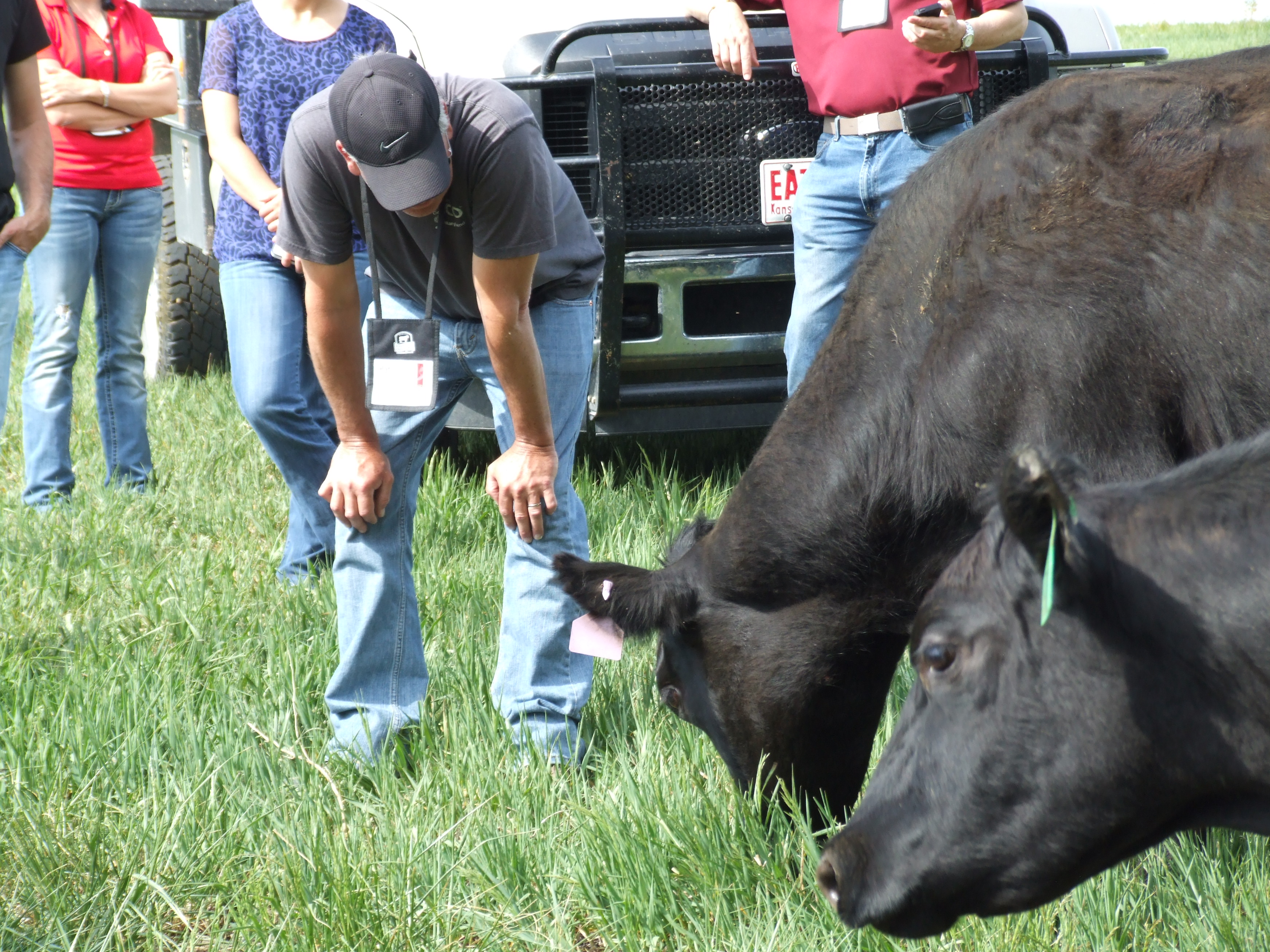
Participants were able to get up close and personal with the cattle during their small commercial operation tour at the Rocky Hill Ranch.
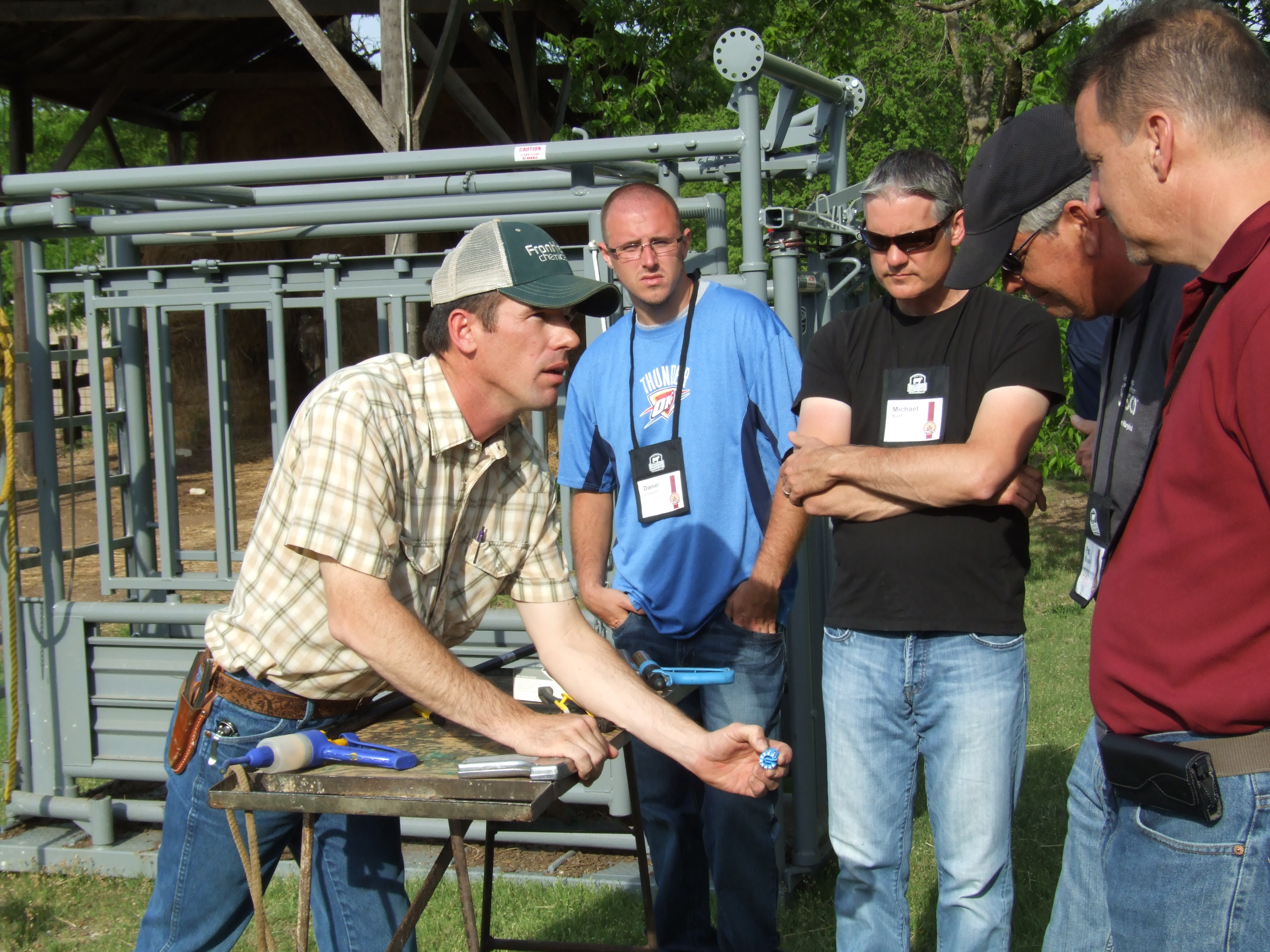
Randall Debler at the Rocky Hill Ranch answered questions about hormone implants and their role in the industry.
Randall Debler at the Rocky Hill Ranch answered questions about hormone implants and their role in the beef industry.
Rezac1s
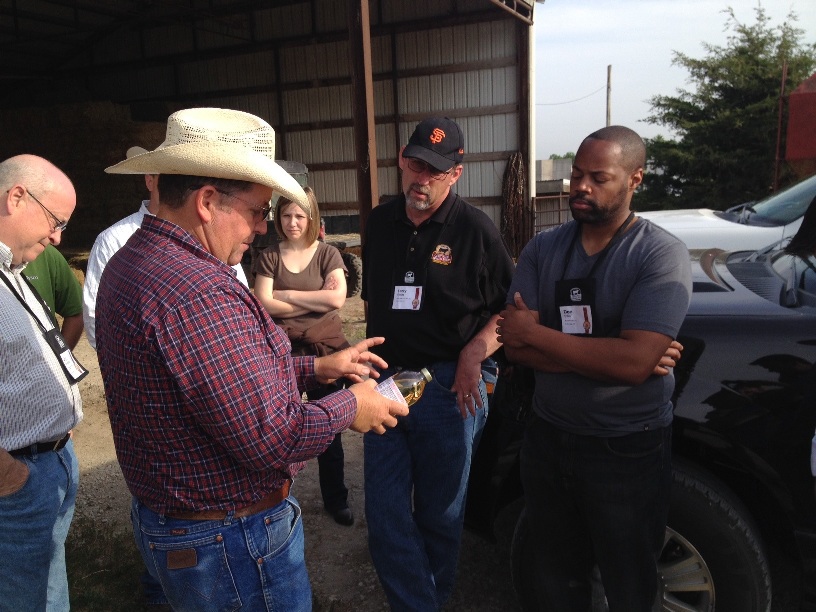
Jay Rezac at Rezac Land & Livestock, Onaga, Kan., told the group, “Antibiotics are not something you want to use, but you have to sometimes.”

Dr. Dale Blasi treated us to a chuck wagon lunch on Wednesday before the groups headed north to visit the JBS Swift packing plant in Grand Island, Neb., and Eisenmenger Farms, Inc., a feedyard in Humphrey, Neb.

Lindsay Ritter is a chef for Sysco Kansas City in Springfield, Mo., but she grew up around the beef industry and her husband’s family raises cattle. However, she still found the session valuable.

“Every rancher does things differently so there’s always something new to learn,” says Lindsay. “I didn’t know much about the seedstock industry but after this program I have a better knowledge of that sector.  When you’ve been on trips like this you can give a more sincere answer to the consumer because you just have that much more experience.”

No matter your background, whether you grew up with hay in your hair (as I often did) or never touched a cow in your life, everyone in the beef industry shares the same goal: to create a safe, high-quality product for the consumer.

~Kaitlin

You may also like

Producers Can Influence Sustainability

Producers Can Influence Sustainability

Sustainability is a new target for producers. While there are no plans to meet these goals yet, there is interest in how cattle can be part of the solution. It comes down to the adage, “trust but verify,” and verification will need to come from those raising beef.

Sustainability Cents

Sustainability Cents

Sustainability is an all-encompassing term for social, environmental and economic business needs. The popular, updated term describes many of the same best practices cattlemen have put to work for generations.

Meeting Demand with Better Beef in 2021

Meeting Demand with Better Beef in 2021

More than forty years after selling the first pound of branded beef on October 18, 1978, Certified Angus Beef continues to deliver for consumers and producers. The brand closed fiscal year 2021 with a few new records and another billion on the books.