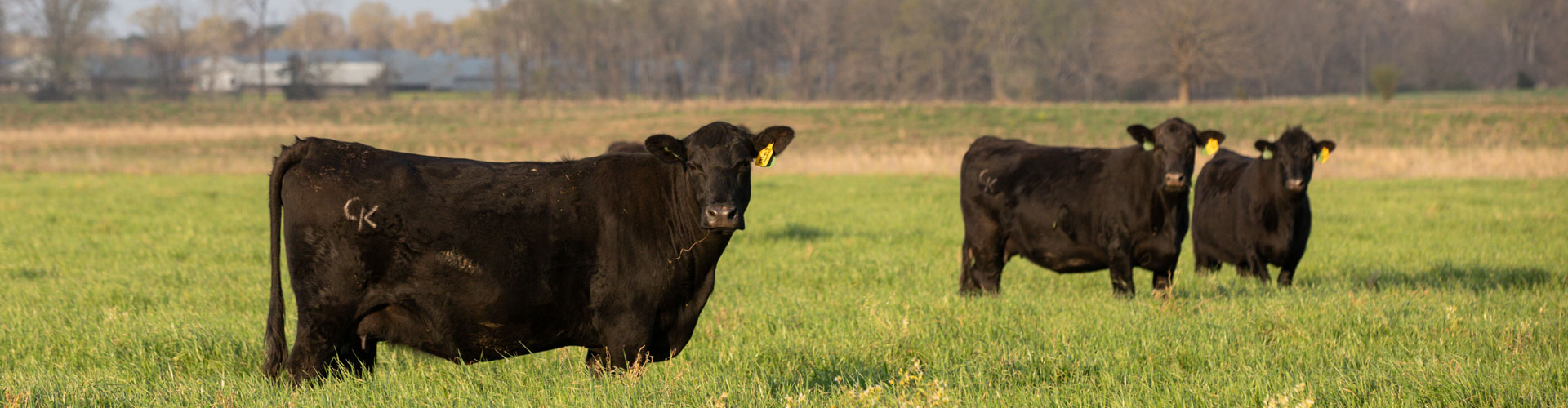
When it rains, it pours…

…and that’s OK in OK.Gary and I were in Chickasha, Oklahoma to put on our second annual “Backgrounding for Quality” seminar with our friends from Pfizer Animal Health last week. The weather was not pretty… it’s safe to say that I’d classify the precipitation as pouring more than once during that day. But after we spent so much time talking about the drought (over and over and over again…) in the southern US this past year, I could hardly complain about the moisture we encountered.

Now, I may have said an unkind word or two about the timing of that moisture last week, but what can you do but shrug and go on with the show when you’ve planned an outdoor field day that forecasts “100% chance of rain?” 

So when the wind, rain and cold settled in at Chickasha, we settled in the White Brother’s Cattle Company’s shop with some heaters instead of our original outdoor plan. There was plenty of hot coffee, a brave and hardy crowd and a line up of top-notch speakers.
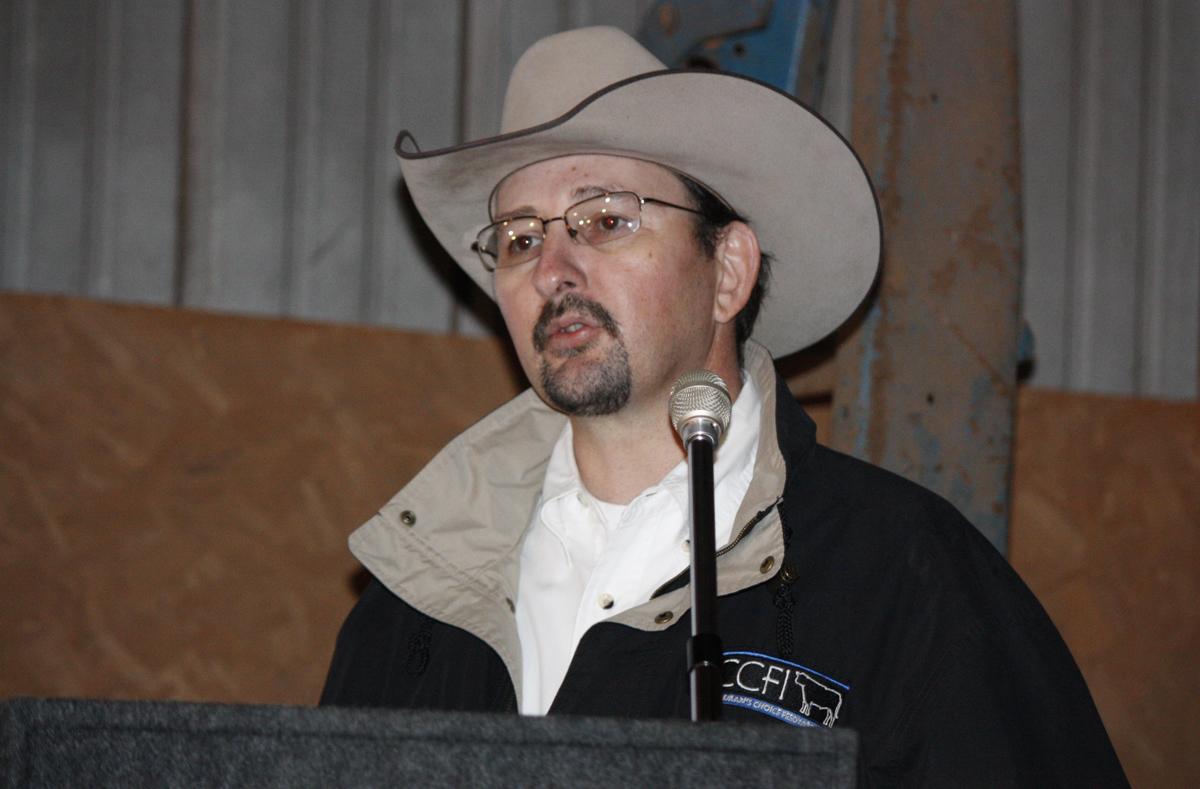
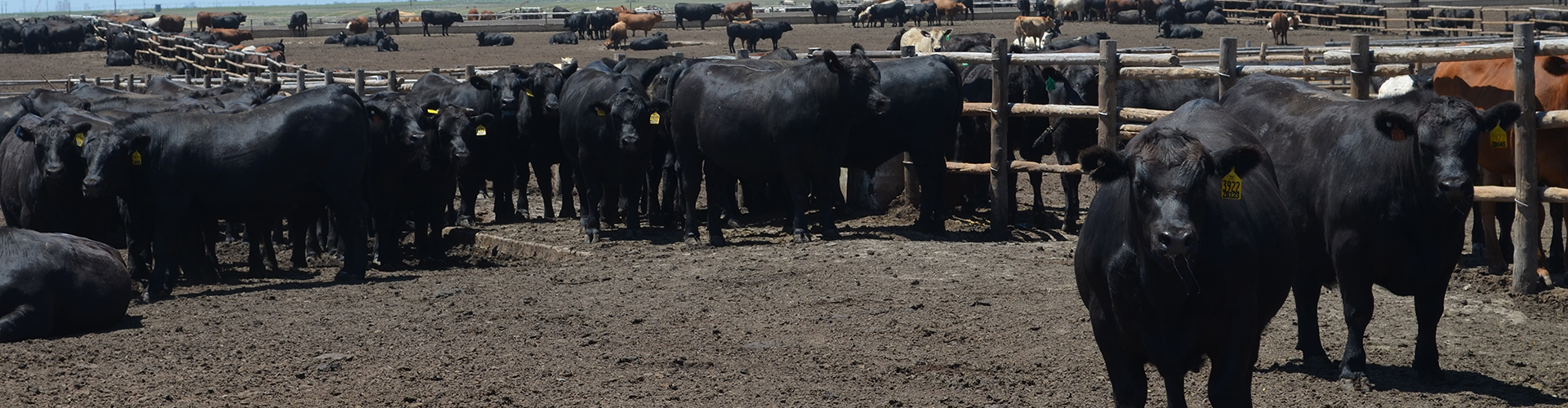
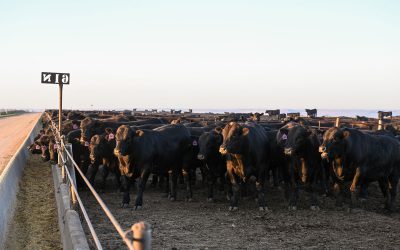
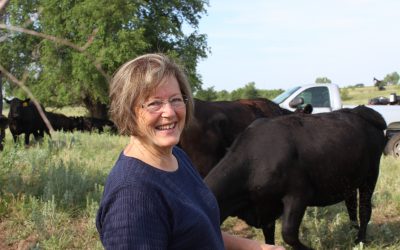
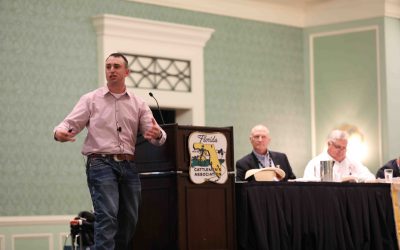
One of those speakers was Dale Moore, the owner and manager of Cattleman’s Choice Feedyard. Dale’s topic of discussion was “What a feeder wants,” and he knows that question from both sides of the equation. Dale and wife Mary also run a commercial cow-calf operation in Oklahoma. Here’s an excerpt from the beginning of his talk.

“What do you think feeders really want? I could give you the same song and dance about feedyards wanting high quality, weaned cattle that won’t give them any problem and will make them a whole lot of money. That’d be my whole talk.

“But I wanted to come up with something new to say to you, about what feedyards are looking for and what feedyards can do for you. When I thought about that, I kept coming back to the same thing: In all honesty, feedyards want customers. At least my yard does. I take pride in being able to feed high quality cattle and make guys lots of premiums, to improve their cowherds. We want to give our feedyard and customers lots of recognition and give them coffee shop talk. That’s what all feedyards under the CAB banner are looking for.

“We don’t get a lot of our upper Choice, CAB-type cattle at the sale barns because a lot of those cattle have to be put together with other cattle or you just don’t win the bid. So we rely on our customers for those good ones. We need customers, and we want to help them be profitable in the long term and improve their cow herd.  

“So to do that, the consumer is where we all need to go back to, in my option. Consumers are demanding higher quality cattle; a better eating experience. Consumers are willing to pay for what they get, and in return they want a tremendous eating experience. That goes all the way down the line from consumers to retailer to packers to feedlots and ultimately to you guys as cow-calf and stocker operators.

“So that’s what a feeder wants: something that through all these chains, is going to provide the end result of a good eating experience, because that’s what’s paying for all of it. We get that good eating experience from high quality customers.”  
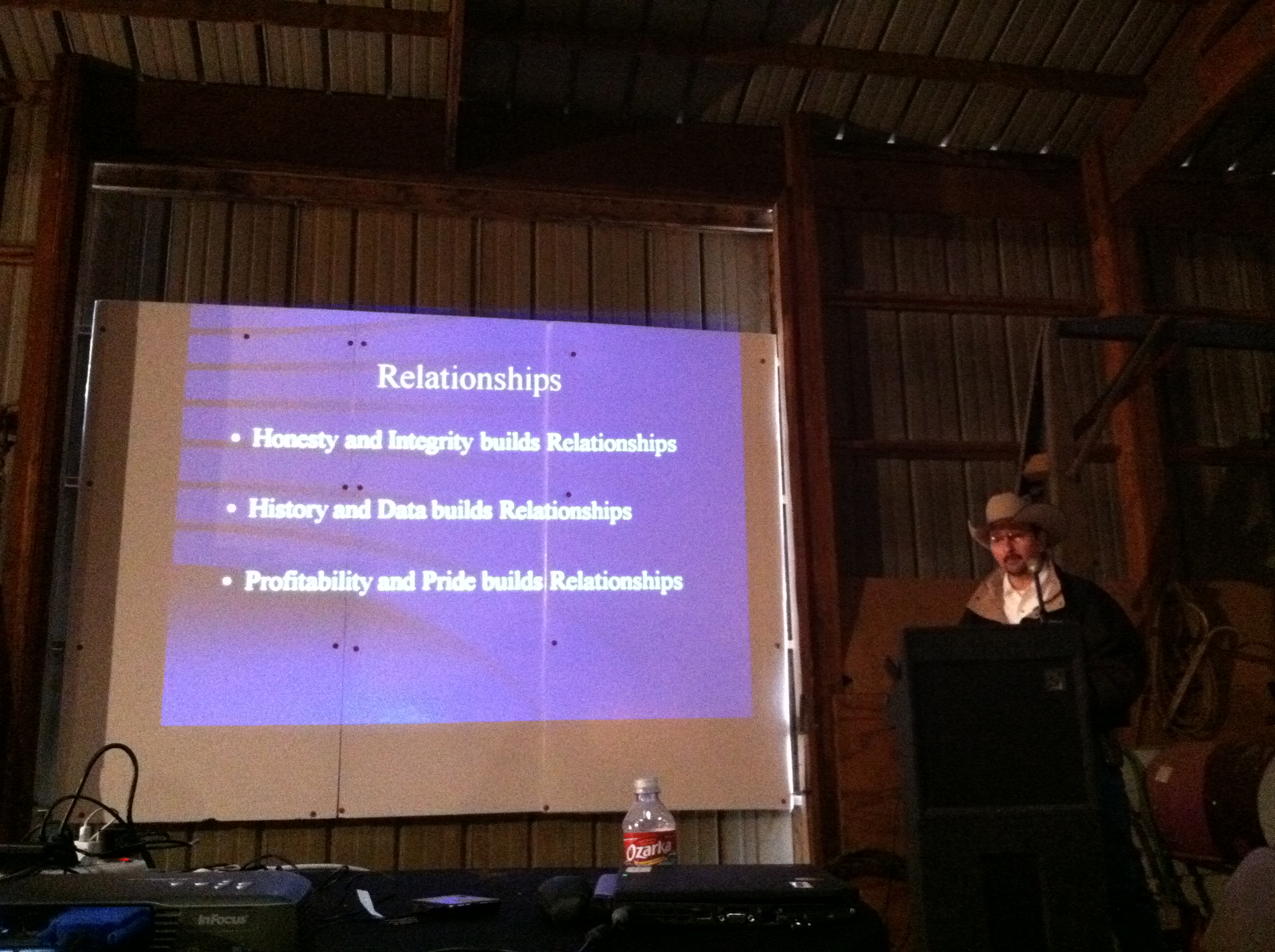
“You measure profit by performance, quality, dollars… but the bottom line is about satisfied consumers.”

When it rains, it pours. And when our industry focuses on meeting the demands of our final customers like Dale focuses on his feedyard customers, it pours success back down the entire system.

To get more clips and quotes from the event, check out our Twitter and Facebook feeds from last week. Enjoy!

-Laura

You may also like
The Cattle Contribution

The Cattle Contribution

Rotationally grazing cattle is one of the best ways to manage the Prairie Pothole Region for waterfowl, for other ground nesting birds, for the general public, and for ranchers themselves, says Tanner Gue, a Ducks Unlimited biologist.
Focus Under the Hide

Focus Under the Hide

From the bulls they buy, the cows they cull and the grass their cattle graze, each decision is evaluated based on how it affects the ranch’s economics, the land and family. This management style earned the Niznik family the Certified Angus Beef 2021 Canadian Commitment to Excellence award.
Following the numbers

Following the numbers

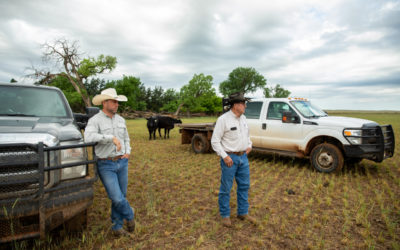
Diversification proved to be key in evolving the ranch. What began as an Angus-based commercial herd, the trio took signals from the data and sought new avenues for revenue. The Woolfolk men have a target: creating more high-quality, profitable cattle. As for how to get there? They’ll continue to follow the numbers.
No business in the DNA business?

If you were at the National Cattle Industry Convention and Trade Show last week, you probably noticed a buzz around GeneMax.

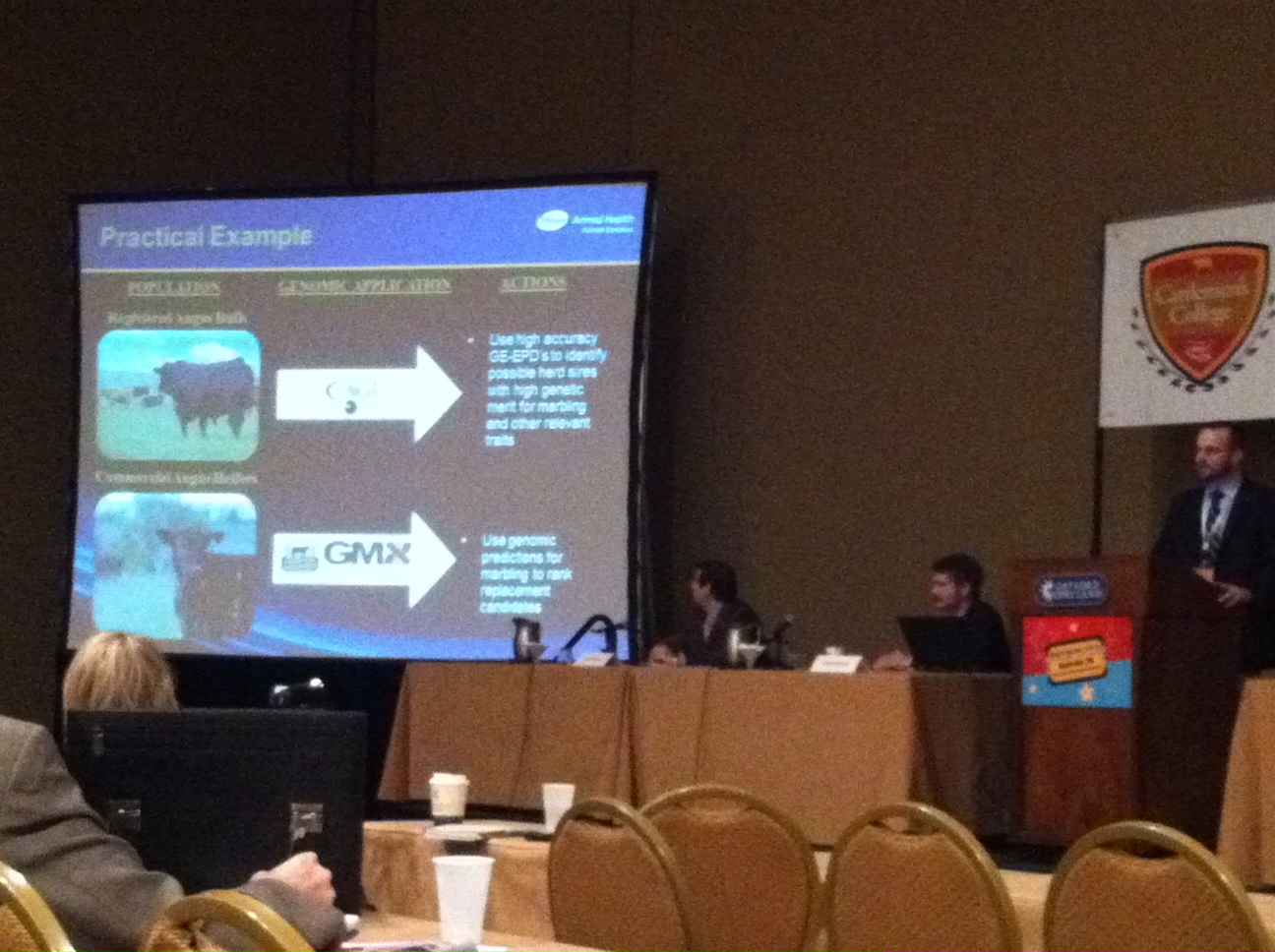
From comments at Pfizer’s Cattlemen’s College…

 to Cattlemen’s College lunch..

to our trade show display…

and our media event…

GeneMax was all over the place!

And if you were home—like me and Steve (we both happened to be caring for babies, some bovine) following along on Twitter—you probably still noticed that GeneMax was a news item.

And if you missed all that, you can get up-to-speed by catching the post-convention coverage by the likes of Agriclture.com (New DNA technology for your beef herd) and Brownfield Ag Network (CAB unveils GeneMax).

But all of this DNA talk has led a few to buy into this notion:

Myth–CAB has no business being in the DNA business.

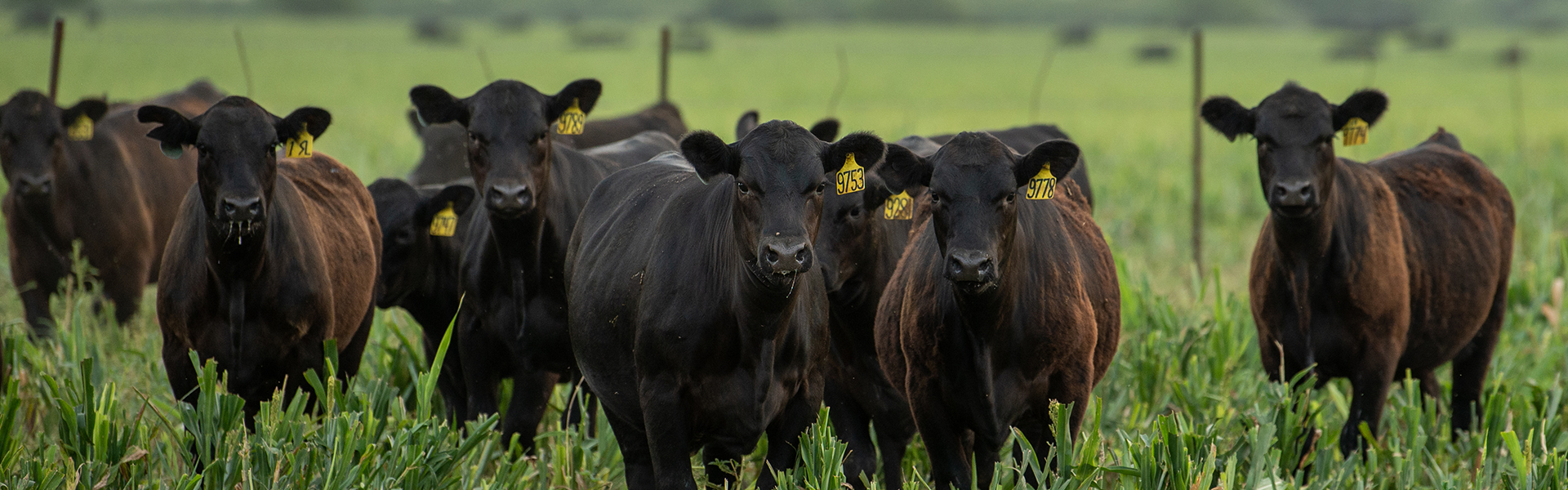
Fact–Our core mission is to grow the demand for registered Angus cattle. We do this by providing a time-tested, super yummy product to consumers across the globe. The only way we can continue to do that is by having more of that product to sell.

You’ve heard us say it before, but I’ll say it again: Marbling is the number one reason cattle fail to meet the brand specifications.  (For us, that means less product. For you, that means fewer premiums.) It’s a losing deal for all of us.

The company doesn’t own any cattle. The only way we can increase that supply is by giving cattlemen tools to help them improve the marbling in their herds. We’ve got the breakeven calculators, the Best Practices Manual, research, research and more research. This is just one more tool.

We hope you’re as pumped about this new venture as we are.

So now that it’s officially here, launched and ready for use, do you have any questions? Any DNA-related myths we can bust?

May your bottom line be filled with black ink,

~Miranda

You may also like

Fetus to feedyard

Fetus to feedyard

This isn’t a research topic you’d find at the middle-school science fair. It’s so new, research is just beginning to explore this 16-letter term for immune cells sharing nutrients with major organs: immunometabolism. So far, there are still more questions than answers.

Beef Leaders Institute: An original experience

Beef Leaders Institute: An original experience

Past experience showed me enough to get where food comes from, but not enough to understand how it gets from point A to B and then to me. Now I get the beef story, and a huge part of the credit goes to the week I spent with the American Angus Association’s Beef Leaders Institute (BLI) in June.

Plan, monitor and cool it

Plan, monitor and cool it

It’s a hot topic every summer.
“Heat stress is the largest impediment to efficient animal agriculture,” said Rob Rhoads, Virginia Tech. He presented with University of California-Davis colleague Frank Mitloehner for a symposium on the topic at the American Society of Animal Scientists annual meeting in July.

angus cows in pasture

Do high prices equal high profits?

August 29, 2011

If I had to sum up the Feeding Quality Forums we co-hosted last week in a short phrase, it would be, “So much good information.”

I enjoyed all the presentations, and as I’m listening to them I’m always trying to pick out the most useful take home messages for producers. As I discussed the content with my family, market analyst Dan Basse’s came up a lot.

He and his cohorts at AgResource Co. are predicting fed-cattle prices to reach $130 to $135 early next year.

To outsiders that might sound like everything is roses in this business, but insiders know better. Still, it’s easy to get starry-eyed when talking record highs and dollar signs in the same breath.

So today’s post is somewhat cautionary.

Myth—High beef prices=guaranteed profit for cattlemen and women.

Fact—High beef prices=hopefully enough money to cover all the rising input prices.

No matter what segment of the business you’re in, there are a number of factors that will Continue reading “Do high prices equal high profits?”

Deets honored by Feeding Quality Forum


by Miranda Reiman

Some people set out to make a lasting change on their industry, but Max Deets, Beloit, Kan., says he never thought of himself in that light.

Instead the cattle feeder’s natural leadership ability, quest for improvement and genuine respect for others led him to some of the most influential roles in the beef business.

Deets, who managed Solomon Valley Feeders until 2007, is just the second recipient of the Feeding Quality Forum Industry Achievement Award.

He will accept the recognition at the meetings in Nebraska and Kansas later this month.

“I have always respected Max because he is a true gentleman,” says fellow Kansas cattleman Jerry Bohn. “He wasn’t an ‘in your face’ leader, but could be forceful in his own way. He is just somebody you look up to.”

The Pratt Feeders manager says he got to know Deets by way of career path.

“I wasn’t directly involved with him a great deal, but in a way he was an industry mentor to a lot of us, just by our watching him,” Bohn says.

Deets’s story doesn’t start much differently than others. He grew up on a diversified crop and livestock farm in south central Kansas. He was drafted into World War II and then used the GI Bill to attend Kansas State University.

“At that point I still planned to go back to the family farm,” says Deets. He and wife Marcelyn did just that for five years, before managing a cow-calf operation, starting a small feedlot and eventually moving to Arkansas City to manage a yard.

There his story deviates. Deets began doing bull testing and pioneered that concept within the state.

“I didn’t have any real vision of being an instigator of bull tests in Kansas,” he reflects. “I’d always been interested in putting figures together and the competition in breeds was always fascinating to me.”

grid marketing webinar

He thought the Arkansas City location was a permanent one, until investors in Beloit, Kan., wooed him with their enthusiasm and plans. So the couple made their final move to manage the newly built 20,000-head Solomon Valley yard.

There he got more involved in industry associations, particularly the Kansas Livestock Association (KLA) board and then presidency in 1988.

“He is a natural leader and always gravitates toward leadership positions in whatever organization he’s in,” says Larry Corah, Certified Angus Beef LLC (CAB) vice president.

The KLA president worked closely with the National Cattlemen’s Association (NCA, now NCBA), so it’s no surprise that Deets eventually served as its president in 1997.

“I enjoyed meeting other people with interests similar to mine, but I could see the value in influencing government decisions,” he says. “There wouldn’t be any way I could have a say in that by myself. This way we were able to have a voice.”

One cause he championed was a focus on the ultimate customers.

“In my year as president, consumer acceptance of beef was at its lowest percentage in some time, so we had a real interest in trying to turn that around,” Deets says. “That’s what generates profits for the whole industry. I liken it to a pie. For every segment to get a bigger piece, you have to have a bigger pie.”

Bohn says the beef industry has historically been “a bit predatory.”

“Here over the past few years we’ve all been able to make a little, and rising water floats all boats,” he says. “Max was certainly somebody who had the interests of the industry at heart, much more than his own.”

Change happens in all segments, Deets says, but it takes information and producer involvement.

“They have to train themselves by getting records on their cattle and learning what they’re producing,” he says. “If they’re not producing the best, they need to do something better.”

Deets jokes that the market volatility and soaring input costs make him glad to be retired, but in the next breath he remains optimistic: “The industry has always had to live with these kinds of occurrences; they come out of it and are stronger.”

His real joy in retirement is rooted in family time, spent with his six children and 16 grandchildren that are “spread out all over the country.

“It was important to have the support of family, and they understood what I was about,” he says.

Deets will give remarks during the lunch program at Omaha, Neb., on Aug. 23 and Garden City, Kan., on Aug. 25.

The seminars are sponsored by Pfizer Animal Health, Land O’ Lakes Purina Mills, Feedlot magazine and CAB.

To register, visit www.feedingqualityforum.com, or contact Marilyn Conley by phone 800-225-2333, ext. 298, or email mconley@certifiedangusbeef.com.

You may also like

Beyond a buzzword

Beyond a buzzword

It’s not the work of fancy technology, though spreadsheets of data and consultants lend their hand. It’s six generations of meticulous puzzle masters who focused on making better each piece of the bigger picture.

Add value to calves

Add value to calves

“Value” in feeder calf marketing is a relative term. All calves have some and the trick is to capture your share, said Paul Dykstra. Success is rooted in your customers he said. Customer changes through the supply chain from feeder, to packer to consumer.

Rebound

Rebound

Shocks to the beef industry were all part of 2020’s “unprecedented” theme, but how the market responded was less surprising. That’s from RaboResearch analyst Dustin Aherin. When history is in the making, cattlemen should be innovative.

Ulrich branded barn

Singin’ for CAB

July 2011

The CAB Cook-Off Contest – youth sing, perform, and cook—all in the name of the Certified Angus Beef® brand.

Every summer I look forward to the National Jr. Angus Show as an opportunity to exhibit my cattle, meet new friends, and learn about the industry.  This year my family traveled to Harrisburg, Penn. with our Angus heifers. In addition to the cattle show, the week is full of educational contests designed to empower youth by developing leadership and communication skills.

As a junior member, the CAB Cook-Off Contest is one of my favorites because of its emphasis on creativity.  Gunsmoke, 101 Dalmatians, and Popeye have all been themes used by my team throughout the years to promote CAB. I credit this contest for cultivating my knowledge of CAB and developing an ability to share these facts with others.

The CAB Cook-Off Contest allows young Angus producers the opportunity to learn about and promote our end product in an educational, creative,and fun way.

Don’t be fooled by the title; this contest is more than grilling the perfect steak. Contestants participate in teams and must prepare a unique recipe using a CAB product, perform a skit promoting CAB, and then serve their dish to the judges. During the taste test, judges can ask questions about dish preparation and CAB facts.

It is difficult to communicate the CAB brand’s specifications and to explain the advantage of these qualifications. Addressing this issue of communication, the cook-off serves the dual purpose of empowering youth to promote CAB while educating audience members on the brand’s advantages and availability. Cook-off contestants rise to the challenge while weaving in humor and creativity.

Meghan Blythe was raised Angus. She grew up on an Angus cattle ranch and has been involved with her family’s cow/calf operation ever since. Meghan is currently a junior at Kansas State University majoring in agriculture economics. While going to school in Manhattan, she works part time as CAB’s data management assistant.

You may also like

Dreamers and doers

Dreamers and doers

If you could have one wish, any wish, what would it be? More resources, greater assets, the best genetics or something else?

Smiles, success

Smiles, success

You could say Cudlobe Angus began on a whim. The journey from three Angus cows purchased at a sale barn to a more than 600 head seedstock operation that hosts two sales a year took decades of learning and investment risk.

Bigwigs in barbecue

Bigwigs in barbecue

The Culinary Center recently hosted the annual Brand Ambassador Summit, welcoming chefs from all over the country, including a handful of barbecue specialists.

BIG, BAM boost beef demand

Checkoff-funded program finds alternatives to thin steaks from larger carcasses

by Wyatt Bechtel

July 2011

A dry, flavorless and thinly cut steak can be enough to sour anyone’s taste for beef.

“There is no doubt that cattle are getting bigger, and that will continue,” says Terry Houser, Kansas State University meat scientist. “I don’t think we are going to produce smaller rib-eyed cattle anytime soon or start selecting cattle for that trait.”

Still, demand for beef looks bright, thanks to new cutting methods developed to tackle the issue of increasing carcass size and its effect on the eating experience.

Some of these methods have been brought to market by the Beef Checkoff’s Retail Marketing Team and its Beef Alternative Merchandising (BAM) program.

BAM came about through “listening to what consumers want,” says Trevor Amen, channel marketing manager for the National Cattlemen’s Beef Association (NCBA), contractor for the Beef Checkoff. “Through the years, the Retail Marketing Team’s cutting tests and focus groups put the product in front of consumers to really see how they interact and what their purchase interest would be.”

According to Kari Underly, author of “The Art of Beef Cutting,” who worked with the team, consumers appreciate cooking tips and detailed recipes. They also prefer smaller cuts with less trim. “The right-size portion for many of them seems to be a 4-ounce (oz.) portion,” she says.

That might seem discouraging, considering the impetus was how to deal with larger carcass size, but it actually opens more doors in beef marketing, Underly says.

In research, new cuts were taken from the ribeye, strip and top butt of typical 700- to 800-pound (lb.) carcasses as well as those pushing the limits at 1,000 to 1,100 lb.

“We wanted to make sure BAM would work well financially on both sizes,” Underly explains. It did, and served to create a wider range of choices for consumers. “It’s an add-on to what retailers were already featuring.”

A top cut

The research dovetailed with efforts of the Beef Checkoff-funded Beef Innovations Group (BIG). Prior to the concept of alternative cutting techniques, retailers had trouble marketing quality cuts from the top butt; now the trouble is simply keeping enough of it in the meat case.

“The top sirloin butt has certainly been a victory for us,” says Mark Gwin, Certified Angus Beef LLC (CAB) research and development manager.

Also a member of BIG, Gwin says retail and consumer buy-in has been strongest for the alternative offerings from this wholesale cut, among all the middle meats.

Three retail cuts were developed through BIG: baseball steaks, culotte steaks and the filet of sirloin. “Any trimmed pieces can be used as medallions or fajita meat,” Gwin adds.

Top sirloins used to be cut exclusively into large steaks with no focus on the multiple muscle complexes within, creating tougher areas within the cut when cooked, he says. The new cuts are thicker and pinpoint where the muscle grain changes.

“We are giving people the means to cut these muscles into thicker steaks to give them a more succulent experience,” Gwin says.

top sirloin butt boneless

Revise the ribeye

“With the ribeye, we’re removing that cap muscle, the spinalis dorsi,” says Mark Polzer, CAB vice president of business development. “That lets you deal with a much smaller diameter product and you can cut it easier.”

The reduction provides advantages on the plate. It will allow restaurants to market ribeyes at 8 to 10 oz. rather than 12 oz. and will bring the thickness back to a range of 1 to 1.5 inches, he says.

Previous industry trends were to maintain the entire ribeye with the cap muscle intact. But that made for an increasingly larger surface area, and half the thickness of the new cuts.

“We’ve cut ribeye steaks from the center eye muscle to increase the thickness of the steak. That provides a higher quality eating experience with more tenderness, juiciness and flavor,” Polzer says.

In cooking, a thin steak has less water retention capability than the thick cut, Houser says.

“A thicker steak will retain juiciness better and it won’t be over cooked as easily,” he notes. “Obviously the product quality is going to be better than on a thin-cut item.”

Splitting the strip

Strip steaks got an overhaul, too, but it was a simple solution.

“All we do is take the strip loin and literally cut it lengthwise in half,” Polzer says. “What you end up with would be two filet-size pieces that then are cut into filet of strip loins.”

Much like the reduced ribeye, the strip loin filet makes for smaller portion size while gaining thickness. Popular Certified Angus Beef ® brand options include medallions from the chateau for two and the split strip.

Polzer says many of the filet cuts are already being created before they reach retail, so they can be given a more attractive cylinder shape by tying or netting.

At first, consumers wondered how to cook the small-but-thick cuts, Underly says: “A lot of them tended to burn the outside, and the inside was not cooked properly either.” NCBA and the Beef Checkoff found an answer by helping retailers teach consumers a skillet-to-oven process.

“You brown the filets on the outside and then stick the pan into the oven where they can finish nice and slow for the right doneness,” she says. “We also created some grill methods such as for the petite roast.”

Consumer preference

Despite a few years in a tough economy, beef purchasing has remained steady.

“We know Americans love to eat beef and they are finding ways to continue to eat beef,” Amen says.

The new cuts do their part to help keep costs down. They can be marketed in smaller package sizes, so more consumers can buy beef.

Partly because the new cuts avoid some seam fat, several have been endorsed with the American Heart Association’s heart-check mark. “That’s basically communicating to consumers that eating beef can be healthy for you,” Amen says.

While the BIG and BAM approaches are helping boost beef consumption by marketing new cuts, “demand response will drive how we further innovate the program,” he adds. “We’ll keep working to meet the needs of consumers by providing options and high-quality beef products.”

More information on BAM is available at www.beefretail.org/beefalternativemerchandising.aspx; for BIG details, visit www.beefinnovationsgroup.com; and the CAB consumer website is at www.certifiedangusbeef.com.

You may also like

CAB Brand Sales Second Largest on Record

CAB Brand Sales Second Largest on Record

The brand recorded the second largest ever sales volume in fiscal 2022 with total sales culminating in 1.234 billion pounds, a 1.6% increase on the prior year. The sum was narrowly below the brand’s 2019 record 1.25 billion pounds sold.

Certified Angus Beef Takes Fine Dining to New Heights to Connect with Consumers

Certified Angus Beef Takes Fine Dining to New Heights to Connect with Consumers

“High Steaks” is about sharing the transformative power of food and the idea that different culinary experiences can take consumers on a journey to different destinations. In a cliff-side setting, Angus rancher Ty Walter joined actor, comedian and host Joel McHale to talk cattle production and what makes the Certified Angus Beef ® brand consistently superior – all while enjoying a four-course meal at an elevation of 8,500 feet.

cowboy moving angus cows

And the winners are… 

February 10, 2011

… drumroll, please!

The winners of five new steak knife sets and one new charcoal grill are…

… I can’t tell you! Dang!

Sorry for the suspense, folks. But our lucky NCBA grill give-a-way winners have been notified by e-mail and we will know their identities soon. I figured they wouldn’t enjoy having their addresses plastered online, so if you subscribed to this blog between Feb. 1-6, THANK YOU, and watch your e-mail for a prize notification!

In the meantime, I wanted to re-cap a few of my favorite highlights from last week’s Cattlemen’s College at the National Cattle Industry Convention. My favorite session was bright and early Wednesday, called “Managing for Quality: A supply chain approach.” Continue reading “And the winners are…”

Keys may unlock cellular doors to marbling mysteries

By Miranda Reiman

October 9, 2009

Knowing more about marbling helps cattlemen produce the best beef. All four National Beef Quality Audits (NBQA) said consumers want more of it, yet many producers manage so as to inhibit rather than enhance marbling.

Scientists offered new insights at the Reciprocal Meats Conference this summer.

“Three major things affect the beef eating experience: flavor, juiciness and tenderness,” Brad Johnson, of Texas Tech University said. “In some direct or indirect way, marbling affects all three of those.”

Johnson, the university’s Gordon W. Davis Regent’s Chair in Meat and Muscle Biology, said marbling is a key to feedlot profits, too. Although the USDA Choice premium over Select fell off in the last year, he said beef industry sustainability hinges on its ability to produce more marbling with fewer inputs and lower carcass weights.

Matt Doumit, meat scientist at the University of Idaho, and Jean-Francois Hocquette, director of the National Institute of Agronomic Research at the Herbivore Research Institute in France, also shared research.

Doumit referenced the 2005 NBQA in noting too little marbling and too much back fat costs the beef industry more than $1.3 billion a year in lost profit.

Getting down to the test-tube level, Johnson and his team isolated bovine muscle cells and then used different steroids, fatty acids and other compounds to manipulate the individual cells. In the beginning these cells are all the same, he said, but then they differentiate into muscle or adipocytes – fat cells.

“The hallmark of an adipocyte is its ability to fill with lipids—triglycerides—as a storage mechanism,” Johnson explained. “We’ve seen that some of these compounds may be having profound effects, from a gene expression standpoint, at pushing cells to become adipocytes.”

That’s not an easy task, he added: “Working with muscle cells, I truly believe we have to go out of our way to make them become something else. A muscle cell wants to be a muscle cell.”

The use of growth implants directs a cell to become muscle and therefore decreases marbling, Johnson said. On the other hand, feeding melengestrol acetate (MGA) actually improved marbling, but also increased back fat.

steak dinner

Three compounds assist in marbling activation and alter the key genes when cells are being allocated as either muscle or fat.

“We were able to get multi-nucleated cells,” Johnson said, “which makes you believe they still have muscle characteristics, but also some mono-nucleated cells that could fill with lipids.”

Doumit’s team is looking at ways to increase both number and size of fat cells, to affect marbling independent of back fat.

“There’s some evidence that fat cells are not just fat cells and preadipocytes are not just preadipocytes,” Doumit said. “They respond to things in a different manner.”

Ibuprofen is just one example of a compound that has been shown to increase intramuscular fat formation.

“It’s probably not ibuprofen we’re looking for, but it points to the opportunity to preferentially affect fat depots,” he said. “It’s possible we can find other naturally-occurring compounds that will preferentially stimulate intramuscular fat over subcutaneous fat.”

Hocquette reminded the audience that genetic potential plays a major role in an animal’s ability to marble, but nutrition is a key to that potential.

“The increase in intramuscular fat is higher when animals are in the feedlot finishing system compared to grass finishing,” he said. “This can be explained by the higher level of glucose in the feedlot diet, and more secretion of insulin, which is known to promote adipogenesis.”

That’s good news for all who hope to increase the good fat while holding the waste fat at bay.

“If we understand the biological differences better, there will be opportunities to develop effective strategies to manipulate these different fat depots,” Doumit said. “That will improve the efficiency of livestock production as well as increase the quality of the product.”

You may also like

Doctor’s orders

Doctor’s orders

As a kid my family went on two trips a year. One to visit relatives up north (this one, not even a guarantee), the other to the Florida Cattlemen’s Association’s Annual Convention. What may have been work for my parents was vacation for us kids. We swam, we...

On Target: The growing requirements

On Target: The growing requirements

Beef cattle genetic power keeps moving up. Just look at the trend for pre- and post-weaning growth potential across breeds. Look at the continued improvement in quality grade across the industry. Some say that growth increase has come at the detriment of the cow herd, increasing feed and forage requirements beyond what the ranch can maintain. But steer carcass weights peaked at 930 lb. in fall 2015, not maintaining their historic 5-lb. annual increase as predicted. While carcass weights vary seasonally, they have declined annually since 2015 and trend lower in 2018.

On Target: Why ‘veggie meat’ won’t replace beef

On Target: Why ‘veggie meat’ won’t replace beef

Lately the news is overrun with features on how we humans plan to shift away from meat as we’ve always known it to plant protein alternatives. Personally, I refuse to call it meat; vegetables and legumes in a meat-like form perhaps, but meat it is not.

One sick calf = less profitable pen

Health costs impact entire feedyard

By Miranda Reiman

January 2009

Low mortality isn’t the only way to measure the success of your health program.

Pfizer veterinarian Robin Falkner told attendees at last fall’s Feeding Quality Forums, held in North Platte, Neb., and Amarillo, Texas, to start thinking about disease management a little differently.

“We want to worry about things that can change and that can matter,” he said.

Consider the steer with a 10% chance of living. A cowboy treats him, sends him to a holding pen and spends extra time with him – only to increase his chance of survival to 14%.

 “Your total focus is on saving that one,” Falkner noted. “How much of my time can I burn up on him that I could better invest somewhere else? In this situation, the bunks aren’t cleaned out. The water troughs aren’t getting cleaned. We don’t have that extra five minute in another pen to pull one early.”

A change of mindset would help the bottom line, Falkner said: “We need to move away from asking what can we do to save him to asking what he can kill.”

That’s because the real risk goes beyond wasting time. That one calf is shedding to the rest of the population – after all, he has pathogens that have already beaten the drugs and management at that yard, Falkner said. “That’s why it’s not about saving him. It’s about saving the other calves.”

Rather than managing health on an animal-by-animal basis, feeders need to think of keeping disease under control in groups of cattle and their yard as a whole.

“I’m not a veterinarian who thinks the world revolves around health, but if you intentionally manage pathogens, your world will change,” Falkner said. He referenced Texas Ranch-to-Rail data that shows a sick calf costs $100, and Iowa research illustrates a 10-point drop in Certified Angus Beef ® (CAB®) acceptance rate for calves treated twice.

“That’s not the whole story, though, because it affected the other calves in the pen,” he said. Sick cattle cause problems with everything from bunk reading to final marketing, but managing health will improve both the efficiency of groups of cattle and the feedyard as a whole.

“Does heath impact any decisions we make about filling pens at any point in time? I think it’s the biggest bottleneck to profitability we’ve got,” Falkner said. “We are scared to buy certain types and classes of cattle because we don’t know if we can handle the health. We’re scared to wreck and overload our labor.”

When those health disasters happen, feeders often put off buying until they have it under control. Some try to change vaccines, nutritionist, veterinarians or even order buyers.

“Switching a good program to one you don’t know is probably not a good deal,” he said.

Instead, Falkner provided some practical prevention recommendations, including not placing your hospital pen next door to receiving.

“You don’t know how many feedyards I’ve been to where the cattle are going to stand right next to a pen of chronics, overnight, before they’re processed in the morning,” he said. Following up with ironic humor, he asked, “Are you just trying to inoculate them early so we can go ahead and get over it? We make sure we give our brand new, naïve, stressed-out cattle good, early access to the worst bugs we’ve collected in the past six months, year or 10 years.”

He also suggests keeping cattle out of that treatment pen if at all possible.

“A low flow of cattle into the hospital works well, because that flushes the bugs out regularly and they don’t accumulate as much,” he said.

Cattle that have been in the yard for 10 to 35 days are the “most dangerous,” Falkner said. “The bugs have all gone through them and they’re shedding a whole lot.”

Sometimes sickness doesn’t show itself in one group of cattle until you mix them with another after they’ve had a couple of weeks to get settled in the yard.

“You create the perfect storm and you blow them completely up,” he said. “This disease is going on in one group and by itself it’s not any more than a runny nose, but you put it on top of another disease that’s going through the other group and it’s really bad.”

Taking a careful look at every aspect of bio-containment could help prevent “real wrecks,” Falkner said. “You’re going to get the bad bugs. You’re going to select for them when you use those drugs, but you don’t have to accumulate them and you don’t have to inoculate them.”

The meetings were cosponsored by Pfizer Animal Health, Certified Angus Beef LLC (CAB), Feedlot magazine and Land O’ Lakes Purina Feed. 

You may also like

Beyond a buzzword

Beyond a buzzword

It’s not the work of fancy technology, though spreadsheets of data and consultants lend their hand. It’s six generations of meticulous puzzle masters who focused on making better each piece of the bigger picture.

Add value to calves

Add value to calves

“Value” in feeder calf marketing is a relative term. All calves have some and the trick is to capture your share, said Paul Dykstra. Success is rooted in your customers he said. Customer changes through the supply chain from feeder, to packer to consumer.

Rebound

Rebound

Shocks to the beef industry were all part of 2020’s “unprecedented” theme, but how the market responded was less surprising. That’s from RaboResearch analyst Dustin Aherin. When history is in the making, cattlemen should be innovative.