dalebanks, perrier, seedstock commitment to excellence award

Correlated traits

These are quite possibly the nicest people I’ve ever met.

Myron and Kay Beatty, 2006 Commercial Commitment to Excellence award winners

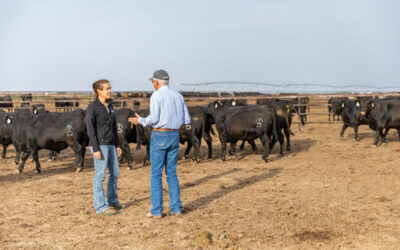
I distinctly remember thinking that as I left one of my first story stops for CAB. I was covering Nebraska ranchers Myron and Kay Beatty, who were to receive our Commitment to Excellence Award later that year. I rode around in their pickup and learned about their herd and their family, their struggles and victories. I often think of how naïve I was, and how gracious they were.

2007_5_mr_Skavdahl-3
Jim and Maureen Skavdahl, 2007 Commercial Commitment to Excellence winners

But then, each year after, I find myself with similar thoughts during my summer travels.

These might be the nicest people I’ve ever met.

When the Black Ink crew picks award winners, “nice” isn’t the set of criteria, but it seems it’s a highly correlated trait.

Ranchers who care about their cattle, the buyers of those cattle and the final beef consumers, also tend to be just some of the most genuine, welcoming and humble people you’ll ever meet.

Dee and Gaye Johnson, 2015 Commercial Commitment to Excellence winners

I can no longer pick a “favorite ranch I’ve ever been to.” The competition is just too stiff when I’ve met people like Jim and Maureen Skavdahl, Dee and Gaye Johnson and the Minnie Lou Bradley and Goggins families.

The list could go on and on, and that’s not to mention the dozens and dozens of cattle feeders I’ve gotten to profile.
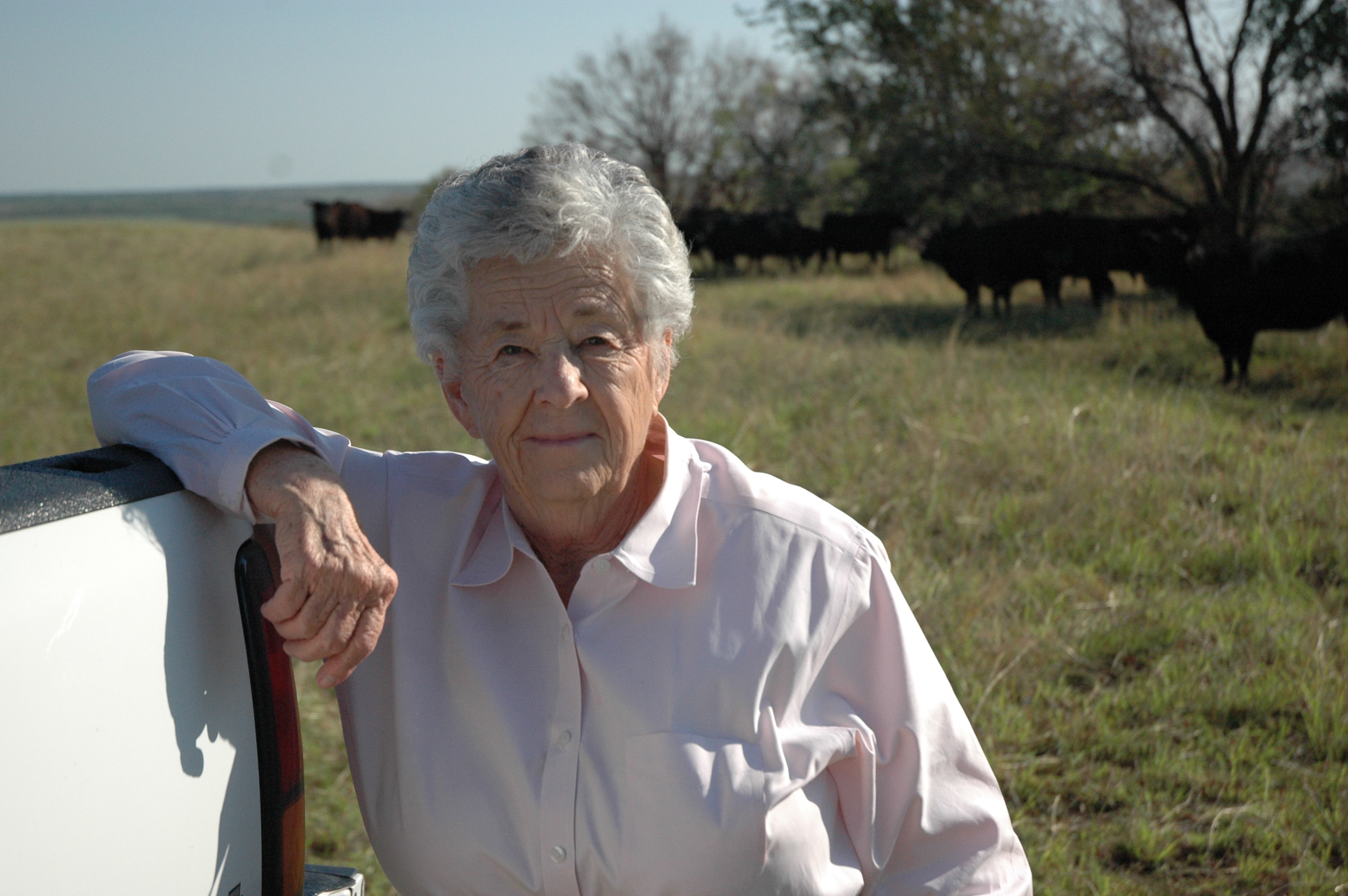
Minnie Lou Bradley, 2009 Seedstock Commitment to Excellence winner

In two weeks, our team will sit down with a virtual folder of nominations. It’s always a tall task that takes several different rounds to whittle down to our eventual winners. At the risk of sounding like I want to make that job harder, I ask: Is there anyone else we should be considering?

Are you a seedstock producer who knows of quality-focused customers who pay attention to all the details from genetics to management to marketing? Are you a commercial rancher who has found a true partner in helping you produce high-quality beef with either your genetic supplier or a feedlot buyer?

Maybe you’re in allied industry, but work with some of the best of the best, the people you know embody the “CAB spirit.”
2013_06_04_mr_Vermilion Ranch-46
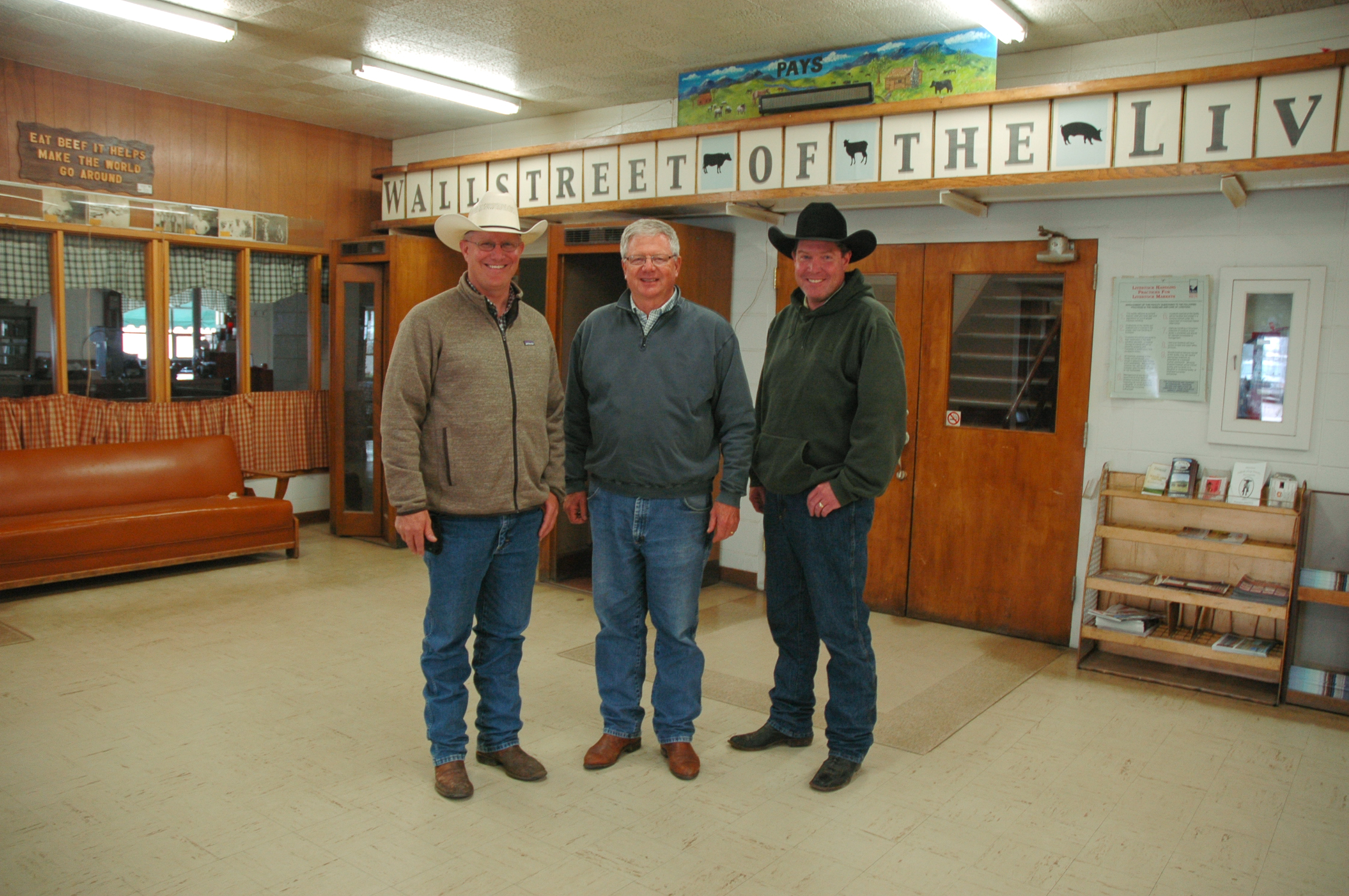
The Goggins family, 2013 Seedstock Commitment to Excellence winners

We have a very short nomination form, available here, and we’d love to hear about them. (But hurry! The deadline is March 31st.)

We’re looking for producers who have a proven track record, who see the market rewards for supplying the CAB brand and have their sights set on creating even more.

Of course, it wouldn’t hurt if they’re nice, too.

May your bottom line be filled with black ink,

Miranda

You may also like
The Competitive Drive

The Competitive Drive

The Bootheel 7 brand that marks the hips of the Wasserburger’s cow herd could stand for the seven state wrestling titles held between three boys in the fourth generation, but that mark far predates their competitive drive. It’s been the brand carried by Wassserburgers looking for the ‘W’ since the homesteading era.
Following Second Dreams

Following Second Dreams

Cow work, genetic improvements and breeding plans are on the table for hours because building the perfect cow takes constant adjustments to the plans they lay out. The Larsons are working on a masterpiece that moves their families and customers closer to “best” every day. Their determined journey toward elusive perfection helped Larson Angus Ranch earn the CAB 2022 Seedstock Commitment to Excellence award.
The Cattle Market Teacher

The Cattle Market Teacher

Part intuition, part learned experience and a growing database gave Randy Blach the tools to communicate to producers what the market demands. The bottom line is consistently front and center, his mission is to keep more cattlemen and women on the land, doing what they do best.
Permission to straightbreed

Four all-Angus success stories

Each day my farm radio reminds me that the bull sale season is in full swing. I hear several seedstock suppliers advertising as “the perfect cross to complement an Angus program,” and they might be right. That is, if you are looking to crossbreed.

They imply you’re missing out if you don’t.

But year after year, our team visits intelligent, strategic-minded ranchers who are not only making money with straight Angus, but who are making more money with a single breed than they say they could in a more complicated program.

Need some proof? Let me re-introduce you to our past four Commercial Commitment to Excellence Award winners:

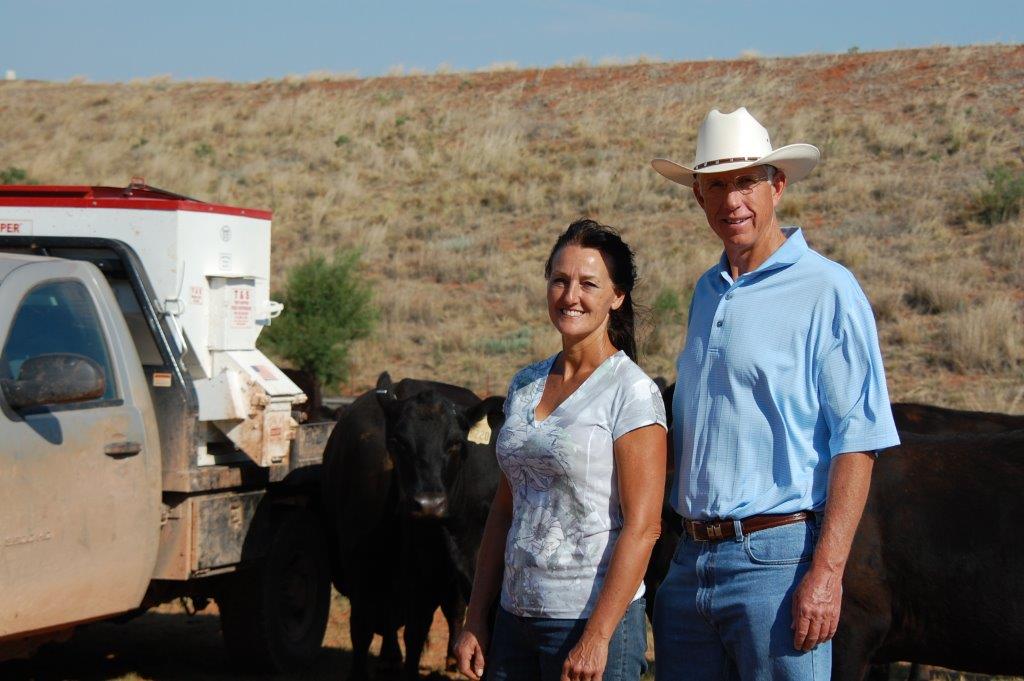
Oklahoma ranchers Jimmy and Tracy Taylor switched to Angus nearly a decade ago.

1—When Jimmy and Tracy Taylor took ownership of the family ranch in Oklahoma, they had one major goal in their genetic selection: “simply to sell the most pounds of beef at weaning.”

“Over time, we began to see there is more security for our ranch and for the whole industry if we reoriented to give the consumer a better eating experience,” Jimmy says. “We changed with the incorporation of registered Angus bulls to a goal of producing the best steak we can possibly make.” Those first Angus-cross calves arrived in 2006, and when they won CAB honors in 2011, they were reaching nearly 60% brand acceptance.

2012_06_28_mr_Zutavern Ranch-41
Con Zutavern and his family run commercial Angus cows and feed out the calves on their Dunning, Neb., ranch.

2-“When we talk about revolutionary things that changed our business, we talk about center-pivot irrigation, distillers grains and the introduction of EPDs to help us pick Angus bulls,” says Con Zutavern, of Dunning, Neb.

His family gradually incorporated Angus genetics, going straightbred in 1988.

Birthweight started as the main trait of importance, but as the sole suppliers to their own feedlot, their selection breezes right past common ones like weaning weights to instead emphasize overall growth and carcass traits.

“We’re looking at the dollar-beef ($B) Values, and we don’t want cattle that are too fleshy. Because selling on a grid you don’t want a bunch of yield grade 4s,” says brother Zak Zutavern.

His son Adam adds, “We’ve been trying to keep a count on the wilder cattle and watch disposition. Looking at Angus EPDs, you can basically get anything you want.

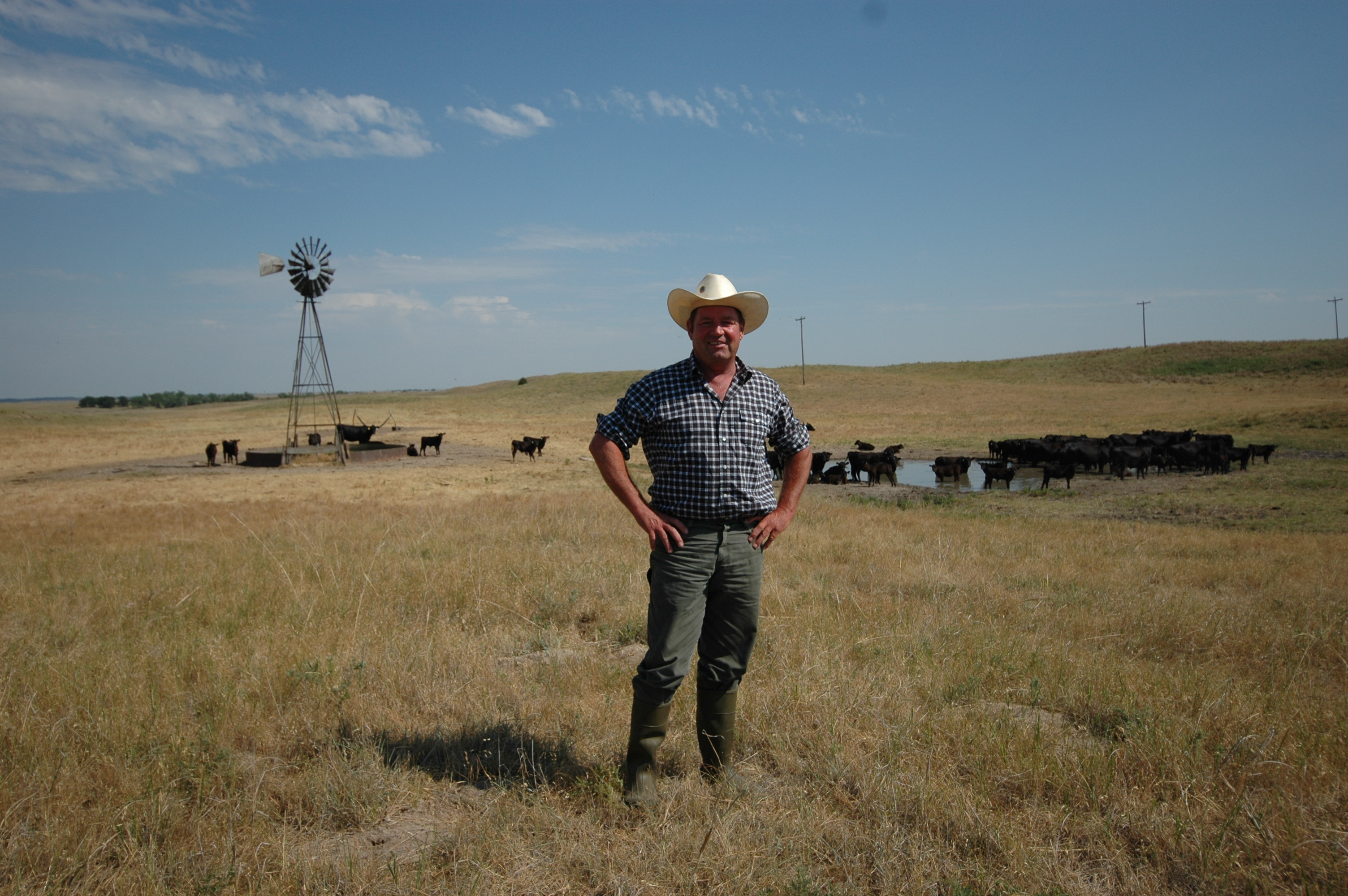
Joe Mayer hones his commercial Angus herd in the Oklahoma Panhandle.

3- Joe Mayer, of Guymon, Okla., fed cattle most of his of life, even owning some interest in a feedlot. “We fed a lot of cattle, and all kinds, but that was back before grids and none of that mattered. When you actually got paid for what you produced instead of one-price-fits-all, I started worrying,” he says.

But worry without action is a futile act.

That’s why he started buying Angus bulls two decades ago with goals of creating uniform performance and quality in calves that would be profitable to feed for the emerging value-based grid markets.

Sensitive to charges that he should be crossbreeding, Mayer says, “I’d love to, if anyone could show me the data relevant to my herd that some non-Angus bull will make more money here.”

2014_06_12_mr_Johnson-158
Dee Johnson, Dry Fork Land and Cattle, Edgerton, Wyo.

4–“In every aspect, from mothering ability to raising pounds to having less health problems to being a better product when it hits the plate, I’ve thought [Angus] was the most productive breed out there,” says Dee Johnson, who we honored just last year.

For the Wyoming producer, it starts with phenotypic evaluation. If bulls are “deep-ribbed,” with good feet and structure, backed up with “the right muscle structure in the hind quarters,” then he’ll open up the catalog and check out birth weights and expected progeny differences (EPDs) for milk, ribeye and marbling.

He matches selection criteria to resources on his ranch that averages 13 inches of rainfall a year. Dee doesn’t emphasize high weaning weights because, “we’d have to tie a bucket of corn on every animal out here to realize some of those numbers.” Instead fertility and final feedlot results–which recently showed 80% CAB acceptances—dictate his program.

Not only are these ranchers true stockman, they’re also smart businessmen. They’re not blindly in love with a breed for the sake of hide color or history. They follow the money and for several years (in many cases 20 or more) it’s led them in the same direction.

We’re not surprised, but are certainly delighted, to know that’s Angus.

For specific tips as you head to this season’s sales, read this post from Mark: Bull buying made simple.

Happy bull shopping and may your bottom line be filled with Black Ink,

Miranda

You may also like

The Competitive Drive

The Competitive Drive

The Bootheel 7 brand that marks the hips of the Wasserburger’s cow herd could stand for the seven state wrestling titles held between three boys in the fourth generation, but that mark far predates their competitive drive. It’s been the brand carried by Wassserburgers looking for the ‘W’ since the homesteading era.

Following Second Dreams

Following Second Dreams

Cow work, genetic improvements and breeding plans are on the table for hours because building the perfect cow takes constant adjustments to the plans they lay out. The Larsons are working on a masterpiece that moves their families and customers closer to “best” every day. Their determined journey toward elusive perfection helped Larson Angus Ranch earn the CAB 2022 Seedstock Commitment to Excellence award.

The Cattle Market Teacher

The Cattle Market Teacher

Part intuition, part learned experience and a growing database gave Randy Blach the tools to communicate to producers what the market demands. The bottom line is consistently front and center, his mission is to keep more cattlemen and women on the land, doing what they do best.
dalebanks, perrier, seedstock commitment to excellence award

Maternal function at Marrs Ranch

“Marrs cattle excel both in performance and carcass value.”

That’s all Tom Williams, Chappell (Neb.) Feedlot, had to say about his customers of five years in 2009.

That, and an added page of data to prove it, were enough.CAB Fall Females Logo-01

Recipients of CAB’s Commercial Commitment to Excellence award, Dan and Anna Marrs, Whitewood, S.D., were the first to admit their herd of 600 Angus females wasn’t perfect.

Although 2009 was a different market and time for the family ranch northeast of the Black Hills, what attracted us to them then attracts us now.

Consistency.

They have the numbers, of course – harvest bunches achieving 70-80% CAB – but it’s what’s behind the numbers that have kept them on our radar.

Marrs_1Speaking more to their way of life and how they raise son Matthew, Anna said in ’09, “In a way, because we don’t have a lot of things – like hi-speed Internet or Nintendo, we just try to concentrate on basics. Reading and phonics. And above all character.”

A comprehensive tell-all, character covers all the bases from family values to their commercial cowherd.

With 24 years of records supporting every decision they make, Marrs Ranch is an example of aiming for balanced excellence and getting it. A forage-oriented, low-input herd, Marrs cattle don’t just hit the CAB target but gain and convert efficiently during the process.

It seems rather simple, really, when Dan explains that records show what “cows we can live with,” in one sense of the phrase. Cow families that show longevity and carcass quality get to stay while those that fall behind hit the road. In another sense of the phrase applied to functionality, Dan adds, “We don’t live with them. If a female gives us any trouble, she can’t stay here.”

Like many breeders who have looked past the myth that says if you want one thing you must give up another, they don’t choose between functionality and quality. Instead, they let them work together, a physical “character” of sorts.

Marrs_3Leery of fads, the Marrs Ranch has “been breeding black” for more than 35 years because of the ability to target desired results.

“Crossbreeding may work for some people, but we know what our Angus cattle can do in the feedlot, as replacement heifers and in our herd. CAB is really a bonus, and it’s a benefit I don’t see attached to any other breed,” Dan says.

Call me biased, but I’d tend to agree.

Thanks for allowing me to tell your story,

Laura

This is the second in a three-part series on maternal function and marbling. To hear about the Nebraska family who wouldn’t sell their cows in a drought for all they had invested in them, click back to yesterday’s post.


You may also like

North Dakota Partnership Earns CAB Progressive Partner Award

North Dakota Partnership Earns CAB Progressive Partner Award

The Bruner and Wendel families earned the 2023 CAB Progressive Partner award by selling high-quality beef through Dakota Angus, LLC, as part of the CAB Ranch To Table program. They focus on their commitment to quality, data-driven decisions, achieve impressive CAB and Prime percentages and offer high-quality beef directly to consumers in their communities.

Kansas Ranchers Recognized for Sustainability Efforts

Kansas Ranchers Recognized for Sustainability Efforts

Kansas’ Wharton 3C Ranch thrives despite droughts, winning the CAB 2023 Sustainability award. The data-driven, quality-focused approach of first-generation ranchers, Shannon and Rusty Wharton, yields 100% CAB cattle. Their commitment to sustainability and industry collaboration sets a bright future for the cattle business.

Saskatchewan Angus Ranch Earns Certified Angus Beef Award

Saskatchewan Angus Ranch Earns Certified Angus Beef Award

JPM Farms in Canada quietly gained recognition for its dedication to environmental sustainability and quality cattle. The Monvoisin family earned the 2023 CAB Canadian Commitment to Excellence award for their outstanding results and partnership with Duck Unlimited, showcasing their commitment to improving the land, cattle and family daily.

cab barn

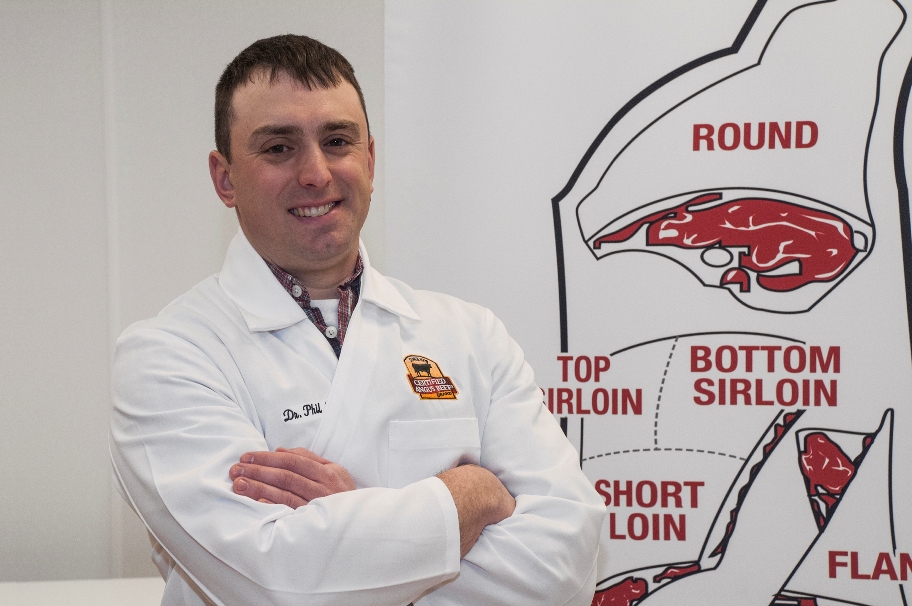
Dr. Phil named to 40 Under 40

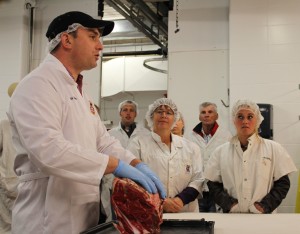
Dr. Phil Bass in Meat LabIt takes a lot to make Phil Bass speechless but a Wednesday morning phone call did just that.

Animated, boisterous, “Dr. Phil” to all who know the corporate meat scientist for the Certified Angus Beef ® brand, is many things, but not silent. An attention stealer, unselfishly and fully justified, there’s something about him that makes you want to stop what you’re doing and watch.

But a call from Vance Publishing’s Agribusiness Group to notify Phil he’d been named one of the company’s 40 Under 40 was enough to slow him down, even if it was just for a minute.

Cacrass101_3

“When I got the phone call, I was speechless,” he admits with a tone that’s more subdued than normal.

Started just last year, 40 Under 40 recognizes those judged most likely to make a difference for their leadership and commitment in advancing the cause to double food production by 2050, says Vance’s Greg Johnson.

“These are 40 of the brightest leaders in the agriculture industry, and we hope readers of all our brands are inspired by the work these young people are doing,” he says.

To be an inspiration. Fitting for the young man who earned his PhD with others in mind.

p216505004-4He’s a teacher. Perhaps not the traditional kind you would find behind a college podium, but his lessons are lasting, rooted in a passion set on educating others about the agriculture industry he loved as a child.

“Phil is a natural teacher, and shares an engaging mix of meat science and the beef production story with leaders and influencers invested in our food supply,” President John Stika says, calling Phil a forward-thinking, creative leader.

Engaging. Maybe it’s the sense of humor coupled with intelligence that makes him so. Or perhaps it’s simply the fact that he smiles a lot. Whatever it is, it’s obvious Phil didn’t set out with any master plan to end up where he is today. Rather he is who he is and people seem to like him for it.

Johnson & Wales Ranch visit

“It doesn’t matter where I go, this is me. This is all you get,” he says. “I don’t know how to be anything different. It’s just that CAB allowed me to really start to grow in that respect and do what just comes naturally to me, to teach, ya know.”

We know. In the absence of any honor or recognition Phil would still be teaching. Humbled by the nomination, let alone the selection, he sees it as his responsibility to keep up with those who work just as hard “behind the scenes” of the industry.

p287557571-4“This is something that other people achieve. I would probably be one of the people writing the nomination, or the guy giving the pat on the back to the other folks,” Phil says when asked if he ever saw the honor coming.

But ask anyone who knows him and they probably wouldn’t be as surprised.

So from all of us who have the pleasure of working alongside the meat scientist, we offer our most sincere congratulations and a pat on the back for a job well done.

Thanks for allowing me to tell your story,

Laura

Vance Publishing’s Agribusiness Group will feature profiles of Phil and the other 39 honorees in November and December print editions of its nine publications, and all will be posted on www.40Under40ag.com.

You may also like

Growing Marketability

Growing Marketability

Advertised as the “Best Angus Beef” and “If it’s not Certified, it’s not the Best,” Certified Angus Beef’s reputation claims elite category status. To remain in that position, the brand must continue to deliver on that promise as customer expectations of quality evolve.

Putting Premiums in the Cattleman’s Pocket

Putting Premiums in the Cattleman’s Pocket

While the competition is growing, the brand’s team of 150 diligently works to differentiate CAB from the rest of the pack. Consumers can feel confident purchasing the Certified Angus Beef ® brand, a high-quality product that is the result of Angus farmers’ and ranchers’ commitment to quality.

Certified Angus Beef Welcomes New Director of Producer Communications

Certified Angus Beef Welcomes New Director of Producer Communications

Genetics and management are at the forefront of targeting the Certified Angus Beef ® brand but communicating beef value propositions to cattlemen guides informed business decisions. To bring the most relevant production and economic information to cattlemen, CAB hired fifth-generation rancher Lindsay Graber Runft as director of producer communications.

Experience wins Kansas Angus Carcass Data Project


by Kaitlin Morgan

Winners of the Kansas Angus Association’s 2014 Carcass Data Project (CDP) are old hands at raising high-quality cattle.

The top three contestants had elite level scores, but John Wendling’s winning entry stands out above the rest.With all 10 of his steers qualifying for the Certified Angus Beef ® brand and four of them grading Prime, he collected the $500 champion prize for the second year in a row.

But no matter the placing, the real prize to all was the data they can use to further improve their herds. Wendling runs a registered seedstock operation near Halstead, Kan.,with his father, David,and the carcass data received through the project has helped show them where their cattle excel and whether they need a little more ribeye.

“Our main goal is to raise bulls,” says Wendling. “I turn the data into the Angus Association to help improve the EPD accuracy on our cows and herd sires, and it proves that we’re doing a good job raising our cattle.”

For the past four years,the cattle in the project were fed at McPherson County Feeders, a CAB partner yard near Marquette, Kan. All animals entered the yard in December 2013 with a minimum of 5 head per contestant.

The Wendlings used to finish all their cattle at a small feedyard on their operation, but have switched to McPherson County Feeders to gain better market access.

“The reason I entered in the project the first time was to get the carcass data and it was a place to feed a small group of cattle,” says Wendling. “We did it again this year and we actually also fed another pen of cattle from one of our customers in the project. We could have just fed them all ourselves but I think they need as many cattle as they can to keep the project going, it’s important to us to support this project,and it gives us a comparison of how we perform compared to other top producers.”

Those would be like Jeff Klausmeyer of Clearwater, Kan.,and his brother Todd Klausmeyer of Wichita, Kan., who won second and third in this year’s contest with steer pens that achieved 89% and 85% CAB. That was after the K3 Angus family placed in the top three the last two years.

Overall, the CDP cattle were 98% Choice and 58% CAB, which is down from past years but the cattle performed exceptionally well with an average daily gain of 3.56 lb. across the board. In the end, all contestants made money and were rewarded for raising high-quality Angus beef.

There were 59 head entered by seven participants this year, including those from Hazelton Angus, McPherson, Kan.; (Jeff) Klausmeyer K3 Angus, (Todd) Klausmeyer K3 Angus, (Thomas) Klausmeyer K3 Angus, Conway Springs, Kan.; Wendling Angus; Hobbs Ranch, Penokee, Kan.; andBryan Lies, Halstead, Kan

You may also like

Mindful management

Mindful management

Undetectable diseases are hard to cure. That’s why the industry is working to find new ways of treating liver abscesses. Tylan is effective, but as antibiotic-resistance concerns and conversations continue, its future is not assured.

What and why are they buying

What and why are they buying

In an era of skepticism consumers have trust issues, especially with those raising their food. The good news is demand is strong and taste is the main driver. Trust is going to be the key to gaining consumer confidence.

Carcass and maternal traits go hand in glove

Carcass and maternal traits go hand in glove

More research shows marbling is not correlated to other traits, supporting its possible to have maternal function and carcass quality in one animal. Late December is showing more typical Choice grading trends.

Thorpe honored for beef industry achievements

There is no man more associated with the words “cattle market” than Topper Thorpe, who left his mark on the industry during a 32-year tenure with CattleFax. His contributions and leadership will be noted as Thorpe receives the Feeding Quality Forum Industry Achievement Award in August.

“The uniqueness of the cattle feeding industry is that we supply almost 80% of the fed cattle produced in the world,” says Larry Corah, vice president of supply for Certified Angus Beef ® brand, who began his own career when Thorpe was a rising star. “That is a pretty impactful industry, and CattleFax and Topper have had a strong influence on how successful it has been.”

Raised on a diversified livestock and crop operation in southern New Mexico, Thorpe earned degrees in business and economics from New Mexico State University before becoming one of two original employees of CattleFax in 1968. As the first analyst at the start-up company, Thorpe laid the foundation and served 30 years as CEO of what became “the nation’s premier market information, analysis, research and education service, owned by cattle producers and feeders.

“His leadership in creating the organization of CattleFax and putting market power in producer hands helped the feeding industry grow and become what it is today,” Corah says.

“Topper understood the value of data, of information, and he could take that aggregate data and do the analysis and then weave a picture of what this industry looked like and what it was going to look like 5 to10 years down the road,” says Randy Blach, current CattleFax CEO, hired by Thorpe in 1980.

Friends and customers always appreciated Thorpe’s candor in bringing transparency to all sectors of the cattle industry. He led CattleFax through the farm crisis of the 1980s, ensuring company analysts always told the honest truth, even if it wasn’t what customers wanted to hear.

During his leadership, CattleFax evolved with technology that “accelerated the learning curve” for producers.

“I think really all the credit goes to Topper,” Blach says. “CattleFax wouldn’t be here today if it wasn’t for him. And it wasn’t always easy–there were a lot of lean years, but his wisdom and guidance got us through those years and developed a foundation that we still benefit from today.”

Beyond his talent with the market and business, Thorpe was known for the emphasis he put on relationships, multiplying himself through others who knew him as a great mentor. “You always knew where he stood,” Blach says. “He showed he was genuinely interested in his people.”

The former CEO may have stepped down in 2001, but his vision sustains CattleFax and the cattle industry today.

“I just want to thank Topper personally for all he has done for me and all that he has done for CattleFax and the benefit he has brought to the cattle and beef industries through all these years,” says Blach.

But to Thorpe, he was just doing his job.

“Receiving this award is very humbling because there are many others that have made great contributions in the industry.To be considered is an honor,” Thorpe says.

He will be recognized and comment at the 9th annual Feeding Quality Forums in Kearney, Neb., on August 19 and in Amarillo, Texas, on August 21. Those are sponsored by Zoetis, Roto-Mix, Land O’ Lakes, Purina Mills,Feedlot magazine and CAB. For more information or to register visit www.feedingqualityforum.com, or contact Marilyn Conley by phone at 800-225-2333, or by email at mconley@certifiedangusbeef.com.

You may also like

The Competitive Drive

The Competitive Drive

The Bootheel 7 brand that marks the hips of the Wasserburger’s cow herd could stand for the seven state wrestling titles held between three boys in the fourth generation, but that mark far predates their competitive drive. It’s been the brand carried by Wassserburgers looking for the ‘W’ since the homesteading era.

Following Second Dreams

Following Second Dreams

Cow work, genetic improvements and breeding plans are on the table for hours because building the perfect cow takes constant adjustments to the plans they lay out. The Larsons are working on a masterpiece that moves their families and customers closer to “best” every day. Their determined journey toward elusive perfection helped Larson Angus Ranch earn the CAB 2022 Seedstock Commitment to Excellence award.

The Cattle Market Teacher

The Cattle Market Teacher

Part intuition, part learned experience and a growing database gave Randy Blach the tools to communicate to producers what the market demands. The bottom line is consistently front and center, his mission is to keep more cattlemen and women on the land, doing what they do best.

cows walking

McPherson County, as in Feeders

Last Saturday afternoon, Gary ventured down to McPherson County Feeders, a stellar CAB Partner located south of Marquette, Kan., licensed since 1999.

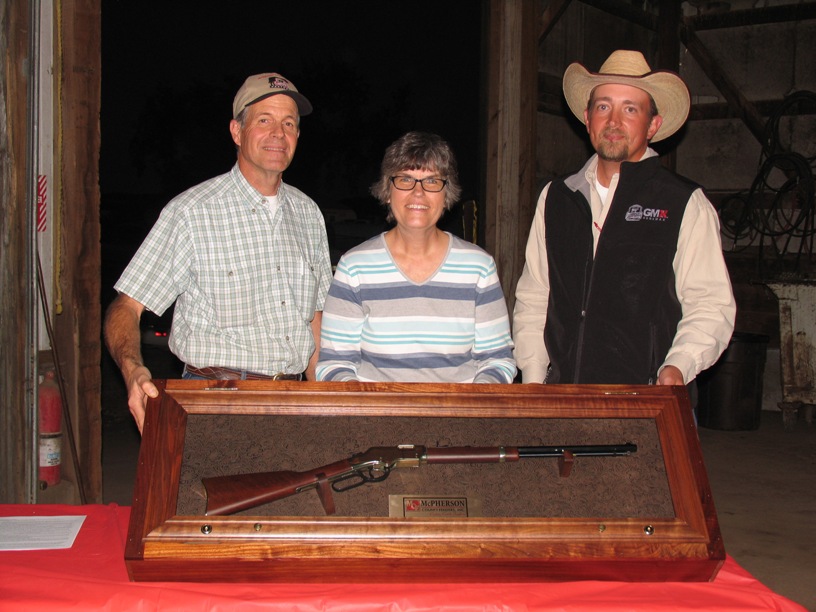
Allan and Deanna Sents with manager Landon Shaw, and awarded rifle.

Allan Sents and company have been Partner of the Year twice, in 2005 and 2010. Since then, MCF has captured carcass and feedlot data on more than 57,000 head of cattle, with a 20.9% CAB acceptance rate. That may not sound exactly like what we would call “stellar,” but keep in mind that from 1999 through 2007, they averaged right around 15%. From 2008 through 2012, the feedlot averaged more than 25% CAB, and the last two years that has been more than 30%–a real commitment to feeding cattle that meet the brand’s 10 specifications.

Each fall, feedlot owner and general manager Allan holds a customer appreciation night. He serves a meal of CAB strip loin steak, calf fries, beans, dessert and drinks to about 150 people. Gary doesn’t always get to attend, but this year he did, because he had the distinct honor of presenting Allan and managner Landon Shaw with a Henry Golden Boy rifle in a walnut case with a plaque honoring them for achieving the “Gold” status in the 30.06 program. Their 2,000 elite, On-Target cattle exceeded 46% CAB and Prime.

There have only been three feedyards (out of a current base of 70) that have achieved this status: Beller Feedlot of Lindsay, Neb.; Chappell (Neb.) Feedlot–and now, McPherson County. Since this program is transitioning to a new “35-10” model, we will no longer be presenting this award. MCF is the final recipient of this award for feeding a cumulative 2,000 cattle or more the make at least 30% CAB with no more than 6% outliers. True friends of the brand, Allan and his wife Deanna are super CAB Partners.


Congratulations to all the folks at MCF!

You may also like

His will, their work

His will, their work

M&M Feeders now includes two yards, with Jamie Huyser tackling the daily tasks at Elm Creek and Daron helps manage operations at Lexington. Mel does everything from keeping up customer relations to driving the feedtruck, while Marvin handles commodity trading from his home in Idaho.

Beyond a buzzword

Beyond a buzzword

It’s not the work of fancy technology, though spreadsheets of data and consultants lend their hand. It’s six generations of meticulous puzzle masters who focused on making better each piece of the bigger picture.

M&M Feeders wins CAB honors

M&M Feeders wins CAB honors

M&M Feeders does business based on honesty. The Huyser family lives by that code, and runs their cattle feeding business the same way. For building beneficial relationships and their drive to produce the best, M&M Feeders earned the 2020 Feedyard Commitment to Excellence Award from the Certified Angus Beef ® brand.

cows walking

Competing with quality

CAB honors Vermilion Ranch for Commitment to Excellence


by Miranda Reiman

From the bright lights and shining hardwood of a basketball court to the cedar shavings of an auction ring, if there’s one ideal Pat Goggins believes in, it’s competition.

Growing up the youngest of six boys born to sharecroppers can do that. It could come from his love of athletics or his early start as one of the most sought-after purebred auctioneers in the country, but whatever gave him that drive, the result is somewhat of an empire around a Billings, Mont., base.

At the center is the Vermilion Ranch, where adding value to customer cattle helped earn the 2013 Seedstock Commitment to Excellence Award at the Certified Angus Beef ® (CAB®) brand annual conference in Palm Desert, Calif., Sept. 18-20.

Many in the cattle business know the Goggins family story. Pat went to college on a basketball scholarship, graduated with an animal science degree and married Florence “Babe” Becker 62 years ago. They scraped by for many years while he worked as a field man and later as a self-taught auctioneer. That was all before purchasing the Western Livestock Reporter, three Montana auction markets and then the Vermilion Ranch.

Just east of Billings this place would be the Goggins patriarch’s real foray into the Angus breed.

“They were discriminated against for a lot of years,” Pat says, even though the former Vermilion Ranch owner with Herefords used to buy all the black cattle coming through Public Auction Yards (PAYS).  “The black-hided cattle just out-gained and outperformed, whether you had them for breeders or for feeders.”

And today they command a premium, but Pat says it’s about reputation.

“Performance testing and EPDs [expected progeny differences] are meaningful and people are paying attention,” he says. “And they should because there is a difference within the breed of Angus cattle.”

Traveling the country to sell at purebred sales and sitting in his own sale-ring bleachers gave Pat a solid idea for “the look” he wanted: clean and long, with good muscle expression.

“He saw lots of cattle. He knew cattle, and he knew what he wanted and that’s never changed,” says Bob Cook, who married Coreen, the eldest Goggins daughter, and manages PAYS and many activities at the ranch.

 Today, Pat’s twin sons, Joe and John, have the opportunity evaluate a large number of cattle and specific bloodlines through their work: Joe as popular cattle auctioneer and John as publisher of the family’s paper, the Western Ag Reporter.

They add their expertise as they continue to hone the herd that started with 200 pairs purchased from the Ross Ranch near Jordan, Mont., in 1968. Today they market nearly 7,000 registered and commercial Angus cattle in the annual spring and fall production sales.

“Dad always beat it into our heads on the seedstock side of things, that you can’t upgrade,” says Joe. “You’ve got to start with the very best ones and you don’t cheat on the bulls. He always said you might buy a used pickup, buy a used tractor—cheat where you can—but don’t cheat on your bull and your cowherd.”

The breeding has followed that plan all along, from Oscar to Right Time and VRD, to name a few.

“If we’re going to use an outside bull, we want to breed at least 100 cows to him,” Cook says. “If we’ve got enough confidence to select a bull, we’re going to breed him to at least 100 cows.”

Quality is always a key. Cook worked for the American Angus Association when CAB was just coming in. “There’s been hundreds of brand programs for the last 35, 40 years, but there’s only one that has kept quality its No. 1 criteria. That’s the one reason CAB has prevailed, and that’s why we maintain a high-quality standard.”

Vermilion cattle have changed over time, but customers still come expecting the same things.

Spencer Cooney, of Harlowton, Mont., is a third-generation Vermilion customer. His family’s Cooney Brothers Ranch has built up the predictability in their herd through half-sibling bulls.

“We always strived to have as high quality, functional cattle as we could,” Cooney says. “My grandfather always wanted quality and bought quality bulls, so when my dad started buying it was the same deal.”

Now Cooney and his brother Cavan have begun to source the genetics for the large straightbred Angus herd, and they’re sticking with tradition. For the past couple of decades, they’ve sold much of their calf crop to Goggins.

“A lot of people in the business offer marketing opportunities,” Cook says. “But we’re a little more unique because we’ll buy a lot of cattle from our customers. We own them.”

That enterprise became a key as properties were added in the 1990s, starting with the Diamond Ring Ranch near Miles City, Mont. The 50,000-acre spread is used for backgrounding calves purchased mainly from customers. Cattle are typically resold as part of January’s Diamond Ring Sale, which included 40,000 Angus-influenced steers this year.

At their Pryor Creek Ranch, the family also develops 2,300 commercial and 500 registered heifers.

“We really get a good handle on how our cattle are doing for our customers and how they feed and finish,” Pat says.      So it’s a symbiotic relationship: the family gets a snapshot of how bulls work out in the country and commercial ranchers have an outlet for their calves. Those services help build long-lasting relationships, too.

“Because we’re in the auction business and we’re in the video business and we’re in the newspaper business, it’s all part of being in the people business,” Cook says.

 The family credits their various industry successes to Pat’s vision and that core philosophy. 

“Breeding cattle is a lot like playing a ball game,” Joe says. “There’s a competitiveness to it. The businesses that we’ve really thrived in all have to do with competition.”

You may also like

Going Above and Beyond

Going Above and Beyond

It’s a normal day near Hudson, Colorado for the Walter family, yet the view is uniquely awe-inspiring for visitors who have never stepped foot on a ranch. As cows come in closer visitors take in the far-reaching pastures and breath-taking mountain views. For the Walter Family, there’s no better backdrop to introduce people to the place where beef begins.

Progress, Not Perfection

Progress, Not Perfection

It’s a labor of love, obvious in the way she lights up explaining their family’s 33-year effort to proactively adapt Angus cows to their land. A lifetime of telling stories from the pasture or kitchen has resonated with nonfarm consumers as much as fellow ranchers. “Everything we do is about cattle, but it’s also about family and connecting our kids to the land and to the cattle,” Debbie Lyons-Blythe says.

Like Father, Like Daughter

Like Father, Like Daughter

For Hands, there’s no short answer to anything. Problems are approached with thoughtful consideration to every possible outcome. Solutions are executed with care. It’s more than a suggestion on how to treat everything from people to cattle to equipment, it’s simply the Triangle H way. They work to be the best in everything they do – a mindset that he’s passing on to his daughter.

Still at the top in beef quality

Performance Blenders repeats with Quality Focus Award from CAB


by Jill Dunkel

It’s hard to stay at the top.

But the “coaches” at Performance Blenders of Jackson, Mo., found ways to work with their team of 130 or more cattle producers to keep a traveling trophy. That’s the Certified Angus Beef LLC (CAB) Quality Focus Award for feeding partners with up to 15,000-head capacity.

Last year’s drought and resulting high corn prices forced the team to modify a few strategies, but those challenges did not overcome efforts to raise cattle that hit the CAB and Prime target.

Performance Blenders won the award for this second consecutive year, and owner-manager Gerry Shinn and wife Jane accepted at the CAB annual conference in Palm Desert, Calif., Sept. 18-20.

Shinn and his son Geoff work with retired Missouri Extension cattle veteran Roger Eakins to help producers make more money increasing beef quality and marketing finished cattle to reap the premiums.

Gerry Shinn says the company utilized more commodity-based alternative such as distillers grains and corn gluten over the last year. But moderation and superior genetics allowed for much success.

“We concentrate on cattle that are genetically bred to marble and grow. The breeding probably went a long way to keeping our [performance and grade] numbers up,” Shinn says. “But it really wasn’t as good as I wanted it to be.”

Part of that notion could be the high bar he set last year, when 507 enrolled cattle made 84% Certified Angus Beef ® (CAB®) brand and Prime. This year 518 enrolled could “only” manage 83.4% CAB and Prime. The share of cattle that graded Prime eased from 22% to 21%.

At these quality levels, channeling cattle from so many individual small producers, nobody could do it better. Certainly no other CAB partner yard enrolling at least 500 head got into that neighborhood of quality.

But Shinn always aims higher: “We had some cattle that didn’t grade quite as well as I thought they should, but by the same token, we had some others that did well. All in all, we had a good year.”

Distillers and gluten byproducts in some rations held the line on cost, but Performance Blenders kept to a corn tradition for the last 60 to 90 days. It’s not entirely about cost of gain.

“We think there’s more to it. We’re trying to add dollars and hit value on top of the cost-of-gain variable,” Shinn says. “When you can get $100 extra and hit premiums for quality, that makes it more worthwhile to spend a little more on feed sometimes.”

Not everyone was able to pull in a profit this year, however.

“It did minimize the impact,” he says. “Most all of the people in this data set, they’re cow-calf people. We work with them on their breeding program, stacking the pedigrees for carcass traits and getting them to fit a grid. They are collecting carcass data to make breeding decisions.”

Although not all customers take advantage of the carcass data, Shinn encourages its use.

To make any premium beef program work, “they have to grow and they have to grade, because that’s where your premiums are at,” he says.

While some producers have their eye on the Choice-Select spread, Shinn says the Prime-Select spread is where it’s at.

“If we can get 15% to 25% of the cattle into Prime, we’ve got a lot more dollars coming back. That’s what I always tell people,” he says. “If you want to put a bulls-eye up on the wall and have something to shoot for, shoot for Prime. There’s a tremendous demand for it. Do that and everything will come out fine in the wash, day in and day out.”

You may also like

Like Father, Like Daughter

Like Father, Like Daughter

For Hands, there’s no short answer to anything. Problems are approached with thoughtful consideration to every possible outcome. Solutions are executed with care. It’s more than a suggestion on how to treat everything from people to cattle to equipment, it’s simply the Triangle H way. They work to be the best in everything they do – a mindset that he’s passing on to his daughter.

The Competitive Drive

The Competitive Drive

The Bootheel 7 brand that marks the hips of the Wasserburger’s cow herd could stand for the seven state wrestling titles held between three boys in the fourth generation, but that mark far predates their competitive drive. It’s been the brand carried by Wassserburgers looking for the ‘W’ since the homesteading era.

Following Second Dreams

Following Second Dreams

Cow work, genetic improvements and breeding plans are on the table for hours because building the perfect cow takes constant adjustments to the plans they lay out. The Larsons are working on a masterpiece that moves their families and customers closer to “best” every day. Their determined journey toward elusive perfection helped Larson Angus Ranch earn the CAB 2022 Seedstock Commitment to Excellence award.

Bechtol wins Industry Achievement Award

By Steve Suther

When David Bechtol is honored at the 2013 Feeding Quality Forums with the Industry Achievement Award, colleagues and clients will catch a glimpse of recent history that laid the foundation for many of the ways they handle cattle health today.

“As one of the very first veterinary feedlot consultants, he evolved with a very young cattle feeding industry as it was starting up and maturing,” John Pollreisz said. “The role of the veterinary feedlot consultant grew as the industry did – it went hand in hand.”

Pollreisz, now managing veterinarian for beef cattle at Zoetis, started working for Bechtol at the Palo Duro Consultation Research & Feedlot practice in the late 1980s, when the practice had 11 years of work behind it. Bechtol began the consulting business after nearly a decade in general practice in Dimmitt, Texas.

It was in Dimmitt that he realized a different approach to cattle production called for a different approach to animal health. One of the first “bad wrecks” he saw in cattle health was near the first attempt to feed tens of thousands of animals in a confined system – reducing death loss became a very apparent priority.

“I knew at that time I was going to have to get more involved with the total program – not just the individual animal – and really come up with some ideas,” Bechtol said. “All of a sudden, I became a feedlot consultant rather than just an individual animal treater.”

But his influence didn’t stop with the animal.

Bechtol was well known for his human customer service, too, and a knack for connecting with feedlot employees to help them help the animals under their care.

“He’d spend a lot of time working in the feedlot itself, very hands-on, working with the cattle health personnel, helping them identify health problems and medication,” Pollreisz said. “Dr. Bechtol is very innovative and service-oriented in his approach to his feedlot customers.”

As he spent more time in the budding feedlot business, it became clear that more research, data and assistance would be needed to allow the industry to continue to grow in a healthy manner. Bechtol found a solution to that, too.

His “Cattle Accounting System” was one of the original record keeping systems for animal health in the early ’70s.

“With that, we could become more precise in what we were trying to do, what our goals were, and also evaluate our processing and treatment programs and come up with better answers in the feedlot,” Bechtol said. “So we progressed from being an individual animal treater to a person that had computerized records and was setting up goals.”

But even that wasn’t enough to satisfy his desire for data and research-based health decisions. In 1979, he founded a private research facility, Agri Research Center, Inc., to perform research trails in his own scientifically-controlled environment.

“Because of his work, we’re making far more objective, science-based decisions on health and how that affects economic parameters within the cattle feeding industry,” Pollreisz said.

Since its inception, the research facility has conducted more than 575 trials, Bechtol said, including research on vaccines, antibiotics, implants and more. But he, said, some advances and results from the decades of trails still shine above the rest in his mind.

“The thing I would be most proud of is the way we have been able to set up a Bovine Respiratory Disease complex,” Bechtol said, “And, it set up a model that we can evaluate products that would be repeatable and show good statistical design.”

Larry Corah, Vice President of Supply for the Certified Angus Beef ® brand, explained that is wasn’t just Bechtol’s desire to acquire animal health data that made him unique in those early years, but his interest in then sharing it for the improvement of the entire industry.

“He played a key role in not only working with those feedlots, but also knowing that data needed to be collected and shared,” Corah said. “Having that documentation – and also the analysis of what problems they may have had – allows them to create health procedures that played off past issues and dictated future health programs. That was huge in developing the feedlot business.”

As a charter member, first president and now lifetime member of the Academy of Veterinary Consultants, Bechtol used that data and information to bring the young, emerging industry together.

“When we graduated from veterinary school back in the mid- to late-’60s, we weren’t taught feedlot medicine on a routine basis. So there were several of us who got together and said, well, we need to exchange some ideas on, what are you doing here? How are you doing that?” Bechtol recalled. “Now the Academy has grown from that original 11 or 12 people to over 750 veterinarians and more than 40 states involved.”

Bechtol is also past president of the Texas Veterinary Medical Association, American Association of Bovine Practitioners, American Society of Agricultural Consultants and committee and council member in the American Veterinary Medical Association.

“In every profession there is an identified leader, a pioneer, an individual who is really looked up to by the profession,” Corah said. “David Bectol is truly one of those industry leaders. You always hear a positive response to the mention of his name, not only because of his incredible skill set, but also for his leadership in the industry.”

Bechtol will be honored at the seventh annual Feeding Quality Forum Aug. 20 in Omaha, Neb., and Aug. 22 in Garden City, Kan., where he will share insights with the audiences. For more information about the educational event or to register, visit www.cabcattle.com or email mconley@certifiedangusbeef.com.

“He’s shown us all what a good veterinarian looks like,” Pollreisz said. “He really set the stage for subsequent vets to see a very ethical, service-oriented, high-integrity approach to veterinary medicine.”

The buzz about beef

The buzz about beef

Anne-Marie Roerink with 210 Analytics talks about the “Power of Meat” as part of her annual surveys. American consumers are 86% meat eaters, yet fridges are empty. Producers are still seen as trustworthy and should work harder to tell their stories.

Innovations in health diagnostics

Innovations in health diagnostics

John Richeson presented on his research in BRD diagnostics at the 2019 Feeding Quality Forum. Focused on metaphylaxis and new technologies that may aid in faster identification of clinically-infected animals.

Rising to the challenge of ideal

Rising to the challenge of ideal

Certified Angus Beef LLC President asks the question, “Have we outpaced consumer demand for premium beef?” John Stika’s short answer is “no”. The ideal quality mix changes as consumers preferences change, but we are close to ideal as ever.