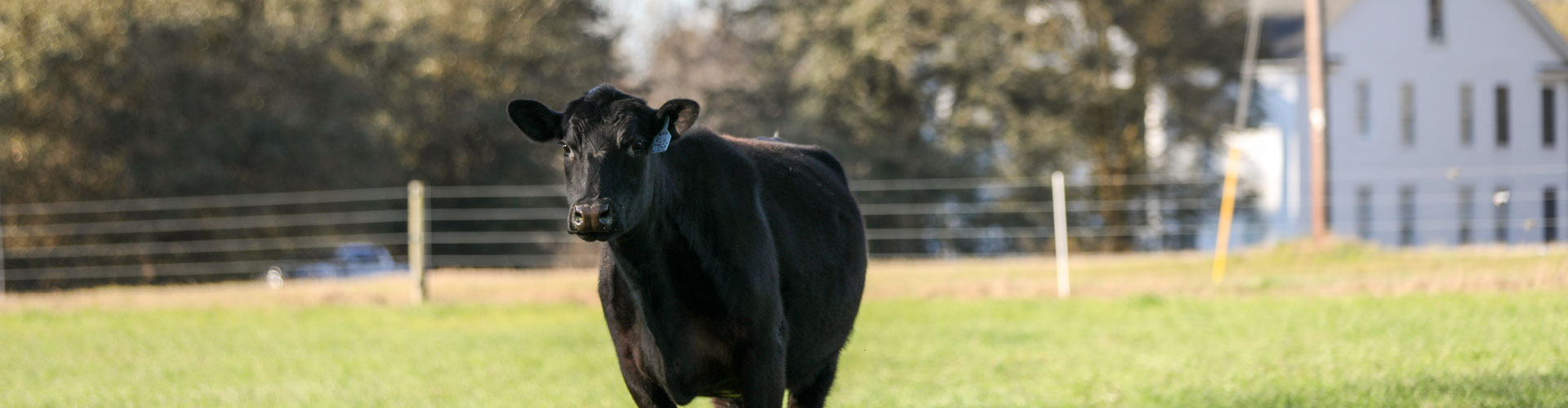
Yon Angus cow

Flashback Friday: Quality in the high-mountain desert

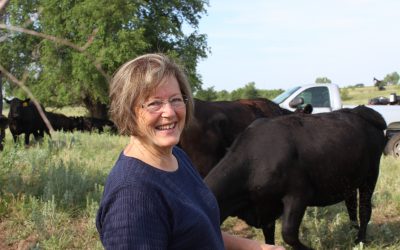
Out of all the hard-working, dedicated commercial Angus producers across the country, each year just one is selected as our Commitment to Excellence Award winner. They’re usually doing something innovative and most certainly targeting high-quality beef production. The recognition is for what they’re doing at that time, but when we get to write those stories we always find a common thread: a quest for continuous improvement. In our “Flashback” series, we’re checking back in with some of our early award winners to see how they’re coming with those plans. Today, summer intern Katie talks about her chat with the 1994 Commercial Commitment to Excellence honoree.      –Miranda

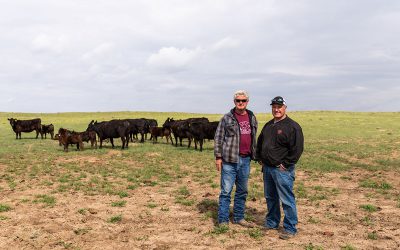
Maybe it’s because I’m from southeastern Ohio, but talking with Wyoming cattleman Mike Healy gave me a whole new perspective of ranching in the West.

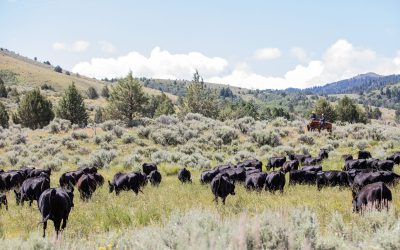
This 100-year-old cow-calf operation spans 150,000 acres in the foothills of the Absaroka mountain range, where annual precipitation is 5 to 7 inches and cattle graze at elevations ranging from 4,500 to 8,500 feet. There are fascinating elements and challenges surrounding the land, operation and genetics.

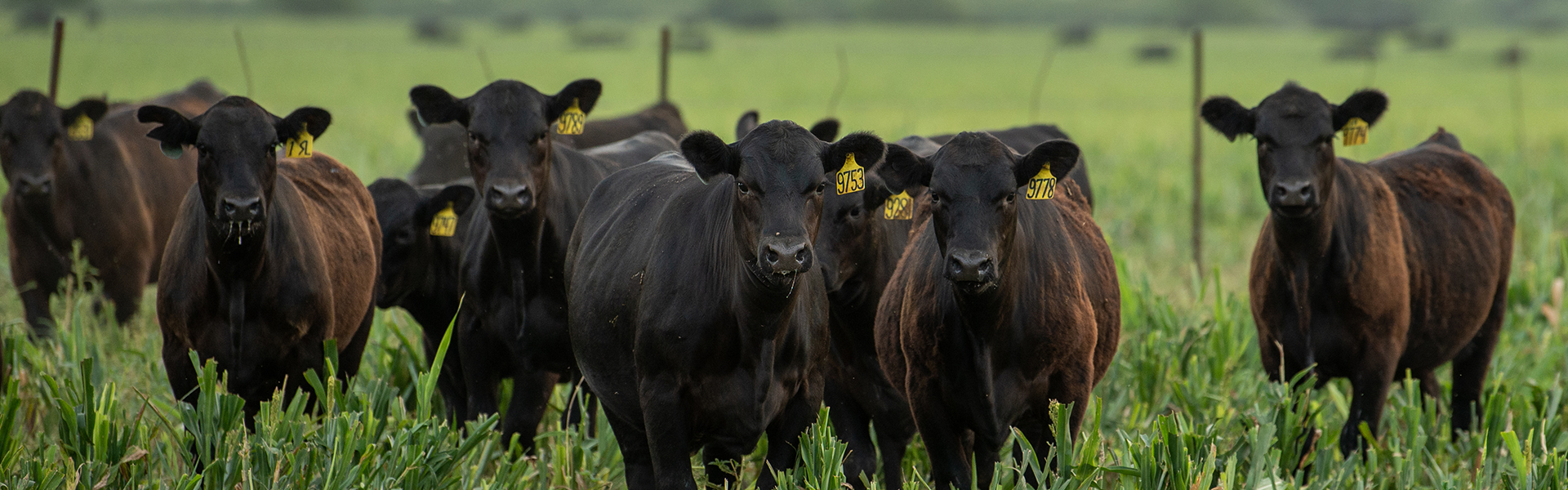
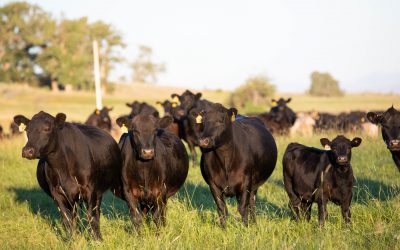
The LU Ranch near Worland, Wyo., is home to 1,400 cows and 300 heifers, all managed to profitably meet the needs of packers and consumers. Mike says they focus on marbling quality, ribeye size and carcass weights, and that begins with breeding.

He is looking out for the characteristics that pay: like producing cattle that meet Certified Angus Beef brand specs. “If you can produce more CAB qualified meat then that is one way to ensure your cattle are accepted at feedlots,” Mike says. The herd averages 32% CAB, but progeny from heifers selected with the help of DNA testing made 47% CAB this year.

The calf crop from the ranch is sent to Decatur County Feedyard near Oberlin, Kan., where Mike appreciates the individual cattle management and return of individual data.

Having 1,400 cows running on 150,000 acres comes with many challenges. Pasture rotations and water development on this scale take a lot of planning and timely action. Being nestled against the mountains that go into Yellowstone National Park means there is plenty of wildlife and that requires more management.

Mike admits he is “getting up there” in age and is trying to figure out how to stay busy while backing off on some of his duties on the ranch.

I thoroughly enjoyed speaking with Mike and only hope one day we can meet in person. I don’t need to explain his personality and how he feels about his land, cattle and wildlife because these words say it all:

“Whatever humans do, we have an impact on wildlife. Sometimes we are slow to respond, but we do and hopefully can clear things up that we have changed and lessen our impact on wildlife.”

–Katie

PS–Be sure to watch the Angus Journal this fall to get the scoop on Mike and the LU Ranch.


You may also like
The Cattle Contribution

The Cattle Contribution

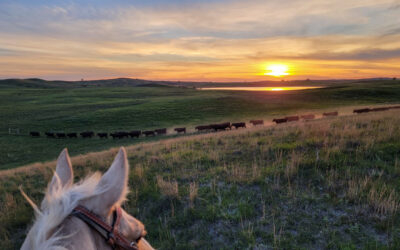
Rotationally grazing cattle is one of the best ways to manage the Prairie Pothole Region for waterfowl, for other ground nesting birds, for the general public, and for ranchers themselves, says Tanner Gue, a Ducks Unlimited biologist.
Focus Under the Hide

Focus Under the Hide

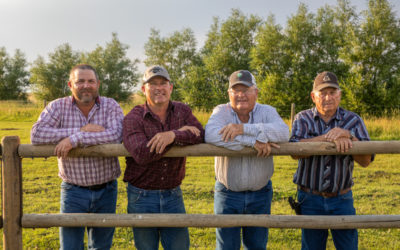
From the bulls they buy, the cows they cull and the grass their cattle graze, each decision is evaluated based on how it affects the ranch’s economics, the land and family. This management style earned the Niznik family the Certified Angus Beef 2021 Canadian Commitment to Excellence award.
Following the numbers

Following the numbers

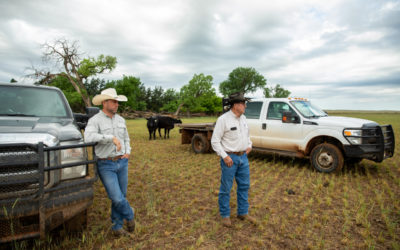
Diversification proved to be key in evolving the ranch. What began as an Angus-based commercial herd, the trio took signals from the data and sought new avenues for revenue. The Woolfolk men have a target: creating more high-quality, profitable cattle. As for how to get there? They’ll continue to follow the numbers.
CAB’s Erickson ‘Woman of Influence’ in food industry

By Bryan Schaaf

Since its inception in 1978, the Certified Angus Beef ® (CAB®) brand has become perhaps the most recognizable worldwide. And for the past 21 years, Tracey Erickson has had a major hand in that unprecedented rise in the food world.

She guided CAB’s entry into male-dominated foreign markets in the early 1990s as International Director, and since then, as Vice President of Marketing, Erickson has led the initiatives that resulted in today’s global presence.

Those are some of the reasons Erickson was recently announced as one of this year’s “Women of Influence in the Food Industry” by Griffin Publishing (http://www.griffinpublishing.net/index.php) with support across the U.S. food industry.

“I’m deeply honored to be selected to this list, and that my peers saw it fitting to nominate me,” Erickson said. “The beef business has provided wonderful opportunities to meet and work with an amazing network of ranchers, distributors, retailers and restaurateurs – each influencers in their fields – who have taught me so much. I’m proud to have had a part in their success with the Certified Angus Beef ® brand.”

Erickson joined CAB in 1992 after completing graduate studies at Colorado State University, stepping into the new role as Director of International, the only employee in the division. The Farmingdale, N.Y., native worked to grow brand partnerships in the North American and Asian markets.

“Twenty years ago, a young female traveling alone in the Asian market was a bit unique,” she said. “Honestly, I never felt it was a roadblock, just something to be aware of and an opportunity to open doors. I felt fortunate to be given this opportunity.”

Today, Erickson oversees the brand’s marketing initiatives – which can be experienced in 46 countries. She has been a driver in the CAB effort to tell the stories of its vast network of farmers and ranchers, and more than 14,000 restaurant and retail partners worldwide.

Erickson lives in Smithville, Ohio, with her husband Brett and their five children.

You may also like

Driving Demand: Foodservice

Driving Demand: Foodservice

“What costs most for a restaurant isn’t the meat, but an empty seat.” That statement resonates even more after rounding a year of a pandemic. But before COVID-19 shutdowns and meat shortages, serving CAB was about competitive advantages and so much more. Loyalty breeds loyalty, creating a demand not only for the product, but the company.

CAB launches #RestaurantChallenge

CAB launches #RestaurantChallenge

Data from the National Restaurant Association shows 1 in 6 restaurants have already closed and the next few months are critical for those continuing to operate. To inspire and build support for this key pillar of the high-quality beef market, the brand launched #RestaurantChallenge.

Driving Demand: Retail

Driving Demand: Retail

As the heavyweight champ in brand volume, retail accounts for 55% of total pounds sold, especially in fiscal 2020. But how is it done and how does it create more demand? CAB Director of Retail answers these questions and more.

Four things I’ve learned from Busby

Darrell Busby

A lot of people have asked Darrell Busby a lot of questions over the years.

I’m one of them. He’s not only a great interview source, with years of knowledge and a knack for breaking down research into “why it matters to cattlemen,” but he’s also just plain one of the nicest guys I know. He’s answered questions on cattle health, disposition and carcass quality. He’s answered questions on retained ownership and feed programs.

Last week, he was recognized for those years of answers by some of his own. The Iowa Cattlemen’s Association inducted Darrell into their Hall of Fame.

But the retired Iowa State University Extension specialist says it’s more the questions he’s asked, than the ones he’s answered.

He’s been leading the Iowa Tri-County Steer Carcass Futurity  (TCSCF) since its inception.

“All of the research work we have done has been retrospective. We try to do the best job we can with the cattle, and then we go back and ask ourselves why we see some differences,” Darrell told me back in 2009 when the futurity won an annual award from CAB.

Under Darrell’s direction, the TCSCF now collects more than 40 individual data points on each animal fed through the cooperating feedlots. Everything is recorded, from breed type and birth date to temperament and carcass data, allowing for several after-the-fact analyses. These help everyone in the beef business.

I couldn’t begin to recount all the times I’ve drawn information from Darrell and that database for articles. It’s one of the most complete sets that follows cattle from origin to packing plant.

Rather than dig all that up, I thought I’d share four things (of the countless number) I’ve learned from Darrell Busby:

  1. If you do a little extra as a rancher, you ought to think about retaining ownership. “We find many producers have spent time and effort selecting genetics that are high-quality, fast-gaining cattle and have gone through the rigors of preconditioning their calves–retained ownership offers them the opportunity to take advantage of the genetics and management that they’ve put into their cattle,” he says.
  2. If you’re going to wean, do it right. “What we found was that the calves that had not been weaned the full 30 days got just as sick as the unweaned calves. That’s one of the management traits that we picked out: if you’re not going to wean the calves more than 30 days then don’t wean them at all when you send to the feedyard. Weaning is big.” He also points to data that strongly supports the use of modified-live vaccines as opposed to killed ones.
  3. Disposition matters. After having a couple of workers get hurt, Darrell thought about a way to measure that and found: “Calmer cattle are faster-gaining cattle. They’re higher-quality grade cattle and they’re more profitable cattle. They make about $56 more/head in the feedlot than the wild cattle do.”
  4. It’s about more than just cattle. “This is a people business and the cattle happen to be what we are using to try and produce a better quality product. This is about people helping each other solve problems and create opportunities.”

I can firsthand vouch for his ability to do just that: help solve problems.

From the Black Ink team, thank you Darrell for your service to the industry, and congratulations on your recognition. Well deserved!

May your bottom line be filled with black ink,

Miranda

You may also like

CAB names first-ever Sustainability Award honoree

CAB names first-ever Sustainability Award honoree

One feeds, the other breeds and stocks a steady supply, ready to fill the pens as they empty. Wilson Cattle Company harvests the grass in Baker Valley while Beef Northwest, started by the fifth generation of Wilsons, finishes the cattle. It’s a symbiotic relationship, both dependent on each other.

The price is right

The price is right

The Steib family has expanded their farm and feedlot operation into a dynamic ranch. Today, they raise the calves they eventually feed out, having a hand in quality decisions every step of the way.

cab barn

Big beef business in the Little Apple

Last night, something big happened in the Little Apple.

A local restaurant in the Sunflower State had a party. But not just any kind of party. As you would expect from this blog, it was a beefy party.

The Little Apple Brewing Company celebrated being named the 2011 National Beef Backer Award winners. We couldn’t have been happier for or prouder of Little Apple for this well-deserved recognition.

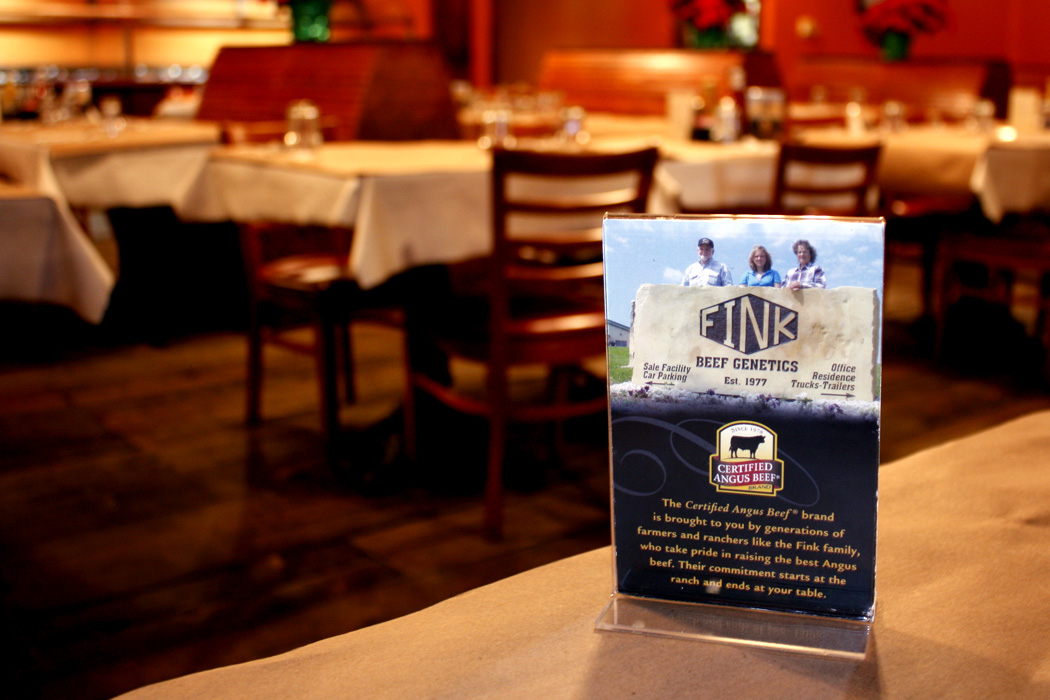
Co- part-owners and managers Russ and Kelly Loub accepted the award earlier this month in Nashville at the National Cattle Industry Convention with partner Lori Fink, who also co-owns the restaurant with her husband Galen. 

The Fink family is no stranger to the award stage. That special connection they have between the cattle business and selling steaks in the Manhattan, Kansas restaurant has made them a shining star to the Certified Angus Beef® brand for years.

This winter, I got to visit with Russ and Kelly about the restaurant business, their connection to CAB and their affinity for serving incredible beef dishes to their customers. Their passion for quality food service and inherint pride in satisfied beef eaters was inspiring.

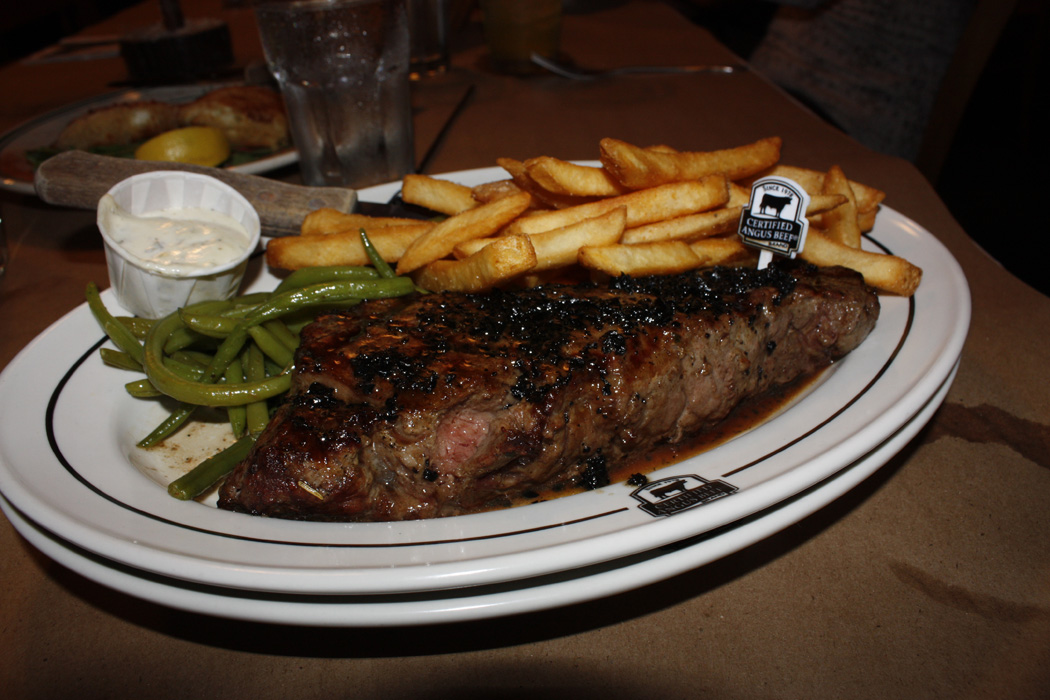
Of course, my favorite open-faced steak sandwich was also inspiring:

Here are a few of my favorite quotes from Russ and Kelly from my interview that day. If you get the chance to travel through Manhattan, Kansas, make it a priority to stop in and say hello to them. These folks are working hard every day to make sure your high-quality cattle are in demand by hungry customers. Tell them “thanks,” and “congratulations.” And for heaven’s sake, order the open-faced sandwich!

“From day one, we aligned ourselves with CAB and became a licensed restaurant. That was really where we put our focus, on having great steaks. We needed to be aligned with a brand that was nationally known, that had its own quality reputation. There was no other place in town that was doing that kind of thing, putting their steaks out front, saying ‘Yeah, these are the best you can get, right here.’”

“You drive down the highway and see lots of cows in the field, but don’t really think about what’s going on there. Behind the scenes – we just see meat in a box, but there’s an awful lot that goes into that, way more than I ever imagined. From breeders to production people to packers — it’s just amazing how many people are involved in this industry. When I think about that, I just say, ‘Wow!’ There are an awful lot of people out there really looking to put out a great product.”

“We salivate knowing we had a really great food and eating experience, and we want to relive that again. I think that’s what we’ve always stived to do here — have consistancy, consistancy, consistancy. The Certified Angus Beef® brand has certainly provided that.”

“That’s what delineates a great resturant from just any resturant: the ability to replicate the same thing over and over and over again, thousands and thousands of times, and have it still comes out as good as it did the very first time. CAB has been there to do that for us.”

“What’s made it work more than anything else is our staff, the loyalty of our staff. Our customers like seeing those same people. It’s like home for them. People love that they come in and see the same person they’ve seen for five years taking care of them. We’ve been so blessed that way – people come back to see us when they’re in town. That’s really been a godsend for us, the loyalty of the staff.”  

Read more about the Little Apple Brewery in the March issue of the Angus Journal.

You may also like

Driving Demand: International

Driving Demand: International

Selling U.S. beef to buyers in other countries means carefully maintained contacts and planning to avoid sea squalls. Adding COVID to that scene creates a perfect storm that can wreck the best plans. For those skilled in navigating the waters, however, it’s just another day on the boat.

Driving Demand: Foodservice

Driving Demand: Foodservice

“What costs most for a restaurant isn’t the meat, but an empty seat.” That statement resonates even more after rounding a year of a pandemic. But before COVID-19 shutdowns and meat shortages, serving CAB was about competitive advantages and so much more. Loyalty breeds loyalty, creating a demand not only for the product, but the company.

CAB launches #RestaurantChallenge

CAB launches #RestaurantChallenge

Data from the National Restaurant Association shows 1 in 6 restaurants have already closed and the next few months are critical for those continuing to operate. To inspire and build support for this key pillar of the high-quality beef market, the brand launched #RestaurantChallenge.

john grimes

Mythbuster Monday returns with DNA

My family tree is stacked with farmers on both sides, so I feel like I know a thing or two about “producer” DNA. There are some seemingly inherent traits, like reluctance to leave the farm. Not because they don’t want to see the world or meet new people, but rather because it’s difficult to entrust the living, breathing creatures that depend on them to anybody else.

Both sets of grandparents have to leave critters at home for big occasions like a baptism.

So when my parents and my in-laws came down for our new little lady’s baptism last weekend, I know they loved getting out, seeing the countryside and spending time with their kids and grandkids (OK, let’s be honest, the grandkids trump all else), but there was still that nagging feeling that they should be home, working.

That’s the best way I can describe to others what it’s like to be on maternity leave. While I enjoyed every minute (OK, most) of my time home with my three kids and I know everything was under control here, I’m so excited to be back. I love my job and can’t wait to jump into some of the big projects we were working on when I left. One of those had to do with DNA of the bovine variety.

That leads me to my first myth to kick this regular blog feature back into action:

Myth: Using DNA technology in beef cattle selection is only for the rich and curious.

Fact: While the seedstock industry was the first to really embrace this new selection tool, it’s becoming increasingly available and practical for commercial cattlemen. EPDs changed the way ranchers select their animals. Now DNA has been called a “game changer.”

At the Range Beef Cow Symposium in December, Colorado State’s Jack Whittier said:

“There are some opportunities that are coming online to maybe use it in a heifer selection basis at a commercial level, that’s early and I’m not sure that we are far enough along to really understand what opportunities there are but certainly using this is a way to make better bull buying decisions.”

The real game changer, yet to be seen, is being able to make decisions more quickly, to be able to isolate at birth, the gene combinations from a specific set of individuals, then go through the evaluation without having to screen all the non-performers or at least increasing the opportunity to make good decisions early on.”

At that point the GeneMax™ DNA test was still in its development phase, but we’re pretty pumped about its product launch at the National Cattle Industry Convention this week. Finally, this technology is available and practical to the average commercial cattlemen who are using registered Angus bulls. If you’re wondering which potential replacement heifers are keepers or culls, confirmation is as simple as a blood test. Want to add more information to your calves on sale day? Arm buyers with the GeneMax facts.

I’ve been off for three months, so I’ll be brushing up on all the details right along with you. Look for more information on this blog or follow the National Cattle Industry Convention on Facebook or Twitter.

Some of our readers have already got a head start on unwrapping the Nashville convention fun. Congratulations to Brandi Buzzard and Desta Crawford, our Shipping Day challenge winners! Somebody get these two ladies on The Price is Right, because their estimates were almost spot on!

Tomorrow, we will unpack 61 boxes, weighing 1,810 pounds at the NCBA trade show. Brandi was a mere 3.3 off the actual weight with her estimate of 1,813 pounds and three ounces, and Desta guessed 66 boxes — well done, ladies! Each have earned ten tickets into the drawing for an iPad2! If you’re going to be in Nashville this week, make sure to stop by the Angus booth to get yourself entered into the drawing. Hope to see you there!

May your bottom line be filled with black ink,

-Miranda

You may also like

Dreamers and doers

Dreamers and doers

If you could have one wish, any wish, what would it be? More resources, greater assets, the best genetics or something else?

Smiles, success

Smiles, success

You could say Cudlobe Angus began on a whim. The journey from three Angus cows purchased at a sale barn to a more than 600 head seedstock operation that hosts two sales a year took decades of learning and investment risk.

Bigwigs in barbecue

Bigwigs in barbecue

The Culinary Center recently hosted the annual Brand Ambassador Summit, welcoming chefs from all over the country, including a handful of barbecue specialists.