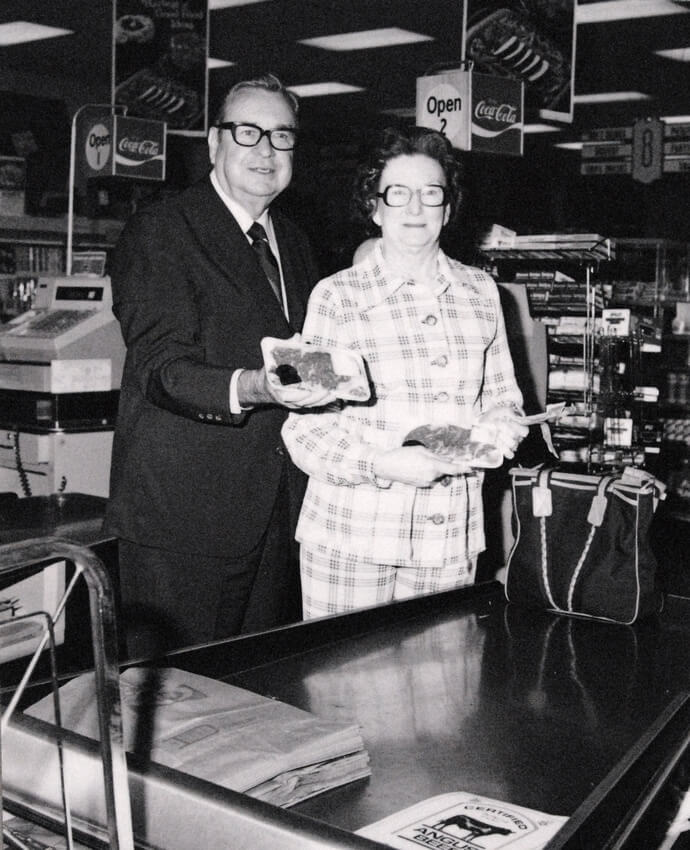
Students already helping lead the beef community could win a share of $33,500 by applying online for the Certified Angus Beef ® (CAB®) brand’s Colvin Scholarship. The Fund has awarded more than $250,000 to 76 college juniors, seniors and graduate students since 1999.
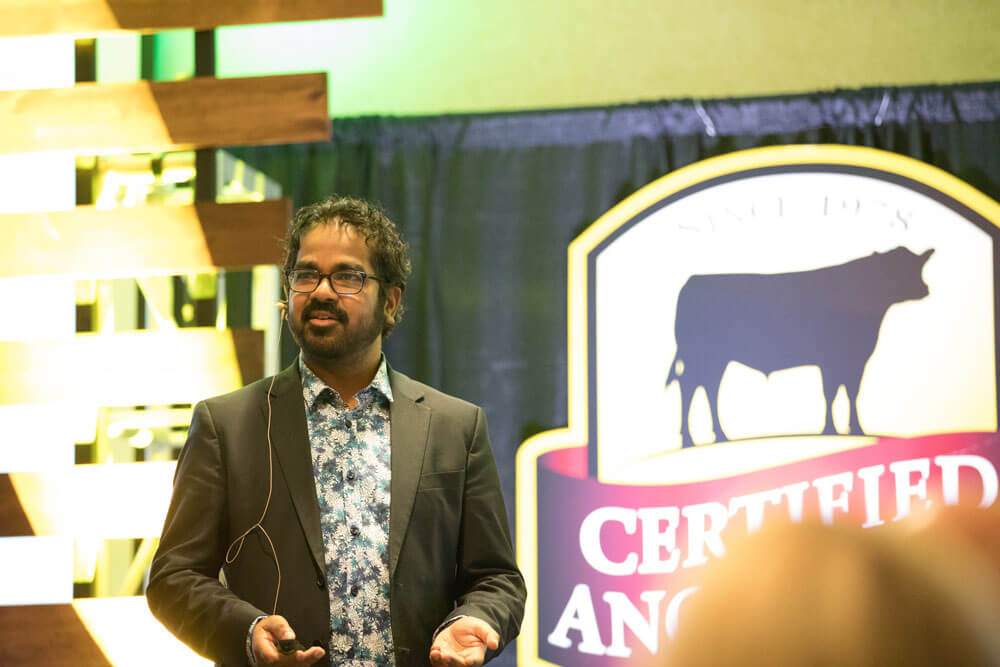
Genetic selection for ranch environment or meeting market demand? That’s a choice cattlemen don’t have to make, said Dan Moser, president of Angus Genetics Inc., speaking at the Feeding Quality Forum in Sioux City, Iowa, this summer.
The one thing certain in commodity markets is ambiguity. Ag Resource Company president Dan Basse, however, provided a bit of clarity and foresight at the Certified Angus Beef ® (CAB®) brand’s Feeding Quality Forum in Sioux City, Iowa.
What’s relevant today isn’t necessarily so tomorrow. Investing in the future pushes everybody forward. That was the motivating think piece Mark McCully shared with cattlemen as part of the National Angus Convention’s opening session Saturday, Nov. 3, in Columbus, Ohio. As farmers and ranchers attended breakouts designed to make their own herds better, McCully’s point held its weight. Anything that could make it above the Select line was once considered “on target” for satisfying consumer demand.
When it comes to stocker nutrition, an old-fashioned strategy might be the way of the future. That’s what Dale Blasi, Kansas State University (K-State) Extension beef specialist, said about limit-feeding calves in the growing phase. The scientific research goes back decades, but at this year’s 13th annual Feeding Quality Forum in Sioux City, Iowa, he presented new reasons to give it fresh look.
The IBM brand isn’t often associated with the cattle business. But that may change, thanks to the tech giant’s IBM Food Trust and its use of blockchain. That’s just what it sounds like: blocks of information that form a chain, linked via Internet to allow information sharing that is seamless, efficient and secure.
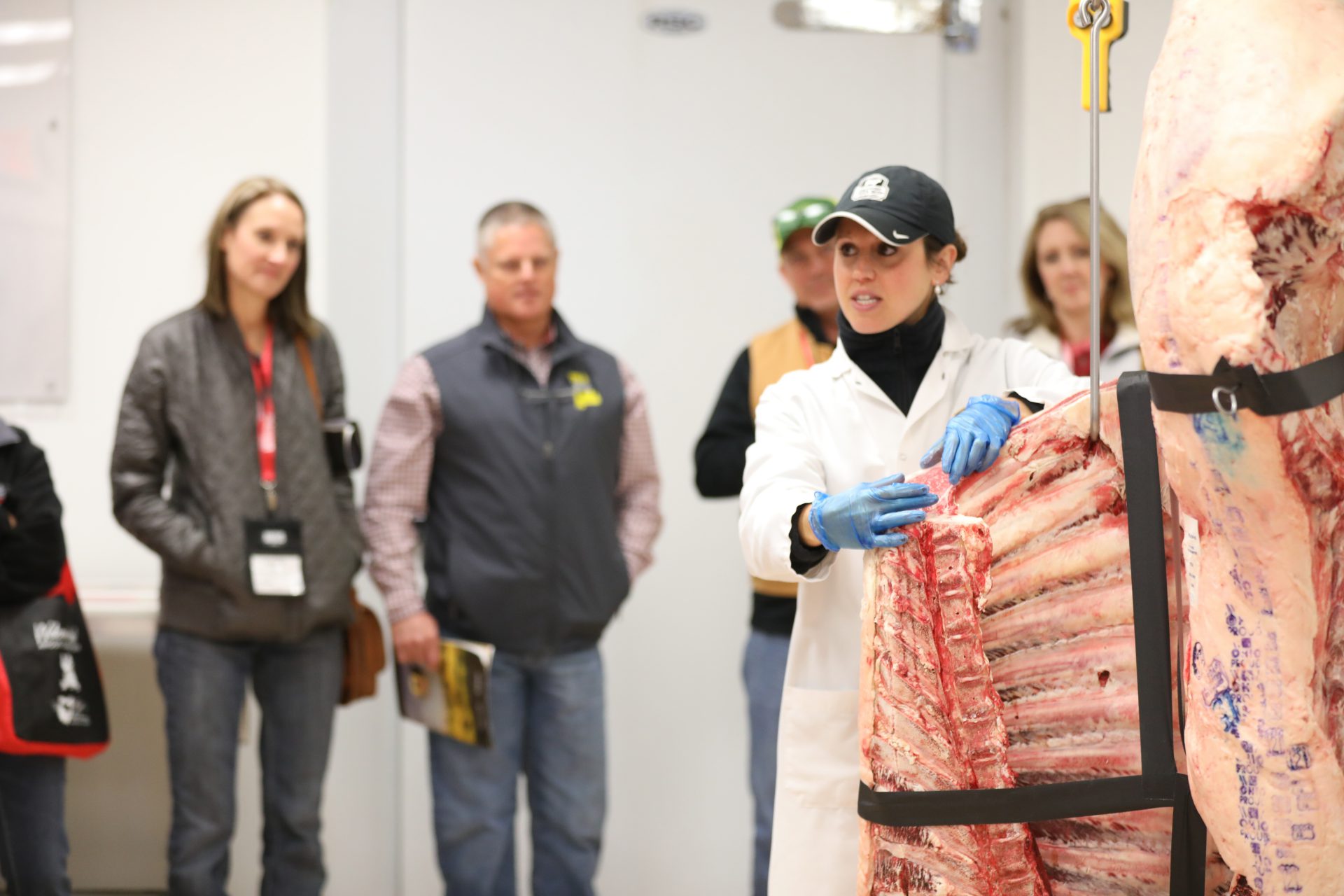
For the staff, it was a big family reunion, getting to show extended kinfolk from across the United States the Certified Angus Beef ® (CAB®) brand’s Wooster, Ohio, home. For Angus breeders, it was a bit like drawing back a curtain to see what happens behind the logo.
You want a cattle vaccine that’s both safe and effective, but sometimes you have to choose which of those ideals gets the upper hand. That’s according to Paul Walz, the Auburn University veterinarian who spoke at the Feeding Quality Forum late this summer in Sioux City, Iowa. Vaccination programs must be true to the label protocols, yet individualized for each farm or ranch and the level of risk they can accept.
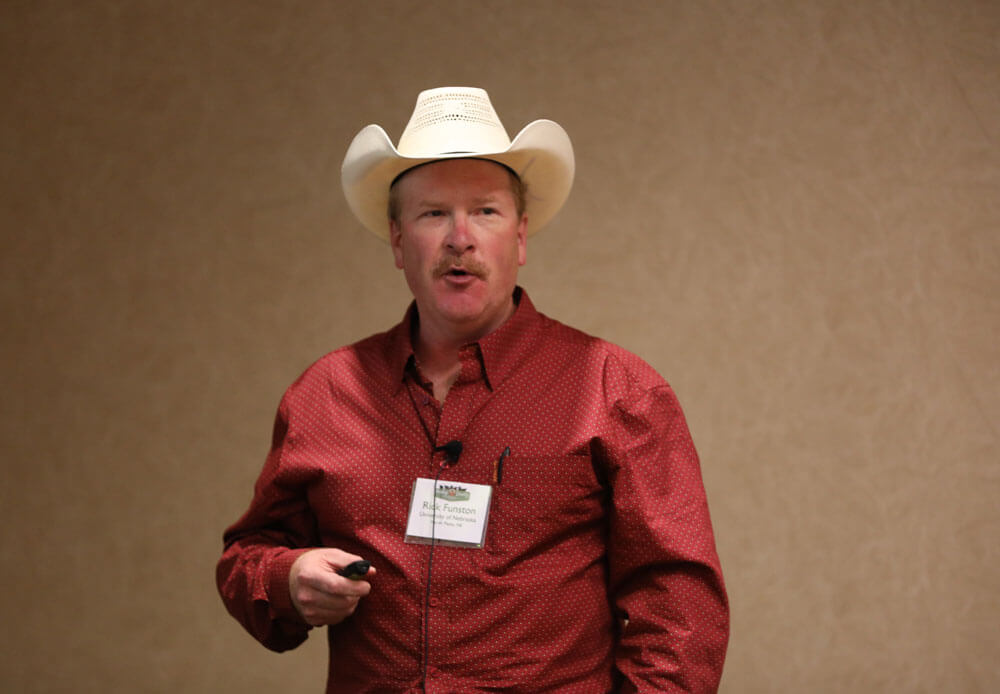
It’s a great time to own cows, but only if you have a competitive cost structure with the right genetics and management to compete in today’s marketplace, Rick Funston said. While input costs should be minimized in times like these, “breakeven at best” for many, he said, it won’t pay to compromise fertility in the process.
To provide the best experiences, we use technologies like cookies to store and/or access device information. Consenting to these technologies will allow us to process data such as browsing behavior or unique IDs on this site. Not consenting or withdrawing consent, may adversely affect certain features and functions.
Functional
Always active
The technical storage or access is strictly necessary for the legitimate purpose of enabling the use of a specific service explicitly requested by the subscriber or user, or for the sole purpose of carrying out the transmission of a communication over an electronic communications network.
Preferences
The technical storage or access is necessary for the legitimate purpose of storing preferences that are not requested by the subscriber or user.
Statistics
The technical storage or access that is used exclusively for statistical purposes.The technical storage or access that is used exclusively for anonymous statistical purposes. Without a subpoena, voluntary compliance on the part of your Internet Service Provider, or additional records from a third party, information stored or retrieved for this purpose alone cannot usually be used to identify you.
Marketing
The technical storage or access is required to create user profiles to send advertising, or to track the user on a website or across several websites for similar marketing purposes.