
Doing It Better
Branch View Angus recognized for Commitment to Excellence.
by Morgan Boecker, Certified Angus Beef
September 16, 2026
James Coffey’s roots go back to frontier pathfinders, the cattle on his family’s Hustonville, Kentucky, farm to a great-great-grandfather’s 1928 membership in the American Angus Association.
Now an Association board member, Coffey relies on innovations, fellow Angus breeders and his Pathfinder cows to forge a brighter future.
“Every morning my goal is to be better than the day before,” he says, a simple mission that carries endless details.
After college, Coffey bought a fishing tackle company, raised its profile and found his way home in the early 1990swith enough capital to branch off a tobacco past and grow Branch View Angus into a self-sustaining seedstock operation.
Just getting by isn’t in his nature.
“Anything James did, he went above and beyond,” his mom Donna says. “He’s always done that since a child.”
From herd genetics to customer service and facilities, Coffey improved it all by embracing new technology and management techniques.
His daily kept promise to do better earned Branch View Angus the 2026 Certified Angus Beef (CAB) Seedstock Commitment to Excellence award, recognized at the brand’s annual conference in early September.
Data-backed genetics
Coffey’s grandpa bought the family’s first Angus cows in 1940, his grandma soon naming the farm after nearby Branch Creek. Angus cattle were more novelty then, but familarity shone a light on the potential.
“No other breed can do what Angus does,” Coffey says, noting progress toward the ever-better ideal with all cows at least breed average.
Commercial customers sell weaned calves, so he prioritizes growth traits, then carcass genetics like marbling and ribeye, carefully maintaining maternal function through generations.
“Record keeping is integral to who we are,” Coffey says. “It’s how we measure success and growth.”
Branch View was recognized as a 2025 gold–level Data Driven Herd from the American Angus Association. That meant sending in more than 8,000 data points, including weights and ultrasound measurements for ribeye, marbling, rump and rib fat.
“It’s time consuming,” he says. “But it’s absolutely worth it to measure where you’re headed.”
Expected progeny differences (EPDs) help identify top performers, so each generation improves. If a cow proves herself by six years, or earns Pathfinder status as have 12 now in the herd, “she has a home forever.” The average progeny weaning ratio for all active dams is 102.
Coffey sells more than 150 Angus bulls, 50 registered cows and 250 commercial females in two sales each year.

Unwavering service
Some customers are third generation because as Coffey says, “if something goes wrong, you’ve got to make it right.”
Since the 1970s, Donnie Leonard says he’s stayed because of the care and honesty. Any problem, just one text or call and Coffey has another bull ready.
The calf buyback program only strengthens those ties. Branch View Angus purchases 600 calves this year, developing commercial females after shipping steers and other heifers to a Kansas feedyard.
“I’ve got 20-some years of data that show improvement of those cattle over time,” Leonard says. “I trust James to pick a bull or cow-calf pairs that will be good for both of us.”
In 8 years, his calves’ daily gain improved by 0.2 pounds with steady conversion for $40/head savings, Coffey says.
CAB acceptance for the groups increased 5 percentage points and Prime up twice that much, he adds, noting a past key focus on weaning weights.
“More recently I’ve found enough high-marbling bulls that most of our AI bulls are in the top 10% of the breed,” Coffey says. “I expect huge jumps in CAB and Prime in the next 5 years or so.”
Coffey uses GeneMax® Advantage™ through Angus Genetics Inc. to DNA-test females, results determining the feedyard or commercial heifer sale. He enrolls calves in AngusLink® and the Genetic Merit Scorecard® (GMS), which adds $5 per head when marketed at National Beef.
“AngusLink is absolutely differentiating cattle in the marketplace,” he says.
Carcass data provides another tool that shows closeouts hitting 50 percent CAB and improving every year.

Every detail matters
Beyond genetics, details like facilities affect progress.
Coffey remembers chasing show heifers around a pond. As a kid, he didn’t think to make an alleyway, but decided one day he would have good facilities.
Today, a single person can work cattle at every location, and poured slabs combat the mud that comes with 50 inches of annual precipitation.
“Concrete is an important aspect of our feeding strategy,” Coffey says. “It helps keep the cattle healthy and efficient.”
He remembers 2018 as particularly wet, when bulls didn’t gain a pound from January to March. That “we can do better” moment led to building a monoslope barn. The next year was just as bad, but bulls in the new barn gained up to 3.5 pounds a day in the same period.
Now, three monoslope barns guard cattle comfort and health in the cold Kentucky rain. Each barn is built on concrete, facing south for natural airflow, and cattle access uncovered sandlots.
When not filled with calves, cow-calf pairs may access barns for protection and efficient year-round use.
While he believes the best place for cows is on grass, developing bulls or customers’ calves takes more attention.
“I tell my bull customers, ‘You can’t starve a teenage boy; neither can you starve a yearling bull,’” Coffey says.
As cattle have increased, so has farming. He chops 100 acres of corn silage, rotating some land to alfalfa or wheat for cover crops to graze. Everything is for the cattle.
Not done yet
“Somebody who gives 100% all the time: that’s James, no matter what he’s doing,” says his wife LuAnn.
He’s in it for the long game, always thinking about what will affect everyone down the line.
“That produces the quality starting at the beginning, from the cattle to the consumer,” she says. “He thinks all the way through—and I think that’s what makes the difference.”
It’s that continual mindfulness rather than specific short-term goals that guide Branch View Angus.
“I guess in my mind, I’m never done,” Coffey says.
You may also like
Jett Stream to Prime
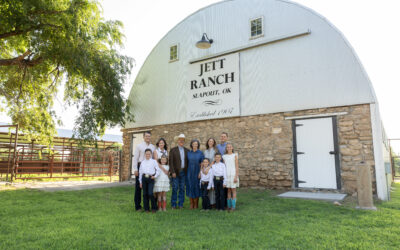
In the Oklahoma Panhandle, four generations built a herd defined not by the odds against it, but by standards never lowered. That commitment drove decades of genetic and management improvements, taking Jett Ranch from struggling to reach Prime to more than 70% Prime today, and earned the ranch the 2026 CAB Commercial Commitment to Excellence award.
Nebraska Feedyard Recognized for Excellence
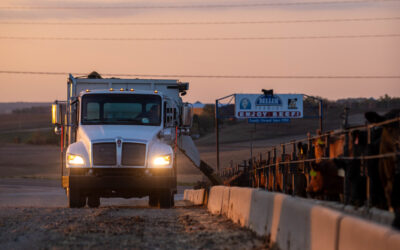
Motivation starts the feed truck before sunrise, keeps going through adversity and drives pursuit of the next goal.
It has more than fueled daily routines for Terry Beller. It’s helped his family and crew build the multigenerational Beller Feedlot into one long-known for customer service and high-quality beef.
The Capstone Approach to Modern Cattle Feeding
Taking aim without a target is like fishing without bait. It just doesn’t work. The cattle market lures with premiums for targets hit, but the bar keeps rising. Getting better in this dynamic setting takes detailed feedback. Capstone Beef provides that to its commercial customers with report cards that track progress and reveal needed change.