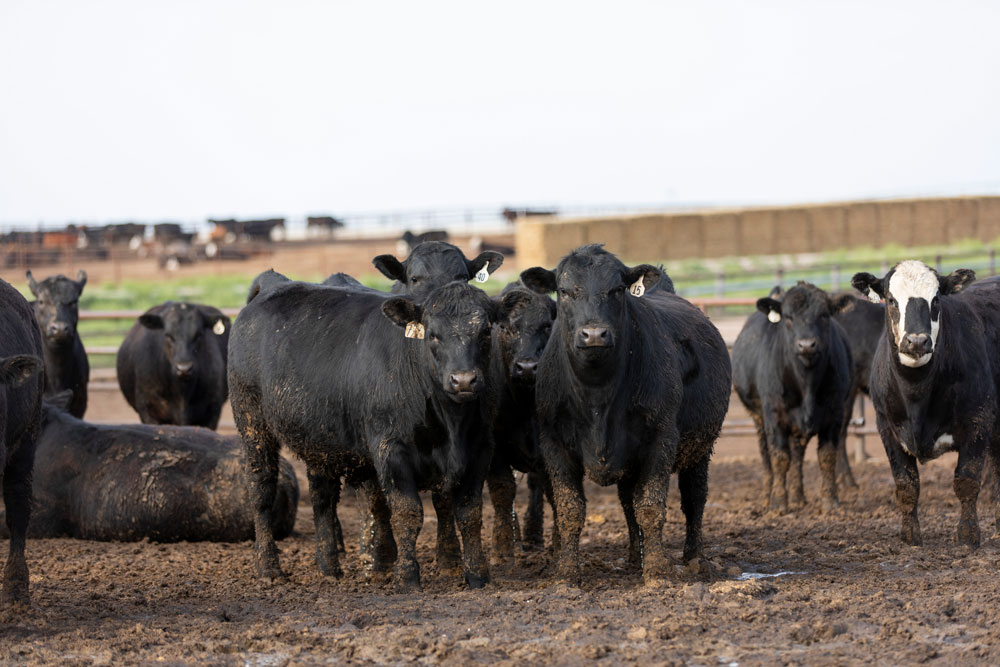
Backgrounding calves can open gates to new revenue paths, though not without risk. When more cattle are sent to the grazing fields or grow yards, there’s a shift in the seasonal pattern of the market and more opportunity to take advantage of better prices.
For the 70% or more of beef calves born last spring, more than the usual share veered from traditional roads to the feedyard come fall. Backgrounding those calves opened gates to several new revenue paths, though not without risk.
Buyers know your calves by their history and connect that to your name. Sometimes it’s all they know about you, good or bad. Basic questions about marketing feeder calves answered to help build your reputation.
Victory in war starts long before the battle. The same is true in combat against cattle diseases. “My job as a military commander is to take a soldier and make him resilient,” Col. Sam Barringer said at the Feeding Quality Forum in Sioux City, Iowa this summer. The veterinarian and technical specialist for Diamond V illustrated the point by stretching a rubber band: too much pressure, no matter the reason, may cause it to break.
You vaccinate to keep cattle healthy, but if they’re already coming down with a bug or your timing is off, your efforts could be worse than a waste. That’s what Brian Vander Ley, veterinarian epidemiologist at the University of Nebraska, told 200 cattlemen at the Feeding Quality Forum in Sioux City, Iowa, this August.
You want a cattle vaccine that’s both safe and effective, but sometimes you have to choose which of those ideals gets the upper hand. That’s according to Paul Walz, the Auburn University veterinarian who spoke at the Feeding Quality Forum late this summer in Sioux City, Iowa. Vaccination programs must be true to the label protocols, yet individualized for each farm or ranch and the level of risk they can accept.
The first snow of the season was just moving off the Highwood Mountains to softly blanket the valley below when I pulled into Todd and Charla Prosser’s driveway
It’s been talked about for 60 years. It’s better for animals, preferred by most cattle feeders and could provide a 169% return on investment. “2014 was the biggest ‘no brainer’ year in history to precondition your calves,” says Purdue University veterinarian W. Mark Hilton. “2015 could be even better.” Crunching the numbers, Hilton first turns to an 11-year analysis of Indiana beef herds that showed weight alone added $50.84 average profit on preconditioned calves.
Manage Consent
To provide the best experiences, we use technologies like cookies to store and/or access device information. Consenting to these technologies will allow us to process data such as browsing behavior or unique IDs on this site. Not consenting or withdrawing consent, may adversely affect certain features and functions.
Functional
Always active
The technical storage or access is strictly necessary for the legitimate purpose of enabling the use of a specific service explicitly requested by the subscriber or user, or for the sole purpose of carrying out the transmission of a communication over an electronic communications network.
Preferences
The technical storage or access is necessary for the legitimate purpose of storing preferences that are not requested by the subscriber or user.
Statistics
The technical storage or access that is used exclusively for statistical purposes.The technical storage or access that is used exclusively for anonymous statistical purposes. Without a subpoena, voluntary compliance on the part of your Internet Service Provider, or additional records from a third party, information stored or retrieved for this purpose alone cannot usually be used to identify you.
Marketing
The technical storage or access is required to create user profiles to send advertising, or to track the user on a website or across several websites for similar marketing purposes.