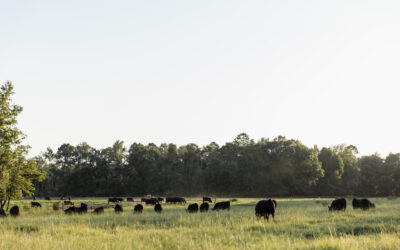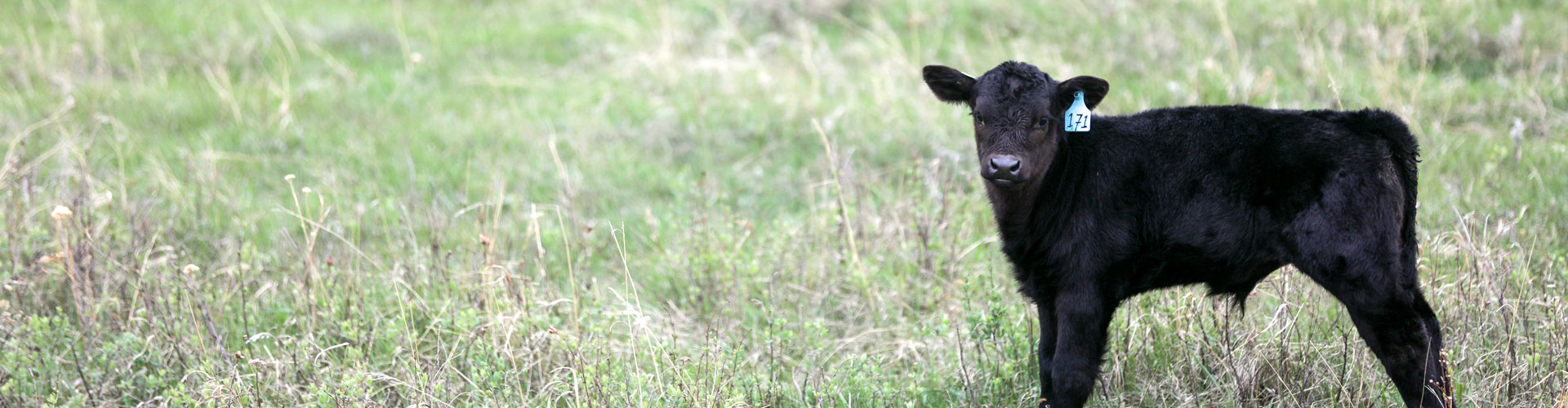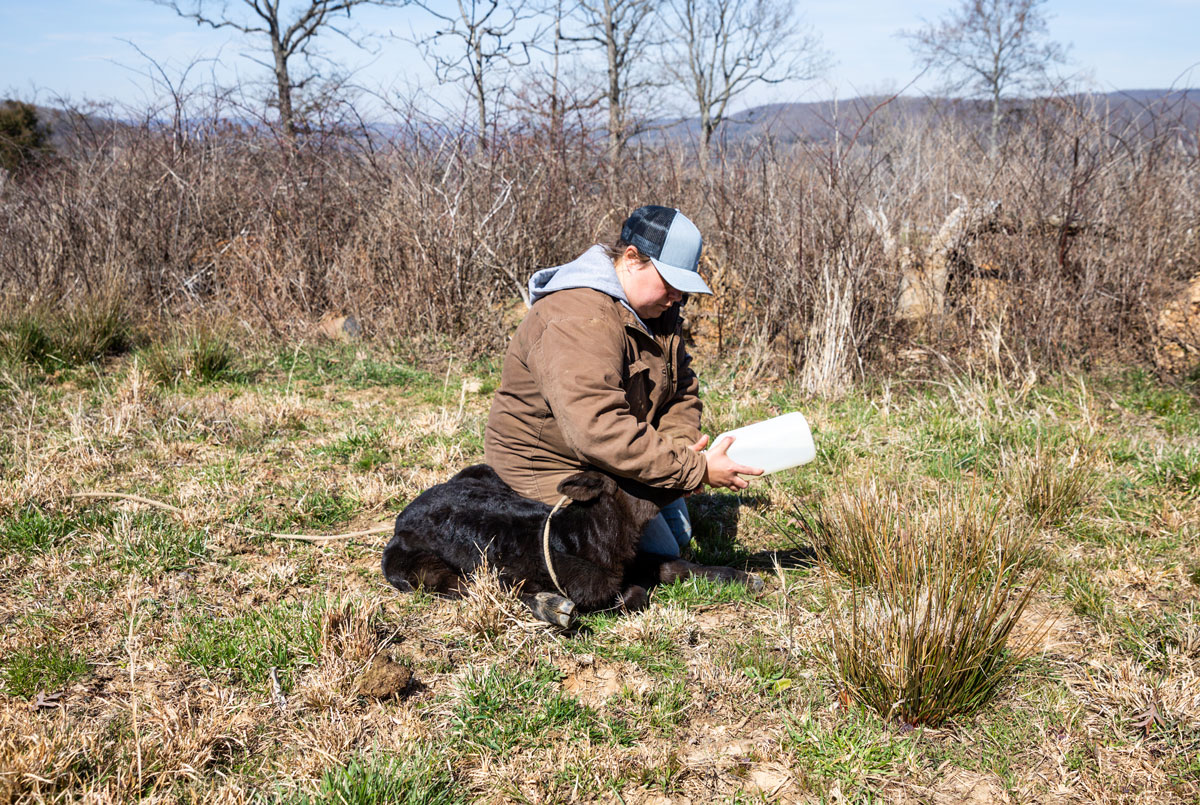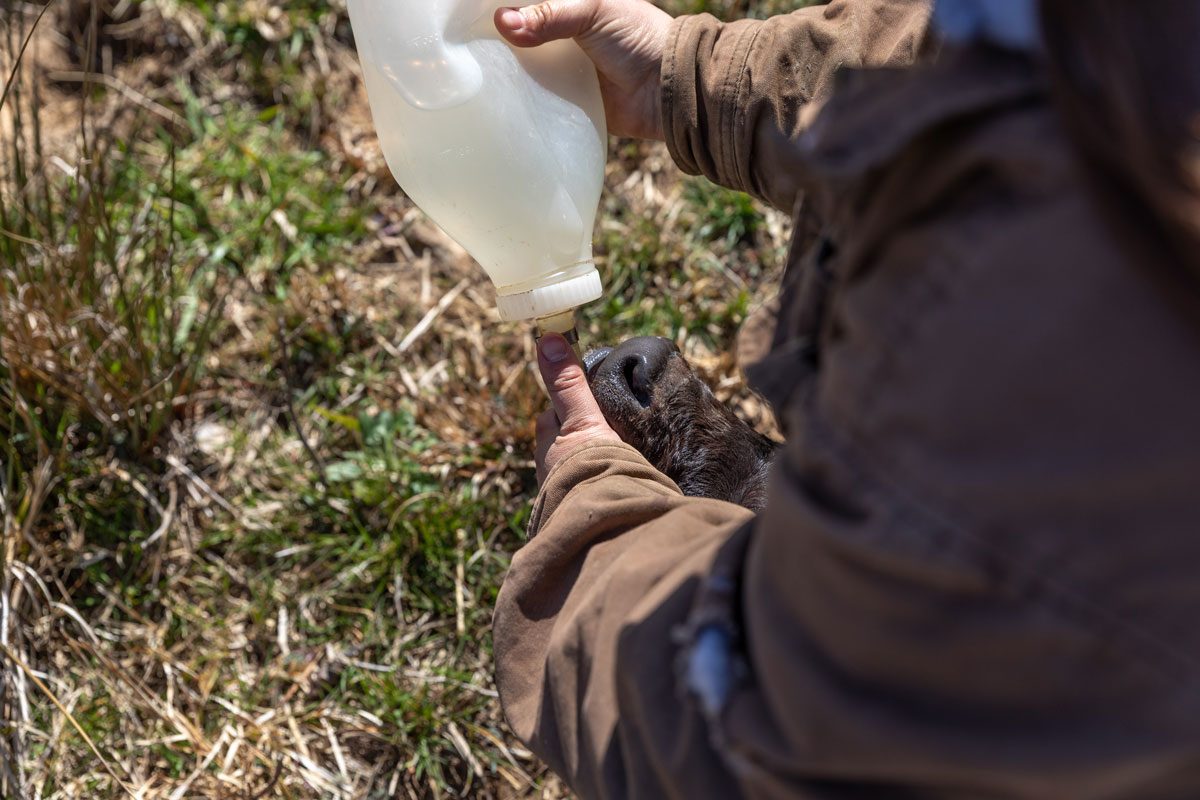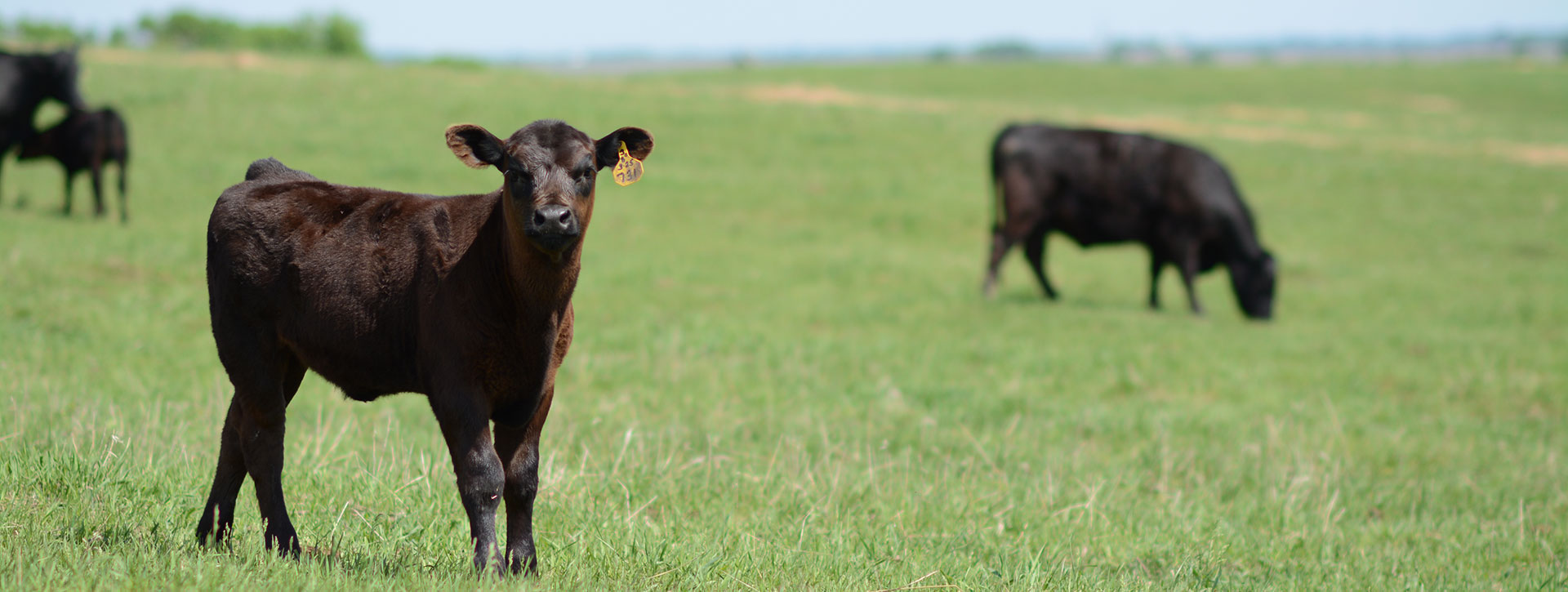
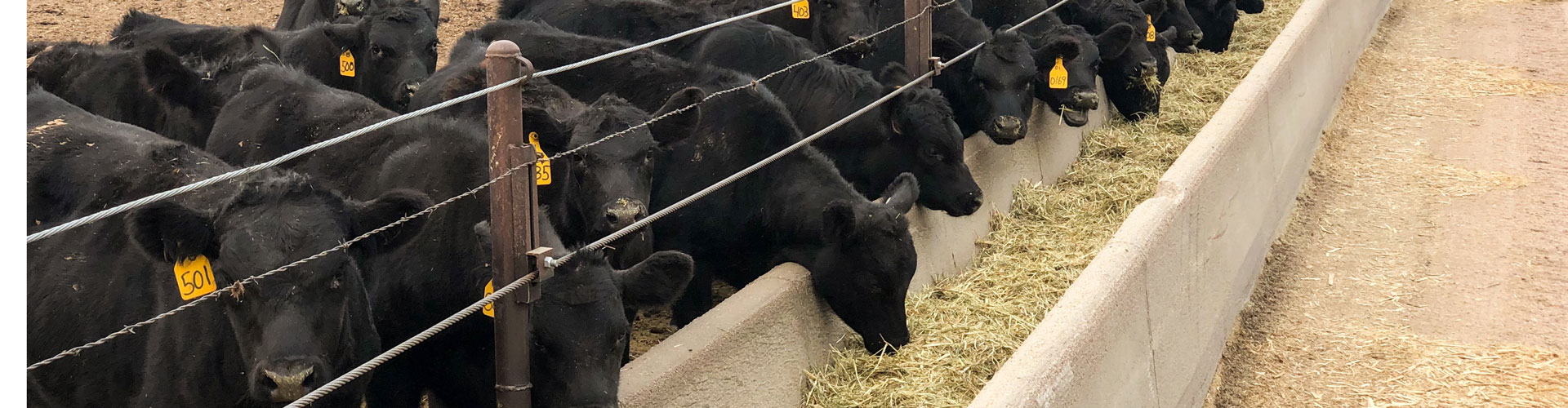
feeder calves

Add value to calves

At least $100 per head awaits efforts to rise above commodity average

by Brianna Gwirtz

September 28, 2020

“Value” in feeder calf marketing is a relative term. All calves have some. paul dykstra

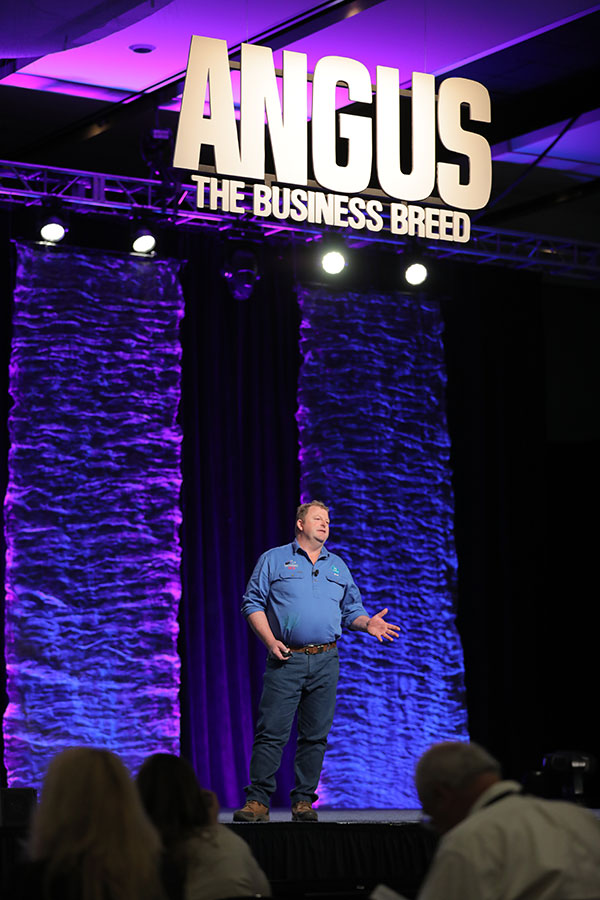
The trick is to capture your share, said Paul Dykstra at the recent virtual 2020 Feeding Quality Forum.

The Certified Angus Beef ® (CAB®) brand’s assistant director for supply management and analysis summarized the key concept.

“Think about where my customer makes the most money,” he said, noting that customer changes through the supply chain from feeder, to packer to consumer. “If we can pursue that endpoint, I think we’re off to a great start in our marketing program.”

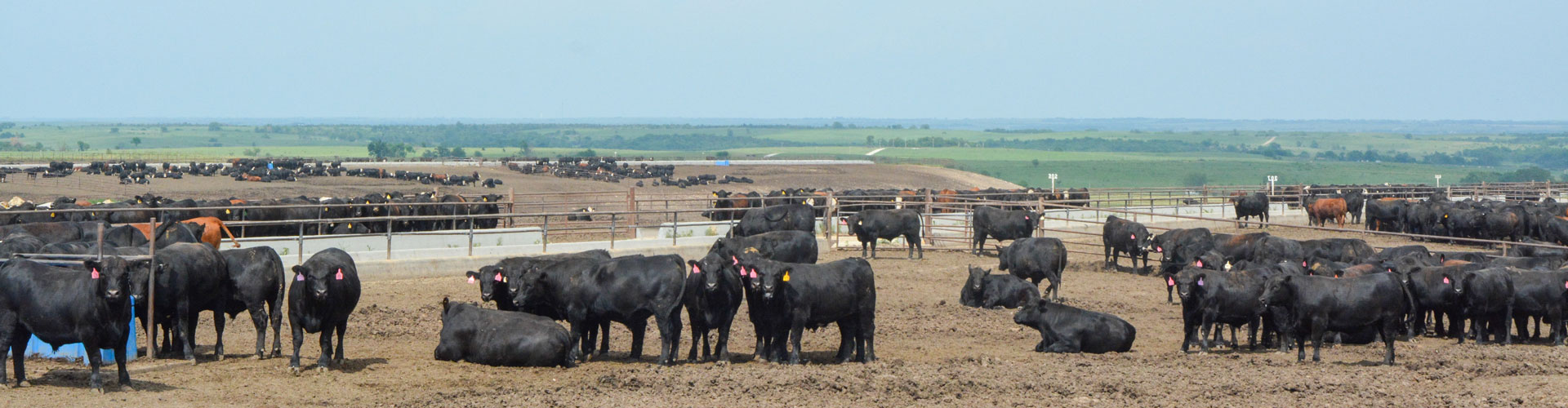
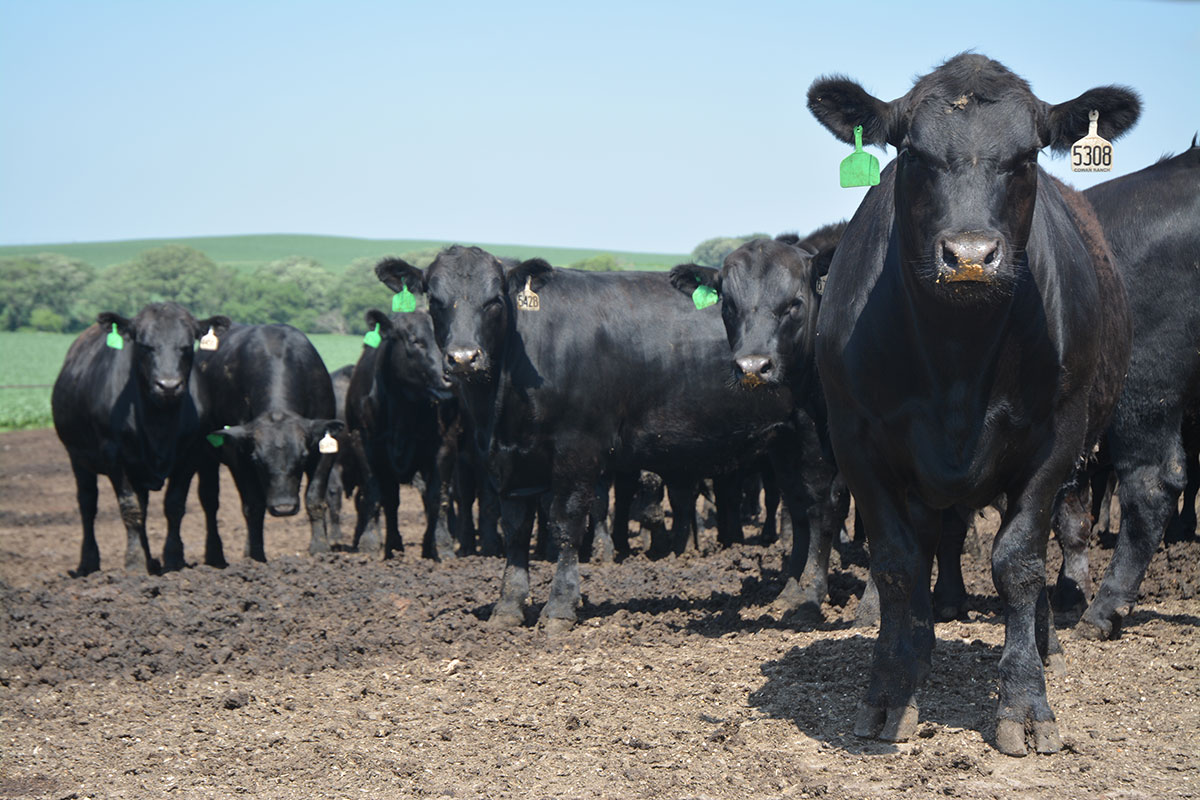
Feedyard managers agree on general traits of desirable calves: They stay healthy, convert feed efficiently and hang a high-quality carcass.

So how do producers ensure their calves are desirable? After genetics, management decisions play a big part. Whether to wean before selling is one of the biggest.

“The feedyards I consulted with are definitely less excited about feeding a freshly-weaned calf than they’ve ever been,” Dykstra said. “Certainly owning those calves through the weaning period has some risks—but our customers are telling us the weaned calf that’s ready to go on feed is the preferred product.”

CattleFax data for 2019 showed a $98-per-head average price boost for calves weaned 45 days or longer, compared to unweaned. Those extra days take feed resources, he said, but also add weight to the calf crop at sale time.

“I’m not going to suggest that this kind of management works for everyone, but this is the reality of the numbers,” Dykstra said.

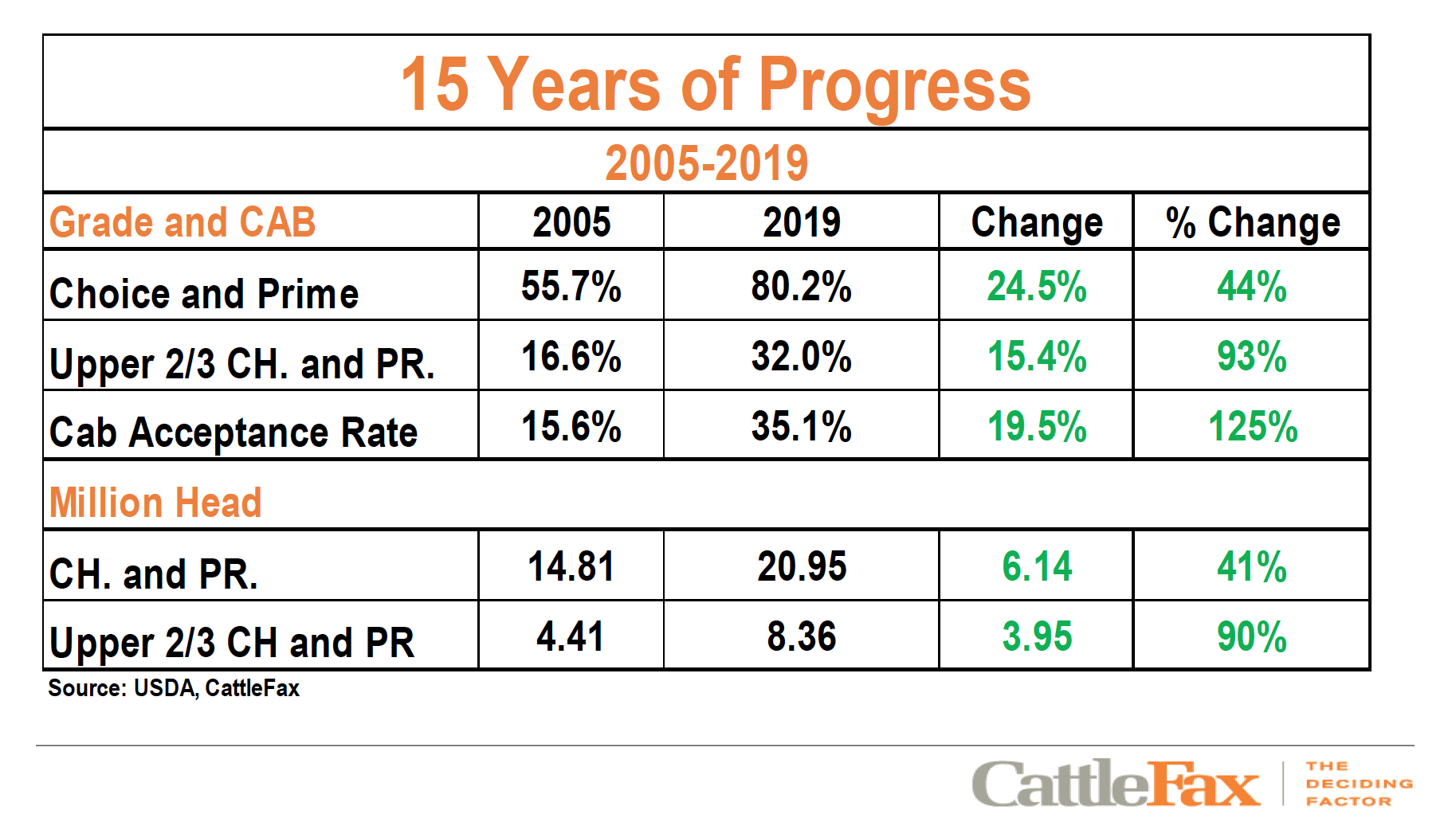
A calf’s potential for premium grades also drives demand. Now that 82% of fed cattle grade Choice or Prime, and as quality keeps rising, so do packer and consumer expectations.

That’s why the likelihood of quality-focused premiums, such as those for the CAB brand, can still add dollars to your check. CAB acceptance rates have doubled in the last decade to more than 35% for Angus-type fed cattle, with rewards only growing.

“We’ve seen increases in the Certified Angus Beef premium paid on grids by packers to feedyards for qualifying carcasses,” Dykstra said. “More supply has not necessarily meant fewer dollars.”

Value starts with genetics.

“In an up market, the best cattle do exceptionally well. In a down market, the best cattle might keep our head above water and above a break-even,” he said. “So let’s look at genetics from a risk-management perspective.”

Enrolling calves in value-added programs is a proven way to do just that, with examples like AngusLink, documented health or naturally raised—all designed to verify decisions made on the ranch.

“We want to get involved in the items that bring back a premium”, Dykstra said, calling such programs “pretty essential.”
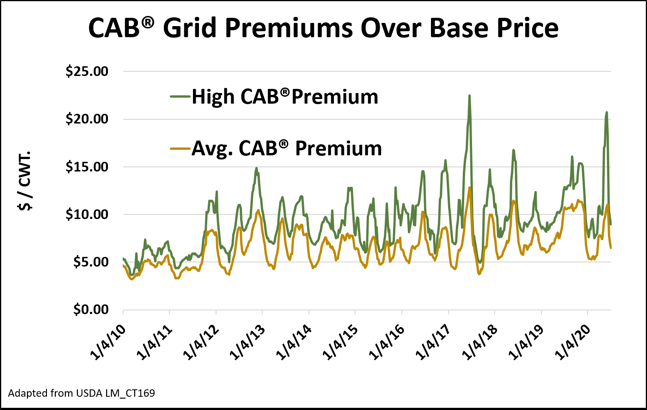
CAB premiums over base price

Build a resume for your calves and send it on to feeders or share on social media to use modern day marketing tools, he suggested. The internet is a cost-effective and often free way to personalize marketing with photos and information. Feeding and carcass data, Beef Quality Assurance certification and details on genetics can set calves apart.

Even with everything else in place, it’s important to consider seasonal price movements.

“There are times of the year that are best not to sell, and times of the year that reward us the most,” Dykstra said. Historical price patterns show significant increases for fed steers in the April-to-May timeframe. “If we make decisions that target that a little bit better, perhaps we manage cattle during a different season.”

Finally, Dykstra urged building personal contacts and relationships.

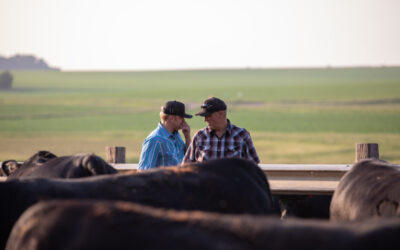
“When we’ve got several thousand cattle for sale on a given day, it’s really hard to stand out,” he said. It helps when relationships result in buyers who know the management and bred-in attributes. “I always appreciate when I get personal contact from people, and I think your customer base may also appreciate that kind of contact.”

Feeding Quality Forum sponsors include Diamond V, Feed-Lot Magazine, Micronutrients, Zoetis and AngusLink. For more information or to watch full presentations, visit www.FeedingQualityForum.com.

You may also like
Missing the Mark Leaves Money on the Table

Missing the Mark Leaves Money on the Table

Certified Angus Beef regularly collects data on millions of fed cattle to discover how cattlemen can capture more value for high-quality carcasses beginning on the ranch. When black-hided cattle don’t earn the CAB stamp, it’s most often for missing the mark in marbling, HCW, REA and backfat.
How to pick a feedyard

How to pick a feedyard

Not every ranch, pen or feedlot is alike or ideally suited to handle the same class of cattle.  Here is a 12-point checklist of ways cattlemen can help themselves when selecting a feedyard. 
Backgrounding can add value, flexibility

Backgrounding can add value, flexibility

Backgrounding calves can open gates to new revenue paths, though not without risk. When more cattle are sent to the grazing fields or grow yards, there’s a shift in the seasonal pattern of the market and more opportunity to take advantage of better prices.

nebraska feedyard

Rebound

Beef comes back from series of unfortunate events

by Morgan Marley

September 22, 2020

Shocks to the beef industry were all part of 2020’s “unprecedented” theme, but how the market responded was less surprising. There was nothing for it but to make new plans and keep going said a RaboResearch analyst.

Dustin Aherin, animal protein vice president and analyst for Rabo AgriFinance, a RaboBank subsidiary, addressed those ideas at the virtual 2020 Feeding Quality Forum.

Dustin AherinCattle, labor, physical capital and technology make up the beef production equation, he said. When any of those fall out of balance, it’s communicated through prices.

The 2019 Tyson packing plant fire and COVID-19 both threw the equation off, but with different effects. Where the Holcomb, Kan., fire caused some destruction at one plant, the coronavirus pandemic brought changes in human health, plant adaptions and new technology across the entire supply chain.

“Looking at what happened here in 2020 with an extreme increase in fed cattle supplies and given the backlog,” Aherin said, “the collapse in prices really wasn’t unexpected.”

The what and why

The escalating disasters highlighted the tightening capacity at packing plants, especially in the last five years. When there aren’t enough resources to turn cattle into beef, “it’s tough to put a high value on those animals,” Aherin said.

That’s what happened, but why requires a deeper understanding of the financial environment.

The pandemic created a “risk-off environment,” he said, causing investors to pull cash out of the market and put it into assets perceived as safer.

“In such a high-risk environment,” Aherin said, “it’s really difficult to motivate buying in the live cattle futures side of the market.”

Studies show small changes in beef tonnage result in large price changes, he said. The temporary plant shutdowns, labor challenges and the rapid shift from foodservice to retail caused major changes in beef availability.

“As painful as it was for cattle producers,” Aherin said the prices and magnitude of changes were in line with research models.

Angus feedyard cattle

Leaving the gate open

What comes next? When so many decisions in 2020 were reactions to repeated rib punches, it’s hard to catch your breath long enough to make plans.

But agriculture often deals with heavy blows. Aherin recalled the global financial crisis of 2008 took seven quarters for foodservice recovery. After a COVID-19 vaccine helps tame the pandemic next year, “we’re expecting closer to eight to 10 quarters,” he said, “and the trend of change will continue” in foodservice.

“We need to be proactive and willing to adapt,” he said. “Consumer preferences, supply chain practices, food safety, quality and convenience are going to be even more important than ever.”

Opportunities are wide open for the beef industry, but it’s going to take buy-in and support from cattlemen to create a resilient, diverse and flexible supply chain.

How do we let technology disrupt established procedures to increase efficiencies, particularly at existing packing plants? Aherin asked.

“The big talk is to have more robotic fabrication and cutting,” he said. “But there’s more near-term potential in data collection and monitoring.”

Improvements in those areas across all production sectors will help identify the best genetics and practices, he said.

Traceability is another benefit. Disease outbreaks not only threaten people but as African Swine Fever has illustrated, also pose high risks to livestock and the food supply.

“We have to be able to track, trace and control any sort of disease outbreak before it becomes a major inhibitor to the marketplace,” Aherin said.

As consumers grow more curious about food production, source and environmental impact, it may pay to enhance documentation. Throughout the pandemic, branded beef led sales. That’s still rooted in quality but more management attributes are emerging. Producers may not have to change much, just add verification to meet consumer demand and gain market access.

Aherin foresees a future where “a product doesn’t have access to food companies, distributors, restaurants and retailers if they don’t meet the standards that those businesses have set for their supply chains.”

“We have to be really focused on the consumer and ready to innovate and be creative,” Aherin said. Because when history is making jumps and bounds, “we don’t want to be caught flatfooted.” 

Watch Aherin’s FQF presentation and find more event coverage here

You may also like

Apply by April 1 for Colvin Scholarship

Apply by April 1 for Colvin Scholarship

The production agriculture, undergraduate and graduate scholarship categories each have tailored requirements. In 2025, the Colvin Scholarship Fund supported 27 students with awards ranging from $2,000 to $7,500.

Working in Balance

Working in Balance

Cattlemen have a responsibility to look critically at their own herd, determine the areas that warrant improvement, and select animals accordingly. Stockmen bring immense value by objectively evaluating phenotypes, regardless of what the numbers say, and setting individual breeding objectives.

Healthier Soils and Stronger Herds

Healthier Soils and Stronger Herds

Effective land stewardship requires an understanding of how each decision affects forage growth, cattle performance and long-term stocking rates. When land is the foundation of the business, producers are more likely to invest time and resources into managing it intentionally.

newborn calf

A scours change?

Plan to prevent, prepare to treat calf scours

by Morgan Marley Boecker

September 2020

New oil and filter? Check. Tires rotated? Done. Air filters? Good to go. For every 5,000 miles you drive, these are the questions to answer.

Regular oil changes are a prevention strategy to maintain your vehicle’s health.

Adequate nutrition to make colostrum? Clean calving environment? Scours vaccine?

Just like regular maintenance on your vehicle, prevention is the best way to ward off scours in your cow-calf herd.

But sometimes the best treatment plans fail, with lasting effects on calf performance. That’s why Mark Alley, senior technical service veterinarian at Zoetis, says ranchers should try to get ahead of the problem.

Prevention before treatment

Proactive maintenance for a cow herd differs from that for a truck of course, but a local veterinarian knows how to prevent scours based on local pathogens.  

“Having that valid client-patient relationship is the key to success for the industry,” Alley says.

Ensure cows will have good colostrum quality by closely monitoring body condition and nutrition in the third trimester. Colostrum begins to form six to eight weeks before calving, which is the suggested advance time for most calf scour vaccines.

A clean environment reduces scouring, and the Zoetis veterinarian points to the Sandhills Calving System as one that moves pregnant cows to fresh pasture while leaving newly calved pairs behind. That minimizes the chance for disease transmission from older calves.

Accurate recordkeeping helps, too, he says, noting Beef Quality Assurance (BQA) guidelines for recording ID, age, symptoms, diagnosis, treatment drug and outcome.

Knowing what was done to treat problems in the past “can result in strategies to hopefully prevent the same thing from happening in the future,” Alley says.

giving electrolytes to calf with scours

When strategies fail

Just like you buy car insurance for the unavoidable fender bender, work with your veterinarian to create a thorough treatment plan when calves scour.

“Usually more than one bacteria or virus may be present in those animals,” Alley says, and age provides clues.

E. coli is closely associated with calves less than five days old, while rota- and coronavirus are more typical in 7- to 10-day-old calves. After three weeks, coccidia bacteria is the more common culprit.

Even with the right diagnosis, scouring calves can die, usually because of dehydration, Alley says.

“When calves have diarrhea, they’re losing a lot of electrolytes,” he says. “First on the agenda for treatment should be correcting both fluid deficits and electrolyte losses, especially for potassium and sodium.”

Dehydration can be estimated by tenting skin at the neck and counting the seconds until its return to normal. Less than 2 seconds is normal, but 2 to 6 seconds indicates 8% dehydration. Alley says you can calculate the need for electrolytes by taking that percentage times a calf’s weight in kilograms. A 99-pound calf is about 45 kg, so it would need about 3.6 liters (almost a gallon) of electrolytes to recover.

Dehydration combined with electrolyte losses often causes metabolic acidosis. A calf’s natural reaction to recover is to breathe faster, which could play to producer instincts to reach for an antibiotic for pneumonia. Resist that urge, he says, because simply keeping them hydrated and well fed is the best course of recovery in scouring calves. Work with your veterinarian to determine when and if an antibiotic is needed.

“If treated appropriately, scours usually will get worse before it’s better, but not providing electrolytes may be the most detrimental thing we could do,” Alley says. That and taking those calves off the dam.

“Without the right nutrition, the villi in the gut will not be able to regenerate,” he explains. “And those calves don’t have enough body fat to actually survive what’s going on.”

A calf’s eyes and ears won’t lie about how it’s feeling.

“Bright and alert calves, even if they still have clinical signs, are probably on the right track,” Alley says, “regardless of what’s going on under the tail.”

electrolytes

Today affects tomorrow

From gestation through the feedyard, variables along the way set calves up for success or failure in reaching their genetic potential for efficiency, gain and carcass quality.

“If we have those animals that become diseased at any point prior to weaning, we’re losing pounds,” Alley says, pointing to Montana data. Calves there that had scours and survived through weaning were 20 pounds lighter than those that were never sick.

Just as we all pay for car insurance but hope we never need it, cattlemen should have a plan to prevent but also treat scouring calves. It pays to be prepared.

Alley’s presentation at this year’s Cattle Industry Convention in San Antonio provided the basis for this article.

Originally published in the Angus Journal.

You may also like

Apply by April 1 for Colvin Scholarship

Apply by April 1 for Colvin Scholarship

The production agriculture, undergraduate and graduate scholarship categories each have tailored requirements. In 2025, the Colvin Scholarship Fund supported 27 students with awards ranging from $2,000 to $7,500.

Working in Balance

Working in Balance

Cattlemen have a responsibility to look critically at their own herd, determine the areas that warrant improvement, and select animals accordingly. Stockmen bring immense value by objectively evaluating phenotypes, regardless of what the numbers say, and setting individual breeding objectives.

Healthier Soils and Stronger Herds

Healthier Soils and Stronger Herds

Effective land stewardship requires an understanding of how each decision affects forage growth, cattle performance and long-term stocking rates. When land is the foundation of the business, producers are more likely to invest time and resources into managing it intentionally.

randy blach, feeding quality forum, cattlefax

Hindsight for the future

Randy Blach’s positive outlook for the industry

by Abbie Burnett

September 17, 2020

The blessing and curse of perspective is not having it until a moment passes. Looking back on the last 40 years shows us more than we can see here and now.

“I think we really have to have an appreciation for where we’ve come from,” said Randy Blach, CattleFax CEO, at this year’s virtual Feeding Quality Forum. “It’s not been a straight line.”

Cattle inventory topped 132 million head in 1975, but it wasn’t until 2000 that the fed-cattle harvest reached its record 30.2 million, and that was with a long decline to 10 million fewer beef cows.

In the 1980s, 12% of U.S. farmers and ranchers went out of business, and the “war on fat” in the ’90s nearly eradicated a poorly informed cattle industry, Blach said. Between 1998 and 2000, almost 40% of carcasses graded Select.

“If you go back to the quality audits at that time period, one out of four steaks was a disappointment,” he said. “No wonder consumers were walking away from our product. They didn’t like it.”

While a new focus on quality emerged in the early 2000s, genetics, growing drought and mistakes of the past kept up pressure to liquidate. From 2000 to 2015, annual fed harvest numbers declined by 7 million head to close some packing plants and limit harvest capacity going forward.

randy blach, fqf

The seeds of that early move to boost quality finally sprouted after the drought, blooming with record-high Choice and Prime grades.

“We’ve just taken out the long-term downtrend in numbers,” Blach said. “I believe the reason we’ve done that is because we’re an industry that is now focused on doing the right thing, producing the highest quality product that we can, and meeting the changing demands of our consumers.”

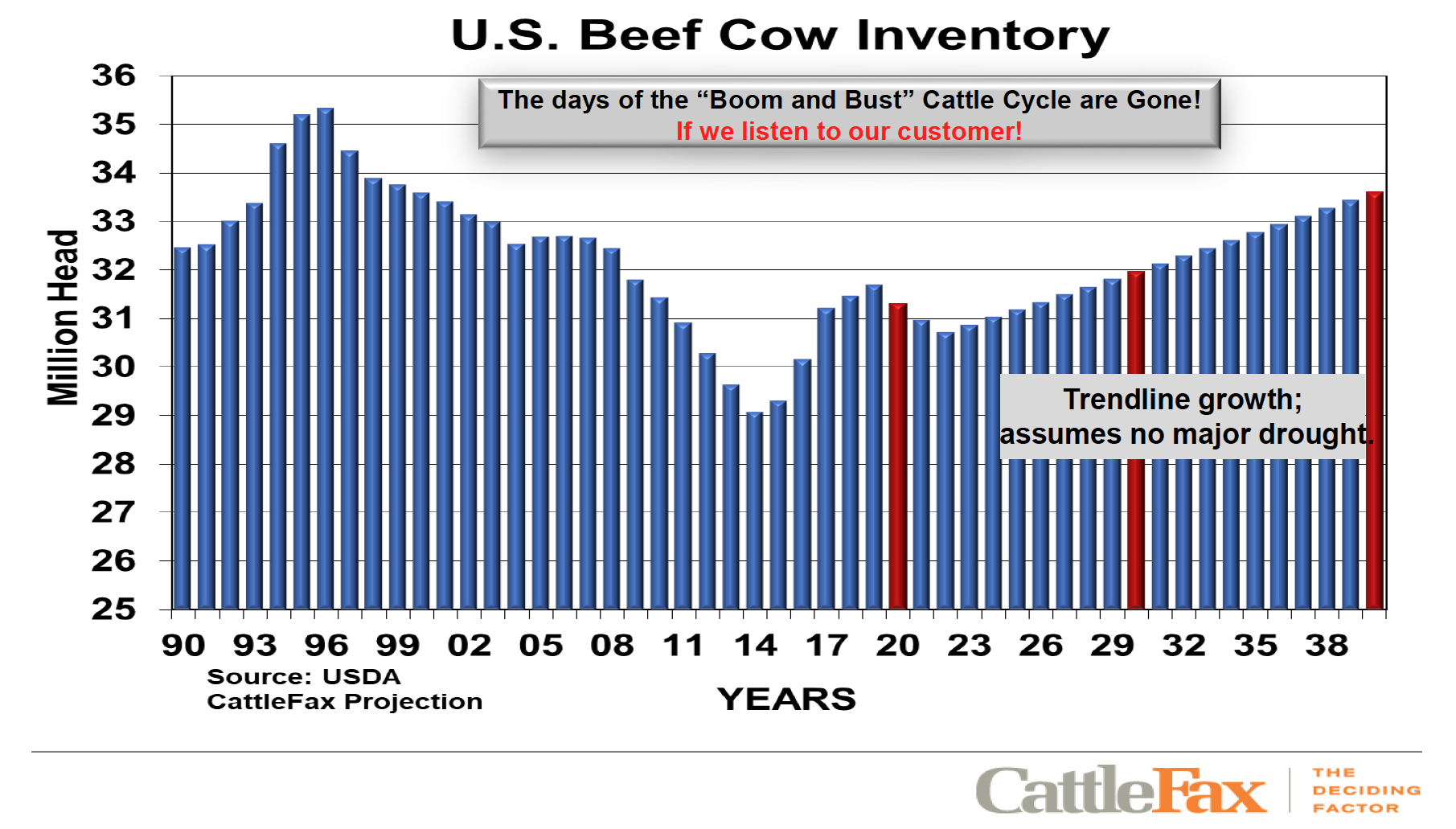
As the U.S. herd decreased, productivity per head greatly increased and finally added premium quality. The market analyst looks for some liquidation due to drought in the near term but overall numbers should only ebb and flow instead of crash and rise. Stabilization has come to the industry.

The retail sector provides a case study, Blach said. From 1980 to 1998, beef demand was cut by more than half, but since then it’s risen by 14 points to 61 on 1980’s baseline of 100. There’s room for more, but much value has already been added.

“That growth from the demand low has been worth anywhere from $225 t about $280 a head,” he said.

Demand is well established for today’s higher quality beef, but without an increase in the bottleneck of harvest capacity, Blach sees herd numbers flattening.

With the current balance in supply and demand, “we increase harvest capacity or we decrease the number of animals that are moving through the system,” he said. “This will be a situation that ebbs and flows and will start to balance back over the course of the next several years.”

randy blach, fqf

On the global stage, the U.S. is the top beef and poultry producer, and third in pork, dominating meat trade overall. The reason?

“Because the lion’s share is a high-quality fed-beef product so we have more yield per animal,” he shared.

In 1990, beef exports were a very small percentage of U.S. production, whereas today it’s 19 billion pounds or 18% of total meat exports.

Blach sees that growing to as much as 150 billion pounds of beef exported by 2040, or 50 billion more than this year.

That sunny projection comes with challenging considerations.

“Are we prepared to continue to make the strides, some of the same hard decisions we made 15 to 20 years ago, focused on quality? Are we going to be willing to do that as we move forward where we can increase our global market share and presence? To have a traceable product? Be source-verified?” he asked.

Instead of $350 per head, Blach said beef exports could be worth close to $500 per head by 2030.

“We’ve seen these premiums stay strong all the way through here because more and more consumers, once they taste the good stuff, they want to stay with it, don’t they? So this has been a quality movement,” he said. “Now the opportunity is to layer some of those other attributes onto this to move the value equation moving forward as we move forward into this next decade.”

Real-time perspective isn’t really a thing, but the progress in the latter half of the last 40 years says a lot about where the beef business is headed.

Find recordings from the event here.

You may also like

An Ambassador for All

An Ambassador for All

Joanie, with daughter Lindsey and her husband, Adam Hall, raise registered Angus cattle with two primary goals: producing high-quality seedstock that perform well in a wide variety of environments and ensuring end-user satisfaction. Those goals tie everything together, from promoting Angus to other producers to sharing their story with CAB partners and beef consumers.

An Unforgiving Land

An Unforgiving Land

What makes a ranch sustainable? To Jon, it’s simple: the same family, ranching on the same land, for the last 140 years. The Means family never could have done that without sustainability. Responsible usage of water, caring for the land and its wildlife, and destocking their herd while the land recovers from drought.

System Over Scale

System Over Scale

For Dallas Knobloch, it’s not about being the biggest feedyard—it’s about building a high-quality system that works. Today, with Tory’s wife Sadie and daughter Ivy, the Knobloch family owns and operates 4K Cattle. They feed 2,500 cattle at eight locations within 10 miles of home, manage 1,000 acres of crops and run a 125-head cow herd, all near Hills, Minn.

Kansas feedyard

The market demands more demand

by Miranda Reiman

September 9, 2020

Demand drivers.

Even without a worldwide pandemic, economic shutdowns and disruptions in food processing, Dan Basse would have covered demand drivers at the 15th annual Feeding Quality Forum.

The president of Chicago-based AgResource Company had charts to back up his point: “Going back maybe to the Civil War, it’s those demand drivers that give opportunity to the market.” Basse kicked off the on-line forum hosted by the Certified Angus Beef ® brand last month.

Grain markets typically lead market direction. Supply is no problem, with a 2.7% increase in global grain yields in the last decade compared to the previous.

“There’s been $87 billion spent looking for technology for farmers to help produce more—more beef, more pork, more grain,” Basse said. “I would really like to get agriculture behind a platform that we think about not only spending on ways to help us farmers produce more, but help consumers consume more, because as the end of the day, that will be the key to terms of our profitability.”

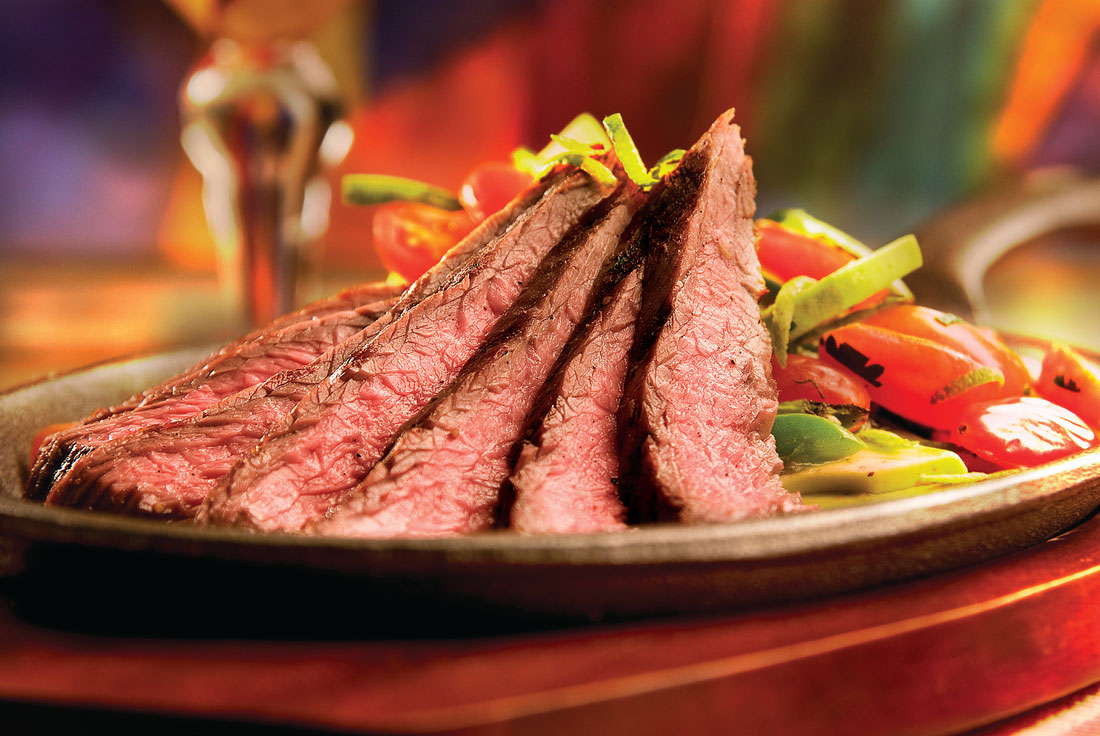
CAB flank steak fajitas

This year, however, those demand drivers are even more lackluster than anyone could have predicted at the start of 2020.

More than 3 million small businesses have shut down since COVID-19 came to the U.S. and that could reach 6 to 8 million by the end of the year.

“It’s the heart of the U.S. agricultural and economic outlook,” he said. Last year was the first time more Americans—51% of them—spent most of their food dollar outside the home, “so it’s a big change to have that [food service] industry crippled as it is,” he said.

Restaurants are operating at about 40% of normal, and it could be a year or more before they’re back to 100%, Basse said, noting the development of a vaccine or a strong therapeutic seems to be the key.

“The food service industry has been very important to the U.S. cattle industry. We’re still believing that it will struggle until we get to next spring,” he said. “I wish I could be more bullish in the cattle market.”

Dan Basse headshotTrade is not in the domestic beef industry’s favor either, as the U.S. has been importing more food than it’s been exporting the last four months. Beef industry exports are down 15.2%.
“To really get health in the agricultural economy, we need to start the export market kicking off a little more robustly. We need to see high-value goods leaving this country to other nations,” Basse said. “Principally beef, meats and some of the DDGs and ethanol products we now produce.”

He suggested Live Cattle futures are overvalued, and cattlemen should consider hedging at $112 to $114 during the last quarter of 2020, and at $116 to $118 into the first part of 2021.

“There is some risk in feed prices based on the late-season dryness, Chinese demand and things of that nature, but also based on the broad commodity markets, which are starting to turn around here just a little bit,” Basse said. Following the Midwest derecho storm, AgResource predicted yields to slip from record highs, down to around 179 bushels/acre, which is still nearly “on trend.”

Yet, he expects the lows to come later this fall.

“Don’t get bullish and chase this market as a feed user today. Step back and allow the market to come to you in October and November,” he advised.

Economic wild cards include political outcomes and continued stimulus measures.

“Never before did I think we’d see a U.S. debt level for government at $26.8 trillion and still growing,” Basse said. “These debt levels are something that I believe will be a drag on the U.S. in the world economy for many, many years to come.”

Growth across the globe has slowed, too, but India and China are still expected to become the No. 1 and 2 largest economies, overtaking the U.S. by 2025 or 2026.

Government support plays a big role in overall farm income, accounting for 40% to 45% of net farm revenue this year.

“That is something I never thought I would see in my career,” said the 41-year veteran.

Net farm income is down 47% from 2012, and has been flat for a number of years.

Basse looks each morning for signs of everything from new export demand to product innovations. “We need to see a new demand driver for you to get this all changed around,” he said.

Feeding Quality Forum sponsors include Diamond V, Feed-Lot Magazine, Micronutrients, Zoetis and AngusLink. For more information or to watch full presentations, visit www.FeedingQualityForum.com.

You may also like

Feeding Quality Forum Dates Set Earlier in August

Feeding Quality Forum Dates Set Earlier in August

When you’re feeding cattle, it counts to keep track of every calf, pound and dollar. Beyond the event’s educational sessions, networking between segments of the beef supply chain is invaluable—from feeders and cow-calf operators to allied industry and university researchers.

More Than A Meat Scientist

More Than A Meat Scientist

On the surface, he’s a meat scientist. Others know him as a meats judging coach. Some call him “the father of instrument grading.” To those who’ve worked most closely with him, Dr. Glen Dolezal is much more.

Registration opens for Feeding Quality Forum webinar

by Maeley Herring

August 3, 2020

On-target information powers the economy, especially the cattle sector in the challenging world of 2020.

Every year since 2006, cattle feeders, ranchers, educators and allied industry leaders have gathered at the Feeding Quality Forum (FQF) for thought-provoking conversation and networking.

This year offers the same range of topics and interaction – but in a virtual setting.

“You won’t get to shake hands with old friends and new, but we’re still bringing together some of the great minds in the beef industry to present the kind of information folks have come to expect from the Forum,” says Kara Lee, production brand manager for the Certified Angus Beef ® (CAB®) brand.

The 15th annual conference as webinar is being condensed to a few hours on Aug. 25 and 26 that will offer key marketing insights and unique perspectives on the beef supply chain’s future.

Many feedyard managers and staff have attended over the years, but Lee says FQF is a great resource for everyone in beef cattle production and marketing.

“Along with cattle feeders, we are targeting commercial cow-calf producers who are retaining ownership, interested in some progressive marketing of their own, or just learning how to raise better beef,” she says. “It’s also a great opportunity for folks in allied industries – anyone who touches the cattle feeding business.”

Dan Basse, president and analyst for AgResource Company, will kick-start the webinar Tuesday afternoon with an overview of commodity and financial markets around the world. Back by popular demand, “he brings some perspective on how what’s going on globally can impact our business here on the cattle production side,” Lee says.

Dustin Aherin will follow with “Hindsight 2020.” The RaboResearch vice president and animal protein analyst will show how COVID-19 first affected the cattle industry and what’s next for cattle procurement, processing and merchandising, post-pandemic.

“We know aftereffects of the market disruption will be top of mind for cattle feeders for months to come,” Lee says. “We want to bring in someone who can provide some really excellent perspective on that moment in time and what we can expect looking forward.”

Later that afternoon, FQF will recognize noted cattle feeding research scientist John Matsushima as the 2020 Industry Achievement Award winner for his long career of dedicated service.

CAB’s Paul Dykstra, beef cattle specialist, will lead off Wednesday’s events with ideas on progressive feeder cattle marketing. Focused on maximizing cow-calf investments, Dykstra will address alternative ways of adding value to high-quality calves when retained ownership is not feasible.

“We know that feeder-calf marketing is not a one-size-fits-all topic,” Lee says. That’s why Dykstra offers insight into several types of commercial operations.

Randy Blach, CattleFax CEO, will wrap up the conference with a 20-year forward look at the industry’s future. He brings his extensive knowledge in market trends and analytics to provide unsurpassed insight on what to expect in the next couple of decades.

At the end of each presentation, attendees will have the opportunity to ask questions directly to the speakers.

Feeding Quality Forum will be a free resource to those who register, thanks to its sponsors: AngusLink, Diamond V, Feed-Lot Magazine, Micronutrients and Zoetis.

Registration is now open at www.feedingqualityforum.com, where you can also find the full agenda and learn more about the speakers.

“Feeding Quality Forum is just two hours a day, for two days,” Lee says. “At no cost other than your time, we feel like it’s a great investment to access and interact with some of the best industry leaders available.”

You may also like

Apply by April 1 for Colvin Scholarship

Apply by April 1 for Colvin Scholarship

The production agriculture, undergraduate and graduate scholarship categories each have tailored requirements. In 2025, the Colvin Scholarship Fund supported 27 students with awards ranging from $2,000 to $7,500.

Working in Balance

Working in Balance

Cattlemen have a responsibility to look critically at their own herd, determine the areas that warrant improvement, and select animals accordingly. Stockmen bring immense value by objectively evaluating phenotypes, regardless of what the numbers say, and setting individual breeding objectives.

Healthier Soils and Stronger Herds

Healthier Soils and Stronger Herds

Effective land stewardship requires an understanding of how each decision affects forage growth, cattle performance and long-term stocking rates. When land is the foundation of the business, producers are more likely to invest time and resources into managing it intentionally.

premiums grid marketing BIF Bertelsen

Best of both worlds

Opportunity for a bottom line filled with pounds and premiums

by Abbie Burnett

June 30, 2020

Would you rather have AC or heat? Only meat or vegetables for dinner? Do you want the profit from your cattle to come from pounds or quality?

These are decisions you don’t have to make.

Brian Bertelsen, U.S. Premium Beef (USPB) vice president of field operations, addressed cattle questions with data at the Beef Improvement Federation’s recent online symposium.

He began by defining premium as the difference between the amount paid on USPB’s value-based grid and the previous week’s USDA-reported average cash market.

“Last year, we had a record-high quality grade premium,” he said, noting some groups earned record high total premiums above cash late in 2019 when the rewards for quality were especially high in the marketplace. “Prior to that, premiums were hanging around $50 per head.”

Marbling and dressing percent were the two key profitability traits, the latter of importance because the grid pays on hot carcass weight (HCW) rather than live weight.

Bertelsen showed the 22-year span of company grade and premium data, commenting on the mostly steady increase in HCW and average premiums paid. Drought caused zigzags in 2006 and again six years later. The introduction of such technology as ultrasound and genomic testing stimulated quality grade improvement early in this century and 10 years later, respectively.

More pounds have been a familiar feature.

“We’ve been increasing carcass weight and live weight ever since we learned how to build fence and selectively breed cattle,” Bertelsen said. “That’s obviously one of the first things we’re focused on because that’s our pay weight.”

Increasing HCW is nothing to be ashamed of.

“This is our competitive advantage,” he said. “We’re really not increasing cow numbers. We’re allowing our industry to feed more people with a lot of pounds of total product from less animals.”

Adding weight can be a key to profit.

premiums grid marketing BIF Bertelsen

“My job is to coach our producers and give them some suggestions, things to do and try,” Bertelsen said. “One of the things I’m talking to them about lately is, ‘Hey, the better your cattle are for genetics, for carcass traits, and let’s say for specifically marbling, really the longer you ought to feed those cattle… if I don’t feed him very long, I don’t allow him or her to maximize their genetic potential.’”

Studying data and trends over the years, Bertelsen watched dynamic shifts develop.

“Remember the drought year in 2006 led to lower grades and there was a high Choice-Select spread. That’s logical, right? But also remember how high the grades have been the last couple of years and the Choice-Select spread has also been pretty high. Well, that doesn’t make a whole lot of sense,” he said.

Until you look at the steeply declining share of fed cattle grading Select across those 22 years.

“The whole industry went from 37% down to 14% Select. Such a huge decrease in availability pushed some large meat customers out of Select and into Choice whether they wanted to or not,” Bertelsen said. Today’s wider spread is all about the discount for an increasingly irrelevant grade.

Looking again at drought years like 2006 and 2012, he noted increases in yield grade discounts.

“If we’re in a period of time when we have a higher percentage of yield grade (YG) 4s and 5s, it’s really more attributable to changes in muscling,” he said, “which I attribute to environment.”

Data indicate YG3 is a gateway to premium Choice. Summaries show quality grade, HCW and YG all moving higher together.

“It’s rather challenging, even with good genetics to produce a lot of Prime cattle with a really low yield grade,” Bertelsen noted. “They’re both fat – marbling and back fat – so we need to allow these cattle some time again to express their genetic potential.”

The relationship between yield grades and HCW are part of the increase in dollars per head on the USPB grid versus the cash market. As yield grade increases, so does HCW.

“Each year, yield grade 3s are the maximum price per hundredweight, but 4s are usually the most total dollars per head,” Bertelsen said.

He compared the top eight ranches (4,000 head) to the USPB grid average. Those eight averaged just 13 lb. lighter HCW, but graded 99% Choice and Prime compared to 87% company average. They also qualified more than 80% for the Certified Angus Beef ® (CAB®) brand, with 51% Prime or CAB Prime. The company average was 6% Prime.

Those numbers show what people can do with modern genetics, focused management and grid marketing incentives, Bertelsen said.

While noting all the company data deals with cattle phenotypes, he closed with an example from one USPB member that compared progeny from two bulls with above-average Angus $B, but one significantly higher than the other. If used on both spring- and fall herds to generate 50 progeny per year for five years, the better bull could add more than $39,000 on the grid.

No balancing needed. Benefits await for pounds and premiums.

You may also like

Apply by April 1 for Colvin Scholarship

The production agriculture, undergraduate and graduate scholarship categories each have tailored requirements. In 2025, the Colvin Scholarship Fund supported 27 students with awards ranging from $2,000 to $7,500.

Working in Balance

Cattlemen have a responsibility to look critically at their own herd, determine the areas that warrant improvement, and select animals accordingly. Stockmen bring immense value by objectively evaluating phenotypes, regardless of what the numbers say, and setting individual breeding objectives.

Healthier Soils and Stronger Herds

Effective land stewardship requires an understanding of how each decision affects forage growth, cattle performance and long-term stocking rates. When land is the foundation of the business, producers are more likely to invest time and resources into managing it intentionally.

angus cows

Beef’s paradigm shift should continue, Rishel says

by Maeley Herring

June 24, 2020

Alexander Graham Bell never imagined the smart phone most Americans carry today. Even those with a touchscreen didn’t dream of such wonders a generation ago, and attitudes still vary. From bag phones to flip phones that can text to the latest with an app for everything, each person choses their level.

Innovation presents the option to accept or turn down, said Bill Rishel, longtime Nebraska Angus producer, at the online 52nd Annual Beef Improvement Federation (BIF) Symposium. He challenged listeners to see change as an opportunity for progress.

“I want to stimulate a new way of thinking about the future,” he began.

Appreciating the past

That should begin with looking back to recognize “paradigm shifts” when new ideas suddenly supplant accepted or traditional ways.

“The paradigm shifts over the past 50 years certainly improved our industry and got us to where we are today,” Rishel said by way of introducing seven that helped everyone from ranch to beef consumer.

  • Performance record systems. Significance often overlooked because of their widespread use today, Rishel said the data collection led to in-herd records, breed association databases and national research organizations.
  • Artificial insemination. Used since the 1950s by a few registered bull owners, this innovation didn’t show what it could do until the early 1970s. When its use was opened to all in the early 1970s, “we witnessed greater opportunity for genetic improvement and long-term sustainability.”
  • Boxed beef fabrication lowered delivery costs, ensured product safety and increased demand for beef.
  • Branded beef programs debuted in 1978 with live and carcass specifications to enhance consistency, Rishel said. “Standing behind the product was a pretty new concept to our industry and the consuming public. It even helped reverse the serious decline in beef demand.”
  • The Beef Promotion and Research Act of 1985 provided structure and requirements for the Beef Checkoff Program that works to benefit producers and consumers, he said.
  • Expected progeny differences (EPDs) allowed anyone to rank individual animals on their genetics, regardless of environmental differences, Rishel said. EPD methodology led to the use of ultrasound technology in gathering carcass data for sire evaluation.
  • Genomic-enhanced EPDs (GE EPDs) take in DNA studies and other sources to find economic merit in more cattle and in traits that are hard to measure. “The speed of development and adaptation of genomics has been revolutionary,” he said.
barn laptop data

The seven innovations offered progress in genetics, efficiency and profitability at each level. They also provide a “paradigm shift philosophy” for future management decisions.

“Perhaps we can apply some of that thinking to our business and industry as we charge forward into the next two decades,” Rishel said. “The central idea to these dynamic changes is the desire to improve genetics and improve our enterprises.”

Looking forward

Research proves the industry is continually improving beef production.

“I believe we are just scratching the surface,” Rishel said. “I have no doubt genomics are destined to play a much larger role,” such as selection for strong immune systems, feed efficiency and carcass merit.

Beef quality is a key focus, Rishel said, but that must expand to other consumer connections.

“Producers are making strides in sustainability,” he said. Cattle graze land unsuitable for crops and “upcycle” forage into that nutritious source of protein that is beef.

Document conservation efforts that link livestock, wildlife, water and forage management, Rishel suggested.

“We have a great story to tell,” he said. “Many of our consumers, even the ones who really love beef, want to know that we are doing the right things for the environment and sustainability of our natural resources.”

If we were to look back on the industry in 20 years, what would be our biggest accomplishment?

“I hope the greatest paradigm shift would be our ability to accept change,” Rishel said.

You may also like

Apply by April 1 for Colvin Scholarship

The production agriculture, undergraduate and graduate scholarship categories each have tailored requirements. In 2025, the Colvin Scholarship Fund supported 27 students with awards ranging from $2,000 to $7,500.

Working in Balance

Cattlemen have a responsibility to look critically at their own herd, determine the areas that warrant improvement, and select animals accordingly. Stockmen bring immense value by objectively evaluating phenotypes, regardless of what the numbers say, and setting individual breeding objectives.

Healthier Soils and Stronger Herds

Effective land stewardship requires an understanding of how each decision affects forage growth, cattle performance and long-term stocking rates. When land is the foundation of the business, producers are more likely to invest time and resources into managing it intentionally.

A shared goal

CAB annual conference brings segments together

By: Miranda Reiman

There’s often a shared understanding among cattlemen. In a career that comes with some of the highest highs and the lowest lows, you need only breathe a word of a specific tragedy or triumph and others just know.

But conveying that to a ballroom filled with 700 people from packer to processor, retailer to restaurateur? That takes building on common ground.

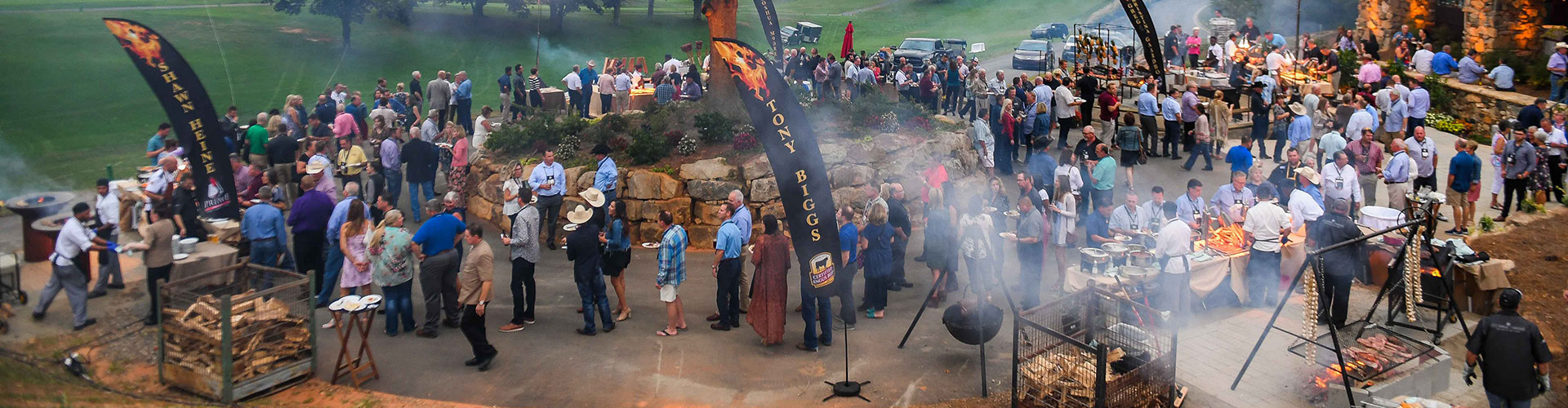
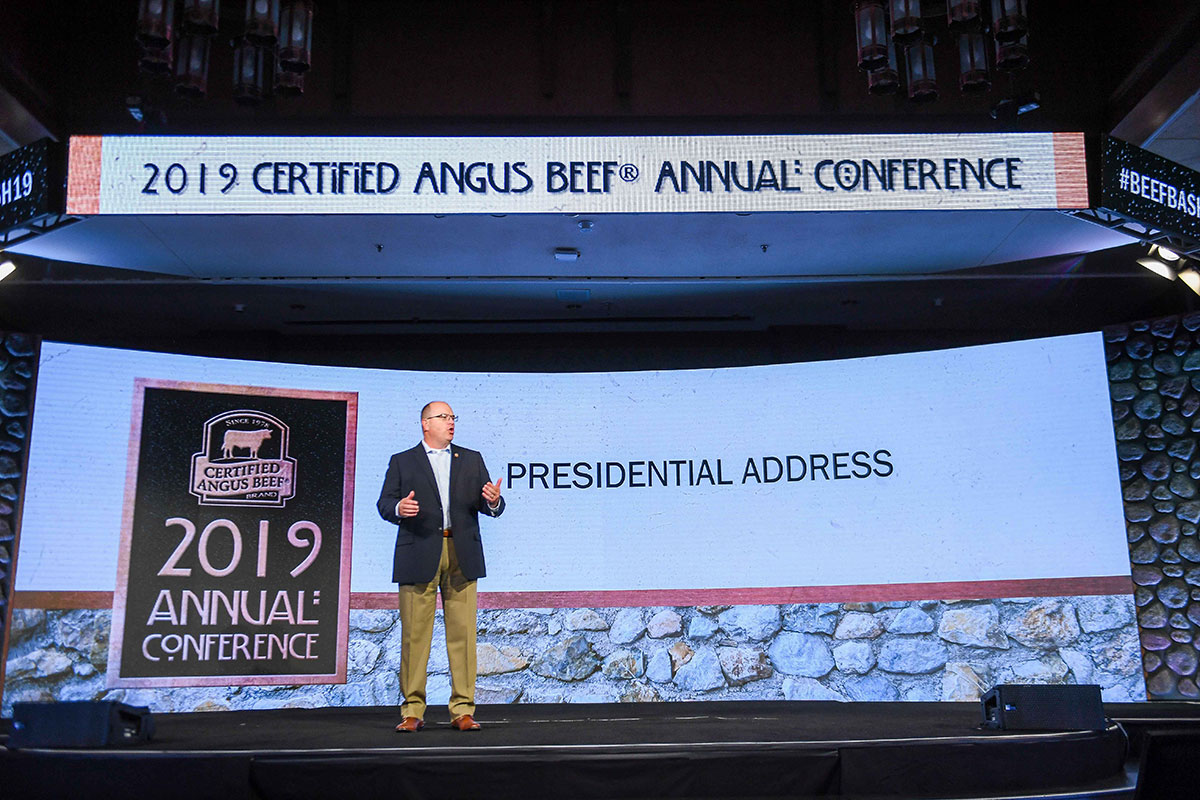
It’s an important role producers had at the 2019 Certified Angus Beef ® (CAB®) brand’s annual conference in Asheville, N.C., in September.

“This conference has evolved over the years into a meaningful annual gathering,” said CAB President John Stika. “Special because it literally brings together an entire community of people from farm to plate, each one of us necessary to deliver this brand to the tables of consumers around the world.”

In between motivational speakers like former Blue Angels pilot John Foley and important sales-marketing inspirations, producers took to the stage to share some humanity from cattle country.

Kansas Angus breeders Chris and Sharee Sankey and Neal and Marya Haverkamp represented the “Brand the Barn” campaign in a live interview.

The Sankeys grew up in the Angus business. Married the year the brand began, their son and daughter were raised in “the Angus family,” Sharee said.

A big part of that was the show ring, which Chris said is to the cattle business “a bit like NASCAR is to the auto business.” He added, “We all like to compete at something.” 

It’s part ad campaign, part showing off “the latest prototype.”

Neal shared the many uses of their barn, from processing cattle, to calving and even office work. He said they’re excited to showcase the logo on it because of what CAB means to them.

“It’s important because first of all, it gets us a premium for our cattle, but it builds demand for our bulls along the way. And that’s the focus for our operation,” Neal said.

 He started his herd in high school, but when Marya entered the picture, she shared his dream. Watching her husband do what she knows he’s meant to do?

 “It’s overwhelming,” she said, before adding some levity. “Now don’t get me wrong—on the days we work cattle, I have to remind myself I love him, even though I don’t really like him right now. But my heart is full when I see him helping the kids and it’s full circle.”

The session brought to life pages from the new book, “Sheltering Generations: The American Barn,” set for a December release. The coffee-table tome is full of photos and stories of the families who own 40 barns painted with the CAB logo in 2017 and 2018. Every penny from book sales will go to support a new Rural Relief Fund that lets CAB contribute to organized efforts during times of natural disasters such as floods or wildfires.

South Dakota cattleman Troy Hadrick shared a slice of what it’s like to literally weather a storm, describing this April’s devastating blizzard on his Faulkton, S.D., ranch.

Videos and pictures on the main screen showed the conditions, while Hadrick conveyed the heartache.

“You’ve got this unwritten, unspoken contract with your cows that you’ll take care of them and they in turn take care of you. We didn’t save them all, but we did the best we could,” Hadrick said.

During the storm, his wife Stacy and their three kids were all working together to save calves, digging their way over to the calving pasture and back home, riding in the bucket of the tractor looking for babies to bring inside. After going through the night, they took a quick reprieve to warm up, and Hadrick told the kids to get something to eat.

“Whatever you want, you want ice cream for breakfast? I don’t care. Find a candy bar, eat it. You just, you got to get something in you,” he recalls. That’s when Hadrick looked over and saw his daughter, head in her hands, sobbing. “We had just pushed her a little too hard. She was kind of emotionally and physically exhausted.

“That was tough for a dad to see,” he said.

People could feel the sentiment, many were moved to tears. 

But it wasn’t just about showing who ranchers are, it was about explaining what they do.

During a sustainability session, panelists put a face on how the production sector is improving animal care and environments. James Henderson, Bradley 3 Ranch; Tom Jones, Hy-Plains Feed Yard; Chris Ulrich, Ulrich Farms; and Sara Place, National Cattlemen’s Beef Association, each shared examples ranging from experience in the Chesapeake Bay watershed to feeding cattle in western Kansas.

Henderson said they hit a turning point when a range specialist visited their Childress, Texas, ranch in 1995.

“At the end of the day, he made a comment that cut to the bone,” Henderson recalled. “He said, ‘This is the most under-stocked, overgrazed ranch I’ve ever been on.’ That’s not what you want to hear as a rancher.”

They made a 20-year plan, where they developed water, implemented aggressive brush control and planted native forage. Increased carrying capacity shows it’s working.

Ulrich had his own stories of fencing out creek beds and introducing contour strips on his Pennsylvania farm ground. Jones described collaborative work at his feedyard’s education and research center, and building up the next generation through internships.

Place put the numbers and media hype in perspective.

“In 2018, it took 36% fewer cattle to make the same amount of beef as we did in the 1970s,” she said. “Those are huge reductions in the amount of greenhouse gas emissions, the amount of natural resources, everything else it takes to make it a really high-quality product.”

The panel took questions from the audience, addressing the ideas of eating local, land use for beef production and even cow farts.

“It all comes up the front end of the animal,” Place said. “The gas that gets produced is methane gas and methane is a greenhouse gas…” but it’s a compound that is easily broken down in 10 to 12 years. And with a fairly consistent number of cows in production over that timeframe, the beef industry isn’t increasing those emissions.

“It’s kind of like the idea of a bathtub. You’ve got a single water level. If you get water coming in and going out at the same rate, the level is going to stay constant,” she said.

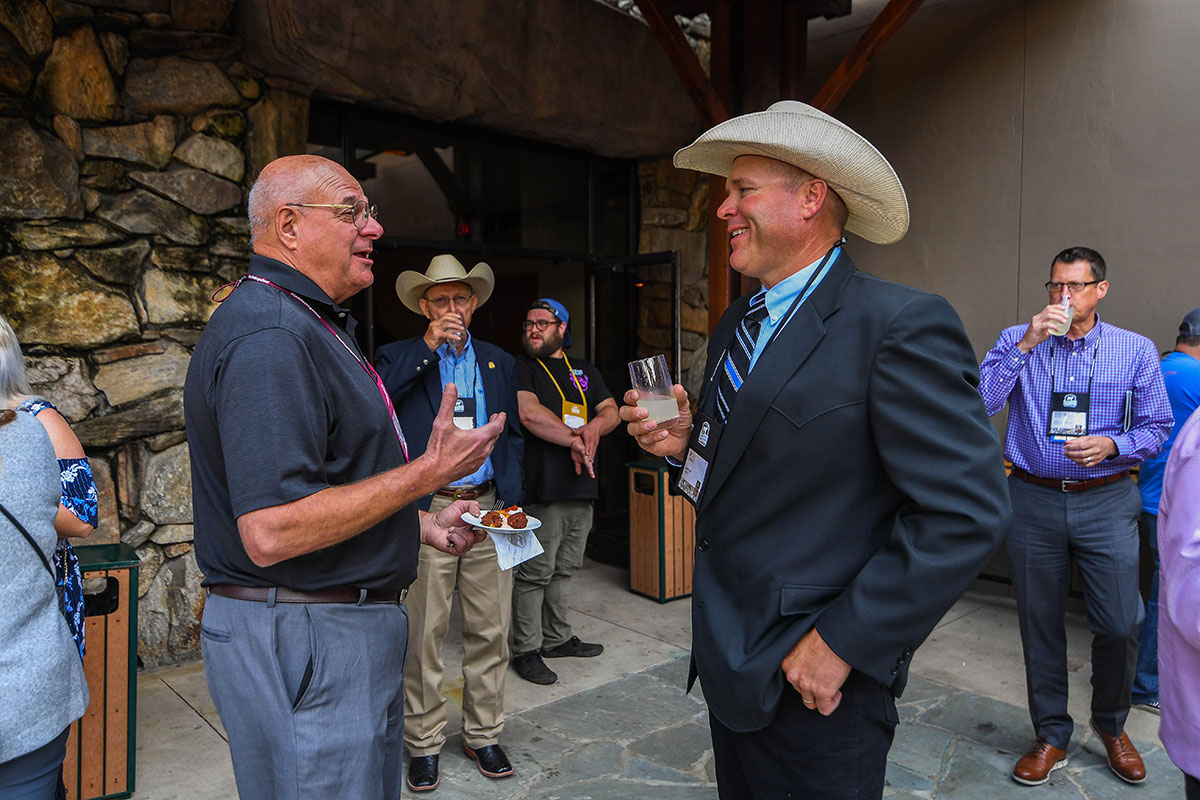
There were more questions than time to answer, but the entire conference encouraged one-on-one interaction among people from different parts of the beef business. Conversations continued in the hallways and during shared meals.

CAB recognized leaders in packing, retail, foodservice, value-added processor and production with annual awards. They announced new programs, such as Steakholder Rewards—a new consumer-brand-loyalty program—and Meat Speak, a podcast showcasing culinary expertise. Marketing staff gave updates on major initiatives and the sales team equipped people selling the brand with more tools and tactics for success.

“I really believe this brand was the lead that changed what was going on in our market,” said Randy Blach, CattleFax CEO, during his market update. “Somebody had to say we are not going to be an ingredient. We have a story to tell.”

Since 1998, consumer spending on beef has increased by $62 billion, more than the increase in outlays on pork and poultry combined, he said.

“There are some out there who will make you think people have quit eating beef. We have record consumption in the U.S.,” Blach said, and beef quality is the highest it’s ever been.

That helped supply the brand, Stika said, which hit a record 1.25-billion pounds of sales, with 3.1% growth for the fiscal year ending in September.

 “What I continue to find absolutely energizing about this event every year is that when you bring this many people together in one place focused on one brand, there arises a creativity, a momentum that fosters great ideas and only serves to further fuel an even-stronger pursuit of excellence moving forward,” he said.

A shared understanding of a shared goal.

Originally ran in the Angus Journal.

You May Also Like…

From Decline to Dominance

From Decline to Dominance

Initiated from a simple yet visionary idea, and pursued through the grit and tenacity of Angus breeders seeking a better future for the breed and Association members, it’s no accident that Certified Angus Beef is where it is today.

Smitty’s Service on CAB Board

Smitty’s Service on CAB Board

Lamb continues to find himself struck by just how far-reaching the Angus breed has become. The brand’s growing demand and rising prime carcasses left a strong impression. He hopes everyone recognizes the vital connection built between consumers and Angus producers. Humbled by the opportunity to serve, Lamb reflects on his time as chairman with gratitude.

Success, Despite Challenges

Success, Despite Challenges

Today’s market is complex and competitive. The collective effort of stakeholders across the supply chain positions Certified Angus Beef to meet the record demand for premium beef moving forward. Signals across the beef industry are clear and Angus farmers and ranchers seeking high-quality genetics that deliver premium beef are producing a product in high demand.

Avoiding the storm

Proactive animal health means a genetic approach.

By: Miranda Reiman

The beef community is getting ready to rip off the Band-Aid.  

Antibiotics are effective tools in managing animal health, but they’ve also been a patch, serving until the advent of genetic tools to solve challenges in the long term.

“We’ve had increasing scrutiny around the use of antibiotics, so we need to be ready,” said Brad Hine, research scientist for Australia’s Commonwealth Scientific and Industrial Research Organisation (CSIRO). “Our ability to use antibiotics in our food-producing animals is, in the next few years, going to be rapidly reduced. A really good strategy is to try to breed animals that have improved disease resistance.”

In others words, create cattle that don’t get sick. What may sound like a far-off wish is quickly becoming reality.

At the 2019 Angus Convention in Reno, Nevada, last fall, Hine shared insight into current work his team is doing with the Australian Angus Association. He also talked of upcoming collaboration with Angus Genetics Inc. (AGI).

“As we continue to refine genetic selection, we realize that genetics contribute to animal health in ways we probably don’t fully understand today,” said Mark McCully, CEO of the American Angus Association. “As we start identifying genetic lines of cattle that are less likely to get sick, that has ramifications across the entire industry.”

It matters at every point in the production chain and affects economics, animal welfare and consumer perception.

“It’s easy to make the assumption that the most productive animal is the animal with the best immune system,” Hine said. “Obviously, the healthiest animal grew the fastest.”

But that’s just not true, he said, and in some instances, disease resistance is negatively correlated with production. For example, high-milking Holstein cows are often more at risk for mastitis, he noted.  

“The research tells us, if we select for productivity alone, we increase susceptibility to disease,” Hine said. “It’s really important for producers to rethink that.”

Australians have used a strategy developed for the Canadian dairy industry and applied it to Angus cattle.

This broad-based approach is a new twist compared to historical health work, where cattle have been bred for brucellosis resistance while sheep were bred to ward off internal parasites.

“We’ve been very cautious not to tailor this to any specific disease, because we might know one disease, but there’s another one right around the corner,” Hine said.

Different types of pathogens are dealt with in different ways: there’s a cellular response for viruses that live inside the cells and antibodies that fight those outside the cells.

“There are two different arms in the immune system,” he said. “And the risk you run if you select animals that are very good at one arm of the immune system is that sometimes those animals are not as good at handling pathogens that require the opposite arm.”

They test for both.

Hine’s team vaccinated cattle just before weaning them into the yard, and then took blood tests to measure their response at the most stressful point.

“It’s about breeding animals with a really strong immune system so they can handle whatever challenges they face,” he said. “It is not necessarily the animals that can respond when they are happy and healthy in the paddy that we are trying to identify. It is those animals that can respond to a disease challenge when they are under some stress, and are able to cope with that situation and return to being productive.”

The early work shows the variability is “enormous,” Hine said, and the heritability appears to be moderate. Correlations to other traits were weak but followed as expected: temperament was favorable, production traits like growth were negative.

He said that’s good news, because it means health can become a priority in selection without compromising other goals.

Following indexed animals through the feedlot was a chance to see if the research worked in a real-world scenario.

For every animal that scored high for immunity, there was a $3.50 animal-health cost. Those in the low group accrued $103, Hine said, noting those are conservative estimates that don’t account for labor.

“If we can identify low-immune-competent animals and get them out of the system, there is a huge economic benefit for us as an industry,” he said.

The poorer immunity group accounted for only 11% of the total population, but represented 35% of the health line items.

“As tools are developed, I think the adoption rate will be pretty significant in terms of both pace and scale,” McCully said. “A slight change in the improvement of animal health has huge economic ramification across the industry.”

The technology is “in its infancy,” he said, but the long-term goal would be the creation of genetic tools, both for Angus breeders and their commercial customers, such as genomic tests for replacement heifers or to prescreen cattle bound for the feedyard.

“I could definitely see this as a way of being better able to characterize risk,” McCully said. “You could modify your management to the risk level.”

Today, cattle often receive metaphalix—or whole herd treatment–upon processing into the feedyard, but studies show for every 100 that get preventative antibiotics, only 20 actually needed them, said John Richeson, West Texas A&M animal scientist. He spoke about innovations in health during the 2019 Feeding Quality Forum.

So, how do cattlemen identify that bottom fifth?

Researchers are developing everything from rapid blood tests to behavior-monitoring instruments, but they still need fine-tuning.

“We need it to be, ideally, at the speed of commerce so we don’t slow down processing,” Richeson said. The challenge is, how can we target accurately, quickly, and those sorts of things—there could be a huge cost savings to the producer.”

Most of the work is focused on cattle chuteside at the feedyard.

With a genetic test for improved immunity in commercial cattle, that information could be communicated with the yard upon arrival, McCully said. Feedyard protocols could differ based on this information, and eventually, market signals should follow.

“If I’m a feeder, I’m still going to want those cattle vaccinated—it doesn’t change anything about good calf management we do today, McCully said. “But if I can look at a set of cattle that has all of that, plus the genetics that give them the likelihood of staying healthier, that becomes an economic signal back to the producer to make more of those cattle.”
Programs like AngusLinkSM could potentially convey information through the chain.

“I really do see immune competence as just one part of the puzzle when we start to think about the resilience of the animal,” Hine said.

Cattlemen still need a focus on management and environments that control pathogens, giving cattle less exposure in the first place.

“We can breed the animals that are the most disease-resistant, but if we put them in a really bad, high-disease environment, then they will eventually succumb,” Hine said.

Even with improved tools, cattle will still get sick, although hopefully less often. That allows for less antibiotics in the system.

“We need to be proactive rather than reactive. We need to be thinking about strategies now that put us in a good place in the future. Because certainly our ability to treat disease is going to be reduced as regulations come through,” Hiene said. “The perfect storm is brewing. So as an industry, how can we avoid that storm?”

Originally ran in the Angus Journal.

You May Also Like…

Marbling, Feet and Fertility: Are they related?

Marbling, Feet and Fertility: Are they related?

The Angus breed has enough genetic diversity to allow breeders, and their commercial bull customers, to make progress across multiple traits simultaneously. One bloodline may be high in marbling but does not check the boxes you need for other traits. That does not mean marbling is the cause—it simply means your search for the ideal genetic pairing is not done.

Working for Premiums

Working for Premiums

The commercial Angus rancher from Collyer, Kansas, came back for daily homework in 1999 after a year at college. For 25 years now, he’s studied all the ways to grow his family’s W6 Cattle cow-calf herd with Angus at the base. Guided by data, Walt worked to improve the herd from zero Primes to averaging 60 percent. Learning what drives premiums prompted improvement.

Raised with Respect™ Cattle Care Campaign Launched This Fall

Raised with Respect™ Cattle Care Campaign Launched This Fall

Raised with Respect™ was developed as part of a strategic cattle care partnership between Sysco and CAB. The collaboration focuses on supporting farmers and ranchers, equipping them with continuing education to stay current on best management practices and helping to increase consumer confidence in beef production.