Two valid pathways to profit

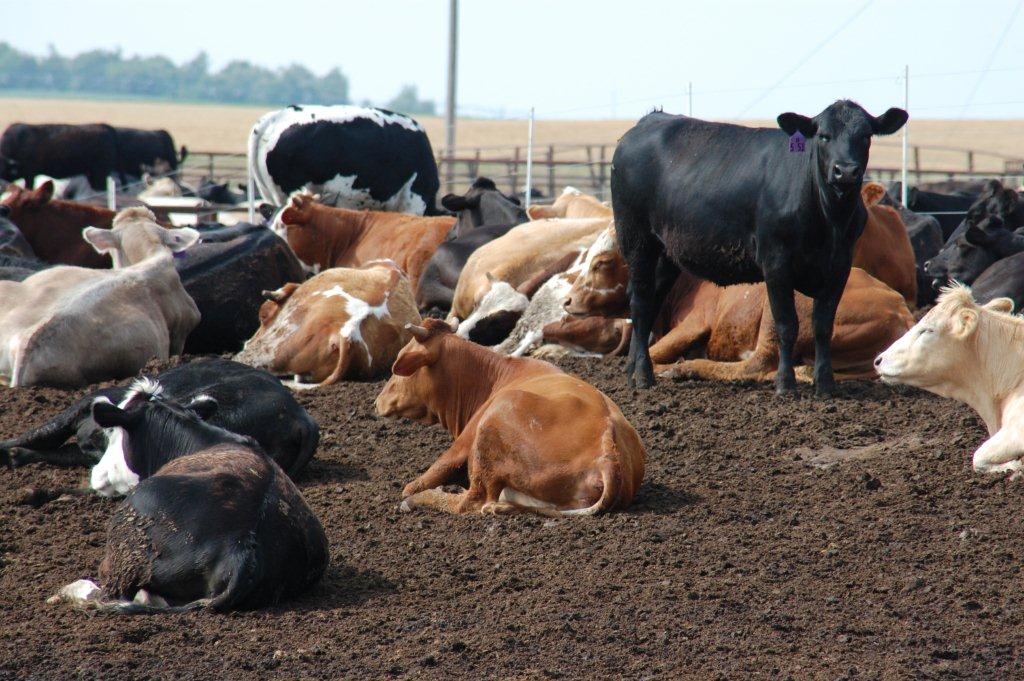
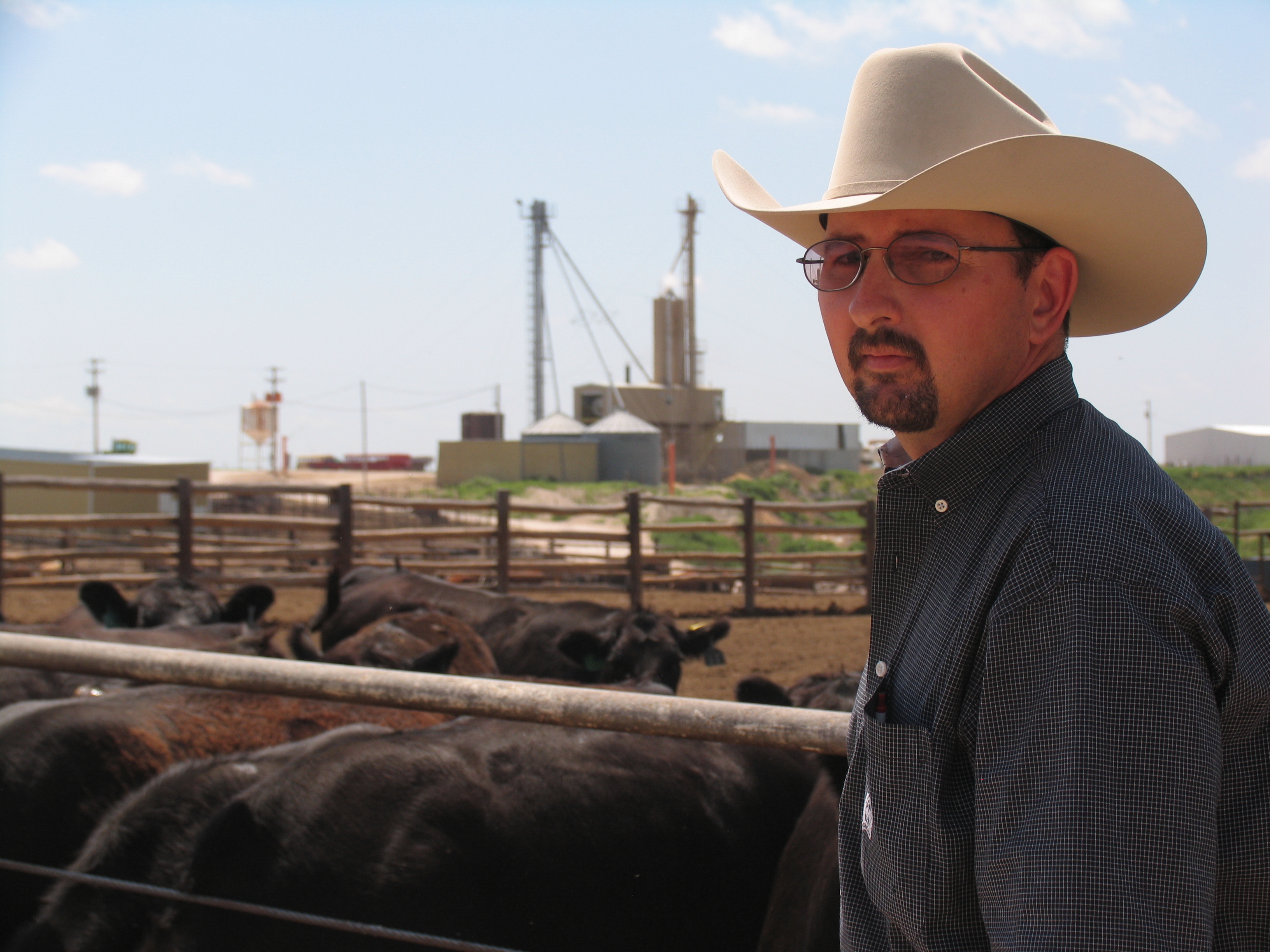
The cattle business is full of diversity, but why do so many producers pick straightbreeding?

I am a proud Jackrabbit, and I owe a lot of my education to the hard working, down-to-earth, practical professors at South Dakota State.

But I think many would agree when I say there are things you learn from a book, and even from hands-on labs, and then there are things you can only learn on the job.

You might have similar experience: I listened with great interest to many animal science lectures on the wonders of modern crossbreeding. I wrote essays on the benefits of heterosis.  And at that time we were just feeding out some cattle at home, so I ate up all of this information, thinking of how I’d apply it to my herd some day.

Well, my cowherd is still in the “someday” category, but when I get to that point I might just brush off those animal science notes to see how a little time “out in the country” has changed my perspective.

My professors were tactful, presenting facts and data when talking breeding strategies. But “out here” I’ve learned not everybody follows that prescribed road. I’ve heard several forms of this one:

Myth: If you straightbreed your cattle, you’re a fool who ignores the “free lunch.”

Fact: Crossbreeding has merits. Straightbreeding has merits. It’s not a one-size-fits-all business and there are some good sound reasons why 70% of this nation’s cowherd is Angus, and around 50% of cow-calf producers say their operations are predominately British.

We recently asked animal scientist Nevil Speer to dig into this phenomenon. You can read his white paper or coverage of it BEEF Magazine.

*Please don’t stop reading. Real producers will weigh in below.*

Speer makes points like this:

  •  Crossbreeding allows producers to take advantage of breed complementarity, he says, “However, differences between breeds have lessened over time, and the concept may be at odds with value-based strategies to improve cow families by stacking traits to rise above averages.”
  • The very consideration of implementing crossbreeding can be somewhat daunting. Many operations would rather forego such effort if production can be maintained while also ensuring relative absence of problems.
  • The Angus breed caught up with Continentals in terms of growth and performance, so you just couldn’t get the boost you were used to getting in crossbreeding—plus the premiums,” he notes. “As the business environment has shifted, the sole pursuit of heterosis is no more tenable than single-trait selection for any genetic trait.”

I really like numbers, facts, proof, but then there’s a bunch more to learn from those who practice straightbreeding. They have options and they’re choosing to straightbreed.

In this video, check out why Johnie Hubach went straight Angus:

And I talk to LOTS of producers like Johnie each year, but one couple really sticks with me.

My very first story trip, knocked this fresh-out-of-college grad back into my rightful place. With years of get-your-hands-dirty experience, Myron and Kay Beatty told me why they turned to straight Angus and called it “the best decision we ever made.”

They sold bred heifers and fed their calves out and wanted the best combination of maternal and terminal in the same package.

Feeder Terry Beller said they had it just right: “They seem to have the cattle that do it all. They gain, they grade, and they’re consistent. They work on the ranch, too.”

Now somebody who mastered all that doesn’t seem like a fool to me.

May your bottom line be filled with black ink,

Miranda

You may also like
Progress, Not Perfection

Progress, Not Perfection

It’s a labor of love, obvious in the way she lights up explaining their family’s 33-year effort to proactively adapt Angus cows to their land. A lifetime of telling stories from the pasture or kitchen has resonated with nonfarm consumers as much as fellow ranchers. “Everything we do is about cattle, but it’s also about family and connecting our kids to the land and to the cattle,” Debbie Lyons-Blythe says.
The Competitive Drive

The Competitive Drive

The Bootheel 7 brand that marks the hips of the Wasserburger’s cow herd could stand for the seven state wrestling titles held between three boys in the fourth generation, but that mark far predates their competitive drive. It’s been the brand carried by Wassserburgers looking for the ‘W’ since the homesteading era.
Following Second Dreams

Following Second Dreams

Cow work, genetic improvements and breeding plans are on the table for hours because building the perfect cow takes constant adjustments to the plans they lay out. The Larsons are working on a masterpiece that moves their families and customers closer to “best” every day. Their determined journey toward elusive perfection helped Larson Angus Ranch earn the CAB 2022 Seedstock Commitment to Excellence award.
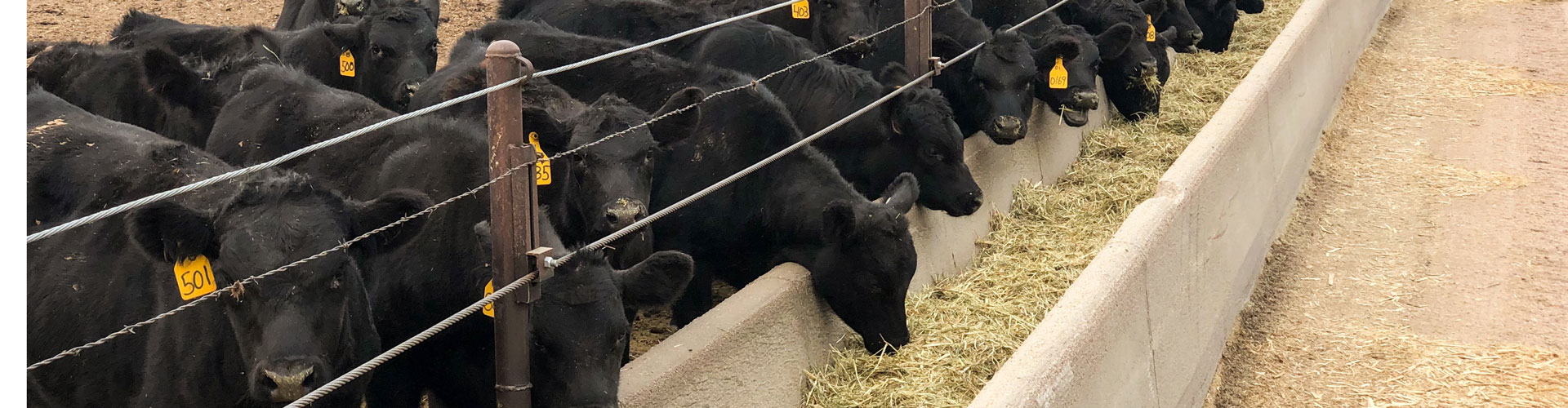
feeder calves

PB & Cattle

Apparently the Reiman house is not the only place where peanut butter is in high demand.

Peanut butter was on my grocery list the other day. When I hit that aisle, I noticed some of the shelves were a wee bit empty and only two jars of my brand of the gooey-kid-tested-mother-approved staple remained.

And then there was the sign: “Due to the global peanut shortage, we’ve been informed by our suppliers that we will be rationed two cases of each brand of peanut butter per week.”

Huh, who knew? (After doing some quick research, I actually felt a little embarrassed that I’m so immersed in my part of the ag industry that I had no idea that weather, competing crops and increasing demand were so hard at work in the peanut business. But that’s neither here nor there.)

The point is that the next time I need peanut butter (and yes it’s a need—I have two tiny people who love the stuff) I will buy whatever is on the shelf. This is no time to be picky.

So I can see where people are coming from when they tell me this one:

Myth: Feedlots are so crunched for feeder calf supplies, they don’t care where the cattle come from, they just need more of ‘em.

Fact:They are scrambling to fill pens—that’s no secret, but the second half of that sentence is just not true, at least not across the board.

Ron Rowan, Beef Northwest

As a matter of fact, as I’ve asked feeders lately what kind of cattle they’re looking for, nobody gives the smart Alec answer, “The one that walks up to the bunk and eats.”

They know the calf shortage is a serious issue. And the people I talk to not only want cattle—good cattle—but also good partners.

When I talked with Ron Rowan of Beef Northwest for an upcoming article he said, “We have too much capacity in the feeding industry relative to the amount of cattle that are available. What we’re trying to do is establish relationships with ranchers so that we can either buy their cattle or feed their cattle for them.”

Regardless of ownership they want people who want to work with them, and they know the result will be steady improvement on the incoming calf crop.

David Trowbridge, Gregory Feedlots

South and east more than 1,200 miles, David Trowbridge, Gregory Feedlots, agrees.

“We want to be able to provide them information, as far as genetic information and individual carcass data and all that. They want to know how their cattle have done, how their genetic program is working—that’s the customer we go out and look for.”

Dale Moore, Cattleman’s Choice

And Laura told you about Dale Moore’s message to the stocker operators last month, where he said:

“In all honesty, feedyards want customers. At least my yard does. I take pride in being able to feed high quality and make guys lots of premiums.”

I haven’t talked to every single CAB-licensed feeder, but I’ve talked to a great majority of them. And I hear these comments echoed over and over and over again.

The point being: the higher quality cattle are even more in demand. There are fewer cattle altogether and feeders who are willing to pay more for the better calves know the competition is fierce.

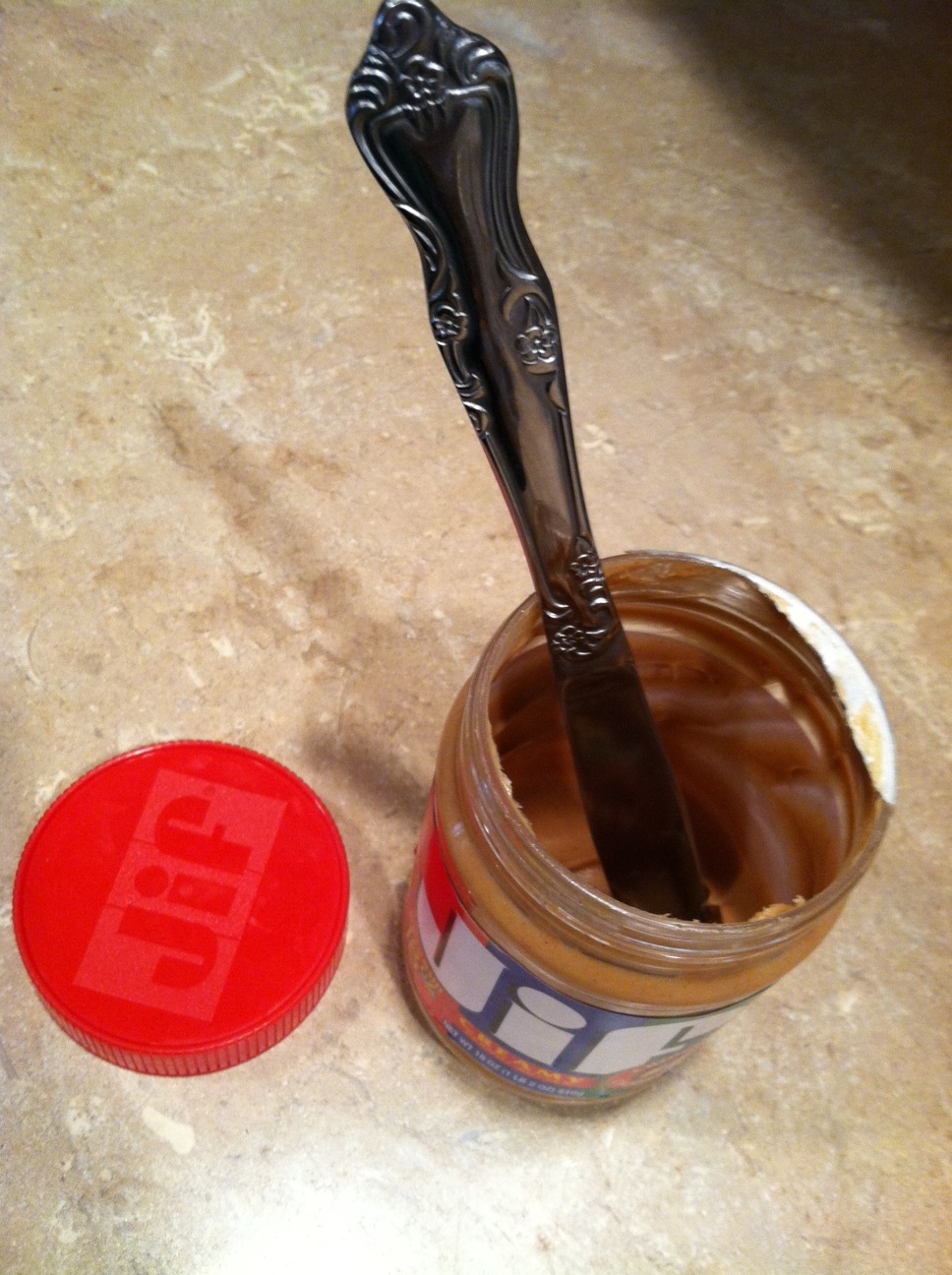
I’m too far removed from the nut industry to know if the peanut butter manufactures have that figured out or not, but the next time I’m at Sonny’s Superfoods, if I find that there are only two jars of Jif left, I’ll be buying both of them up. Even if they’re twice the price.

May your bottom line be filled with black ink,

Miranda

You may also like

Every Issue Has Its Moment

Every Issue Has Its Moment

Progress happens when people are at the table, engaged and committed to action. With a vested interest in the industry’s future, CAB is leaning in on conversations surrounding evolutions in meat science.

Feeding Better Cattle Better

Feeding Better Cattle Better

Not everyone is cut out to be a cattle feeder. It’s an art and a science that comes with a need to overcome risk. Wayne Carpenter fed his first pen of steers in 1980 and lost money. But he stuck with it. Today with their sons’ families, he and wife Leisha run the 15,000-head-capacity Carpenter Cattle Company.

You, Your Cows and Their Feed

You, Your Cows and Their Feed

Expert guidance from Dusty Abney at Cargill Animal Nutrition shares essential strategies for optimizing cattle nutrition during droughts, leading to healthier herds and increased profitability in challenging conditions.

Dr. Bob mentorship

Prices rise for a reason

Who has heard “rising food prices” in the news recently?

Looks like everybody’s hands are raised (if not, I must ask, what cave do you inhabit?). If I had to venture a bet, I’d say it ranks as the second highest “rising” phrase right now, just behind “rising gas prices” and ahead of “rising input costs.” No data to prove that, just a big ol’ fat guess. Anyway…

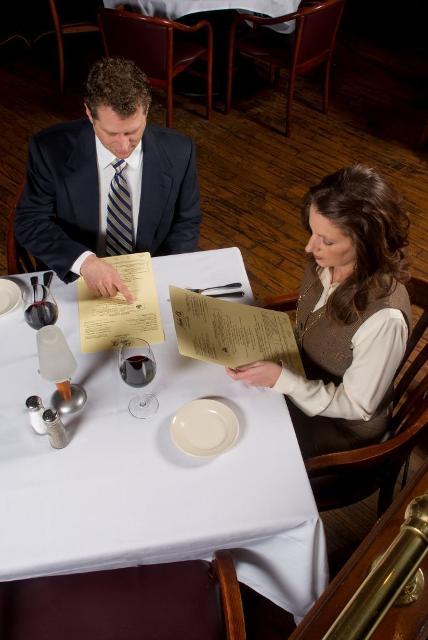
Whenever prices go up, it seems like we’ve got all kinds of finger-pointing going on. “I’m not striking it rich. It must be the next guy.” When folks on the production side of the equation head to a restaurant, a little cowboy math leads them to believe they’re getting the raw end of the deal.

Myth: Restaurateurs are just using the high prices of corn and other inputs as an excuse to rip people off at the plate. They must be making a killing!

Fact: It’s no secret that everyone—from producers to packers to foodservice folks—are in the business to make money. But the reality is that it takes a lot of work to get that beef from packer to plate, and that work comes with a price tag, which is then passed on to the consumer.

Have you ever stepped back to think of all the costs that go into that porterhouse or strip steak? Well if a distributor were to list out all their individual costs beyond the obvious cost of the meat, they would be numerous; but here’s a snapshot:

  • Food safety tracking and testing
  • Labor: From warehouse workers and cutters to packagers and truck drivers.
  • Plant overhead (somebody’s got to pay the light bill) and all that fuel for deliveries (you, know, that’s rising, too)
  • Equipment and supplies (vacuum-packing film, knives, mesh gloves, etc.)
  • Liability insurance, salaries for the sales force and all the related staff

And then to top it off, there’s a certain chunk of change that goes toward “bad debt” or customers unable to pay their bills.

That’s all before it gets to the steakhouse’s back door, where those businesses also have light bills and employees to pay, plus the need to provide a pleasing ambiance and delicious food to each and every customer—even on the slow nights. (Ever seen a waitress reading a paper instead of serving? That’s a nightmare for somebody trying to balance wages with sales.)

Last week our team chatted with Gale Rhoads, CAB executive account manger (i.e. works with people on “the other side” of the business.) And when food cost came up, he brought up some great points. In order to remain competitive most foodservice people will take a lower margin on a beef items than they will on chicken so that they don’t “price themselves out of the market.”  (Kind of puts that “outrageous food price” into perspective, huh?)

He added, “It’s wonderful to see this margin opportunity for the producer, because they go through some trying times, without a doubt. They’re seeing increasingly challenging times now on the other side of the business–the costs of their raw materials, those primal or cut steaks, are higher now as well. A lot of them can’t change their menu weekly because of the cost of printing and things of that nature. It cuts into their margin.”

So when times are tough for beef-sellers (like they are now) they’re tough for a while.

When I wrote a series on this a while back, the word on the street was distributors are hoping to make 3% to 5% on the profit and restaurateurs have to mark up food 2 to 3 times just to aim for that 5% mark, too.

I’d invite you to read those articles:

Behind the menu price

Quality in the price equation

Meat Case Math

Even though economics may have changed some since 2009, the concepts are still the same. I’ve been a waitress (Perkins helped pay my way through college) and a producer (raising cattle did the same) but I learned a whole lot about all that “in between” from the people I chatted with. Hope you do, too!

May your bottom line be filled with black ink,

~Miranda

You may also like

Mark Ahearn Completes Term as CAB Board Chairman

Mark Ahearn Completes Term as CAB Board Chairman

Mark Ahearn admits his role as the chairman has meant a lot to him and his family. He expresses gratitude to those who believed in him throughout the past year and looks forward to seeing the future successes of the premium beef brand.

Certified Angus Beef Takes the Field

Certified Angus Beef Takes the Field

Certified Angus Beef showcased the best Angus beef at the Pro Football Hall of Fame Enshrinement Festival in Canton, Ohio. The first weekend of August saw CAB’s involvement in two-key activations: the Enshrinees’ Gold Jacket Dinner and the Class of 2024 Unscripted & Tailgate.

$100,000 Up for Grabs with 2024 Colvin Scholarships

$100,000 Up for Grabs with 2024 Colvin Scholarships

Certified Angus Beef is offering $100,000 in scholarships for agricultural college students through the 2024 Colvin Scholarship Fund. Aspiring students passionate about agriculture and innovation, who live in the U.S. or Canada, are encouraged to apply before the April 30 deadline. With the Colvin Scholarship Fund honoring Louis M. “Mick” Colvin’s legacy, Certified Angus Beef continues its commitment to cultivating future leaders in the beef industry.

angus calf

To have it all, pay attention to all

Last week’s fact was, “If you’re focused, you can put together a well-rounded genetic program that includes all of those things in the same package.”

All of “those things” were marbling, maternal function and performance.

But re-reading that post I realized I may have unintentionally fueled another myth, so let me a clarify a bit.


These calves were selected for marbling, among LOTS of other things.

Myth: You can achieve profitable, high-quality cattle by selecting for marbling alone.


Fact: You need to keep pressure on marbling, while focusing on all economically important traits.

Yes, even a branded beef company with a big emphasis on marbling (it is the No. 1 one reason cattle fail to meet CAB) won’t ever suggest you select for it without regard for other economically important traits.

I’ve brought this up before, but I thought it’s worth stating again and our Best Practices Manual says it best:

“Selecting for any one trait while ignoring others does not lead to commercially successful livestock production. The key is balance in selecting for all traits that affect profit, both short- and long-term. However, balance need not mean “equal.” Strong selection pressure can be put on a few traits that greatly improve CAB acceptance rates without compromising other areas.”

We have an entire chapter devoted to our genetic recommendations, which includes stacking generations selected for marbling and choosing Angus bulls that are AT MINIMUM in the top 40% of the breed for marbling.

There are recommendations for backfat and ribeye area, too, but that’s only one part of the puzzle. You need easy-keepers, good mothers and good gainers, too.

Now you can’t say I didn’t warn you. You can have it all, but that means paying attention to it all, too.

May your bottom line be filled with black ink,

Miranda

You may also like

Progress, Not Perfection

Progress, Not Perfection

It’s a labor of love, obvious in the way she lights up explaining their family’s 33-year effort to proactively adapt Angus cows to their land. A lifetime of telling stories from the pasture or kitchen has resonated with nonfarm consumers as much as fellow ranchers. “Everything we do is about cattle, but it’s also about family and connecting our kids to the land and to the cattle,” Debbie Lyons-Blythe says.

The Competitive Drive

The Competitive Drive

The Bootheel 7 brand that marks the hips of the Wasserburger’s cow herd could stand for the seven state wrestling titles held between three boys in the fourth generation, but that mark far predates their competitive drive. It’s been the brand carried by Wassserburgers looking for the ‘W’ since the homesteading era.

Following Second Dreams

Following Second Dreams

Cow work, genetic improvements and breeding plans are on the table for hours because building the perfect cow takes constant adjustments to the plans they lay out. The Larsons are working on a masterpiece that moves their families and customers closer to “best” every day. Their determined journey toward elusive perfection helped Larson Angus Ranch earn the CAB 2022 Seedstock Commitment to Excellence award.

angus heifers looking over fence

Having it all

Behind the scenes at a family photo shoot. You can bet these three keep this working gal busy, but I'm sure glad that somebody told me I could have it all!

I’m a working mom, so I know all about juggling and finding balance and all that jazz. I also know that sometime (like back in the 70s?) society stopped telling women that they couldn’t have both a successful career and a family.

Yet in the cattle industry we often hear that you can’t have it all.

Myth: You must choose between things like carcass quality and performance or between end product traits and cowherd function.

Fact: If you’re focused, you can put together a well-rounded genetic program that includes all of those things in the same package.

Professional Cattle Consultants looked at a cross-section of cattle feeding country (nearly half a million head of data) and found that the highest grading third (72.8% Choice or better) performed better and made more money than the middle and lower third.

*Cue naysayers now*

“Yeah, you can get performance and marbling, but if you’re paying attention to the feedlot traits you’ll ruin what you’ve got going on back at the ranch.”

Nope. Not true. Big ole myth.

And I know because Twig Martson reviewed all available research on the subject back when he was at K-State. And then he updated it and found the same thing: zero connection between doability and marbling.

You can read the paper or see what he’s got to say about it in this video:

Now, that’s not to say it isn’t more work or that it doesn’t take focus, but it’s possible. And it’s so worth it!

Sort of like this working mom gig….

May your bottom line be filled with black ink,

Miranda

You may also like

Humble Growth

Humble Growth

Customers from around the world file into the Shamrock Shack beside their sale ring each spring and fall. They’re not just buying into Connealy cattle, but the customer-service guarantee. For getting that and a lot more right, Connealy Angus was recognized with the 2024 Seedstock Commitment to Excellence award.
North Dakota Partnership Earns CAB Progressive Partner Award

North Dakota Partnership Earns CAB Progressive Partner Award

The Bruner and Wendel families earned the 2023 CAB Progressive Partner award by selling high-quality beef through Dakota Angus, LLC, as part of the CAB Ranch To Table program. They focus on their commitment to quality, data-driven decisions, achieve impressive CAB and Prime percentages and offer high-quality beef directly to consumers in their communities.

Saskatchewan Angus Ranch Earns Certified Angus Beef Award

Saskatchewan Angus Ranch Earns Certified Angus Beef Award

JPM Farms in Canada quietly gained recognition for its dedication to environmental sustainability and quality cattle. The Monvoisin family earned the 2023 CAB Canadian Commitment to Excellence award for their outstanding results and partnership with Duck Unlimited, showcasing their commitment to improving the land, cattle and family daily.

fiscal year 2020, billion pounds

Topping the market

I put down the phone after a lengthy conversation with Ron Hale, an analyst for Professional Cattle Consultants, about the premiums paid for feeder cattle.

Ron Hale, Professional Cattle Consultants data wizard

He looks at millions of head of data. He crunches numbers and he knows a thing or two about this feedlot business. We’d talked about which cattle deserve a little extra in the auction ring and about how hard it is to correctly identify which ones really are worth more. That’s all covered in the article I was interviewing him for ( “Market-toppers need proof”) but this quote resonated long after that call:

“That doesn’t mean feedlots don’t buy poor quality cattle, but when they do, they buy them at a discount.”

Huh, sounds like the perfect comment to back me up on this one:

Myth—Feeders just pay their target price for cattle, whether they’re worth more or not.

Fact—Feeders and order buyers are constantly making decisions of value based on how they predict cattle will do in three main categories: gain, grade and health.

That particular PCC work that Ron and I were discussing showed four quartiles, ranging from a “heavy discount” group that averaged -$20.90 to a heavy premium at $12.37.

We know there are various traits that fetch more at the auction barn, like health, muscle tone and breed type. Researchers across the country have studied this, and we’ve written about it again and again.

We know about the advantage that known Angus genetics have over their counterparts because we’ve got an ongoing “Here’s the Premium” study. The last data collected in fall 2010 revealed Angus steers brought $6.32 per hundredweight (cwt.) more than their non-Angus counterparts.

But rather than tell you what we know, let Tom Brink, with one of the nation’s largest cattle feeders, tell you what he knows. What type of cattle do they pay more for (and why)?

May your bottom line be filled with black ink,

Miranda

You may also like

Building Bridges for Better Beef

Building Bridges for Better Beef

As the clock ticked past 2:00 a.m., handshakes finally signaled a deal. History was made that Thanksgiving morning in 1997 when a group of producers bought a material interest in what was then Farmland National Beef Packing Company.

2022 Was as Predicted

2022 Was as Predicted

If there was a lesson in 2022, it was that the beef market is very sensitive to declines in quality grade, as evidenced through price signals. It’s the first time in recent history where we’ve gone backwards — albeit ever so slightly — and customers are telling us they have unfulfilled demand. That’s reflected in the premiums paid, and that’s saying something after two years of extremely high premiums.

The Cattle Market Teacher

The Cattle Market Teacher

Part intuition, part learned experience and a growing database gave Randy Blach the tools to communicate to producers what the market demands. The bottom line is consistently front and center, his mission is to keep more cattlemen and women on the land, doing what they do best.

Changing the world, one beef eater at a time

I am somewhat of a Certified Angus Beef evangelist.

I’m not a fire-and-brimstone style crusader. I know everybody has their own tastes, but I want everybody to base their choice on good information, by golly. By now most of my family members (and quite a few friends, too) are trained to look for the CAB logo before associating that beef with my company.  And before they shell out a pretty penny for a lower quality hunk of meat.

I’d like to think I’ve single-handedly saved many a dinner party or Saturday night supper club selection, but I digress.

There’s nothing like a comment from a close friend to bring you back to reality: “I just had one of your Certified Angus Beef burgers at McDonald’s.”

Well, there it is. I have more work to do.

Just over a year ago I wrote about this myth, “In short, it’s probably the most common one we get.” Apparently that’s as true in 2012 as it was in 2011, as we polled our Facebook followers and they overwhelmingly said that’s the word on the street.

Myth: “Certified Angus Beef? Ya, I’ve seen that at McDonald’s…”

Fact: You have not seen Certified, Angus and Beef—those three words, together with this logo

at McDonald’s. That’s the only way you know it’s Certified Angus Beef and not just Angus beef. Don’t know the difference? Don’t worry, it happens all the time. Here’s the crash course:

To be CAB cattle must pass a total of 10 carcass specifications designed to provide predictably delicious beef.

So, if that beef at McDonald’s isn’t CAB, that begs the question: What is it?

There are 126 programs certified by the USDA. Of those only 89 are Angus programs and only 30 are Premium Choice. Packers want to do something with all the cattle USDA has already identified as Angus-type, so when they don’t make CAB there is a wide variety of programs they might fall into.

Only one in four (sometimes one in five) of these A-stamped carcasses end up as CAB, so the other 75% to 80% will fulfill the needs of companies like Hardees, Arby’s, Burger King and Mickey D’s.

“Angus” is not the same as saying “Certified Angus Beef”

That’s why we’ve coined the tagline, “Not all Angus is equal.”

Are you ready to bring this good news story to the world? Check out our consumer website to load up on more facts. I could use a little help here.

May your bottom line be filled with black ink,

Miranda

You may also like

Mark Ahearn Completes Term as CAB Board Chairman

Mark Ahearn Completes Term as CAB Board Chairman

Mark Ahearn admits his role as the chairman has meant a lot to him and his family. He expresses gratitude to those who believed in him throughout the past year and looks forward to seeing the future successes of the premium beef brand.

Certified Angus Beef Takes the Field

Certified Angus Beef Takes the Field

Certified Angus Beef showcased the best Angus beef at the Pro Football Hall of Fame Enshrinement Festival in Canton, Ohio. The first weekend of August saw CAB’s involvement in two-key activations: the Enshrinees’ Gold Jacket Dinner and the Class of 2024 Unscripted & Tailgate.

$100,000 Up for Grabs with 2024 Colvin Scholarships

$100,000 Up for Grabs with 2024 Colvin Scholarships

Certified Angus Beef is offering $100,000 in scholarships for agricultural college students through the 2024 Colvin Scholarship Fund. Aspiring students passionate about agriculture and innovation, who live in the U.S. or Canada, are encouraged to apply before the April 30 deadline. With the Colvin Scholarship Fund honoring Louis M. “Mick” Colvin’s legacy, Certified Angus Beef continues its commitment to cultivating future leaders in the beef industry.

Mythbuster Monday goes beyond the logo

I am new to the Certified Angus Beef LLC family, but I am not new to the Certified Angus Beef® (CAB) brand.

I grew up with CAB practically in my backyard, with the same zip code as the company’s original West Salem, Ohio office. My aunt previously worked in marketing for the brand. I drove past the current CAB headquarters in Wooster every time I visited town while growing up. Not to mention, and perhaps most importantly, I have enjoyed many delicious CAB steaks in my short life span.

Last summer, I had the amazing opportunity to intern as the brand’s Promotions & Communications Marketing Intern. The job title is a mouthful, but essentially I was a part of the oldest and most recognized American beef brand, and I am at it again as the spring Industry Information Intern with Miranda, Laura and Steve!

Why I am telling you this? Though I grew up surrounded by CAB, I did not recognize the breadth and depth of the brand until I gained an insider’s perspective. Last Monday, Miranda talked about the company’s vast reach in the beef industry, and her blog post has me wondering if I am not the only one who has known of CAB, but has not truly known how CAB works.

Myth: CAB is a logo you see in the grocery store that works entirely on the demand/consumer side of the beef production chain.

Fact: CAB works closely with cattle producers and feeders to help them raise the highest quality beef and works with every stage along the beef production chain, starting with the producer.

As you may know, CAB is a subsidiary of the American Angus Association, with the mission to increase demand for registered Angus cattle. But if we increase consumer demand for high-quality beef, we also must increase supply!

It is true that CAB owns only its logo. But beyond that, there is a well-trained team of employees who understand the beef industry from pasture to plate, and is involved all the way from cultivating consumer demand for exceptional beef to ensuring market supply.

The Black Ink blog and the Supply Development website are simple examples of how CAB offers producers relevant and valuable management information. The CAB team provides timely information about feedlot performance and beef market statistics. And, key to production success, the brand builds relationships within the industry and fosters networking among producers.

I am excited to join this network and continue to grow in my understanding of the industry and brand, which is a whole lot more than a logo at the grocery store!

-Emily

Emily Krueger is an Industry Information intern for the spring 2012 semester. A senior at Ohio State University, Emily will complete her degree in agriculture communications this spring. She grew up on her family’s cattle and horse farm in West Salem, Ohio, and currently serves as vice president of the OSU Collegiate Young Farmers club of Ohio State University.

You may also like

Success, Despite Challenges

Success, Despite Challenges

Today’s market is complex and competitive. The collective effort of stakeholders across the supply chain positions Certified Angus Beef to meet the record demand for premium beef moving forward. Signals across the beef industry are clear and Angus farmers and ranchers seeking high-quality genetics that deliver premium beef are producing a product in high demand.
Keep the Supply Coming

Keep the Supply Coming

A record-high 800 registrants from 17 countries gathered in Austin, Texas, to learn more about CAB, become inspired by the culinary work of chefs and pitmasters, and celebrate sales and production success. But at the forefront: supply and demand, a reflection of the chaotic past year, and preparing for what’s ahead.

A Summer to Learn, Grow

A Summer to Learn, Grow

CAB opens four internship positions each summer, guiding students as they apply their skills from the classroom in a real-world setting. From their first day to their last, interns are treated more like full-time employees. Experiencing what it’s like to work for the brand, from brainstorming sessions to executing projects.

No business in the DNA business?

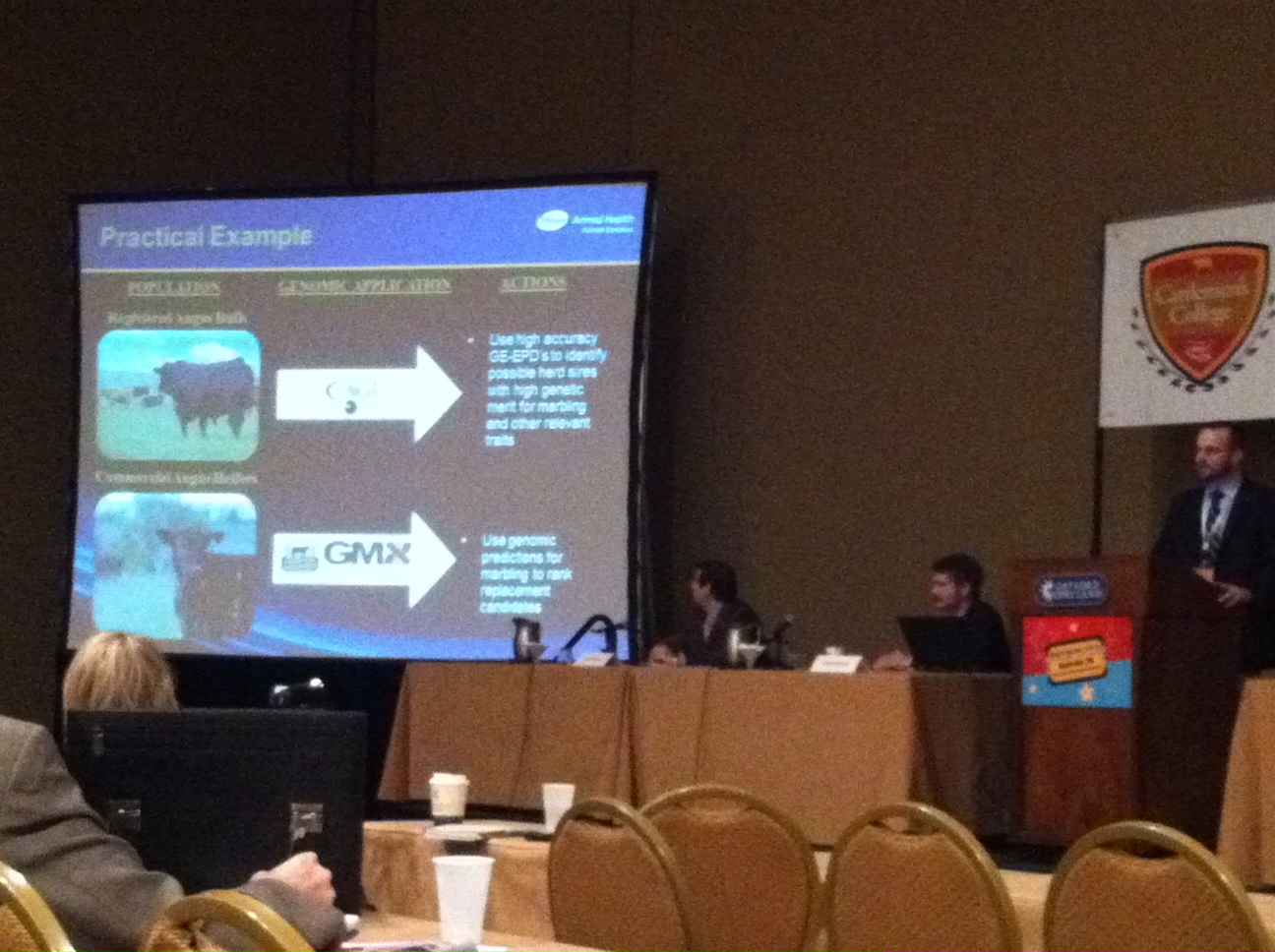
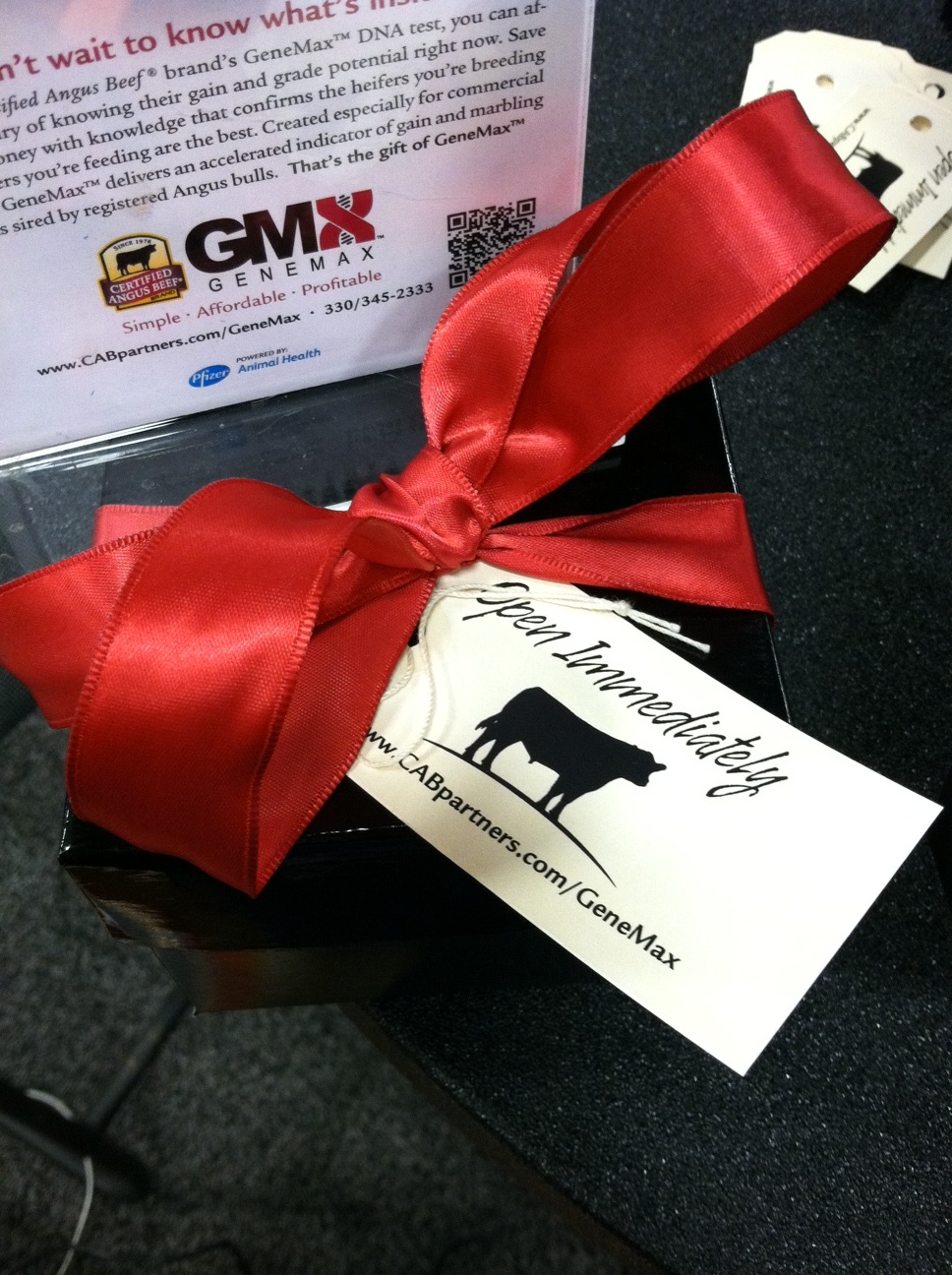
If you were at the National Cattle Industry Convention and Trade Show last week, you probably noticed a buzz around GeneMax.

From comments at Pfizer’s Cattlemen’s College…

 to Cattlemen’s College lunch..

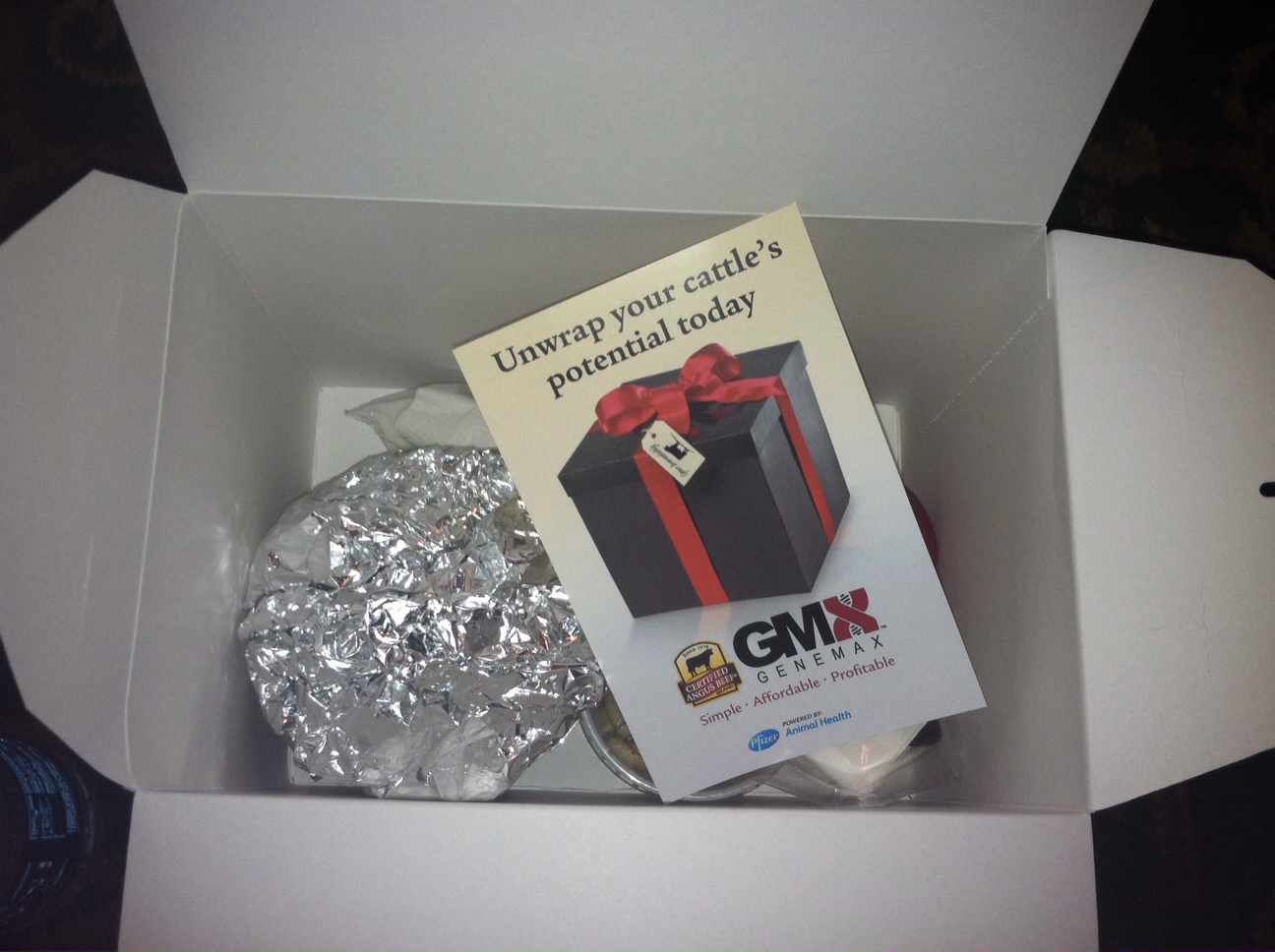
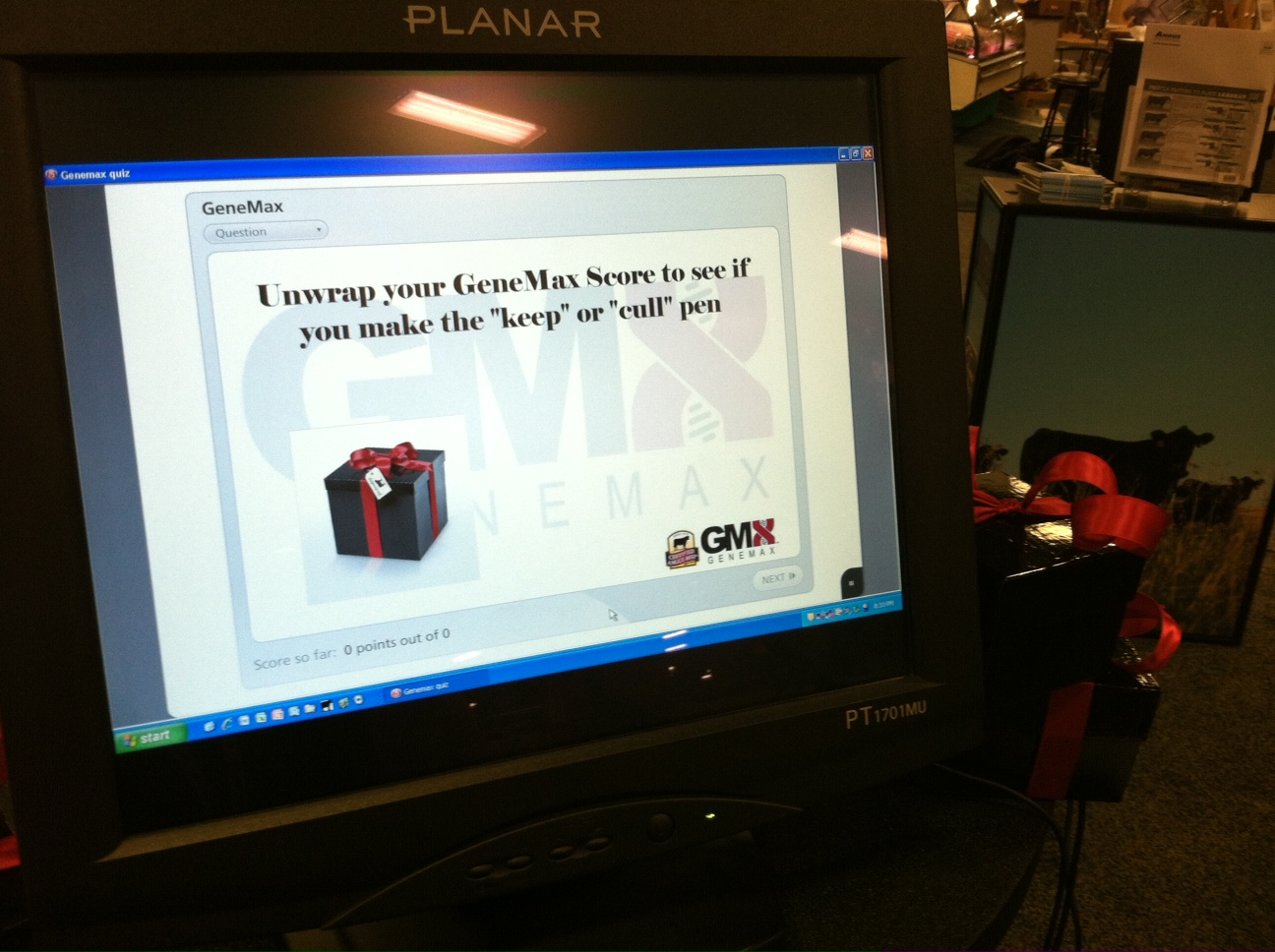
to our trade show display…

and our media event…

GeneMax was all over the place!

And if you were home—like me and Steve (we both happened to be caring for babies, some bovine) following along on Twitter—you probably still noticed that GeneMax was a news item.

And if you missed all that, you can get up-to-speed by catching the post-convention coverage by the likes of Agriclture.com (New DNA technology for your beef herd) and Brownfield Ag Network (CAB unveils GeneMax).

But all of this DNA talk has led a few to buy into this notion:

Myth–CAB has no business being in the DNA business.

Fact–Our core mission is to grow the demand for registered Angus cattle. We do this by providing a time-tested, super yummy product to consumers across the globe. The only way we can continue to do that is by having more of that product to sell.

You’ve heard us say it before, but I’ll say it again: Marbling is the number one reason cattle fail to meet the brand specifications.  (For us, that means less product. For you, that means fewer premiums.) It’s a losing deal for all of us.

The company doesn’t own any cattle. The only way we can increase that supply is by giving cattlemen tools to help them improve the marbling in their herds. We’ve got the breakeven calculators, the Best Practices Manual, research, research and more research. This is just one more tool.

We hope you’re as pumped about this new venture as we are.

So now that it’s officially here, launched and ready for use, do you have any questions? Any DNA-related myths we can bust?

May your bottom line be filled with black ink,

~Miranda

You may also like

Going Above and Beyond

Going Above and Beyond

It’s a normal day near Hudson, Colorado for the Walter family, yet the view is uniquely awe-inspiring for visitors who have never stepped foot on a ranch. As cows come in closer visitors take in the far-reaching pastures and breath-taking mountain views. For the Walter Family, there’s no better backdrop to introduce people to the place where beef begins.

Progress, Not Perfection

Progress, Not Perfection

It’s a labor of love, obvious in the way she lights up explaining their family’s 33-year effort to proactively adapt Angus cows to their land. A lifetime of telling stories from the pasture or kitchen has resonated with nonfarm consumers as much as fellow ranchers. “Everything we do is about cattle, but it’s also about family and connecting our kids to the land and to the cattle,” Debbie Lyons-Blythe says.

Smith receives Industry Achievement Award at Feeding Quality Forum

Smith receives Industry Achievement Award at Feeding Quality Forum

The hands of a veterinarian hold the life cycle of an animal in their care. The mind, however, directs the hands. Anyone who’s met Dr. Bob Smith knows the way he thinks is something else. It’s come from more than 30 years in the industry caring for its people and cattle. It’s why he earned the 2021 Industry Achievement Award.
john grimes

Mythbuster Monday returns with DNA

My family tree is stacked with farmers on both sides, so I feel like I know a thing or two about “producer” DNA. There are some seemingly inherent traits, like reluctance to leave the farm. Not because they don’t want to see the world or meet new people, but rather because it’s difficult to entrust the living, breathing creatures that depend on them to anybody else.

Both sets of grandparents have to leave critters at home for big occasions like a baptism.

So when my parents and my in-laws came down for our new little lady’s baptism last weekend, I know they loved getting out, seeing the countryside and spending time with their kids and grandkids (OK, let’s be honest, the grandkids trump all else), but there was still that nagging feeling that they should be home, working.

That’s the best way I can describe to others what it’s like to be on maternity leave. While I enjoyed every minute (OK, most) of my time home with my three kids and I know everything was under control here, I’m so excited to be back. I love my job and can’t wait to jump into some of the big projects we were working on when I left. One of those had to do with DNA of the bovine variety.

That leads me to my first myth to kick this regular blog feature back into action:

Myth: Using DNA technology in beef cattle selection is only for the rich and curious.

Fact: While the seedstock industry was the first to really embrace this new selection tool, it’s becoming increasingly available and practical for commercial cattlemen. EPDs changed the way ranchers select their animals. Now DNA has been called a “game changer.”

At the Range Beef Cow Symposium in December, Colorado State’s Jack Whittier said:

“There are some opportunities that are coming online to maybe use it in a heifer selection basis at a commercial level, that’s early and I’m not sure that we are far enough along to really understand what opportunities there are but certainly using this is a way to make better bull buying decisions.”

The real game changer, yet to be seen, is being able to make decisions more quickly, to be able to isolate at birth, the gene combinations from a specific set of individuals, then go through the evaluation without having to screen all the non-performers or at least increasing the opportunity to make good decisions early on.”

At that point the GeneMax™ DNA test was still in its development phase, but we’re pretty pumped about its product launch at the National Cattle Industry Convention this week. Finally, this technology is available and practical to the average commercial cattlemen who are using registered Angus bulls. If you’re wondering which potential replacement heifers are keepers or culls, confirmation is as simple as a blood test. Want to add more information to your calves on sale day? Arm buyers with the GeneMax facts.

I’ve been off for three months, so I’ll be brushing up on all the details right along with you. Look for more information on this blog or follow the National Cattle Industry Convention on Facebook or Twitter.

Some of our readers have already got a head start on unwrapping the Nashville convention fun. Congratulations to Brandi Buzzard and Desta Crawford, our Shipping Day challenge winners! Somebody get these two ladies on The Price is Right, because their estimates were almost spot on!

Tomorrow, we will unpack 61 boxes, weighing 1,810 pounds at the NCBA trade show. Brandi was a mere 3.3 off the actual weight with her estimate of 1,813 pounds and three ounces, and Desta guessed 66 boxes — well done, ladies! Each have earned ten tickets into the drawing for an iPad2! If you’re going to be in Nashville this week, make sure to stop by the Angus booth to get yourself entered into the drawing. Hope to see you there!

May your bottom line be filled with black ink,

-Miranda

You may also like

Beef up your cooking

Beef up your cooking

Before I started my job with Certified Angus Beef all I knew about steak is I wanted it medium-rare. My mom burns food and it doesn’t matter if it’s garlic toast or steak. So I was not used to getting medium-rare steak…

Champions on the hoof and under the hide

Champions on the hoof and under the hide

Alexis “Lexi” Koelling has been pulling a heifer around since she was three. Now 15, she’s no stranger to the winner’s circle, but you wouldn’t know by talking to her. You’d have to prod her a bit to find out she won Grand Champion in both the carcass steer and bred-and-owned carcass steer at the National Junior Angus Show this summer. It’s her 5th year in that competition, her second bred-and-owned.
Sustaining common ground

Sustaining common ground

Steve knows that while consumers’ intentions are good, they aren’t always backed with the most accurate information. He explains points of sustainability on his ranch.