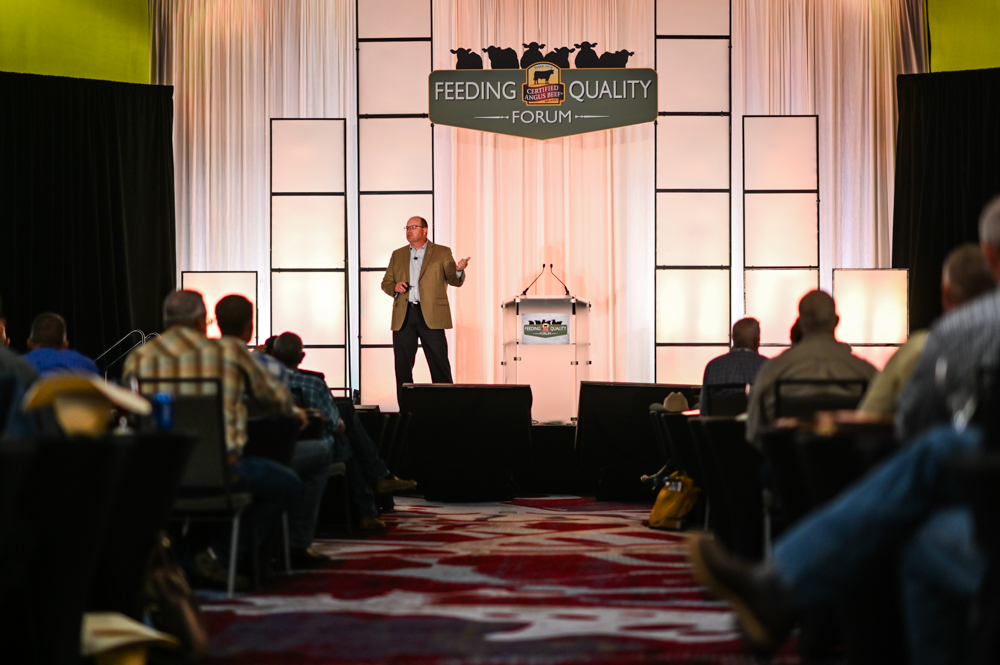
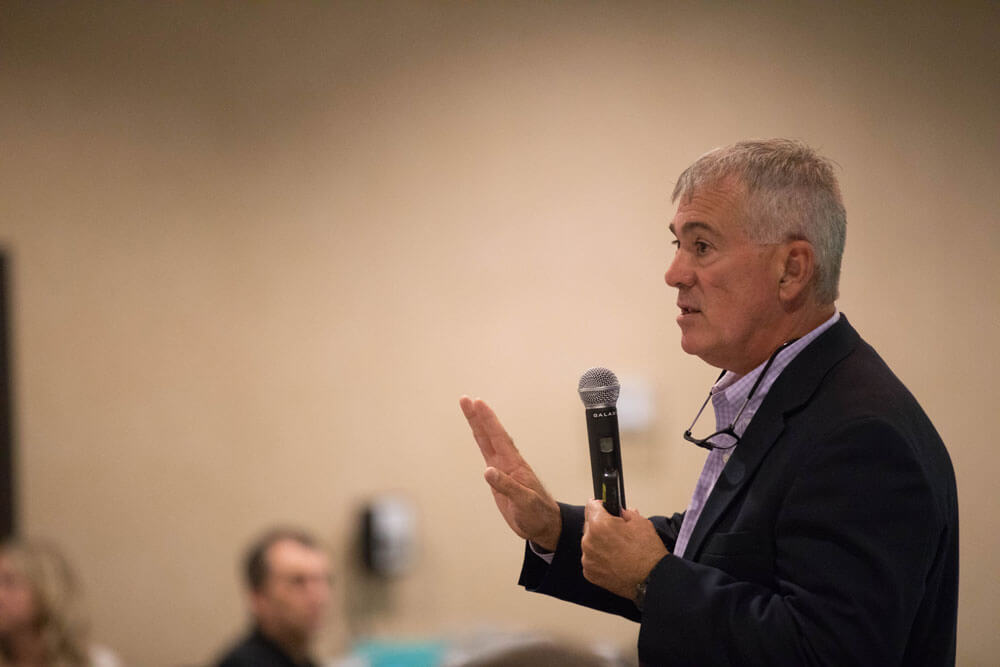
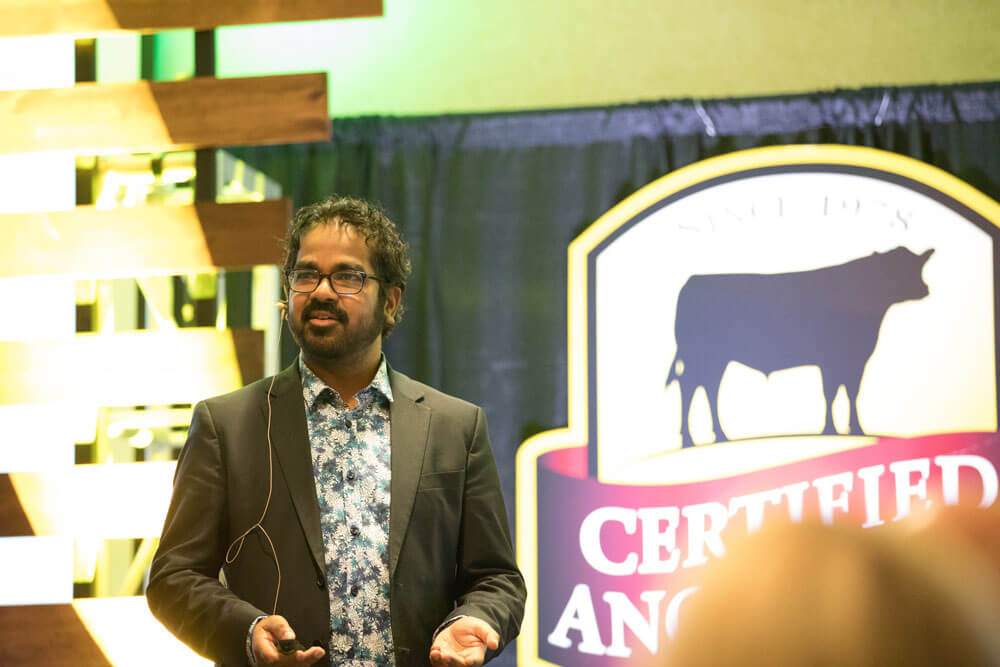
The cattle industry needs to make some bold, creative changes to ensure its viability. That was the wakeup call from speakers at the Feeding Quality Forum, Aug. 27 to 28 in Amarillo, Texas. Persistent problems may require new approaches.
For his leadership to the beef industry and dedication to raising quality cattle, Bohn will receive the 2019 Feeding Quality Forum (FQF) Industry Achievement Award later this month. The honor will be given at a special dinner during the conference, slated for Aug. 27 to 28 in Amarillo, Texas.
It’s no secret, we’re producing more high-quality beef than ever before, but does that suggest a danger of oversaturation or swamping demand? Buzz words and marketing claims talk a lot, but consumers speak with their wallets. What do they say about the years to come?
Victory in war starts long before the battle. The same is true in combat against cattle diseases. “My job as a military commander is to take a soldier and make him resilient,” Col. Sam Barringer said at the Feeding Quality Forum in Sioux City, Iowa this summer. The veterinarian and technical specialist for Diamond V illustrated the point by stretching a rubber band: too much pressure, no matter the reason, may cause it to break.
You vaccinate to keep cattle healthy, but if they’re already coming down with a bug or your timing is off, your efforts could be worse than a waste. That’s what Brian Vander Ley, veterinarian epidemiologist at the University of Nebraska, told 200 cattlemen at the Feeding Quality Forum in Sioux City, Iowa, this August.
Genetic selection for ranch environment or meeting market demand? That’s a choice cattlemen don’t have to make, said Dan Moser, president of Angus Genetics Inc., speaking at the Feeding Quality Forum in Sioux City, Iowa, this summer.
The one thing certain in commodity markets is ambiguity. Ag Resource Company president Dan Basse, however, provided a bit of clarity and foresight at the Certified Angus Beef ® (CAB®) brand’s Feeding Quality Forum in Sioux City, Iowa.
When it comes to stocker nutrition, an old-fashioned strategy might be the way of the future. That’s what Dale Blasi, Kansas State University (K-State) Extension beef specialist, said about limit-feeding calves in the growing phase. The scientific research goes back decades, but at this year’s 13th annual Feeding Quality Forum in Sioux City, Iowa, he presented new reasons to give it fresh look.
The IBM brand isn’t often associated with the cattle business. But that may change, thanks to the tech giant’s IBM Food Trust and its use of blockchain. That’s just what it sounds like: blocks of information that form a chain, linked via Internet to allow information sharing that is seamless, efficient and secure.
You want a cattle vaccine that’s both safe and effective, but sometimes you have to choose which of those ideals gets the upper hand. That’s according to Paul Walz, the Auburn University veterinarian who spoke at the Feeding Quality Forum late this summer in Sioux City, Iowa. Vaccination programs must be true to the label protocols, yet individualized for each farm or ranch and the level of risk they can accept.
We use cookies to ensure that we give you the best experience on our website. By continuing to use this site, we will assume that you are in agreement.