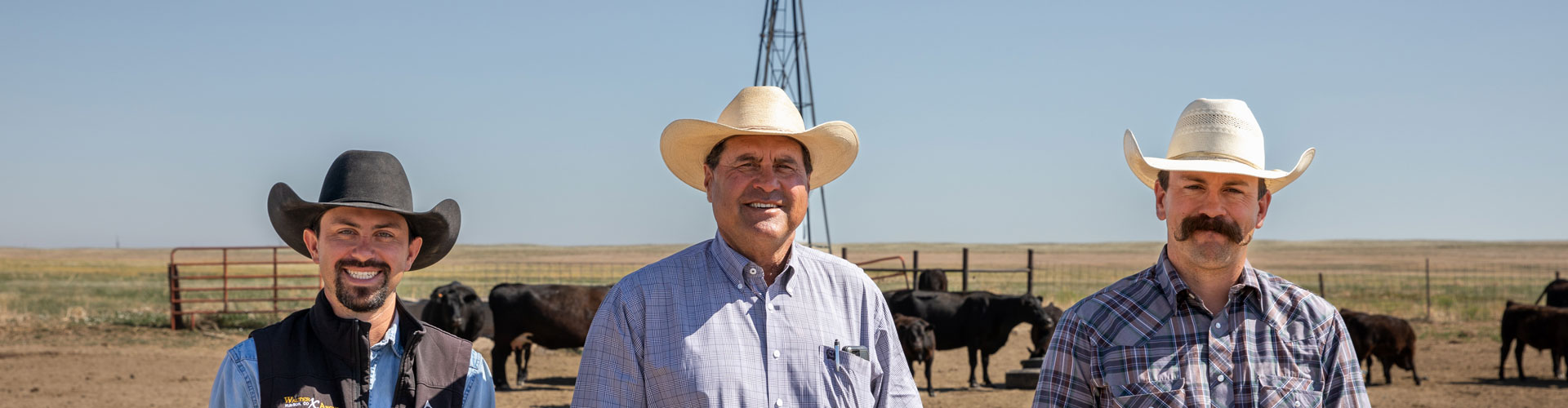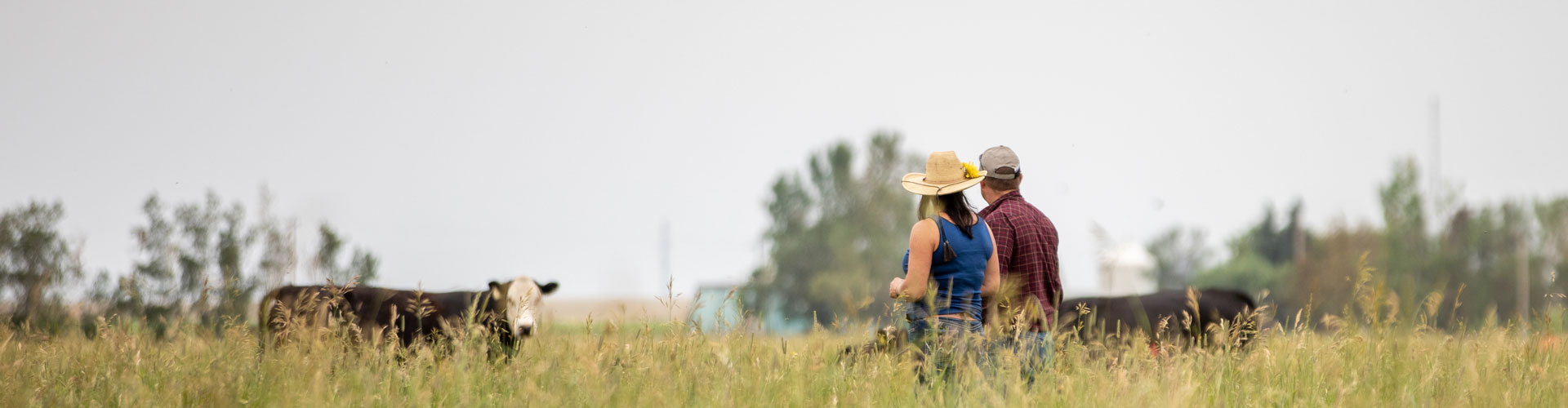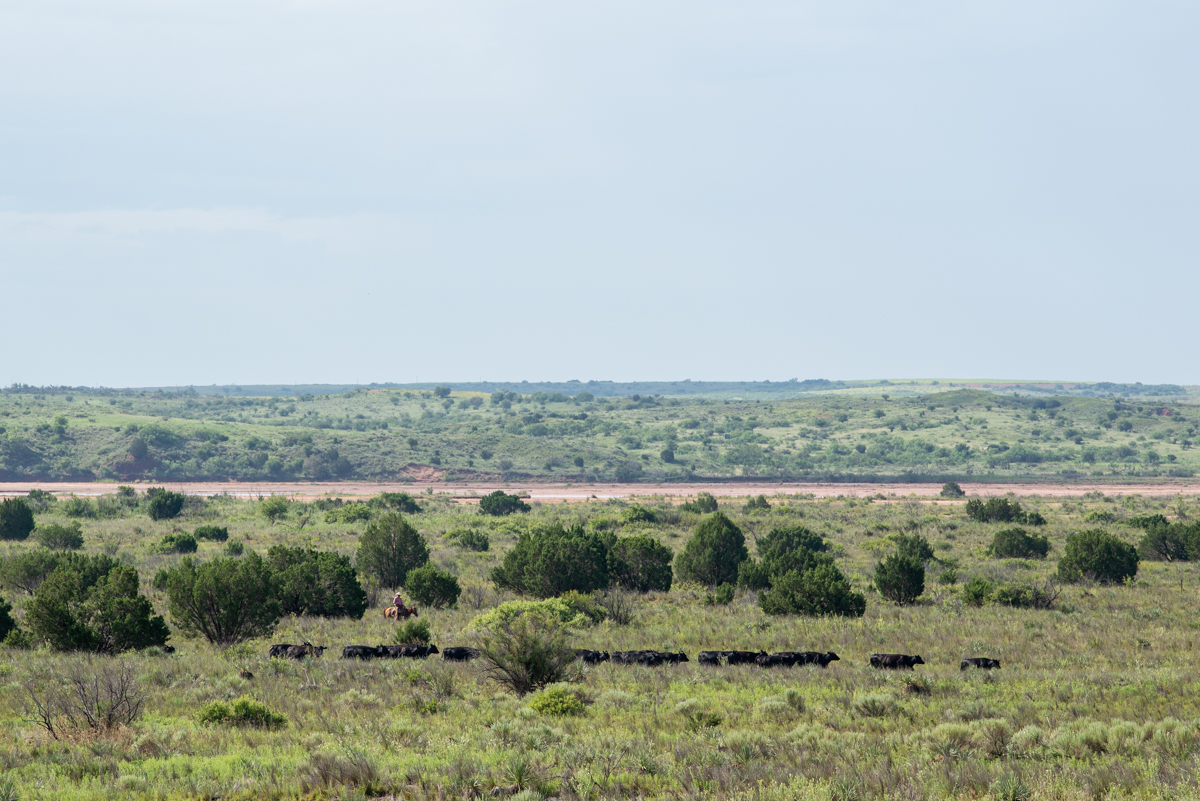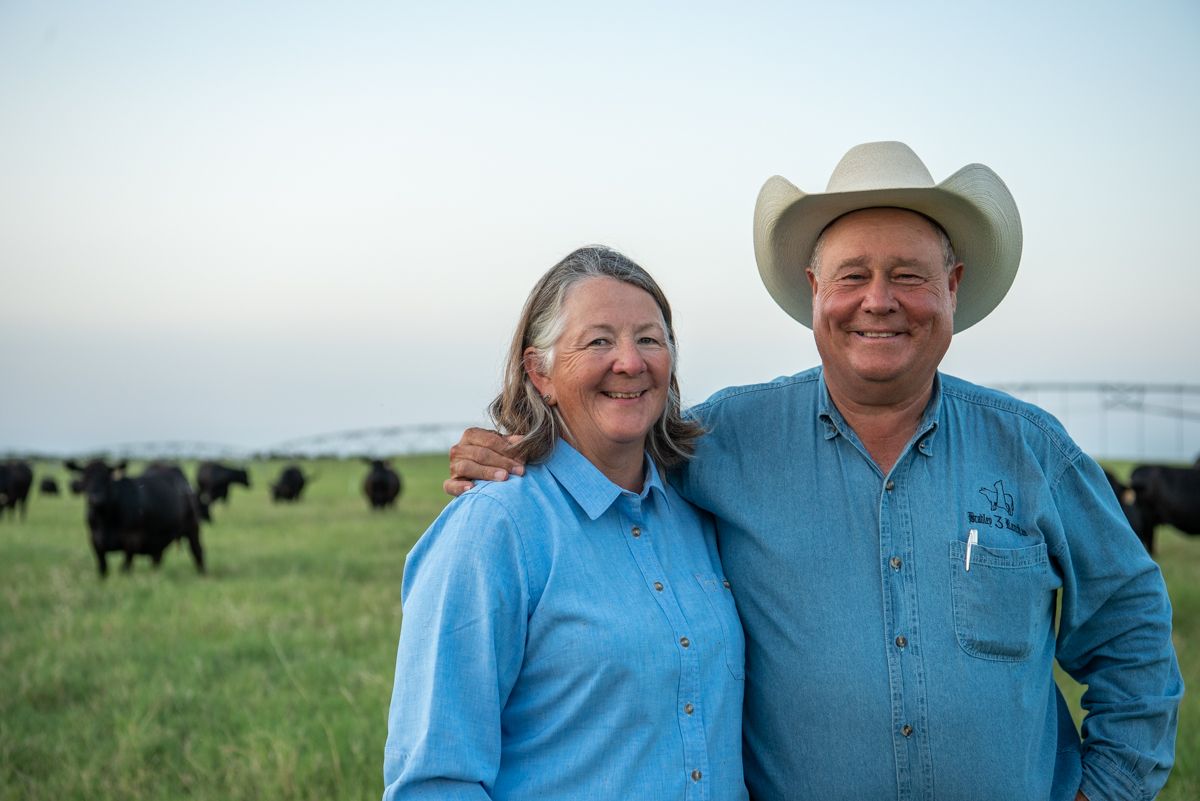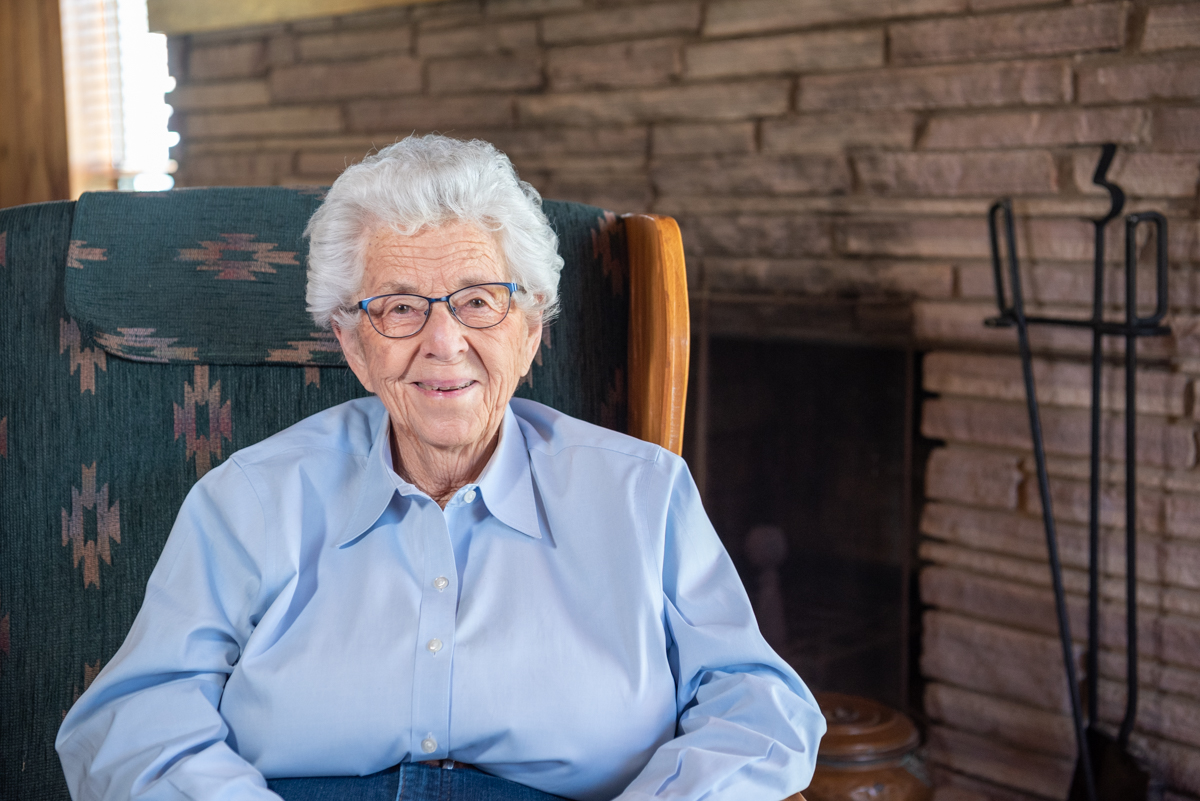
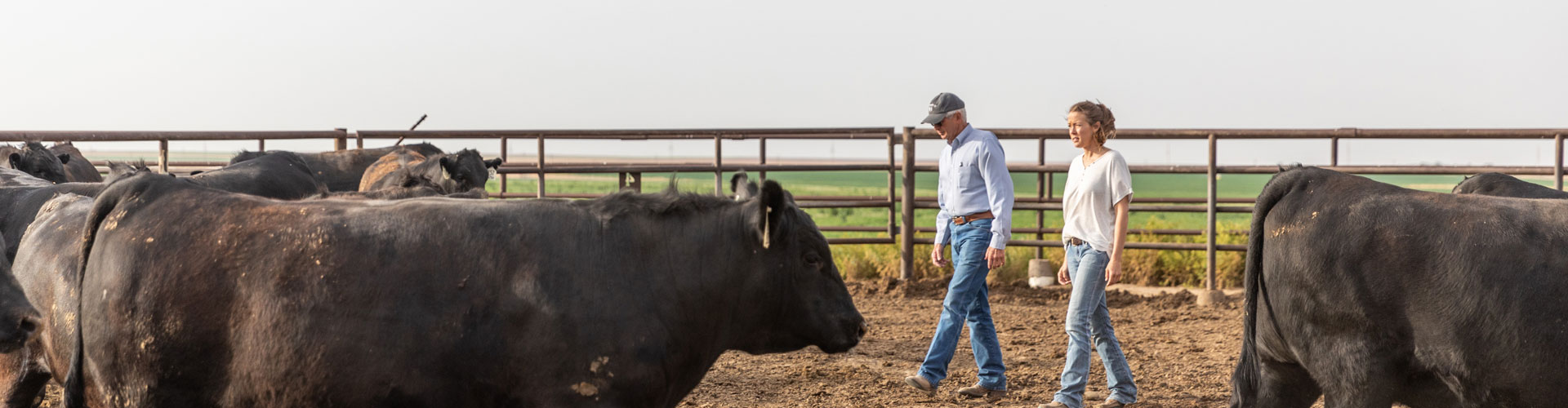
Marisa and Sam

Like Father, Like Daughter

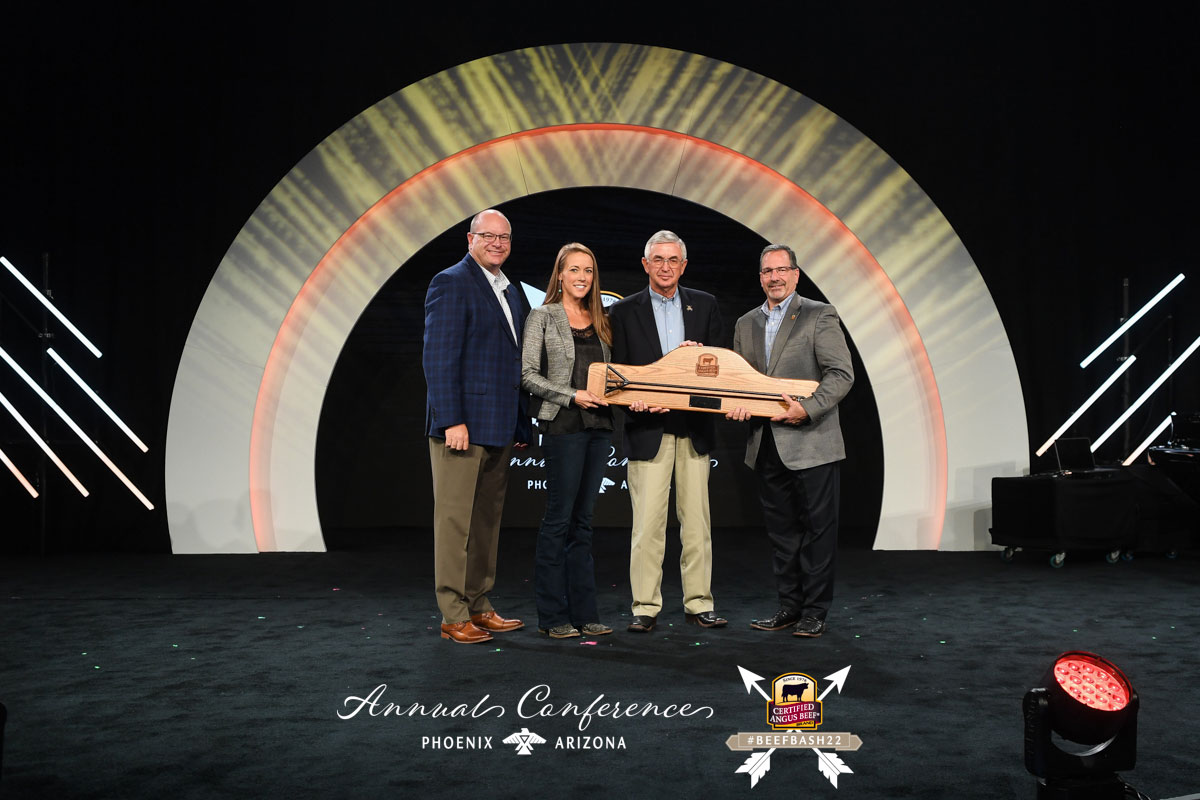
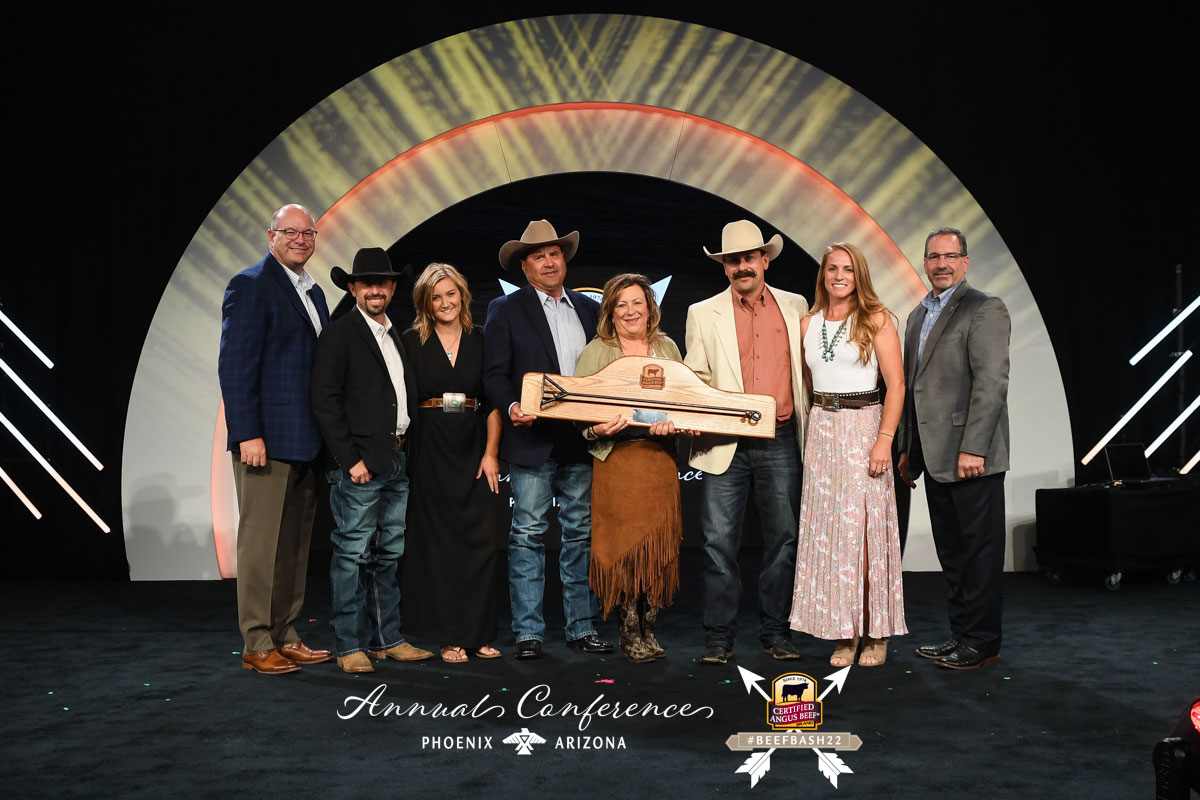
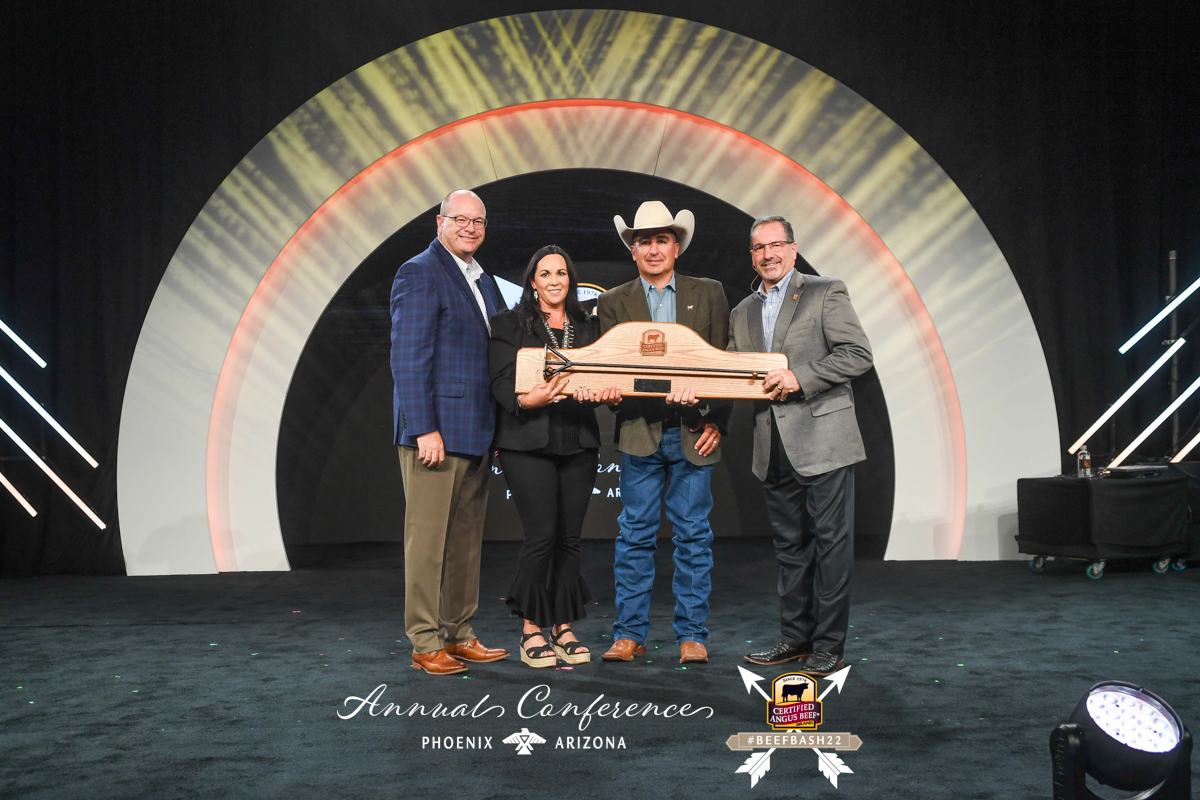
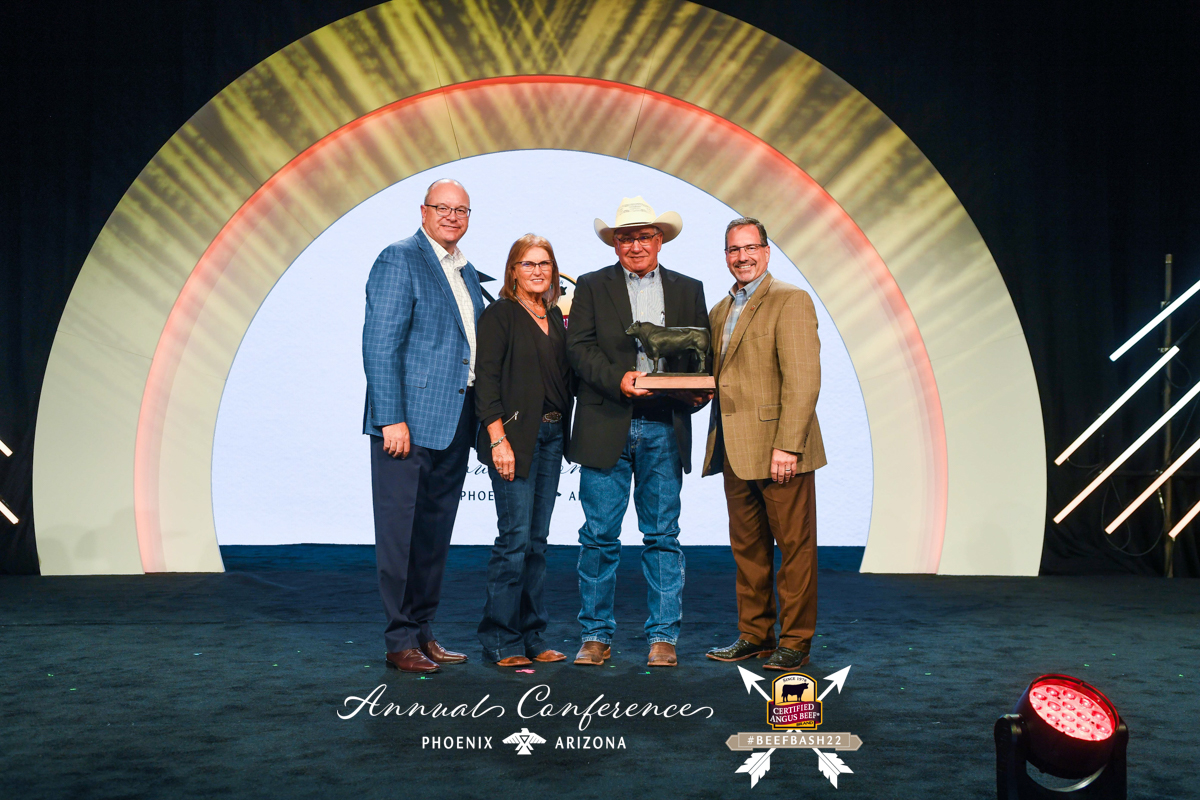
Triangle H accepts the 2022 CAB Feedyard Commitment to Excellence award.

By Morgan Boecker

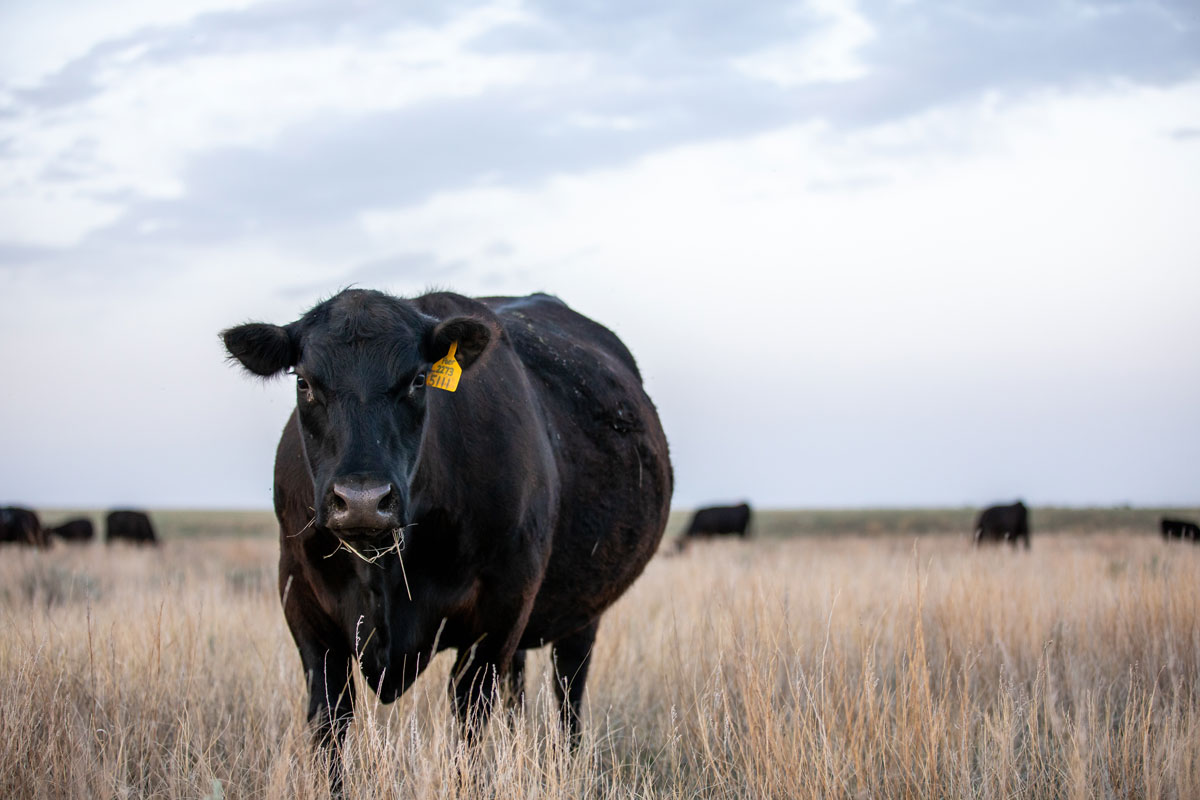
Cattle have a way of stirring the soul.

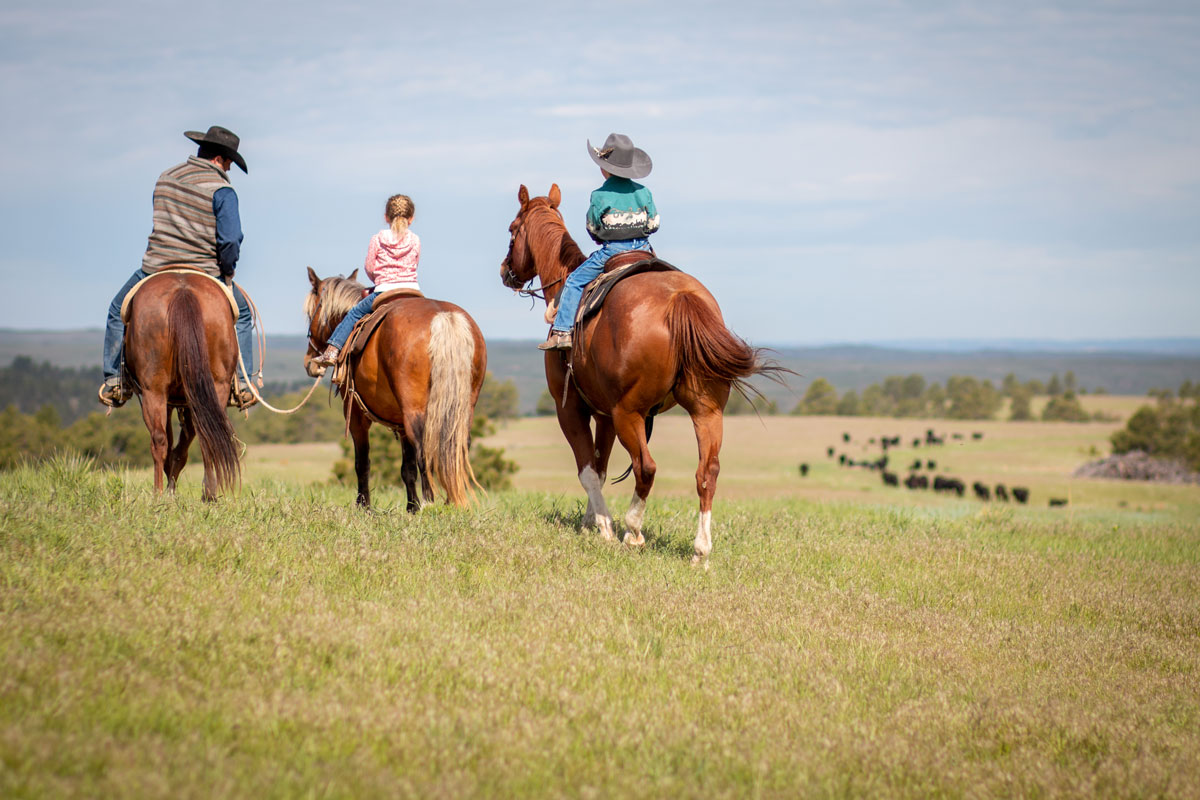
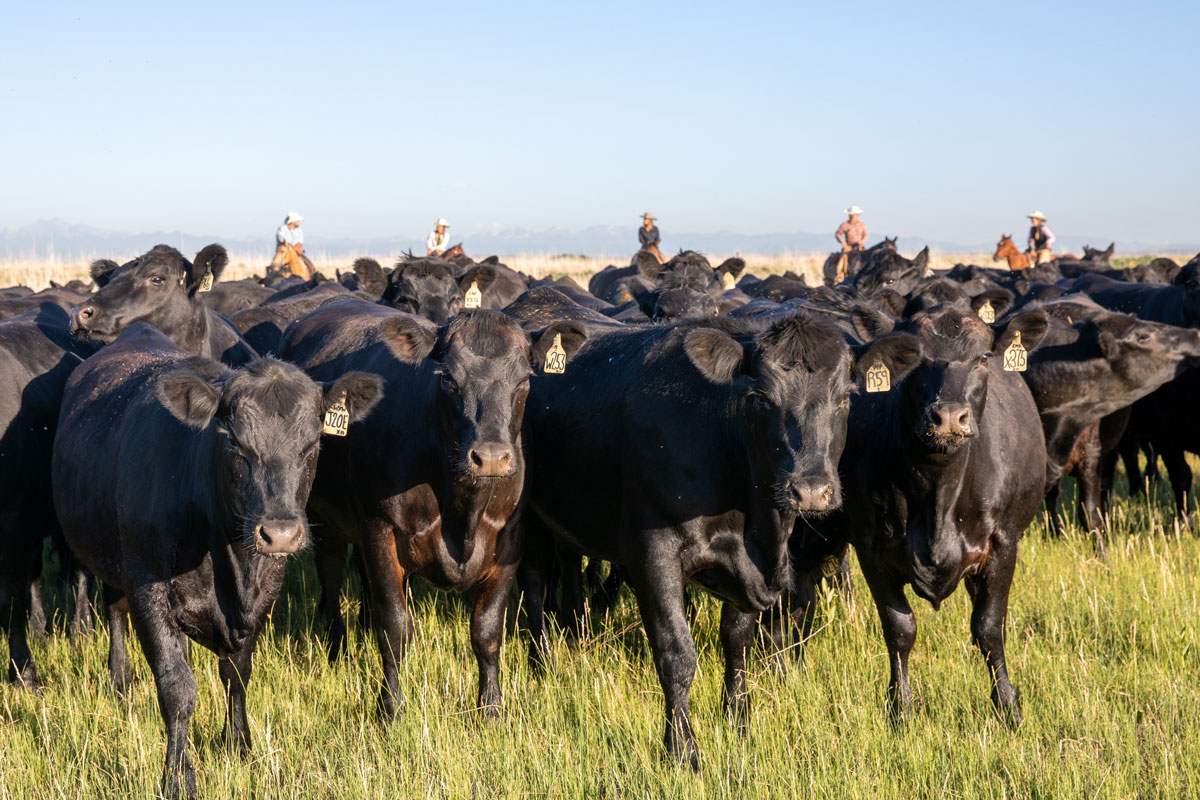
It happened when Marisa Kleysteuber was riding through the cows checking for heats. The weight of this responsibility was light as a kid, but her dream to one day make decisions took shape as she sat horseback beside her dad.

For most of her life, she’s followed in her father’s footsteps.

Sam Hands attended Kansas State University for animal science with a business option, three decades later so did his daughter. He was a Reserve Officer Training Corps (ROTC) student at K-State and was commissioned as a Lieutenant in the U.S. Army to serve in Vietnam. He made his way back to Kansas in 1973. His daughter earned a Master’s in ruminant nutrition before coming home in the mid-2000s.

“This is a passion,” she says. “I’ve just always wanted to come back and be a part of the legacy that my dad created and carry it on.”

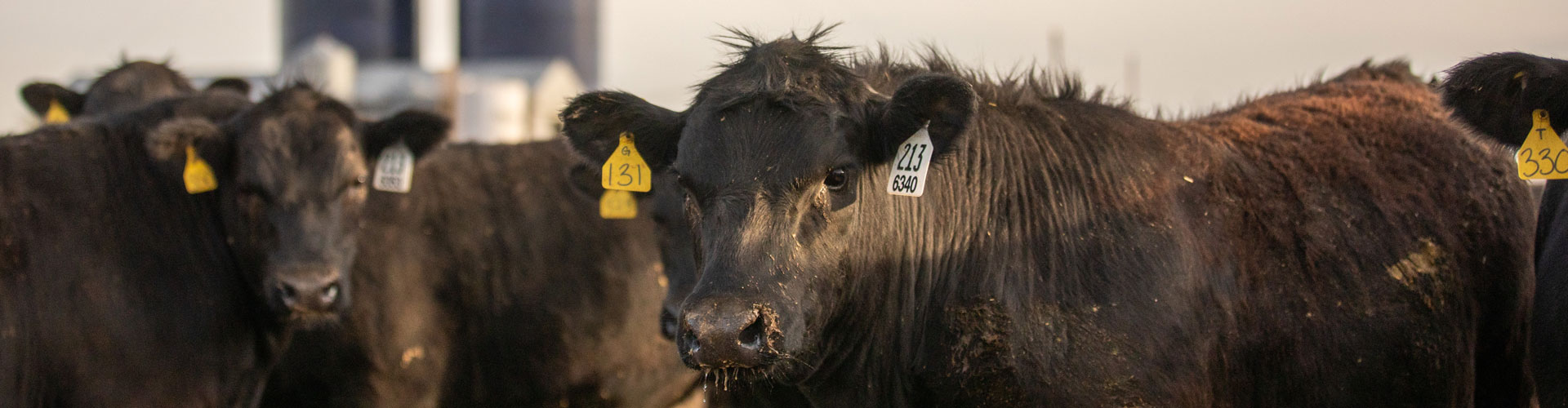
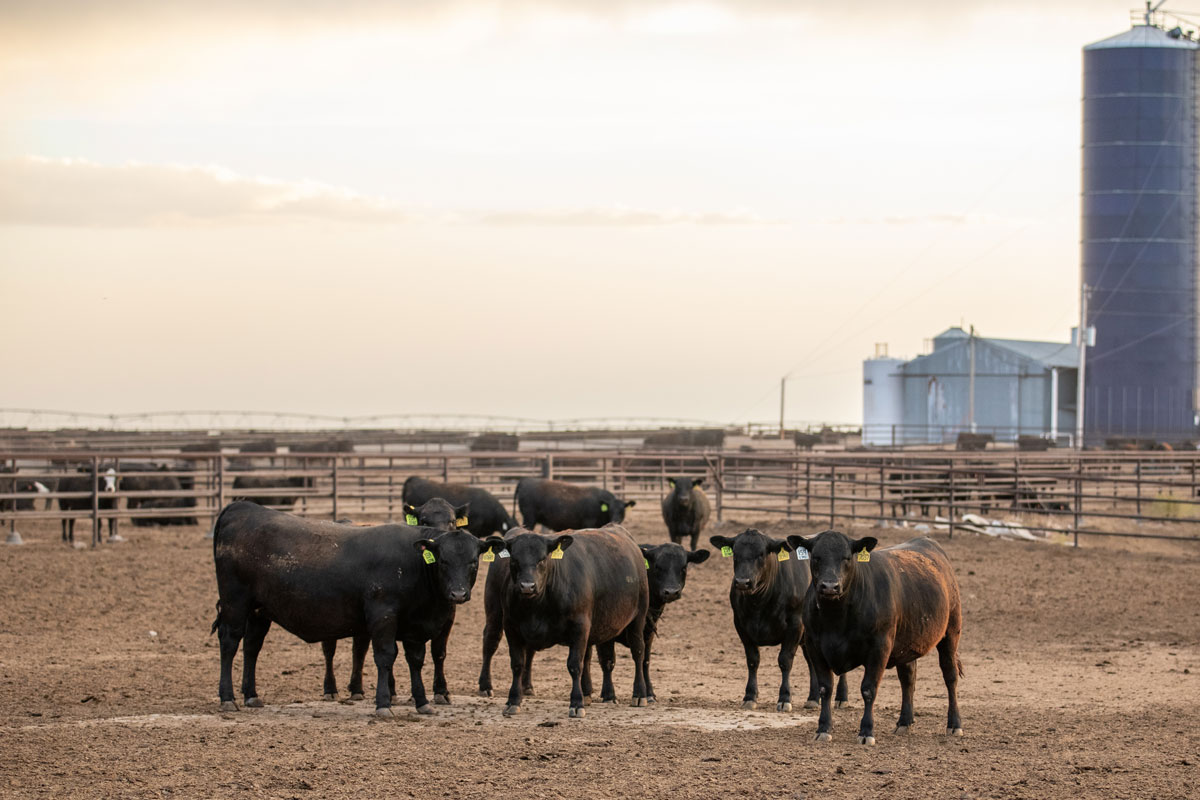
Home is Triangle H where they care for more than 8,000 fed cattle between a feedyard in Garden City and another 20 miles west in Deerfield. 

For Hands, there’s no short answer to anything. Problems are approached with thoughtful consideration to every possible outcome. Solutions are executed with care. It’s more than a suggestion on how to treat everything from people to cattle to equipment, it’s simply the Triangle H way. They work to be the best in everything they do – a mindset that he’s passing on to his daughter.

The Right Tools

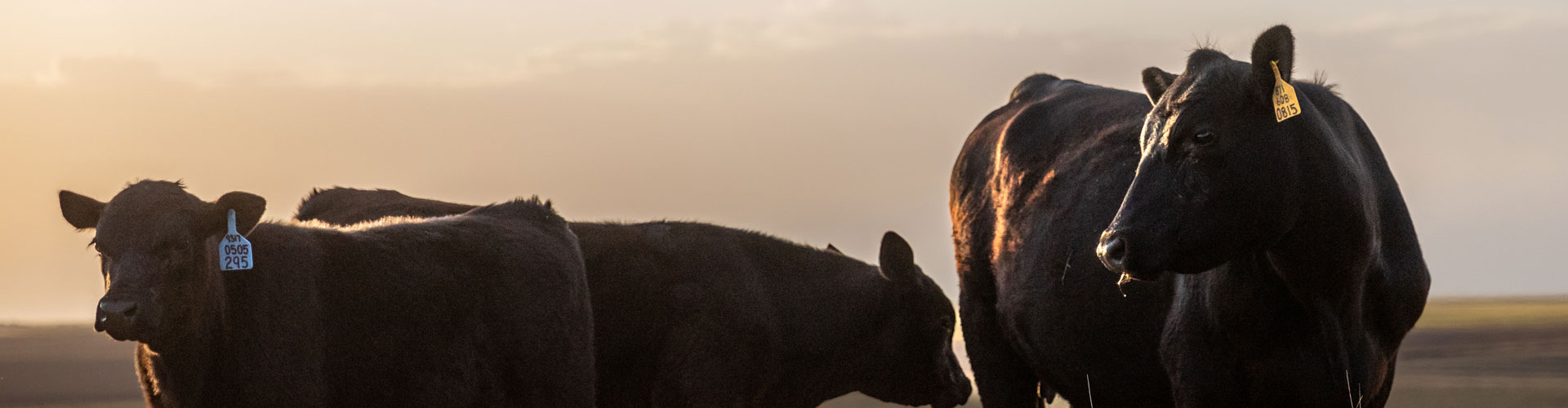
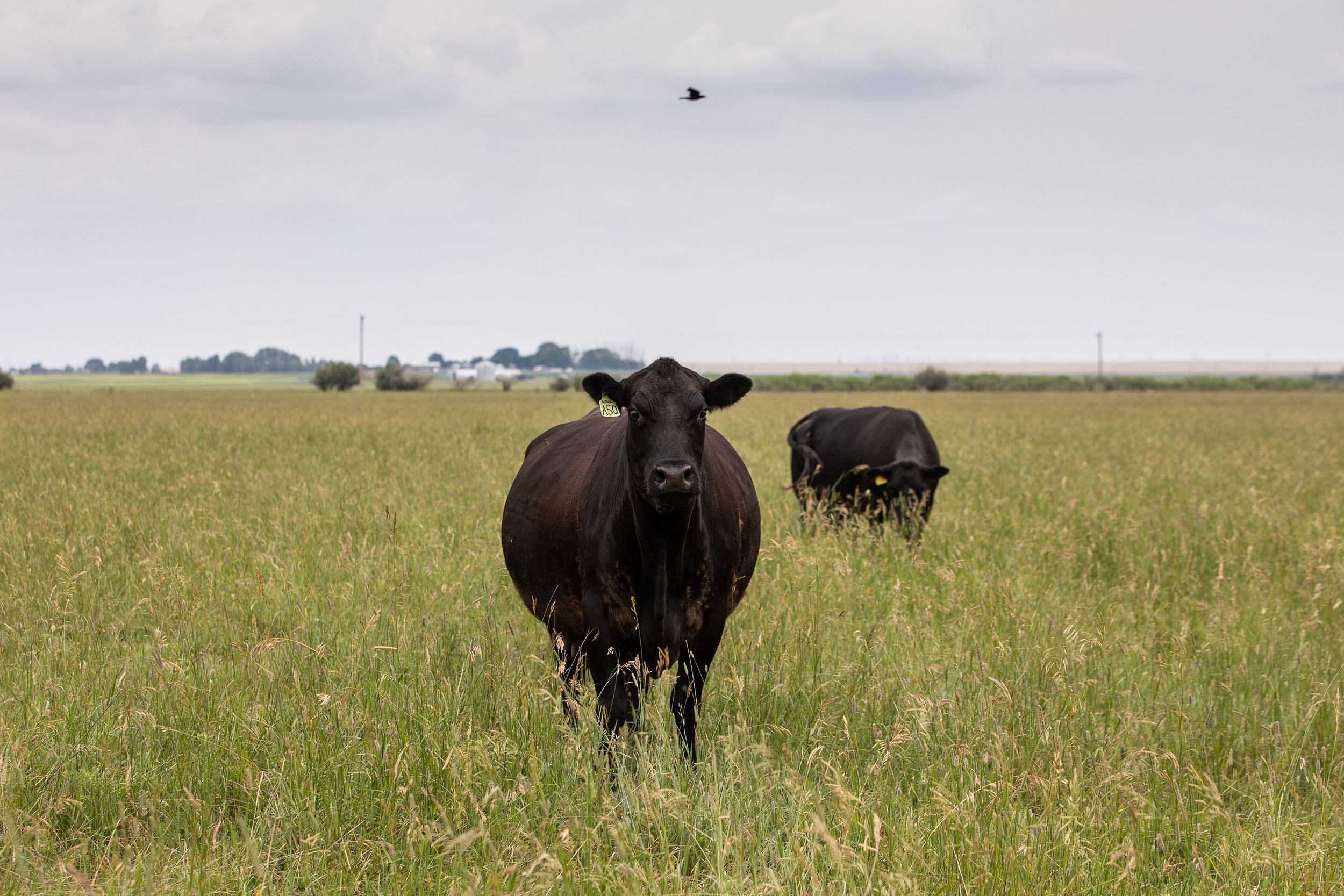
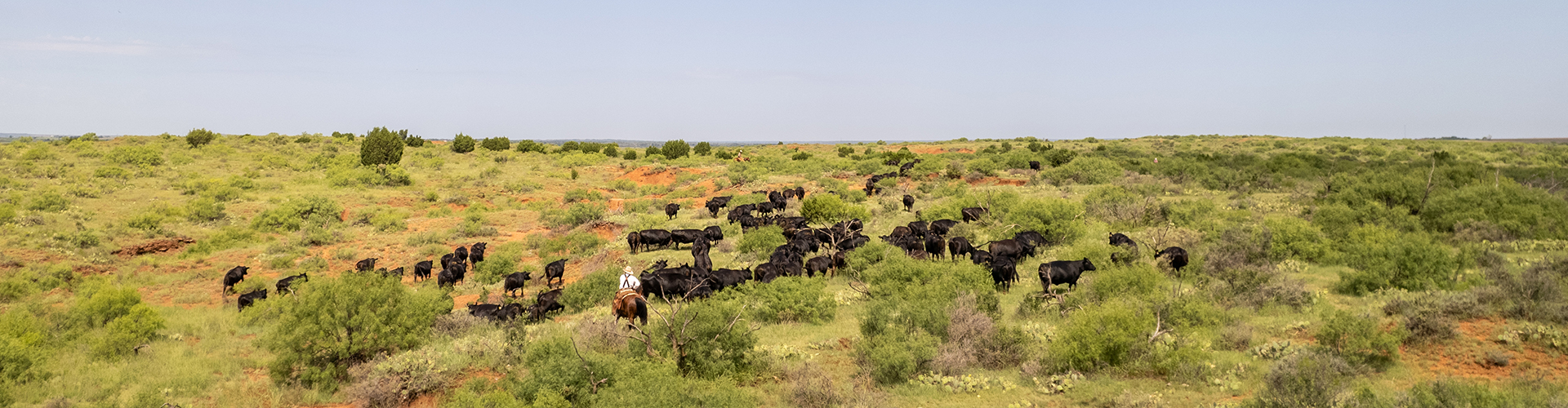
Located in the heart of prime cattle country, there’s no shortage of genetics that excel at the ranch and the feedyard. In their own commercial Angus herd, they select sires knowing those calves will be in their pens in 15-18 months.

“I just hope from a feeder’s standpoint that we don’t prevent them from reaching their genetic potential,” Hands says. “Whether we’re raising corn, alfalfa, wheat or beef, it all starts with good genetics.”

Then it’s all on the shoulders of the caretakers.

“Good cattle can’t afford to have a bad day,” Kleysteuber says. “So we do everything in our power to give them every opportunity to perform and express the genetics that are there.”

Optimizing a calf’s carcass quality has been their specialty since the 80s when they started marketing on the grid. At that point, Hands and his dad were already using artificial insemination (AI) and retaining ownership for years. Decades watching calves from conception through harvest means they know how changes at the ranch affect what happens in the yard.

Today, Triangle H consists of separate business entities – a feedyard, commercial cow/calf ranch and farm – that funnel into the other. The father-daughter pair take care of the livestock while Hands nephew Tyler manages the grains.

“We grow our own high-quality grain products and really pay attention to the details in our timing of feeding and timing of market,” Hands says. “It’s this dedicated effort that ensures our customers and us are competitive.”

Hands is the kind of man who wants to understand an entire process. In the 70s and 80s, he and his wife Janet spent hours in coolers of packing plants tracking their cattle through harvest to know exactly how they were performing.

“If I’m going to produce a product knowing I’m going to sell on the rail then I want to know if I’m getting the dollars that I hope to reach,” he says. “I’ve got to be on target.”
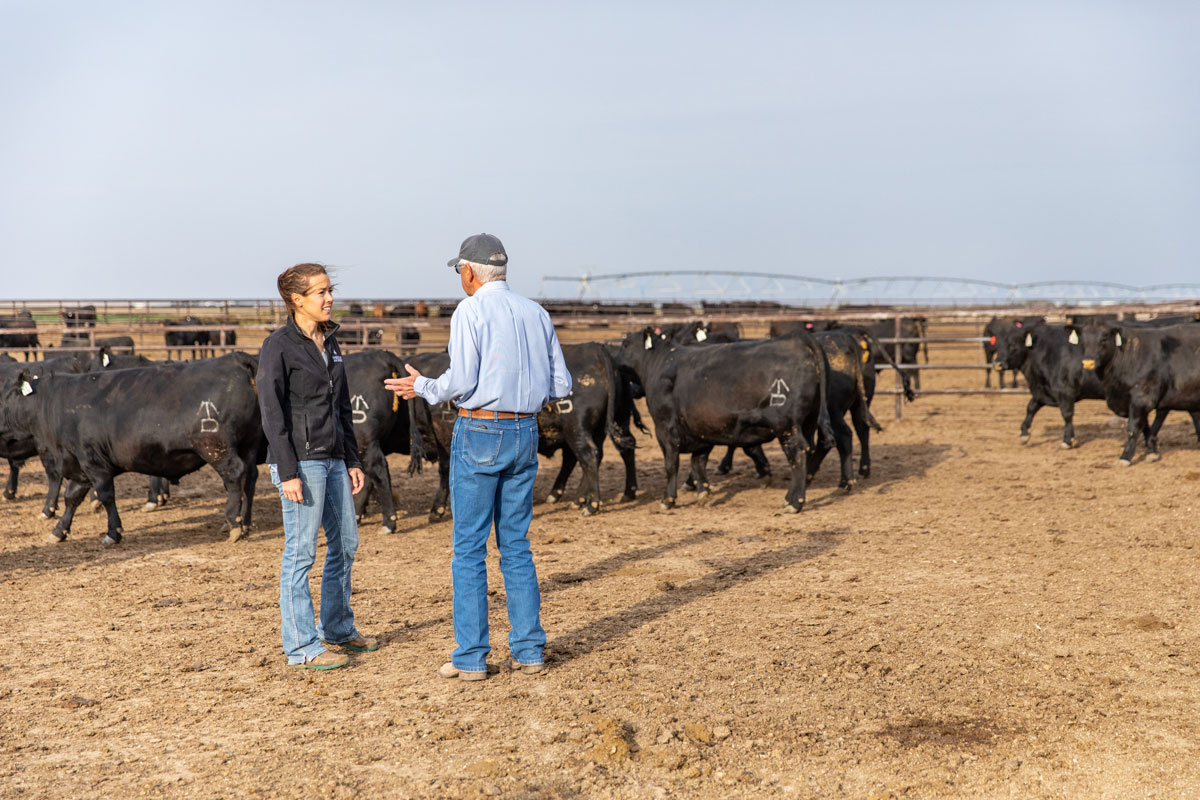
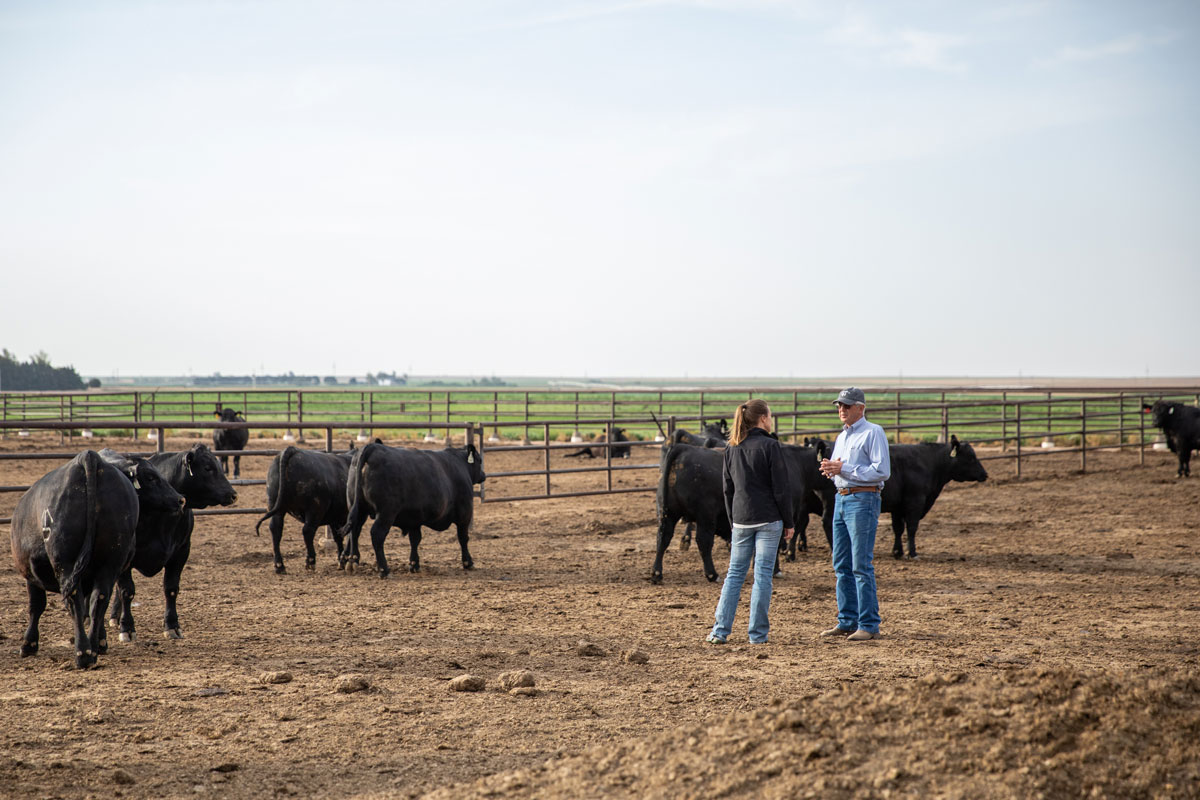
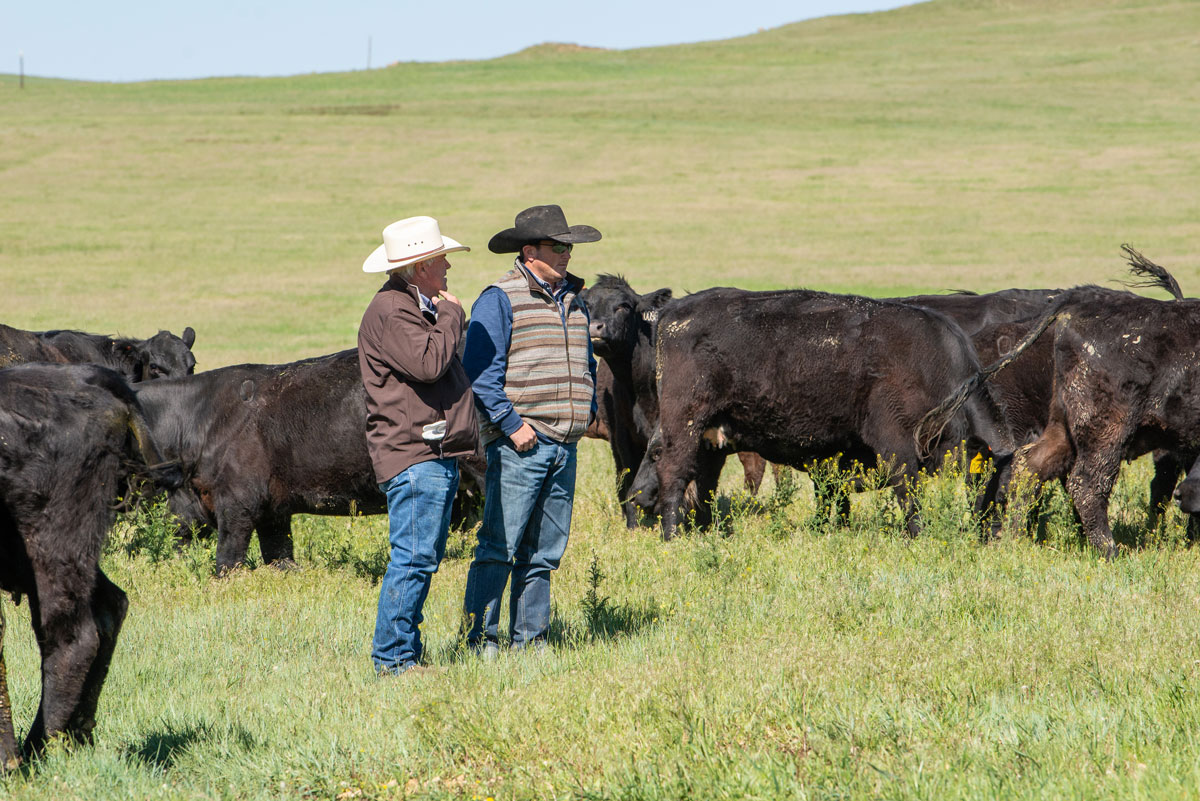
Marisa Kleysteuber and Sam Hands in feedyard pen

The Right Customers

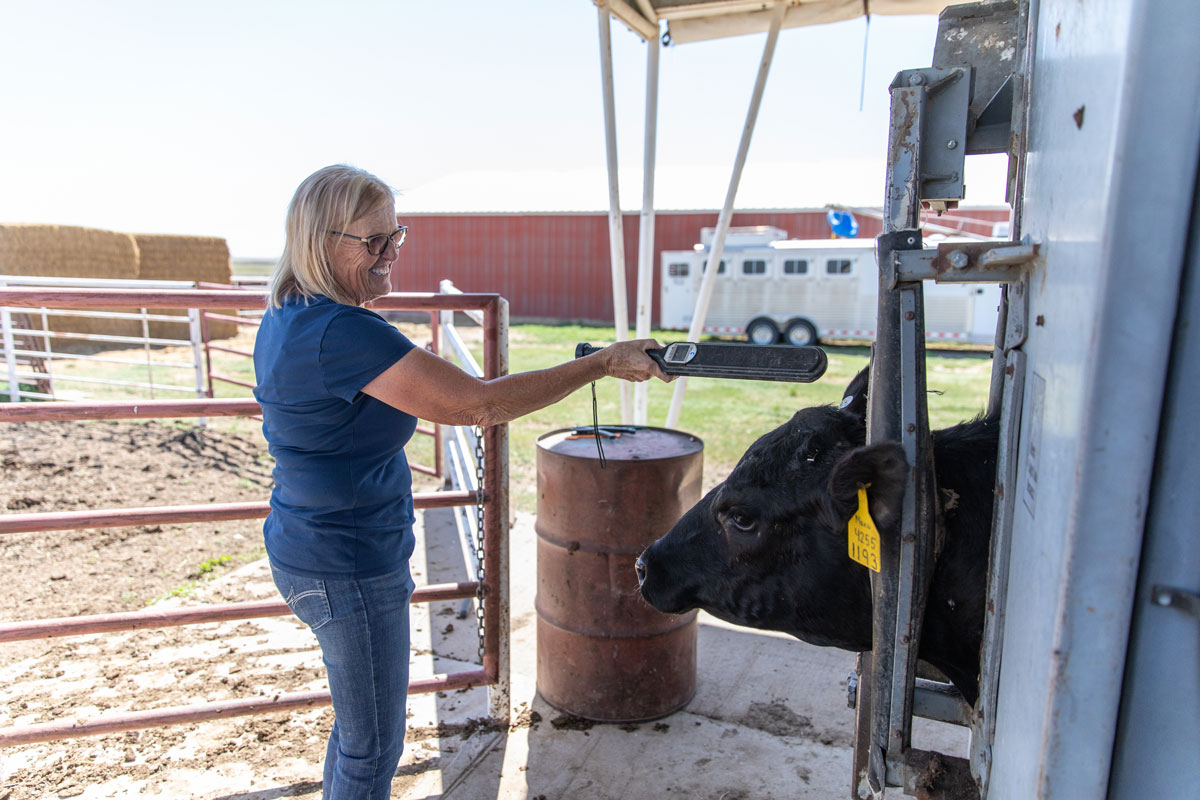
Size and scale allow them to uniquely serve their customers’ individualized data on cattle performance. Electronic identification (EID) tags track calves at each stage of finishing. Once slaughtered, Triangle H customizes an index with each animal’s carcass and feedyard data.

“This is a powerful tool that we can share with our customers to make improvements with their herd and add more value to their bottom line,” Kleysteuber says.

A tool regularly put to the test. After working for Hands for seven years, Shannon and Rusty Wharton stepped out to pursue their own Angus herd with Wharton 3C Cattle in the Kansas sandhills. They send calves to Triangle H at 900 lbs. to be marketed through US Premium Beef (USPB). Fifteen years ago, they were grading 30% Choice, but with the data they get from Triangle H, now they’re hitting 100% Choice and Prime.

But data and the right genetics can’t replace a knack for knowing when cattle are ready. For that, there’s no one better.  

“Sam just knows. He knows their genetics. He knows how to feed them and what to expect. He’s the best about sorting cattle to make sure we get the best premiums,” she says, noting their two-year average of $280 per head over cash for cattle grading 40 to 60% Prime and 50% CAB.

Through the USPB grid, Hands knows each carcass’s performance. As long as they stay above average, they see black in their bottom line.

And they do. In the first quarter of 2022, Triangle H averaged 97% Choice or better, 18% Prime and 44% CAB resulting in a $91.60 per head premium. But at certain times of the year, premiums can reach more than $200 per head.

“We need cattle that have high-quality carcasses,” Kleysteuber says. “At the end of the day, the consumer needs to have the best eating experience possible so that the demand for our product stays strong.”

It’s this sharp focus on quality and thoughtful customer service that earned the Hands family the 2022 Feedyard Commitment to Excellence Award from Certified Angus Beef (CAB). In September, they accepted the award at the CAB Annual Conference in Phoenix, Arizona.
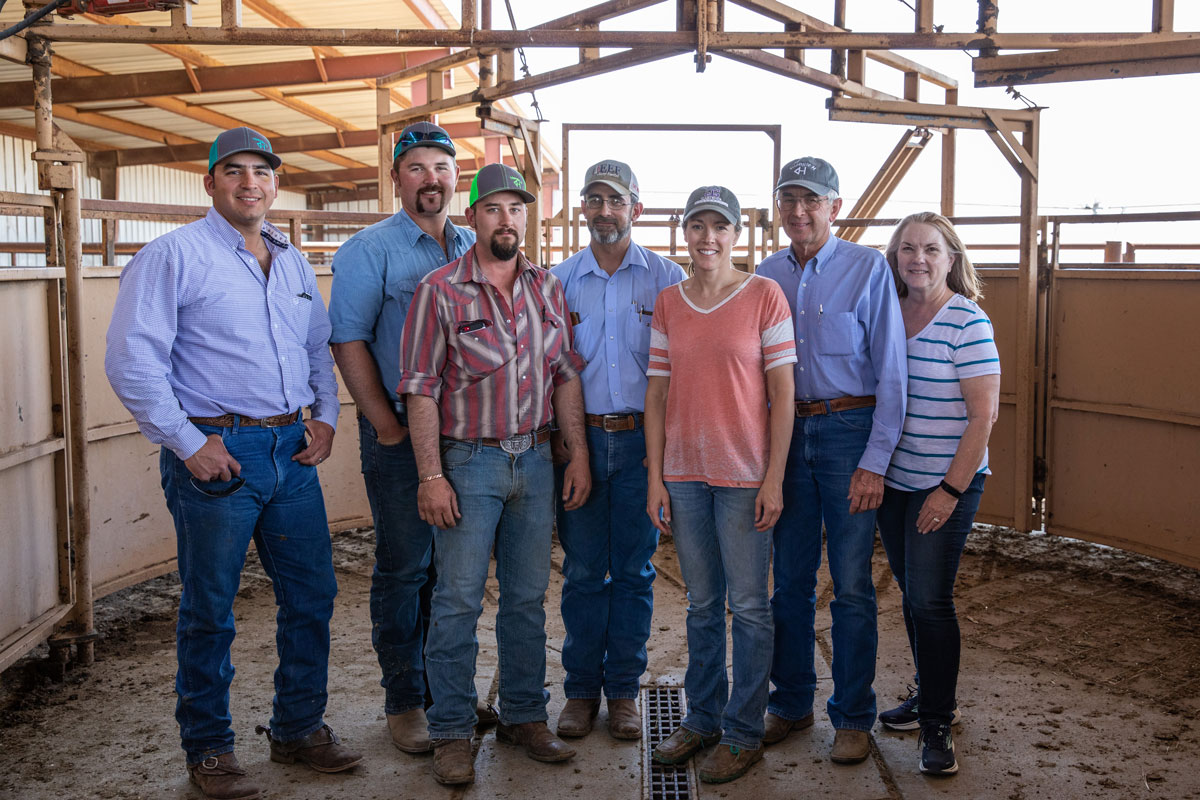
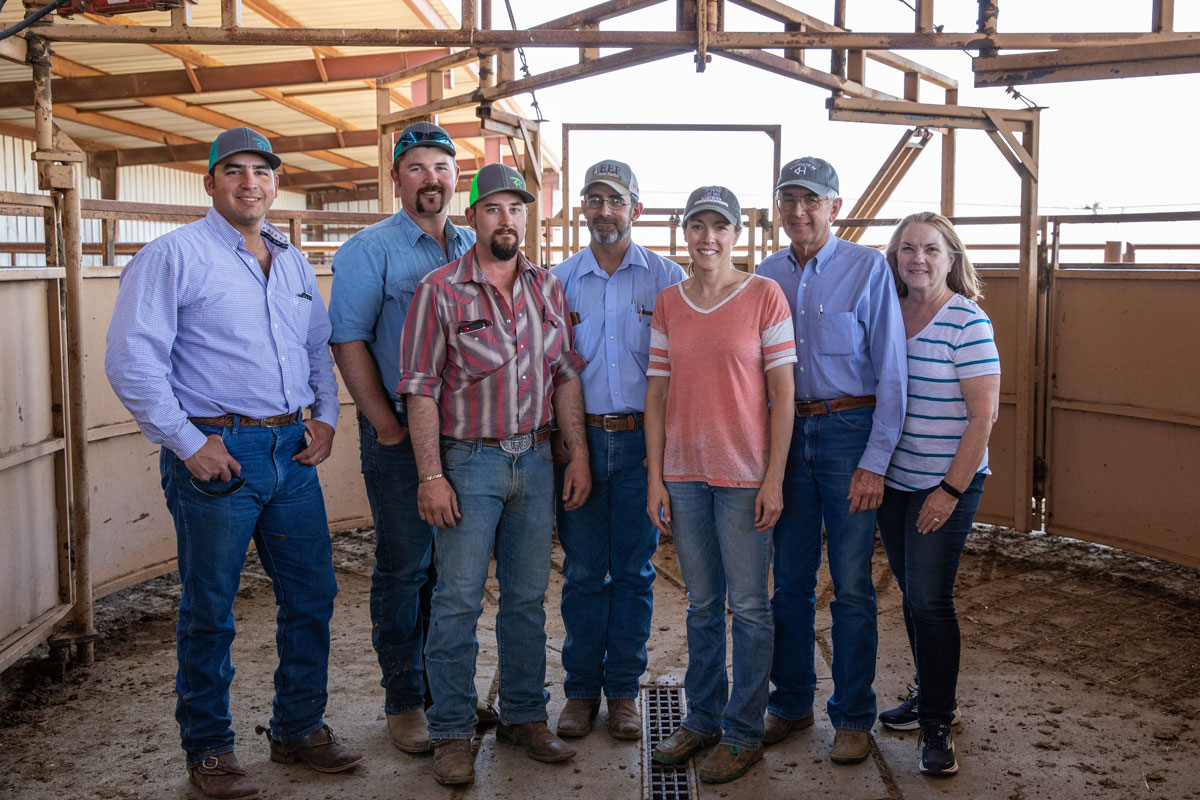
Triangle H Crew

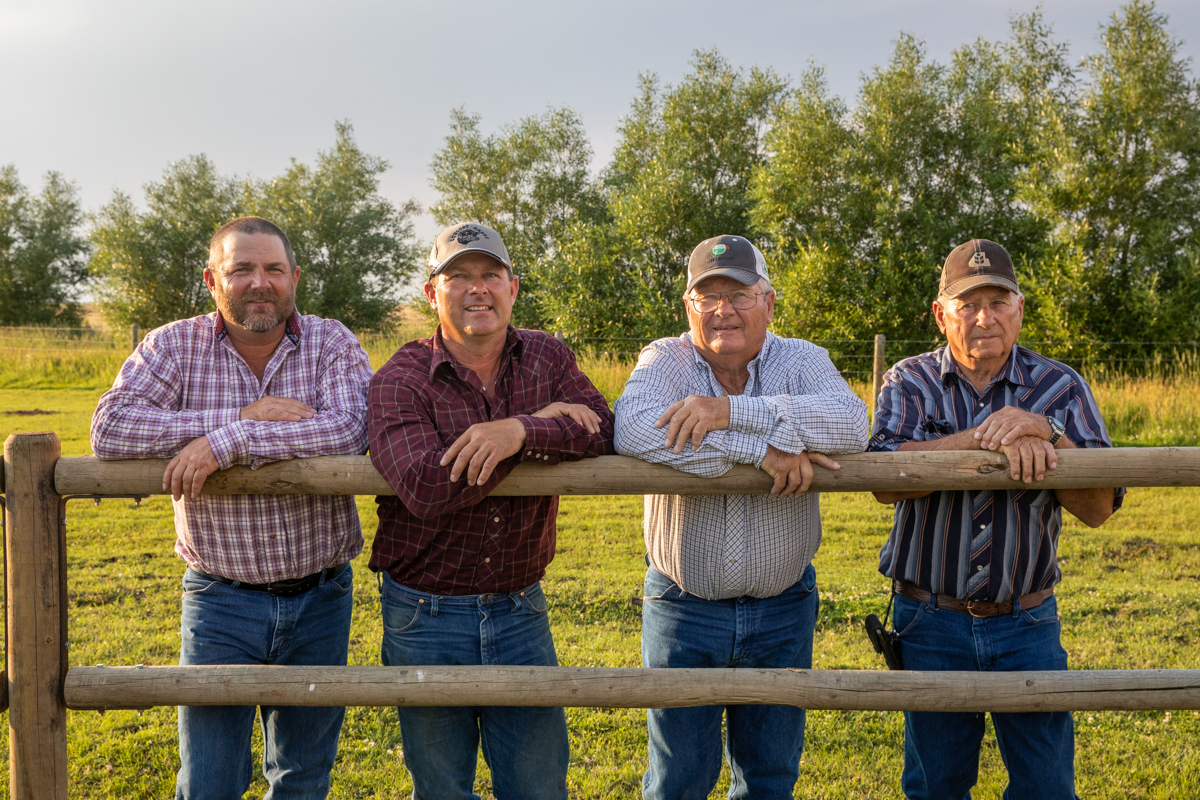
(left to right) Fernando Obregon, Brodie Sweeney, Kris Rose, Bill Hager, Marisa Kleysteuber, Sam and Janet Hands

“Good cattle can’t afford to have a bad day,” Marisa Kleysteuber says. “So we do everything in our power to give them every opportunity to perform and express the genetics that are there.”
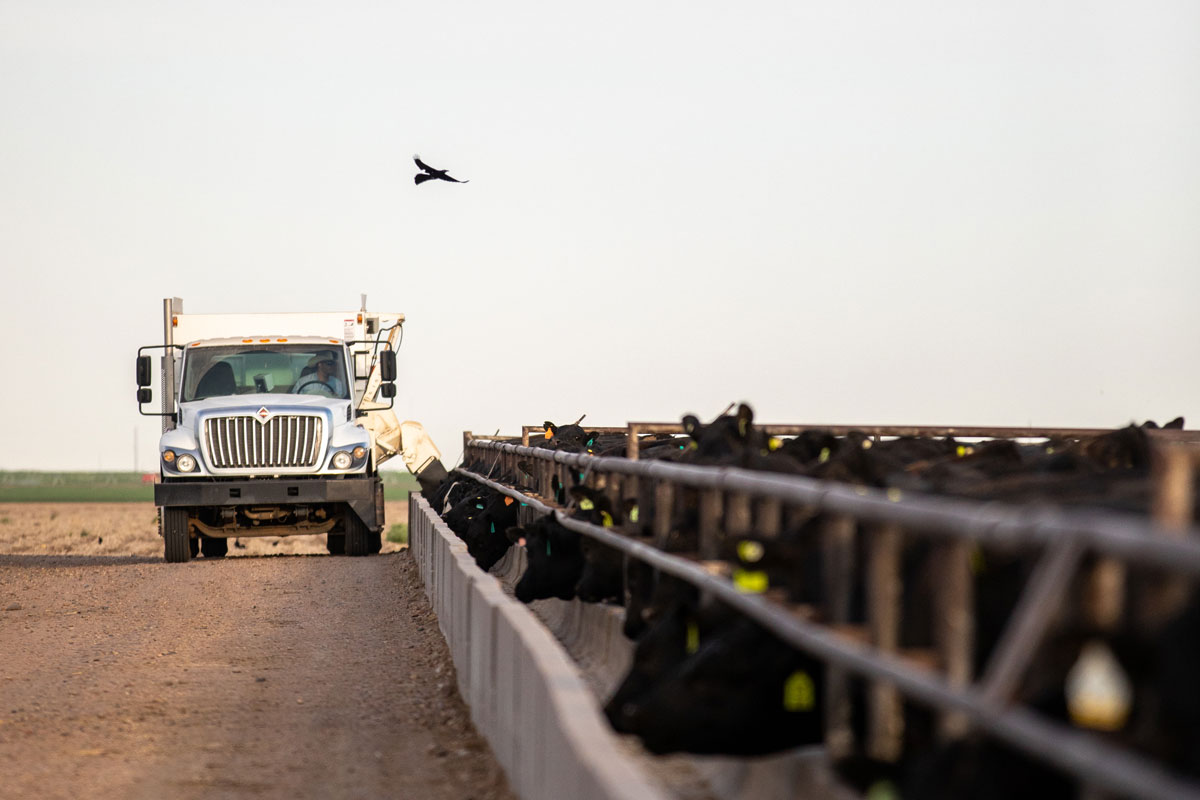
Triangle H feedtruck

The Right People

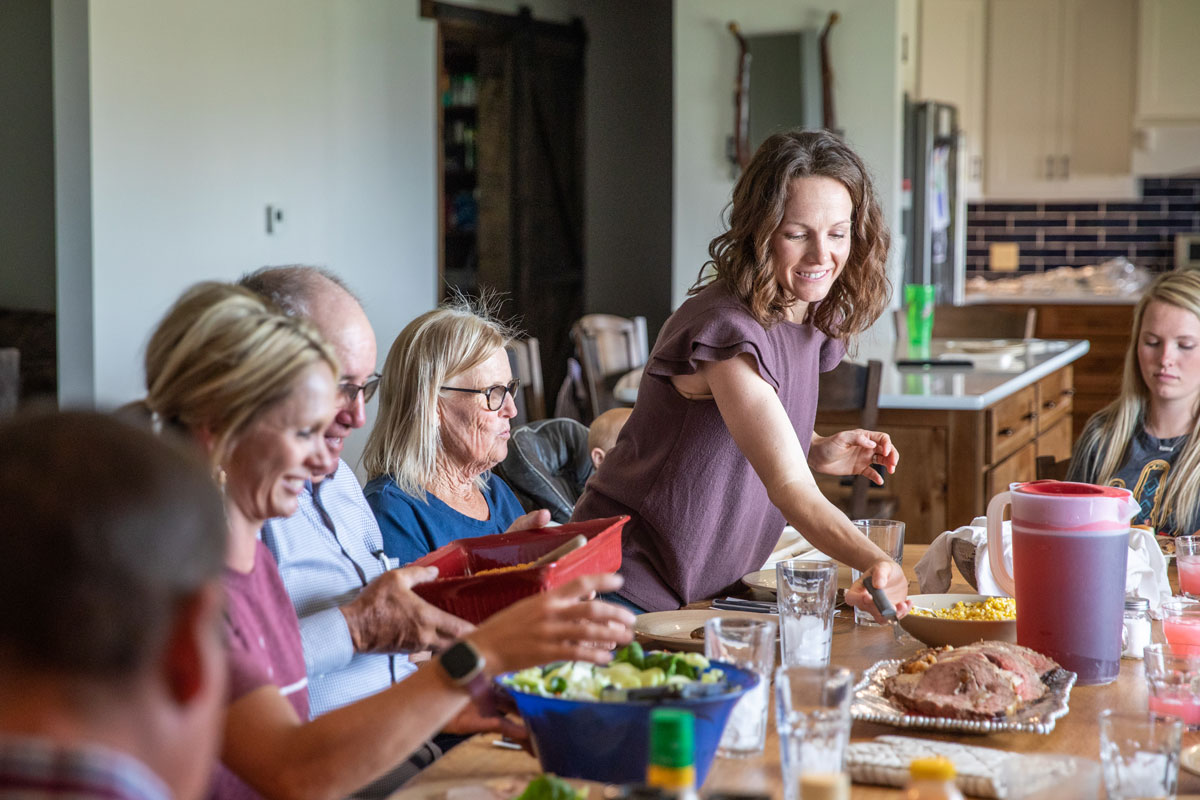
Rocking in Adirondack chairs on the patio, a glass of tea in hand, the duo make their game plan. The only slow part of their day is now, reflecting on what happened, how to improve and what needs attention next.

A reoccurring question is how to bring in good employees to help them grow and develop.

“We may not be a big yard, but we feel there are some natural niches where we can give opportunities to a person to have a career opportunity,” Hands says. “Especially those who may not be in a position to marry into ag or inherit it.”

Their investments pay off with tenured employees.

“We give them a lot of responsibility to make decisions and keep things moving,” he says. “This lets us focus on more of the business side at the office.”

Even at 74 years old, Hands puts in his share of hours.

“Growing up and even watching my dad today, he’s the hardest working person I know,” Kleysteuber says.

She follows his lead and starts each day with the team helping process cattle, cover silage pits or clean water tanks. Mutual respect comes from being part of the three-man crews at each yard.

“They give it their all and I feel like I need to be right there alongside them,” Kleysteuber says. “Because if I ask them to do it, I need to be there doing the same thing.”

“We’re only here for a short time,” Hands says. “Hopefully we can provide an environment for people that gives them a reason to get up in the morning and go to work and feel good about what they do.” 
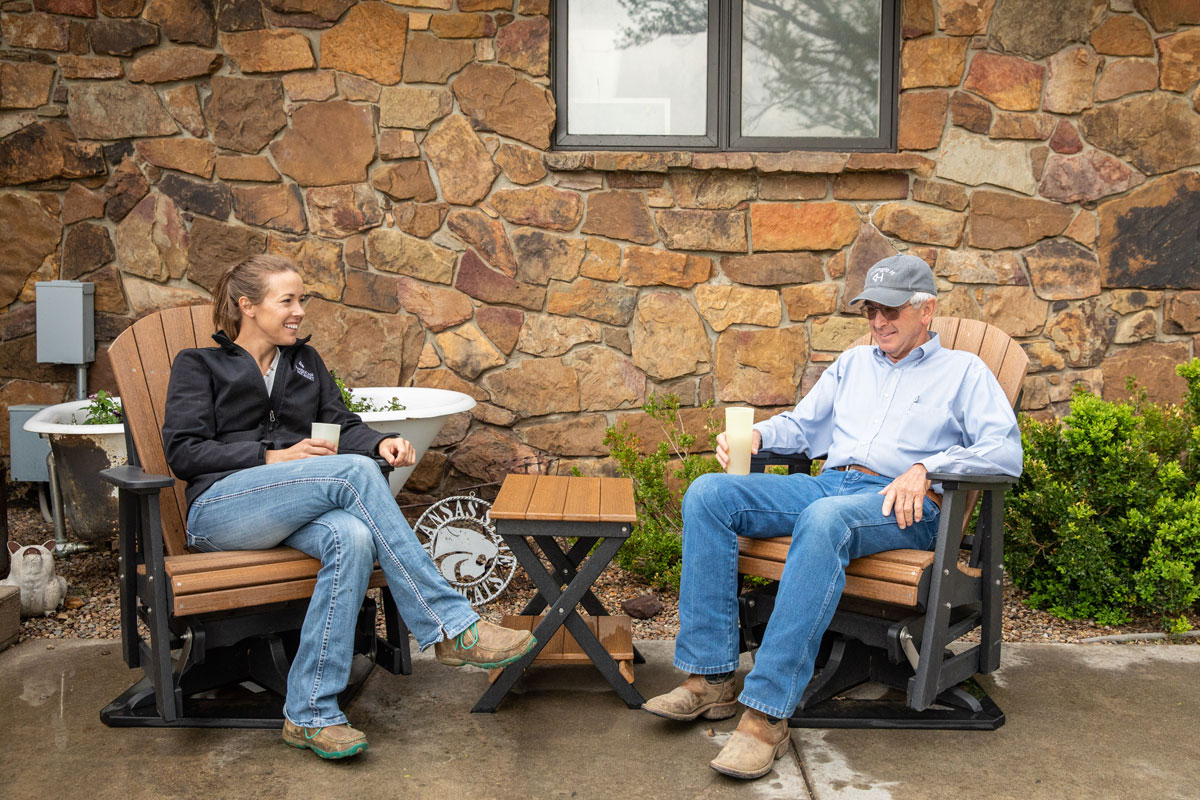
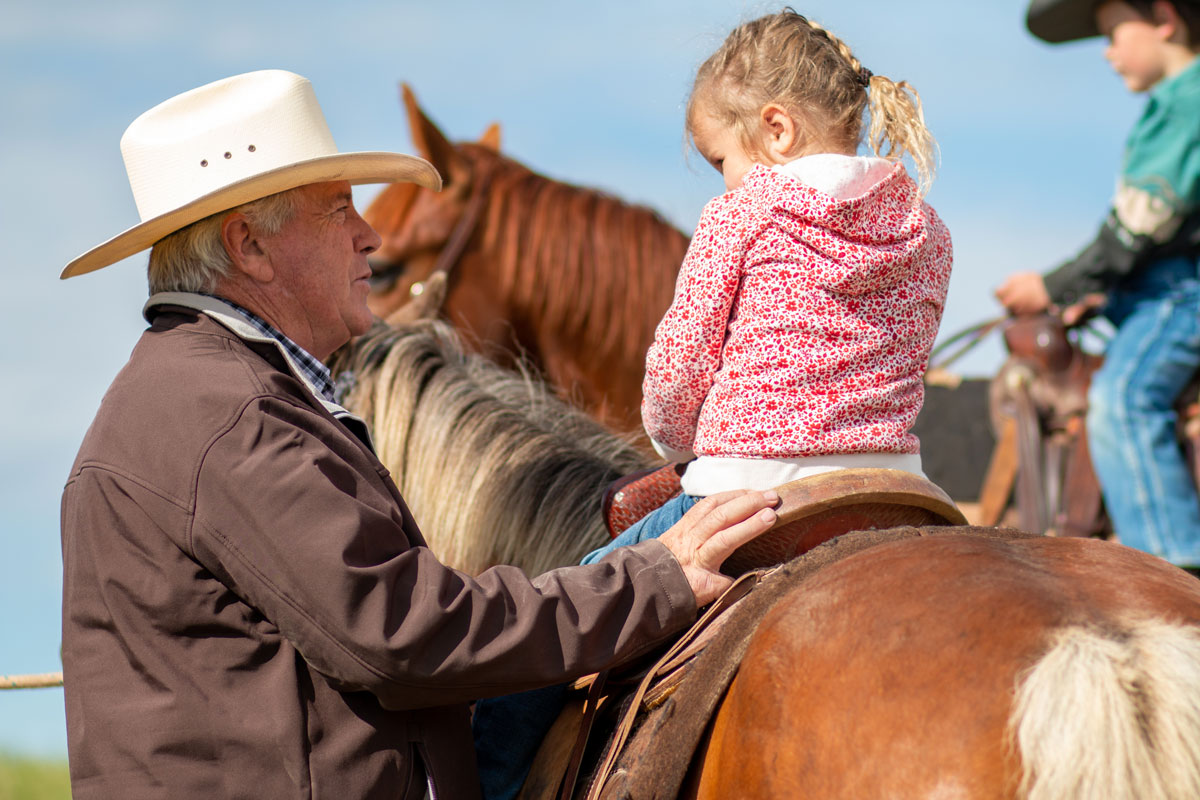
Marisa Kleysteuber and dad Sam Hands

Knowing No Different

Every day Kleysteuber accepts more of the daily weight that comes with managing a feedyard.

“Over time dad has helped me gain more confidence in different areas of the business,” she says.

Planning, learning and teaching are integral pieces of succession preparation, though not an easy process. “Blessed” is how Hands describes having his daughter step up in their cattle business.

“I haven’t ever known anything different,” Kleysteuber says. “It’s just always been natural for me to be out working the cattle.”

The succession plan isn’t etched in stone. It’s more of an understanding that the Triangle H values will continue to pass through the generations, either through the Hands family or the people who are integral there today.

She naturally fills the role but continues to take full advantage of the time she spends with her dad. “As long as he can get up and come out here, I plan on us working side-by-side.”

You May Also Like…
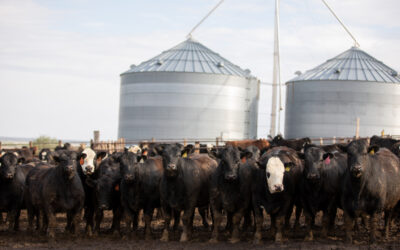
The Angus Argument

The Angus Argument

There’s no denying CAB has helped dramatically expand the market share for registered Angus genetics. Arguably, that success has encouraged several other breeds to adopt a black hide color by incorporating registered Angus genetics into their breeding programs and registries.
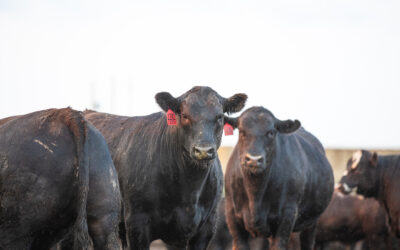
Utilization Key to Prime Success

Utilization Key to Prime Success

More demand for individual Prime grade cuts is being discovered on the part of packers and wholesalers as they educate downstream users about the opportunities to capitalize on growing Prime demand.
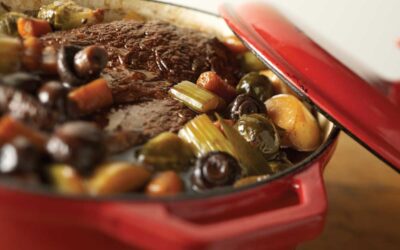
Seasonal Demand Shifts Carcass Values

Seasonal Demand Shifts Carcass Values

January often presents the lowest beef demand, while February likely vies second. Also, we see a shift in consumer preference away from holiday middle meat roasts toward end cuts for “comfort food” meals.
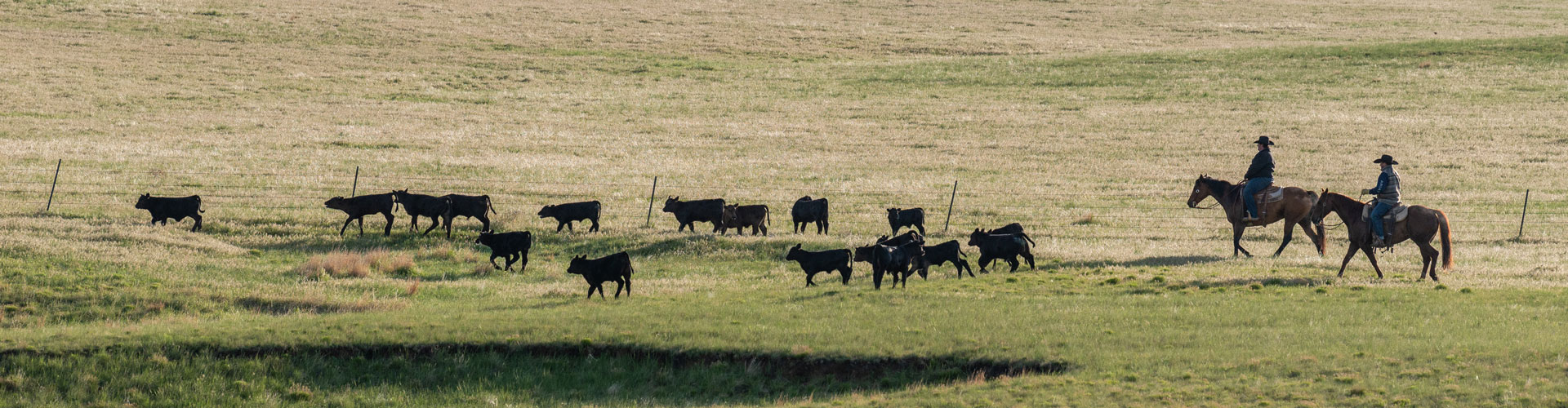
Bootheel 7 Livestock cattle drive

The Competitive Drive

An athletic mindset earns Wyoming family Certified Angus Beef Commercial Commitment to Excellence honors.

By Laura Nelson, freelancer for Certified Angus Beef

Whether it’s in the curved panels of an auction ring or the arch of a boundary line on a wrestling mat, the Wasserburgers of Lusk, Wyoming, know what it takes to enter an arena, eager to compete.

The Bootheel 7 brand that marks the hips of their herd could stand for the seven state wrestling titles held between three boys in the fourth generation, but that mark far predates their competitive drive. It’s been the brand carried by Wassserburgers looking for the ‘W’ since the homesteading era.     

In September, their hands were raised in the winners circle again, in Phoenix, Arizona, as recipients of the 2022 Certified Angus Beef (CAB) Commercial Commitment to Excellence Award. The honor marks years of channeling such athletic intensity into success on the ranch.  

Cousin Trey Wasserburger wrote the nomination. He and wife Dayna own and operate TD Angus at Rishel Ranch, North Platte, Nebraska. The Bootheel 7 steers handily won their TD Angus Feed Test “Highest CAB Percentage” category two years in a row with pens at 64% and 65% CAB and 100% Choice or higher.

Those moves are the work of JD and Laurie Wasserburger, with their sons Eric and Andrew and his wife, Anne, built on family legacies of pioneer great-grandfather Henry and his son, Henry Jr.

The 1916 homestead title started it all, but Henry felled cedar fenceposts in the Buck Creek Hills for neighboring ranches before he could claim one of his own. He spent those first years in a “soddy” of stacked native prairie adorned with a cowhide door flap but then established a ranch and passed the Bootheel 7 brand down to the son who began buying other area homesteads and grasslands.

Henry Jr. built up the modern ranch with sheep and cattle that JD further diversified with new businesses to support the next generation. They sold the sheep and JD started a freight company to serve the area’s oil and gas industry. His foresight paid off with two sons back on the ranch, proudly carrying the Bootheel 7 brand into its second century.

“There’s no such thing as being OK with where we are, even though we are extremely grateful for every single thing we have,” Anne says. “We’re growing, looking for new ways every day to integrate all aspects of farming and ranching: raising our own feed, feeding our own cattle, following them through to the plate. Whatever it takes to understand the whole process and figure out how to be the best at it.”

Building the Program

Around the table in the original homestead’s kitchen of a house grown and modernized apace with the ranch around it, Andrew pulls out a three-ring binder from his range management class at North Dakota’s Dickenson State University. It’s a snapshot of the Bootheel 7 Livestock before he joined his older brother in the business.

Eric bought his first farmland in 2005 while at Chadron State College in Nebraska, setting the pace for “can’t wait” expansion. In 2010 when Andrew’s final college project had him mapping the main ranch for soil types and grazing capacity, he planned new ways to build and manage grazing inventory. The brothers were staged to move the ranch into a new weight class.

That notebook tracked the grazing plan for three herds totaling 500 mother cows. A dozen years later, they’ve more than tripled that capacity, building quality in every gain. Today, Eric takes the lead at Buck Creek Freight and all farming enterprises as Andrew leads on the ranch.

“I just get out of the way and let them work,” JD says with a laugh. “They’ve got what it takes to be bossing me around now.” He’s active on all fronts, but both he and his father are proud to let the younger generation lead. Laurie recently retired from teaching to manage accounting for the multi-faceted business. Anne serves as the local county attorney with a law practice in town, while wrangling the fifth generation of Wasserburgers on the ranch.

Andrew refers to them all as spokes in the same wheel, each contributing to the circle they hold together and keep rolling forward. There’s the inner hub, too, which includes eldest brother Jason, an oil and gas attorney, and his family in Cheyenne, plus in-laws with connections to the restaurant industry and cousins in the seedstock and feeding business, all contributing with unique insight.

Like generations before, Eric and Andrew looked for every opportunity to build and buy, now selling high-quality alfalfa and most recently building a grow yard for another element of control in cattle marketing. They can background their calves for the off-peak-season sale in February and develop bred heifers for sale in November. They planted their first crop of silage corn this year while penciling the numbers on holding steers into yearlings when the timing is right.

The only way to keep tradition alive, they figure, it to allow it to change and evolve.

It’s the echo of a sentiment grandfather Henry shared earlier in the day, “You’re either making progress or you regress. There’s no standing still in this business.”

JD and Andrew Wasserburger
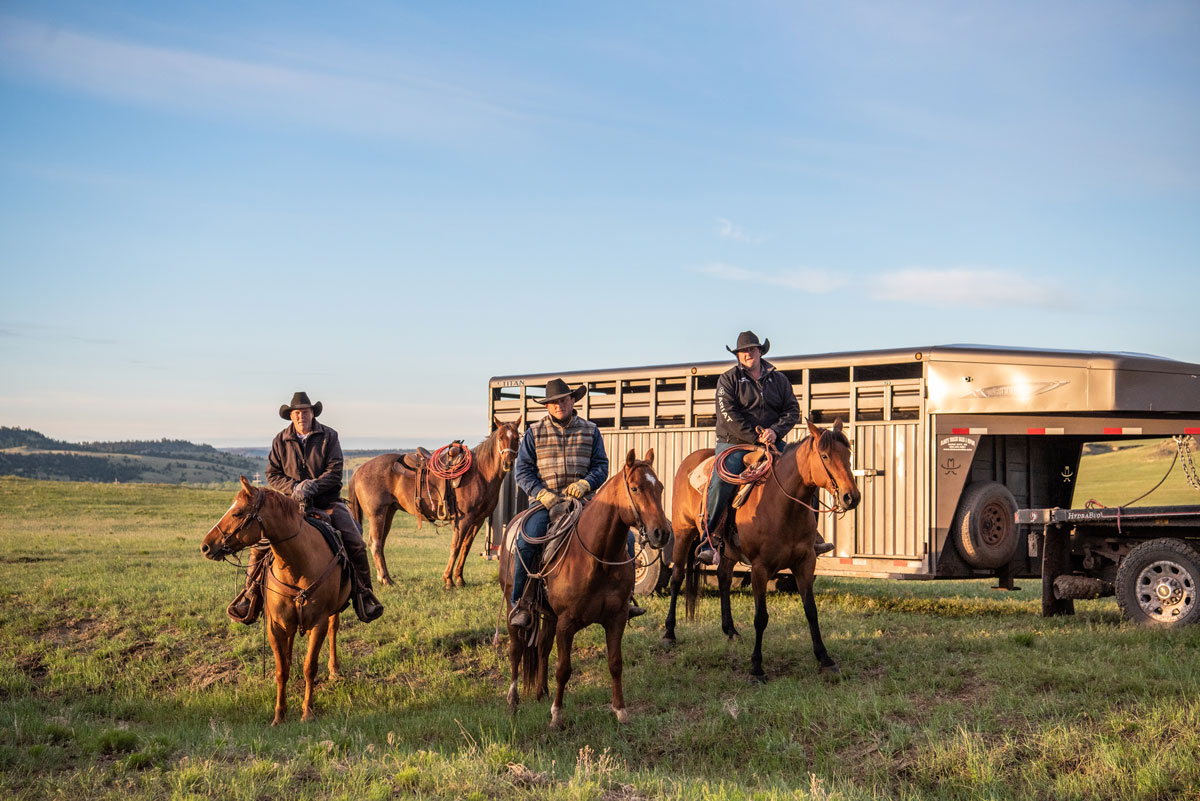
Wasserburger cowboys

Driven by a Competitive Spirit

“If you’re not competitive, you might not be a Wasserburger,” Eric smiles.

Others in the family joke: “Wasserburgers? Competitive?! Good grief, we can’t play cards without it getting heated!” – “Those boys can’t walk up the stairs at the same time without making it a race.” Still, they know the hearts of true competitors beat to better themselves. 

“If we don’t top the sale one day,” Andrew explains, “it’s not that we’re wishing the other guys’ cattle were worse, we just want to know, how can we make ours better? How do we get ourselves where he is?”

Of course, they have topped plenty of sales over the years, more frequently as the years go by. It’s competition that drove Henry and JD to move the cow herd to an Angus base decades ago, and competition drives Andrew and Eric’s selections today.

“It didn’t take sitting in many sale barns to see the black-hided calves were bringing more money,” JD says, looking back to when he returned to the ranch. Still, it was maternal traits rather than color that drove bull selection.

“In this country, you just have to have cows that can do it themselves,” Andrew says, nodding across the wide, Wyoming prairie of big grasslands cut by deep coulees and rocky enclaves. “If she has bad feet, she’s not going to travel to water, she’s not going to travel to cake or mineral, which means she’s more likely to slough a calf, or short him on nutrition. It just doesn’t work.”

 He studies their performance records, willing the cows into a competition with one another. Is there room for second chances in the Bootheel 7 herd?

“No. There’s a thousand other cows out there that aren’t lame, why do you need to be lame? There’s a thousand other cows that kept their calves alive during that storm, why did you lose yours? There’s a thousand other cows I didn’t have to spend $350 to sew up, why would I spend it on you?” Andrew says. “If we keep cows like that around, we’re just asking for more of the same next year.”

The fertility window keeps getting more competitive, too. They recently moved to a 42-day breeding target and use that scorecard as another opportunity to cut the least competitive mothers.

This exacting race to the top drives buyers, too. The last load of heifers through the TD Angus sale ring earned $200 per head over the day’s market average.

“Those buyers come back every year because they understand what we’ve done to produce females here,” Andrew says. “We feel like if you do that job right, raising cows that will raise heifers that will raise the next generation, the steer calves will fall in right behind.”

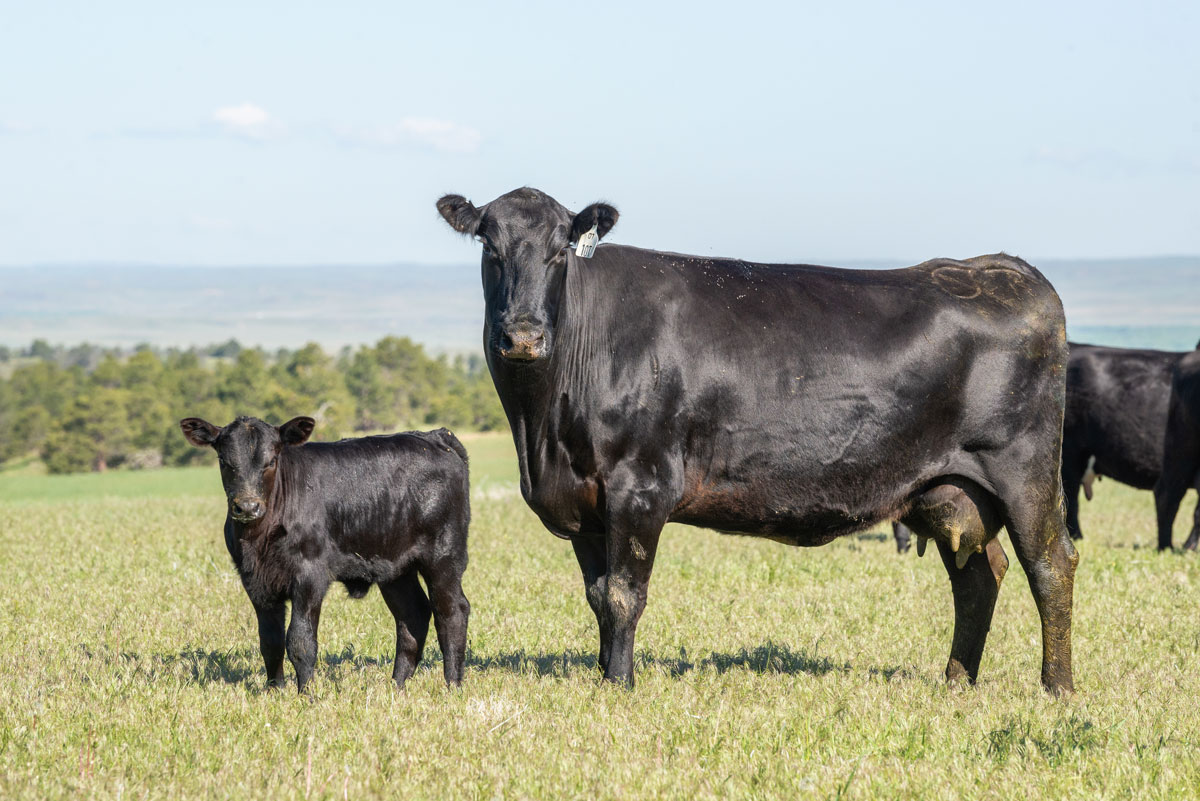
Bootheel 7 Livestock cow-calf pair

Tech Takes Training to the Next Level

Andrew points to one definitive training tool that helped the ranch grow to support multiple families.

“The use of technology is really what inspires me to keep moving forward, because you can actually measure progress on ranches now,” Andrew says. “Any way you can imagine, you can measure your range, your grass, your breeding, your carcass, everything. You have a marker so you can know when you’re getting better. It’s your scoreboard.”

About six years ago, the family got curious about how competitive their beef could be on the plate, too. They started ultra-sounding potential replacement heifers to gain a clearer picture of marbling ability and ribeye size and soon moved to scanning every heifer on the place, sorting to ensure every keeper had the targeted 1.1 square inches of ribeye for every 100 pounds of body weight and an intramuscular fat (IMF) score over 3.5 – the threshold for Choice marbling.

This year, they invested in genomic testing for each heifer, with an even-more-detailed analysis of maternal, carcass and performance traits. Now they know exactly what the scorecard will show before they step into the ring

“That’s the fine-tuning,” Andrew says. Again, the competition is stiff. They tested all 690 heifers this year, all earning composite scores in the upper half of the Igenity database. After sorting phenotypically for the top 500, they used the genetic data to sort by ribeye size, IMF score and weight.

“So we’ve got 500 heifers in there we’d be proud to breed on our place,” he says, “but we only need 300. You can watch five, 600-pound, nice-looking heifers go by that look identical on the outside, and now we can narrow them down to the ones with that ideal ribeye inside, too.”

In the 2021 and 2022 TD Angus Feed Tests, they not only won the Highest CAB Percentage category, they came out on top of the Percentage Prime category, too. Topping two out of five categories was an honor, a brief moment to glance at the scoreboard and be proud to see their name in lights, “But we didn’t win ‘em all; that means we still have a lot of work to do,” Eric says.

JD Wasserburger and grandkids
Wasserburger family

The Real Winner’s Circle

As much as they learn and lean on technology and the wisdom of past generations, the most valuable tool is still the skill as old as the ancient sport of wrestling or that of tending livestock: a strong social network.

Among others, JD points to the late western Nebraska feeder Dallas Larson, who got him started feeding his own cattle and taught him how to evaluate their potential for performance and profitability beyond the ranch gate.

“This is a tough business – it always has been,” JD says. “But you can’t let it get you down. I never saw Dallas Larson have a bad day; that’s probably the most important thing I learned from him.”

Eric shakes his head, remembering that first purchase of farm ground.

“I tell you, it was some tough love for a few years. We had one old tractor, no experience running a pivot, and that thing was breaking down, flat tires, stuck in the mud, all the time… it was just terrible. But we stuck with it. Asked for a lot of advice. Got better.”

“It helps if you talk to someone smarter than you every day,” Andrew says.

They each point to good neighbors, growing business partners, and a strong community as inspiration to keep learning, growing and helping the next generation.

“We all help each other out, make each other better,” JD says, driving across the same ranch trails his father and grandfather before travelled. His grandkids clamor in the back. “We want kids to be proud of where they came from, proud of what we’re doing here. We want the chef to know when he’s serving a steak that came from here, it’s something he can be proud of, too.”

Now in his second decade as coach on the mat, JD knows that, like wrestling, ranching is not necessarily a test of brute strength. Rather, it’s a trial of endurance and control in the face of adversity.

“Wrestling’s a terrible sport to lose at. I don’t know why, but some kids are just devastated when they’re beat,” he says.  The only way to overcome the heartache and bounce back to get better, he figures, is to help a kid feel proud of himself. It can’t be a pride of arrogance, but it must include an earned confidence that comes from knowing they’ve worked hard and used every tool and training to be their best that day.

“If you can make a kid feel proud of himself like that, you’ve got it whipped. And boy, I tell you what, when the kids are proud of themselves, the parents are prouder,” he smiles into the rear-view mirror. “That’s what makes it all worthwhile.”

This story was originally published in the Angus Journal.

You May Also Like…

The Angus Argument

The Angus Argument

There’s no denying CAB has helped dramatically expand the market share for registered Angus genetics. Arguably, that success has encouraged several other breeds to adopt a black hide color by incorporating registered Angus genetics into their breeding programs and registries.

Utilization Key to Prime Success

Utilization Key to Prime Success

More demand for individual Prime grade cuts is being discovered on the part of packers and wholesalers as they educate downstream users about the opportunities to capitalize on growing Prime demand.

Seasonal Demand Shifts Carcass Values

Seasonal Demand Shifts Carcass Values

January often presents the lowest beef demand, while February likely vies second. Also, we see a shift in consumer preference away from holiday middle meat roasts toward end cuts for “comfort food” meals.
Angus cow at sunset

Following Second Dreams

Larson Angus Ranch recognized for the 2022 Seedstock Commitment to Excellence award. 

By Morgan Boecker

Dust gathers on sketchbooks and drawing pencils while other plans take shape. Years ago, Brady Larson set aside his passion for art to master a new calling.

That echoes his dad’s stepping away from a dream of horse training to work on building the best Angus herd.

In 1977, Dan and wife Becky answered a more literal call when his own father, Floyd Larson, asked the couple to come back to Sharon Springs, Kansas. Dan took a pen riding job at nearby Kan-Sun Feeders and she drove a feed truck and worked with the processing crew.

The feedyard was a good place to start the horses they were raising, and Dan soon started feeding cattle there as he worked on up to assistant manager and became more involved after hours at home working for his father and leasing cows and farm ground. But he wasn’t sure this was meant to be. Though he grew up in the cattle business, his younger self didn’t think it would be a career.

Sometimes walking away takes you exactly where you need to be.

Economics and a newfound passion led him back to the family ranch, where he jumped into studying genetics and the Angus Journal. They’ve since grown Larson Angus Ranch to 800 cows. Since 2007, that’s been with the help of their son Brady along with his wife Kyla, bringing up a fifth generation on the land.

Cow work, genetic improvements and breeding plans are on the table for hours because building the perfect cow takes constant adjustments to the plans they lay out. The Larsons are working on a masterpiece that moves their families and customers closer to “best” every day.

Their determined journey toward elusive perfection helped Larson Angus Ranch earn the Certified Angus Beef (CAB) 2022 Seedstock Commitment to Excellence award.

​Power of the Cow

Fields of corn, wheat, alfalfa and milo spread across the landscape, till Ladder Creek marks a shift, where black cows dot the rough, rocky terrain.

“We’re turning grass pastures that can’t be farmed into a high-quality protein source,” Dan says. “We can count on our Angus cows in this region. They work hard for us for 10 or 12 years and produce calves that have a lot of vigor.”

Investing in the right foundational pieces takes upcycling in the short-grass prairie where grazing is good in the summer. That’s if there’s enough rain to make it grow. Drought is part of the cycle and they’re accustomed to managing through them. The cold winter months they rely on cornstalks from neighboring farms.

“We take care of the land and the cattle, in turn, it takes care of us,” Kyla says. “That’s a very short answer for everything that goes into it.” 

What works are medium-frame cows with moderate milk production, good udders, calving ease and sound feet to travel. Fertility and carcass merit are non-negotiable.

“It’s one of those things that you just constantly build on,” Brady says. “You’re never gonna get the perfect animal, but you just keep building on it and build on it and build on it.”

Just like each brush stroke adds detail to a painting, every bull mating brings them closer to their goals. 

They quickly adopted artificial insemination (AI) in 1989 and within a few years started using embryo transfer (ET). That inspired Brady to pick up custom AI through ABS Global to keep him even busier during breeding season.

Today, they put in 150 embryos and give cows one chance with timed AI. Whatever doesn’t stick gets another chance with the turnout bull.

“We don’t do it on a huge scale compared to other people,” Dan says, while noting their ET work contributes to most of the 100 bulls they sell each March. “This really helps us speed up genetic progress.”

Cows must prove themselves before trusting them to produce an embryo, but they’re seeing that in younger cows all the time.

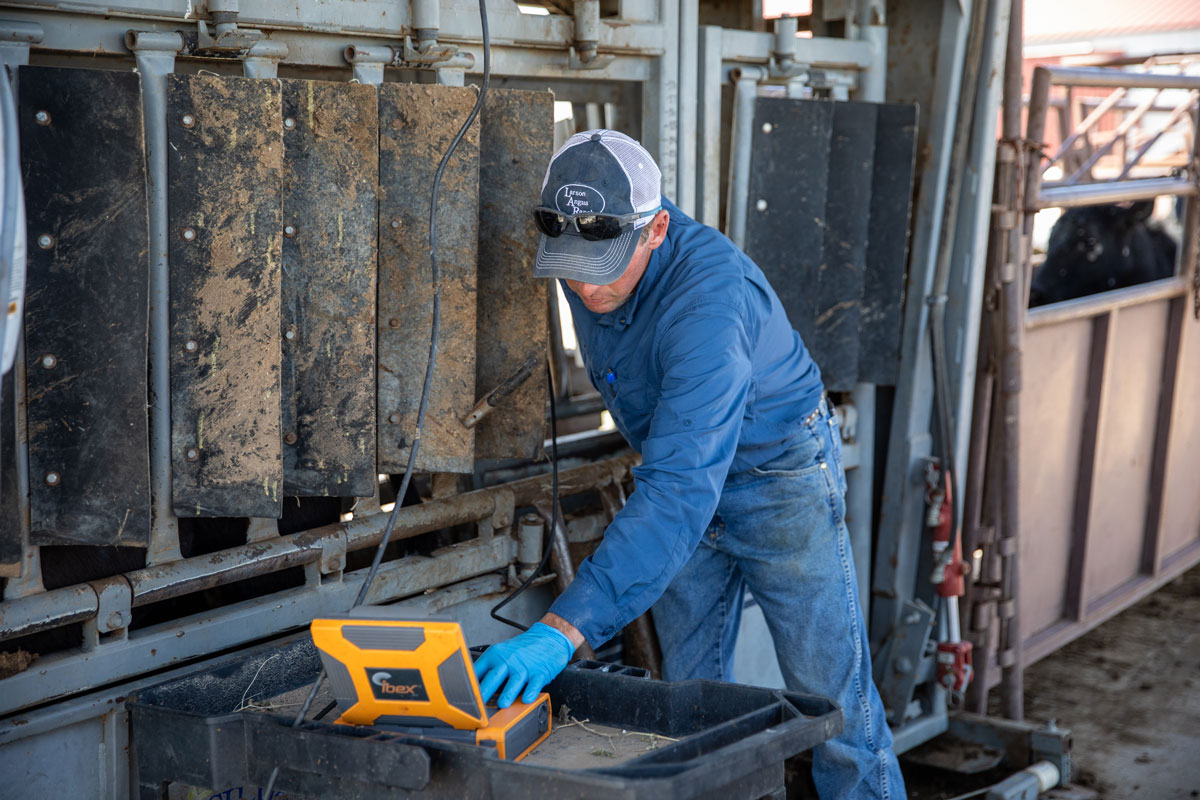
Technology takes out most of the guesswork. Ninety days after breeding, Brady ultrasounds the cows to match pregnancies to the breeding method and due date. From there, cows are split into calving groups and electronic identification lets them track the data and sort it in spreadsheets.

“We can better manage them, especially in the wintertime,” Brady says. “When we start calving and a blizzard hits and we need to bring some back to the barn, we know almost exactly when cows are going to calve.”

There’s no room for abstract; every little detail matters in the final picture.

Becky Larson using EID scanner

Technology helps them stay on target. They use EId tags to track data on all of their cows, which they’re able to then use throughout the year to manage cows individually.

“I certainly think you can have both, maternal instinct and carcass merit,” Brady Larson says. “It’s not easy. I don’t know if the best animal will ever exist, but we strive every day to reach that.”

Brady Larson ultrasounding

Customer Focused

Whether it’s in a pasture or on a plate, the family wants everything their customers want.   

“Our customer base is not just selling calves at weaning, though some of them do,” Brady says. “We’ve got a lot of customers that come to us because they want to put their cattle on a grid and make extra money.”

The Larsons have the same priorities. Only the top bulls make the annual sale and the best heifers become replacements while they finish the other 600 in their own feedyard to market through US Premium Beef.

“Our goal was to get 100% Choice and years ago we got to that,” Dan says. “And then we tried for 100% CAB and we reached that goal. Now we’re feeding groups of cattle that grade nearly 80% Prime and dress at 64%.”

“If there was a quality grade above Prime, we’d try to target it,” Brady says. “But we also think there’s a multitude of traits we need to focus on to make a complete, balanced animal.”  

Hitting the mark means the cattle have to excel across all EPDs and look good do it, he adds. Seven of their top-selling bulls ranked in the top 3% for $C (Combined Value), which combines $M (Maternal Weaned Calf Value) and $B (Beef Value). This helps them and their customers intending to keep replacement heifers and retain ownership through the feedyard.

Sitting at 4,000 feet of elevation, high altitude disease becomes a concern and pulmonary arterial pressure (PAP) a critical trait to watch. They see it affecting the youngest calves on feed.

“We feel we need to select more for this or get a little more frame on our calves before they go on feed,” Dan says. “Right now, the best tool we have at this stage is the PAP EPD.”

It’s a balancing act to dance among the relevant traits.

“When we’re really exceptional in one area, then we back up and try to self-audit and see where we really need to improve,” Brady says. “Is it fertility? Is it PAP? Foot quality? Udder quality? Is it growth and calving ease? But we try to really look at where we can be better.”

It’s a progressive mindset, seeking traits that ensure quality and carcass merit are expressed to their full potential. The quest goes on because that’s what pays.

“I was talking to a corn farmer and he told me how envious he was of us being able to add value to our product and that he did not have that ability or any extra way he could to add value,” Brady says. “And that kind of gave me the perspective: a brand, Certified Angus Beef, came out early and it’s been the most consistent product out there. And it’s a product that pays us back good premiums.”

Their sights are set on 100% Prime. Together, they’ll reach it.

Brady Larson and kids
Angus cow
Kyla Larson serving lunch

Home is With Family

Seven miles is all it takes for Becky and Dan to be at any of their sons’ homes. Farming opportunities made it possible for Beau, Bret and Bart to return, supporting the ranch with the grains they grow and helping when they’re available.  

“I don’t know what more a mother or grandmother could ask for,” Becky says. Most days the grandkids saddle up and take barrel racing lessons from Becky or even help move cows. At the end of the day, garage gatherings are common dinner stops. 

“I would say this is the American dream. Not a lot of people get to make their livelihood doing what they love,” Brady says. 

He and Kyla hope to pass that on to their four kids. Sustaining and improving the water, grass and cattle so each day is the best it can be. That means they’re always getting better.  

Whether riding along in the Ranger to check cows, water or put out minerals, the kids are learning by example.

“We try to prioritize, and we don’t always get it right,” Kyla says. “But just getting up the next day and trying again, it’s a lot of hours. I think you could work and work and work and never get it done. But for us, it’s doing the best for our family. Get the cows taken care of, get the work done.”

So they’ll keep working to meet this second dream, skillfully adding brush strokes to make it better.  

This story was originally published in the Angus Journal.

You May Also Like…

The Angus Argument

The Angus Argument

There’s no denying CAB has helped dramatically expand the market share for registered Angus genetics. Arguably, that success has encouraged several other breeds to adopt a black hide color by incorporating registered Angus genetics into their breeding programs and registries.

Utilization Key to Prime Success

Utilization Key to Prime Success

More demand for individual Prime grade cuts is being discovered on the part of packers and wholesalers as they educate downstream users about the opportunities to capitalize on growing Prime demand.

Seasonal Demand Shifts Carcass Values

Seasonal Demand Shifts Carcass Values

January often presents the lowest beef demand, while February likely vies second. Also, we see a shift in consumer preference away from holiday middle meat roasts toward end cuts for “comfort food” meals.
Angus fed calf

Triangle H Named CAB Feedyard Commitment to Excellence Honoree

Sam Hands and Marisa Kleysteuber recognized for feeding high-quality Angus at the Certified Angus Beef 2022 Annual Conference.

by Morgan Boecker

October 5, 2022

Rocking in Adirondack chairs on the patio, a glass of tea in hand, Sam Hands and daughter Marisa Kleysteuber make their game plan. It’s the only slow part of their day, reflecting on what happened, how to improve and what needs attention next at Triangle H.

Together, they care for more than 8,000 feeder cattle between a feedyard at Garden City, Kan., and another 20 miles west near Deerfield. 

For Hands, there are no short answers. Problems are met with careful consideration of every possible outcome, solutions executed with care and evaluation. It’s simply the Triangle H way to deal with every challenge from people to cattle to equipment. Work to be the best in everything they do – a mindset Hands is passing on to his daughter.

Their sharp focus on quality and thoughtful customer service earned Triangle H the 2022 Feedyard Commitment to Excellence Award from Certified Angus Beef (CAB), presented Sept. 23 at the brand’s Annual Conference in Phoenix.

Triangle H family recognized

Located in the heart of prime cattle country where genetics excel equally at the ranch and feedyard, bulls for the family’s own commercial Angus herd are selected knowing calves will be in their feeding pens within 15-18 months.

“I just hope from a feeder’s standpoint that we don’t prevent them from reaching their genetic potential,” Hands says.

Raising premium beef starts with genetics, then it’s on the shoulders of the caretakers.

“Good cattle can’t afford to have a bad day,” Kleysteuber says. “So we do everything in our power to give them every opportunity to perform and express the genetics that are there.”

Hands is the kind who wants to understand an entire process. In the 1970s and ’80s, he and wife Janet spent hours in the packing plant coolers tracking their cattle through harvest to know exactly how they were performing.

“If I’m going to produce beef knowing I’m going to sell on the rail, then I want to know if I’m getting the dollars that I hope to reach,” he says. “I’ve got to be on target.”

Size, scale and decades of experience allow them to uniquely tailor each customers’ feedyard and carcass data to best cattle performance.

“This is a powerful tool that we can share with our customers to make improvements with their herd and add more value to their bottom line,” Kleysteuber says.

Through the U.S. Premium Beef grid, Hands knows individual carcass performance. As long as a pen stays above average, they see black in their bottom line.

And they do. In the first quarter of 2022, Triangle H averaged 97% Choice or better, 18% Prime and 44% CAB resulting in a $91.60 per head premium. At certain times of the year, premiums can reach more than $200 per head.

Triangle H crew
Marisa Kleysteuber and Sam Hands

But cattle don’t perform to their greatest potential without the right people. A reoccurring question for the father-daughter duo is how to bring in good employees and then help them grow and develop.

“We may not be a big yard, but we feel there are some natural niches where we can give opportunities to a person to have a career opportunity,” Hands says. “Especially those who may not be in a position to marry into ag or inherit it.”

Their investments pay off with tenured employees.

“We give them a lot of responsibility to make decisions and keep things moving,” he says. “This lets us focus on more of the business side at the office.”

“Over time dad has helped me gain more confidence in different areas of the business,” Kleysteuber says. Every day she accepts more of the daily weight that comes with managing a feedyard.

She naturally fills the role but continues to take full advantage of the time spent with her dad. “As long as he can get up and come out here, I plan on us working side-by-side.”

You may also like

Keep the Supply Coming

Keep the Supply Coming

A record-high 800 registrants from 17 countries gathered in Austin, Texas, to learn more about CAB, become inspired by the culinary work of chefs and pitmasters, and celebrate sales and production success. But at the forefront: supply and demand, a reflection of the chaotic past year, and preparing for what’s ahead.

Ty, Terry and Trevor Walter

Walter Angus Recognized as 2022 CAB Ambassador Honoree

The Walter family opens the gates to share their passion for Angus cattle.

by Jessica Travis

October 4, 2022

Teaching an appreciation for Angus cattle comes naturally to Terry and Becky Walter. Along with their children Trevor, Ty and Katelyn, they’ve built Walter Angus into a fifth-generation seedstock ranch that specializes in high quality at a high elevation.

Hudson, Colo., provides awe-inspiring views of the pristine Rocky Mountains as a backdrop to their picture-perfect cattle. It’s the ideal spot to introduce visitors to the place where beef begins.

Their spirit of hospitality and work to share how they raise high-quality beef earned the Walter family the 2022 Certified Angus Beef (CAB) Ambassador Award.

Many of the groups that visit Walter Angus include foodservice sales staff who merchandise CAB or chefs serving the brand at their restaurant. They’ve also hosted food bloggers, media, video and photo crews to capture their story to share in CAB training and promotional materials.

“I enjoy talking to people, especially as society gets more disconnected from agriculture,” Terry says. “I want people to know that ranching isn’t easy; it takes a lot of work producing high-quality cattle so people can feel good about eating beef.”

Walter Family at Annual Conference

Opening their ranch is more than putting a face to the hands that raise a delicious steak, but understanding the intention behind each decision, taking care of both the land and livestock.

That includes taking cattle to new heights.

The Walter Angus herd spends at least six months grazing mountain pastures that range from 6,000 to 11,000 feet in elevation. Bred to handle the altitude, management also helps cattle adjust with gradual rotations during the warm summer and fall months before the cows come home.

While the mountain pastures are great for cattle, the Walters want people to know those cows are great for the pastures, too.

“The cattle help break up the decomposing trees that have succumbed to beetle rot,” Trevor says. “Grazing helps prevent wildfires and creates a positive ecosystem for the land they’re on.”

Their grazing encourages deeper roots and healthier grasses.

“We make the land better with our cattle,” Ty says, noting the increased forage production and soil health. “God created this land to be grazed by cattle. Without them, and the grasses and sagebrush, the land would blow away to Kansas.”

Ty Walter
Angus cows

Docility is another key component of breeding for balance. The family creates cattle that can be good working partners on the ranch, knowing it ties to performance on the plate.

“We’re always trying to make balanced cattle,” Terry says. “We’re trying to put as much marbling in these cattle as we can without sacrificing functionality. But in my opinion, marbling is what pays bills.”

 That intentional breeding pays off. A look through sale catalogs shows the CAB Targeting the Brand™ logo next to most of their bulls. A mark to help their customers identify bulls with greater potential to sire calves that earn a CAB stamp.

Their focused approach is put to the test by retaining ownership and the carcass data lets them see how they’re doing. Over the last four years, 97% of their cattle graded Choice or higher, with 51% qualifying for CAB and 13% Prime.

Raising great bulls to produce calves that meet the demand for high-quality beef is a feat on its own, but the Walters take the next step to connect with people at the other end of the supply chain.  

Pulling out of the driveway, visitors head home with more than a camera full of beautiful pictures and cow selfies to post on social media. They leave as friends who know that the cattle behind the brand are raised by good families, in a way that’s good for animals and the environment.

“I want groups to leave our ranch knowing that there’s a family in Hudson, Colorado, that loves Angus cattle,” Terry says. “That we’re striving to make the best beef possible, and our mission here is hitting that CAB target. But more than that, it’s knowing that we care about the cattle.”

The Walter family was recognized for the Ambassador Award at the Certified Angus Beef Annual Conference in Phoenix on September 30, 2022.

You may also like

Keep the Supply Coming

Keep the Supply Coming

A record-high 800 registrants from 17 countries gathered in Austin, Texas, to learn more about CAB, become inspired by the culinary work of chefs and pitmasters, and celebrate sales and production success. But at the forefront: supply and demand, a reflection of the chaotic past year, and preparing for what’s ahead.

Larson Angus Ranch

New Mexico Ranch Earns Certified Angus Beef Sustainability Award 

by Kylee Kohls Sellnow

September 30, 2022

Producing beef in the desert Southwest takes a certain resolve, faith that the rain will come and grit to do the hard things and smile through the work when it doesn’t.  

This is the grit engrained in Manny and Corina Encinias and their seven children operating Buffalo Creek Ranch.  

Sustainability runs deep for these stewards of a legacy that dates back to 1777, when the first generations of their family began herding sheep near Galisteo, N.M. Today they focus on cattle well-suited to the harsh desert range east of Albuquerque, fostering community strength and creating opportunities for others. 

My ranching philosophy is adapting to the ever-changing environment and marketing climates,” Encinias says. 

Their holistic approach earned this ranching family the 2022 Certified Angus Beef (CAB) Sustainability Award.  


Restoring the Land 

Manny and Corina purchased Buffalo Creek Ranch in 2016 with a vision to restore the land and help it flourish. 

“The first part of sustainability is consideration for the natural resources,” he says. “In the desert Southwest, those are fragile, yet resilient.”  

Dormant grasses, the sound of a creek bed crunching beneath boots and a lone, green cottonwood point to the tenacity life requires in this part of the world. Named for the creek that typically runs through its heart, Buffalo Creek Ranch relies on water from a closed basin – and a monsoon season not seen in many years – to nourish its native grasses. 

“Our gold in this country is water,” Encinias says. “And it’s what keeps me up at night. Water will always be of concern, for myself and future generations, because it is so precious. I don’t believe people recognize it as a fragile resource in everyday living here in the United States.”  

Cattle are part of his plan to restore the land, taking care to only stock as many as the acreage can maintain. 

In 2021, the family responded to persistent and extreme drought by downsizing to 90 of their best Angus-influenced cows. They stock at only 30% today – one cow for every 40 to 100 acres depending on the pasture.   

Their genetic goals are multifaceted. Key considerations include Angus cattle that can adapt to the unforgiving environment yet achieve carcass merit and qualify for the Certified Angus Beef ® brand. Cows that stay must be easy fleshing and structurally sound, with maternal instincts and adapted to handle the 6,300-foot elevation. Those still thriving prove Angus cows can meet consumer demand for high quality in ways that work for both caretaker and landscape on which crops could never thrive. 

The 98% 

“The consumer drives a lot of what we do,” Encinias says. “We have embraced that as a responsibility. I think it’s important to have a seat at the table with the 98% not directly involved in agriculture, not only as beef consumers but as policy makers.” 

Transparency across varied platforms helps define responsibility to the industry and welcomes visitors. 

Foodservice salespeople and chefs stop in as part of CAB Ranch Days, learning what goes into a day’s work and a long-term plan. For example, Encinias explains the effect of water-saving night irrigation to limit evaporation and the stewardship of rotational grazing.  

His efforts go beyond simply opening the ranch gate. Further education and helping with beef industry programs fit in with the family’s own progress and readiness to share principles on or off the ranch.  

“I think Beef Quality Assurance (BQA) as a program has evolved to really take in a lot more of the important consumer-based issues like animal welfare,” Encinias shares.  

As a former BQA trainer and state extension beef cattle specialist, I can attest to the program being about evaluating systems through the BQA principles, he says.

“We can all lend ourselves to becoming better better handlers of animals and our environments,” he says. 

Encinias teaches animal and meat sciences and ag business at Mesalands Community College, drawing on years of consulting on ranches from Hawaii to North Dakota. In the between hours, he also translates for Mexican veterinarians at U.S. feedyards and ranches. 

“Instead of just performance or profitability, we try to be the kind of ranch you’d want to live next to if you weren’t in production agriculture,” the rancher and educator says. “This just expresses who we are, who we’ve always been, who we were when we first arrived here in this region. And it’s really being a good neighbor, caring for each other.”  

You may also like

Keep the Supply Coming

Keep the Supply Coming

A record-high 800 registrants from 17 countries gathered in Austin, Texas, to learn more about CAB, become inspired by the culinary work of chefs and pitmasters, and celebrate sales and production success. But at the forefront: supply and demand, a reflection of the chaotic past year, and preparing for what’s ahead.

Larson Angus Ranch

Larson Angus Ranch Earns Certified Angus Beef Seedstock Award

by Morgan Boecker

September 29, 2022

An unanswered prayer led Dan Larson back to the ranch. He and wife Becky stepped away from their dream life of horse training for a new calling, to build the best Angus herd they could.

Economics and a newfound passion brought on years of studying genetics and the Angus Journal to where Larson Angus Ranch, Sharon Springs, Kan., now manages 800 cows. Since 2007, that’s been with the help of their son Brady along with his wife Kyla, bringing up the fifth generation on the land.

Cow work, genetic improvements and breeding plans are on the table for hours because building the perfect cow takes continual adjustments. The Larsons are making moves that bring their families and customers closer to “best” every day.

“It’s one of those things that you just constantly build on,” Brady says. “You’re never gonna get the perfect animal, but you just keep building on it and build on it and build on it.”

Their determined journey toward elusive perfection helped Larson Angus Ranch earn the Certified Angus Beef (CAB) 2022 Seedstock Commitment to Excellence award presented at the brand’s Annual Conference Sept. 29 in Phoenix.

Larson Angus Ranch accepts CAB seedstock award

Spanning rough, rocky terrain along Ladder Creek, the ranch fills a niche next to farm country.

“We’re turning grass pastures that can’t be farmed into a high-quality protein source,” Dan says. “We can count on our Angus cows in this region. They work hard for us for 10 or 12 years and produce calves that have a lot of vigor.”

The Larsons like medium-frame cows with moderate milk production, good udders, calving ease and sound feet to travel. Fertility and carcass merit are non-negotiable.

They adopted artificial insemination (AI) in 1989 and within a few years started using embryo transfer (ET). That inspired Brady to pick up custom AI through ABS Global to keep him even busier during breeding season.

This year, they put in 150 embryos and as usual allowed cows one chance with timed AI. Whatever doesn’t stick gets another chance with the turnout bull.

“We don’t do it on a huge scale compared to other people,” Dan says, but ET work figures into most of the 100 bulls they sell each March. “This really helps us speed up genetic progress.”

Larson Angus Ranch cow-calf pair
Brady and Kyla Larson family 2022

The Larsons have the same priorities as their customers. Only the top bulls make the annual sale and the best heifers become replacements while they finish the other 600 in their own feedyard to market through U.S. Premium Beef.

“Our customer base is not just selling calves at weaning, though some of them do,” Brady says. “We’ve got a lot of customers that come to us because they want to put their cattle on a grid and make extra money.”

“Our goal was to get 100% Choice and years ago we got to that,” Dan says. “Then we tried for 100% CAB and we reached that goal. Now we’re feeding groups of cattle that grade nearly 80% Prime and dress at 64%.”

Hitting the mark means the cattle have to excel across all EPDs and look good doing it, Brady adds. It’s a balancing act to dance among the relevant traits.

Brady and Kyla hope to pass that way of thinking on to their four kids, sustaining and improving the water, grass and cattle so that each day they’re getting better. 

Whether riding along in the Ranger to check cows, water or put out minerals, the kids are learning by example.  

“Sometimes I wonder how far we’d be if ranching had been my plan A,” Dan says. His sights are always on the future, looking for better ways. With his family and that outlook, they’ll keep improving their best.

You may also like

Keep the Supply Coming

Keep the Supply Coming

A record-high 800 registrants from 17 countries gathered in Austin, Texas, to learn more about CAB, become inspired by the culinary work of chefs and pitmasters, and celebrate sales and production success. But at the forefront: supply and demand, a reflection of the chaotic past year, and preparing for what’s ahead.

Pfeiffer Angus 2021 CAB Ambassador Award

Nominations for Certified Angus Beef Rancher Awards Close January 17

by Morgan Boecker

January 7, 2022

It takes passion, drive and ability to build a top-quality beef program based on economics, ethics and sustainability. A legacy like that merits recognition from peers and those they affect throughout the supply chain all the way to consumers.

Until Jan. 17, nominations are being accepted for one of three Certified Angus Beef producer awards, which recognizes cattlemen and women raising beef to the highest standards.

See who was recognized in 2021.

“During the brand’s Annual Conference in September, we recognize those who exemplify our mission on their operations,” says Kara Lee, assistant director of producer engagement. “These awards allow us to both thank them for their dedication and also introduce partners across the beef business to cattlemen and women who supply this brand.”

There are three categories of awards to nominate someone you know:

1) Commitment to Excellence nominees are sought in three areas: commercial, seedstock and feedyard. Selection is based on the nominee’s direct effect on high-quality cattle and growing supply of the Certified Angus Beef ®

2) Progressive Partner awards ranchers, cattle feeders or organizations that elevate the beef business and empower other sectors in the supply chain. Selection focuses on innovation, technology, education and connecting beef industry stakeholders.

3) The Sustainability Award recognizes a ranch, feedyard, grocery store or restaurant that exemplifies sustainability in its daily operations. Honorees go above and beyond in terms of environmental stewardship, cattle care, community involvement/service and opportunities for the next generation.

Award winners will be invited to accept the honor at the 2022 CAB Annual Conference, set for September 28 to 30 in Phoenix, Arizona.

“It’s a chance for producers to meet people from all areas of the beef industry—chefs, distributors, retailers and more. It gives them a new perspective on the brand and the people involved in it,” Lee says.

Visit www.cabcattle.com/nominate to nominate someone who deserves to be recognized.

You may also like

Keep the Supply Coming

Keep the Supply Coming

A record-high 800 registrants from 17 countries gathered in Austin, Texas, to learn more about CAB, become inspired by the culinary work of chefs and pitmasters, and celebrate sales and production success. But at the forefront: supply and demand, a reflection of the chaotic past year, and preparing for what’s ahead.

Kristin and Brad Niznik

Focus Under the Hide

Alberta ranch earns Certified Angus Beef award.

by Morgan Boecker

October 27, 2021

In the distance, corn stalks rustle and soft lowing is heard. Cows call to their calves to pair back up after being moved to their winter home. Inside the red ranch-style farmhouse, lively chatter and laughter fill the dining room as the Niznik family gathers for supper after a long day’s work.  

It’s the sight and sounds of fall at Niznik Ranch in Brooks, Alberta. Brothers Brad and Bruce Nizik carefully plan and meticulously execute all tasks. To anyone else it’s just another ranch, but for the Niznik family, it’s home.  

From the bulls they buy, the cows they cull and the grass their cattle graze, each decision is evaluated based on how it affects the ranch’s economics, the land and family. 

“We’re capitalizing on data and raising the best product and doing the best with the environment we’re given,” Brad says. “It is a culmination. Our goal is to reach the top, to be the best at what we do.”  

This management style earned the Niznik family the Certified Angus Beef (CAB) 2021 Canadian Commitment to Excellence award.  

Bruce, Brad, George and Jack Niznik
Pictured: (left to right) brothers Bruce and Brad, their father George and uncle Jack Niznik

Better Living  

Producing the best starts with a strong base.   

“If you’ve got a good Angus cow, you can probably make a good living with her,” Bruce says, adding that technology takes the guesswork out of finding and breeding “good” ones.  

“We won’t buy a bull if we do not know what’s under the hide,” he says. “The ultimate animal we want to produce is a Prime, Yield Grade one.”  

They’ve differentiated their cattle to fit into a premium beef market by buying bulls that rank in the top 5% of the breed for marbling and above average ribeye area, among other traits. They use genetic testing to pinpoint traits they want in their replacement heifers. 

“We run a closed herd,” Bruce says. “The one opportunity to add new genetics is from the purebred producer using every available technology to improve their herd so that we can improve ours.”  

A successful partnership with their bull supplier requires similar goals, Bruce says. That’s why the Nizniks continue to use Cudlobe Angus bulls. As a customer, it also gives them access to a ready market in the Cudlobe-influenced feeder calf sale. Each year they see return buyers bid on their calves.  

“If the market’s terrible, we have top of the terrible market,” Bruce says. “But when it’s a good market, it’s really good for us.”  

They’ve created a reputation for calves that perform on the rail, with recent loads averaging 32% Prime and 68% AAA.  

Results like that start with genetics.  

“A lot of people might not think that’s on the mind of people producing beef,” Bruce says. “But to people like us, that’s our end goal.”  

“Certified Angus Beef delivers that product,” Brad adds. “A product that people want, all over the world.”  

Canadian Angus cow

The Ripple Effect  

With incremental progress, came steady growth and increased efficiency in the Niznik cow herd.  

Twenty years ago, 700 cows were a lot, and the family worked tirelessly to keep them fed. The short summers were spent in the hay fields and long winters meant hours each day in the tractor.   

“Basically, in this country all you do is prepare for winter,” Bruce says, “because they’re hard.” 

Twelve years ago, they turned cows out on full corn stalks for the winter and they’ve done it every year since. They went from putting more than 1,000 hours on a tractor in the winter to 100; from feeding hay six months to just three weeks. 

“That was probably as big of a change on this place as the round baler was for our dad,” Bruce says.  

Their summers changed, too. Less time was spent baling hay, resulting in fewer expenses. The cattle are handled less and grazing longer, doing more with less. Now, there’s more time for the ranchers to focus on their family.  

Today, the ranch supports more than 1,000 head and supports four families. The brothers hope it will be a place for the fifth generation to return, Bruce says.  

“Everyone knows their place and contributes in their own way,” Bruce’s wife Jodi says. “I think everyone has the same passion to make Niznik Ranch what it is today and something in future.” 

It’s a place to instill grit in the family and a focus on raising cattle that produce high-quality beef, for generations to come.  

You may also like

The Angus Argument

The Angus Argument

There’s no denying CAB has helped dramatically expand the market share for registered Angus genetics. Arguably, that success has encouraged several other breeds to adopt a black hide color by incorporating registered Angus genetics into their breeding programs and registries.

Utilization Key to Prime Success

Utilization Key to Prime Success

More demand for individual Prime grade cuts is being discovered on the part of packers and wholesalers as they educate downstream users about the opportunities to capitalize on growing Prime demand.

Seasonal Demand Shifts Carcass Values

Seasonal Demand Shifts Carcass Values

January often presents the lowest beef demand, while February likely vies second. Also, we see a shift in consumer preference away from holiday middle meat roasts toward end cuts for “comfort food” meals.
b3r sustainability

More with Less

Texas grass farmers win CAB Sustainability Award

Story and photos by Abbie Burnett

October 2021

It’s July in the rolling Texas Panhandle Plains, but not a bead of sweat forms. A cool breeze moves the knee-high grasses carpeting the red clay soil like God himself is smoothing out the wrinkles in a blanket. 
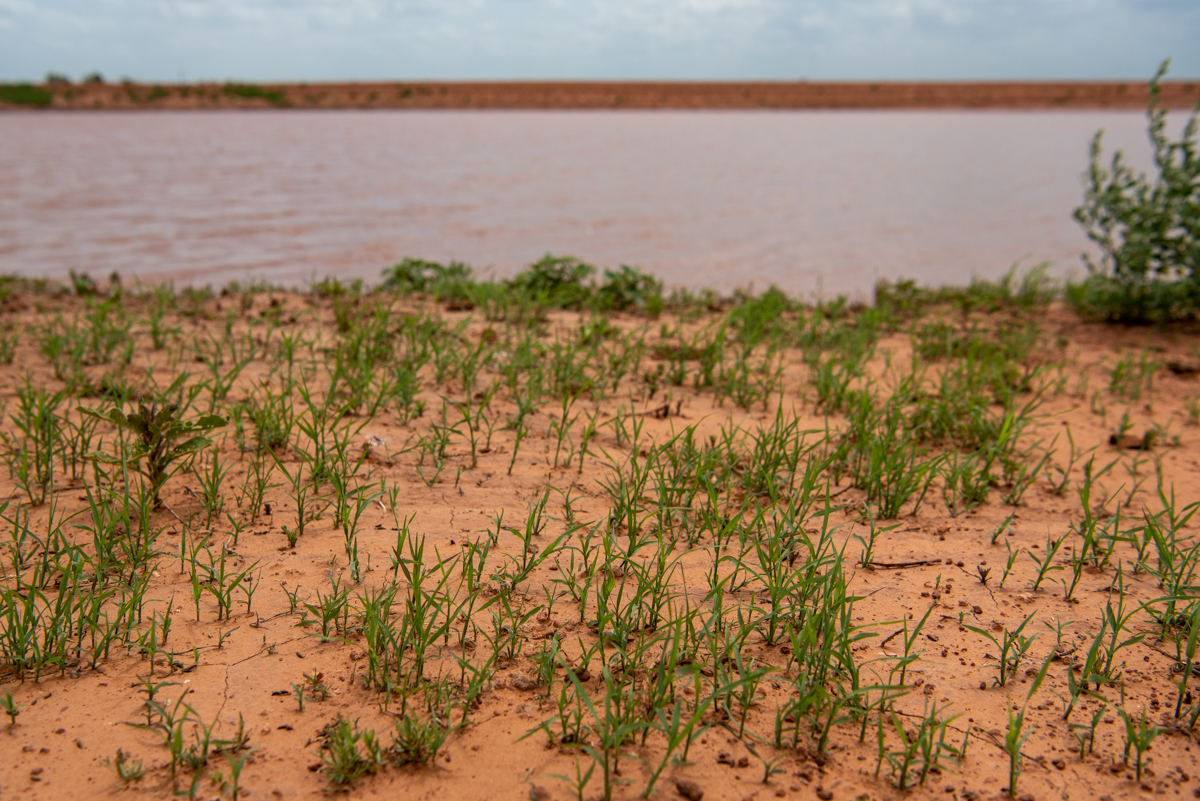
Indigo clouds fill the northwest sky with a promise of rain. In a region of guaranteed droughts and an average annual 18 inches of rainfall, Mary Lou Bradley-Henderson and husband James Henderson of Bradley 3 Ranch (B3R) near Childress, Texas, look in wonder across the landscape. 

Regular dust storms, 50+mph winds, and temperatures ranging from 115 to -35, just living here is harsh, says Mary Lou. But not this year. 

“This is living the dream,” she says. “You can’t go wrong when it rains every other day. Not in this country.” 

If going through bad years makes one appreciate the good ones, Mary Lou and James have plenty under their belt to take respite. 

“Anybody can run cattle this year,” says Mary Lou. “It’s when it’s 111 and ain’t raining that it’s a different can of worms.”  

They should know. 

More than 65 years ago, the ranch was considered a wasteland when B3R’s matriarch and Mary Lou’s mother Minnie Lou arrived.

It was the 1950s during the drought of a generation. Her soon-to-be father-in-law, Rusty, procured the ranch property as a wedding gift. As they walked the desolate landscape, Rusty pulled out his pocketknife and began sifting under the fine soil.  

Minnie Lou’s not sure what surprised her more: that there were roots or that they were alive. Nothing above ground promised either. 

“I didn’t know until later,” she recalls, “But no one had ever owned this piece of country for over 10 years without going broke.” 

She might have taken the same path had a friend not told her outright, “You’re one of the worst grass people I’ve ever known.” They were understocking but overgrazing. 

The cattle cherry-picked the good stuff, eating all the grass and leaving space for 30 gallon a day, water-sucking Mesquite trees and Redberry Juniper to steal the land. 

Distraught at what they’d done, Minnie Lou implemented a rotational grazing plan and strapped GPS collars to her cows to find the grazing paths. She learned every pasture is different, and finding grazeable acreage over total acreage per cow is challenging. 

Minnie Lou admits, “For 42 years, I didn’t think we made any progress.” 

In the early 2000s, Mary Lou and James sold their meatpacking company, B3R Meats, and returned to the ranch. They mapped out a 20-year plan to ensure water was no more than a half-mile from any point, picking up work Minnie Lou started. The fruits of their labor are evident this year. 

B3R is the 2021 Certified Angus Beef (CAB) Sustainability Award recipient, and it’s been a long time coming. 

minnie lou bradley

Soaking it in 

Water is the elixir to life in these parts. 

In the 1940s, a saltwater spring was plugged and flooded the aquifers under the ranch’s south part, making groundwater unusable and unaffordable to clean up. 

In the north, the groundwater is so full of sulfates it must be kept moving to evade evaporation, and thus turning fatal for the cattle. 

Water guzzling plants ruled their pastures, and any rain is trapped or evaporates before it can hit the ground. 

The plan: build more opportunities for water, gouge out the scourge of brush one by one, and bring back the grass while managing a quality-forward seedstock business. 

Droughts are not an “if,” but a “when,” and James and Mary Lou do their best to prepare, but the record drought of 2010 to 2014 changed everything. 

There were 100 days over 100 degrees, and 45 over 110 recalls Mary Lou. 

“Droughts like that are mind games because you’re defeated financially and defeated on what to do,” she says. 

They thought they had a drought contingency plan, says James, “But we didn’t have enough of anything – grass, hay, or money.” 

Even when sparse rains came, the withered land drank it so fast, mud wouldn’t form. One evening in 2015, Mary Lou, James, and Minnie Lou gathered around their dispersal plans. 

B3R Sustainability

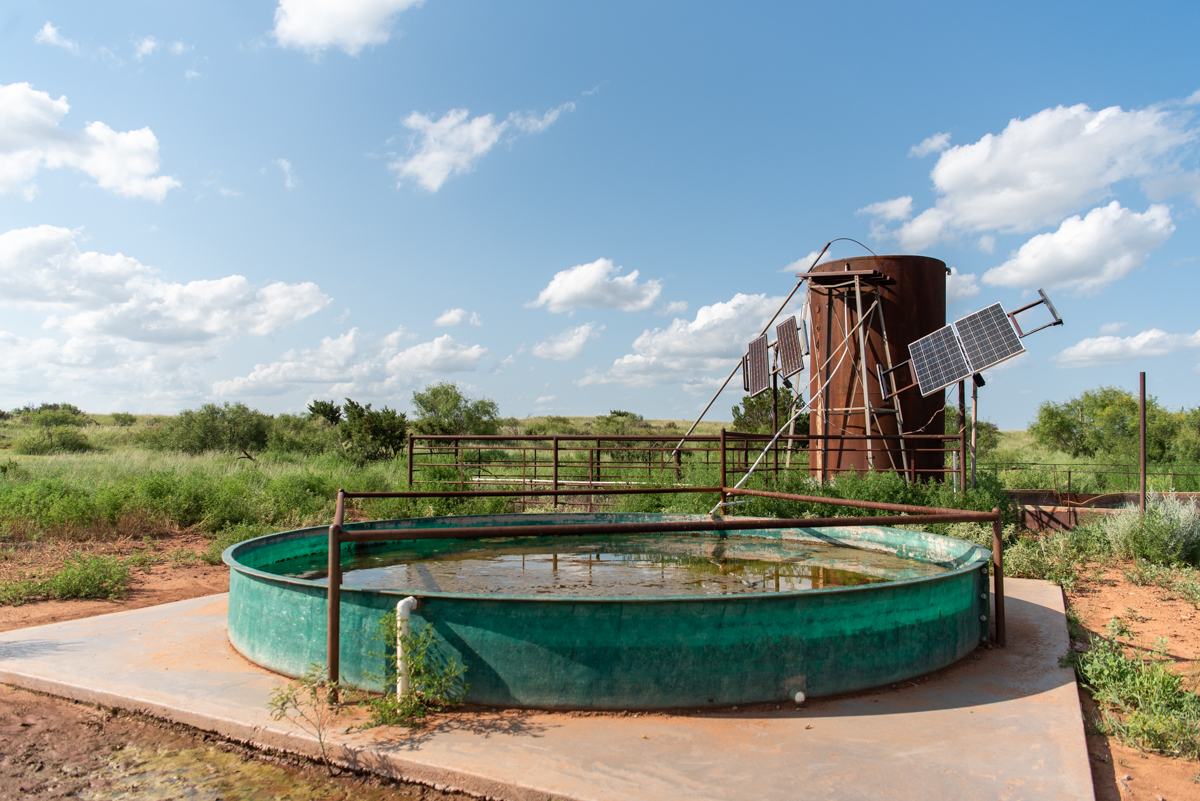
One night in June, their newly built stock stank filled up. Collecting water off the barns and homes, it lives here for cattle instead of flowing to the Red River. Bermuda grass is banked to prevent erosion.

“I just thought it was our time,” says Mary Lou. 

But they were rained out overnight and couldn’t drive to the lease country. 

“Okay, I hear You,” she says. “We’re not done. So, we weren’t done.” 

They formed a new plan. First, they began investing in stock tanks (West Texan for ponds). It takes one dry year to remove brush, dig the pond and another nine for the rain to soak the ground, find equilibrium and begin filling. 

It’s what they did for the 20 ft. deep tank just down the hill from their barns and homes. As a result, water that would normally flow into the Red River is now stored for cattle. 

A 10-year process became one as a single night rain in June filled the 2020 pond to the brim. There are nine operational ponds now, with more on the way. 

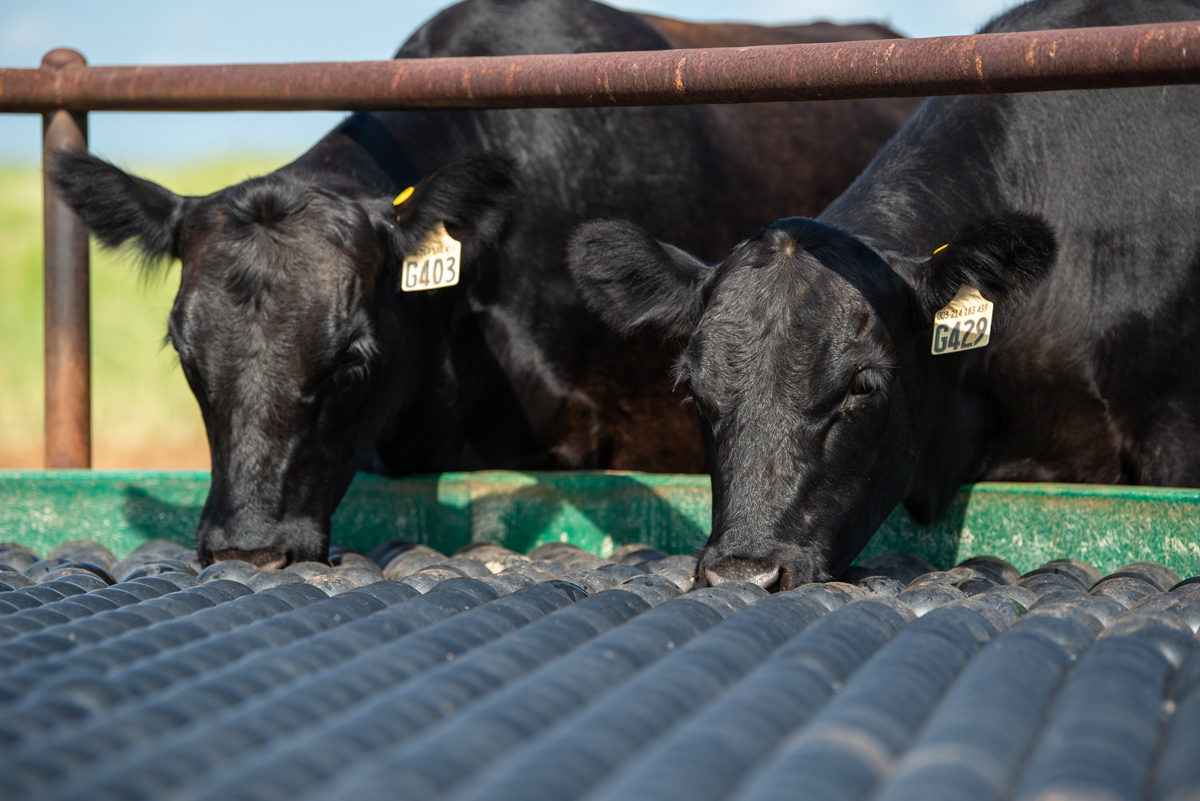
In 2019, an interesting new design started floating in B3Rs water troughs. Aqua balls – black, polyethylene spheres filled with a touch of water have saved 5,000 gallons or $3,000 to $4,000 per trough. 

Covering about 95% of the surface area, the balls prevent water evaporation, loss to wind, and surface algae growth. The water is crystal, mildly cool on a 90-degree day. Heifers gently nudge their noses against the balls to find a drink. In the winter, the surface area is so small, ice rarely forms. When it does, it easily breaks. 

“We’ve got 45 tubs on the ranch, all about 2000 gallons,” says James. “They’d typically be dry come springtime, and we’d lose another 4,000 gallons in the summer to evaporation. We’re saving several thousand dollars a year.” 

Other touches are solar-powered wells that keep the water moving in the sulfate-rich areas with overflow ponds for wildlife. Wildlife that’s also found water in the new springs that have emerged from brush removal. 

Since Mary Lou and James came home, they’ve doubled the size of the herd and expanded acreage several times over. A two-section pasture that wouldn’t run 20 cows can now hold 45 at 30 acres per cow. 

They’re proud of the successes, but it doesn’t stop there. 

B3R Sustainability
B3R Sustainability

High expectations 

Sustainability to Mary Lou and James is as much about the efficiency and quality of the animal as it is about land and water. 

“We’ve really concentrated our cow herd on being efficient,” says James. “Sustainability is doing more with less, and well, the cows have to do that, too.” 

They’ve built indexes around the performances of their cattle and focus on cows that can raise a calf, breed back, do it on minimal resources and maintain their flesh. And with their background in meatpacking, Mary Lou and James are always keeping the carcass top of mind. 

“We’re trying to get a very highly productive cow,” she says. “One that will have calves that’ll work downstream for some of the CAB steaks later on.” 

While the genetics and performance indexes are finely tuned in a detailed spreadsheet, management in nutrition is just as intentional. 

Growing heifers, James says they try to get them to their mature weight as soon as possible. Why risk it when they can get her growing stages behind her before the calf ever hits the ground? 

That nutrition is all in the grass and how they manage it. 

Hundreds of species are out here, says James. “Predominately Sideoats, Blue and Hairy gramas. Silver and Ironmaster Bluestem. A lot of Buffalograss. A lot of Dropseed, some White Tridens, and we’ve come back in and planted a lot of what would have been the original prairie grasses like Big Bluestem, Indiangrass, and Switchgrass.” 

Like a carefully maintained lawn, regular and rotational grazing improves the grass. Growth above reflects growth below. 

“To maintain grasses in a fragile environment, you’ve got to be able to let them grow plenty of roots,” says James. “If we are grazing those grasses, then they regrow and refresh and redo. If you don’t ever graze the grasses, they become stale and basically worthless from a nutritional standpoint.” 

Biodiverse grasses are essential as they mature at different times of the year, so the nutrient value varies. If a monolithic culture is all there is, James says it’s all really good or all not good. 

This year their cows weaned 61.4% of their body weight and averaged a body condition of 6 to 6.5. A big deal in the Panhandle, says Mary Lou. 

And with more grass and better grazing comes more cattle. They can run a cow to 30 acres like they set out to do. B3R was purchased at 3,500 acres and began with a few hundred yearlings. Now it’s at 16,000 and about 850 head. 

“For us, if you don’t have the bottom line, we’re not here,” says Mary Lou. “We’ve got to make it work. Truly, we are sustainable, or we’re not.” 

 
B3R Sustainability

“The grass will tell you when to move,” says Mary Lou. Here, it’s been grazed, and the cattle are ready to move to the next pasture.

Progress for progress 

Before there were fences and farms in the Panhandle, stirrup high grasses owned this land. With time, they have dwindled to near extinction. And with time again, they’re resurrecting. 

Nothing is a one-year thought process, says Mary Lou. Just like building a fence, she asks herself whether their decisions will last the next 50 years. What will this place look like for the next chapter of ranchers? Will the land work for them as it has for Minnie Lou, Mary Lou, and James? 

“It’s taken 60 years to figure this all out, but we are about to get those grasses back that stirrup height.” Minnie Lou smiles. “It quite grabs my heart when I walk into those pastures and remember what they were and what they are today.”

Originally published in the Angus Journal and Angus Beef Bulletin.

You may also like

From Modest Beginnings to Excellence

From Modest Beginnings to Excellence

Gilchrist Farm recently received the 2024 Certified Angus Beef Canadian Commitment to Excellence award. This prestigious honor recognizes their exceptional achievements in high-quality Angus genetics and management. Over the years, they have transformed their operation by embracing superior Angus genetics. Their commitment to high standards and innovative practices has distinguished them as a model of excellence in the industry.

From White House to Farmhouse

From White House to Farmhouse

At Pleasant Valley Farm in Brookville, MD, four generations of the Stabler family have blended tradition and innovation to create a thriving, diversified Angus operation. Honored with the Ambassador Award at the 2024 Certified Angus Beef (CAB) Annual Conference, the Stablers exemplify a commitment to sustainable farming, community engagement and educational outreach. Their significant contributions to the hosting on behalf of the CAB brand highlight their commitment and play a key role in receiving this award.

What’s Good for the Cattle, Is Good for the Wetlands

What’s Good for the Cattle, Is Good for the Wetlands

JY Ferry & Son, Inc., named the 2024 Certified Angus Beef Sustainability Award winner, exemplifies how sustainability in agriculture can bridge quality beef production, land stewardship, and wildlife management. At JY Ferry & Son, what’s good for the cattle is good for the wetlands—and good for the next generation of this multi-generational family business.