Double Down On Angus

The Cross family earns Certified Angus Beef’s 2025 Canadian Commitment to Excellence award.

By Courtney Weekley

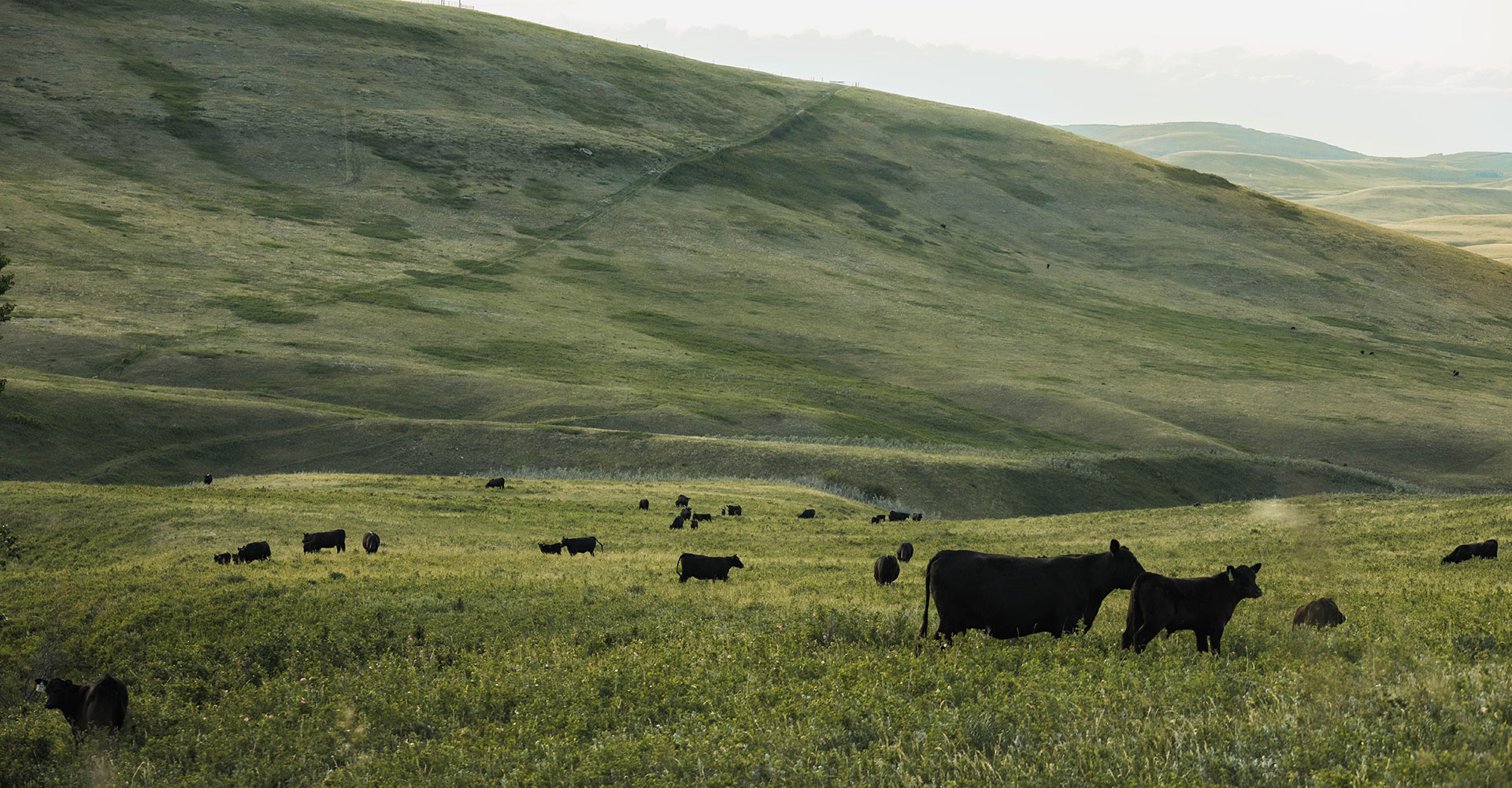
In the Eastern slopes of the Canadian Rockies, the land stretches in steep, sweeping curves. Bold and untamed. Native grasses blanket the ridgelines. Spring-fed creeks cut through valleys, feeding rivers that have shaped the foothills for centuries. It’s a beautiful place, yet brutal for ranchers.

To raise cattle here, you need more than determination. You need vision and a commitment to double down on what works best.

That’s what defines Cross Cattle Company.

South of Calgary, Alberta, brothers Austin and Malcolm Cross carry on a century-old family history. Their great-great-grandfather staked his future on this land. Today, the Cross brothers are building one of their own—with Angus cattle that not only perform in the harsh environment but consistently meet the highest standards for beef quality.

Success with this combined mission earned them the 2025 Certified Angus Beef Canadian Commitment to Excellence award.
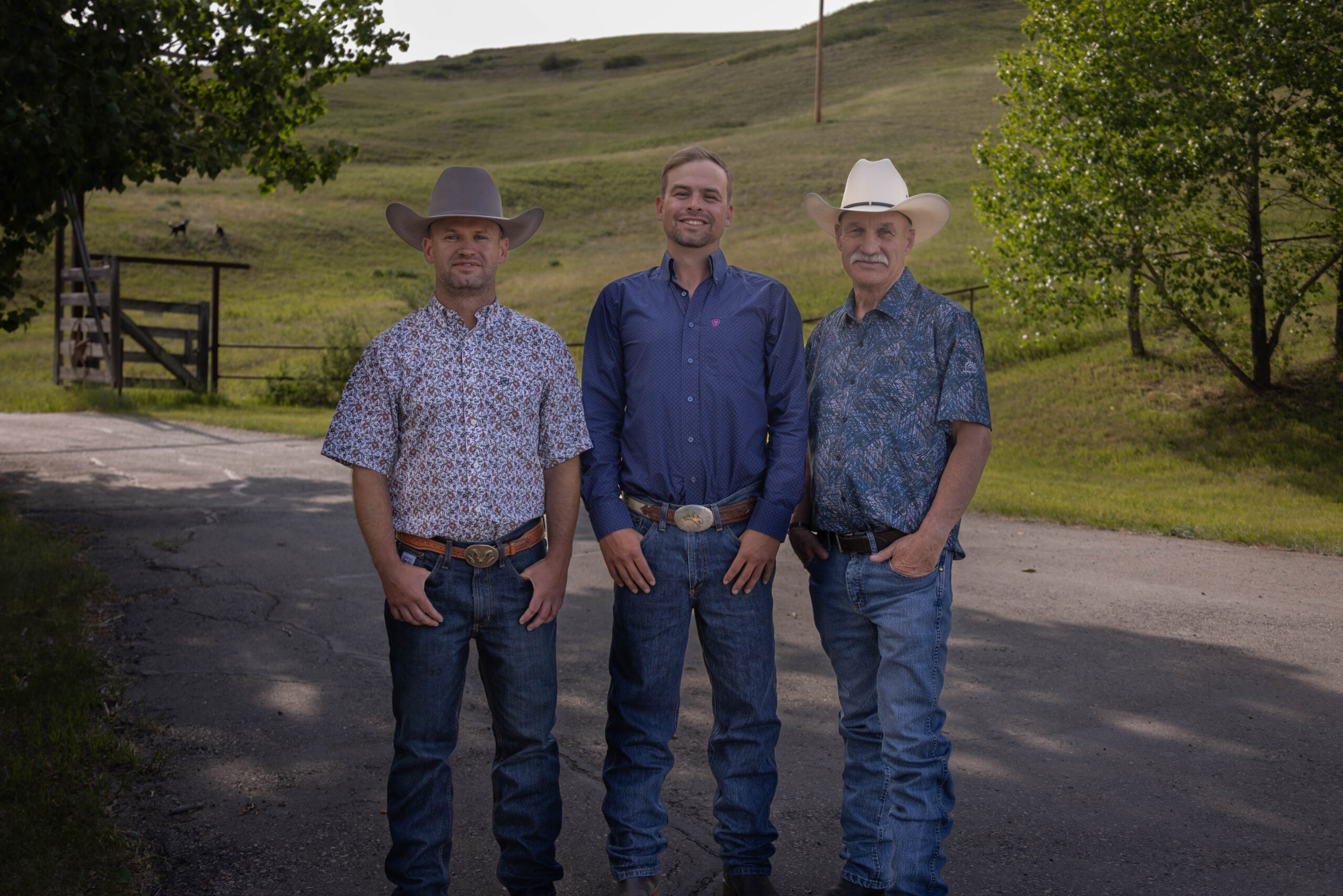
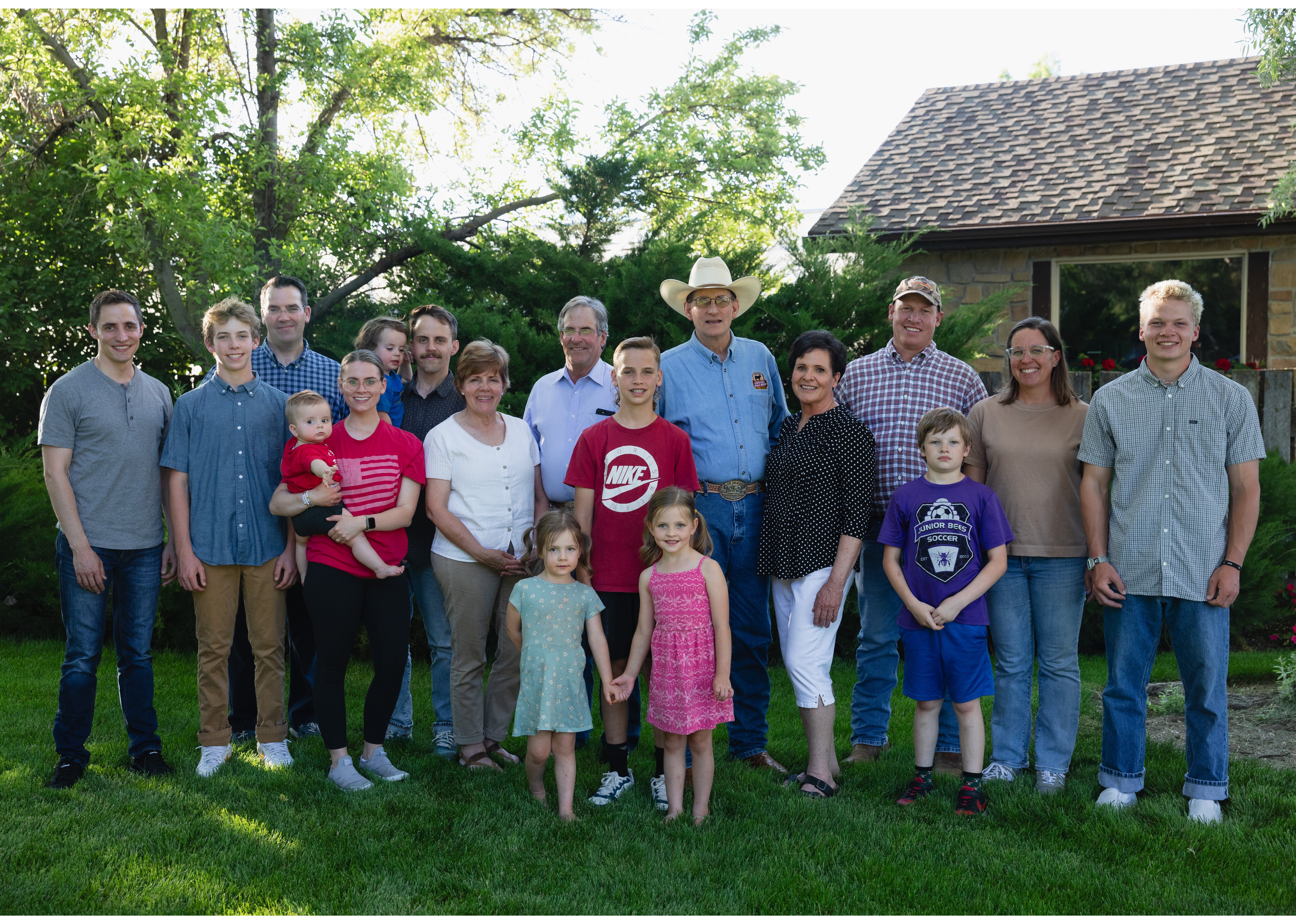
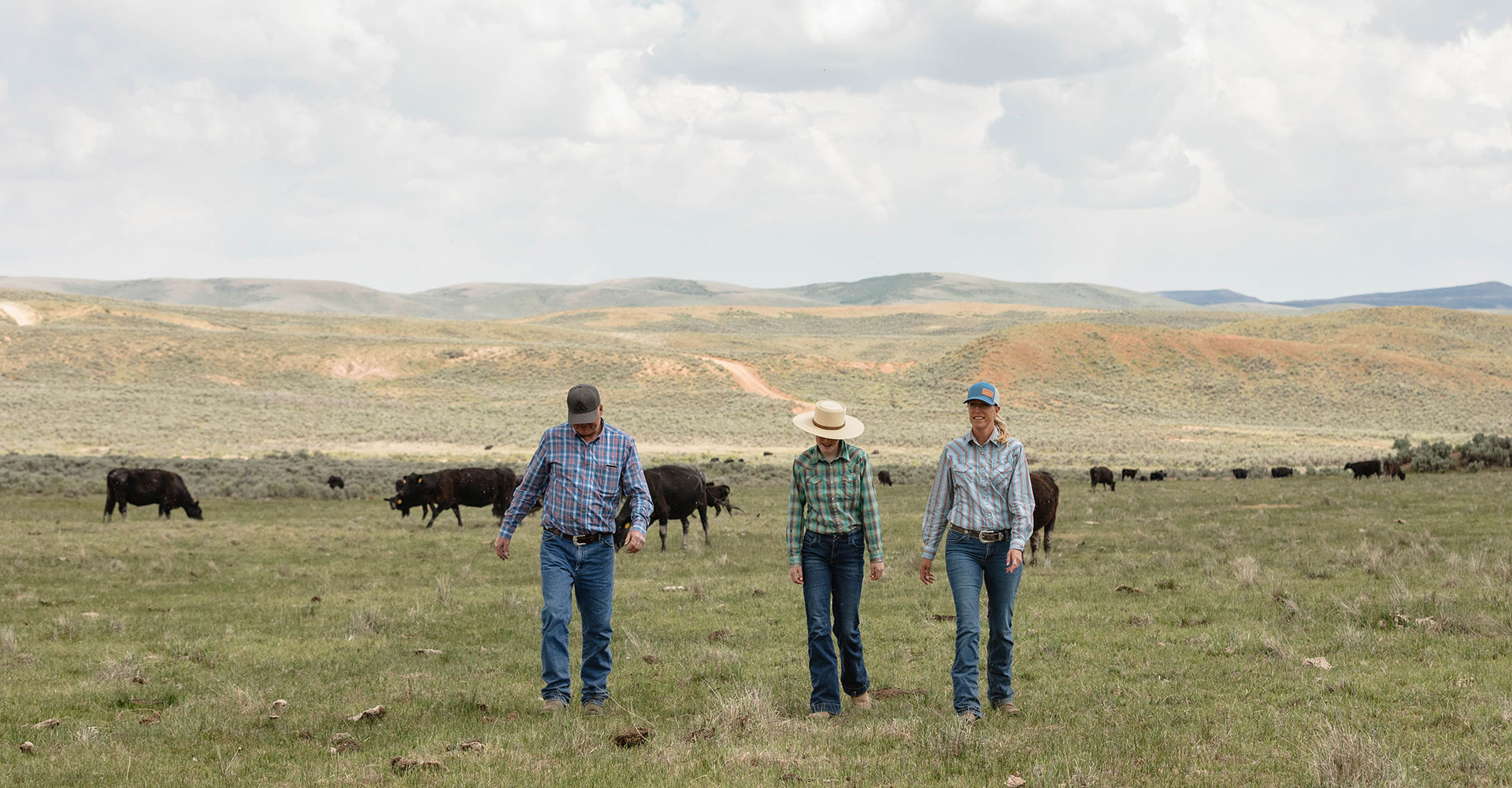
Malcolm, Austin and Bill Cross

Caption: (Left to right) Brothers Malcolm and Austin with their father, Bill.

Double Down on Quality  

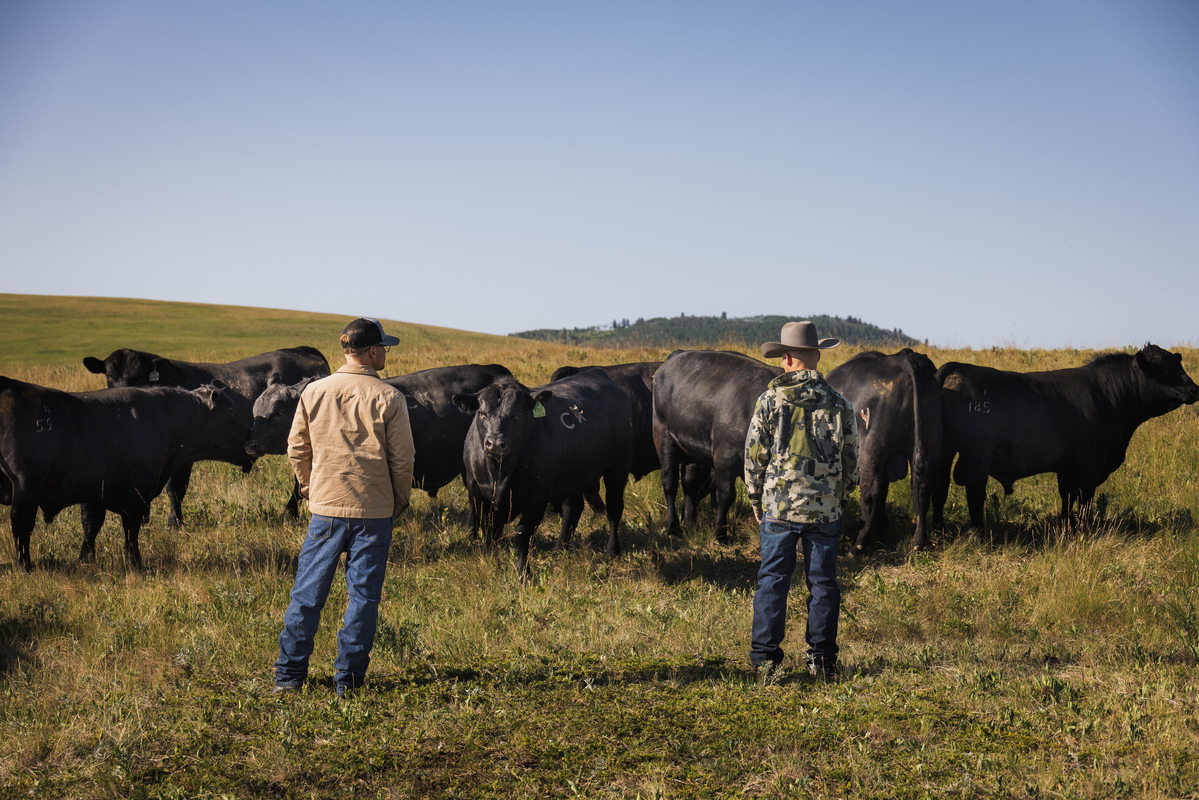
In much of Canada’s cattle industry, the focus often lands on pounds and size rather than premium beef. The Cross family leads with a focus on quality from the start, with clear intentions to raise cattle that perform well in the pasture and consistently meet high standards for carcass merit.

“We raise our cattle with the best intentions,” Austin says. “If they’re not gaining, we’re not doing our job.”

They select genetics to improve and complement their maternal strength and terminal performance, aiming to produce calves that hit the Certified Angus Beef ® brand and Prime targets. That’s a rare feat here, where regular carcass data is scarce and quality grades can be an afterthought.

Without frequent feedback from packers, the Crosses rely on historic results, visual appraisal and a disciplined bull selection strategy with seedstock programs aligned to their quality goals.

“Our main selector for bulls is EPDs. Appearance matters, but not as much as producing better calves,” Austin says. “Good data helps us weed out weaker bulls and steadily improve the herd.”

Just down the road, the Crosses work closely with their trusted local seedstock provider, Cudlobe Angus. The brothers’ father, Bill, has sourced bulls from them since 1986, building a partnership that feels like family.

This combination of phenotype and performance drives their breeding decisions, helping them raise calves that consistently meet high-quality standards.

While their ancestors raised Herefords, Shorthorns and Galloways, the Cross family made a clear choice to focus on Angus for its proven efficiency, adaptability and consistent carcass quality.

“This is the perfect place for a cow to live,” Austin says. “The land isn’t meant for crops. It’s meant for cattle. And Angus work here.”
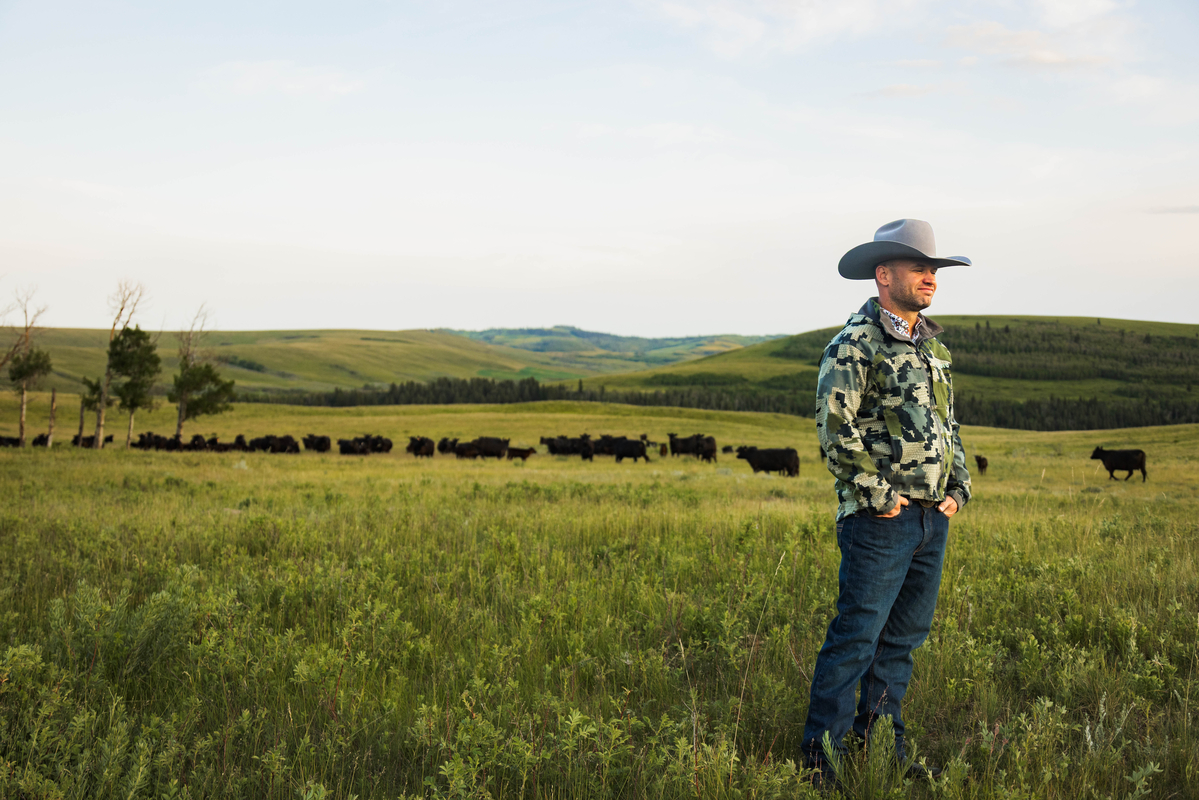
Canadian Angus rancher in a pasture
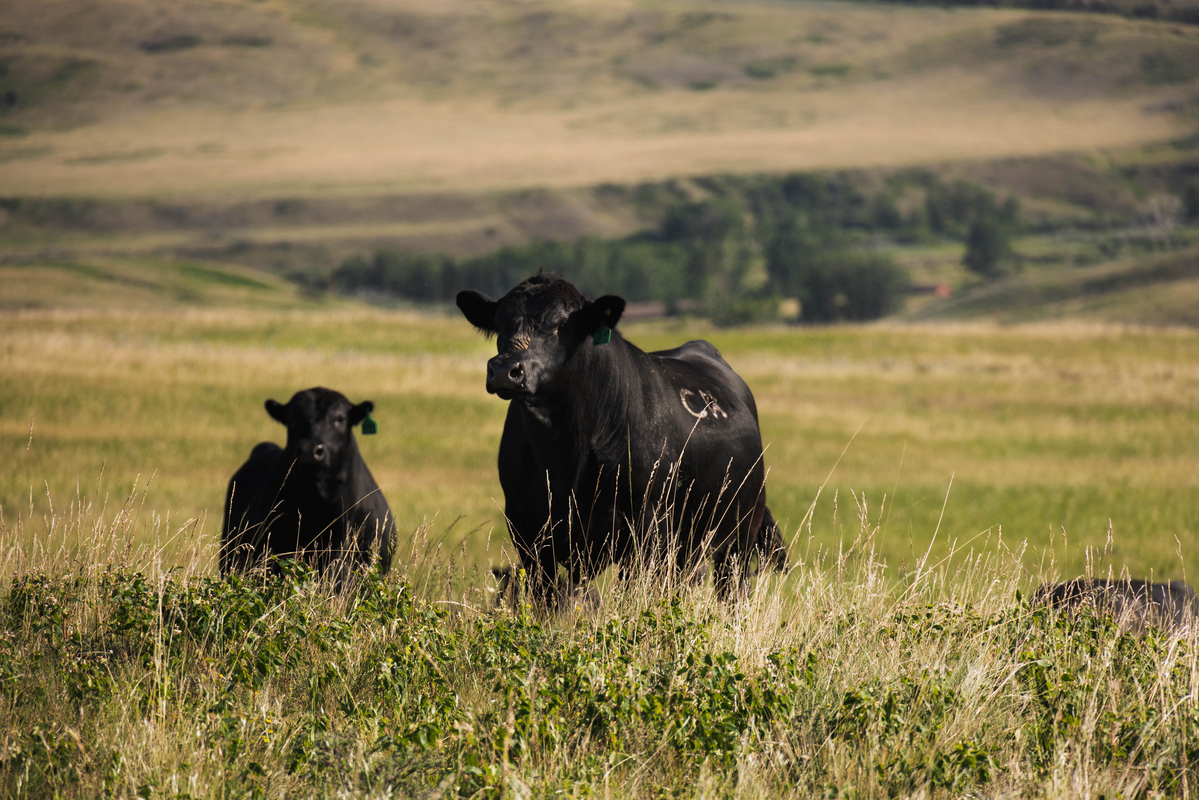
Angus bull in Canada
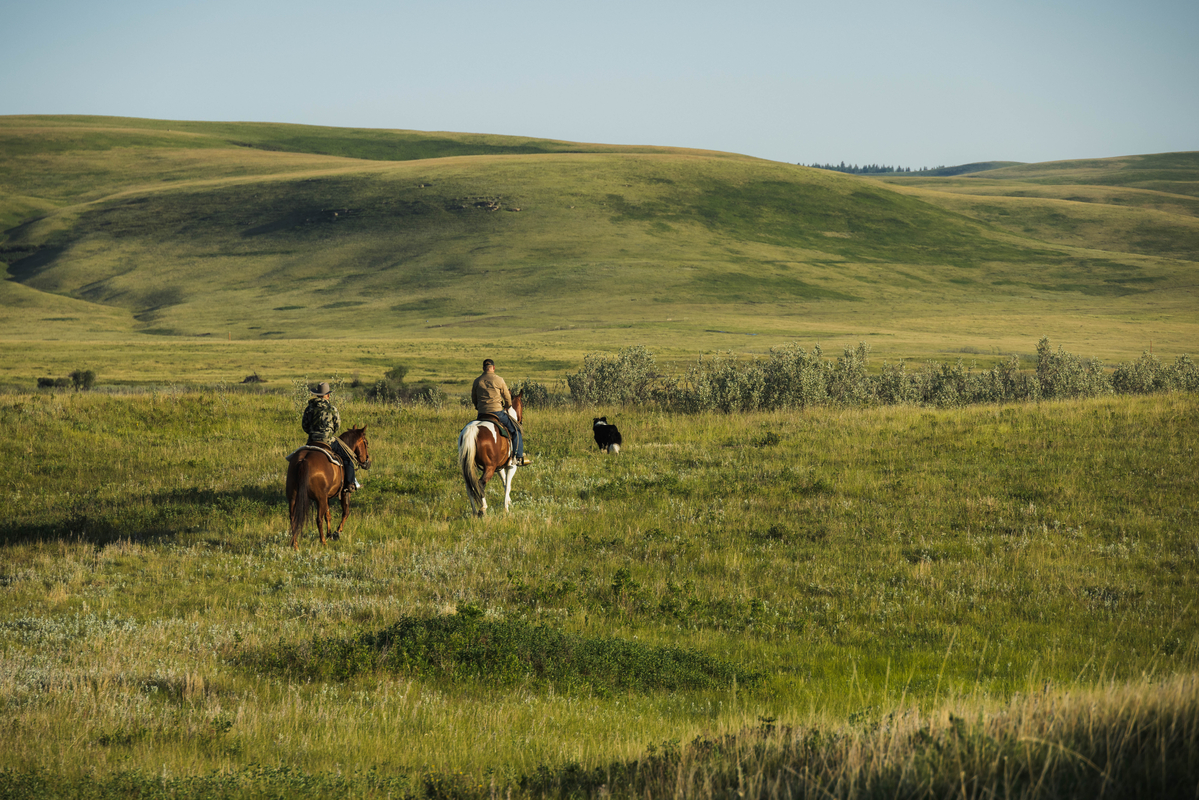
Ranchers looking at their cattle in a pasture

Of Grass and Water

The Crosses know cattle need resilient land. Native prairie grasses with roots reaching 10 to 15 feet deep give the land a natural advantage during drought by accessing moisture far below the surface.

“Native grass does better than invasive species, especially when drought hits,” Malcolm says. “Once it’s gone, it’s gone. You can’t just buy seed from somewhere else and expect it to thrive here.”

Still, drought remains a challenge. To adapt, the Crosses have shifted management, grazing their grass reserves for a while before feeding their cattle more heavily through winter to keep them in optimal condition.

Rotational grazing and long rest periods let the land recover while cattle return vital nutrients to the soil. Chinook winds, warm dry air descending from the Rockies, melt snow quickly and make winter grazing possible even in the coldest months.

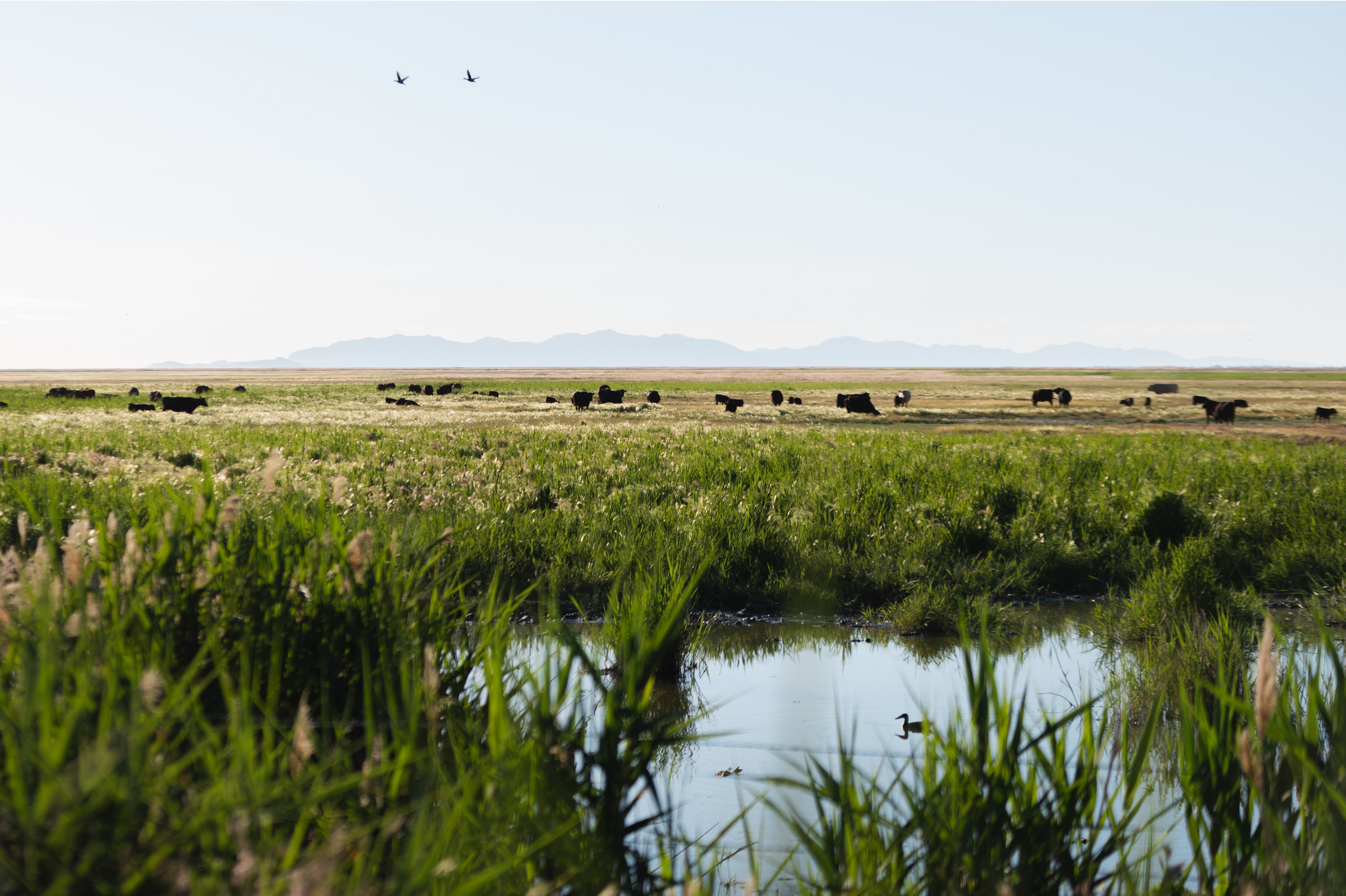
Equally essential are the spring-fed water systems. In a region where dugouts freeze solid and ice chipping isn’t sustainable, gravity-fed springs funnel water into tire troughs. The setup is simple and effective, even at -40°C.

“The springs are the bread and butter of the place,” Austin says. “You can go without grass for a while, but you need water. That’s the difference between making it and not.”
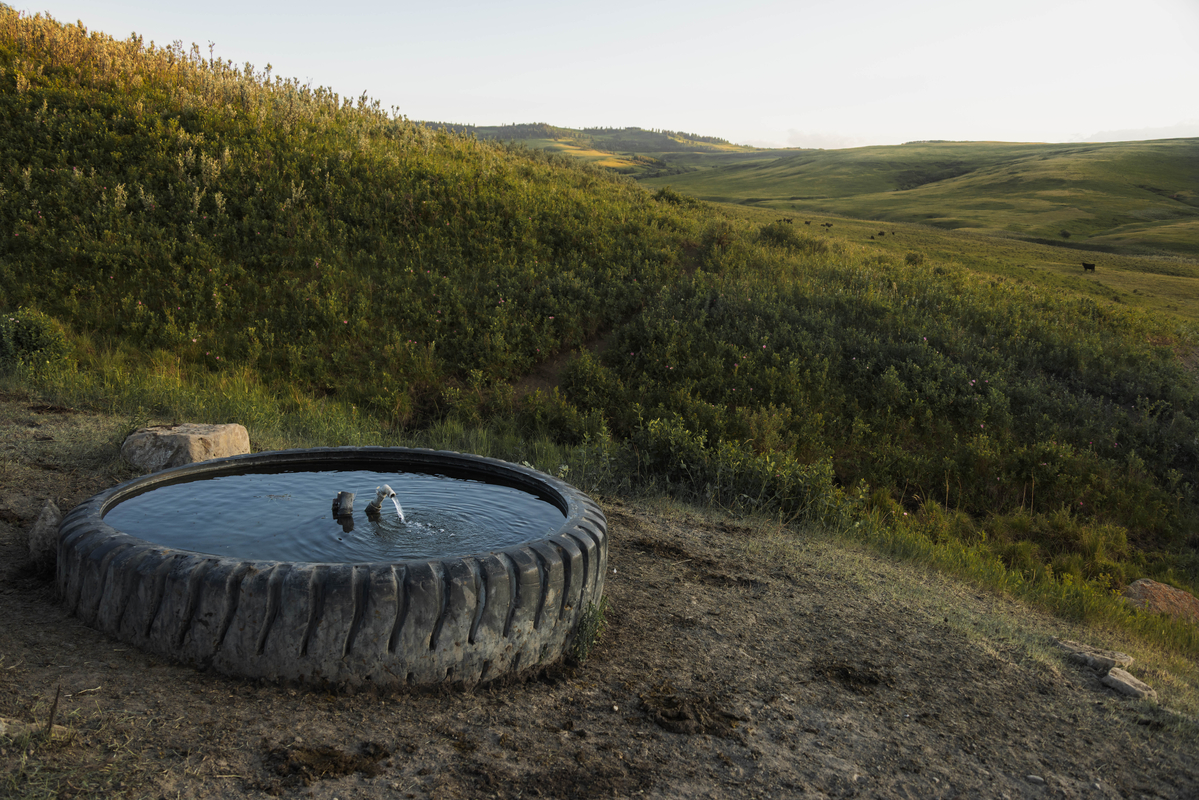
Water tank

Family First

The grit behind Cross Cattle Company comes from its family roots. Austin and Malcolm grew up with the harsh realities of ranch life: droughts, tough seasons and the discipline to prepare for the unknown.

While the brothers lead the operation, their parents have stepped back to give them space to lead. Malcolm’s wife, Sam, also supports the operation and raises their young sons Talon and Steel, already dreaming of the day they might carry on the family legacy.

“Family is everything,” Malcolm says. “And with her support, I’m able to do this. She’s right there, every step.”

The Cross family knows their hard work honors the past and builds a future for generations to come.

“We want to build it bigger and better,” Austin says. “It’s a lot of sacrifice, working extra hours, missing out on things. But at the end of the day, it’s not just for us. It’s for the generations that come after.”

The Crosses doubled down on Angus because they know quality starts with care. Every decision reflects their commitment to the land, the cattle and the future they’re building for the next generation.

This story was originally published in the October 2025 Angus Journal.

You May Also Like…
An Unforgiving Land

An Unforgiving Land

What makes a ranch sustainable? To Jon, it’s simple: the same family, ranching on the same land, for the last 140 years. The Means family never could have done that without sustainability. Responsible usage of water, caring for the land and its wildlife, and destocking their herd while the land recovers from drought.
Double Down on Angus

Double Down on Angus

South of Calgary, Alberta, brothers Austin and Malcolm Cross carry on a century-old family history. Their great-great-grandfather staked his future on this land. Today, the Cross brothers are building one of their own—with Angus cattle that not only perform in the harsh environment but consistently meet the highest standards for beef quality.
A Means to an End

A Means to an End

For Willis Ranch, the best Angus cattle thrive in the high desert and produce calves that can become productive replacement females or high-quality carcasses. Every year, calves are better because of their investment in tools like GeneMax and AngusLink. But behind it all is one man’s perfectionist mindset that keeps the entire family moving in the same direction.
Jordan, Joslyn and Jennie Willis

A Means to an End

Wyoming commercial ranch uses Angus genetic tools to meet high-quality targets, earning them CAB honors.

by Morgan Boecker

Six generations of Willises have made a living on their ranch lands in Wyoming and Utah. But only the last two have turned out Angus cows.

Starting in 1969, Roland and Linda Willis had 916 acres with 125 Hereford cows, but they wanted better. Angus was the answer.

“We always bought the best genetics we could possibly afford,” Linda says, noting the budget increased over the years. “With Angus, we felt that we got the quality and the production we wanted.”

For Willis Ranch, the best Angus cattle thrive in the high desert and produce calves that can become productive replacement females or high-quality carcasses.  

Their decades-long and successful mission to produce truly premium beef earned the Willis family the 2025 Commercial Commitment to Excellence award from Certified Angus Beef (CAB). They were recognized at the brand’s annual conference in September.

Though Roland passed on in 2017, he always encouraged his boys to “figure it out” on their own, Linda says. His legacy of old-fashioned cowboy knowledge, along with the next generation’s embrace of the latest technology, helped find a means to an end.

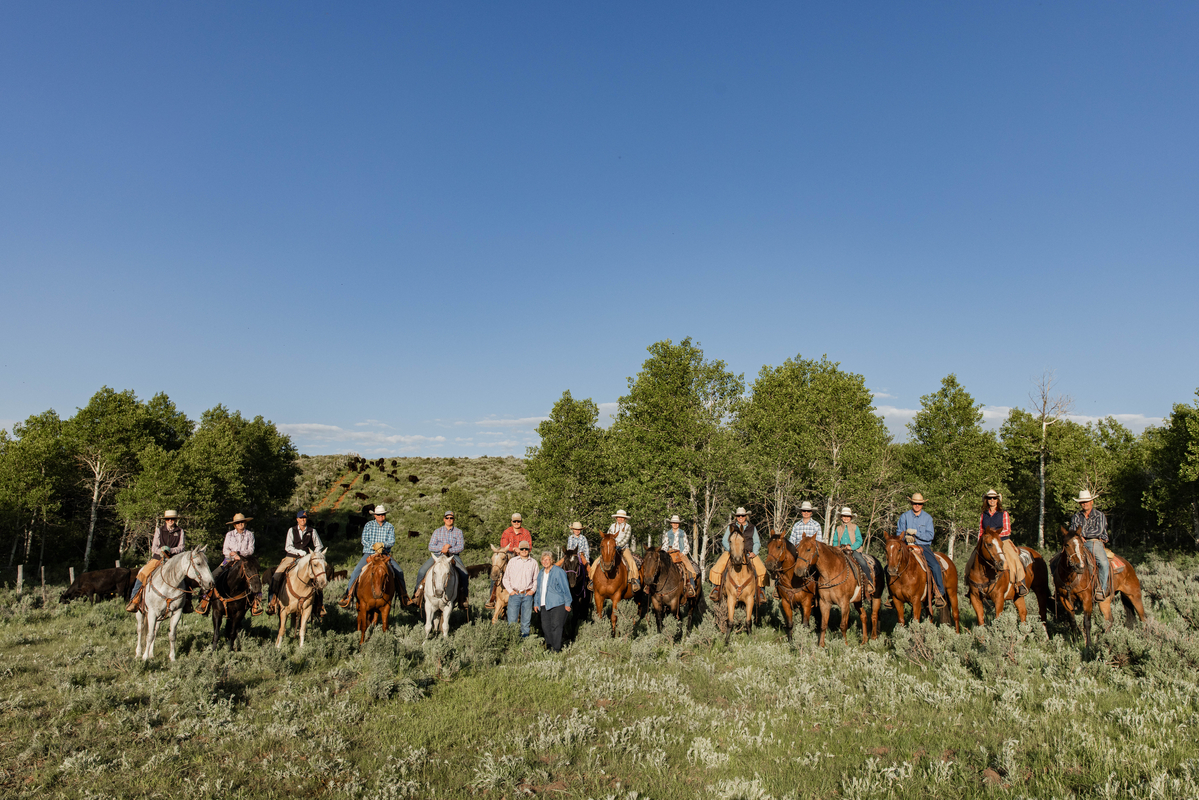
Willis family on horses

The means

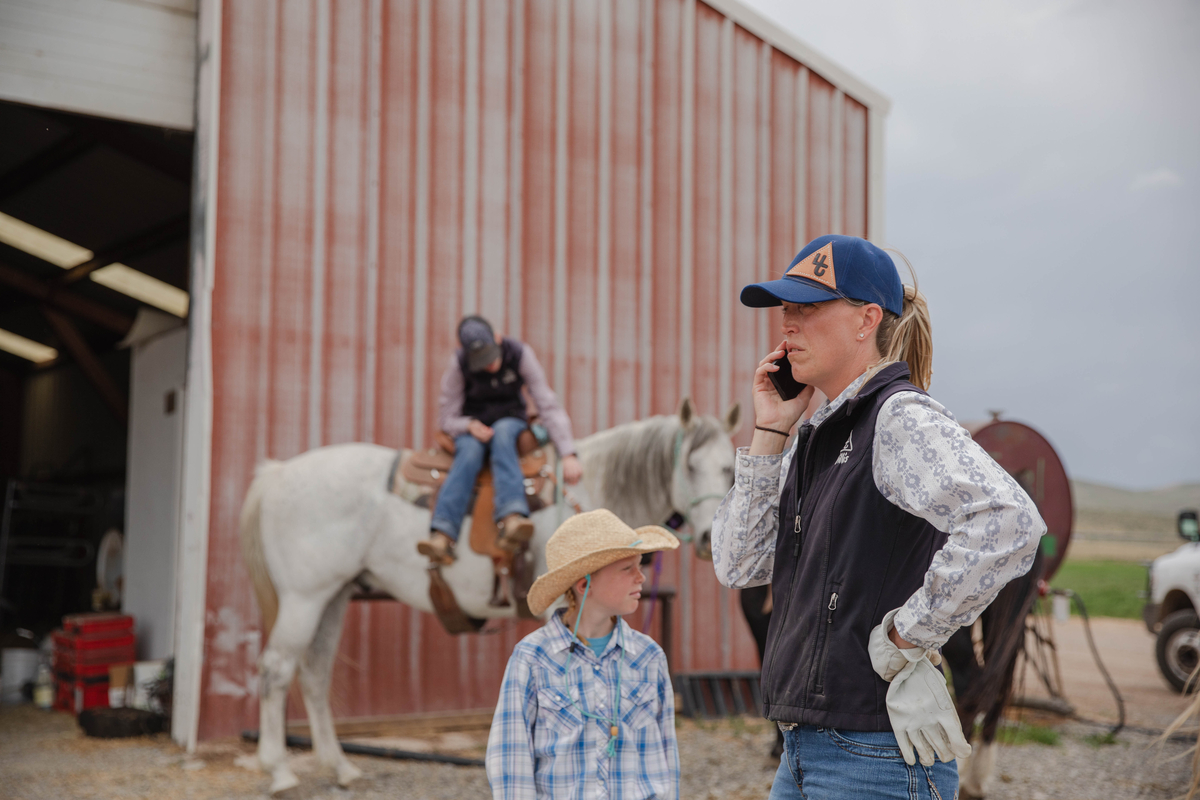
Sons Jordan and Jed manage the Angus cows while James grows crops that feed the cattle. Jordan’s wife, Jennie, provides support, whether it’s feeding the crew, running errands, hauling bulls or her favorite job, baling hay.

Jordan is always learning new tricks of the trade by attending meetings and trying new programs to progress forward and stay on the leading edge of what’s new, Jed says.

“Something my dad told me years ago, [and I’ll never forget, and someone had told him,] if you want to be successful in this business, you got to buy the best,” Jordan says.  

They found a seedstock partner in Basin Angus in Montana and began buying bulls there.

“With all the technology and tools that we have at our hands today, you can have it all,” Jordan says. “But you still need to be a cattleman and you still got to have an eye for cattle.”

He likes an easy-fleshing, maternal cow that thrives in their dry environment. Calm disposition so their kids can safely join in on the work. Well-rounded, because not only is she raising replacement heifers, but also the calves that carry carcass merit to qualify for the Certified Angus Beef ® brand.

The Willises rely on available tools for what the eye of a stockman can’t measure, such as expected progeny differences (EPDs) and DNA testing. For 13 years, Jordan has used GeneMax® Advantage™ to select replacement heifers. These tools are his means to a highly marketable calf crop—whether he’s selling heifers or feeder calves–and a premium end product.

Taking tissue samples at branding allows time to get data back, analyze it and use that information chute-side during preconditioning and sorting calves at weaning.  

Jennie says it’s Jordan’s perfectionist attitude that motivates the entire family.

“He likes things done just right and wants to do a good job every day. So, we try to do our best and work hard,” she says. “Jordan doesn’t think he’ll be able to improve, but he does.”

Every year, calves are better because of their investment in tools like GeneMax.

“For a small investment, GeneMax Advantage testing offers much more in return,” Jordan says. “My theory is that it takes as much grass or feed or resources to feed a poor animal. You may as well have a good one.”

The end

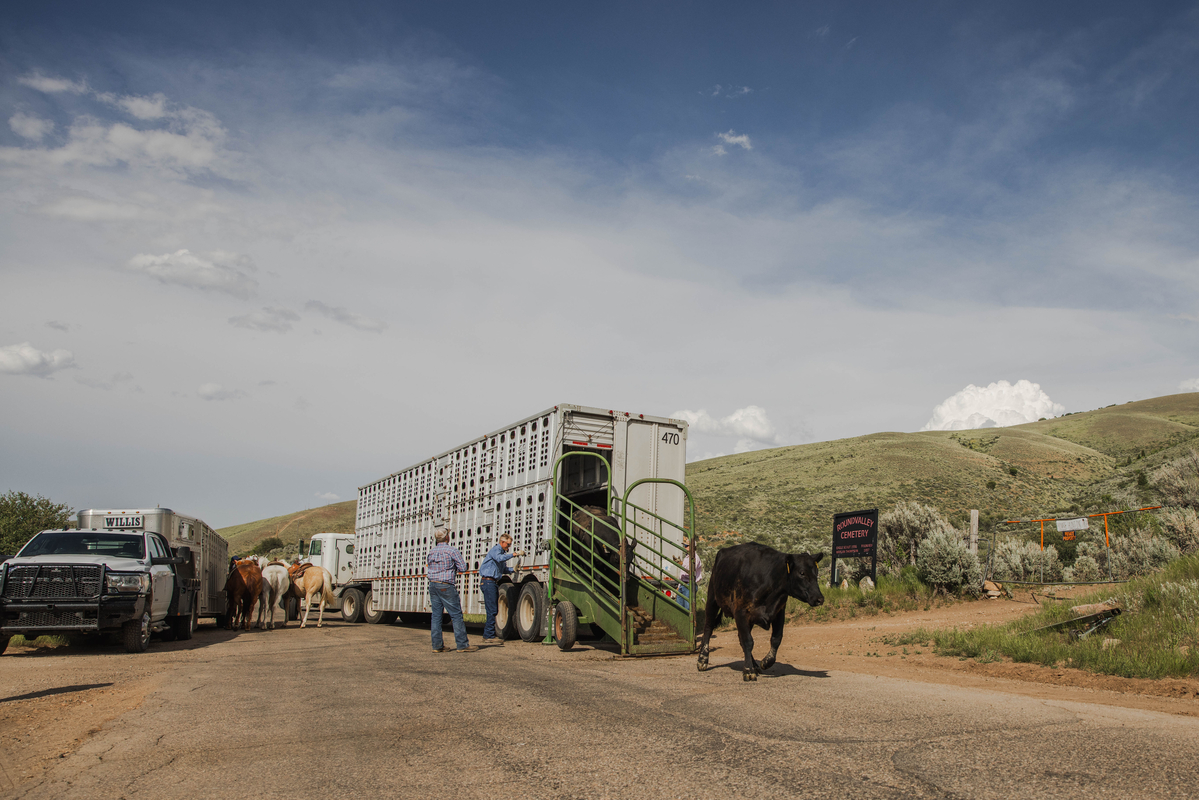
The females are bought by Noble Ranch in Colorado to be developed into bred heifers. Ryan Noble, commercial rancher, and Jordan met through Basin Angus.  

“Between the elevation challenges, long, tough winters and sparse range conditions in the summer, every cow is tasked with bringing home a calf that will get on a truck and go out to add value to whomever buys it,” Noble says. “It’s a daunting challenge, but Willis Ranch seems to have put all of the pieces together.”

 Noble says he buys a lot of heifers from several states, but when other cattlemen stop to visit, “it seems like we always take a few extra minutes to look at the Willis heifers because of the obvious quality and uniformity.” 

After fall and winter grazing, Noble brings the heifers into the grow yard to synchronize and artificially inseminate. Heifers that are open after being exposed to cleanup bulls head to a feedyard. Bred heifers are sold to commercial ranchers, including Willis, as replacements.  

The steers are marketed with AngusLinkSM at weaning. They enroll in the AngusVerifiedSM and Genetic Merit ScorecardSM (GMS). While AngusVerified guarantees calves are at least 50% Angus (sired by a registered Angus bull), GMS describes genetic potential for a group of feeder calves. It bridges a gap between buyers and sellers, giving their customers insight into how calves should perform at the feedyard.

“So many cattle are sold on video auctions,” Jordan says. “How do you distinguish yourself from the others? AngusLink provides that tool.”

Recent carcass data from multiple calf crops representing more than 1,500 head revealed the Willis calves achieved 52% Prime and 94% upper 2/3 Choice.

Not by chance, but by a deliberate and consistent drive to be the best.

“The market isn’t always going to be this great,” Jordan says. “And you need to keep moving your herd forward because when the market goes down, you’re going to need the cow herd and the programs to make ends meet.”  

The why

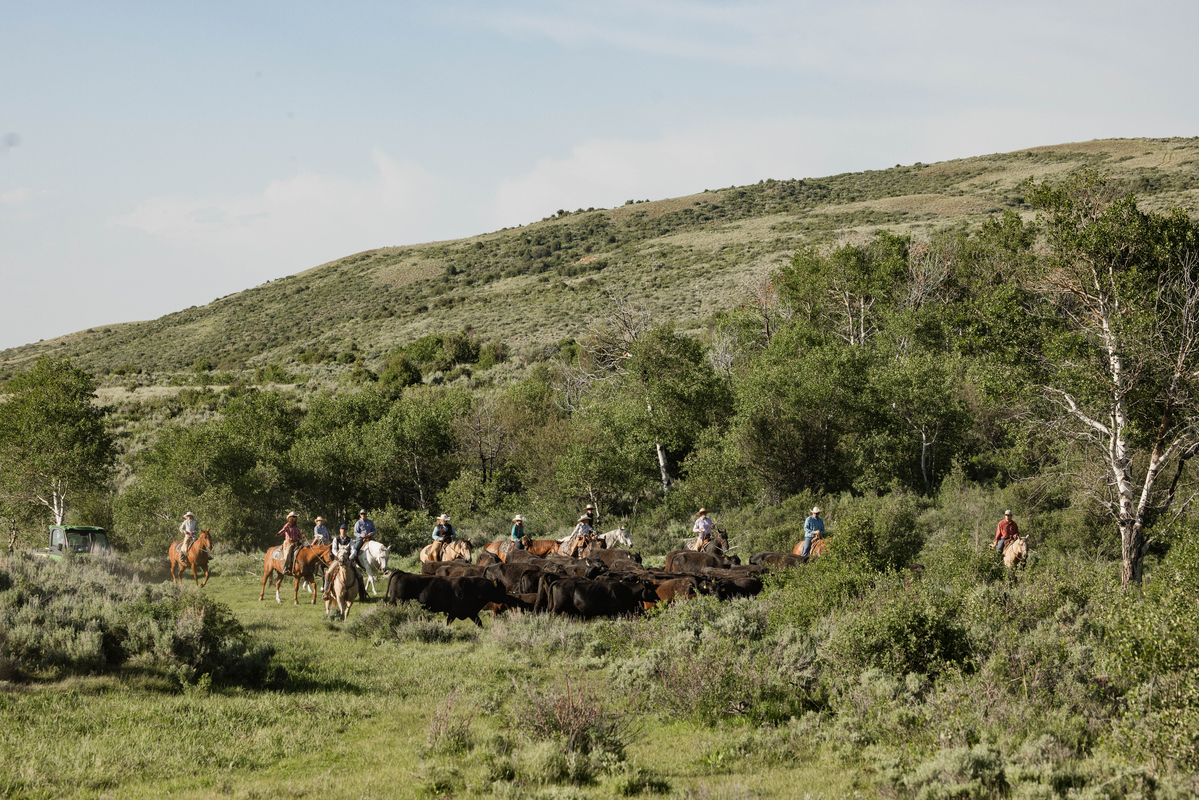
The Willis family is blessed by numbers. The days they move cows are a sight—nine young cowboys and cowgirls atop their horses (or four-wheelers) peek out above the sagebrush.

“We work with our family, with our kids, every day,” Jordan says. “One reason we continue our education, through programs like Beef Quality Assurance, is for the next generation. So our kids can grow up and do what we’re doing today.”

While the ranch has grown in quantity and quality, their “why” is the same.

“We love cattle, love family, love being ranchers, love helping people and taking care of people,” Linda says. “And cooking dinner for them even.”  

They feed a big crew but know their daily work puts beef on many family tables. They hope those families have confidence in the quality of beef they are raising.

“When other moms are at the grocery store, I hope they look for the Certified Angus Beef logo and they take that home to their families and feel like they have bought something really, really delicious and nutritious for their family,” Jennie says. 

They want to provide the same thing for their family. That’s why it’s important to hit a high target, like CAB, Jordan says.

When the target moves higher, they’ll adjust to keep getting better.

This story was originally published in the October 2025 Angus Journal.

You May Also Like…

An Unforgiving Land

An Unforgiving Land

What makes a ranch sustainable? To Jon, it’s simple: the same family, ranching on the same land, for the last 140 years. The Means family never could have done that without sustainability. Responsible usage of water, caring for the land and its wildlife, and destocking their herd while the land recovers from drought.

Double Down on Angus

Double Down on Angus

South of Calgary, Alberta, brothers Austin and Malcolm Cross carry on a century-old family history. Their great-great-grandfather staked his future on this land. Today, the Cross brothers are building one of their own—with Angus cattle that not only perform in the harsh environment but consistently meet the highest standards for beef quality.

A Means to an End

A Means to an End

For Willis Ranch, the best Angus cattle thrive in the high desert and produce calves that can become productive replacement females or high-quality carcasses. Every year, calves are better because of their investment in tools like GeneMax and AngusLink. But behind it all is one man’s perfectionist mindset that keeps the entire family moving in the same direction.
System Over Scale

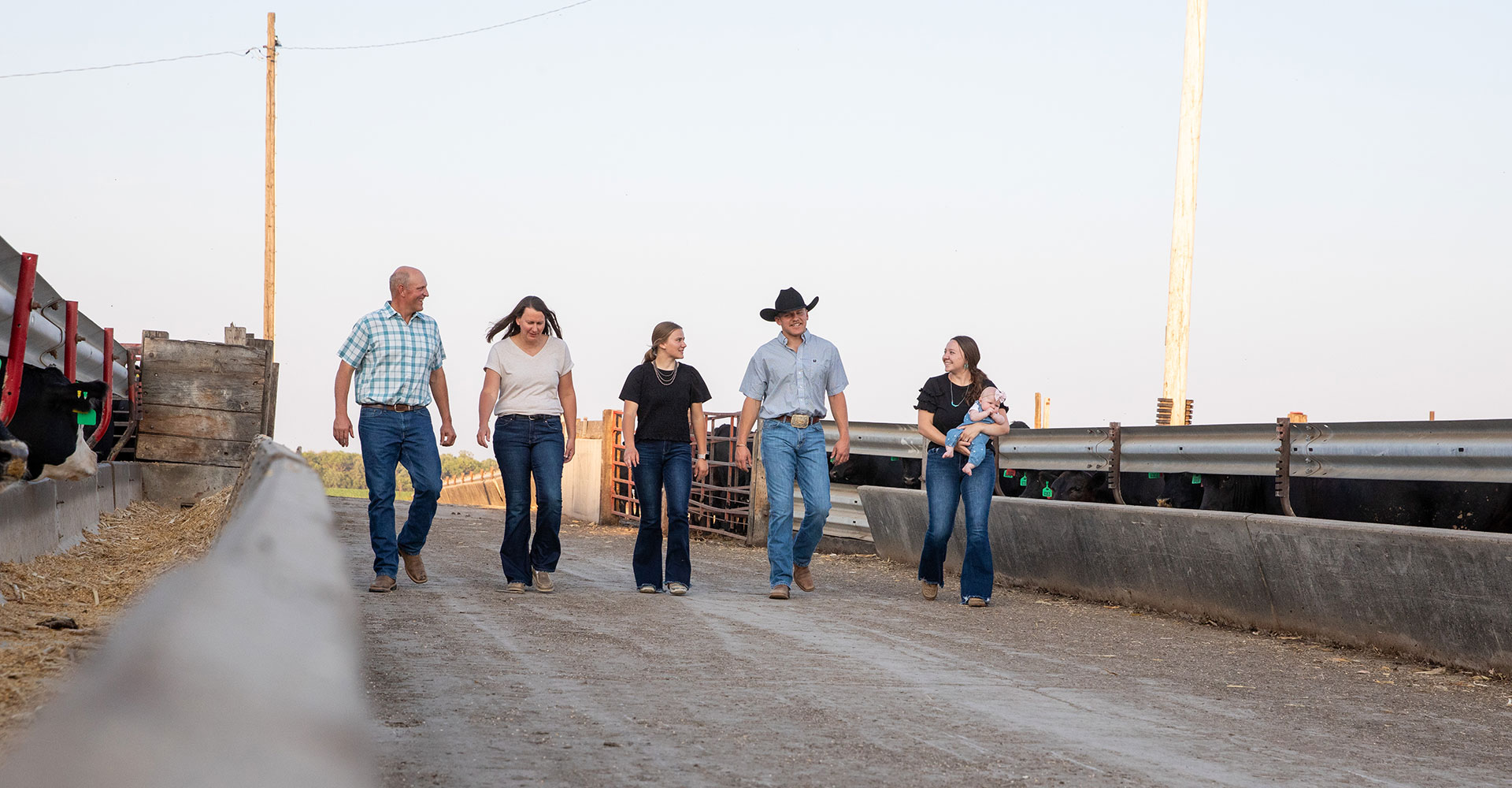
Minnesota cattle feeder earns 2025 Certified Angus Beef Feedyard Commitment to Excellence Award.

By Kylee Sellnow

October 2025

For Dallas Knobloch, it’s not about being the biggest feedyard—it’s about building a high-quality system that works.

After custom feeding cattle with his father, Larry, for decades Dallas and wife Amy took the giant step of downsizing to gain focus. They proved attention to details, relationships and quality can outperform scale.

In the last decade, Amy quit her 18-year banking career to come home, just as their son and daughter, Tory and Claire, were growing up and interested in the farm.

“That’s really when we were able to start focusing on the details, streamline our process and start to move forward again,” says Dallas.

Today, with Tory’s wife Sadie and daughter Ivy, the Knobloch family owns and operates 4K Cattle. They feed 2,500 cattle at eight locations within 10 miles of home, manage 1,000 acres of crops and run a 125-head cow herd, all near Hills, Minn. You can almost see Iowa and South Dakota from there.

Their successful reinvention and networking from packer to ranching customers earned the Knobloch family the 2025 Certified Angus Beef (CAB) Feedyard Commitment to Excellence Award.

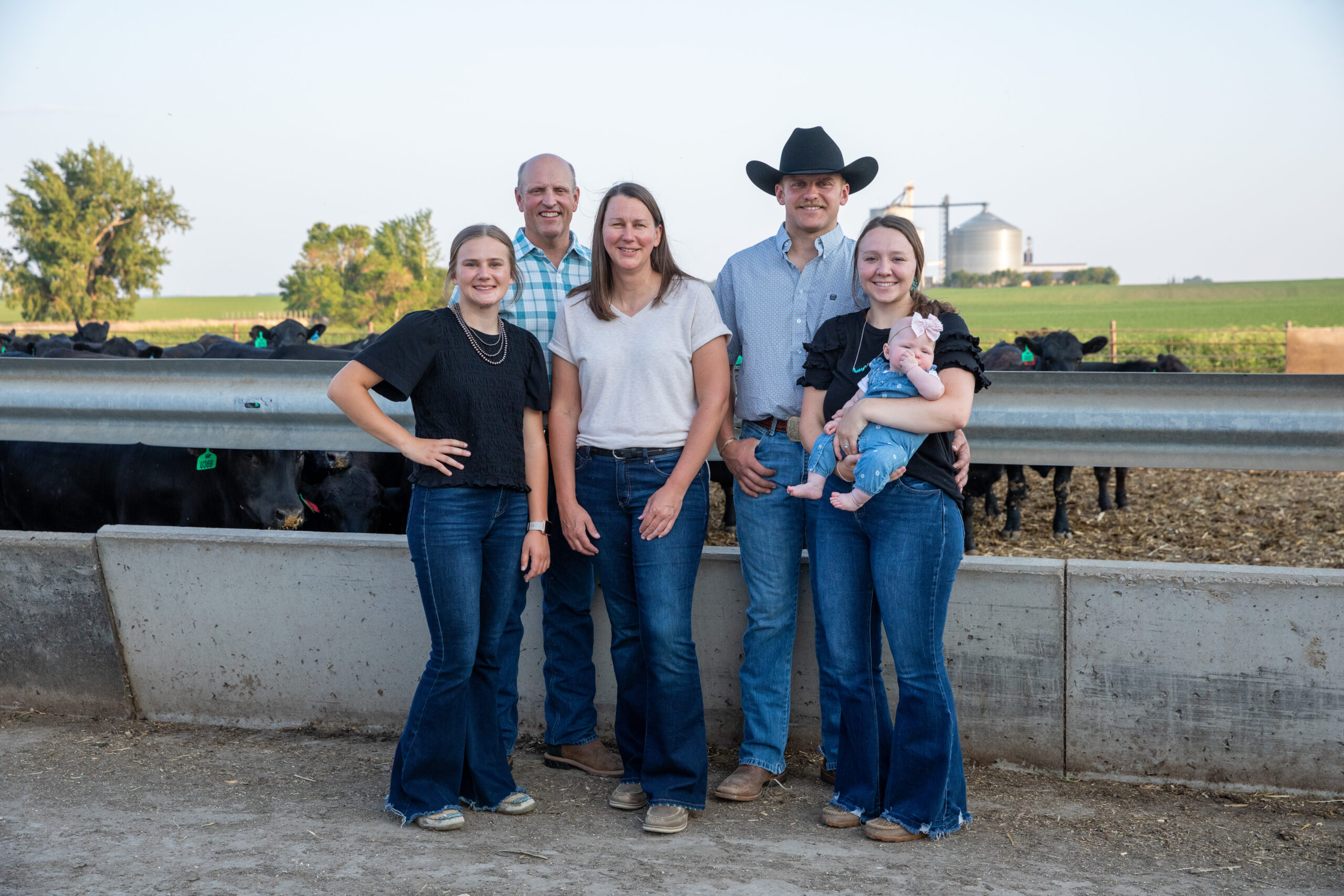
Knobloch family

(left to right) Claire, Dallas Amy Knobloch, Tory, Sadie, Ivy Knobloch

Details Add Up

When Amy came back to help, Dallas grew the cow herd to finish their own calves and began managing other small yards nearby. Partnering with everyone involved, he looked for consistency in his pens and focused on details to improve results. 

“To really make it work, to be sustainable and to pass this to the next generation, you have to hone in on those details,” he says. “Timing and quality of feed, shrink, genetics, herd health—it all adds up.”

When they started marketing through Upper Iowa Beef in 2020, Dallas realized he could play a critical role in adding value through the entire supply chain.

Targeting CAB was the first step to capturing those few extra dollars.

He built relationships across the cattle feeding system, from neighbors to ranchers to packers like Upper Iowa Beef.

Buying calves directly from Dakota ranches has been a game-changer, and it began with cultivating connections with Angus seedstock producers at the turn in the market in 2020. They saw a way to boost calf demand for their bull customers and save everyone time and money.

“In today’s weight market, there’s $50 to $100 per head difference between the producer and me,” Dallas explains. “So if you figure he loads them up, hauls them to the barn, he’s got shrink, commission, and to pay for his trucking to the sale barn. Then they run around, shrink a little more, I pay commission. One day I added it up—I was paying over $50,000 just in commission.”

On top of that, not knowing the management on those cattle made for a herd health battleground.

So, direct they went.

“When the market is really low, I take those 50 to 70 bucks and give them to the rancher,” Dallas says. Lately though, strong relationships have turned the other way. Ranchers have let 4K Cattle hold onto the margin, happy with a handshake that he’ll return next year.

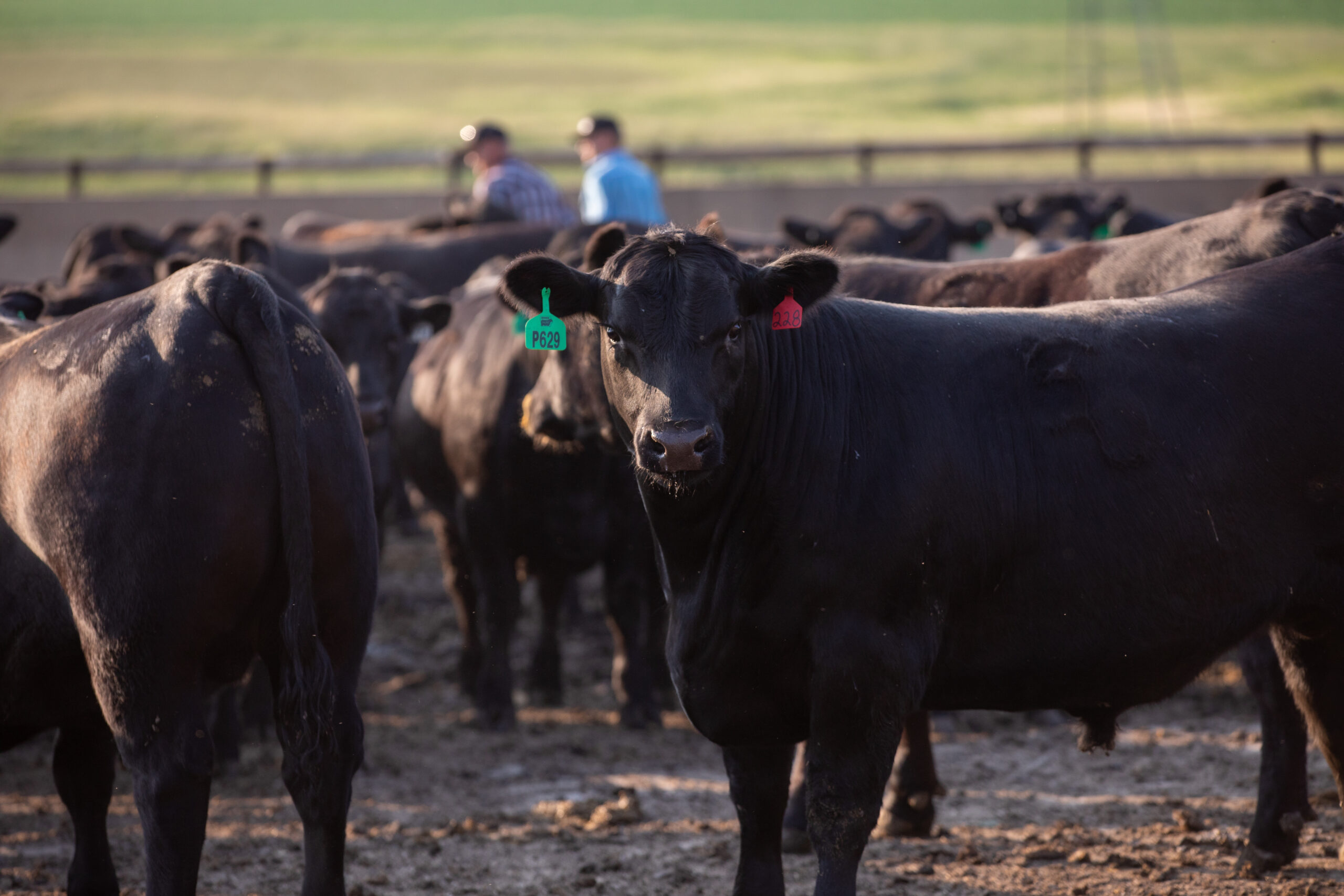
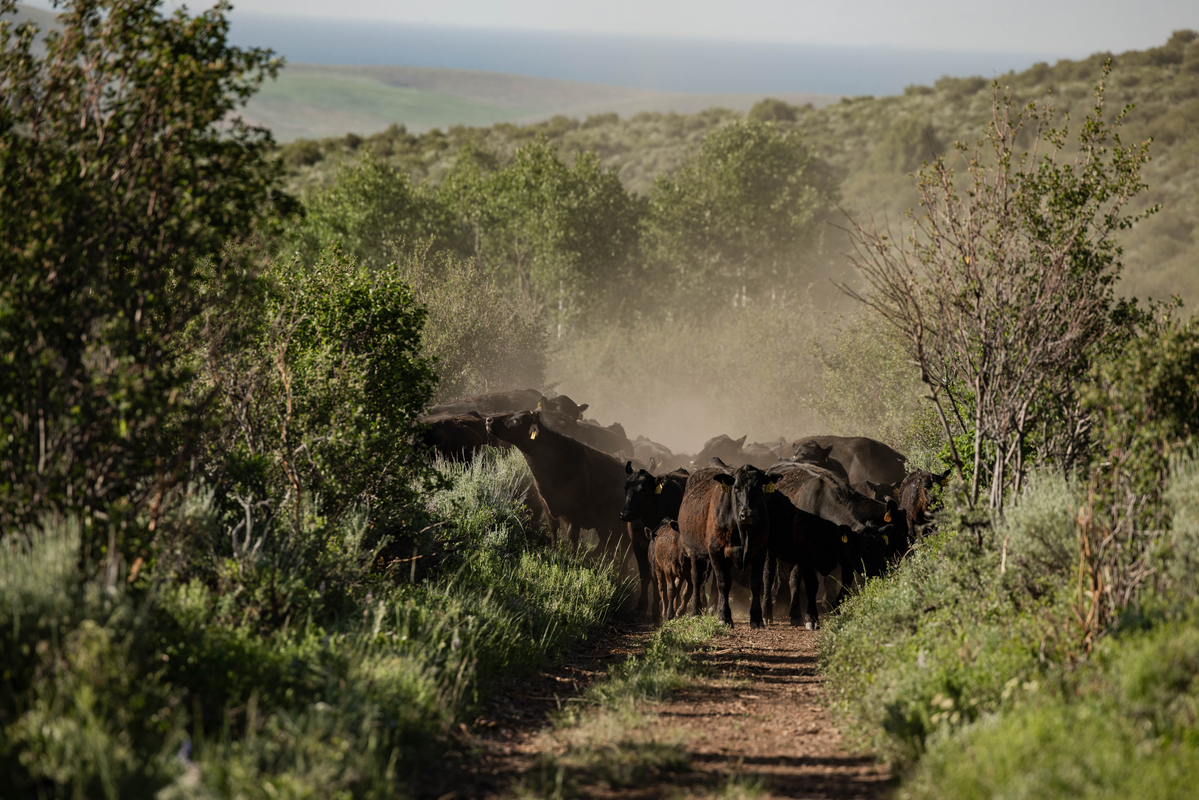
Angus cattle in Minnesota feedyard
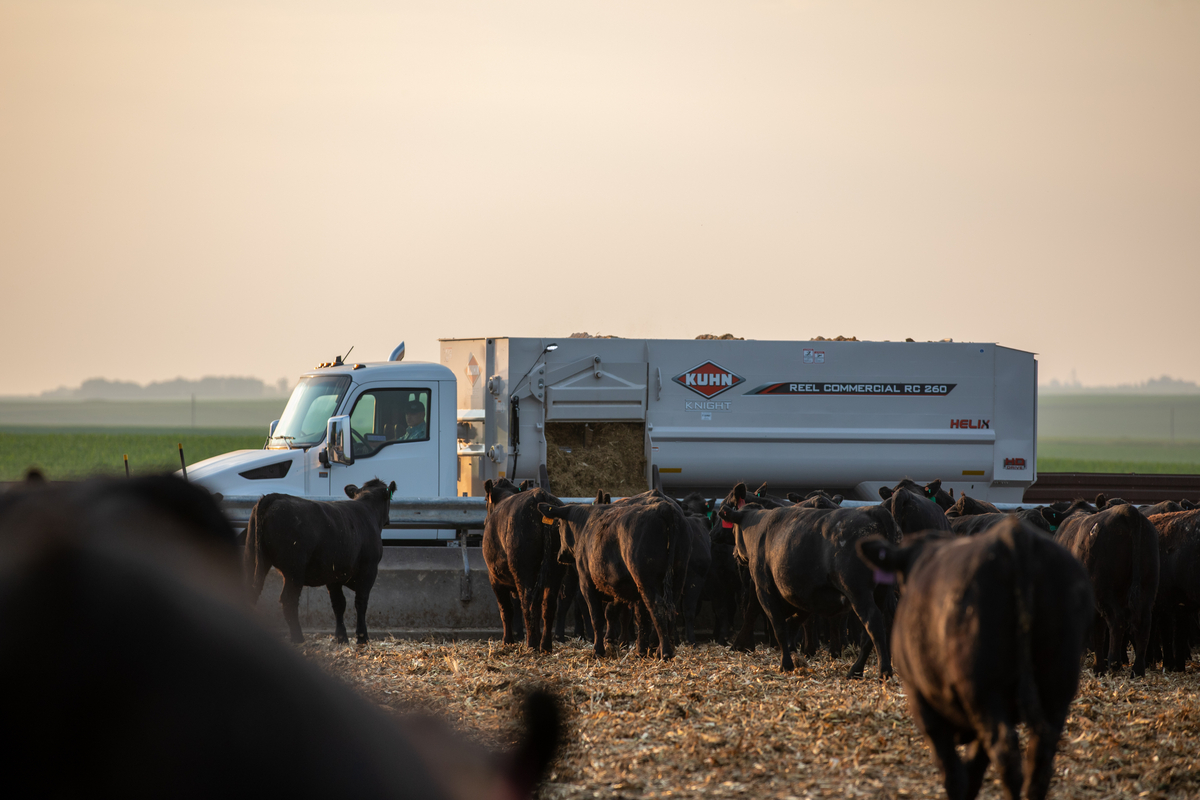
feedtruck at small feedyard
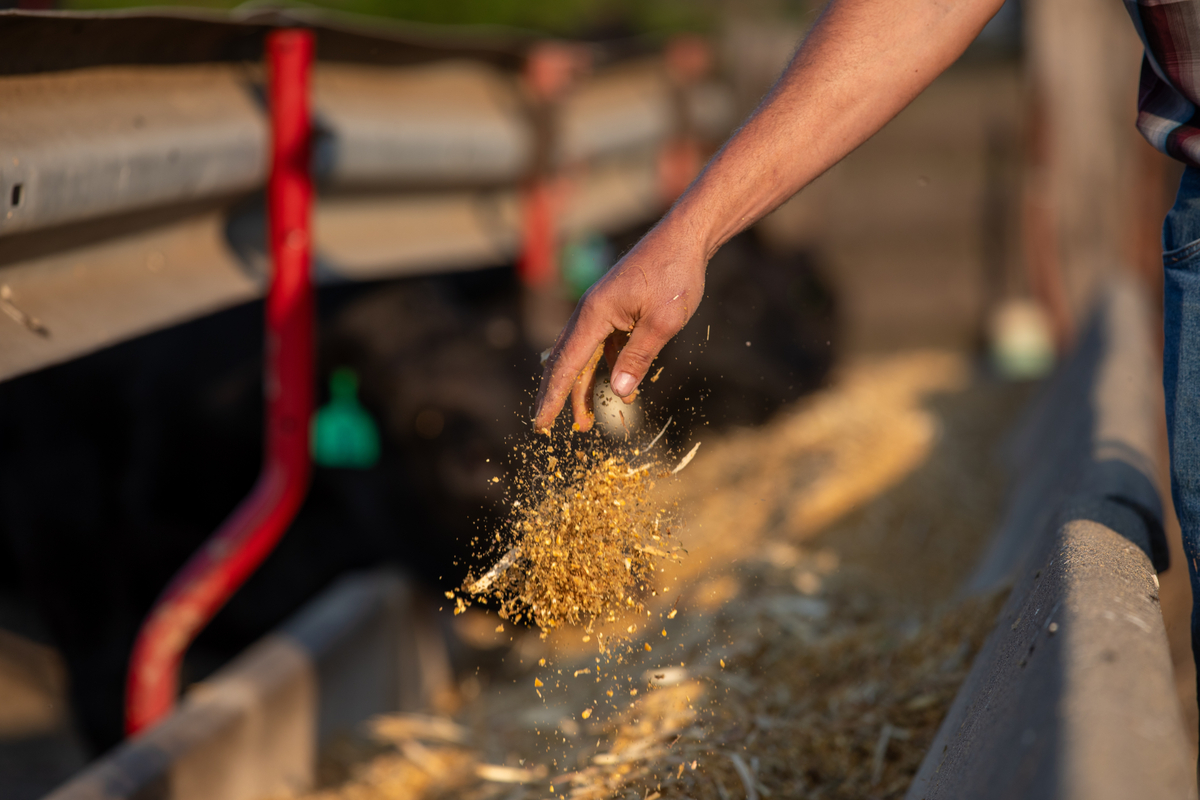
man's hand dropping cattle feed into bunk

Data, Cattle Return

Knowing the background and genetics in his pens has helped the cattle feed more efficiently while maintaining health – and the overall consistency that “return cattle” provide is huge. Of course, Dallas takes what he learns from carcass data back to the ranchers.

“It’s going to take us two and a half years to really find those details, and asking a producer to drastically change something may disrupt a lot of the things that he set up in 30 years,” says Dallas. “It’s just one of those challenges, but it’s had a great reward.”

Rather than push change, Dallas invites ranchers to see pens of cattle ready for harvest and opens conversations about genetics, vaccination protocols, and animal handling.

David Scott raises 250 commercial Angus calves each year in the rugged terrain of western South Dakota. He started selling directly to Dallas seven years ago, resulting in less stress for his family and the cattle, with a simple yet rewarding transaction. They make the trip to the feedyard before their pens head to Upper Iowa.

“I really appreciate his insight,” Scott says. “Sometimes what works for him doesn’t always work for us, so we focus on finding a really happy medium: a good, honest, moderate, efficient cow, yet not sacrificing too much in terms of end pounds, carcass weight and things like that.”

Shared progress strengthens the relationship and keeps the other coming back for more, year after year.

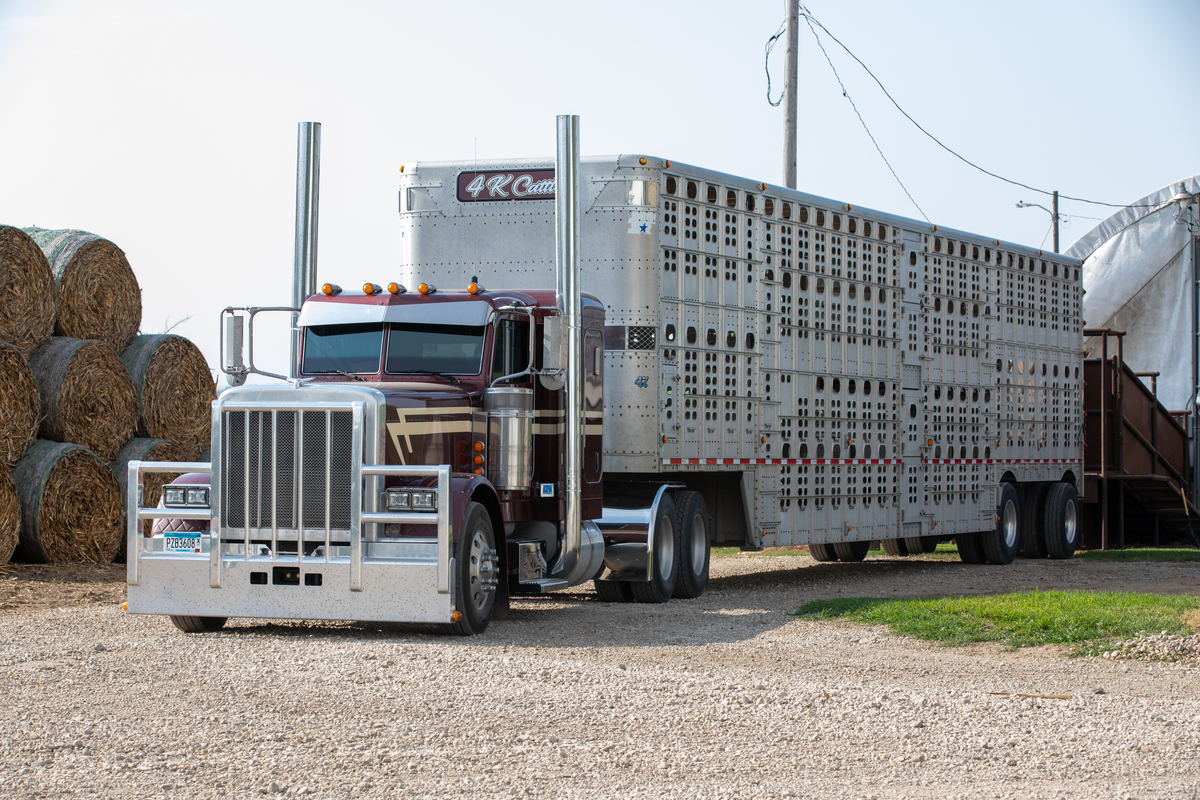
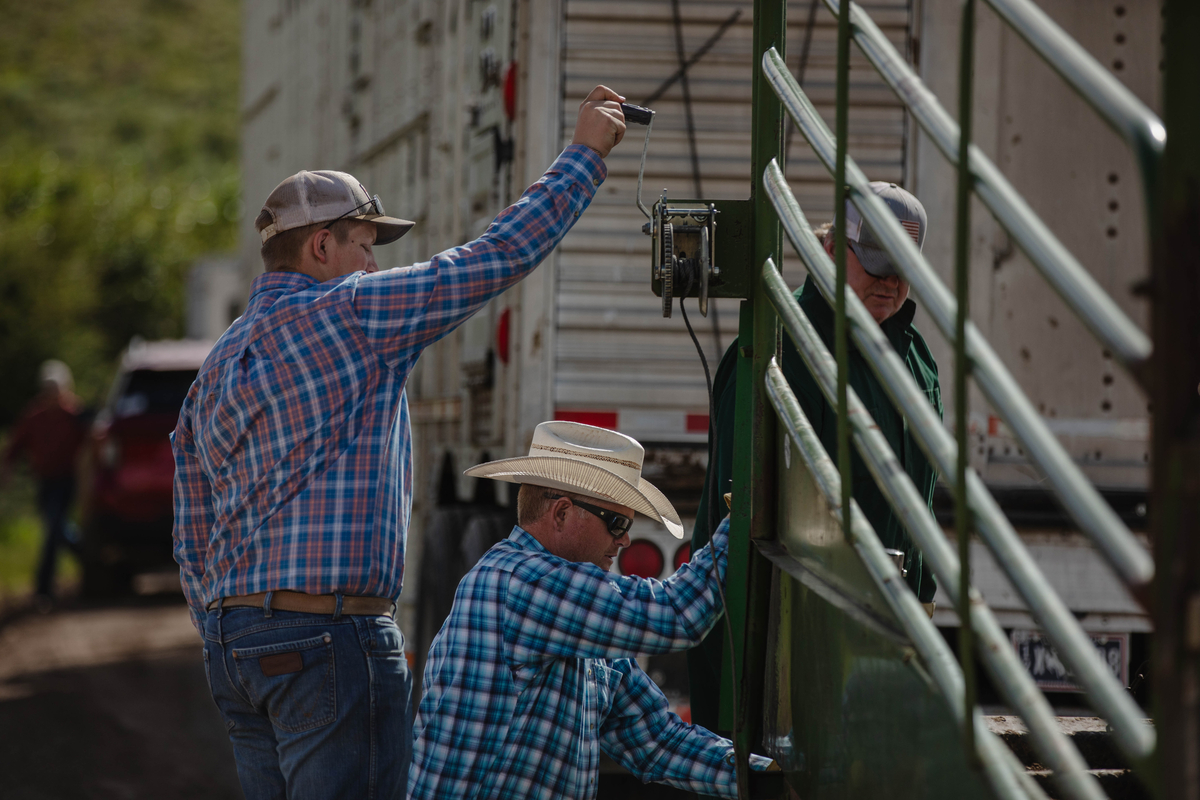
4K Cattle LLC semi truck

A Prime Target

The results of working directly with ranchers speak for themselves.

“Targeting Certified Angus Beef has opened many doors and different relationships,” says Tory. “We get more information on things we can change or tweak to better our premiums and cattle quality.” 

4K Cattle markets one to three loads of fed cattle per week for 45 weeks of a year. Working with Upper Iowa Beef allows for timely data and open communication.

“It’s critical to our success,” says Dallas. “The communication tells us what’s working, what’s not, and how to get a premium to our cow-calf breeder.”

It all starts with genetics.

“Every breed has its challenges, but Angus cattle are required to make that grid work,” he says. “Feed efficiency, meat quality and hitting Prime grades—it’s critical.”

They delivered some 3,700 head to Upper Iowa in 2024, about 90 percent of them black-hided, all marketed on the grid, targeting Certified Angus Beef. Recent loads have graded over 60 percent Prime.

“Certified Angus Beef has become much more of a priority as we’ve moved into the last three to four years because we understand the consumer better,” says Dallas. Their size allows them to focus on the finer details that deliver quality and consistency.

Tory puts it simply: “We expect the same quality on our plates as we expect on theirs.”

records at a feedyard
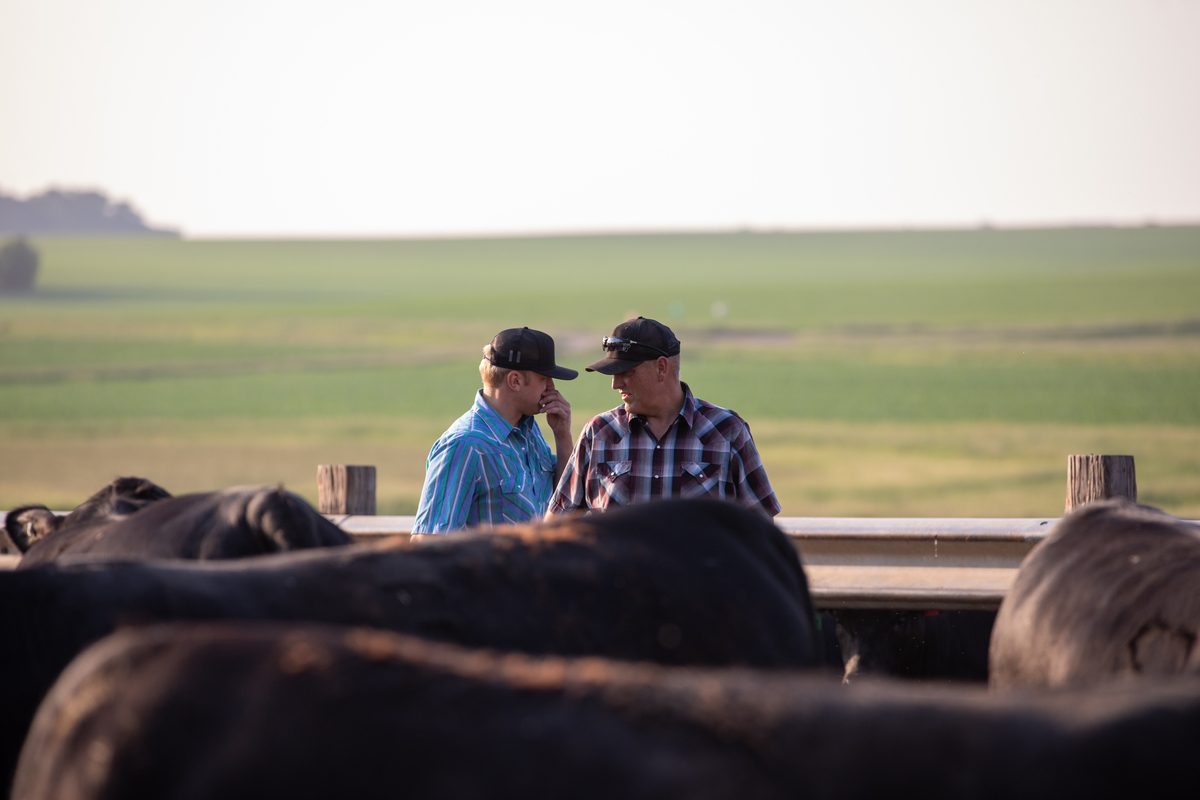
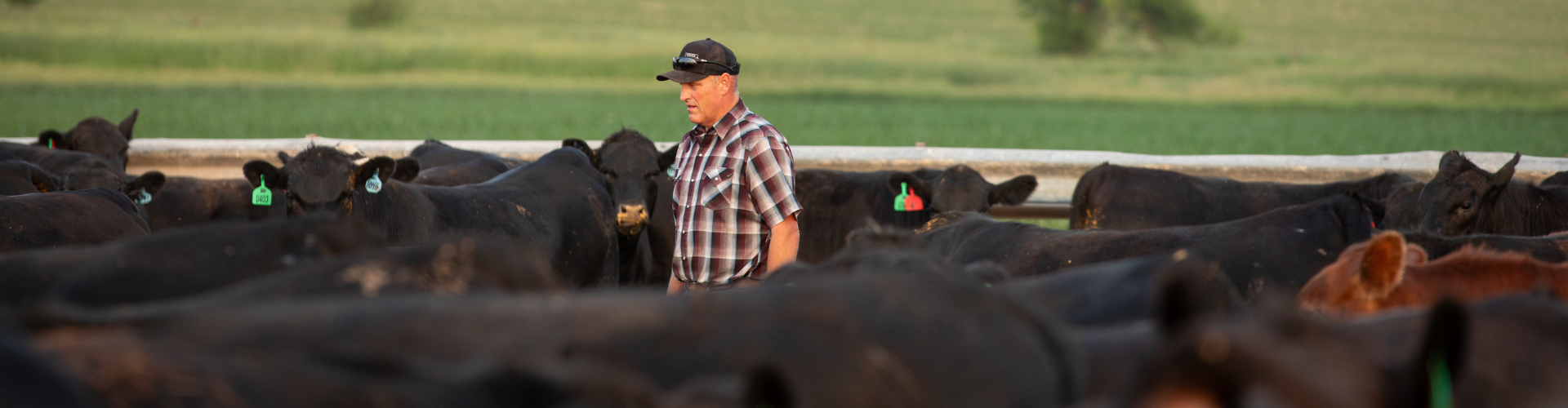
Tory and Dallas Knobloch walking pens in their feedyard

Detail Discipline 

Dallas, Amy and Tory all work to build their database to better understand their true cost of gain. Always crunching the numbers, the family works as a team to stay consistent.

In every market, pounds pay. But discipline in the details can make them pay more. Even with marketing and cash flow spread out, Dallas says health maintenance is key to pocketing premiums.

“Every morning, we walk cattle,” he says. “It’s the highest-paying job on the farm right now.”

Consistency is paramount in herd health, record keeping, pen management, feed quality and timing. That’s why Beef Quality Assurance (BQA) is the basis for consumer confidence as well as cattle performance.

The Knoblochs demonstrate dedication with schedules geared mainly to suit cattle, leaving at 2:30 a.m. to haul calves home from the Dakotas because it means less stress.

Working alongside their veterinarian in Hills, Dallas helped his commercial cattlemen fine-tune vaccination protocols.

“When I visit in August for my ranch tour,” he says, “I actually give my ranchers the one vaccine I really want cattle to have before they get here. I don’t even charge them. It’s a 56-cent shot that saves me thousands of dollars a year.”

Tory adds, “My dad is particular about the details and the numbers because we chase quality.”

Since returning full-time two years ago, Tory’s helped move ahead on care and management. A new feed truck and semi-trailer truck improved feeding consistency and animal handling—with Tory in the driver’s seat.

As the Knoblochs continue to finesse their system, they keep proving excellence isn’t about scale – it’s about intention.

“It’s not just about the dollars and cents, it’s about the opportunity and for our kids to find an interest and have a few more open doors than we may have had,” says Amy.

With every load of cattle, every walk through a pen, and every conversation across the supply chain, they build a legacy rooted in quality.


The Knobloch family received their award in September at the 2025 Certified Angus Beef Annual Conference in Austin, Texas. This story was originally published in the October 2025 Angus Journal. 

You May Also Like…

An Unforgiving Land

An Unforgiving Land

What makes a ranch sustainable? To Jon, it’s simple: the same family, ranching on the same land, for the last 140 years. The Means family never could have done that without sustainability. Responsible usage of water, caring for the land and its wildlife, and destocking their herd while the land recovers from drought.

Double Down on Angus

Double Down on Angus

South of Calgary, Alberta, brothers Austin and Malcolm Cross carry on a century-old family history. Their great-great-grandfather staked his future on this land. Today, the Cross brothers are building one of their own—with Angus cattle that not only perform in the harsh environment but consistently meet the highest standards for beef quality.

A Means to an End

A Means to an End

For Willis Ranch, the best Angus cattle thrive in the high desert and produce calves that can become productive replacement females or high-quality carcasses. Every year, calves are better because of their investment in tools like GeneMax and AngusLink. But behind it all is one man’s perfectionist mindset that keeps the entire family moving in the same direction.
4K Cattle Receives Feedyard Commitment to Excellence Award

The Minnesota cattle feeder was recognized at Certified Angus Beef’s 2025 Annual Conference.

by Kylee Sellnow

September 29, 2025

For Dallas Knobloch, success isn’t about being the biggest—it’s about building a high-quality system that works.

After decades of custom feeding cattle with his father, Larry, Dallas and wife Amy downsized to focus on quality. Their attention to detail, relationships, and consistency proved that excellence can outperform scale.

A decade ago, Amy left her 18-year banking career to join the farm full-time, just as their children, Tory and Claire, were growing up and showing interest. That shift allowed the family to streamline operations and move forward.

Today, with Tory’s wife Sadie and daughter Ivy, the Knoblochs run 4K Cattle near Hills, Minn., feeding 2,500 cattle across eight nearby locations, managing 1,000 acres of crops, and maintaining a 125-head cow herd. Their success earned them the 2025 Certified Angus Beef (CAB) Feedyard Commitment to Excellence Award.

Details Add Up

Amy’s return helped Dallas expand the cow herd and begin managing nearby small yards. He focused on consistency and honed in on the details—timing and quality of feed, shrink, herd health—all of which added up to better results.

Dallas built relationships across the system, from neighbors to packers like Upper Iowa Beef. Buying calves directly from Dakota ranches became a game-changer, sparked by connections with Angus seedstock producers during the 2020 market shift.

“In today’s weight market, there’s a $50 to $100 per head difference between the producer and me,” Dallas explains. “I realized I was paying over $50,000 just in commission.”

Beyond cost, unknown management practices led to herd health challenges. So, they went direct.

“When the market is low, I give those 50 to 70 bucks to the rancher,” Dallas says. “Lately, ranchers let us keep the margin, trusting we’ll return next year.”


Data, Cattle Return

Knowing the background and genetics of his cattle improves feed efficiency and herd health. Dallas shares carcass data with ranchers, fostering long-term improvement.

“It takes two and a half years to find those details,” he says. “Asking a producer to change something drastically may disrupt decades of work.”

Instead of pushing change, Dallas invites ranchers to see harvest-ready pens and discuss genetics, vaccination protocols, and handling.

David Scott, a South Dakota rancher, began selling directly to Dallas seven years ago. The result: less stress and a simple, rewarding transaction.

“I appreciate his insight,” Scott says. “We find a happy medium—a moderate, efficient cow without sacrificing carcass weight.”

Shared progress strengthens relationships and keeps ranchers coming back.

A Prime Target

Working directly with ranchers has paid off.

“Targeting Certified Angus Beef has opened doors,” says Tory. “We get more information to improve premiums and cattle quality.”

4K Cattle markets one to three loads weekly for 45 weeks a year. Their partnership with Upper Iowa Beef provides timely data and open communication.

“It’s critical to our success,” Dallas says. “It tells us what’s working and how to get a premium to our cow-calf breeder.”

It all starts with genetics.

“Angus cattle are required to make the grid work,” Dallas says. “Feed efficiency, meat quality, Prime grades—it’s critical.”

In 2024, they delivered 3,700 head to Upper Iowa, 90% black-hided, all marketed on the grid. Recent loads graded over 60% Prime.

“Certified Angus Beef has become a priority,” Dallas says, noting their size allows them to focus on the finer details that deliver quality and consistency consumers are looking for.

Tory notes, “We expect the same quality on our plates as we expect on theirs.”

Detail Discipline

Dallas, Amy, and Tory work together to build a database and understand their true cost of gain. They crunch numbers and stay consistent.

In every market, pounds pay—but discipline in the details pays more. Health maintenance is key to pocketing premiums.

“Every morning, we walk cattle,” Dallas says. “It’s the highest-paying job on the farm.”

Consistency in herd health, record keeping, pen management, feed quality, and timing is paramount. That’s why Beef Quality Assurance (BQA) is foundational to both consumer confidence and cattle performance.

The Knoblochs demonstrate dedication with schedules tailored to cattle needs—like leaving at 2:30 a.m. to haul calves home from the Dakotas to reduce stress.

Dallas works with his veterinarian to fine-tune vaccination protocols. During ranch visits, he even provides a key vaccine to ranchers at no charge.

“It’s a 56-cent shot that saves me thousands a year,” he says.

Tory adds, “My dad is particular about the details and the numbers because we chase quality.”

Since returning full-time two years ago, Tory has helped improve care and management. A new feed truck and semi-trailer enhanced feeding consistency and handling—with Tory behind the wheel.

As the Knoblochs continue refining their system, they prove excellence isn’t about scale—it’s about intention.

“It’s not just about dollars and cents,” Amy says. “It’s about opportunity—for our kids to find interest and have more open doors than we had.”

With every load, every pen walk, and every conversation across the supply chain, they’re building a legacy rooted in quality.

The Knobloch family received their award in September at the 2025 Certified Angus Beef Annual Conference in Austin, Texas.

You may also like

Apply by April 1 for Colvin Scholarship

Apply by April 1 for Colvin Scholarship

The production agriculture, undergraduate and graduate scholarship categories each have tailored requirements. In 2025, the Colvin Scholarship Fund supported 27 students with awards ranging from $2,000 to $7,500.

Working in Balance

Working in Balance

Cattlemen have a responsibility to look critically at their own herd, determine the areas that warrant improvement, and select animals accordingly. Stockmen bring immense value by objectively evaluating phenotypes, regardless of what the numbers say, and setting individual breeding objectives.

Healthier Soils and Stronger Herds

Healthier Soils and Stronger Herds

Effective land stewardship requires an understanding of how each decision affects forage growth, cattle performance and long-term stocking rates. When land is the foundation of the business, producers are more likely to invest time and resources into managing it intentionally.

Connealy family in the pasture with their cattle

​Customer First Mentality

Connealy Angus recognized by Certified Angus Beef for commitment to excellence.

by Morgan Boecker

September 2024

​When potential buyers fill the Connealy Angus sale barn, they’re not just there for the genetics but the customer service guarantee.

The Connealys could easily go unnoticed if not for their customers. Their remote location paired with their quiet demeanor doesn’t draw attention, but their character does.

“Your reputation is paramount,” Jerry says. “You can’t cut corners, you can’t be shortsighted.” Not if you want repeat customers, the family’s measure of success.

For getting that and a lot more right, Connealy Angus was recognized with the 2024 Certified Angus Beef Seedstock Commitment to Excellence award at the brand’s Annual Conference in September.

 A Place to Thrive

In one of the toughest economic times for the cattle business, Jerry and his new bride Sharon moved back to his family’s ranch.

“We’ve gone from survival mode in the ’80s to making the right decisions so we can pass this on to the next generation and our customers,” Jerry says. “We’re now in a place where everybody can, not just survive, but thrive and make the land and everything we touch better.”

Sharon, once a city girl, now manages accounting, payroll, data entry, purebred registry and sale catalog creation for two annual Angus bull sales.

Three of four children work full-time at the ranch.

Oldest son Jed’s passion for merchandising spurred the creation of Connealy Marketing. He works with commercial customers daily to buy or place feeder calves with feedyards, and offers artificial insemination (AI) services for their herd and customers. His wife Jais is the ranch veterinarian.

Jed passes performance and carcass information back to Jerry and youngest son Gabriel, who followed his father’s footsteps in caring for the cattle and an interest in genetics. His wife Becca is a nurse, but also actively assists with sale prep, event coordination, data entry and customer gifts.

Daughter Hannah’s primary role is managing social media, data entry, event planning and Connealy Angus Meat Market. She also helps when an extra hand is needed moving cows or processing cattle.

“The kids returning home has been key to our ability to grow and to meet customer needs on a more personal level,” Sharon says.

Jerry and Sharon Connealy

Simple Strategy

Angus have roamed Connealy pastures since 1961 when Jerry’s dad first unloaded them there.

“Now, I look at my counterparts who have other breeds and wonder how they overcome their obstacles and compete against the Angus cow,” Jerry says. 

His ideal cow is the one he doesn’t notice. It’s the female that calves unassisted, raises a big calf and gets bred at the same time every year.

Preparing for breeding season, Jerry and Gabriel compare strengths and weaknesses of their chosen sires. Sharon exports custom reports from Angus Information Management Software comparing expected progeny differences (EPDs) and phenotypic scores. They also ask: What’s changing in the marketplace and what direction do the cattle need to go?

“Not to sound too simplistic, but it all comes down to our commercial bull customer,” Jerry says. “What traits each bull brings to the table that are ultimately going to make our commercial customers profitable.”

Rather than positioning the herd as maternal or terminal, “we think we can do both within the same line of cattle,” Gabriel says.

They pay attention to each of the EPDs and indexes offered through the American Angus Association® but evaluate some more than others. Their first focus is on the maternal side through calving ease direct (CED); then they look at growth via yearling weight. Finally, pressure is applied to the carcass through marbling, ribeye area and carcass weight.

They also DNA test each calf for an added measure of trust, Gabriel says.

Each animal gets an electronic identification (EID) tag for quick and accurate records. Using available technology allows them to make faster progress and avoid mistakes, Jerry says. It’s an imperative investment as the cost of doing business rises.

Connealy Angus pasture in Nebraska

Customers First

“For our customers’ calves to ultimately be profitable, they need to ring the bells and whistles that bring back greater bonuses by performing at a higher level to get off the commodity list and into premium territory,” Jerry says.

Through Connealy Marketing, Jed acts as broker to place groups of calves that match a feeder’s goals. His relationship with feedyards allows him to share information with his family and their customers to make informed management decisions.

“There’s undeniable pull-through demand for cattle genetically geared to make Certified Angus Beef,” Jed says. “They demand a premium. If that premium’s on the feeder cattle side, that guy sees it and he can take that premium and reinvest it to get even better.”

M & M Feeders, Lexington, Neb., fills a lot of pens with Connealy genetics because co-owner and manager Daron Huyser knows what to expect.

“They put more energy into intramuscular fat [marbling] than external backfat, so we don’t get discounted for yield grade fours and fives,” Huyser says. Consistently, truckloads average 50 percent CAB and $100 per head premiums.

Knowing there’s a higher chance to earn a payback drives confidence to make improvements at the ranch. If it was Connealy genetics that got them there, the same customers will be back the next time they need bulls or replacement females.

 Passing It On

Even as the cattle business continues to evolve, they’re evolving, too. Through genetics, using the available tools and technology and managing the cattle well, their product keeps getting better and better.

But their kindness and character remain why their reputation precedes them.

“How you define success isn’t necessarily in your checkbook,” Jerry says. Success is moving the industry forward, going to bed at night knowing you did the right thing and providing a service that keeps your customers in business. 

You may also like

Apply by April 1 for Colvin Scholarship

Apply by April 1 for Colvin Scholarship

The production agriculture, undergraduate and graduate scholarship categories each have tailored requirements. In 2025, the Colvin Scholarship Fund supported 27 students with awards ranging from $2,000 to $7,500.

Working in Balance

Working in Balance

Cattlemen have a responsibility to look critically at their own herd, determine the areas that warrant improvement, and select animals accordingly. Stockmen bring immense value by objectively evaluating phenotypes, regardless of what the numbers say, and setting individual breeding objectives.

Healthier Soils and Stronger Herds

Healthier Soils and Stronger Herds

Effective land stewardship requires an understanding of how each decision affects forage growth, cattle performance and long-term stocking rates. When land is the foundation of the business, producers are more likely to invest time and resources into managing it intentionally.

​From Modest Beginnings to Excellence

Gilchrist Farm’s journey to winning the 2024 Certified Angus Beef Canadian Commitment to Excellence award. 

by Courtney Weekley

September 20, 2024

In the cattle world, it’s a story often heard: one Angus cow changed the trajectory of a cow herd and family business.

Brad Gilchrist knew the commercial cattle side well, as the four generations before him built the family’s operation near Lucknow, Ontario. However, a twist of fate took Gilchrist Farms from a commercial cow-calf ranch to a thriving Angus seedstock enterprise.

The family’s dedication to improving their breed and adhering to the highest standards of beef production has earned them the 2024 Certified Angus Beef (CAB) Canadian Commitment to Excellence award. They received the award at the September 2024 Annual Conference in Verona, New York.

Turning Point

Gilchrist vividly recalls the notion that changed everything for their herd.

“We were showing cattle and learning the cattle business through 4-H,” he says. “We initially showed steers and did well, but we believed we could raise some on our own. So we bought this small herd of club-calf cows and grew from that.”

This lightbulb moment switched on in 2003 when Gilchrist purchased an Angus female that would become the cornerstone of their now renowned seedstock program.

“That female really showed me the clear advantages of Angus over our commercial herd,” Gilchrist says. “At that time, we had about 200 commercial cows, but she showed us what a low-maintenance and highly productive female could do for a herd.”

The evolution from commercial to purebred Angus cattle took rigorous breeding for genetic improvement.

“When I look out over my pastures now, I see cattle with bold sprung rib, excellent udders and good foot quality,” he says. “We focused on replacing our commercial herd with Angus, emphasizing traits that balance longevity and productivity.”

Gilchrist Farm’s evolution includes the use of artificial insemination (AI) and embryo transfer to maximize progress. They source pasture bulls from across North America—including Texas, Ohio, Illinois as well as Canada—helping to ensure both natural service and AI sires meet their genetic standards.

Management has made the investments pay.

“We can focus on performance and data all we want and make sure that we’ve got the right genetics in place, but if we don’t manage these cattle properly, we’re not going to get the most out of them,” he says.

A Source for Producers and Consumers

Getting “the most” led to full-spectrum results.

Local bull customers recognize calves sired by Gilchrist bulls for their sound legs, easy birth and ultimately superior carcass traits.

That’s realized just 20 miles up the road near Kincardine on Ontario’s west coast along the shores of Lake Huron at the family’s CAB-licensed retail shop, the Beef Way. That’s where they offer the Certified Angus Beef ® strip steaks, T-bones and ribeyes. They also custom butcher and market a full line of meats from local producers.

“Our goal is to be the top choice for consumers, retailers and wholesalers, emphasizing quality and consistency in every product we offer,” Gilchrist says.

Dedication to genetic improvement drives their success.

“Every time I look at our cattle,” he says, “I see the results of years of careful selection and breeding.”

Ensuring the farm’s legacy, daughter Peyton has already developed a keen interest in its future, ready to represent the sixth generation.

“I want to make sure Peyton’s got the same opportunity to take the business and continue on in better shape than it was when I received it.”

Looking ahead, he’s committed to genetic improvement and quality production to ensure Gilchrist Farm remains at the forefront of the industry.

“My family’s legacy gave us the chance to achieve what we have now,” he says. “Looking back helps me move forward, ensuring that everything I do is rooted in the values and groundwork laid by my family.”

You may also like

Apply by April 1 for Colvin Scholarship

Apply by April 1 for Colvin Scholarship

The production agriculture, undergraduate and graduate scholarship categories each have tailored requirements. In 2025, the Colvin Scholarship Fund supported 27 students with awards ranging from $2,000 to $7,500.

Working in Balance

Working in Balance

Cattlemen have a responsibility to look critically at their own herd, determine the areas that warrant improvement, and select animals accordingly. Stockmen bring immense value by objectively evaluating phenotypes, regardless of what the numbers say, and setting individual breeding objectives.

Healthier Soils and Stronger Herds

Healthier Soils and Stronger Herds

Effective land stewardship requires an understanding of how each decision affects forage growth, cattle performance and long-term stocking rates. When land is the foundation of the business, producers are more likely to invest time and resources into managing it intentionally.

​From White House to Farmhouse

Maryland’s Stabler family earns the 2024 Certified Angus Beef Ambassador Award.

by Courtney Weekley

September 20, 2024

It’s only 33 miles from the White House steps to Pleasant Valley Farms’ driveway. In a metro that seems to grow by the day, the Stabler family of Brookeville, Maryland, stands out as a beacon of agricultural dedication and community engagement. Established in 1954, three generations of Stablers work side by side on their farm today.

“The farm has always been a place where our family comes together,” Kelsey Stabler says. “It’s not just about the work we do, but the bonds we build and the values we uphold.”

Blending tradition and innovation seamlessly across the land they care for, and willingness to share their excitement for the Angus breed and raising high-quality beef earned them the 2024 Certified Angus Beef (CAB) Ambassador Award. The family received their award at the 2024 CAB Annual Conference in Verona, New York, in September.

By the Busload

Kelsey Stabler and sister Shelby Stabler Stambaugh play crucial roles in daily operations, extending beyond the farm’s borders. They’ve become key ambassadors for CAB, hosting and educating large groups of brand partners, most recently some 300 Sysco representatives.

“Hosting these groups not only allows us to educate others but also reinforces our own commitment to excellence,” Kelsey says. “Seeing visitors’ reactions and their newfound appreciation for agriculture is incredibly rewarding.”

Their proximity to cities on the East Coast makes it convenient for the Stablers to host a wide range of visitors. Tours include hands-on experiences and highlight environmental and sustainable practices, providing a comprehensive understanding of cattle care and the importance of quality in every step of the operation.

“We love opening our farm to guests. It’s a chance to show them the ins and outs of what we do, from our cattle operations to our conservation efforts,” Shelby says. “It’s an honor to represent CAB and share the impact of our work.”

Angus for Generations

At the heart of their operation is the Angus herd, which has grown to more than 200 cows. The Stablers are committed to balanced genetics.

“Our goal is to produce the best Angus cattle possible, balancing both maternal and terminal traits,” Kelsey says. “We want to provide high-quality beef to our local community while maintaining the health and productivity of our herd.”

Randy Stabler, Kelsey and Shelby’s father, emphasizes the importance of farm’s history.

“We take pride in sharing our story and the CAB story with others. It’s a way for us to showcase the quality and dedication that goes into every aspect of our farm,” he says.

For decades, the Stablers have implemented no-till farming, a practice deeply rooted in the family’s farming heritage. No-till farming preserves soil structure, reduces erosion and promotes biodiversity, ensuring a sustainable farm for future generations.

“It’s about more than producing food,” Kelsey says. “It’s about being stewards of the land and ensuring that we leave something better for the next generation.” The Stablers’ commitment to Angus extends beyond their farm, from involvement in junior Angus programs since the sisters were young. That instilled a deep Angus understanding and passion for the industry, which they now bring to their roles on the farm and in their community.

At the Farmstand

In an area where farming families are increasingly rare, the Stablers’ dedication to their community is especially significant. Their Pleasant Valley Produce stand has become a valued resource, allowing sales of their products directly to consumers and fostering strong local connections. The stand offers a variety of fresh, seasonal produce, including retail beef cuts that have become a staple for local residents.

“People appreciate having a local source of food,” Shelby says. “Especially being so close to D.C., where farming is a rarity, our stand offers something unique and essential.”

The farm’s operation is a true family affair, with Randy’s daughters stepping up to take on significant responsibilities. That ensures the farm’s continuity and success, with values passed down from Bob Stabler, Randy’s father, and his grandfather as well.

“My father instilled in us the values of hard work and integrity,” Bob says. “Seeing my children and grandchildren carry on that legacy fills me with immense pride.”

At Pleasant Valley Farm, the Stabler family is not just raising cattle and crops, they are cultivating a legacy of commitment to sustainability and community engagement that will endure for generations to come.


You may also like

Apply by April 1 for Colvin Scholarship

Apply by April 1 for Colvin Scholarship

The production agriculture, undergraduate and graduate scholarship categories each have tailored requirements. In 2025, the Colvin Scholarship Fund supported 27 students with awards ranging from $2,000 to $7,500.

Working in Balance

Working in Balance

Cattlemen have a responsibility to look critically at their own herd, determine the areas that warrant improvement, and select animals accordingly. Stockmen bring immense value by objectively evaluating phenotypes, regardless of what the numbers say, and setting individual breeding objectives.

Healthier Soils and Stronger Herds

Healthier Soils and Stronger Herds

Effective land stewardship requires an understanding of how each decision affects forage growth, cattle performance and long-term stocking rates. When land is the foundation of the business, producers are more likely to invest time and resources into managing it intentionally.

​What’s Good for the Cattle, Is Good for the Wetlands

Progressive work in the Utah wetlands earned JY Ferry and Son, Inc. the 2024 CAB Sustainability Award.

by Lindsay Graber Runft

September 19, 2024

Sensitive, unique, ecologically productive. Healthy forages palatable to cattle. The wetlands and land for grazing—when managed correctly, they are one and the same.

Located north of Salt Lake City, brothers John and Ben Ferry manage their century-old business, JY Ferry and Son, Inc., along with family. The multi-faceted business encompasses ranching, farming and wildlife management. With a determined focus on enduring for generations to come, the family has made strides in land restoration and genetic progress within their Angus cow herd. These efforts earned them the 2024 Certified Angus Beef (CAB) Sustainability Award, presented at the CAB Annual Conference in Verona, New York, this September.

Grazing for a Good Lifecycle

“There’s a good cycle to wetlands,” says Joel Ferry, John’s son and current executive director of Utah’s Department of Natural Resources.

Serving as a habitat for wildlife, the wetlands also have a hydrologic purpose. They act as both filter and sponge, cleaning the water and absorbing it when soils become saturated. Drying out, the wetlands slowly release water, which keeps the land green longer into summer. More plant life means greater grazing opportunities.  

“Grazing is a really important part of that cycle,” Joel says. “It stimulates a lot of regeneration of the wetland vegetation.”

Though they are a vibrant and ever-changing ecosystem, wetlands can become stagnant over time. Without cattle grazing there, the ecosystem becomes decrepit, not ecologically productive.

Speaking from experience, Joel attributes the rise in nesting birds and thriving cattle to the increase in forages and feed for both.

In the wetland areas they manage, the Ferry family mimics natural patterns of wet and dry cycles. Some years, their cattle graze the grasses there, oxygenating soil and stimulating growth. Other years, they dry out some areas, causing wide cracks that let oxygen penetrate deep into the soil. This yields growth of different vegetation with an increase in bugs and birds, restarting the circle of life.

As an added benefit, grazing keeps at bay such invasive plants as the water-hoarding reed phragmites, noxious weeds that steal resources from other plants, fish, birds and wildlife.

“In any system, overgrazing can be detrimental,” Joel says. “But in a wetland, if you manage it properly, grazing is very beneficial.”

Speaking to the evolution of grazing strategy in Utah, he says the mindset has changed. What was once considered disadvantageous is now the solution. With education at wildlife refuges and state waterfowl management areas, rotational grazing has been implemented. Thousands of cattle now graze pastures around the Salt Lake, including the phragmites. That helps control its spread and restore the ecosystem, all in an eco-friendly and sustainable way.

“It’s good for ranchers, it’s good for the ecosystem, it’s good for the birds,” Joel says.

Sustainable Lands, Sustainable Family Business

Wildlife management is one leg on the three-legged stool of JY Ferry and Son, Inc. The other legs, cattle and farming, fall under John and Ben Ferry’s hats. John takes care of the cows, and Ben manages the farm.

Diversity has been key to success and sustainability.

“Even when Hereford was king, we were black,” John says. “We’ve tried different things, as far as terminal crosses, but we’ve always come back to Angus.”

The ranch operates a custom feedyard and runs approximately 1,200 Angus cows.

Replacement heifer selection traits of emphasis include yearling weight, birth weight, milk, docility and marbling. Herd management is geared toward value-based marketing.

“The market is there for quality,” John says of today’s consumers. “They want marbling, flavor and taste.”

He often reviews carcass data from the packer and considers it a measure of progress. If his home-raised Angus cattle grade below 80-90% Choice, John looks at two factors: genetic selection and nutrition. He knows the long-term average is near 85% Choice with 30-40% meeting Certified Angus Beef ® brand specifications.   

“You see your load of calves go down the road and think your concern has ended,” John says. “It hasn’t. It goes all the way to the table.”

A sitting member of the Cattlemen’s Beef Board, he recognizes the consumer’s importance to his business and the entire beef supply chain. The Angus cow offers something consumers want, he says: Quality.

“Angus is in the driver’s seat,” John says. “The progressive nature of the cattle, the genetics, they’re the gold standard.”

For Ben, whose main priority is crop farm management, the task is challenged by various soil types and climates.

The ranch sits in a river valley at 4,200 feet above sea level, protected by mountains on each side that provide a watershed from snow. And though they manage several wetlands, the ranch’s headquarters due north of the Salt Lake features arid, saline soil. 

Though a canal system carries water, the land isn’t immune to drought.

“When dealing with Mother Nature, she doesn’t do anything two years in a row,” Ben says. “So it’s always an education, and most of the time she sends you a tuition bill for a class you never took.”

A few years ago, northern Utah drought saw reservoirs at about one-third of normal levels. Farmers and ranchers faced water rationing. Crops were managed to meet the water availability in a rotation system used for growing wheat, corn and hay.

“Farming in this valley is an art,” Ben says.

Combining years of experience and progressive technology, he steers the farming enterprises toward preparation and predictability, pillars of sustainability.

To Ben, sustainability means survival.

His farming philosophy includes practices that protect the land and its nutrients: no-till planting, cover crops and soil sampling for ultimate soil health. And downstream: developing the watershed and managing a habitat so wildlife and cattle can coexist.

His overall philosophy is family wide. Build for the future, the next generation.

Sustainability in agriculture can mean a lot of things. At JY Ferry and Son, Inc., it bridges quality beef production, land stewardship and wildlife management. What’s good for the cattle is good for the wetlands—and good for another generation of the Ferry family’s multi-generational business.

You may also like

Apply by April 1 for Colvin Scholarship

Apply by April 1 for Colvin Scholarship

The production agriculture, undergraduate and graduate scholarship categories each have tailored requirements. In 2025, the Colvin Scholarship Fund supported 27 students with awards ranging from $2,000 to $7,500.

Working in Balance

Working in Balance

Cattlemen have a responsibility to look critically at their own herd, determine the areas that warrant improvement, and select animals accordingly. Stockmen bring immense value by objectively evaluating phenotypes, regardless of what the numbers say, and setting individual breeding objectives.

Healthier Soils and Stronger Herds

Healthier Soils and Stronger Herds

Effective land stewardship requires an understanding of how each decision affects forage growth, cattle performance and long-term stocking rates. When land is the foundation of the business, producers are more likely to invest time and resources into managing it intentionally.

Jerry Connealy walking with his grandkids

Humble Growth

Connealy Angus earns CAB award for registered cattle with customer profitability in mind.

by Morgan Boecker

September 2024

The Connealys might go unnoticed if not for their customers. At home 45 miles from a grocery store where their private radio network replaces spotty cellphone service, their quiet demeanor doesn’t draw attention. Their reputation does.

If you’ve ventured to Irish Lane near Whitman, Nebraska, you know Connealy Angus is worth notice, for its cattle and family values.

“Your reputation is paramount,” Jerry Connealy says. “You can’t cut corners, you can’t be shortsighted.” Not if you want repeat customers, the family’s measure of success.

A Place to Thrive

After graduating from the University of Nebraska-Lincoln, Jerry and his new bride Sharon moved to the ranch in 1981. In the midst of one of the toughest economic times for the cattle business, he was the only one of seven siblings interested in coming home.

Being from Omaha, “it was all new to me,” Sharon remembers, “so it was kind of an adventure.”

That once city girl now manages accounting, payroll, data entry, purebred registry and sale catalog creation for two annual Angus bull sales.

“We’ve gone from survival mode in the ’80s to making the right decisions so we can pass this on to the next generation and our customers,” Jerry says. “We’re now in a place where everybody can, not just survive, but thrive and make the land and everything we touch better.”

Three of four children work fulltime at the ranch. The exception, second-oldest Ben, works in San Diego but still knows his beef. “He cooks about the best hamburger I’ve ever tasted,” Sharon says.

Oldest son Jed’s passion for merchandising spurred the Connealy Marketing business arm of the ranch. He works with commercial customers daily to buy or place feeder calves with feedyards, and offers artificial insemination (AI) services for their herd and customers. His wife Jais is the ranch veterinarian.

“What interests me about marketing feeder cattle is connecting the dots between production segments,” Jed says. “The flow of information sometimes gets lost, so I can help keep that intact and share feedback to our customers about their cattle’s performance, grades at the packer and whether they should consider making any changes in their approach.”

This information also flows back to Jerry and youngest son Gabriel, who followed his father’s footsteps in caring for the cattle and genetics.

Gabriel helps with day-to-day operations, from balancing feed rations to selecting bulls at breeding season, meeting bull customers and delivering bulls after their sales. His wife Becca is a nurse, but also actively assists with sale prep, event coordination, data entry and customer gifts.

Daughter Hannah’s primary role is managing social media, data entry, event planning and Connealy Angus Meat Market, which supplies beef to select restaurants and Hy-Vee grocery stores in eastern Nebraska. She also helps when an extra hand is needed moving cows or processing cattle.

“The kids returning home has been key to our ability to grow and to meet customer needs on a more personal level,” Sharon says.

Everyone brings a different skillset, allowing them to diversify the business, service customers and call the ranch home.

Jerry and Sharon Connealy

Simple Strategy

When the first 40 Angus heifers stepped out on the Nebraska Sandhills in 1961, the neighbors thought Jerry’s dad was a unicorn. Jerry admits it was hard being different through the ’60s and 70s when the exotic European cattle made their splash. Through sheer stubbornness and leveraging every bit of their assets, they didn’t budge.

“Now, I look at my counterparts who have other breeds and wonder how they overcome their obstacles and compete against the Angus cow,” Jerry says.

His ideal cow is the one he doesn’t notice. It’s the female that calves unassisted, raises a big calf and gets bred at the same time every year. If that calf’s a female, then she should be replacement quality. Bull calves must have the traits to keep their bull customers generational and profitable.

Preparing for breeding season, Jerry jots down pages of notes on potential bulls and then he and Gabriel compare strengths and weaknesses of each. Sharon exports custom reports from Angus Information Management Software comparing expected progeny differences (EPDs) and phenotypic scores. They also ask: What’s changing in the marketplace and what direction do the cattle need to go?

“Not to sound too simplistic, but it all comes down to our commercial bull customer,” Jerry says. “What traits each bull brings to the table that are ultimately going to make our commercial customers profitable.”

Rather than positioning the herd as maternal or terminal, “we think we can do both within the same line of cattle,” Gabriel says.

They pay attention to each of the EPDs and indexes offered through the American Angus Association® but evaluate some more than others. They also DNA test each calf for an added measure of trust. Their first focus is on the maternal side through calving ease direct (CED); then they look at growth via yearling weight. Finally, pressure is applied to the carcass through marbling, ribeye area and carcass weight.

“The added trust that comes through EPDs and DNA tests probably makes it the most important technology we use,” Gabriel says.

Each animal gets an electronic identification (EID) tag for quick and accurate records. Using available technology allows them to make faster progress and avoid mistakes, Jerry says.

“It validates what we’re doing and even allows us to raise more beef per acre of grass,” he adds. It’s an imperative investment as the cost of doing business rises.

Labor is arguably the biggest challenge, so choosing problem-free bulls is important. Bulls that will breed a lot of cows and sire calves with a better chance to add black to the bottom line.

bulls in a grow yard
Angus cows in the Nebraska sandhills
Angus cow in Nebraska

Customers First

“For our customers’ calves to ultimately be profitable, they need to ring the bells and whistles that bring back greater bonuses by performing at a higher level to get off the commodity list and into premium territory,” Jerry says.

They put their money where their mouth is through an available customer calf buy-back program and marketing finished cattle on a quality-based grid. But more often, Jed acts as broker to place groups of calves that match a feeder’s goals.

He handpicks cattle based on whether the feedyard will sell them on a grid or by live weight. Through relationships with feedyards, Jed takes information back to his family and their customers for breeding and management decisions.

“There’s undeniable pull-through demand for cattle genetically geared to make Certified Angus Beef,” Jed says. “They demand a premium. If that premium’s on the feeder cattle side, that guy sees it and he can take that premium and reinvest it to get even better.”

M & M Feeders, Lexington, Nebraska, fills a lot of pens with Connealy genetics because co-owner and manager Daron Huyser knows what to expect.

“They put more energy into intramuscular fat [marbling] than external backfat, so we don’t get discounted for yield grade fours and fives,” Huyser says. Consistently, truckloads average 50 percent Certified Angus Beef (CAB) and $100 per head premiums.

Knowing there’s a higher chance to earn a payback drives confidence and energy to make improvements at the ranch. If it was Connealy genetics that got them there, the same customers will be back the next time they need bulls or replacement females.

“If we’re keeping those cattle profitable for our commercial customers, genetically we must be doing something right,” Jerry says.

For getting that and a lot more right, Connealy Angus was recognized with the 2024 CAB Seedstock Commitment to Excellence award at the brand’s Annual Conference in September.

Connealy family walking in the pasture with cows.

Good for Their Word

Customers from around the world file into the Shamrock Shack beside their sale ring each spring and fall. They’re not just buying into Connealy cattle, but the customer-service guarantee.

“I’ve bought a lot of bulls in my time, but the Connealys are good for their word,” says Gary Hill, Saguache, Colorado. “Years ago, I bought two bulls and one got hurt shortly after I turned them out with the heifers. I called Jerry just to let him know and the next day I met his son halfway and he loaded two bulls in my trailer, not just one. I’ve never been treated like that.”

Sharon says they approach each sale with gratefulness. Their actions follow suit.

“They’re good for their word,” says Marty Fletchall, Beloit, Kansas, bull customer. “Our job is tough enough that we don’t need extra turmoil, so to get along with my seedstock supplier, it doesn’t get any better than that.”

It’s more than representing the cattle honestly, it’s having pride that you did the right thing, Jerry says. 

Passing It On

These acts of kindness haven’t gone unnoticed by the next generation.

“They’ve instilled that in all of us,” Jed says. “We’re from humble beginnings and still in a humble place today. I think we will remain there.”

Even as the cattle business continues to evolve, they’re evolving, too. Through genetics, using the available tools and technology and managing the cattle well, their product keeps getting better and better.

But their kindness and character remain why their reputation precedes them.

“How you define success isn’t necessarily in your checkbook,” Jerry says. Success is moving the industry forward, going to bed at night knowing you did the right thing and providing a service that keeps your customers in business.

This story was originally published in the Angus Journal and Angus Beef Bulletin.

You may also like

Apply by April 1 for Colvin Scholarship

Apply by April 1 for Colvin Scholarship

The production agriculture, undergraduate and graduate scholarship categories each have tailored requirements. In 2025, the Colvin Scholarship Fund supported 27 students with awards ranging from $2,000 to $7,500.

Working in Balance

Working in Balance

Cattlemen have a responsibility to look critically at their own herd, determine the areas that warrant improvement, and select animals accordingly. Stockmen bring immense value by objectively evaluating phenotypes, regardless of what the numbers say, and setting individual breeding objectives.

Healthier Soils and Stronger Herds

Healthier Soils and Stronger Herds

Effective land stewardship requires an understanding of how each decision affects forage growth, cattle performance and long-term stocking rates. When land is the foundation of the business, producers are more likely to invest time and resources into managing it intentionally.

Carpenter Cattle ear tag

Carpenter Cattle Company Recognized for Feeding Better Cattle Better

Kansas feeder earns the 2024 CAB Feedyard Commitment to Excellence Award.

by Kylee Sellnow, senior content manager

September 2024

Not everyone is cut out to be a cattle feeder. It’s an art and a science that comes with a need to overcome risk. Wayne Carpenter fed his first pen of steers in 1980 and lost money. But he stuck with it.

Today with their sons’ families, he and wife Leisha run the 15,000-head-capacity Carpenter Cattle Company.

The Brewster, Kansas, yard still has the same priorities it started with at 1,000 head: cattle care, facility management, profitability and commitment to high-quality beef. Learning and adjusting over time serve to temper the risk.

“We have to be aware and listening to all segments of the industry­, including chefs, retailers and the consumer, we have to know what they do and don’t want,” Wayne says.

This dedication to feeding the best beef earned Wayne and his family the 2024 Certified Angus Beef (CAB) Feedyard Commitment to Excellence Award. They received their award in Verona, New York, at the brand’s Annual Conference in September.

Carpenter family

An Art

Bunks are clean, waterers clear and cattle quiet. Not a day goes by that a pen isn’t fed within an hour’s deviation at the Carpenter yard.

You can find Wayne himself in the feed truck most mornings.

“It’s more than dumping feed and calling it good,” he says. “The little things in the yard, the ones you don’t think about here and there. Those add up to affect your bottom line.” The challenge drives him.

“Wayne’s not a quitter,” Leisha says. “From getting cattle marketed right to adjusting for the weather we have, he’s not afraid to take a chance to grow and try something different.”

The Carpenters have positioned their yard for success with all team members Beef Quality Assurance (BQA) certified and the business backed by Micro Technologies precision feed management.

“Animal health, feed inventory, feed truck scales, GPS, billing, all of it is tracked through one system which has made our life a lot easier,” Wayne says. “We can run any report we need for our veterinarian or nutritionist—you name it, we can analyze it. It’s made us better.”

His customers recognize that meticulous care.

Wayne McKinney runs a cow-calf operation near Weskan, Kansas, and has retained ownership of calves through Carpenter Cattle Company.

“He’s not a manager that is 200 miles away and has somebody else running it,” McKinney says. “He’s available at any time and can tell me how my cattle are doing. He’s a progressive go-getter, always making improvements.”

The Carpenter approach to embracing innovation and technology to improve results wins many admirers.

“Not only does Wayne do a quality job with the animals and the economics of the business, but the relationship is top shelf as well,” Keith Burcamp says.

The stocker and backgrounder at Cottonwood Feeders, Cunningham, Kansas, tips his hat to the business ethics.

“I don’t know many people who work harder,” Burcamp says. “I really appreciate his guidance. He’s always honest with me; he’s consistent and his character is top-notch.”

Carpenter Cattle Company feedyard

A Science

Carpenter commends the Angus breed for adding to the producers’ toolbox with genomics and data that point the way to CAB grid premiums.

Those tools cut down on guessing when cattle are finished and how long it will take to improve them.

“We used to eyeball it or maybe look at our grids and figure it will be two years before it gets better,” Wayne says. “Now, we’ve sped that up.”

Before joining U.S. Premium Beef, the Carpenters sold pens of finished cattle on the cash market, all for the same average price. But once they started to get individual carcass data back and saw the greater value of high-quality beef, they leaned into grid marketing. They haven’t looked back.

“If it wasn’t for grids improving carcass quality and putting that quality in front of the consumer, we wouldn’t have the demand for our product today,” Wayne says. “It’s made us better cattle feeders.”

He says it takes feeding the right kind of cattle to make the most out of the grid, and they’ve been lucky to have some great partners that have made it a successful business for all of them.

“You’ve got to have quality pounds,” Wayne says. “The whole industry is pushing over 80% Choice and Prime, and I’ve got to compliment the cow-calf side of this business. They don’t always get the recognition, but it all starts there with quality genetics. We’re just a piece of the chain here at the feedyard, and it all starts at the ranch and setting calves up right.”​

pen rider at Carpenter Cattle Company feedyard

Risk Overcome

Wayne grew up in a family of dryland farmers and ran a few cow-calf pairs with his dad. After feeding out his first pen of steers, however, he was hooked.

“My dad told me one day, ‘You’re going to go broke feeding cattle,’” Wayne chuckles. “And he was right. We’ve been broke three times. We always come back. Like I always told him, ‘When you were a wheat farmer and you got hailed out, did you quit? No, you kept going.’”

Success over the long term means learning from setbacks in a series of calculated risks.

“Businesses take time to grow and mature. Just make sure you enjoy what you’re doing.”

For Wayne and Leisha Carpenter, the risk has paid off.

This story was originally published in the Angus Journal and Angus Beef Bulletin.

You may also like

Apply by April 1 for Colvin Scholarship

Apply by April 1 for Colvin Scholarship

The production agriculture, undergraduate and graduate scholarship categories each have tailored requirements. In 2025, the Colvin Scholarship Fund supported 27 students with awards ranging from $2,000 to $7,500.

Working in Balance

Working in Balance

Cattlemen have a responsibility to look critically at their own herd, determine the areas that warrant improvement, and select animals accordingly. Stockmen bring immense value by objectively evaluating phenotypes, regardless of what the numbers say, and setting individual breeding objectives.

Healthier Soils and Stronger Herds

Healthier Soils and Stronger Herds

Effective land stewardship requires an understanding of how each decision affects forage growth, cattle performance and long-term stocking rates. When land is the foundation of the business, producers are more likely to invest time and resources into managing it intentionally.