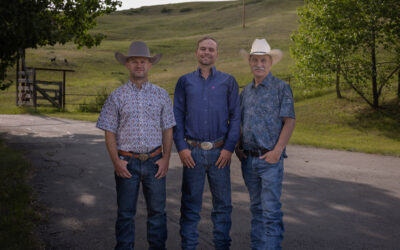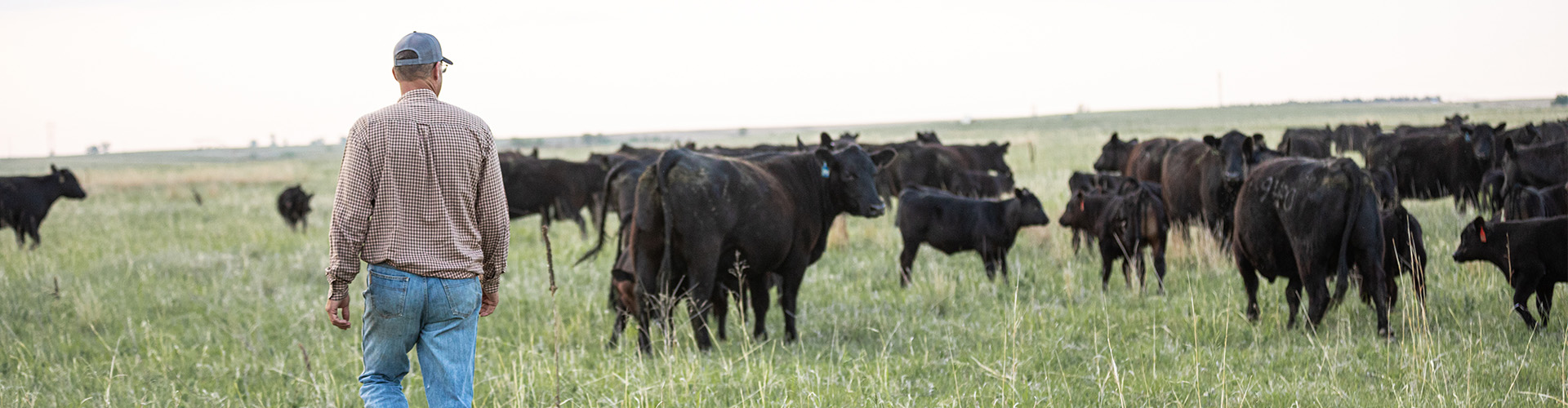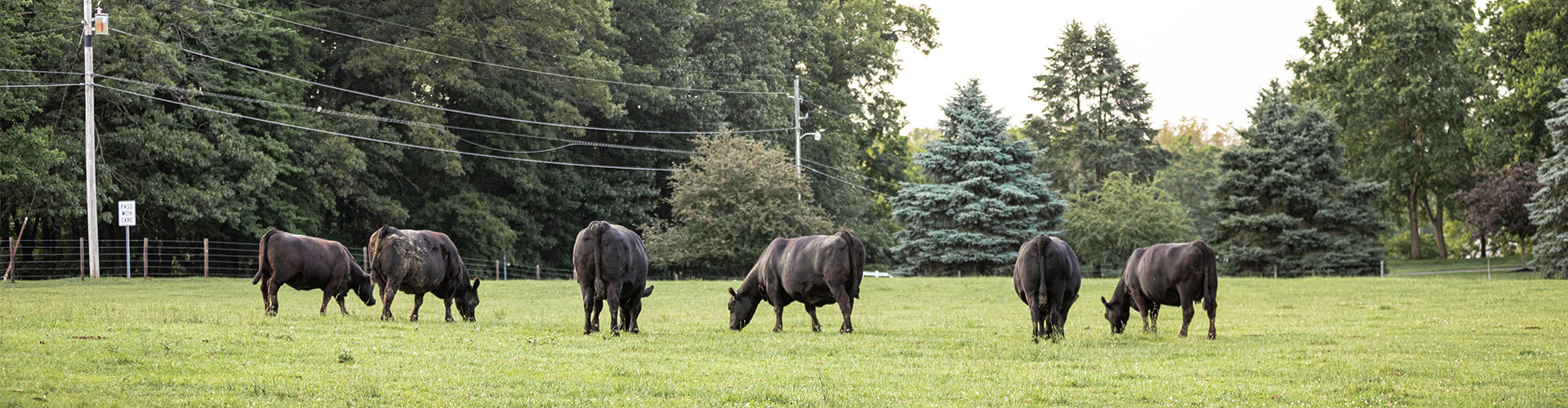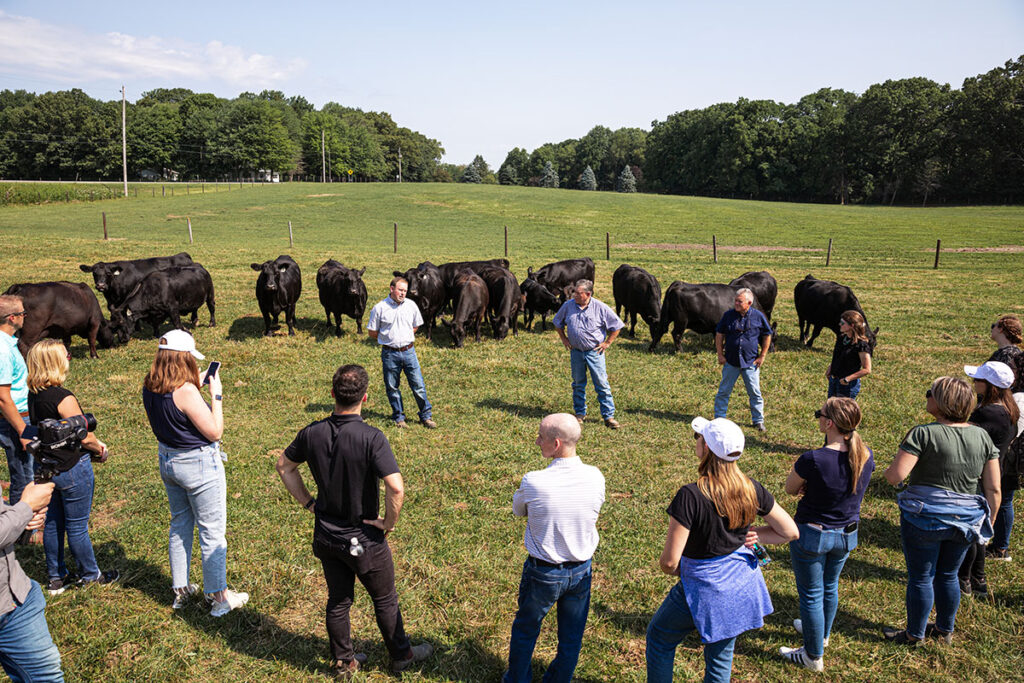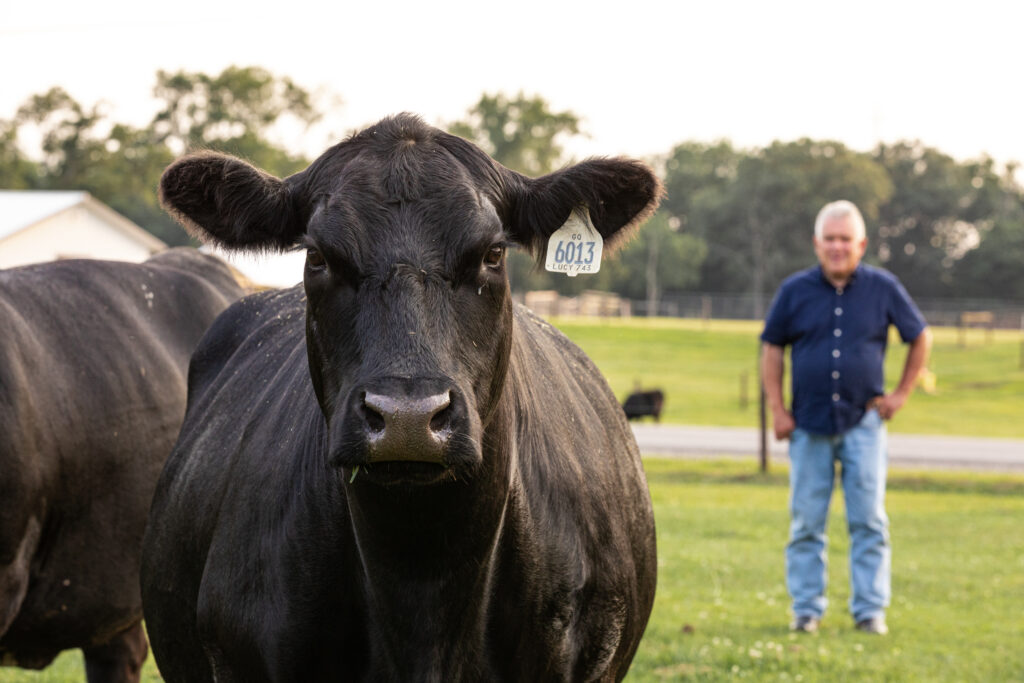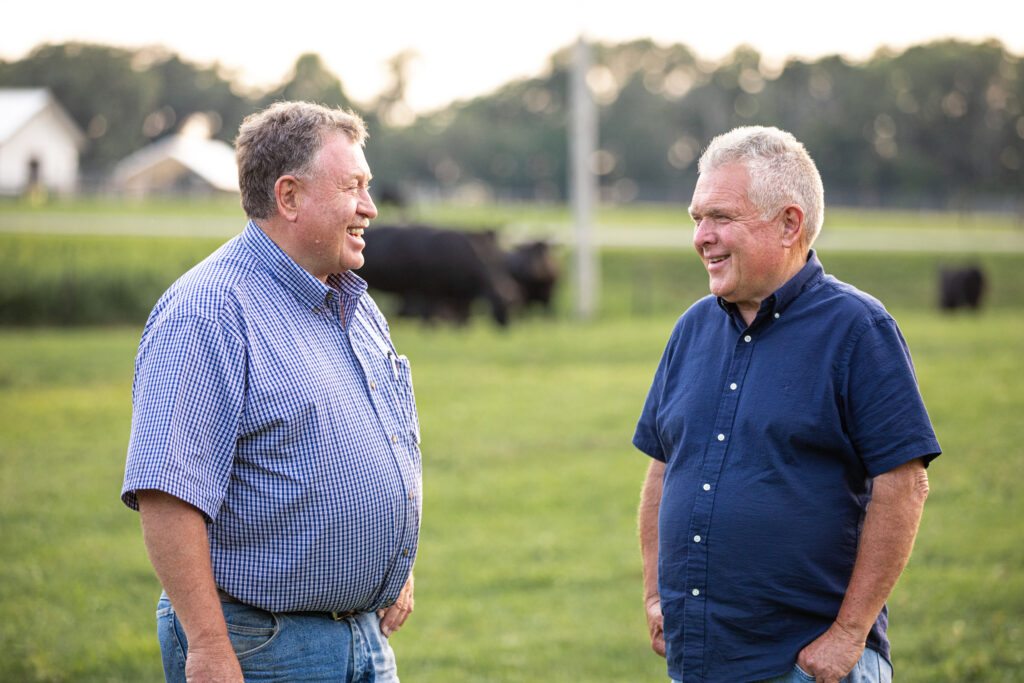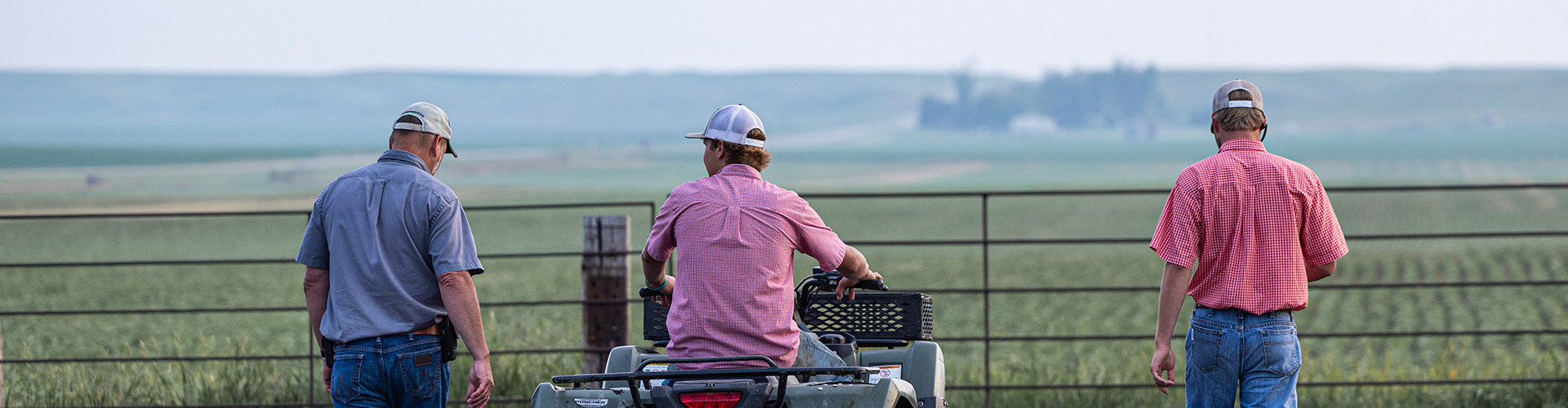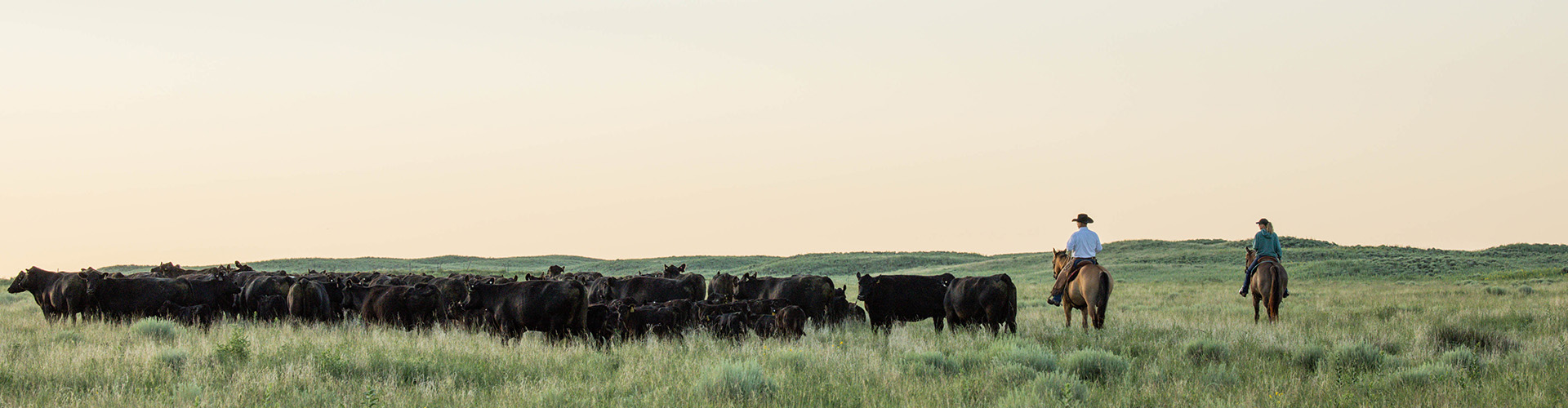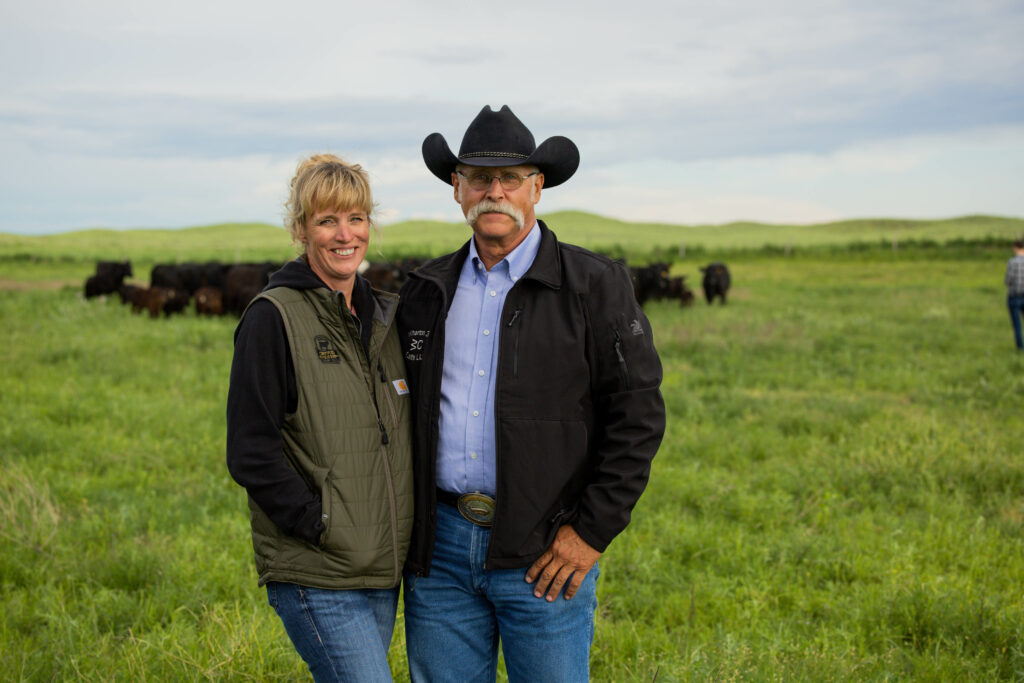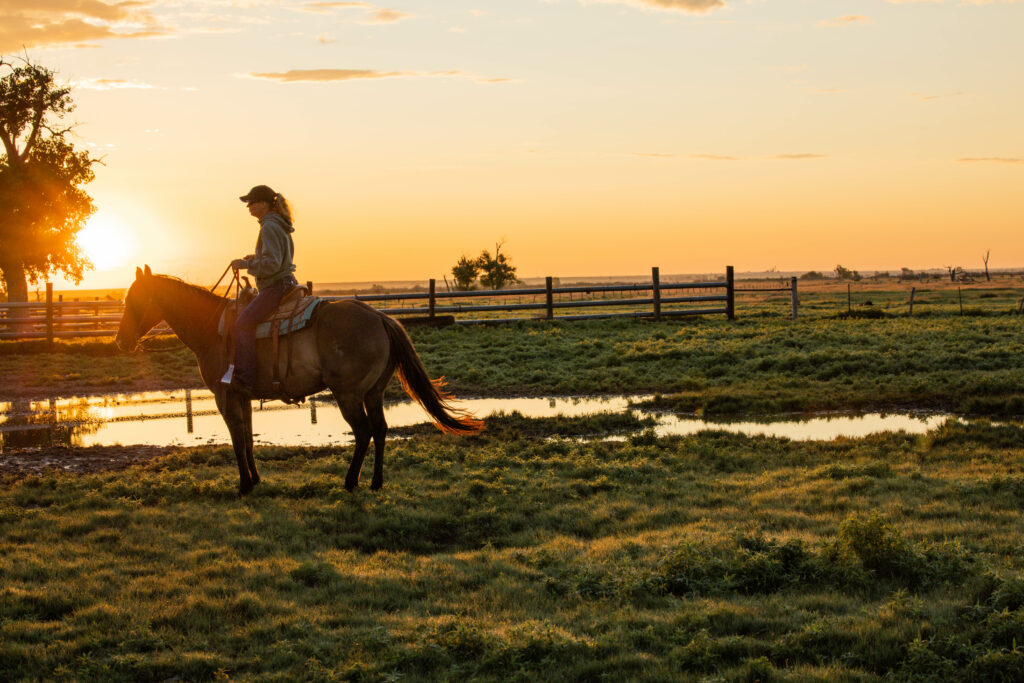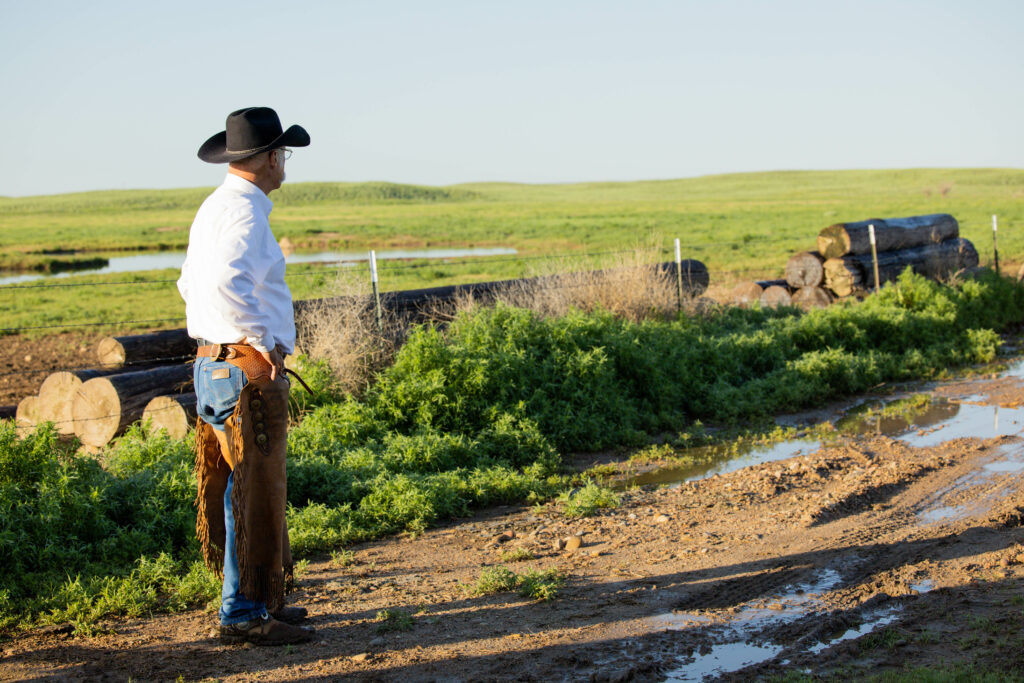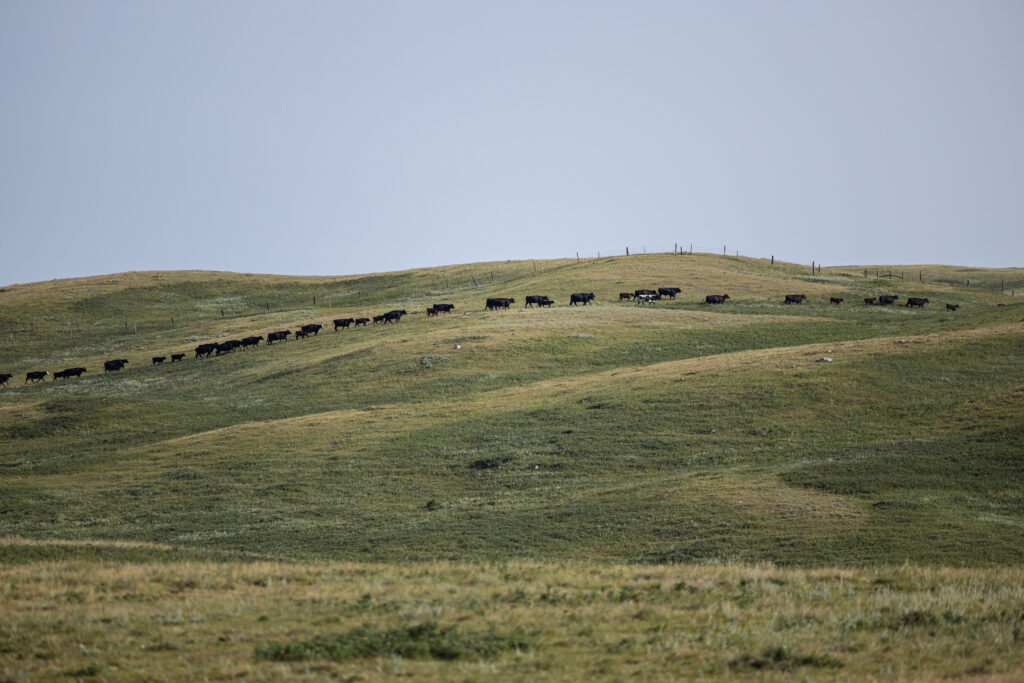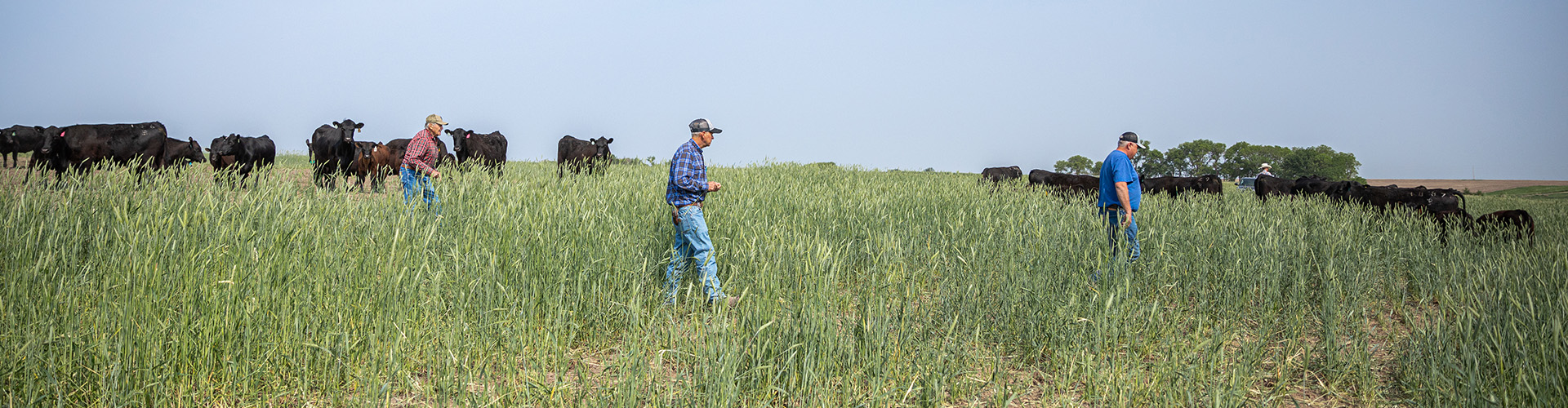
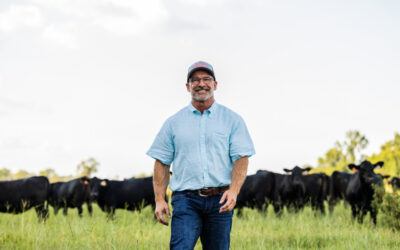
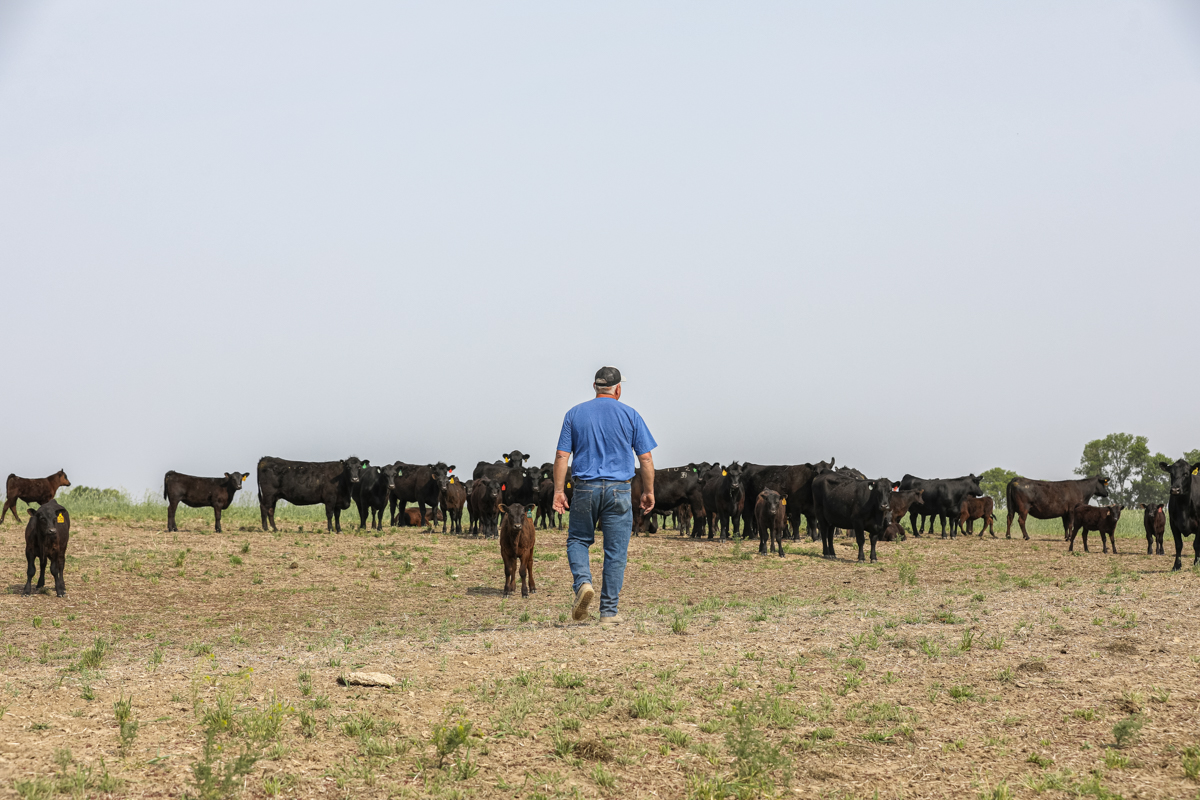
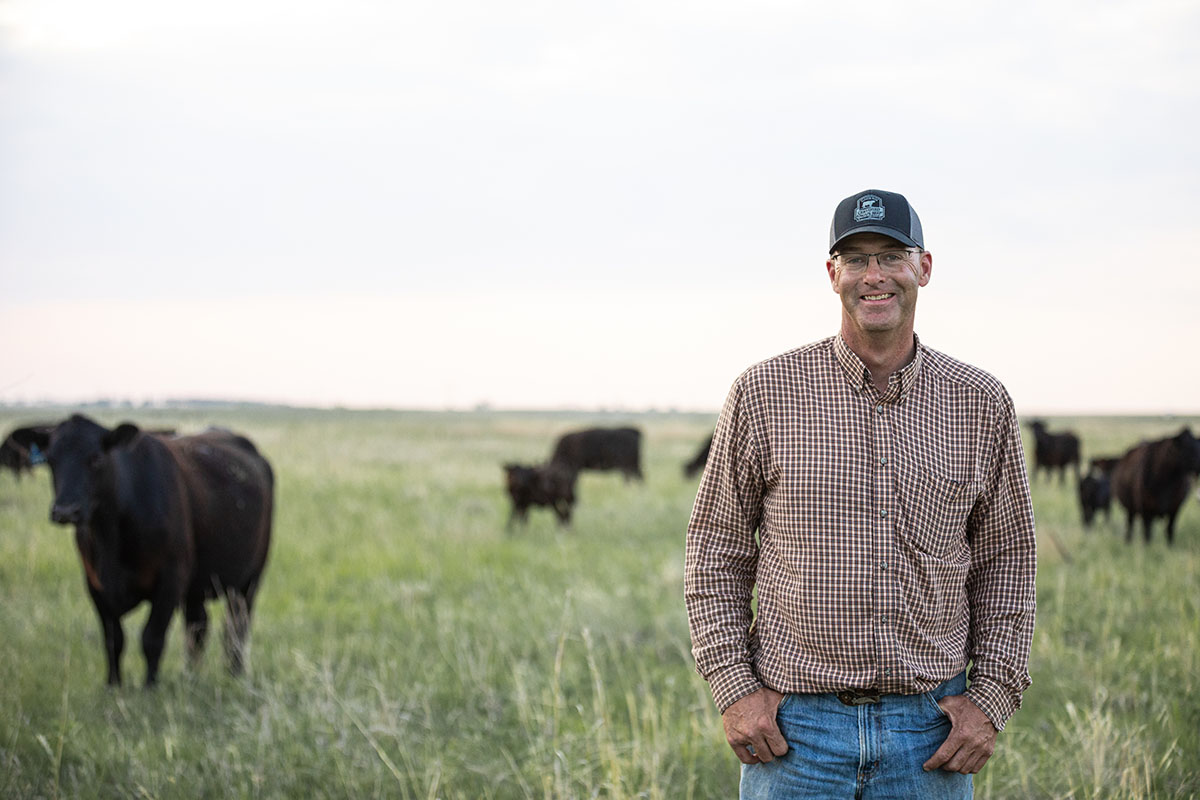
Quintin and Brian Walt walking through the cow pasture

Walt Family Earns Certified Angus Beef Commercial Award

Pursuing premiums takes honest, hard-work for Kansas rancher and his family.

by Morgan Boecker

September 2024

Brian Walt works smart.

The commercial Angus rancher from Collyer, Kansas, came back for daily homework in 1999 after a year at college. For 25 years now, he’s studied all the ways to grow his family’s W6 Cattle cow-calf herd with Angus at the base.

“He studies the data; decisions aren’t made on a whim,” says Dominic Stephens, manager and part-owner of Beef Belt feedyard, Scott City, Kansas. “Brian has a very structured program. Nine years ago, he started feeding his calves at my yard and got a taste for higher premiums. Economics drive his program.”

Guided by data, Walt worked to improve the herd from zero Primes to averaging 60 percent. While some are content with matching the national Certified Angus Beef (CAB) average of 35 to 40 percent, today he regularly sees 85 to 90 percent CAB and Prime in his carcass data.

Learning what drives premiums prompted improvement.

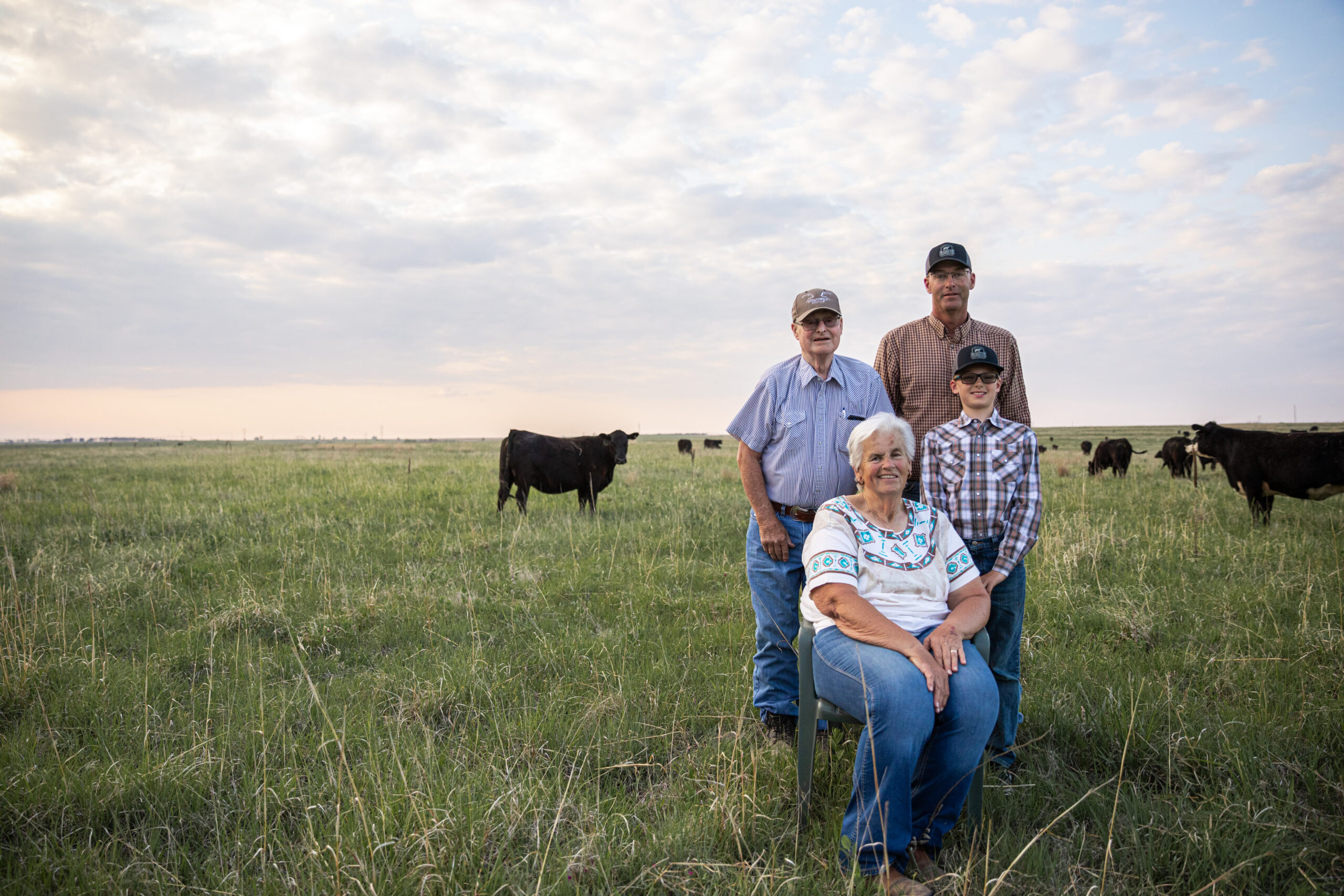
Walt family photo

Caption: (l to r) Aceton, Quitin, Brian, Jana, Madison and Keaton Walt

After the Primes

In 2008, after breeding with registered Angus bulls for four years, Walt dipped his toe in retained ownership. The first year it was 25 percent, the next year twice that and by year three he was all in.

“Until I finished cattle, I don’t think I understood what it took to be profitable in this industry,” he says.

After five years, loads were grading 85 to 90 percent Choice but grade had plateaued. Unsatisfied, he looked for ways to improve quality and profitability.

“I started researching different seedstock producers and kept coming back to Gardiner Angus Ranch,” Walt says. “I was drawn to them because of all the data they provided and the information I found on marbling and its heritability.”

Results came with his first calf crop from Gardiner genetics and continued to improve. Today, he expects 60 percent Primes in a load. Next year, he anticipates more.

“Our goal is to reach 100 percent Prime, have the best cattle we possibly can and always feed the best,” says his son Quintin Walt. 

Selection for profitability means looking at tangible metrics: growth, performance, pounds and quality. But there is one Walt insists is even more critical.

“One of the most important traits people leave out is the consumer,” he says. “The quality of the product that we’re producing needs to be what they want. If the consumer isn’t willing to pay a premium for it, we’re not where we need to be.”

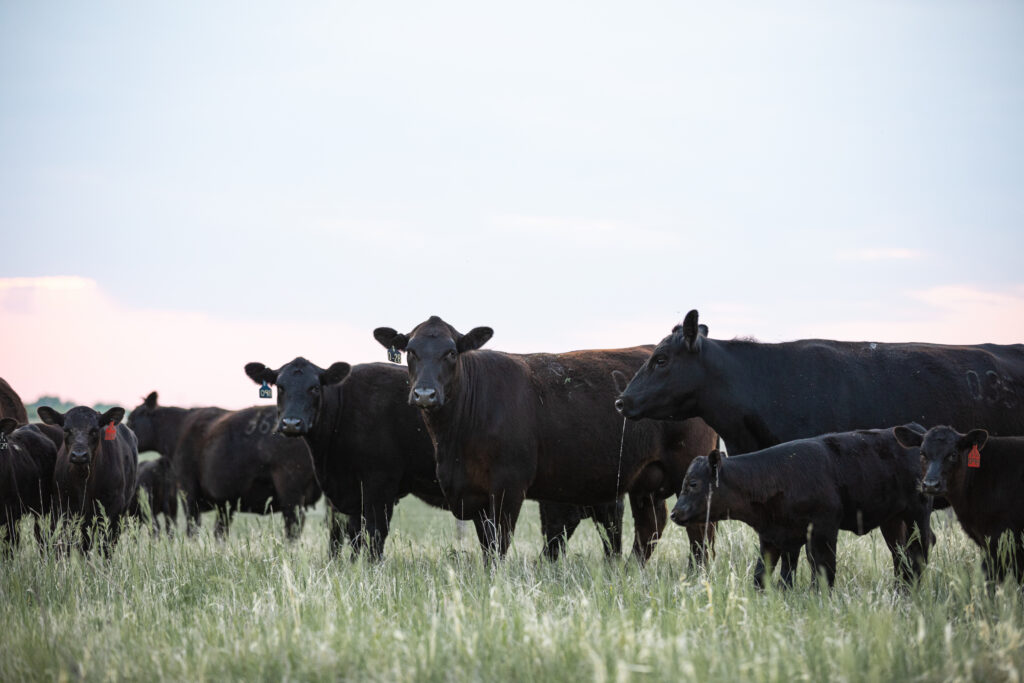
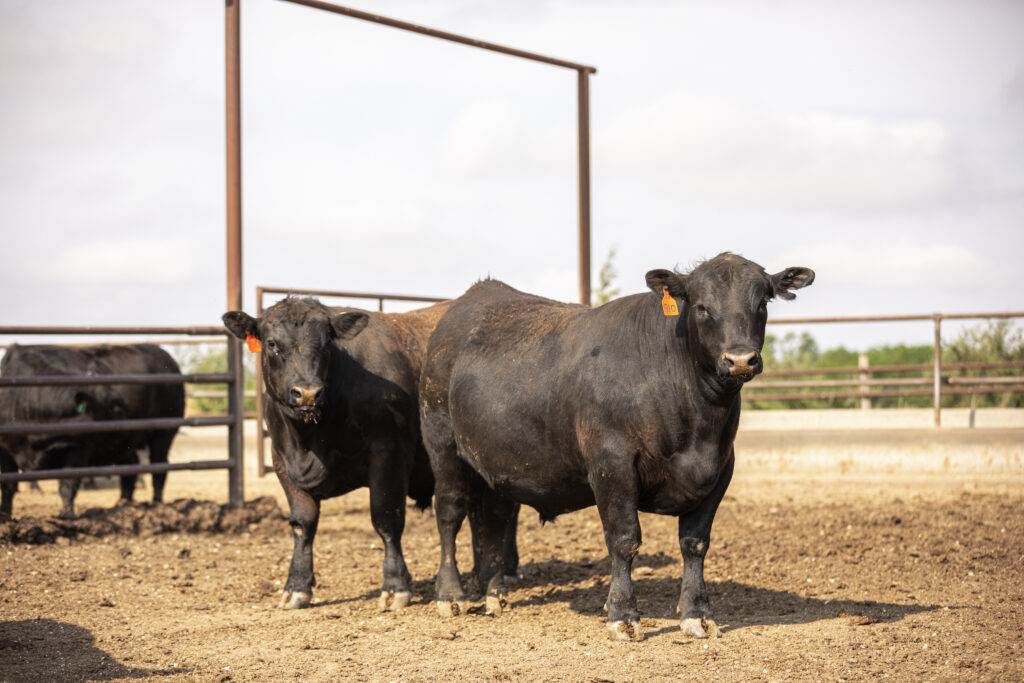
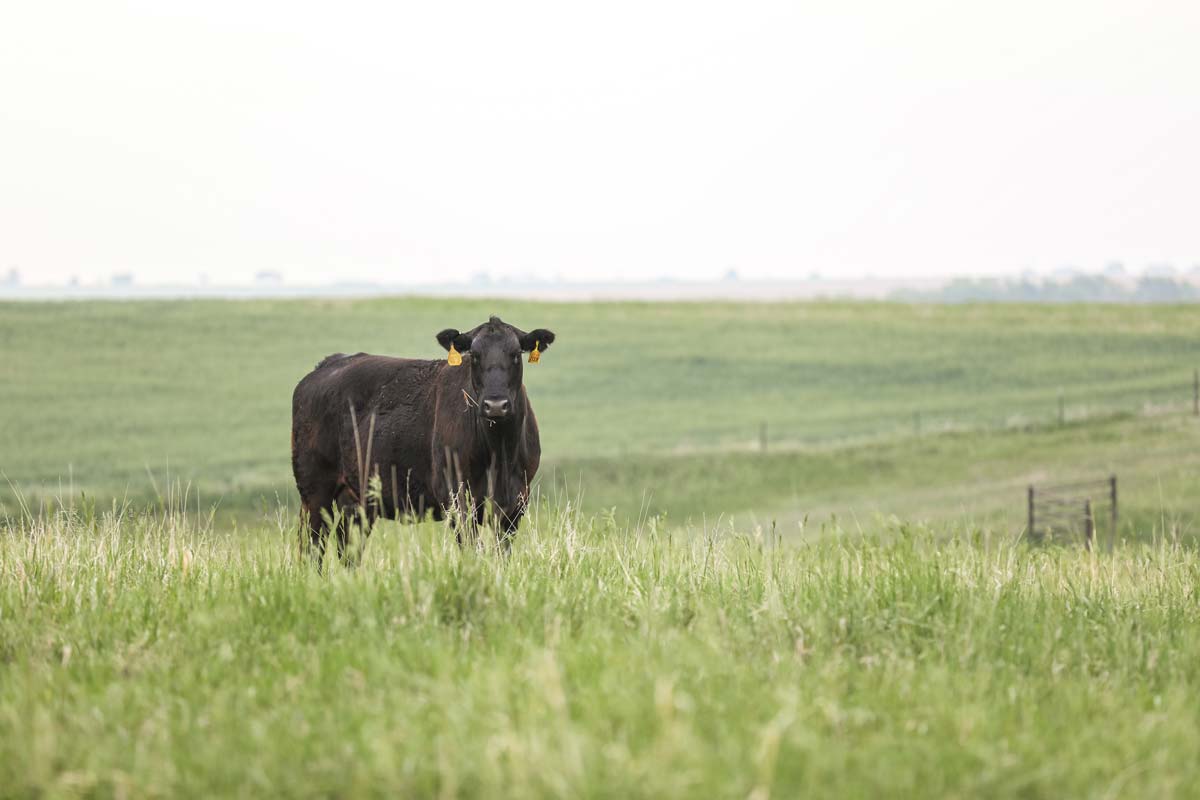
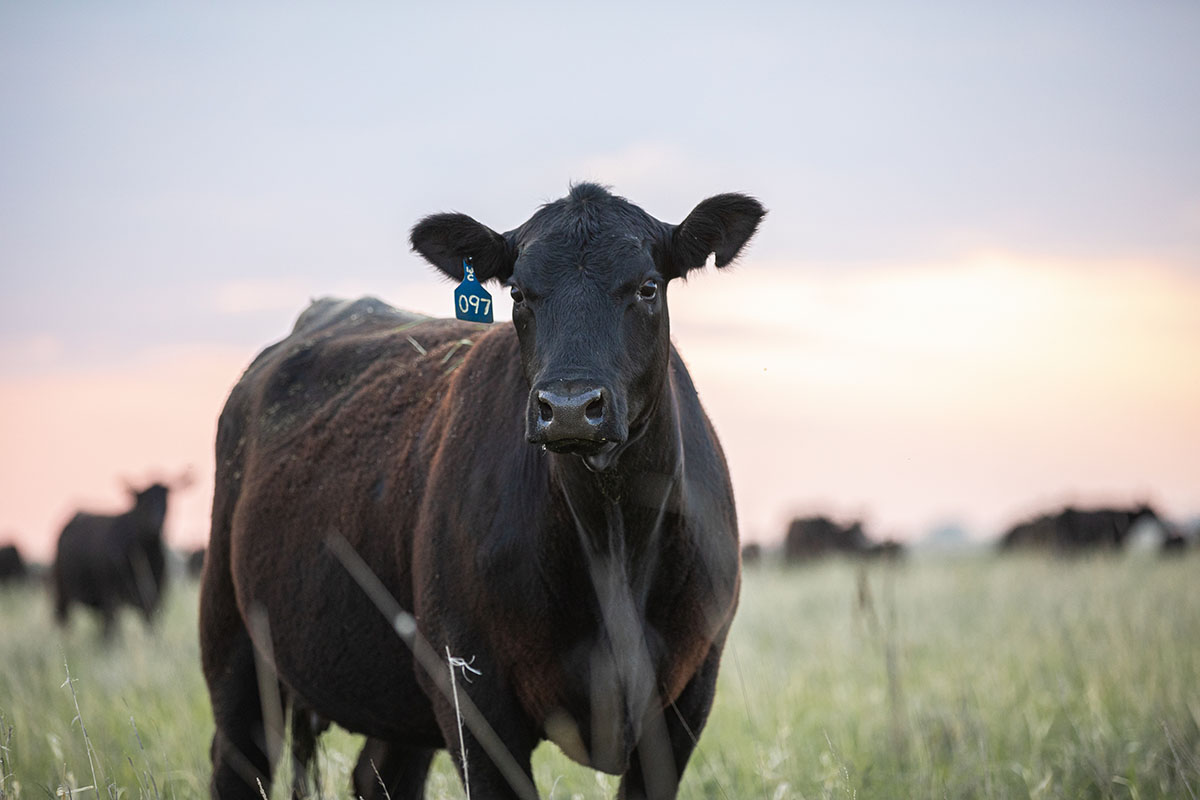
Angus cow in western Kansas pasture

Faster Change

When carcass data arrives, Walt gets to work. Progress with fed cattle was fast, but it started with the right foundation.

“I want the same maternal traits as everyone else,” he says. “I want that cow to be a good female, easy fleshing and breed back, but I want a premium on the other side of it. I don’t think she can be a really good female unless she can also produce a Prime carcass.”

From breeding season, it’s at least two years before knowing if you made the right decisions for genetic progress based on carcass data or replacement heifers getting bred. DNA testing speeds that up by more than half. Phenotype and structure matter, but Walt’s priority is keeping the freshest genetics in his herd. That’s why DNA tests determine replacement heifer selection.

“I’ve seen the progress we’ve made from it in a short amount of time,” he says, noting the return on investment.

His goals are clear, and he’s figured out how to hit his target.

“The quality is bred into them,” Stephens says. It’s up to the Walts and Beef Belt to manage the cattle in a way to reach their full genetic potential.

For their unwavering and successful quest to improve carcass quality while maintaining a strong maternal base, W6 Cattle was presented the 2024 CAB Commercial Commitment to Excellence Award at the brand’s Annual Conference in Verona, New York, in September.

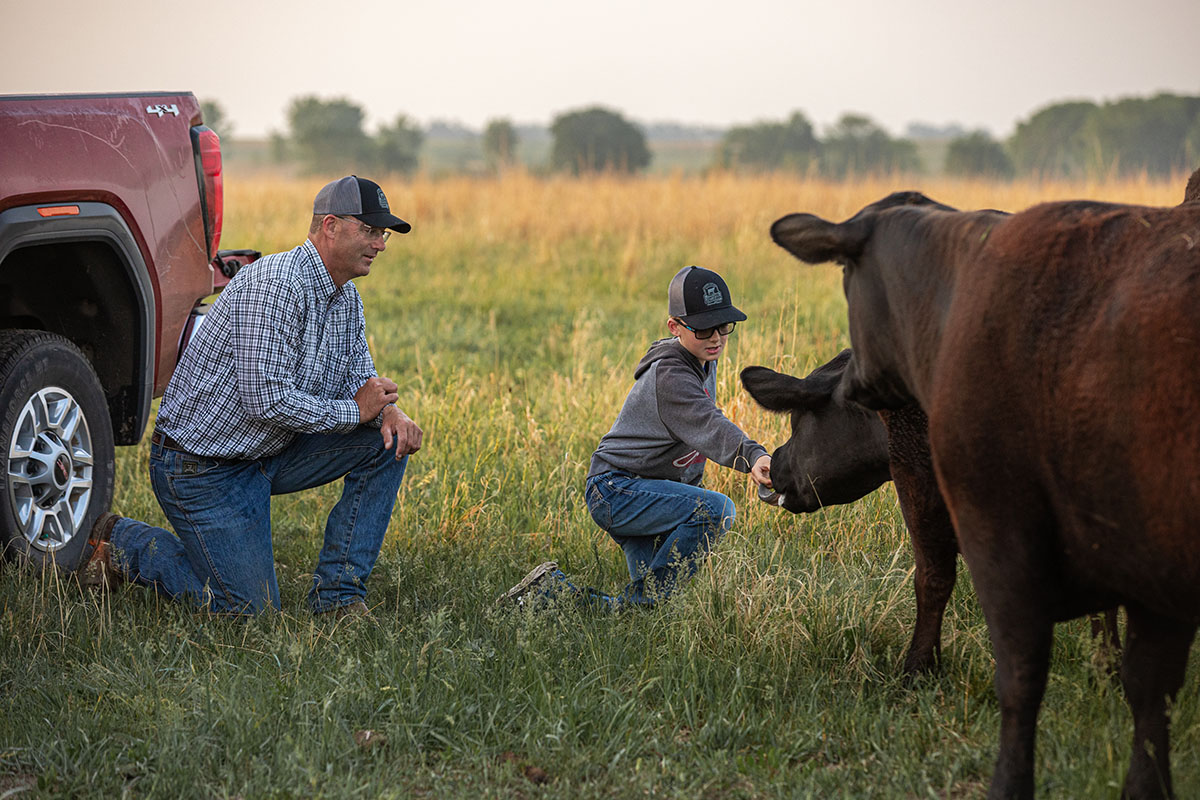
Aceton Walt feeding cubes to cows.

Management Matters

“It doesn’t matter how hard you feed them, if those cattle aren’t genetically capable of hitting high Choice, Prime or Certified Angus Beef, they just won’t,” Walt says from years of feeding cattle from across the U.S.

Still, he carefully manages his own calves to allow them to achieve their genetic potential.

When calves are weaned, they’re backgrounded for at least 90 days. The first 30 days to let them settle in, then the feed ration changes to push daily gains to 2.5 pounds. Heifers are fed for slower growth to prepare them as replacements, but any that don’t make the cut after DNA tests are fed out with the steers.

“Brian ships me a 900- to 950-weight animal,” Stephens says. “His approach improves their health, and if you don’t have health issues, you can get better performance on feed.”

Looking at the W6 calves, Stephens sees them exceed 4 pounds a day in the feedyard.

Not only does nutrition help reach high-quality grades, but Walt’s seen better vigor from calves on a good mineral supplement.

Enjoy What You Do

Hard work isn’t reserved for sweaty brows and long days laboring to complete tasks. Sometimes the hardest work is being efficient, so you have time to make it to your daughter’s ballgame. Or deciding which direction to take your herd to improve profitability so your son has the opportunity to return to the ranch. The Walts have achieved both.

“I hope our kids learn from Brian and I that it always takes hard work,” says wife Jana. “You should never be satisfied in what you’re doing. Always look to improve and grow in whatever they choose to do.”

And enjoy what you do.

“Brian is probably the one person I know who loves to go to work,” she says. “He loves to get out there with his cows and find ways to get better.”

This story was originally published in the Angus Journal and Angus Beef Bulletin

You may also like

Smitty’s Service on CAB Board

Smitty’s Service on CAB Board

Lamb continues to find himself struck by just how far-reaching the Angus breed has become. The brand’s growing demand and rising prime carcasses left a strong impression. He hopes everyone recognizes the vital connection built between consumers and Angus producers. Humbled by the opportunity to serve, Lamb reflects on his time as chairman with gratitude.

commercial cattle grazing in Luling, Texas

The Luling Foundation Recognized for Leaving Enduring Legacy

Plus, paving the way for quality beef production while keeping the community, education a priority.

by Katelyn Engel, 2024 producer communications intern

September 2024

Where once stood rows of nodding pump jacks, now black cattle serenely graze the hill pastures along a boundary river.

In 1922, pungent earthiness and industrial grit filled the air after Edgar B. Davis discovered the oil field 50 miles south of Austin, Texas.

Five years later, driven by providential faith in a vision of sustainable agriculture and community empowerment, Davis put up a million dollars from that flow to establish the Luling Foundation.

After nearly a century, that vision perseveres.

“It’s just so encouraging. Whenever you see true faith in action, it’s infectious,” says Bonnie Dredla, office manager at the Foundation in Luling, Texas.

Davis foresaw a demonstration farm to teach diversity beyond cotton toward more sustainable practices in Caldwell, Gonzales and Guadalupe counties and beyond.

Many facets of agriculture have been explored but cattle now form the core.

Herd manager Michael Kuck says today’s Foundation cattle were bred for multiple traits to deliver profit in the pasture and enjoyable beef for the consumer. It’s more than genetics, he says, noting a holistic approach that encompasses care for the land and animals.

“We have to take care of nutrition, we have to take care of genetics, we have to take care of the environment they live in every day,” Kuck says. “We have to treat them well so they treat us well.”

Underscoring wider collaboration, Dredla says Foundation success “takes a group effort in all facets.”

That enduring focus on quality, unwavering commitment to hospitality and education earned the Luling Foundation recognition as 2024 Certified Angus Beef (CAB) Progressive Partner, awarded at the CAB Annual Conference in September.

Angus cow at Luling Foundation

Quality Driven

In response to the rising demand for high-quality beef, the Luling Foundation strives to exceed consumer expectations by delivering the best in its freezer beef program.

“Whenever you’re doing the basics and you’re producing a quality product, you’re going to continue to have business, you’re going to continue to have customers, you’re going to continue to have happy people,” Dredla says.

Focusing on carcass genetics, the Foundation enhances weaned calf value from the commercial herd using genetics from its registered Angus herd and CAB programs like Targeting the Brand™.

Although the cuts aren’t labeled as Certified Angus Beef locally, the Luling commitment to excellence ensures satisfaction.

“When you have a quality product, it’s going to sell itself,” Dredla says.

Positive feedback and repeat business validate the dedication, Kuck says. It also motivates Foundation staff to share strategies for enhancing beef quality with fellow producers.

Foundation Chairman Gary Dickenson says the focus on premium beef brands helps producers make more profit from their herds.​

processing calves at Luling Foundation

Empowering a Community

Beyond the beef, the Luling Foundation serves as an educational cornerstone for the wider community. Everyone from local grade school students to worldwide travelers realize positive impacts from farm visits.

“We’re very involved in ag literacy,” Dickenson says. “We have a lot of people coming to our field day from town or surrounding areas that have no idea what it takes to be a farmer or rancher.”

That’s why a key goal remains instilling a deeper appreciation of where food comes from and the process required to produce it sustainably.

“It seems like no matter where our visitors are from, near or far, they want to know the story behind the food we produce,” Kuck says.

For those who don’t come from an agricultural background, Dredla remembers Temple Grandin’s advice of showing people basic things they can connect with.

“We lose sight of the simple things that we do on a day-to-day basis,” she says. “People don’t understand how important it is to latch a gate.”

However, the Foundation’s commitment to education extends far beyond agriculture to broader connections and life lessons.

“Something I teach the kids is how important history is,” Dredla says. “Whenever you understand history, sometimes it’s so you don’t repeat other people’s mistakes, sometimes it’s to understand where you came from and sometimes it’s to know where you’re going.”

Continuing the Legacy

Amid the lessons and legacy, there’s a quiet resolve to continue the mission.

“The future of the foundation is to keep on producing the very best quality Angus beef that we can while working on ag literacy,” Kuck says.

Beyond and underpinning that drive for excellence lies the original vision, that providential faith that the work isn’t just about today but paving a path for future generations.

“Whenever you realize that you have a bigger purpose than just waking up, it’s a different light,” Dredla says.

Setting or rising, the sun casts golden hues over cattle grazing the Luling Foundation’s sprawling fields and invokes the weight of history and hope. Rooted in faith, quality and community, Davis’ legacy continues to flourish, reminding all of the profound impact one person’s vision can have.

This story was originally published in the Angus Journal and Angus Beef Bulletin.

You may also like
Smitty’s Service on CAB Board

Smitty’s Service on CAB Board

Lamb continues to find himself struck by just how far-reaching the Angus breed has become. The brand’s growing demand and rising prime carcasses left a strong impression. He hopes everyone recognizes the vital connection built between consumers and Angus producers. Humbled by the opportunity to serve, Lamb reflects on his time as chairman with gratitude.
2023 Commercial Commitment to Excellence

Nebraska Ranch Receives Certified Angus Beef Commercial Award

By: Morgan Boecker, Senior Manager of Producer Communications

September 2023

Some progress can be seen. Replacing old barns with new ones, buying a hydraulic chute, or those first calves after investing in genetics. Other progress is invisible because it happens inside, in the way you think.  

Both are a necessity on the Guide Rock, Nebraska, ranch where Troy Anderson manages a commercial Angus herd and small grower yard.   

His focus is clear: maternal cows that thrive in this environment, big calves that will grade premium Choice and Prime. But his approach includes respect for his livestock, people and land. For all that and more, Anderson Cattle was honored with the Certified Angus Beef (CAB) 2023 Commercial Commitment to Excellence Award. Troy, son Zane and parents Roy and Rosemary received the award in September at the CAB Annual Conference in Las Vegas. 

When Roy first moved to Nebraska in 1963, he found rundown fences, eroded farm ground and a dream that transformed it with terraces, trees and new fences.  

The days were long and the work physically exhausting. Roy and Rosemary balanced raising a family and farming wheat, milo and silage while gradually growing their herd.  

“There’s always been the desire to raise good cattle and do a good job with the cattle we have,” Troy says.  

Over the years, they continued to seek better genetics. Troy looks for Targeting the Brand™ logos in bull sale catalogs. 

“Targeting the Brand tells me a bull has the genetics to produce a higher percentage of calves that qualify for CAB,” Troy says. That’s his target, too.  

It just made sense to build a yard to grow and finish calves at the ranch. Since 2015, Troy has fed and finished home-raised, purchased or customer cattle in his 850-head feedyard. All are marketed on a quality-based grid.  

As soon as he gets the carcass data back, he’s matching sires to individual progeny carcass values to see if the bulls will be used again next breeding season. Data and technology open doors to improvement.   

“We’re bottom-line driven,” Troy notes. “If we can get an extra $6 per hundredweight, that’s $50 to $60 a head. That can be the difference between making money or not on a set of calves, especially with the things we’ve gone through the last few years in the cattle industry.”  


The Anderson Family

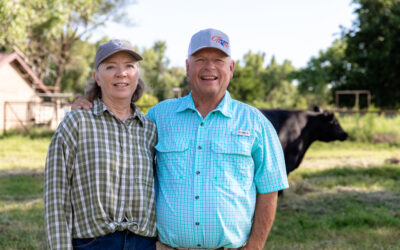
Caption: (left to right) Roy, Troy, Rosemary and Zane Anderson

In May 2023, Anderson’s calves hit 88 percent Choice and Prime with 44 percent CAB. The few Select grades usually trace back to some problem in a calf’s life, Troy says.  

“Harvesting more CAB qualifiers not only gives us more profit, but it helps consumers feel better about beef,” he says. “It also makes me feel better about our cattle, knowing that we’re producing beef that people want and enjoy.”  

And consumers can feel better because the cattle raised according to Beef Quality Assurance guidelines relate not only to product in the grocery meat case but to the entire herd.  

That extends to Troy taking care of his land in an environment that tests him often.  

“We put in miles and miles of cross fence and several miles of waterlines to tanks,” he says of his fencing career after moving home in 2001.   

The new system distributed the cows’ grazing, resulting in better grass. It makes life a lot easier for herd and pasture, especially during a drought, he adds. Cows will graze more areas of the pasture when they have access to fresh water.  

They AI’d 100 heifers and 150 cows last spring, a herd that’s dwindled in the face of too many consecutive dry years.  

Waterlines run across 600 to 1,000 feet of surface to get water to cows lucky enough to be on grass. Others were fed longer and dry-lotted well into summer.  

“It’s a testament to Angus cows and careful management,” Troy says. “We’ve pushed them for efficiency but upped our mineral program to make up for the differences.”  

Even though the days are long, memories of progress bring a smile. It isn’t easy passing the reins to the next generation, but Troy says his parents have been accommodating to let him make decisions and learn from them.

Cattle may determine what’s on today’s to-do list, but people are the heart of the operation.

It takes the same firm yet gentle hand to be a stockman and a dad. Lessons Troy learned the hard way guide him as a father today when he has Zane in tow.  

“I like to help sort cattle because you can learn a lot about them,” Zane says. “Dad taught me to be calm around livestock because they can sense you. So, if you’re angry or happy, they can sense that.”

“To have Zane out there wanting to learn, it means the world to me thinking I’m raising someone who may help move the industry forward,” Troy says.  

Everything they accomplish, they accomplish as a family.

“We have lived here 50-some years now,” Roy says, “and we’ve got everything situated about the way we want it.”

Still, the next 10 years will only build on successes as they give everything they have to get better.

You may also like

Smitty’s Service on CAB Board

Smitty’s Service on CAB Board

Lamb continues to find himself struck by just how far-reaching the Angus breed has become. The brand’s growing demand and rising prime carcasses left a strong impression. He hopes everyone recognizes the vital connection built between consumers and Angus producers. Humbled by the opportunity to serve, Lamb reflects on his time as chairman with gratitude.

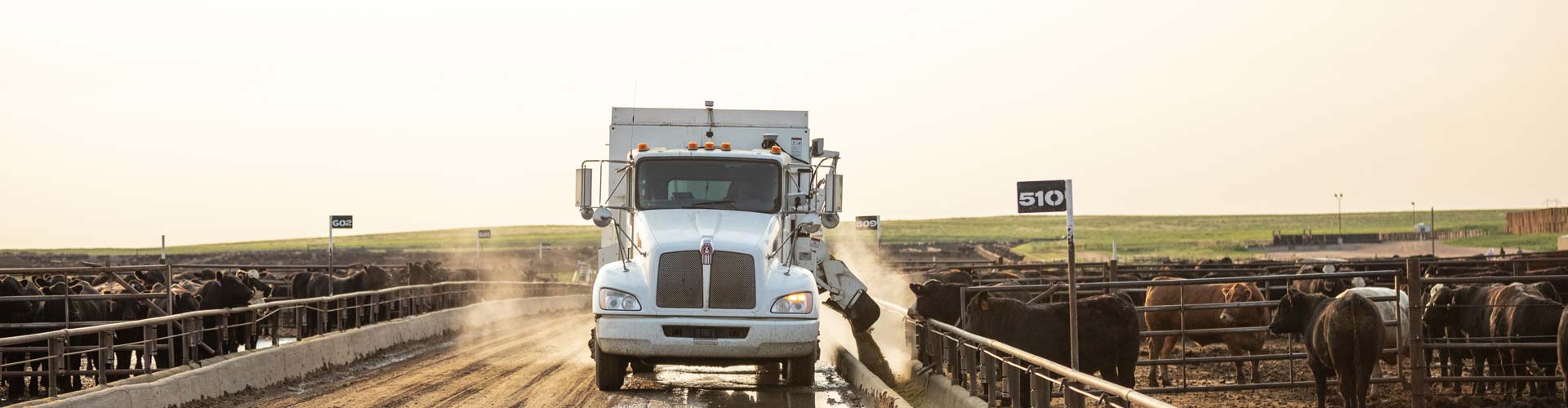
feedtruck at Magnum Feedyard

2023 Feedyard Commitment to Excellence

Magnum Feedyard Earns Certified Angus Beef Award


By: Morgan Boecker, Senior Manager of Producer Communications

September 2023

A sign in Steve Gabel’s office says, “three yards a down.” It’s a football recipe for steady progress based on every little bit of work and attention to detail.

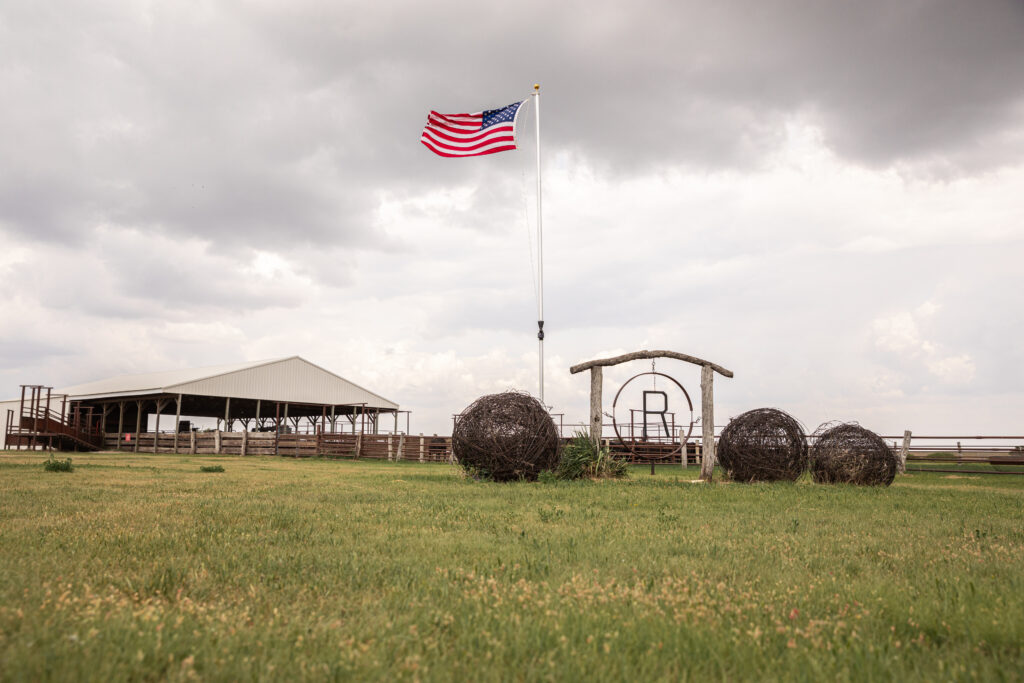
The sights and sounds at a feedyard are predictable, but you don’t expect to find such pristine facilities and people who care about every aspect of the cattle feeding business. It’s all there at Magnum Feedyard just outside of Wiggins, Colorado.

For their drive to effectively hit the high-quality beef target and determination to get better every day, Magnum Feedyard received the Certified Angus Beef (CAB) 2023 Feedyard Commitment to Excellence award. The Gabels were recognized at CAB’s Annual Conference in Las Vegas, Nevada, in September.
“The world is run by people who show up,” says Christie Gabel, quoting one of her dad’s sayings and life lessons. “It’s a good daily motto to get up and go serve your purpose.” 

Each family member conveys their own strengths to Magnum. Steve brings years of operations and market wisdom as Audrey keeps the books and people balanced. Case handles risk management and cattle procurement while his sister Christie recently joined as the cattle clerk.

Since 1994, Steve and Audrey have modernized the infrastructure with steel pens, concrete bunks, a corn steam flaker and hay processor.

Loads of multihued cattle once stepped off the trailers, filling pens with calves from Mexico or Holstein influence. Now, they actively seek Angus-based cattle of Northern origin with hopes to excel in quality grade and hit a 1,500- to 1,600-lb. end weight.

“I think the icing on the cake becomes the grid and its potential to return premiums for the right genetic package fed right,” Steve says.

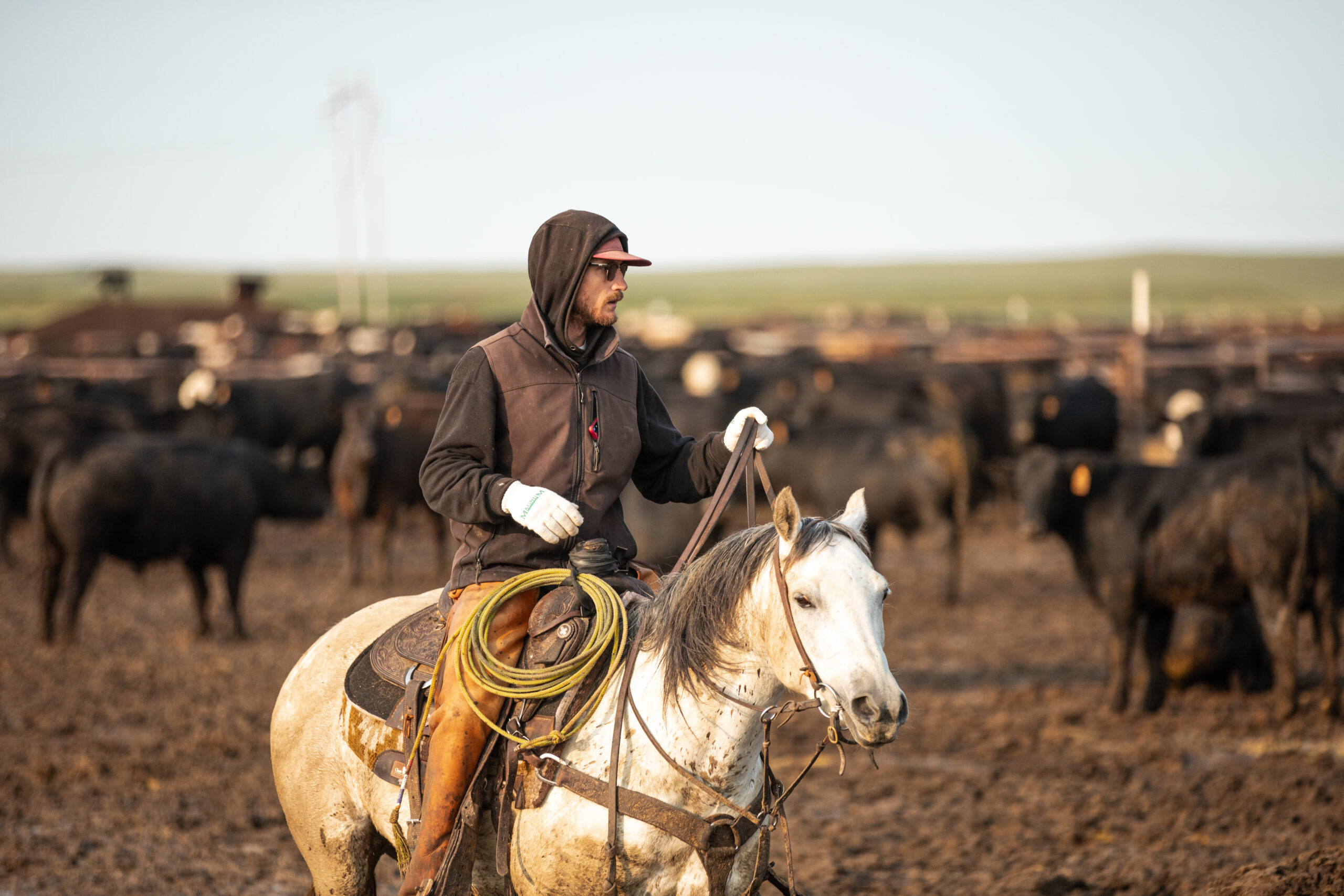
Magnum Feedyard pen rider

But quality isn’t the only change realized. Better genetics also improved gains and dry-matter conversions. The report card keeps improving, with pens of cattle averaging 40% CAB and 10% Prime – a big improvement from selling on a live basis.

“If you can’t quantify how cattle are going to perform, you can’t really manage your risk against that,” Case says. “With better cattle, you have more predictable performance in all aspects.”

Keeping the bunks stocked is the biggest undertaking at the feedyard, closely followed by caring for their health. Research and practice show a correlation between visits to the sick pen and ability to grade Choice, Steve points out.

“We’re not capable of eliminating every potential bad day,” he says. “Our job as stockmen and caretakers of these animals is to do everything to make the environment as pleasant and performance oriented as we possibly can.”

That includes the little details. Driving through the feedyard, nothing is out of place. At every sunrise, the yard office is clean for the many feet that will trek in and out of the front door, checking in at the scales.

“The Gabels don’t do anything half-heartedly,” says Dirk Murphy, Magnum’s feedyard manager. “They would tell you that a half-hearted work ethic receives half-hearted results.”

Whether you’re a feed truck driver, pen rider, office assistant, intern or cattle buyer, your work matters. The average Magnum employee has been there for more than nine years.

“Everybody understands value in their role because mom and dad make people feel valued on top of just telling them they are,” Christie says.

The office buzzes with energy from each of the Gabels, spilling out to the rest of the feedyard employees who spend the day hands-on with the cattle.

Progress is rarely a straight trajectory up – and the Gabels have seen their fair share of setbacks – but each day they bring a positive, driven attitude to get better. As responsibility continues to shift to the next generation, there’s just as much excitement and thrill to chase the moving target of success.

You may also like

Smitty’s Service on CAB Board

Smitty’s Service on CAB Board

Lamb continues to find himself struck by just how far-reaching the Angus breed has become. The brand’s growing demand and rising prime carcasses left a strong impression. He hopes everyone recognizes the vital connection built between consumers and Angus producers. Humbled by the opportunity to serve, Lamb reflects on his time as chairman with gratitude.

2023 Ambassador Award

Michigan Angus Family Earns Ambassador Award

By: B.J. Eick, CAB freelance writer

Among Angus cattlemen, Seldom Rest Farms in Niles, Michigan, is a brand synonymous with show-ring success. But a few times a year, it’s no flood of frenzied heifer buyers pulling into the driveway.  

Instead, it’s a bus loaded with dozens from the Meijer grocery communications team to see how the beef they sell is raised.  

The Foster family opens the gates to share their story with Certified Angus Beef (CAB) partners on a regular basis, earning Seldom Rest Farms the CAB 2023 Ambassador Award. The family was recognized in September at the brand’s Annual Conference in Las Vegas. 

Brothers Bruce and Scott Foster operate Seldom Rest Farms along with Scott’s son, Andrew.  

Just over 90 miles from Chicago, the pristine show facility and small groups of Angus cattle at Seldom Rest Farms provide the perfect backdrop to host CAB stakeholders from around the Midwest. Chefs from top restaurants, grocery store managers, butchers and beef marketers enjoy up-close interactions with Angus cattle. Today’s Meijer visit marks the sixth CAB Ranch Day held at the farm in the last three years. 

Chad, Everett and Doug Benoit

Caption: the Foster Family

seldom rest farms CAB ranch day

Hosting Ranch Days helps build the value of the brand throughout the supply chain by allowing both sides to meet and ask questions.  

Two-term American Angus Association® board member Scott and the CAB team greet arriving guests, all as eager to learn as the Michigan family is hungry to help.  

“The Foster family doesn’t just open their farm to hosting groups, they create an experience that makes a lasting impression on the restaurants, distributors and grocery stores who sell the Certified Angus Beef ® brand,” says Deanna Walenciak, CAB’s vice president of brand marketing, domestic. “Customers leave every visit with more confidence in how beef is raised and have a stronger connection to the people who are caring for the cattle.” 

“Whether it’s chefs or restaurant owners, it allows us to interact with them so they can see what it’s like on a daily basis for the people raising the product,” Andrew says. “They can see the things we go through. They know where our passion comes from, where some of the struggles are and what keeps us going from day to day. And they can take those stories back and share with their customers and the consumers down the line.”  

The Fosters are building that fervor for agriculture with the next generation of Angus promotors, and opening their farm to share their own passion with stakeholders in the beef business in hopes of securing a stronger future for everyone who benefits from the brand.  

Their passion for the junior livestock program ties directly to that for the future of production agriculture and opportunities for young people through all segments of the industry.  

“As you look at the future, we really need to have these young people come back and be a part of the registered Angus business,” Scott says. “We believe in the Angus breed for the opportunities – to find a place in the beef industry, no matter what segment you’re in, and we still believe that opportunity exists for the next generation and the generation after that.” 

The Fosters have firsthand experience in the opportunities CAB helps create for anyone with a passion for the beef business. While Andrew manages the show cattle operation, his sister Danielle Matter works as director of brand experience and education for CAB.   

Hosting groups from the opposite end of the supply chain lets the family build relationships with people who may have never set foot in a pasture. While success at Seldom Rest Farms might not be measured in pounds of beef sold, they view the opportunity to host groups as a service to all members of the American Angus Association.    

“We believe in the product. We believe in our fellow Angus breeders who are out there producing seedstock. We believe in the packers, in the feedlots, [and all the people] who are making it happen,” Andrew says. “It’s important for visitors to see that we all care about the product that ends up on their plate.”  

That makes it a priority to find time to talk about what they do and how CAB plays a role in their ability to pursue this lifestyle by increasing the demand for Angus genetics. 

“When we give a tour for CAB, we’re representatives for the entire beef industry,” Andrew says, “and we want people to know how much we care for the cattle and for the land.”   

Chad, Everett and Doug Benoit
seldom rest farms CAB ranch day

You may also like

Smitty’s Service on CAB Board

Smitty’s Service on CAB Board

Lamb continues to find himself struck by just how far-reaching the Angus breed has become. The brand’s growing demand and rising prime carcasses left a strong impression. He hopes everyone recognizes the vital connection built between consumers and Angus producers. Humbled by the opportunity to serve, Lamb reflects on his time as chairman with gratitude.

2023 Progressive Partner

North Dakota Partnership Earn CAB Progressive Partner Award

Direct-to-consumer beef business Dakota Angus establishes a future.

By: Kylee Kohls Sellnow

October 2023

With posterity in mind, the Bruner and Wendel families looked for a processor to harvest, inspect and grade their high-quality Angus cattle. They would sell directly to consumers through Dakota Angus, LLC. 

“It’s hard these days for a farm or ranch to support one family or multiple families at that,” Ashley Bruner says. “In rural America, if we want it to make a turn and grow again, we need to give opportunity to the next generation. Diversifying and adding Dakota Angus to our lineup gives our kids an opportunity to come back someday.” 

Pilot partners in the Certified Angus Beef (CAB) Ranch to Table program, these North Dakota families took some of the market volatility into their own hands in April 2022.  

The leap of faith now diversifies their income with high-quality beef options for their communities.  

As seedstock producers, Bruner Angus Ranch, near Drake, and Wendel Livestock, a couple hours to the southeast at LaMoure, North Dakota, were focused on raising herd sires and replacement heifers for customers. Now they sell their finished cattle, as well as those of their customers, through Dakota Angus. 

That partnership earned the 2023 CAB Progressive Partner award, and the two families were recognized in September at the CAB Annual Conference in Las Vegas, Nevada.  

Data is Power 

Shane Wendel is the numbers guy of the joint operation. With grid marketing data going back over 25 years, CAB and Prime have been constant targets.   

The last load of steers made 76 percent CAB, including 65 percent Prime this spring.  

Angus programs proved progress for the Wendels.  

“We have huge amounts of data now, and data is power, innovation and value,” Shane says. “Certified Angus Beef is a great example of how many pounds are sold, records that keep being broken and consumers still demanding more.” 

With data to back up his brother Mike’s high-performing genetic and management decisions, Shane had confidence in grading their own cattle on a smaller scale to start marketing them direct to consumers and close the loop in capturing 100 percent of the value.  

But he needed to find a partner in The Business Breed who shared his vision and energy.  

It didn’t take long for Travis and Ashley Bruner to say “yes” to Dakota Angus.  

“Both of our families operate on high integrity, and we have strengths and skillsets that complement each other to make us a great team,” Shane says. “That’s what makes the Bruners a great partner.”  

Chad, Everett and Doug Benoit

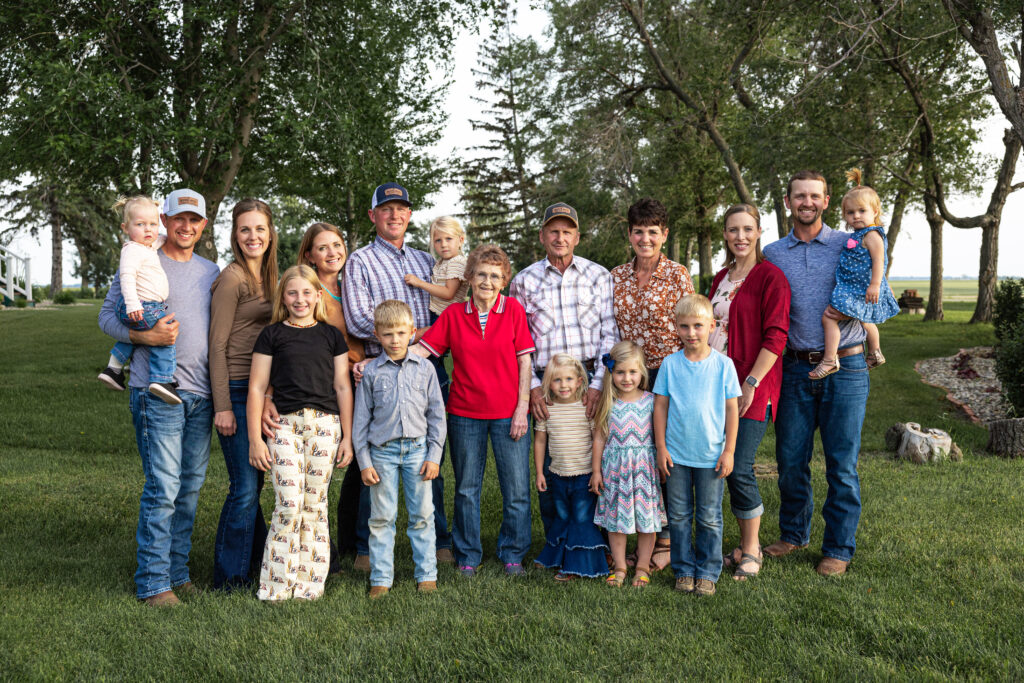
Caption: The Bruner Family: (L to R): Ty and Erin Bruner with daughter Brynlee, Ashley and Travis Bruner with daughters Rayna(front), Celia (front), Josie and son Frankie (front), Cecelia Bruner, Blaine and Kim Bruner, Rachel andTrenton Bruner with son Landon (front) and daughters Lena (front) and Lillian.

seldom rest farms CAB ranch day

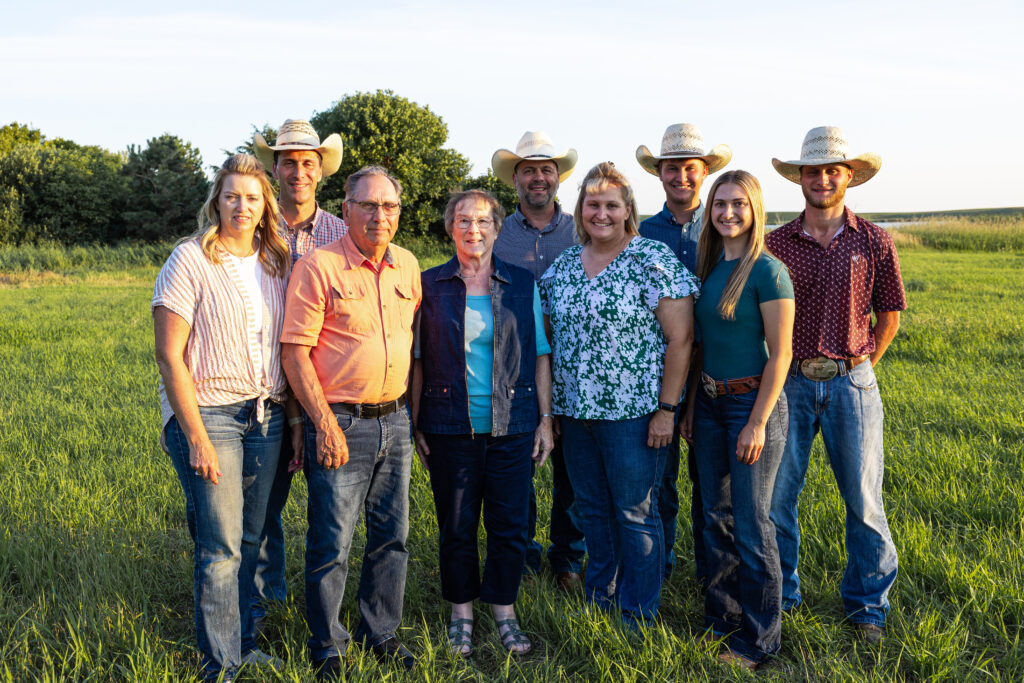
Caption: The Wendel Family; (L to R): Mary and Shane Wendel, Dennis and Marsha Wendel, Mike, Shari, Ryder, Rose and Reed.

The Partnership

Closely aligned herd goals help explain the perfect fit.

Mike Wendel and his sons focus on foot scores, marbling and heifer longevity EPDs (expected progeny differences) in breeding decisions for their 500-cow herd. Embryo transfer plays a large role in their genetic program.

“When you’re working from conception to consumption, you really can’t veer very far from any one trait,” Mike says. “Everything from maternal to growth to carcass all have to be incorporated in a very moderate, conservative direction.”

Travis’s focus is on the 500-cow registered Bruner Angus herd and the two bull sales they host annually, selling 150 herd sires to commercial cattlemen.

They know their customers rely on those bulls to sire replacement females and raise calves that pay and weigh up.

“We’re always paying attention to feet and udders, docility and do-abilty,” Travis says. “As our business has grown, we are using carcass EPDs to have more well-rounded cattle, too.”

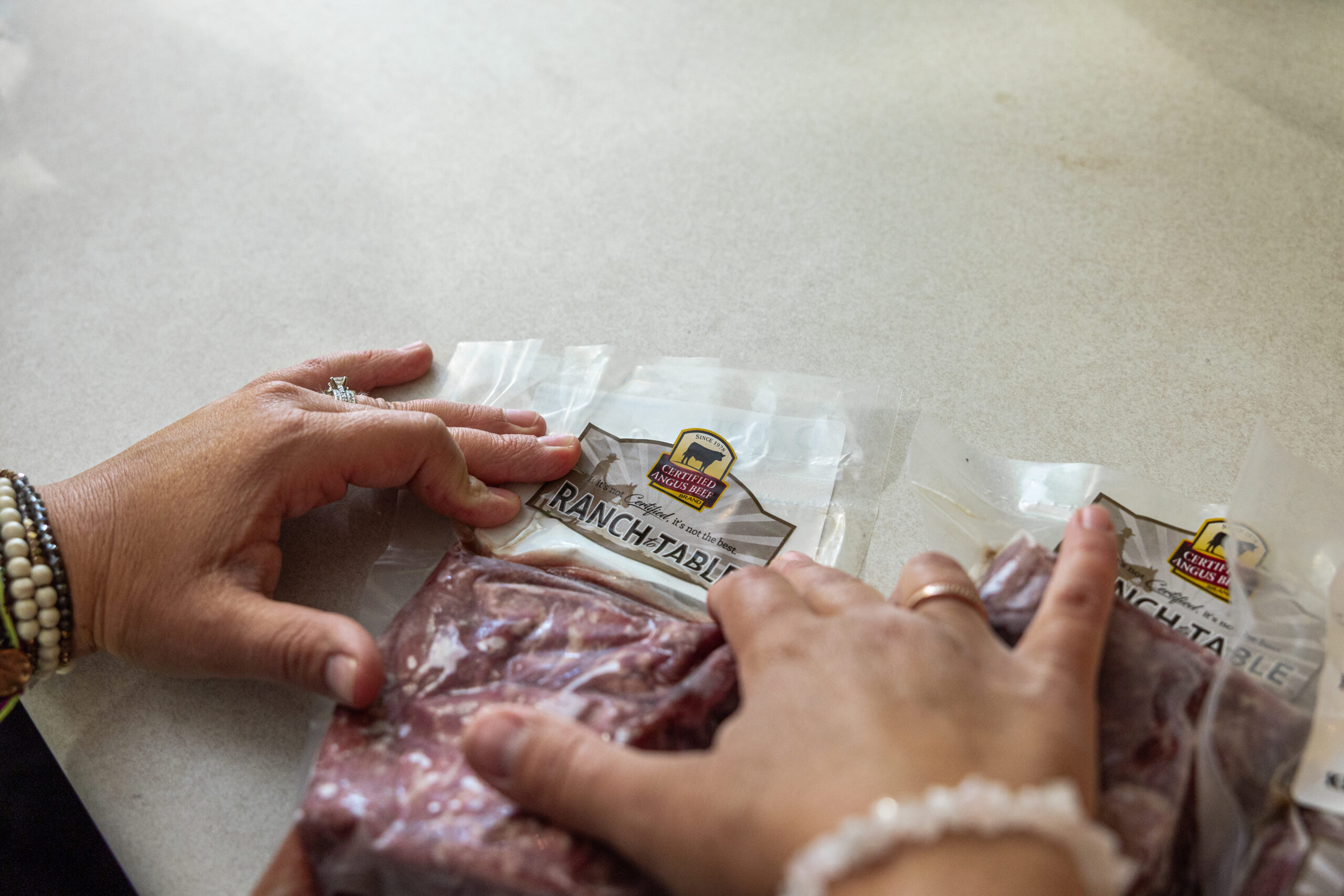
Ranch to Table packaged meat
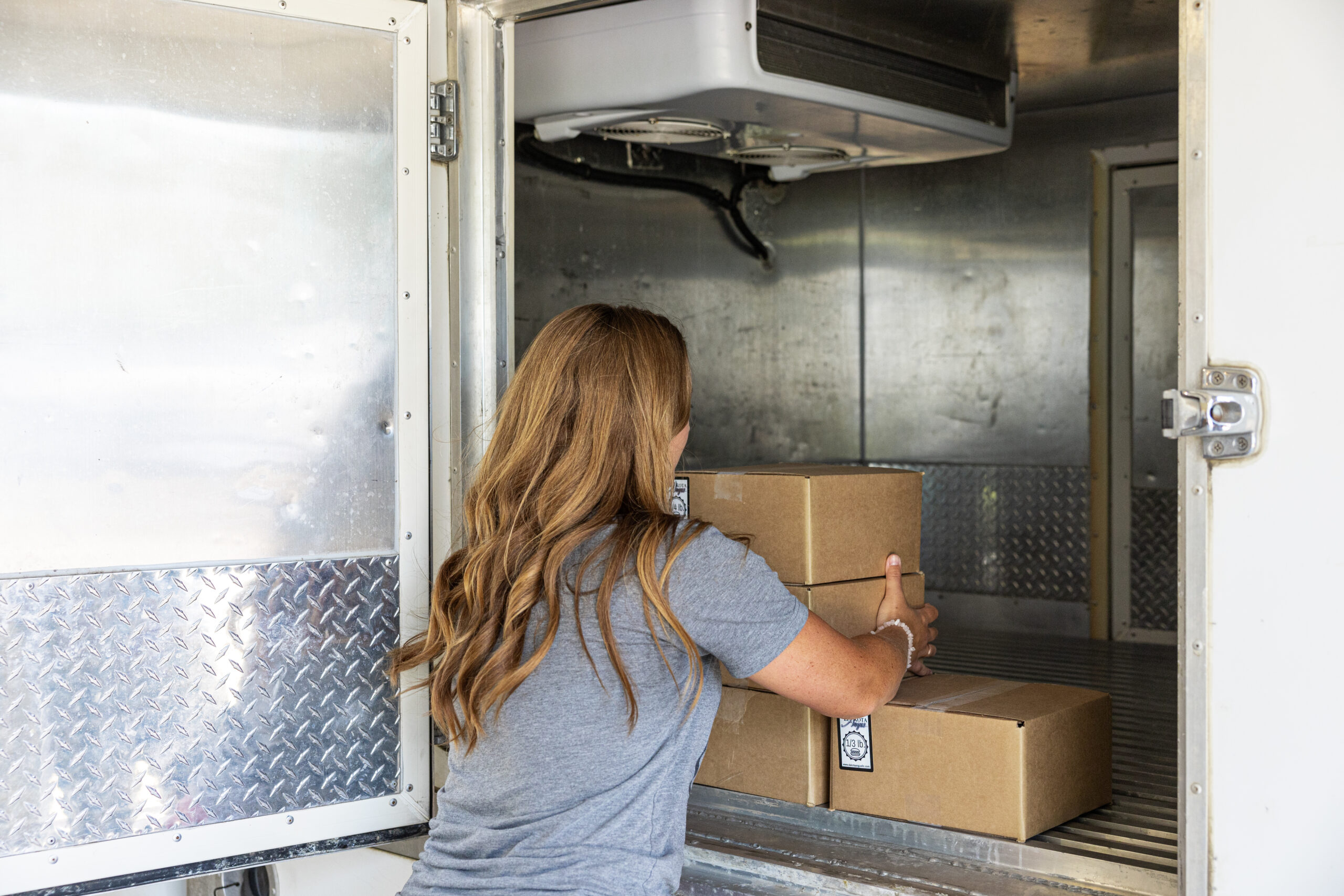
Dakota Angus, Ashley Bruner grabbing freezer beef box

A Relationship Business   

After the two families decided to launch Dakota Angus, they knew they wanted to incorporate the brand, to help inform consumers about differences in beef quality and value.  

“We’re confident in the product we have,” Ashley says. “But the confidence we have with Certified Angus Beef behind us means so much more. And the more that we can talk to people and engage them with what we’re doing as producers and beef suppliers, the better it is for all beef.” 

In the last 12 months, they’ve harvested more than 80 head in a federally inspected facility two hours from the Dakota Angus ranch store north of Drake. Federally grading every carcass lets them sell their beef by quality grade, allowing more accurate pricing for each pound.  

Frozen halves, wholes and retail cuts sell in vacuum-sealed package out of the walk-in freezer the Bruners built in their garage-converted meat shop.  

“Quality control includes Travis in our backyard at the grill,” Ashley says with a grin that recognizes a common bond. The beef they serve their own family is now a part of moments and memories for more neighbors because of Dakota Angus.  

Even at the Tuesday night baseball game two towns over, you can find one of the Bruner brothers flipping burgers at the concession stand.  

It’s really a family business from start to finish.

You may also like

Smitty’s Service on CAB Board

Smitty’s Service on CAB Board

Lamb continues to find himself struck by just how far-reaching the Angus breed has become. The brand’s growing demand and rising prime carcasses left a strong impression. He hopes everyone recognizes the vital connection built between consumers and Angus producers. Humbled by the opportunity to serve, Lamb reflects on his time as chairman with gratitude.

2023 Sustainability Award

Kansas Ranchers Recognized for Sustainability Efforts

By: Nicole Lane Erceg

The view of Wharton 3C Ranch, near Syracuse, Kansas, in the summer of 2023 is so green Shannon and Rusty Wharton might have better luck convincing people it is a slice of heaven rather than the harsh, drought-ridden environment locals know. 

In fact, a few years ago, there wasn’t a cow in these pastures, lack of rain left the soil unable to produce much more than dust. 

The commercial outfit is made up of about 600 head spread across more than 35,000 acres, most of that a Western Association of Fish and Wildlife conservation easement. A 1,000-head grow yard prepares calves for finishing. The Whartons have been managing it for various owners since 2005. The last time it changed hands in 2017, they made the numbers work, purchasing the cattle and a little land, leasing the rest.  

A mix of puzzle pieces built over time helped two first-generation cattle ranchers carve out their own place in the cattle business. Their resilience and success earned Wharton 3C Cattle the 2023 Certified Angus Beef (CAB) Sustainability Award.  


A Better Way 

Unburdened by tradition that sometimes saddles generational ranches, the Wharton’s mindset is business first. Follow the science and data in selection and management, then work to get better every day.  

“We have our goal towards quality, not only quality in the meat we produce, but also quality of the land,” Shannon says.  

Involved in retained ownership since the 1990s, the couple tracks everything from conception to carcass data. A recent load of cattle were 100% Certified Angus Beef ®, including 92% Prime. They achieved 87% or higher CAB and Prime across all their 2021fed cattle. Premiums on those cattle add some extra black ink to the bottom line.  

People and a wider vision drive them to build not only their section of the cattle business but the entire industry. 

“We all need each other,” Shannon explains. “Without the cow-calf producer, restaurants don’t have great beef to serve, without the packer, our product doesn’t get to those restaurants and consumers don’t have access to it. And commercial producers need someone to feed and finish those cattle. So, it’s very important that we all work together and realize in the end, we’re all producing the same product.” 

Caption: Shannon and Rusty Wharton

Greater Involvement  

This thought process led Shannon to get involved in the U.S. Roundtable for Sustainable Beef (USRSB).  

“It’s such a neat organization where we can have the whole supply chain sit down together and say, okay, from the producer all the way to the retailer, we’re producing this beef. Let’s do it to the best of our ability. Let’s make sure we’re not impacting the environment negatively. Let’s ensure we’re taking care of the animals and our employees.” 

The USRSB framework aligns with the Whartons’ mindset on management.  

“We have to be sustainable to be in this business.” Rusty says. “If we don’t do the right thing with the grazing management plan, if we don’t take care of the cattle properly and if we fail to bring together our customer base, then we’re not going to be in business.” 

Rusty admits he’s been one to store cattle or grazing data in his head or scribbles in a dashboard notebook. However, technology to sort and the discipline to keep records allow him to run their cattle operation like any other business. That recorded and analyzed data enables good decisions, workable drought plans and meeting the requirements of take 1/3, leave 2/3 when grazing the conservation easement. 

“It helps you stay focused when you need to make a move,” Rusty says. 

The most valuable takeaway for the couple’s USRSB involvement has been opening new avenues of communication. Shannon has firsthand experience in how simple management tools like Beef Quality Assurance certification and written grazing management plans can align values across the beef supply chain. 

“Being involved in the U.S. Roundtable for Sustainable Beef has impacted how we communicate what we do, because we’ve been doing this for a long time and this is what we believe in,” Shannon says. “So, our communication about sustainability is improved by the Roundtable.” 

Visionaries who were willing to learn, work hard and persevere, Wharton 3C cattle is building both their business and the cattle business for the future.  

Chad, Everett and Doug Benoit
Ashley Bruner with Dakota Angus

You may also like

Smitty’s Service on CAB Board

Smitty’s Service on CAB Board

Lamb continues to find himself struck by just how far-reaching the Angus breed has become. The brand’s growing demand and rising prime carcasses left a strong impression. He hopes everyone recognizes the vital connection built between consumers and Angus producers. Humbled by the opportunity to serve, Lamb reflects on his time as chairman with gratitude.

2023 Canadian Commitment to Excellence

Saskatchewan Angus Ranch Earns Certified Angus Beef Award

By: Lindsay Graber Runft, Director of Producer Communications

September 2023

The cattle business awards no trophies for participation. Nor does any rancher plan and work to be noticed for doing things right.  

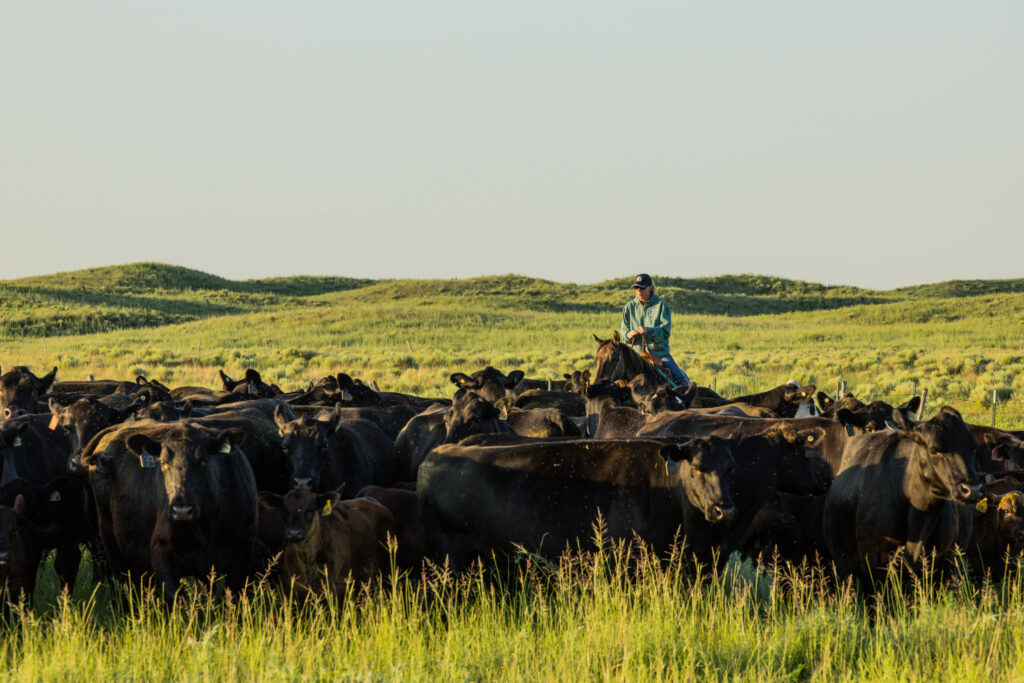
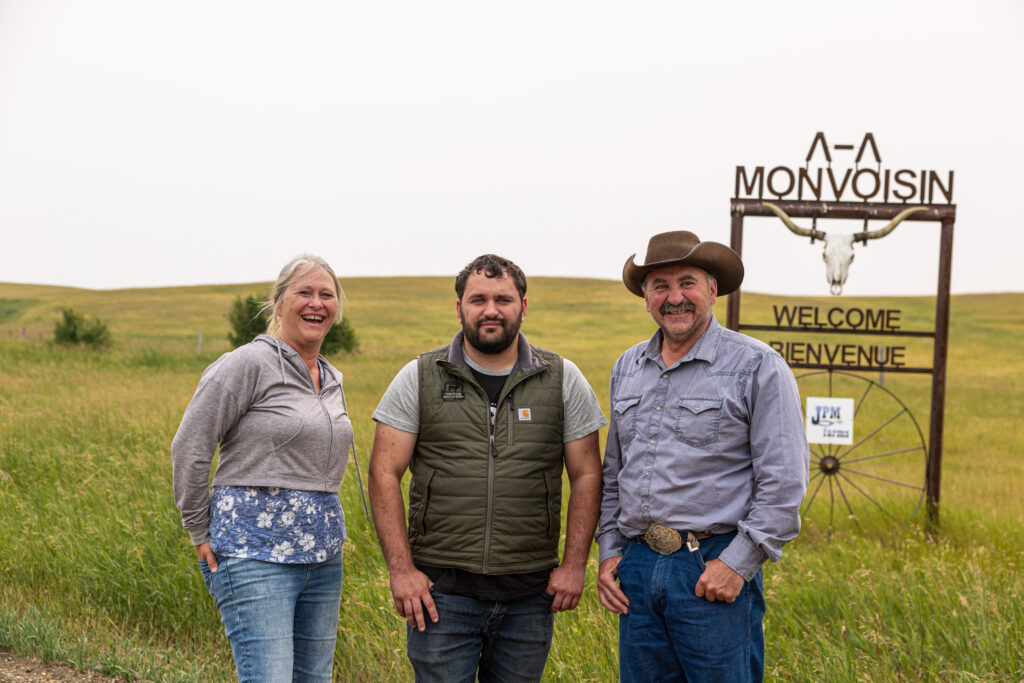
Yet caring for land and livestock quietly switched a spotlight on JPM Farms. Jean-Paul and Marlene Monvoisin, with their son Colton and daughter Josee Monvoisin-Garner, operate the quality-focused seedstock Angus ranch in the rolling hills near Parkbeg, Saskatchewan.  

They lean into viable sustainability, with immense focus on the environment and a long-time partnership with Ducks Unlimited Canada. The perpetually progressive learners naturally work hard to improve their cow herd and grasslands.  

“Our philosophy is to treat the land, the cattle and our family the best we can every day to make it a better day than the one before,” Marlene says. Outstanding results earned JPM Farms the Certified Angus Beef (CAB) 2023 Canadian Commitment to Excellence Award. The Monvoisin family was recognized at the CAB Annual Conference in Las Vegas, Nevada, in September. 


Caption: (left to right) Marlene, Colton & Jean Paul Monvoisin

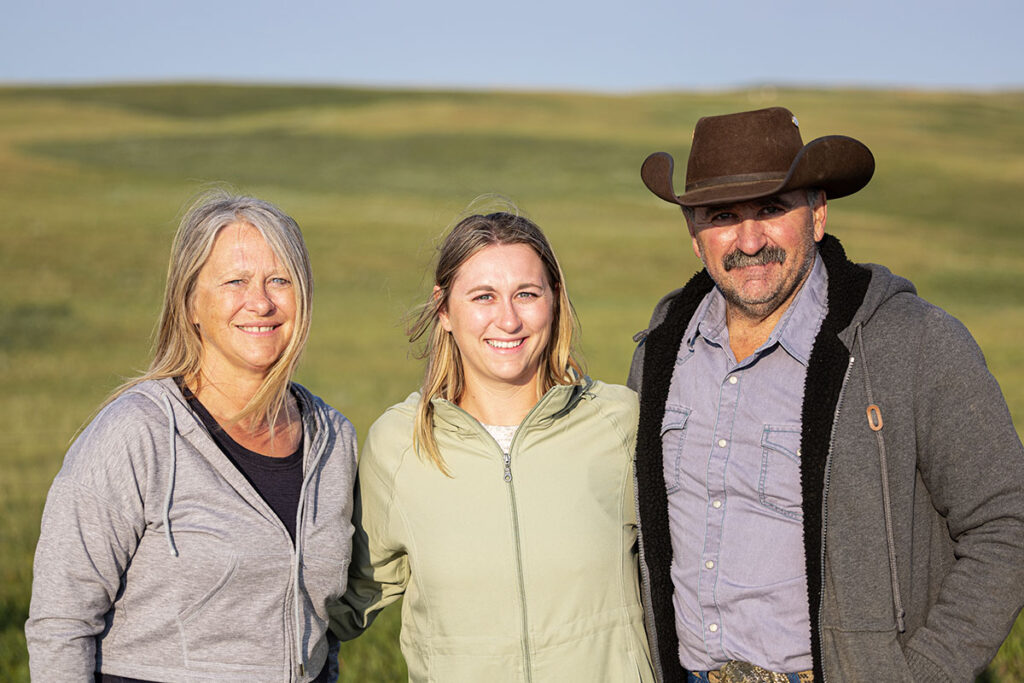
Caption: (left to right) Marlene and Jean Paul with Josee Monvoisin-Garner

Destination Ranchland 

Just 100 miles north of the Montana border, JPM Farms sits in the heart of the Missouri Coteau, a hilly plateau that parallels the river southeastward into the Dakotas.  

“When we’re green and wet here, we have a lot of pothole wetlands, and great upland vegetation that supports nesting habitat for waterfowl,” says Ross MacDonald of Ducks Unlimited. “That’s also what allows ranchers in this area to thrive.”  

The ecosystem here depends on wildlife. The Monvoisins credit waterfowl, other birds and deer with helping increase sustainability in their native grassland pastures.  

“Ensuring that you have a resilient, highly functioning soil provides biodiversity across the landscape—and distribution of landscape dynamics needed for different wildlife species and cattle grazing resources,” MacDonald says.  

Partnering with Ducks Unlimited helps improve JPM Farms’ grasslands for environmental and ranching wins. 


Conservation and Cows 

Cattle are good for the grass. “I don’t think there’s another animal that could be as efficient in maintaining the landscape,” Jean Paul says.  

Management underpins the effect, as JPM Farms strictly limits grazing for sustainability.  

The arid to semi-arid Coteau’s native grasses tolerate some drought, but all pastures run the risk of sudden declines in grass and water quality.  

That’s why the family worked with the Farm and Ranch Water Infrastructure Program on a pipeline that carries water to remote pastures on conservation easements. The result helps distribute grazing and gives purpose to land otherwise unusable for ranching.  

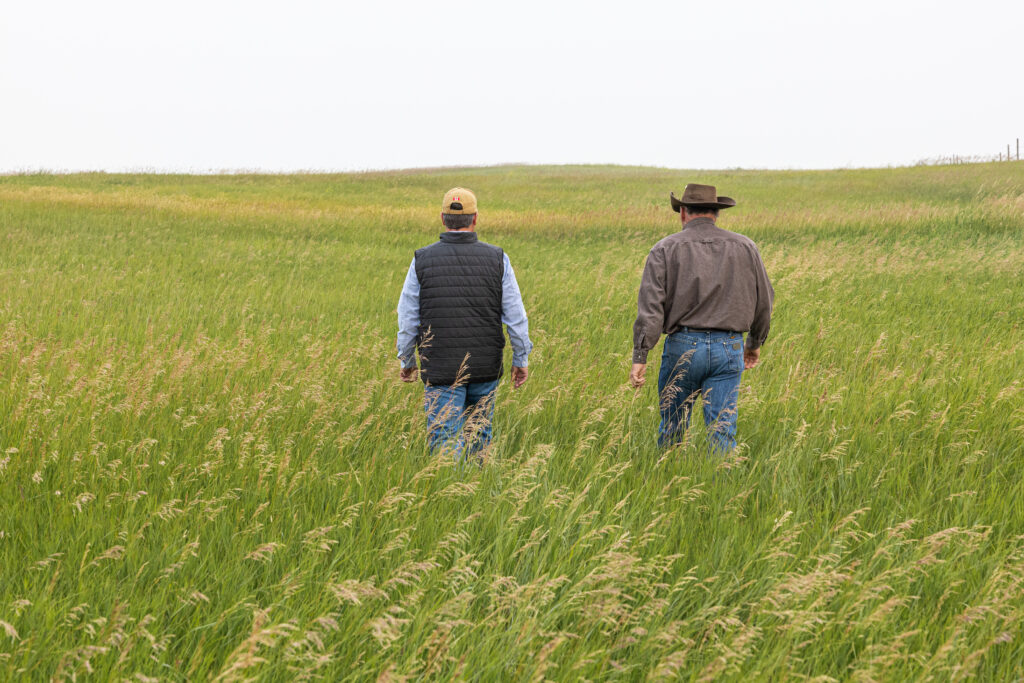
Caption: Jean Paul walking with Ross MacDonald.

Feet, Function and Selection 

Their cow herd has adapted greatly to the big hills and rocky setting since Jean-Paul’s grandfather brought registered black Angus to Saskatchewan in 1941. Cattle must walk across large summer pastures where structural correctness determines survival. 

“You have to have good feet,” Jean-Paul says. “That’s the most important thing I’ve found.” 

The wide-open country says a cow must be maternal, Marlene adds, providing steady care and raising a quality calf. 

“The mother cow is the biggest way you’re going to be profitable,” she says.  

They rely on such cows to produce bulls for customers, as well as calves with superior carcasses for beef the Monvoisins market independently.   

“The biggest compliment I can get is to see my customers’ calf weaning weights go up a year or two after they start using our bulls,” Marlene says.  

She says the best way to improve a herd and profitability is to cull from the bottom and build the top end. They are doing it in their own herd using expected progeny differences (EPDs), and helping customers do likewise. With better bulls come higher weaning weights and greater carcass quality, all adding dollars.  

“It’s a huge part of sustainability,” Jean-Paul says. “We have to get paid for what we’re doing.” 

Incorporating embryo transfer and a robust data collection system, the Monvoisins are geared toward progress. They are also committed to education, both in explaining EPDs to customers and learning for themselves.  


The Goal, Not the End 

The family’s recipe comes down to careful consideration of Angus genetics, continuing education and serving customers as bull buyers or helping to market calves.  

“I feel ownership in the Certified Angus Beef brand,” Marlene says. “There’s immense pride in having Angus cattle in our herd and producing Angus for our customers, ourselves and the consumer.” 

But excellence?  

“I don’t think anybody can ever say they’re the best at anything. Excellence is a goal, not the end,” Marlene says. “It’s all the extra work you do to be successful or just make your own operation better.”  

At JPM Farms, it means approaching each day with the attitude that you will make things better than they were yesterday— for your cattle, the land and how you treat other people. Going the extra mile and working hard at what you love.  

You may also like

Smitty’s Service on CAB Board

Smitty’s Service on CAB Board

Lamb continues to find himself struck by just how far-reaching the Angus breed has become. The brand’s growing demand and rising prime carcasses left a strong impression. He hopes everyone recognizes the vital connection built between consumers and Angus producers. Humbled by the opportunity to serve, Lamb reflects on his time as chairman with gratitude.

2023 Seedstock Commitment to Excellence

Benoit Angus Ranch honored with CAB Seedstock Award

By: Lindsay Graber, Director of Producer Communications

September 2023

Fresh out of the Army with an eye for the right kind of cattle, Everett Benoit bought six Angus heifers from his neighbor and started a cow herd of his own. He and wife Bonnie settled down in north-central Kansas to build a farm and family. The only kind of work they knew was hard work, and plenty of it.

Their resolve and work ethic saw the herd grow to 400 Angus females, along with a 2,500-acre farming division now.

Benoit Angus Ranch, marketing over 150 bulls annually, is a multi-generation family business with sons Doug and Chad. Focused on serving commercial cattlemen, the Benoits built a reputation for high-quality cattle that perform on the ranch, in the feedyard and on the rail.

With always-improving cattle to support that renown, and the will to back it up, Benoit Angus Ranch earned the Certified Angus Beef (CAB) 2023 Seedstock Commitment to Excellence Award. The family was recognized at the CAB Annual Conference in Las Vegas, Nevada, in September.

Doug Benoit

Family, Farm and Love for the Angus Female

While Doug manages the cow herd, Chad oversees the farming side. Where possible, that ties back to cattle as row crops, cover and forages diversify beyond managing 3,500 acres of grass. Cows graze corn stalks till late in the year and cover crops on wheat ground extend light grazing through the winter.

Everett and Bonnie remain involved, often sitting down with their sons to provide input and advice.

“They started this and now we all work together,” Doug says. “Dad has been a great teacher for us. And, it’s very nice to be able to work with your folks.”

Passing his work ethic, love for the breed and the core foundation of the family Angus herd on down to sons meant they grew up with Angus as the only logical choice.

            The Benoits have been recognized for their emphasis on maternal traits and overall high-quality Angus genetics that meet commercial cattlemen’s needs.

To Doug, the Angus female is the ideal type, further refined for a feminine head and length of body.

And to Jeff Mafi, American Angus Association regional manager, the Benoit Angus herd is a functional, working set of cows.

“They look for females with a good phenotype, do-ability and the right udder,” he says. “But they know they are in the beef business, so they pay attention to carcass traits, too.”

Striving for excellence, the Benoits stress data collection and testing. The longtime Maternal Plus members document that side of performance in their herd. All replacement females and sale bulls are American Angus Association Genomic Selection (GS)-tested, with results applied to herd improvement and marketing.

“They’re no-nonsense Angus breeders,” says Mafi. “If the cattle won’t work for customers, they get rid of them.”

Benoit Angus cow

Customer-Focused Cattlemen

Any reputation is earned. In the cattle business it can be cultivated in many ways, but it hangs on customer opinion.

“We measure success by our customers,” Doug says. “We work for them, and we’ll do everything we can to keep them satisfied.”

With two annual production sales, females in the fall and bulls in the spring, the Benoits rely on a strong customer base, largely repeat buyers and upwards of 85 percent commercial.

Each year’s breeding decisions aim to improve the herd, partly by targeting high-quality beef production. With a bull customer base largely aiming for a premium on calves produced, the Benoits employ CAB’s “Targeting the BrandTM” logo in their sale catalogs. In 2023, 76 percent of their bull sale offering earned the logo.

            “We put that Targeting the Brand mark in our sale catalog, and I know a number of customers will buy off that,” Doug says. “And they will mark out bulls from their selection if it doesn’t have the Targeting the Brand logo.”

At the first of two rounds of culling, the ranch pulls the bottom 25 percent of bulls based on quality, and sends them to a Nebraska feedyard as steers. That bottom end, in a sense, still contributes carcass data as a baseline for how different genetics perform.

With an average CAB acceptance rate of nearly 65 percent along with those grading Prime, the Benoits have found what works.

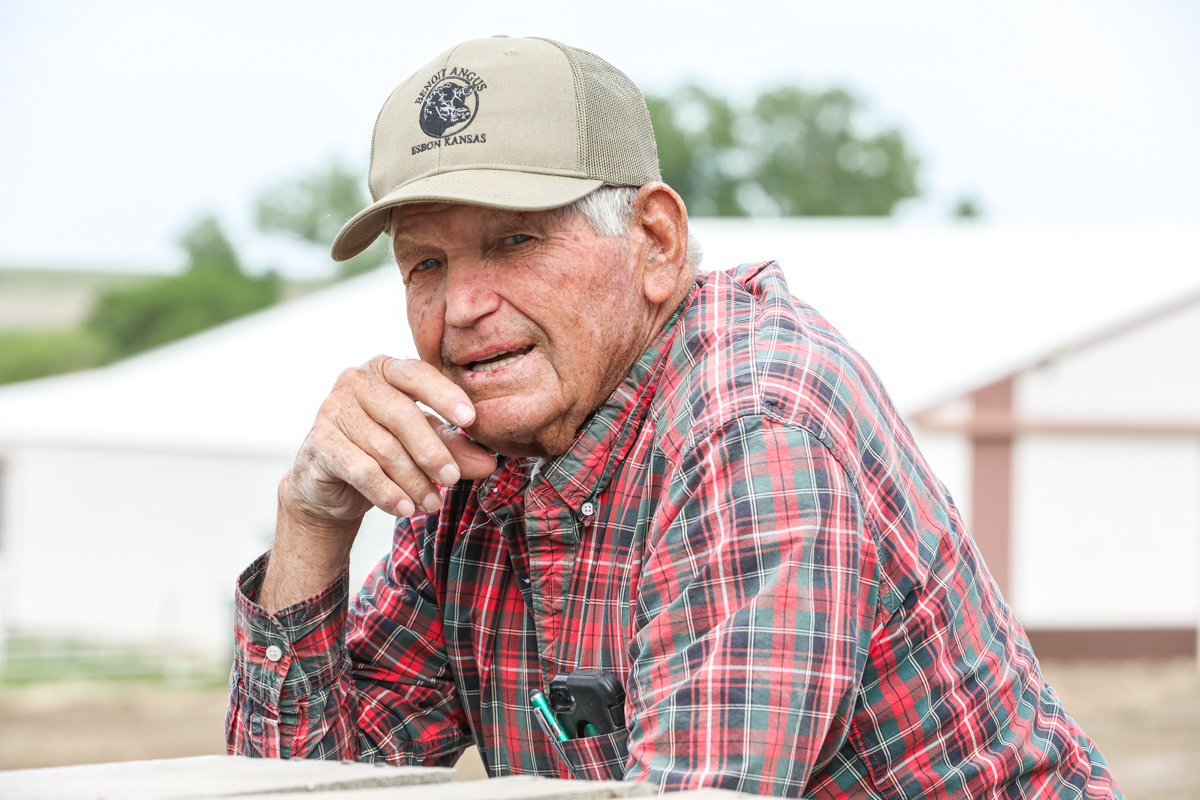
Everett Benoit

Putting in the Work

“As long as it’s got a seat on it, I can usually do a pretty good job,” Everett says.

Now in his mid-80s, he wakes before sunrise and climbs into his truck for another day of work on the farm. Whether he’s feeding cows or swathing hay, he enjoys what he does from the seat. Bonnie still can’t plan on him for dinnertime, but they’ve managed to get along so far.

“If you love doing something, it’s not work,” Everett says. “That’s the way I taught my boys—and hard work, it pays off.”

For the Benoits, that’s the goal: Add quality to the cow herd and improve the quality of a steak.

With another generation (or two) following in his footsteps, and the success of the ranch to carry forward, one thing’s for certain: hard work is a learned lifestyle at Benoit Angus Ranch.

You may also like

Smitty’s Service on CAB Board

Smitty’s Service on CAB Board

Lamb continues to find himself struck by just how far-reaching the Angus breed has become. The brand’s growing demand and rising prime carcasses left a strong impression. He hopes everyone recognizes the vital connection built between consumers and Angus producers. Humbled by the opportunity to serve, Lamb reflects on his time as chairman with gratitude.

Everything Header

Everything They Have

For giving it their all, Anderson Cattle receives Certified Angus Beef commercial producer award.
By Morgan Boecker, Senior Manager of Producer Communications

October 2023

If snapshots in scrapbooks could talk, they’d tell of both the good and the hard times the Andersons have seen.

Burning the old milk barn so a new calving and horse barn could be built. A framed shed ready for metal before a storm knocked it to the ground to push restart. Or just daily life on a ranch with four kids, and now a growing bunch of grandkids.

To see it live, Anderson Cattle tells a story of hard work.

Progress is a necessity on the Guide Rock, Nebraska, ranch where Troy Anderson manages a commercial Angus herd, small grower yard, his 10-year-old son, and a testing environment.

The first picture you see when arriving are thoughtful buildings and pens designed to make it easier on the livestock and people.

“It all goes back to efficiency,” Troy says. “The more comfortable the cattle are, the higher possibility of that calf grading better and growing better in the feedyard.”

His focus is clear: maternal cows that thrive in his environment, big calves that will grade premium Choice and Prime. But his approach includes respect for his livestock, people and land. For that, Anderson Cattle was honored with the Certified Angus Beef (CAB) 2023 Commercial Commitment to Excellence Award. Troy, son Zane and parents Roy and Rosemary received the award in September at the CAB Annual Conference in Las Vegas.
Long-term Priorities

Quality has been a priority for the Andersons even when CAB launched in 1978. When they heard of a premium beef brand looking for Angus cattle, they called to find out where they could take a load of calves.

“I just remember shoveling corn and shoveling corn and shoveling corn,” Troy says.

Then, finishing calves took manual labor scooping corn into a wheelbarrow to pour into a wooden bunk. When the calves were ready in the summer of 1980, they were hauled to Litvak Meat Company in Denver.

“We did really well with them,” Roy recalls: 64 percent qualified for the new Certified Angus Beef ® brand.

They sought better genetics through bull sources and being selective for replacement heifers. Looking for Targeting the Brand™ logos in bull sale catalogs is an easy tool to use.

“Targeting the Brand tells me a bull has the genetics to produce a higher percentage of calves that qualify for the CAB,” Troy says. That’s his target, too.

Bulls also have to check the box for efficiency, growth and ribeye area.

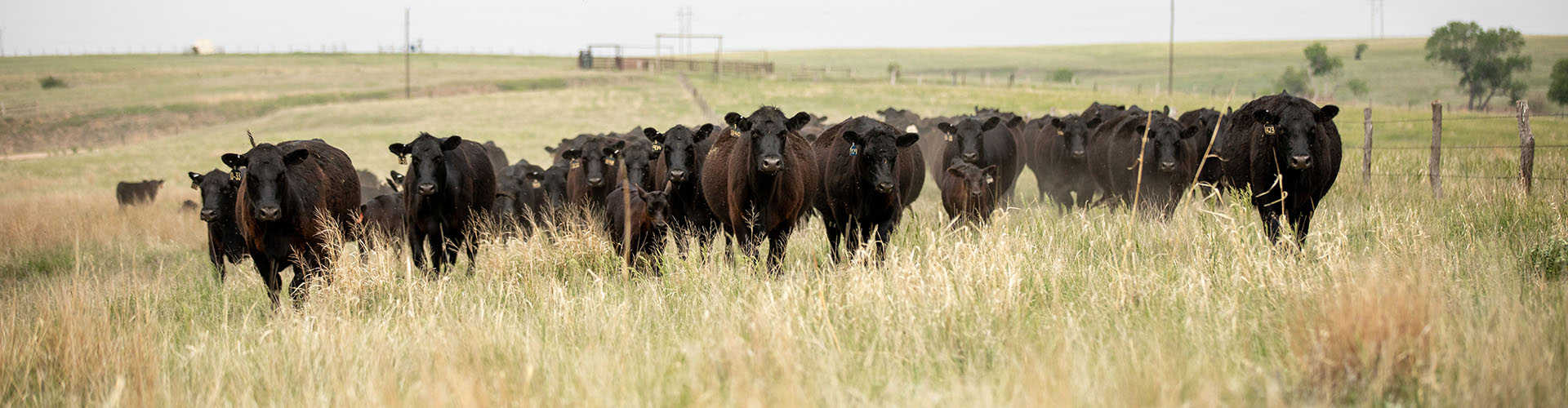
Today, loads of cattle far outnumber their first pen of fed calves in 1980. Loads now often average 90 percent Choice and Prime with more than half hitting CAB. The few Select grades can be traced back to a problem in that calf’s life, Troy says.

“We’re bottom-line driven,” he notes. “If we can get an extra $6 per hundredweight, that’s $50 to $60 a head. That can be the difference between making money or not on a set of calves, especially with the things we’ve gone through the last few years in the cattle industry.”

It just made sense to build a yard to grow and finish calves at the ranch. Since 2015, Troy has fed and finished home-raised, purchased or customer cattle in his 850-head feedyard. All are marketed on a quality-based grid.
As soon as he gets the carcass data back, he’s matching sires to electronic identification tags to see if the bulls will get used again next breeding season. Data and technology are keys to improvement.

“Harvesting more CAB qualifiers not only gives us more profit, but it helps consumers feel better about beef,” Troy says. “It also makes me feel better about our cattle, knowing that we’re producing beef that people want and enjoy.”

And consumers can feel better because the cattle raised according to Beef Quality Assurance guidelines relate not only to product in the grocery meat case but to the entire herd.
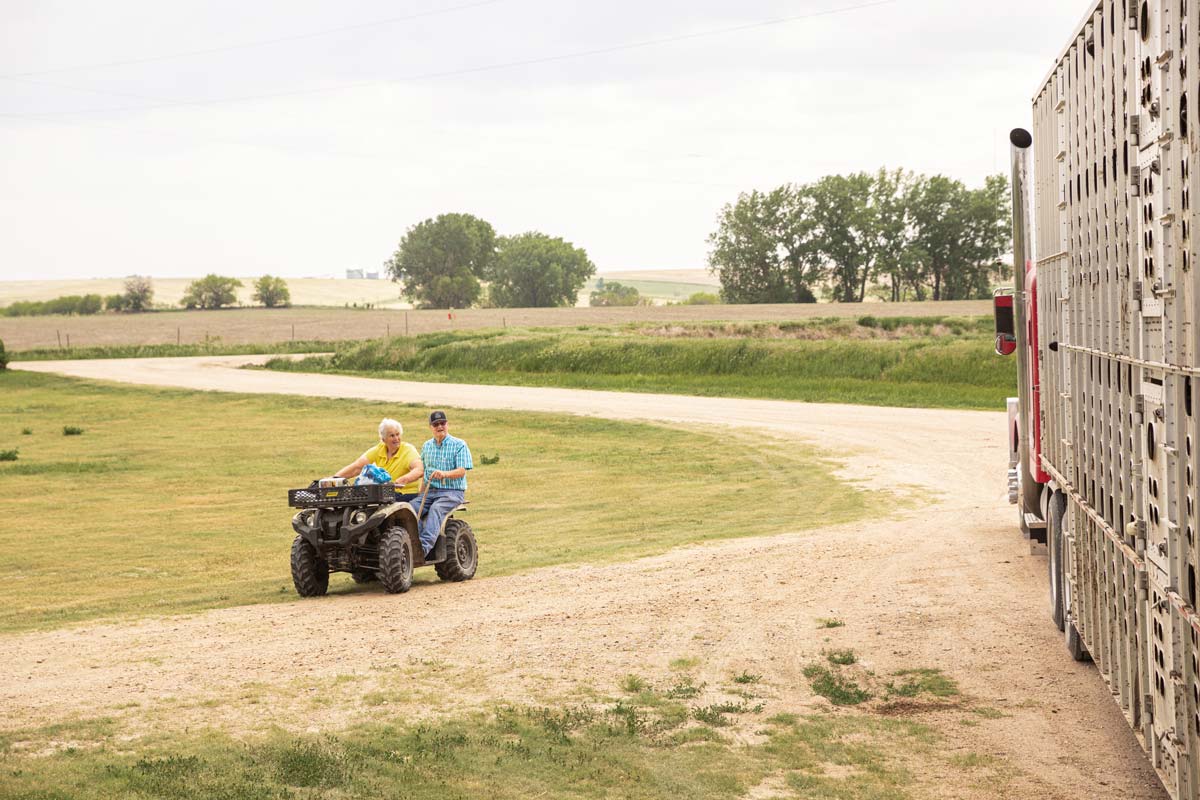
Roy and Rosemary Anderson on a four-wheeler

Caption: On shipping day, truck drivers are greeted with blueberry coffee cake, cinnamon rolls or brownies from Rosemary.

Meeting Cows Needs

Reaching higher quality grades starts with taking care of your cows.

“Our Angus cows have to give calves a good start by getting them up and nursing,” Troy says. “But it’s up to us to make sure the cow has what she needs to make good colostrum.”

That’s just the start. If a calf gets even a little sick or develops lung problems, its performance is affected.
The pressure is on the females to do their job. He keeps sound, moderate size cows that can raise a big calf and breed back over the years for longevity.
“There’s always been the desire to raise good cattle and do a good job with the cattle we have,” Troy says.

Selection for better cows started with Roy.

“He had 35 cows when we got married in 1970,” Rosemary says. “We could never get more than 40 because either lightning would strike one or something would happen. That’s just the way it was.”

Gradually, they grew their herd until it was the main focus, which led Roy to artificial insemination (AI) school in the ‘80s.

“After that, we kept the AI heifers because you could pick them out of the herd, just bang,” Roy says. “They were the bigger, nicer ones.”

They AI’d 100 heifers and 150 cows last spring, a herd that’s dwindled in the face of too many consecutive dry years.

Waterlines run across 600 to 1,000 feet of surface to get water to cows lucky enough to be on grass. Others were fed longer and kept dry lotted well into the summer.

“It’s a testament to Angus cows and careful management,” Troy says. “We’ve pushed them for efficiency but upped our mineral program to make up for the differences.”

Easier and Better Today

Rundown fences, eroded farm ground and a dream lay before Roy when he moved to Nebraska in 1963. That snapshot in time is long gone, after days of putting in terraces, planting trees and replacing fence.

The couple started out farming wheat, milo and silage while ranching on the side. As the kids grew in number and the weather was dry, Roy would pick up some dollars custom farming or working shifts at the Superior dehydrating plant making alfalfa pellets from midnight to noon.

“I’d sleep two to three hours, get up and work for me a while, then go back to work,” Roy says. “Rosemary was getting pretty aggravated, but it’s all worked out.”

Other days he would spend nearly 24 hours swathing or baling hay. “That was probably the hardest work I’ve ever done,” he recalls.

The days were long and the work physically exhausting.

Troy moved home in 2001 to help Roy with a large custom hay assignment that first summer, and he started a fencing business. Extensions of the work he was doing on their ranch.

“We put in miles and miles of cross fence and several miles of waterlines to tanks,” Troy says.

The new system distributed the cows’ grazing, resulting in better grass. It makes life a lot easier for herd and pasture, especially during a drought, he adds. Cows will graze more areas of the pasture when they have access to fresh water.

Memories of progress bring a smile. It isn’t easy passing the reins to the next generation, but Troy says his parents have been accommodating to let him make decisions and learn from them.

Caption: “We are all BQA certified,” Troy says. “It helps consumers feel good about what they’re buying and feeding their families and shows them we’re doing everything the best that we can at the ranch.”

Strength Together

The cattle may determine what’s on today’s to-do list, but people are the heart of the operation.

It takes the same firm, yet gentle hand to be a stockman and a dad. Lessons Troy learned the hard way guide him as a father today when he has Zane in tow.

“I like to help sort cattle because you can learn a lot about them,” Zane says. “Dad taught me to be calm around livestock because they can sense you. So, if you’re angry or happy, they can sense that.”

“I learned how to handle cattle really well because we had a lot of electric fence growing up,” Troy says. “To have Zane out there wanting to learn, it means the world to me thinking I’m raising someone who may help move the industry forward.”

While age may be slowing down Roy and Rosemary, food brings everyone together at least once a day. They sit down and enjoy meals, even if it’s wrapping up a hamburger and delivering it to where Troy, Zane and their part-time hired hand are working.

“I believe it is very important for families to take that time together,” Rosemary says, “just one look, or dinner conversation, to know how the day went.”

Everything they accomplish, they accomplish as a family.

“We have lived here 50-some years now,” Roy says, “and we’ve got everything situated about the way we want it.”

While pictures taken today would stir envy in many ranchers, those 10 years from now will build on successes. They’ll continue to give everything they have to get better.

“Mom has scrapbooks where you can see pictures of what it used to be like,” Troy says. “Our progress and what we’ve built here, I’m pretty proud of that.”

This story was originally published in the Angus Journal.

You may also like

Smitty’s Service on CAB Board

Smitty’s Service on CAB Board

Lamb continues to find himself struck by just how far-reaching the Angus breed has become. The brand’s growing demand and rising prime carcasses left a strong impression. He hopes everyone recognizes the vital connection built between consumers and Angus producers. Humbled by the opportunity to serve, Lamb reflects on his time as chairman with gratitude.