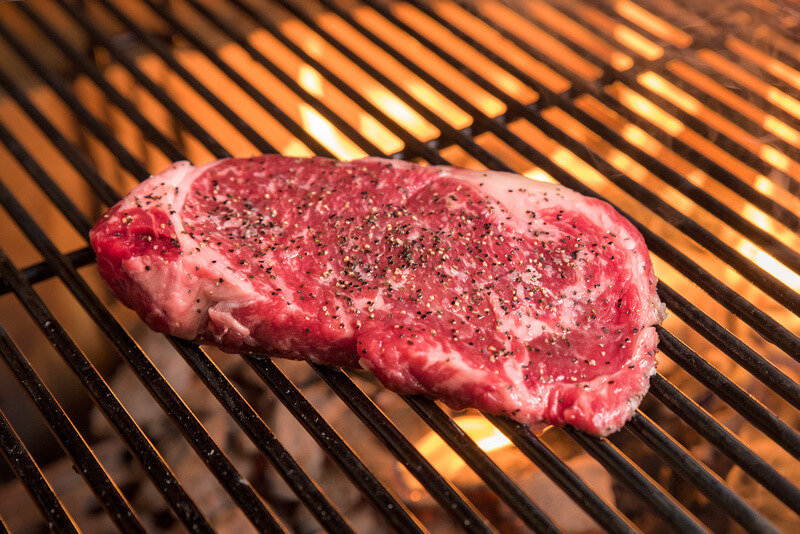
There’s no doubt, cattle that earn the Certified Angus Beef ® (CAB®) brand or Prime grade also earn premiums. In 2017 alone, packers in a biannual survey reported paying cattle owners $75 million in grid premiums specifically for CAB.
Is this a good time to expand your cow herd, now that the U.S. beef cattle industry is deep into a fourth year of its rebuilding phase? The consensus has a short answer: no.
They say we’ve already added more than enough cows to produce the volume of beef consumers can afford to buy. Adding to your herd now only aggravates the pending oversupply and sets you up to endure several years of unprofitable calf prices.
If you’ve never eaten beef lips, you’re proof of this beef export truth: “It’s all about putting the right cut in the right market and maximizing what opportunity there is.”
For the cattle industry, market signals can offer the same perspective. Data, seasonal changes, articles providing the same advice on vaccination programs or colostrum importance are all too familiar.
The one thing certain in commodity markets is ambiguity. Ag Resource Company president Dan Basse, however, provided a bit of clarity and foresight at the Certified Angus Beef ® (CAB®) brand’s Feeding Quality Forum in Sioux City, Iowa.
What’s relevant today isn’t necessarily so tomorrow. Investing in the future pushes everybody forward. That was the motivating think piece Mark McCully shared with cattlemen as part of the National Angus Convention’s opening session Saturday, Nov. 3, in Columbus, Ohio. As farmers and ranchers attended breakouts designed to make their own herds better, McCully’s point held its weight. Anything that could make it above the Select line was once considered “on target” for satisfying consumer demand.
Economic theory suggests more supply will lower the price, and higher prices tend to lower sales for a commodity. “A commodity like beef,” older textbooks might say. Premium beef has not always borne that out, particularly in the decade since the Great Recession of 2008, says CattleFax analyst Lance Zimmerman.
For many cattle across the United States that’s the difference in a marbling score of 492 versus 500. Those commodity Choice carcasses are just a few fat flecks away from upper two-thirds Choice and their share of the $50 million that packers pay each year for cattle earning that high-quality designation.
Few producers strive for average—from cow productivity to cost reduction, we all want to be better than that. Yet half of every herd is below its own average, so the bar we compare against is important for context. As the summer video sale reports come in, we hear lots of comments wondering how some cattle trade at such exceptional prices.
Certified Angus Beef ® is the Brand that Pays®. At a rate of $8,500 per hour, 24-7, that was $75 million for 2017, up from the $52 million paid in 2015; the linking year came in at $63 million. That brings the 20-year total for CAB premiums to $688 million, more than half of it paid in the last seven years.
Manage Consent
To provide the best experiences, we use technologies like cookies to store and/or access device information. Consenting to these technologies will allow us to process data such as browsing behavior or unique IDs on this site. Not consenting or withdrawing consent, may adversely affect certain features and functions.
Functional
Always active
The technical storage or access is strictly necessary for the legitimate purpose of enabling the use of a specific service explicitly requested by the subscriber or user, or for the sole purpose of carrying out the transmission of a communication over an electronic communications network.
Preferences
The technical storage or access is necessary for the legitimate purpose of storing preferences that are not requested by the subscriber or user.
Statistics
The technical storage or access that is used exclusively for statistical purposes.The technical storage or access that is used exclusively for anonymous statistical purposes. Without a subpoena, voluntary compliance on the part of your Internet Service Provider, or additional records from a third party, information stored or retrieved for this purpose alone cannot usually be used to identify you.
Marketing
The technical storage or access is required to create user profiles to send advertising, or to track the user on a website or across several websites for similar marketing purposes.