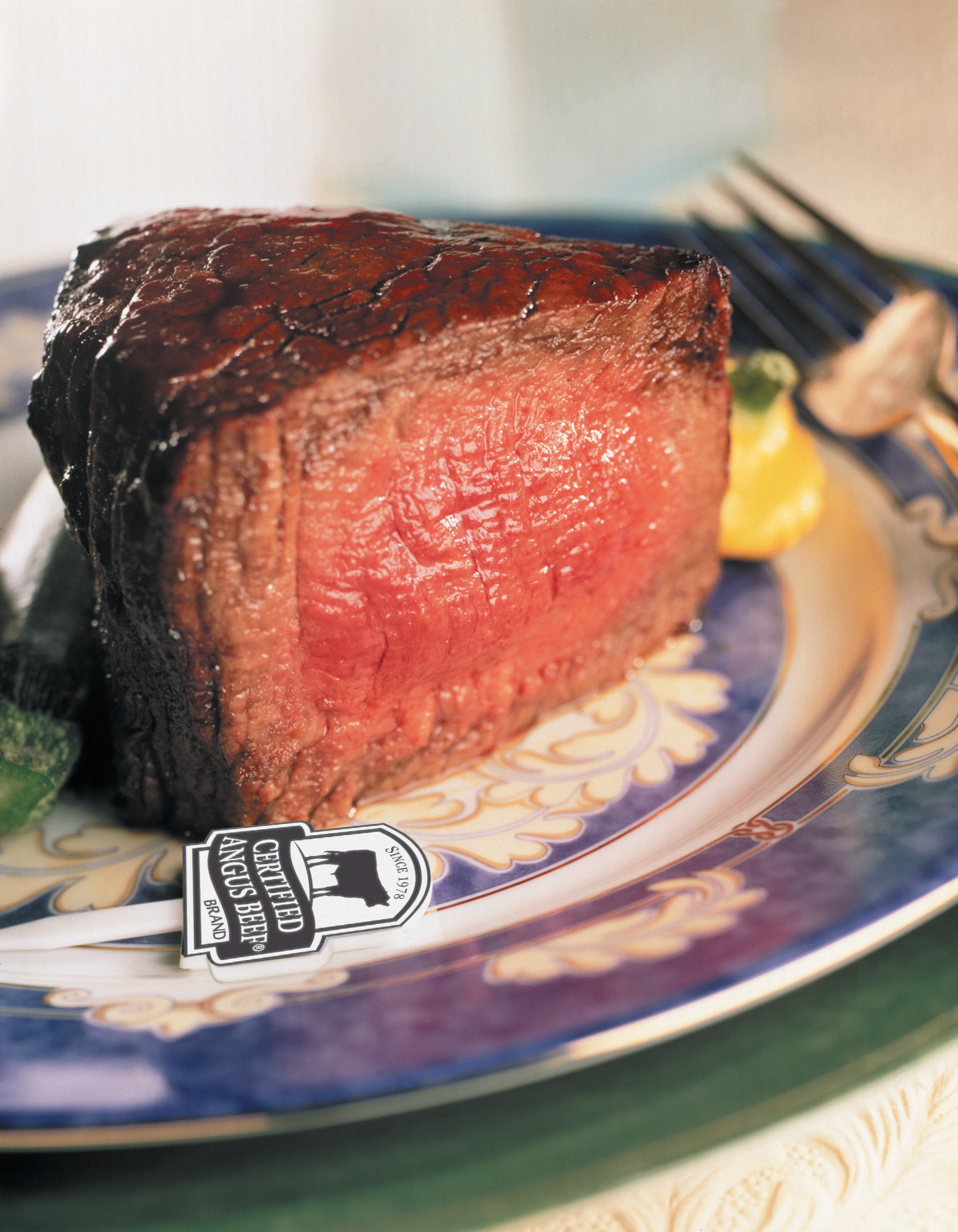
As cash cattle prices shot up to record highs in March and the futures markets showed incredible strength, consumers were asked to pay record prices for beef. Shaking off worries about the economy, they responded positively. Ground beef and cuts from the chuck and round led the increase, but middle-meat steaks moved higher, too. Faced with record high prices for the most expensive cuts, more consumers opted to ensure the eating experience by turning to the Certified Angus Beef ® (CAB®) brand.
Good stocker operators think about how to make their cattle better for the next segment in the beef business. Many of them gathered at the Backgrounding for Quality field day near Hamilton, Kan., last month to learn more about what feeders want and how to get there.
Cattle health matters at every segment, but it could be the single biggest profit determinant for the stocker phase. Mitch Blanding, senior veterinarian with Pfizer Animal Health, and rancher Mike Collinge shared tips for managing health at last month’s “Backgrounding for Quality” field day on the ranch near Hamilton, Kan.
Sky-high corn prices don’t typically outline “exciting opportunities” in the cattle business, but one economist says those in the stocker business can benefit from high feed costs by focusing on available forage.
Certified Angus Beef LLC (CAB) President John Stika sent a letter to USDA Secretary Tom Vilsack in late March to explain the branded beef company’s stand against current wording in rule changes proposed by the Grain Inspection Packers & Stockyards Administration (GIPSA).
There’s no rigid job description for Chairman, Certified Angus Beef LLC (CAB) Board of Directors. But the elected, voluntary position entails a lot of responsibility, and those who excel at the job tend to redefine it with passion and energy.
Consumer demand for high-quality beef has been on the rise, and so have cattle prices. A more secure future for ranching points toward quality, but what does it take to get there? This month Certified Angus Beef LLC (CAB) teamed up with Purina Land O’Lakes, Pfizer, Oklahoma State University and the Oklahoma Angus Association to bring Sooner beef producers a series on “Managing for Success.”
Animal scientist Ty Lawrence knows that it’s what’s under the hide that counts. The West Texas A&M researcher was in a beef packing plant one night when he had a revelation: “I’m looking down the stun line and the cattle that were coming toward me were a Heinz 57 mix of hide colors,” he says. “Then immediately behind me I could see the carcasses going to the hotbox. My thought was, ‘There’s a tremendous perception of value differences of the live animals, but when they cross the grading rail, where the true carcass value is determined, those value differences are minimized.’”
Cattlemen know overseas markets are important to their bottom line. Maggie O’Quinn, of Certified Angus Beef LLC (CAB), recently reminded producers how significant they are to exporters. Speaking at the Georgia Cattlemen’s Association annual convention March 31, the CAB executive account manager for Latin America and the Caribbean explained the value of trade relationships, the logistics of exporting, and why producers should care.
What began as an idea to create specifications for beef with a breed connection has sparked the interest of many over the years to create their own branded programs. The founding brand remains at the top, but the proliferation of others has arguably made the entire beef industry more consumer driven.
Manage Consent
To provide the best experiences, we use technologies like cookies to store and/or access device information. Consenting to these technologies will allow us to process data such as browsing behavior or unique IDs on this site. Not consenting or withdrawing consent, may adversely affect certain features and functions.
Functional
Always active
The technical storage or access is strictly necessary for the legitimate purpose of enabling the use of a specific service explicitly requested by the subscriber or user, or for the sole purpose of carrying out the transmission of a communication over an electronic communications network.
Preferences
The technical storage or access is necessary for the legitimate purpose of storing preferences that are not requested by the subscriber or user.
Statistics
The technical storage or access that is used exclusively for statistical purposes.The technical storage or access that is used exclusively for anonymous statistical purposes. Without a subpoena, voluntary compliance on the part of your Internet Service Provider, or additional records from a third party, information stored or retrieved for this purpose alone cannot usually be used to identify you.
Marketing
The technical storage or access is required to create user profiles to send advertising, or to track the user on a website or across several websites for similar marketing purposes.