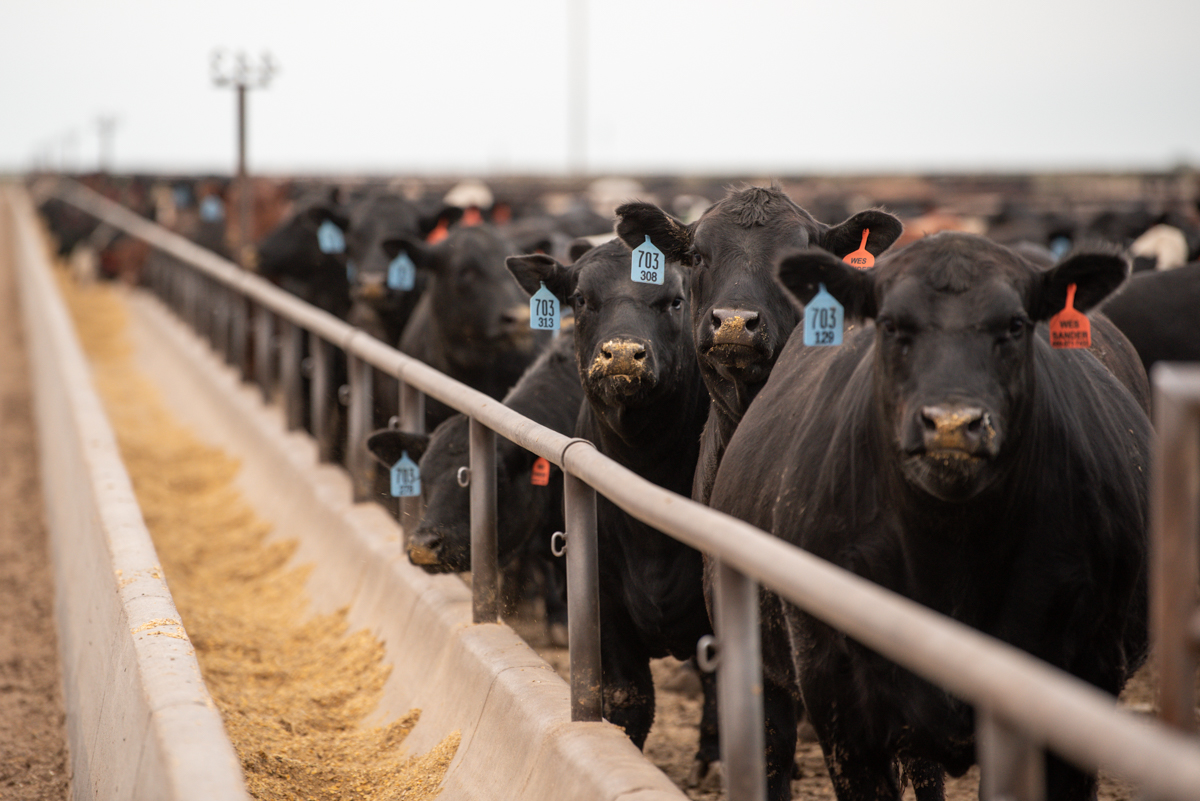
Profit. That’s a word cattlemen would like to hear more often in connection with their herds. “Managing for Success,” a seminar series focused on that very topic, is coming to South Dakota at the end of August.
Although beef prices have been relatively high this spring and summer, many consumers and chefs are continuing to look for high-quality cuts. The Certified Angus Beef ® brand sold 70 million pounds in June, the highest volume month in the company’s 33-year history, 4.3% above the previous June and some 10 million pounds better than June 2009.
“Ahead of the feeding curve” is a good place to be with the volatile markets and ever-changing dynamics in the cattle feeding business. It’s also the theme of this year’s Feeding Quality Forum, slated for August 23 in Omaha, Neb., and August 25 in Garden City, Kan.
A dry, flavorless and thinly cut steak can be enough to sour anyone’s taste for beef. “There is no doubt that cattle are getting bigger, and that will continue,” says Terry Houser, Kansas State University meat scientist. “I don’t think we are going to produce smaller rib-eyed cattle anytime soon or start selecting cattle for that trait.” Still, demand for beef looks bright, thanks to new cutting methods developed to tackle the issue of increasing carcass size and its effect on the eating experience.
You could say there were no losers, but room for more winners in the Kansas Angus Association 2011 Carcass Data Project pen. “The cattle just did phenomenally—everybody’s did,” said Landon Shaw, assistant manager at McPherson County Feeders, a Certified Angus Beef ® brand partner yard near Marquette, Kan.
Early-born calves have a better chance than the later born of making a profit for their owners. That’s what a 2010 study of Iowa Tri-County Steer Carcass Futurity (TCSCF) data helped confirm.
When springtime hits the rural regions, folks hunt for mushroom delicacies that pop up this time of year. People crave these, seek them out and guard their secret places, but they know it is for a limited time only.
The people of Performance Food Service (PFS) journeyed to farm country to learn more about ranchers who raise high-quality beef for the Certified Angus Beef ® (CAB®) brand. The event marked the company’s 25th year as a licensed CAB distributor.
Education is part of beef promotion and sales. That’s as true within the beef industry as it is in selling beef to consumers. Any of the 37 meat technical and sales professionals from Buckhead Beef Atlanta who came to Kensington Cattle Company, near Woodbury, Ga., for a ranch field day this spring would surely agree.
It’s a pretty well recognized fact: if you want grid premiums, your cattle have to be better than average. Most people don’t sell on a value-based system unless they have reasons to believe their herd genetics and management will result in high-quality beef. But even among ranchers who sell on a grid, the plant average factor—part of the formula used to derive grid pricing—is not as well understood.
Manage Consent
To provide the best experiences, we use technologies like cookies to store and/or access device information. Consenting to these technologies will allow us to process data such as browsing behavior or unique IDs on this site. Not consenting or withdrawing consent, may adversely affect certain features and functions.
Functional
Always active
The technical storage or access is strictly necessary for the legitimate purpose of enabling the use of a specific service explicitly requested by the subscriber or user, or for the sole purpose of carrying out the transmission of a communication over an electronic communications network.
Preferences
The technical storage or access is necessary for the legitimate purpose of storing preferences that are not requested by the subscriber or user.
Statistics
The technical storage or access that is used exclusively for statistical purposes.The technical storage or access that is used exclusively for anonymous statistical purposes. Without a subpoena, voluntary compliance on the part of your Internet Service Provider, or additional records from a third party, information stored or retrieved for this purpose alone cannot usually be used to identify you.
Marketing
The technical storage or access is required to create user profiles to send advertising, or to track the user on a website or across several websites for similar marketing purposes.