Some people set out to make a lasting change on their industry, but Max Deets, Beloit, Kan., says he never thought of himself in that light. Instead the cattle feeder’s natural leadership ability, quest for improvement and genuine respect for others led him to some of the most influential roles in the beef business.
Profit. That’s a word cattlemen would like to hear more often in connection with their herds. “Managing for Success,” a seminar series focused on that very topic, is coming to South Dakota at the end of August.
Although beef prices have been relatively high this spring and summer, many consumers and chefs are continuing to look for high-quality cuts. The Certified Angus Beef ® brand sold 70 million pounds in June, the highest volume month in the company’s 33-year history, 4.3% above the previous June and some 10 million pounds better than June 2009.
“Ahead of the feeding curve” is a good place to be with the volatile markets and ever-changing dynamics in the cattle feeding business. It’s also the theme of this year’s Feeding Quality Forum, slated for August 23 in Omaha, Neb., and August 25 in Garden City, Kan.
A dry, flavorless and thinly cut steak can be enough to sour anyone’s taste for beef. “There is no doubt that cattle are getting bigger, and that will continue,” says Terry Houser, Kansas State University meat scientist. “I don’t think we are going to produce smaller rib-eyed cattle anytime soon or start selecting cattle for that trait.” Still, demand for beef looks bright, thanks to new cutting methods developed to tackle the issue of increasing carcass size and its effect on the eating experience.
You could say there were no losers, but room for more winners in the Kansas Angus Association 2011 Carcass Data Project pen. “The cattle just did phenomenally—everybody’s did,” said Landon Shaw, assistant manager at McPherson County Feeders, a Certified Angus Beef ® brand partner yard near Marquette, Kan.
Early-born calves have a better chance than the later born of making a profit for their owners. That’s what a 2010 study of Iowa Tri-County Steer Carcass Futurity (TCSCF) data helped confirm.
When springtime hits the rural regions, folks hunt for mushroom delicacies that pop up this time of year. People crave these, seek them out and guard their secret places, but they know it is for a limited time only.
The people of Performance Food Service (PFS) journeyed to farm country to learn more about ranchers who raise high-quality beef for the Certified Angus Beef ® (CAB®) brand. The event marked the company’s 25th year as a licensed CAB distributor.
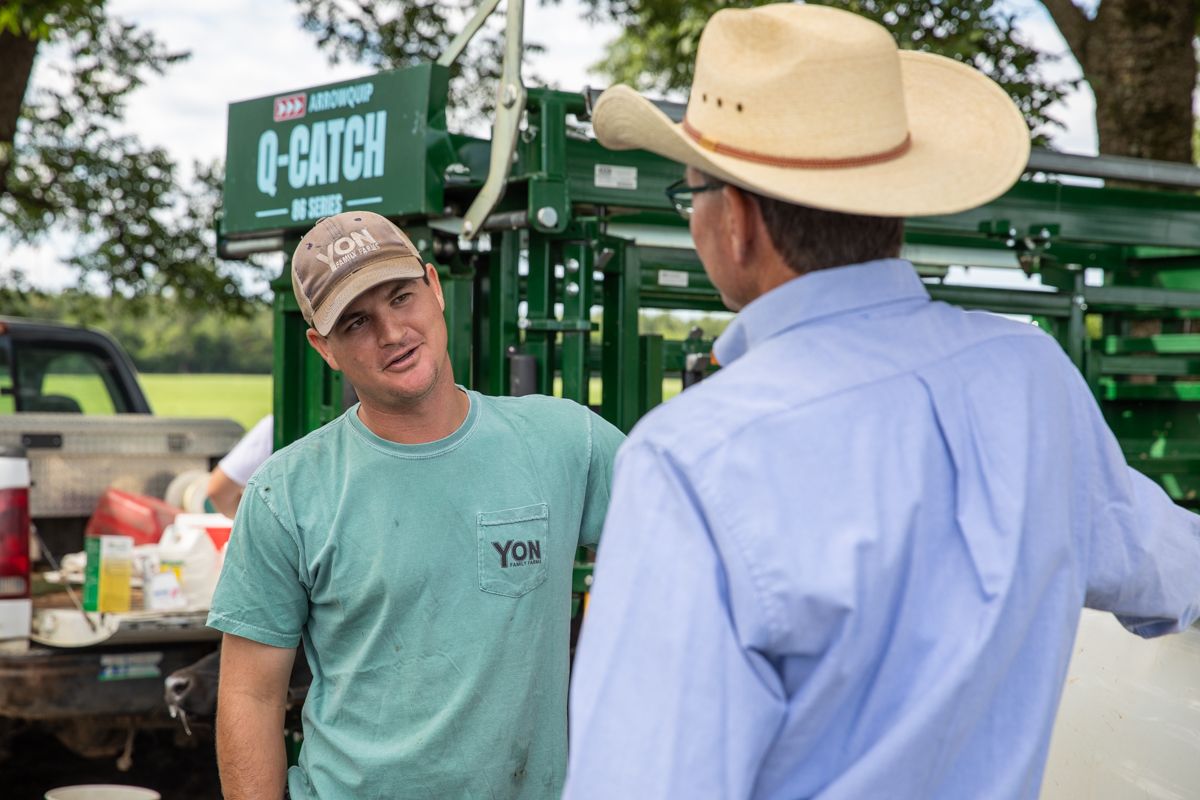
Education is part of beef promotion and sales. That’s as true within the beef industry as it is in selling beef to consumers. Any of the 37 meat technical and sales professionals from Buckhead Beef Atlanta who came to Kensington Cattle Company, near Woodbury, Ga., for a ranch field day this spring would surely agree.
We use cookies to ensure that we give you the best experience on our website. By continuing to use this site, we will assume that you are in agreement.