
Working in Balance
There’s value in simultaneously improving carcass and maternal traits in your Angus herd.
by Kara Lee
January 27, 2026
When you look at quality grid premiums, Angus cattle continue to defy the fundamentals of supply and demand. As Angus cattle continue to improve, today there is a higher percentage of high-quality carcasses hanging on the rail, yet producers continue to get paid for it. That’s strong demand—and a clear signal back to ranchers.
These gains are driven by consumers who continue to purchase beef for its superior taste and tenderness. As this pull-through demand signal from the consumer has become evident, Angus breeders have met end-users’ increased appetite for quality beef. At the same time, Angus cows continue to offer strong maternal traits while raising calves that may later enter the supply chain.
As carcass quality improves and the average marbling (Marb) expected progeny difference (EPD) for the Angus breed increases, many Angus breeders ask the supply development team at Certified Angus Beef (CAB), “Do we still need to focus on marbling?”
Data says yes.
Money on the table
The Angus breed has a strong market share, with 72% of fed cattle being Angus-influenced. Still, only four in 10 head that meet the live animal specifications go on to meet all 10 CAB carcass specifications. In 2024, 82% of Angus-influenced cattle didn’t have enough marbling (CAB Consist Study).
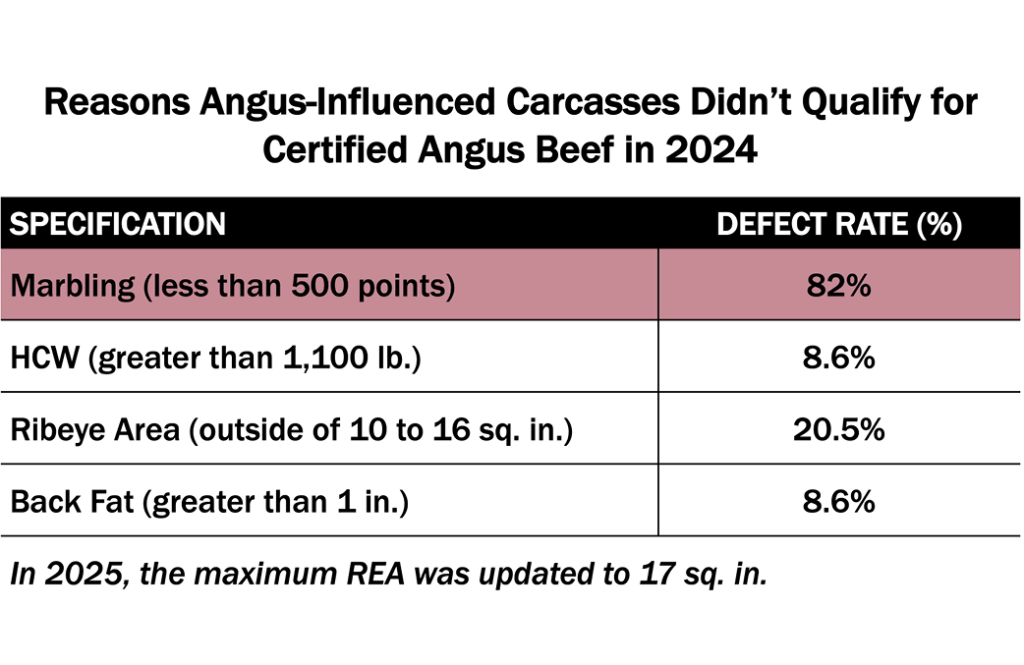
While cattle may not qualify for CAB for missing multiple carcass specifications, the greatest opportunity to increase the amount of Angus-influenced cattle that qualify for CAB are those that barely miss the marbling requirement
Evaluating the marbling distribution of Angus-influenced cattle provides a clearer picture of the portion of the population that falls short of CAB’s marbling threshold. Just over 10% of our missed supply is within only 30 points of marbling. Moderate improvements in marbling can still leave room for improved selection across multiple traits while making meaningful strides in product quality.
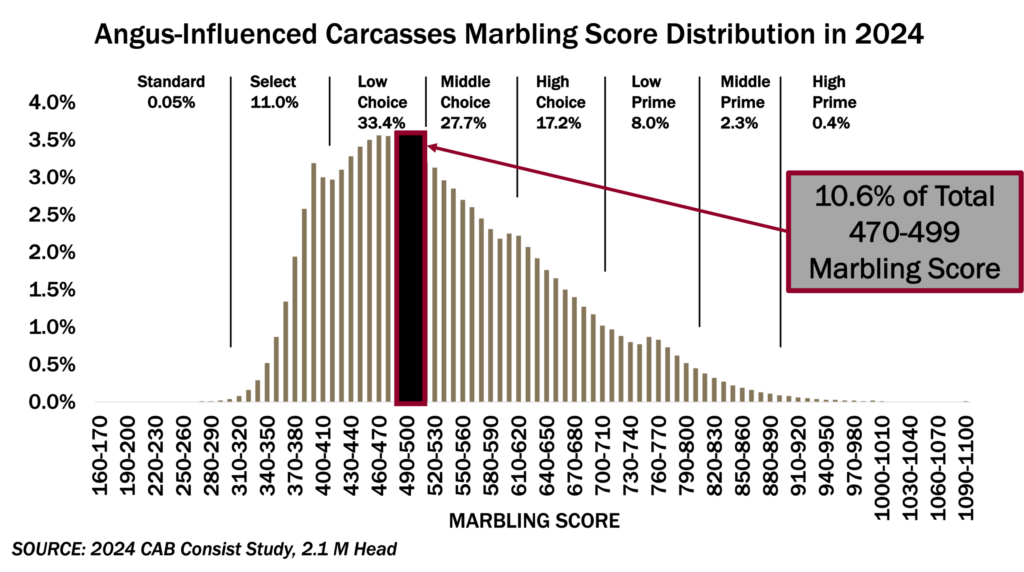
Caption: Carcasses must score 500+ for marbling to qualify for Certified Angus Beef ® brand.
The data proves that marbling should still be a priority. But additional data shows that it doesn’t have to be your only priority.
Are marbling, feet and fertility related?
Another common question from cattle country: Has our breed been so focused on marbling that we’ve lost sight of other valuable traits? Specifically, feet and fertility are recent areas of concern.
In search of answers, CAB worked alongside the American Angus Association® (Association) team to identify genetic trends between fertility and feet issues and the culled animals’ Marb EPDs. The Association provided all disposal code records from the Angus Herd Improvement Records (AHIR) database for both fertility and feet from 2010 through 2023. AHIR offers valuable insights into the primary reasons cattle were removed from a herd.
In both cases, there was a normal distribution of animals culled—indicated by the bell-shaped curve. The real lessons become visible when we draw lines at the marbling threshold for Targeting the Brand™.
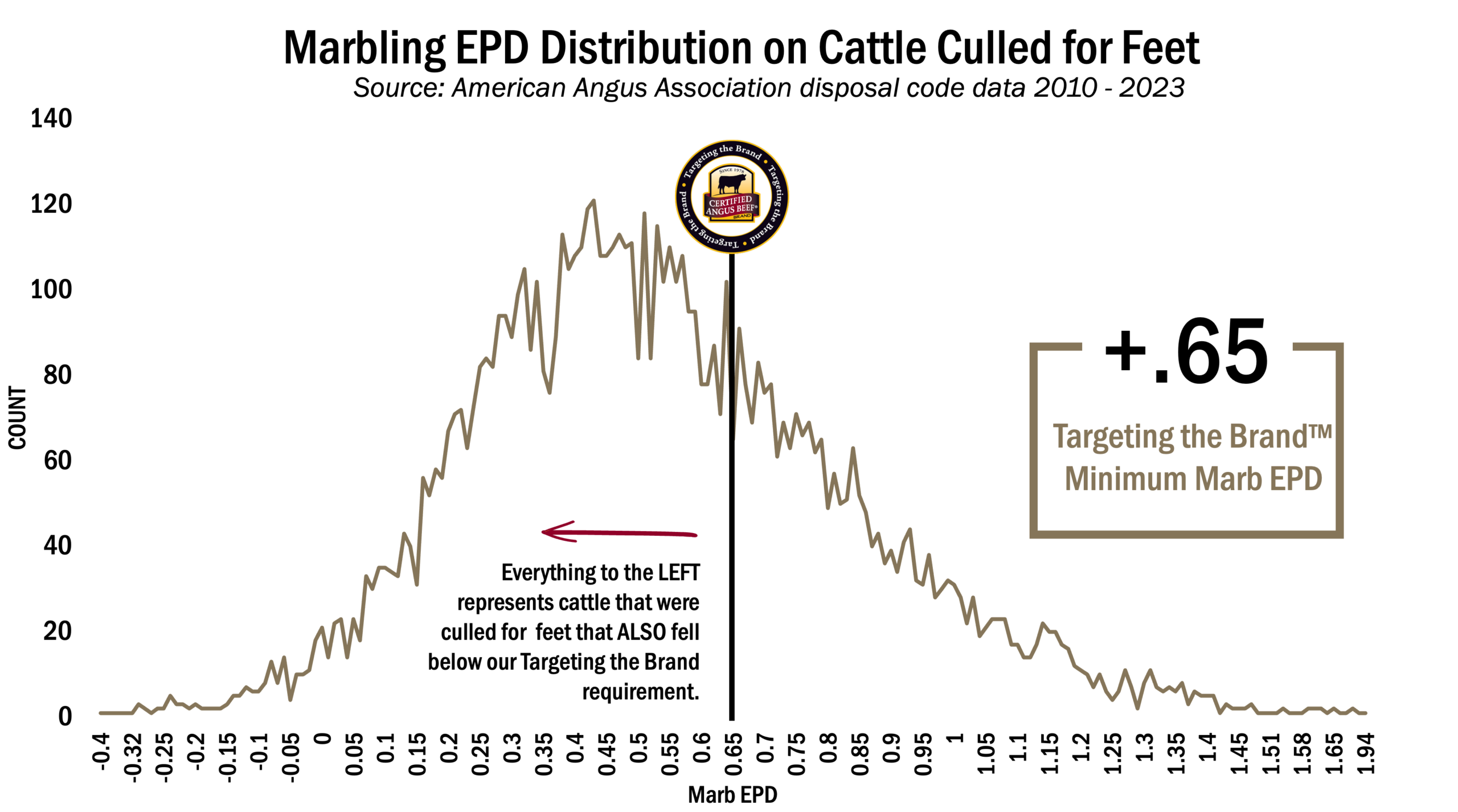
Caption for feet graph (left): From 2010 to 2023, more than 7,600 cows, bull, and calves were culled for foot issues. Many culls fall below the black line representing the Targeting the Brand minimum requirement for Marb EPD (+0.65.)
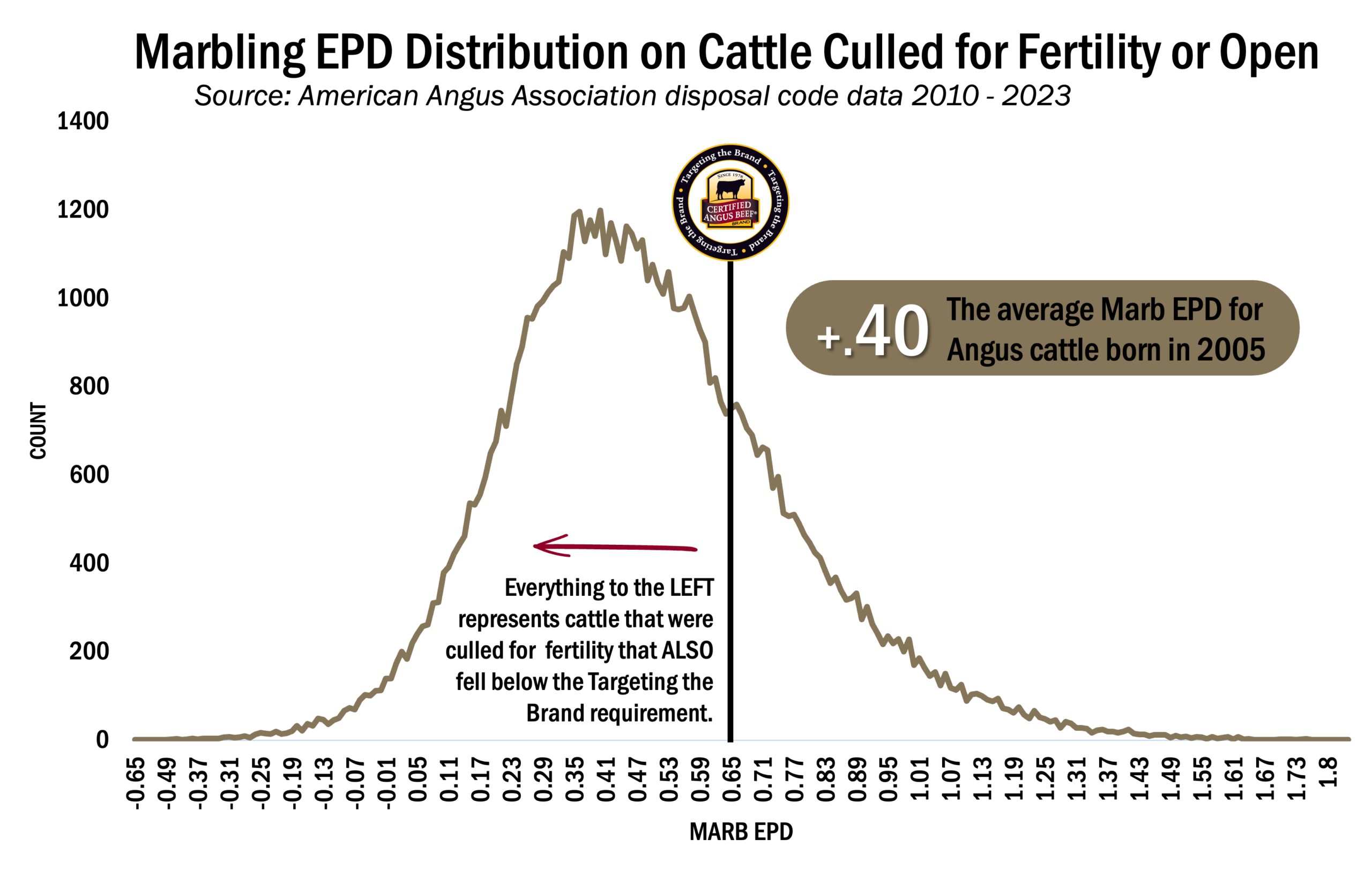
Caption for fertility graph (right): From 2010 to 2023, more than 72,000 females were culled from the herd due to being open or having other fertility issues. Many culls fall below the black line representing the Targeting the Brand minimum requirement for Marb EPD (+0.65.)
For several years, CAB has published Targeting the Brand™ requirements for Marb EPD and Grid Value ($G) Index to help commercial customers easily identify registered Angus animals with added genetic carcass value. The minimum genetic requirement thresholds are +0.65 Marb EPD and +55 $G.
The most cattle culled for feet and fertility fall below +0.65 for marbling. Incidentally, the 2025 breed average for current sires was +0.64. While there are cattle with very high marbling values culled from herds due to feet or fertility problems, the whole picture shows that many of those culled cattle are not considered elite for carcass quality. Moreover, this data shows that recent improvements in Marb EPDs aren’t to blame. In both disposal codes, the bulk of the curve peaks at around a +0.40 Marb EPD, which was the average for Angus cattle born in 2005.
Perhaps improvement in quality doesn’t rely on extremes.
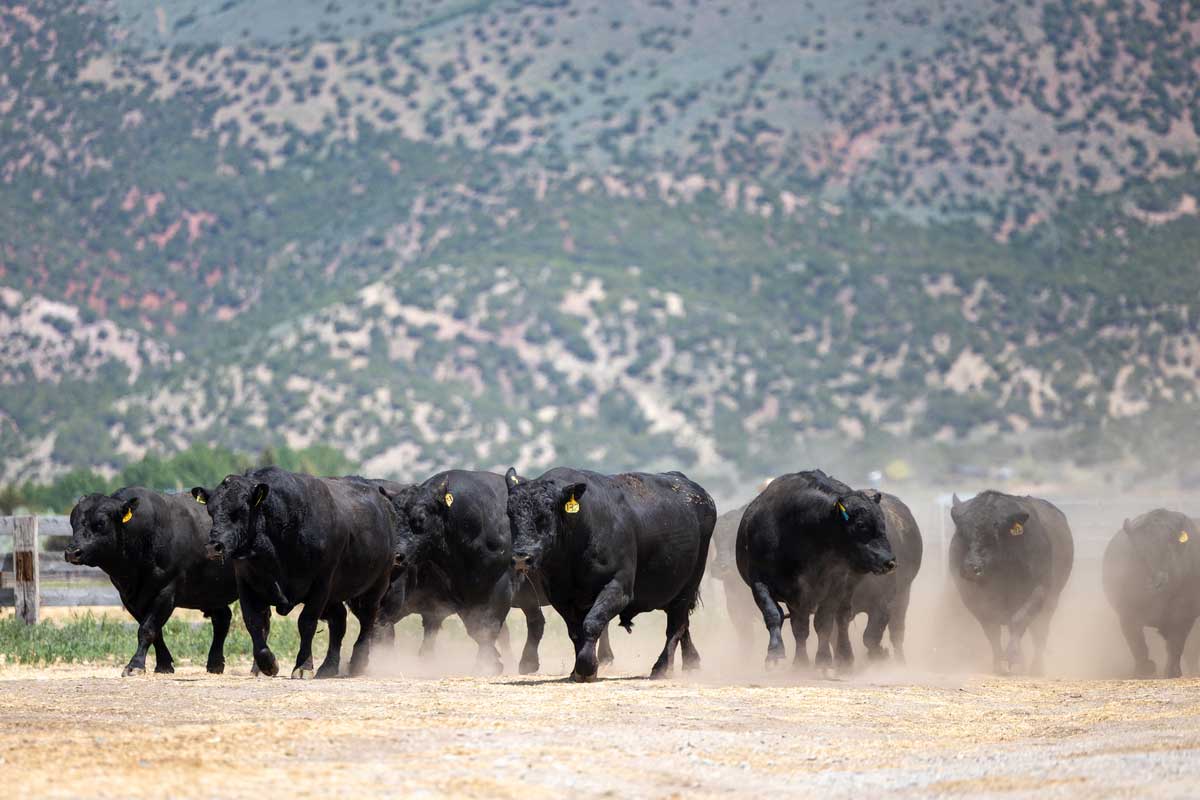
Caption: Stockmen bring immense value by objectively evaluating phenotypes, regardless of what the numbers say, and setting individual breeding objectives.
Simultaneous improvement
Cattlemen and women have a responsibility to look critically at their own herd, determine the areas that warrant improvement, and cull animals accordingly. Stockmen bring immense value by objectively evaluating phenotypes, regardless of what the numbers say, and setting individual breeding objectives.
When evaluating EPDs and considering what you’re breeding for, you must first recognize your environmental needs. Second would consider resources (labor, land availability, etc.) at your disposal. Third are your marketing goals and, just as important, your customers’ marketing goals.
For cattle producers who have goals of increasing their CAB acceptance rates, Targeting the Brand™ is a data-driven selection tool that helps bull and female customers more easily identify registered Angus animals that will help them achieve a 60% CAB acceptance rate, whereas the 2025 CAB acceptance rate (not exclusive to those utilizing Targeting the Brand™) averages 37%.
Some Angus breeders or their customers’ breeding objectives are higher than CAB acceptance and focus on increasing the number of cattle that grade USDA Prime. In 2025, the industry average Prime acceptance rate was around 11%. If you manage an average commercial cow herd under average management and environmental conditions, then data suggests registered Angus bulls with a +1.10 Marb EPD and +72 $G have more potential to achieve a 20% Prime acceptance rate.
As you’re making mating decisions for your next breeding season or headed to purchase new herd bulls, there’s space to put emphasis on marbling without excluding other valuable traits for your operation.
Sale Day Tip
The Angus Sire Evaluation Report and Angus Media’s Pasture to Publish sale catalogs both offer an EPD Search tool, allowing you to set your EPD parameters and search for animals in a sale book that meet your criteria. When sale day arrives, you already know which bulls carry the genetics that will help meet your breeding objectives.
You may also like

$100,000 to Future Beef Leaders
Interest in quality beef production continues to grow. This year, the Colvin Scholarship Fund awarded $100,000 to 24 students across the country, helping them continue their education and prepare for careers that will contribute to the strength and advancement of the beef industry.
From Data to Dollars
The journey to produce high-quality beef presents market volatility and management challenges. But today, there are data, technology, tools and partners to identify the best value and how to attain it. At the 2026 Feeding Quality Forum, each speaker added to the same message on Aug. 4 and 5 in Amarillo, TX.
Curiosity Changed the Beef Industry
Dr. Del Miles built a career on asking better questions to inform smarter decisions. Throughout his career, he challenged assumptions, advanced science-based management and helped cattle feeders prevent problems before they started. His influence reaches beyond feedyards, shaping the way veterinarians, researchers and cattlemen think about herd health.