
Prime on Purpose
by Kara Lee
February 2026
Targeting higher marbling scores boosts profitability and satisfies growing consumer demand. Genetics play a critical role in marbling performance, although several factors influence carcass quality. With a heritability of 0.48, marbling is one of the most highly heritable traits measured by the American Angus Association. More marbling progress can be made in one generation of genetic selection than in most other traits.
To improve the likelihood that your calf crop will achieve a 60% Certified Angus Beef (CAB) acceptance rate, use registered Angus bulls that carry the Targeting the Brand™ logo, signaling that the animal meets the minimum genetic requirements of +0.65 Marbling (Marb) EPD and +55 dollar grid ($G) index.

The industry average CAB acceptance rate is 37%. While the acceptance rate continues to rise annually, carcass quality also continues to stretch from upper two-thirds Choice to Prime.
Barely more than a decade ago, Prime was often seen as an exception in carcass performance. Current data proves that achieving Prime is practical and attainable. In 2025, USDA Prime averaged 12%, while a record 13.7% of all CAB carcasses were CAB Prime. That’s a 3.6% increase in a year when total certified head counts were down. Since 2020, more Prime carcasses have provided a consistent supply for Prime beef in grocery stores.
Consumers vote with their dollars. Despite historically high prices at retail, USDA and Terrain data show Prime beef demand has risen 20% year-over-year, while Choice demand stays just under the same threshold.
Quality grid premiums are higher, too. From September 2024 to August 2025, the USDA Prime premium averages reached $289.54 per head, CAB averaged $135.24, and Choice followed at $90.80 compared to the weekly cash average.
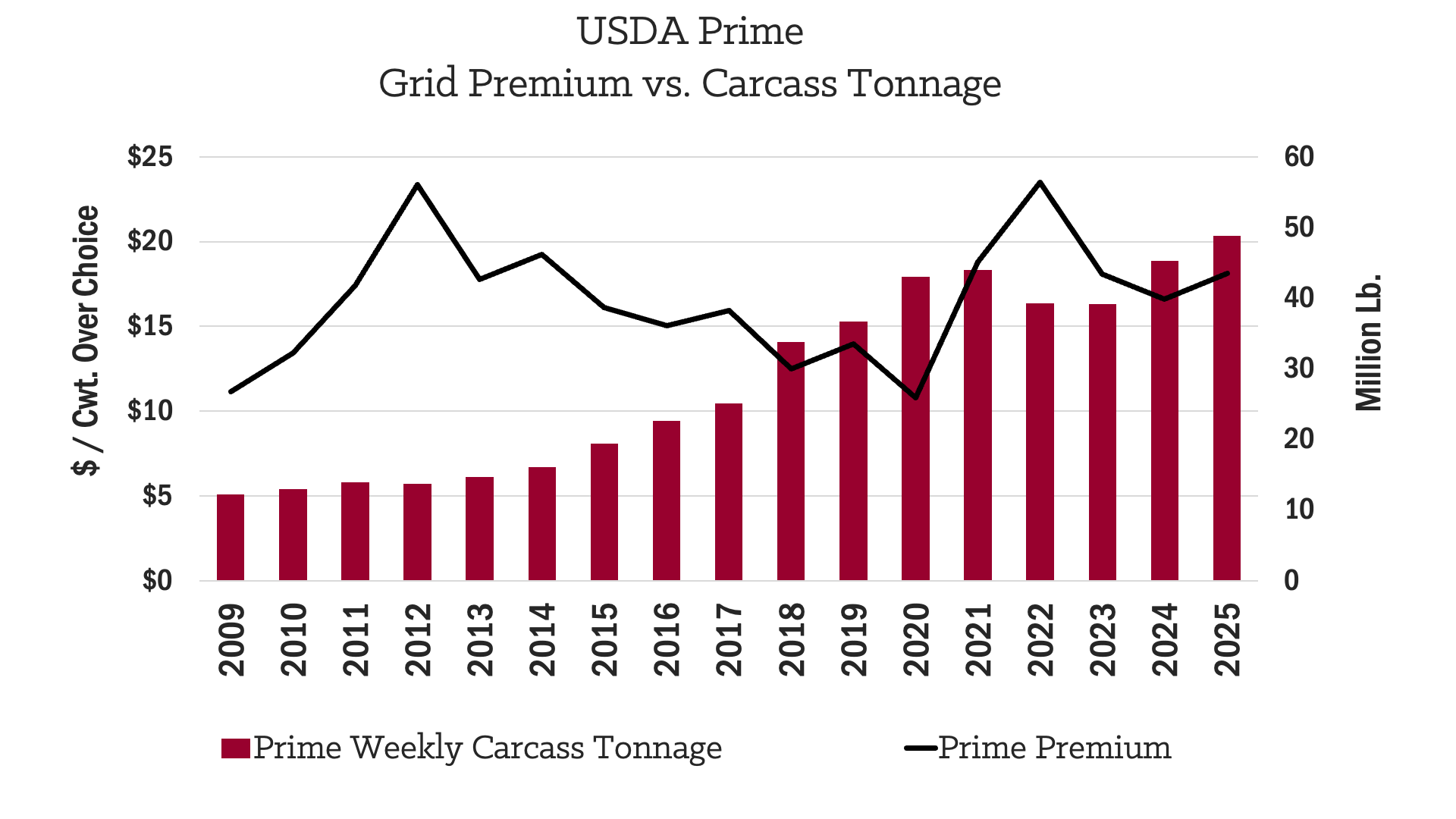
The data-driven approach to carcass grading and marketing helps you reduce variability and capture more premiums. Achieving Prime pays off, and genetics can help you hit your quality goals faster.
A collective data analysis effort between CAB and Angus Genetics Inc. (AGI) sets a baseline to target a 20% Prime acceptance rate. Based on an average Angus-based commercial cow herd, one recommendation assumes average management and environmental conditions according to the World Angus Evaluation, while the other assumes the cows are under below average conditions. Under average management and environmental conditions, select for a minimum +1.10 Marb and +71 $G.
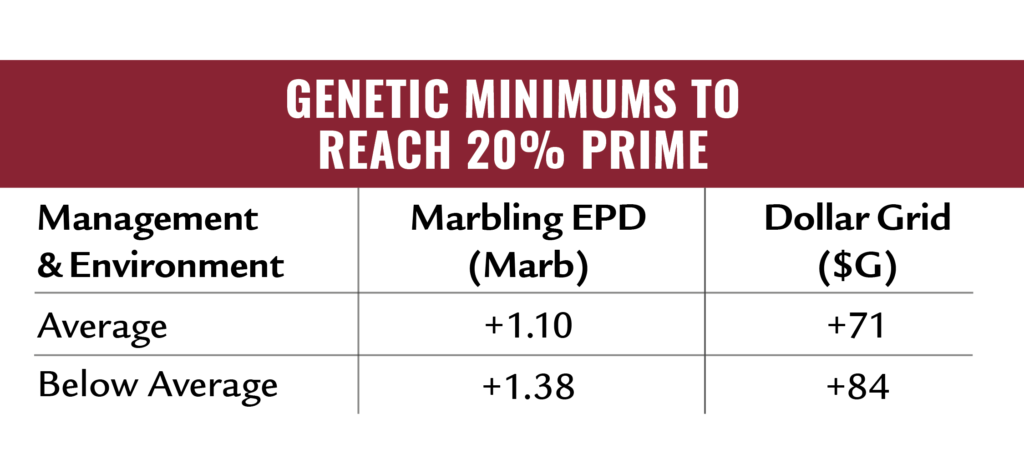
Producers should always evaluate their own benchmarks, breeding objectives, and environment and apply balanced selection accordingly. For those with an eye on Prime, these guidelines may serve as a helpful tool.
Download Prime on Purpose for use in sale catalogs below.
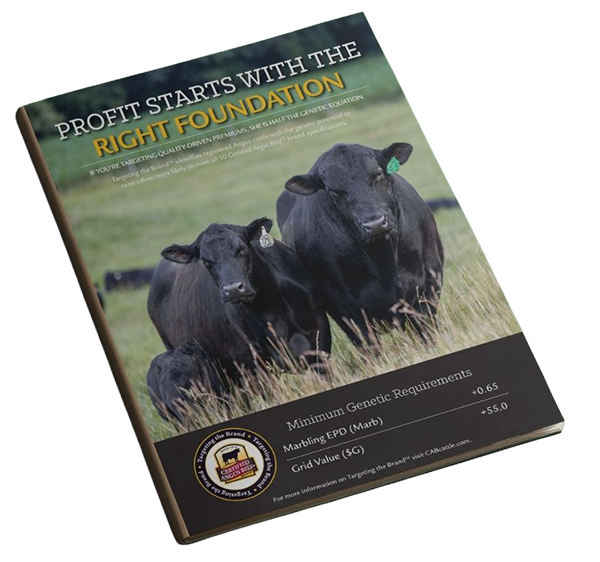
Direct Your Customers to Quality
Download all of our Targeting the Brand™ and sale book resources to highlight your commitment to carcass quality and genetics linked to greater premium potential.
You may also like

Jett Stream to Prime
In the Oklahoma Panhandle, four generations built a herd defined not by the odds against it, but by standards never lowered. That commitment drove decades of genetic and management improvements, taking Jett Ranch from struggling to reach Prime to more than 70% Prime today, and earned the ranch the 2026 CAB Commercial Commitment to Excellence award.

Nebraska Feedyard Recognized for Excellence
Motivation starts the feed truck before sunrise, keeps going through adversity and drives pursuit of the next goal.
It has more than fueled daily routines for Terry Beller. It’s helped his family and crew build the multigenerational Beller Feedlot into one long-known for customer service and high-quality beef.
The Capstone Approach to Modern Cattle Feeding
Taking aim without a target is like fishing without bait. It just doesn’t work. The cattle market lures with premiums for targets hit, but the bar keeps rising. Getting better in this dynamic setting takes detailed feedback. Capstone Beef provides that to its commercial customers with report cards that track progress and reveal needed change.