
Mythbuster Monday: Highway robbery at retail
Myth: Retailers are ripping us off with those high-priced tenderloins, based on our steer prices
Fact: Cutting demonstrations and math show how the high-quality but tiny muscle pricing adds up correctly.

CAB® brand filet mignon at $25/lb. — How can that possibly be when fat cattle are bringing $1.25/lb.? A little math reminds us how that premium cut of filet mignon, the most desired cut on the beef carcass, gets priced so high.
First we need to remember that the $1.25/lb. price is for the live weight of the finished steer. Most fed steers will produce a carcass that is about 63% of their live weight, so that $1.25 divided by 63% gets us to $2/lb. carcass
weight. Now for the tenderloin: in an 850-lb. carcass, we would typically only get 12 lb. of tenderloin (1 per side weighing about 6 lb. each). This week, CAB tenderloins were bringing about $10/lb. So a cut that represents about 1.4% of the weight of the carcass actually accounts for about 7% of the value.
Now, suppose you bought those two 6-lb. tenderloins and starting cutting steaks. You might be disappointed to learn that those 12 lb. actually yield 3 lb. of trim (think hamburger), 5 lb. of medallions (not big enough for a true center-cut filet mignon), and 4 lb. of those beautiful center-cut filet mignons. You paid $120 for the 2 tenderloins.
The 3 lb. of trim is worth about $2/lb. and the 5 lb. of medallions are worth about $6/lb. Add those up and you only have back $36 of the $120 you spent. That leaves $84 worth of center-cut steaks weighing 4 lb., or about $21/lb. (!!!)
You may also like
From Data to Dollars
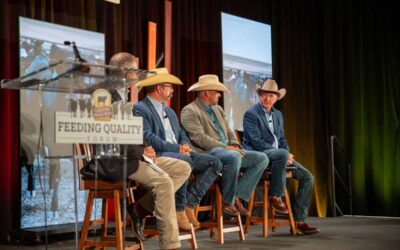
The journey to produce high-quality beef presents market volatility and management challenges. But today, there are data, technology, tools and partners to identify the best value and how to attain it. At the 2026 Feeding Quality Forum, each speaker added to the same message on Aug. 4 and 5 in Amarillo, TX.
Prime on Purpose
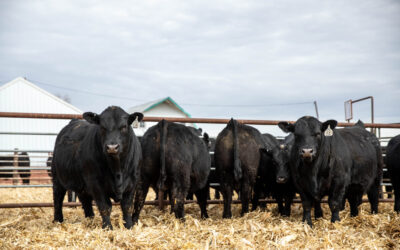
The data-driven approach to carcass grading and marketing helps you reduce variability and capture more premiums. Achieving Prime pays off, and genetics can help you hit your quality goals faster.
An Ambassador for All
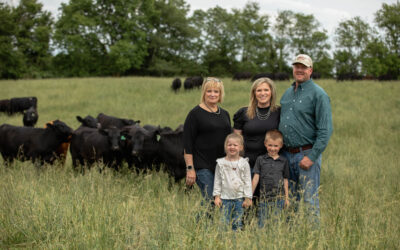
Joanie, with daughter Lindsey and her husband, Adam Hall, raise registered Angus cattle with two primary goals: producing high-quality seedstock that perform well in a wide variety of environments and ensuring end-user satisfaction. Those goals tie everything together, from promoting Angus to other producers to sharing their story with CAB partners and beef consumers.