Air, water quality keynote Feeding Quality Forum
by Miranda Reiman
“Going green” is a stirring buzz phrase everywhere, no less in cattle feeding.
Some shudder as they think of the regulations it entails. Others argue that agriculture is the original green industry and producers are closer to the land and natural resources than anybody else.
Frank Mitloehner, University of California-Davis, is an expert in how that term applies to those involved in livestock production. He’ll share research findings and insights from growing up in Europe to working on the U.S. West Coast with attendees at the annual Feeding Quality Forum.
The meetings are set for Aug. 23 in Omaha, Neb., and Aug. 25 in Garden City, Kan.
“I have a lot of research data, both in the area of air quality but also climate change, that will help show where they stand and what they need to do to be ‘green,’ so to speak,” he says. “Producers have to view this whole area in a proactive way, and address issues before they run into trouble with the law or the activist groups.”
The combination of lab facilities and a highly qualified staff give Mitloehner a unique arsenal of facts.
“We have found that some of the allegations out there are not in agreement with our research findings on campus,” he says.
California generally provides the test case for what kind of rules are coming down the pike for those in the Midwest, the professor notes. Air and water quality are in the spotlight in his state.
“They have to obtain permits to make any changes to their operation,” Mitloehner says. “If you want to put up a new shade in your corral, you have to get an air permit for that.”
Both government and activist organizations are trying to enforce this policy.
“Fines can be pretty significant, but the other issue is that there are groups like the HSUS (Human Society of the United States) and others that sue producers they feel are not compliant with current regulations,” he says.
Right now, there are half a dozen such lawsuits in California.
“We’re talking about very large sums of money,” Mitloehner says. Even when they’re not successful, the “attempt itself is scary, particularly because if even one of them is successful, it sets precedence.”
Education and an open dialog are the best tools cattlemen can use, he says.
“Many producers think, ‘We know what’s best for our animals. We know what’s best for the environment and we don’t want people to meddle with it.’ But those days are over,” he says, “because the public wants to know where their food comes from.”
To hear Mitloehner’s presentation in person, register for the upcoming forum at www.feedingqualityforum.com or call Marilyn Conley at 800-225-2333, ext. 298.
The seminars are sponsored by Pfizer Animal Health, Land O’ Lakes Purina Mills, Feedlot magazine and CAB.
You may also like
The Power of Curiosity
Dr. Del Miles built a career on asking better questions to inform smarter decisions. Throughout his career, he challenged assumptions, advanced science-based management and helped cattle feeders prevent problems before they started. His influence reaches beyond feedyards, shaping the way veterinarians, researchers and cattlemen think about herd health.
From Data to Dollars
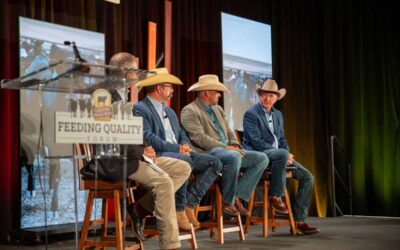
The journey to produce high-quality beef presents market volatility and management challenges. But today, there are data, technology, tools and partners to identify the best value and how to attain it. At the 2026 Feeding Quality Forum, each speaker added to the same message on Aug. 4 and 5 in Amarillo, TX.
Curiosity Changed the Beef Industry
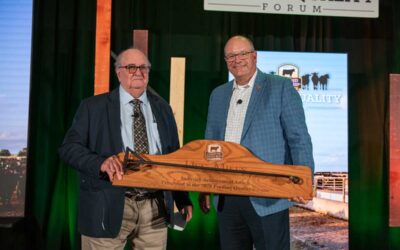
Dr. Del Miles built a career on asking better questions to inform smarter decisions. Throughout his career, he challenged assumptions, advanced science-based management and helped cattle feeders prevent problems before they started. His influence reaches beyond feedyards, shaping the way veterinarians, researchers and cattlemen think about herd health.