Healthier Soils and Stronger Herds
Noble Research Institute shared data-backed management practices for land stewardship.
by Briley Richard, freelance writer
December 18, 2025
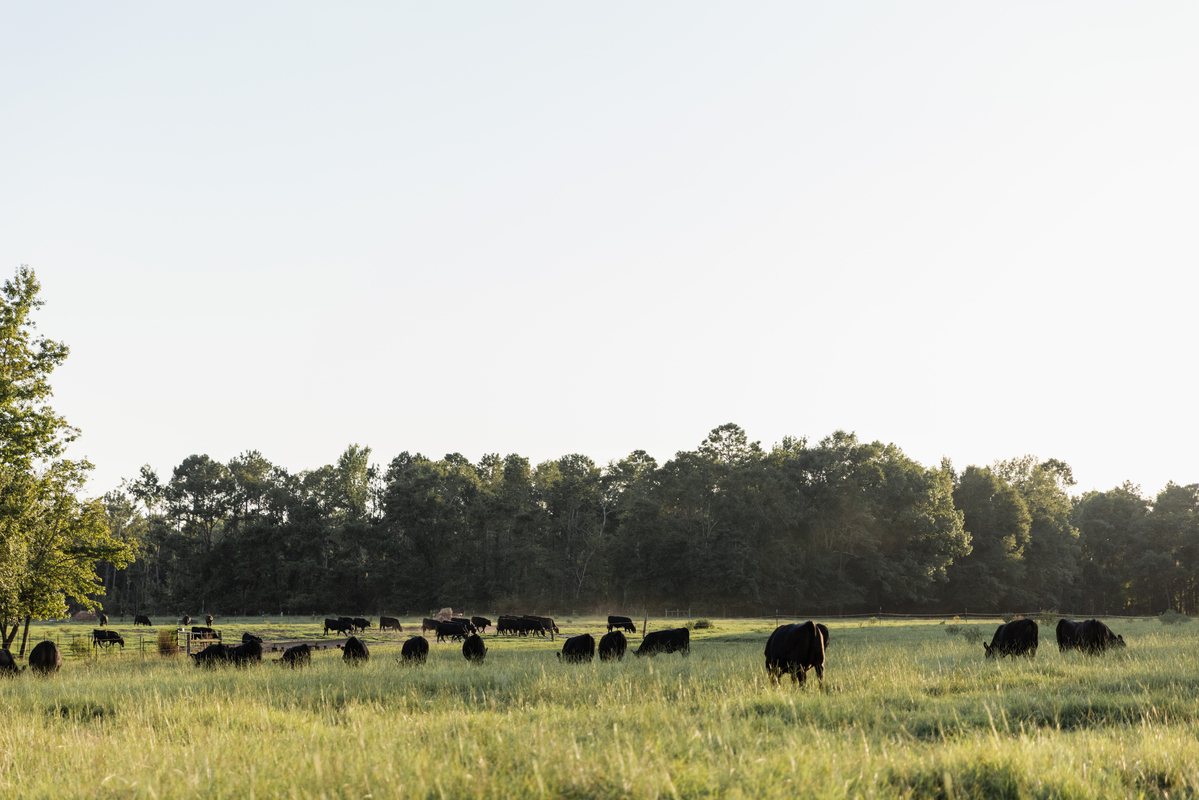
Every grazing decision leaves a mark on the land and affects the herd that depends on it.
Effective land stewardship goes beyond isolated practices, requiring an understanding of how each decision affects forage growth, cattle performance and long-term stocking rates. When land is the foundation of the business, producers are more likely to invest time and resources into managing it intentionally.
Certified Angus Beef’s Kirsten Nickles, Ph.D., and Hugh Aljoe, director of ranches, outreach and partnerships at Noble Research Institute, discussed land stewardship practices at the 2025 Angus Convention in Kansas City, Mo., in November.
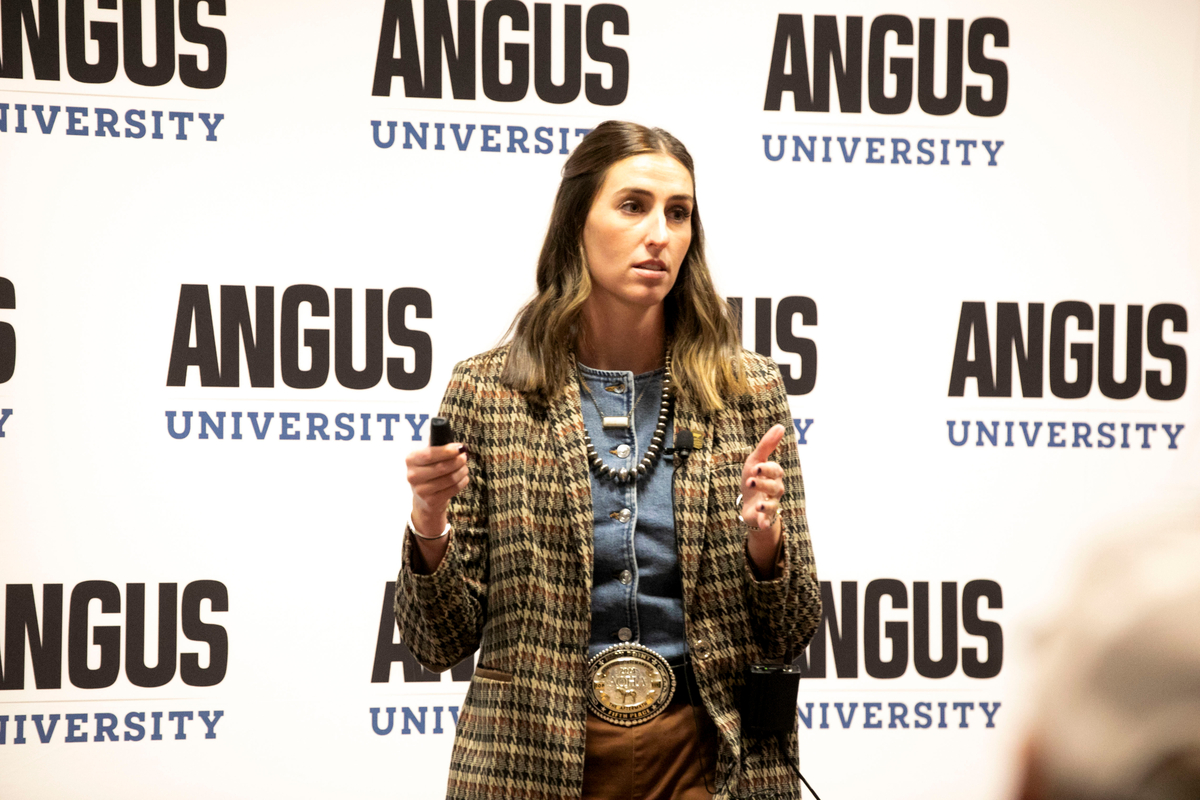
Caption: Certified Angus Beef’s Kirsten Nickles, Ph.D., introduces the land stewardship session focused on intentional grazing management and long-term resource resilience during Angus University at the 2025 Angus Convention in Kansas City, Missouri.
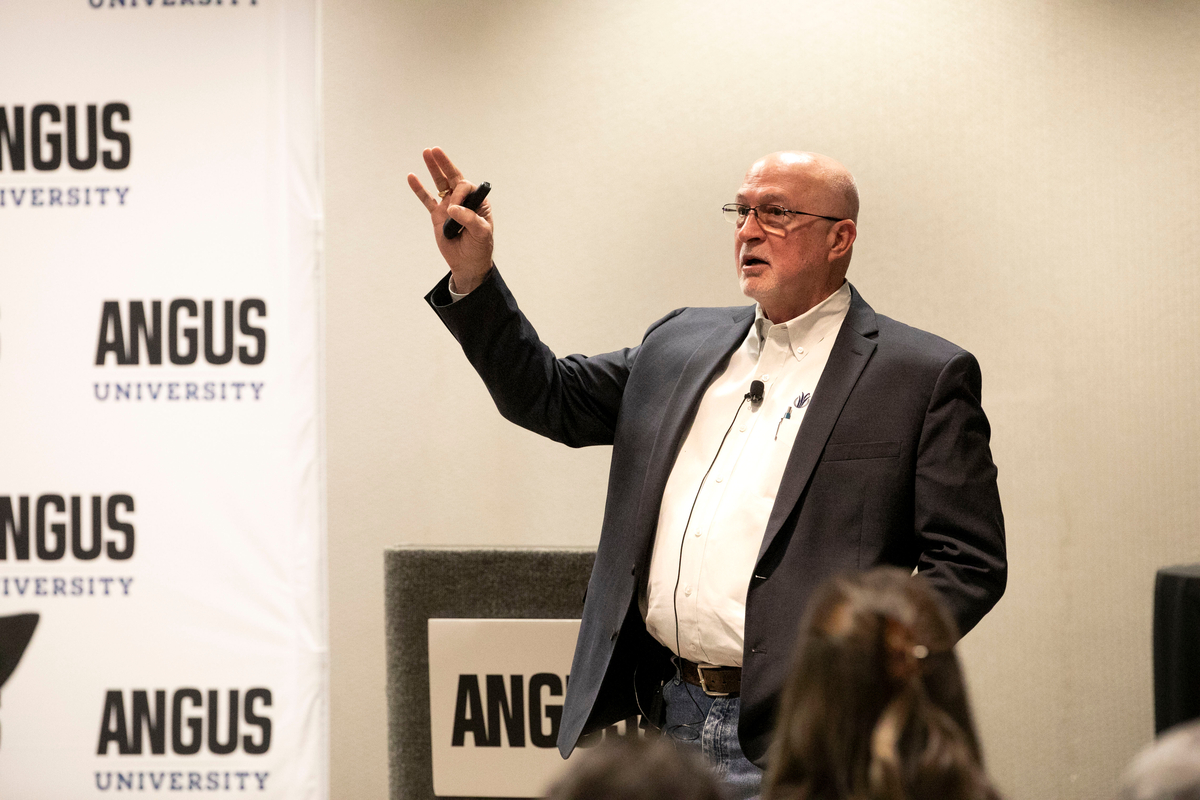
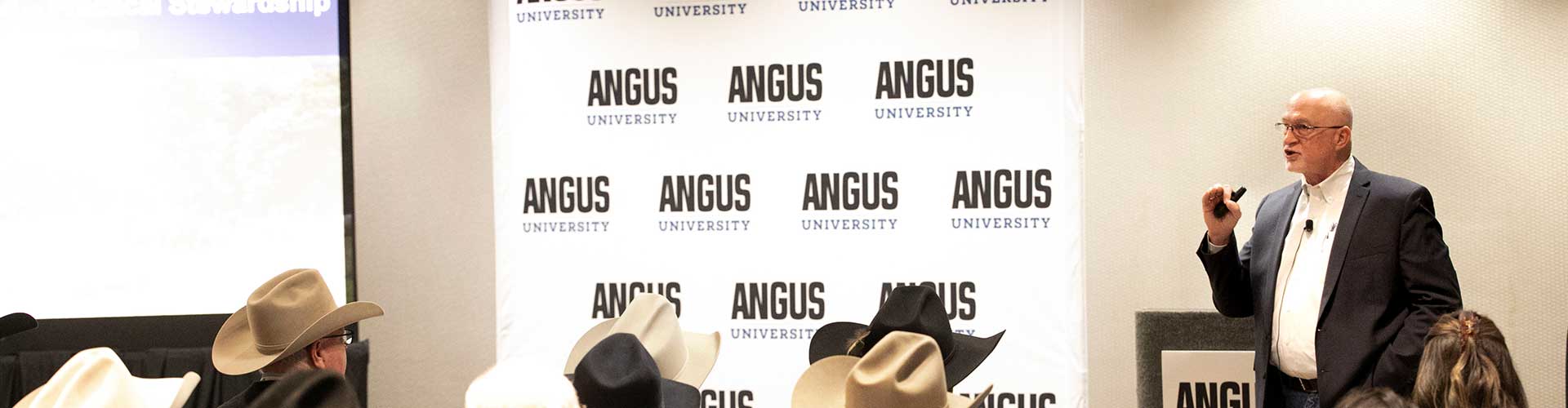
Caption: Hugh Aljoe, Noble Research Institute, shares insights on data-backed land stewardship practices during an Angus University session at the 2025 Angus Convention in Kansas City, Missouri.
“When we start thinking about land stewardship, think about the legacy of the land,” Aljoe said. “All of us want to be more profitable. All of us would like to see our land improve. But how do we go about intentionally making it happen?”
Aljoe expressed how management directly affects soil biology, forage recovery and carrying capacity. Concepts such as maintaining adequate residual forage, shortening grazing periods and extending recovery periods were explained as essential tools for producers who seek to protect and improve their resources.
“We want to minimize the disturbance, and we want to minimize the impact,” Aljoe said. “If we’re going to be grazing, we want to graze for a short period of time.”
Noble Research Institute research shows how adaptive grazing can dramatically increase grazing days. In the study, cattle moved daily or multiple times per day produced significantly more available forage compared to herds rotated less frequently.
“I’m getting 43 percent more grazing days through this methodology over our prescriptive [grazing] approach, which is a good rest rotation,” Aljoe said. “That’s where the power of applied adaptive grazing really begins.”
What are the first steps someone can take to move toward more sustainable land stewardship? First, evaluate your stocking rate as the most critical decision made each year. Key drivers of profitability and land resilience include managing below carrying capacity and adjusting numbers based on rainfall variability.
Using a region’s typical rainfall pattern, Aljoe explained that producers often plan around an average, which rarely occurs. Some years come in well above and others fall short, meaning forage supply varies more than many expect. The goal is to understand the range of rainfall across many seasons and adjust stocking numbers so the herd stays in harmony with what the land can produce.
Tools that track soil health and grazing patterns reveal how small changes influence forage recovery and long-term productivity. By documenting pasture conditions, tracking decisions and assessing outcomes, you can better identify opportunities to strengthen both land and herd performance.
“Ranch management begins with intentional land stewardship, and its applied practices that align with soil health principles,” Aljoe said. “So how do you know when they’re messing up? Which one is the weakest ecosystem process that needs to be addressed first? That’s what you get a taste of as you go into these Land Stewardship modules.”
Noble Research Institute, in collaboration with Certified Angus Beef, offers a free online Land Stewardship course designed for producers looking to strengthen their land management practices. The course teaches you how to achieve healthier soil, more resilient grazing land and greater profitability through better land management, reducing inputs and optimizing natural resources. Learn more at https://cabcattle.com/land-stewardship/.
You may also like

Apply by April 1 for Colvin Scholarship
The production agriculture, undergraduate and graduate scholarship categories each have tailored requirements. In 2025, the Colvin Scholarship Fund supported 27 students with awards ranging from $2,000 to $7,500.
Working in Balance
Cattlemen have a responsibility to look critically at their own herd, determine the areas that warrant improvement, and select animals accordingly. Stockmen bring immense value by objectively evaluating phenotypes, regardless of what the numbers say, and setting individual breeding objectives.
Smitty’s Service on CAB Board
Lamb continues to find himself struck by just how far-reaching the Angus breed has become. The brand’s growing demand and rising prime carcasses left a strong impression. He hopes everyone recognizes the vital connection built between consumers and Angus producers. Humbled by the opportunity to serve, Lamb reflects on his time as chairman with gratitude.