Behind the Brand
The Angus Argument
by John Stika
February 2026
Certified Angus Beef’s (CAB) mission is to increase demand for registered Angus cattle, yet the brand doesn’t require carcasses trace back to documented Angus heritage.
Why? Consider the industry 50 years ago. Angus had a declining presence, branded beef programs didn’t exist and packers had little reliable information to confirm source, let alone breed composition.
At the time, a USDA-certified beef program transferring live cattle eligibility standards to a carcass had never been attempted. The brand’s founders knew the program had to be practical, easy, and affordable to implement. Strict parentage requirements would have been nearly impossible for the industry to adopt, as they would have hindered the creation of a scalable program and widespread value for the breed.
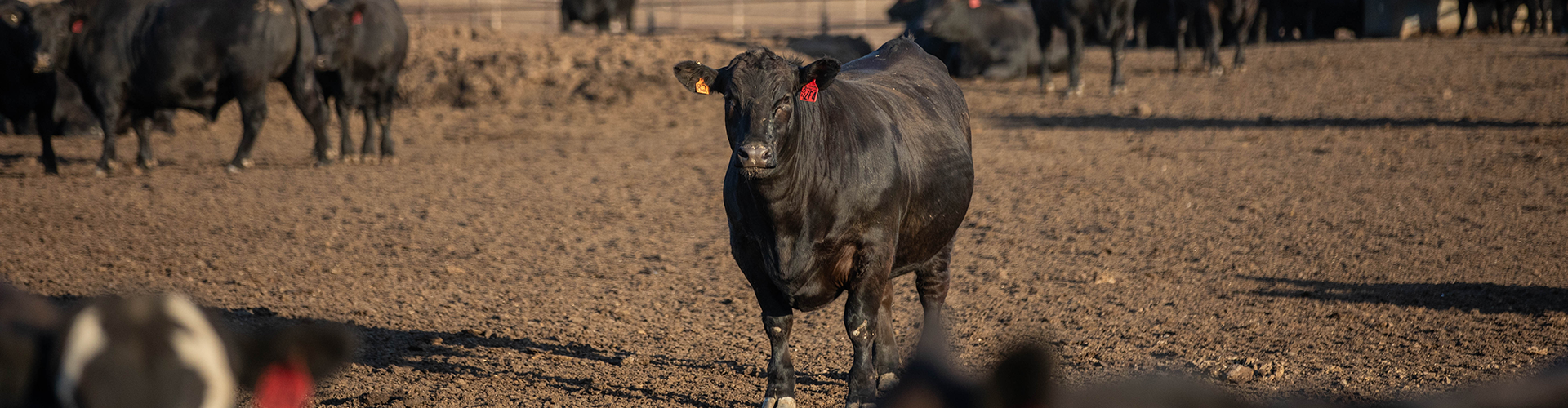
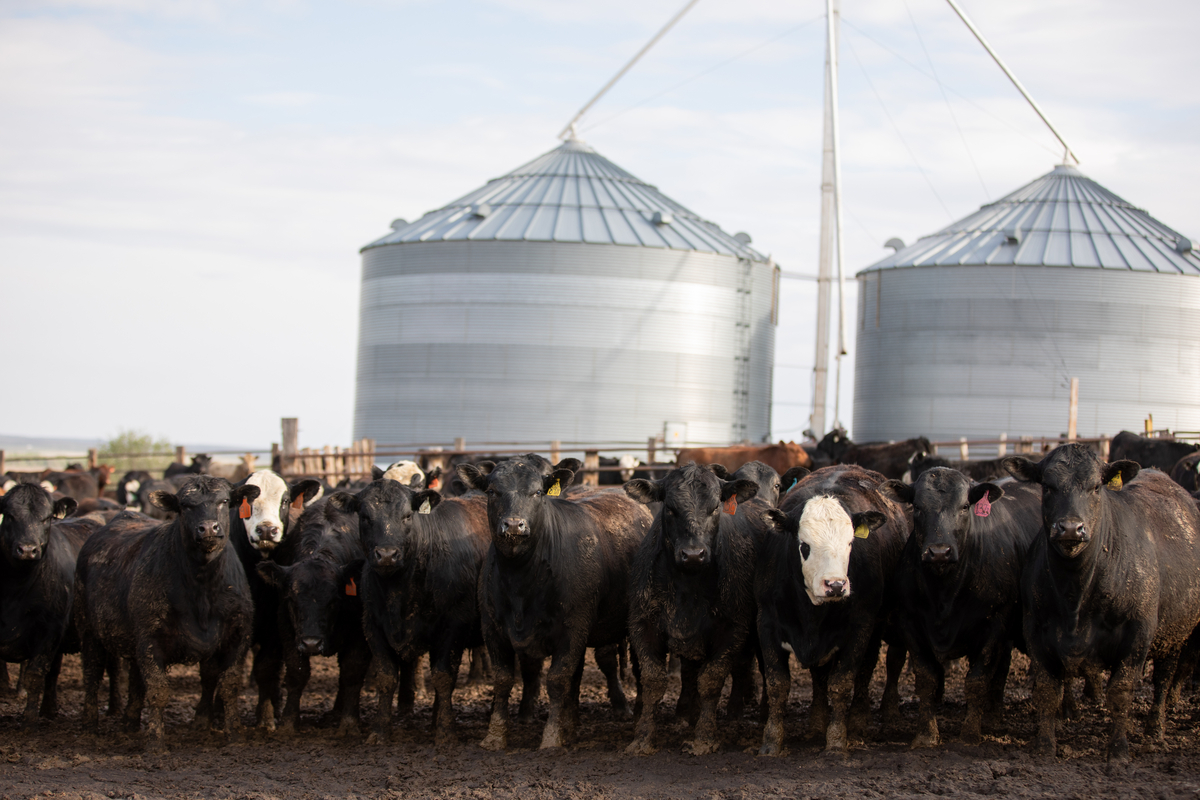
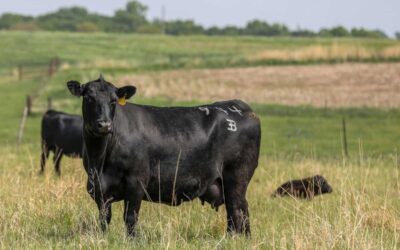
In collaboration with USDA, hide color was established as the basis for determining live animal eligibility for CAB. Still today, the American Angus Association’s Live Animal Specification outlines characteristics for the USDA to determine live cattle eligibility for beef programs referencing Angus influence. To be eligible for CAB, cattle must be predominantly solid black with no other color behind the shoulder, above the flanks, or breaking the midline, excluding the tail.
The “is it Angus” argument
There’s no denying CAB has helped dramatically expand the market share for registered Angus genetics. Arguably, that success has encouraged several other breeds to adopt a black hide color by incorporating registered Angus genetics into their breeding programs and registries.
Today, with more than 70% of fed cattle being predominantly solid black, both Angus breeders and non-Angus producers inquire about the genetic composition of CAB carcasses, especially given the market preference and price disparity between cattle that are and are not eligible for Angus beef programs.
Scientific sampling of the national supply of CAB carcasses reveals the average CAB carcass approaches 75% Angus genetics. Among CAB Prime, this average grows beyond 75%, nearing straight-bred Angus. This sample testing confirms CAB supply derives from high-percentage Angus cattle, even though it doesn’t require a specific percentage of Angus heritage. This makes sense thanks to a market dominated by registered Angus bulls and a mix of other sires highly influenced by registered Angus genetics being widely used on predominantly Angus-based commercial cow herds.

Caption: Carcasses are identified as Angus-influenced when the hide is removed at the packing plant with an A-stamp on the rump or mark on the hock in blue ink.
Room for improvement
This is not to suggest the system is perfect. However, it does support the contention that, under the USDA Agricultural Marketing Service, determining live animal eligibility for Angus beef programs by hide color remains accurate, although admittedly imprecise at times.
Thus, we should always remain open to better options. Significant progress in DNA technology, individual animal traceability and information exchange could each factor into a more precise method of determining live cattle eligibility for Angus beef programs moving forward.
As we contemplate alternative approaches, we also need to keep in mind the U.S. beef industry identifies roughly 16 million fed cattle as eligible for Angus beef programs each year. From that, 5.8 million qualify for CAB. Transitioning to a more precise system reliant on DNA testing or traceability would add cost and needs to be factored into the cumulative return on investment.
Where this long-debated topic lands remains to be seen. However, looking at the 47-year history of CAB suggests the approach has benefitted Angus breeders, supply chain partners and consumers. Some try to suggest CAB merely requires a black hide. That is simply false. The fact is just being Angus or black hided isn’t enough. To qualify for CAB, eligible carcasses must meet 10 exacting carcass specifications. We will talk more about that next time.
Submit questions or comments to John online.
Behind the Brand is a monthly column published in the Angus Journal.
You may also like
Sysco Highlights the Value of Beef Quality Assurance
Sysco Highlights the Value of Beef Quality Assurance By Briley Richard, freelance writer for Certified Angus Beef March 25, 2026 The best beef is raised the right way. This message was reinforced by remarks from Joe Don Eilers, vice president of merchandising for...
Promising Quality in Angus
Before Certified Angus Beef, consumers didn’t know what “Angus” meant. Angus meant little, except to its breeders. A strict adherence to quality through its 10 carcass specifications continues to serve as the foundation for maintaining the breed’s premium beef position in the marketplace and drives demand for registered Angus genetics.
Apply by April 1 for Colvin Scholarship
The production agriculture, undergraduate and graduate scholarship categories each have tailored requirements. In 2025, the Colvin Scholarship Fund supported 27 students with awards ranging from $2,000 to $7,500.