Ranchers as ambassadors
January 10, 2011
Connecting to the consumer is a hot topic any time of the year, as more and more people want to learn about the food they eat.
That’s especially important in the perception-rich world of branded beef. A 33-year-old company owned by 30,000 rancher-members of the American Angus Association is empowering its stakeholders with the facts.
Those cattlemen are learning how to explain the Certified Angus Beef ® (CAB®) brand and what makes it different. Last fall the company released the Brand Ambassador Training program, an on-line course that takes less than 15 minutes to complete and provides a user-friendly overview of CAB specifications, business model, sales objectives and success stories.
“To their neighbors and friends, producers are experts on what all these Angus brands mean,” says Christy Johnson, special projects manager for CAB. “Now they have an easy place to get information that helps them prepare for those conversations.”
Jerry Gustin, an Angus breeder from Gloucester, Va., completed the program after he heard about it on an industry e-wire.
“I learned a lot more about the specifications that guide the criteria for CAB quality than I ever knew before,” he says. “I didn’t realize how it always arrived at such a consistently excellent quality beef. The specifications are much more stringent than I had imagined.”
More than 80 people have completed the course and taken a short quiz at the end. Many respondents say they knew of the premium-Choice marbling specification, but discovered lesser known criteria like the 10- to 16-square-inch ribeye and moderate or thicker muscling, for example.
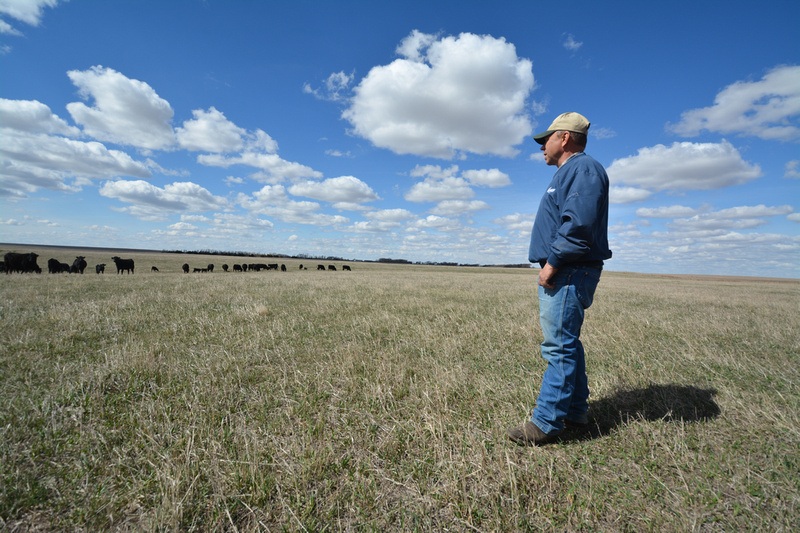
The program was unveiled on the National Angus Tour, which is where Virginia Koepke, from Edgar, Wis., heard about it.
“I knew that Certified Angus Beef wanted to offer a product superior to others, but this program brought that to light in more detail,” she says. “I also never realized how many Angus brands are out there—to the general consumer this has got to be confusing.”
Indeed more than 75 USDA-certified brands that include the Angus name, and many more non-certified Angus brands.
The course shares how CAB works, from the seedstock producer to their customers, feedlots, packers and the restaurants and retailers that ultimately market the product.
Teresa Perry, of Cottage Grove, Tenn., says, “We are proud of what we produce and are grateful to the businesses that support our efforts to provide the best quality.”
After their quiz, cattlemen were invited to share a message with the brand’s nearly 14,000 partners in the United States and 46 other countries.
“My ultimate goal is to provide an eating experience that will make them want to come back for CAB every time,” says Mark Savage, of Mount Juliet, Tenn. “I care about the welfare of my animals, the environment and the consumer. We have the tools available to continue to ensure that we provide the best beef.”
Koepke shares that goal: “It’s so important to offer the best palate experience out there and keep customers satisfied, so we can keep producing those quality animals.”
To view the Brand Ambassador Training, visit www.cabcattle.com and follow the link at the bottom of the home page.
You may also like
$100,000 to Future Beef Leaders
Interest in quality beef production continues to grow. This year, the Colvin Scholarship Fund awarded $100,000 to 24 students across the country, helping them continue their education and prepare for careers that will contribute to the strength and advancement of the beef industry.
From Data to Dollars
The journey to produce high-quality beef presents market volatility and management challenges. But today, there are data, technology, tools and partners to identify the best value and how to attain it. At the 2026 Feeding Quality Forum, each speaker added to the same message on Aug. 4 and 5 in Amarillo, TX.
Curiosity Changed the Beef Industry
Dr. Del Miles built a career on asking better questions to inform smarter decisions. Throughout his career, he challenged assumptions, advanced science-based management and helped cattle feeders prevent problems before they started. His influence reaches beyond feedyards, shaping the way veterinarians, researchers and cattlemen think about herd health.