How to Face Evolving Demands
by Jessica Wesson
October 28, 2021
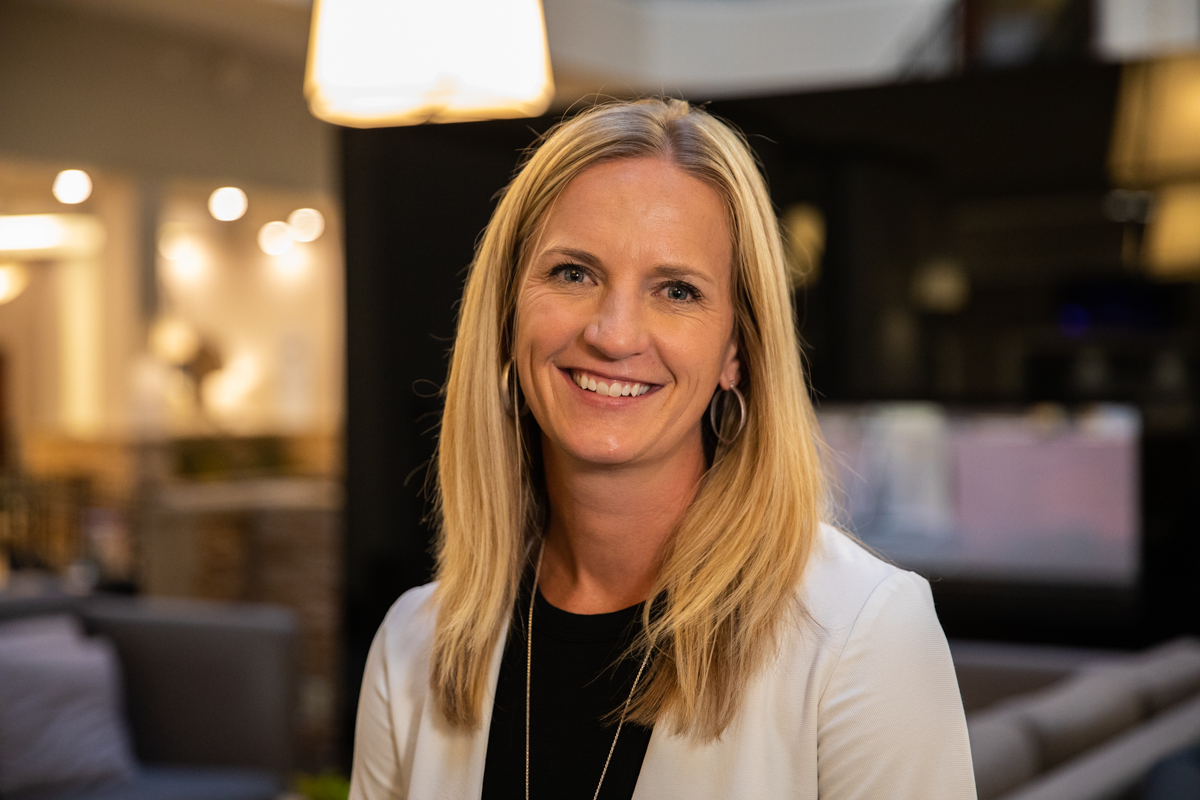
Sustainability doesn’t keep Kim Stackhouse-Lawson, Ph.D., up at night. It’s how investments skyrocketed last year urging companies to do something about it.
And not just major companies, said Stackhouse-Lawson, director of AgNext at Colorado State University (CSU). There’s a trickle-down effect all the way to cattle country. Everyone is paying attention.
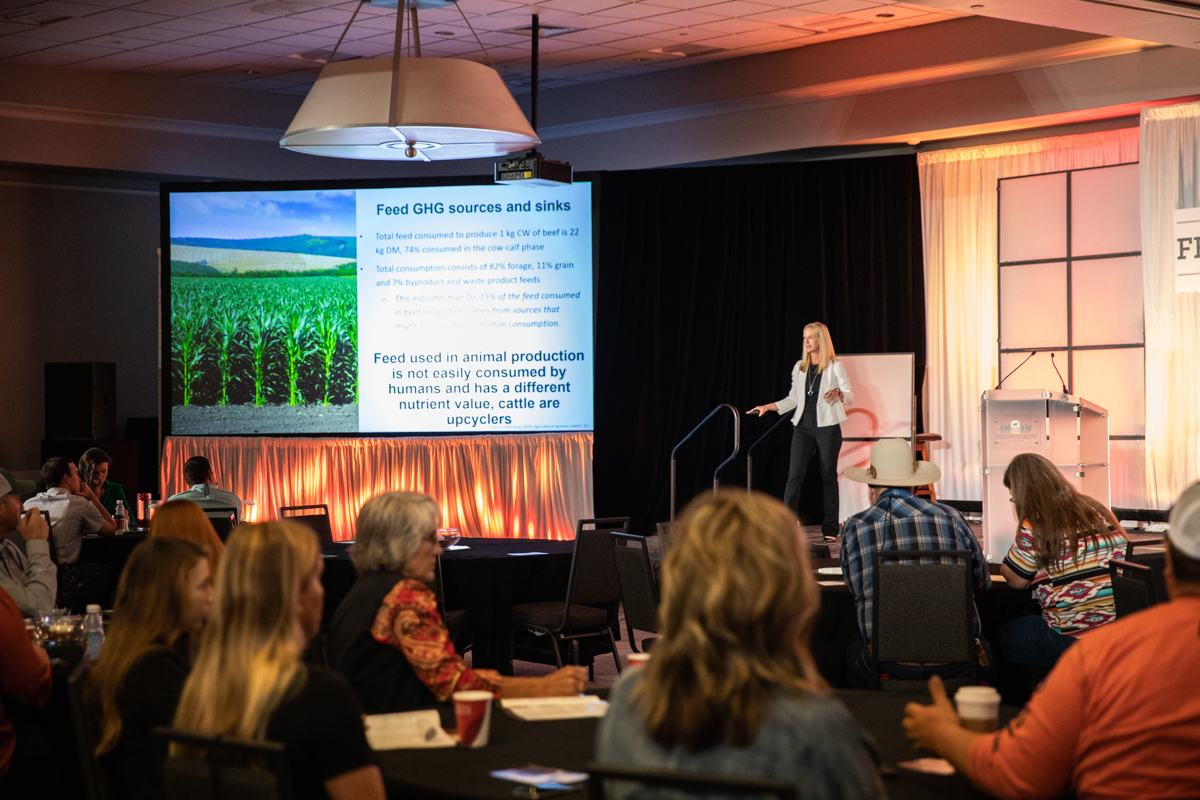
Globally, companies invested more than $30 billion in sustainability initiatives in 2020 and publicly traded companies and banks are quickly moving to capitalize, Stackhouse-Lawson said during the 16th annual Feeding Quality Forum, Aug. 25 in Fort Collins, Colo. “These investments outperformed traditional stock. There will be an influx of dollars that enters this sustainability space quickly, and it’s going to be top-down driven.”
Consumers care, too. They want to know they are agents of change within sustainability and environment conversations, she said.
“Seventy-five percent of millennials believe that their investments can influence climate change, and 84% of them believe their investments can help lift people out of poverty,” Stackhouse-Lawson said. “The Gen Z group is coming up now, and they care too.”
Nearly all the major food processing companies are making net zero commitments to decrease their carbon emissions and footprint in the next couple of decades. While their definitions vary, one thing remains constant.
“What I want you guys to know is that when a company commits to net zero, it 100% includes their entire value chain all the way down to the kernel of corn,” she said. “And even the fertilizer that’s going to go on that kernel of corn.”
For some certified programs, that may even affect what cattle can eat.
Cattle producers do a good job raising more beef with fewer resources, but more progress can be made, she said.
“You have probably heard the industry and scientists, me included, say that we have gotten better over time,” Stackhouse-Lawson explained. “And we have, but it depends on the lens in which you look through. We are efficient, but absolute emissions are still increasing.”
Ranchers have a good story to tell, but more information is needed for truly effective communication according to Stackhouse-Lawson.
“The first thing I think is important to acknowledge when you talk about sustainability is that emotion and science are on equal footing,” Stackhouse-Lawson said. “If you put them in a head-to-head race, emotion wins in the sustainability space nearly every time.”
The narrative may be polarizing and complex, but she remains hopeful.
“We’re behind in research. We don’t have a good start here for the supply chain, and there’s zero federal funding to look at greenhouse gas emissions from beef cattle,” Stackhouse-Lawson said. “We’re really hoping that begins to change.” Stackhouse-Lawson is leading the AgNext team at CSU to expand innovation for real-time solutions for sustainability in animal agriculture and will start research efforts this fall.
Until there is more quantifiable data, she suggested farmers and ranchers focus on genetic and management efficiencies. Choose and breed cattle that can do more with less. If cows in the herd are not producing, culling individual animals may need to be considered.
She also said land management was another important area to focus.
“An easy example is the integration of livestock into cropping systems,” Stackhouse-Lawson said. “When we graze corn stubble, winter wheat, cover crops or something like that, the land is providing us a double win. We can also get a carbon benefit when we rotate those animals in.”
Most cattlemen are already on the right track.
You may also like
The Power of Curiosity
Dr. Del Miles built a career on asking better questions to inform smarter decisions. Throughout his career, he challenged assumptions, advanced science-based management and helped cattle feeders prevent problems before they started. His influence reaches beyond feedyards, shaping the way veterinarians, researchers and cattlemen think about herd health.
$100,000 to Future Beef Leaders
Interest in quality beef production continues to grow. This year, the Colvin Scholarship Fund awarded $100,000 to 24 students across the country, helping them continue their education and prepare for careers that will contribute to the strength and advancement of the beef industry.
From Data to Dollars
The journey to produce high-quality beef presents market volatility and management challenges. But today, there are data, technology, tools and partners to identify the best value and how to attain it. At the 2026 Feeding Quality Forum, each speaker added to the same message on Aug. 4 and 5 in Amarillo, TX.