Brand specifications evolve
by Kylee Kohls
September 8, 2020
“Meat heads” by education and experience, scientists and number crunchers gather to analyze the latest scatter plot. Coffee fuels the banter as they discuss where the figures point toward progress.
It’s Friday morning: analysis day for the Certified Angus Beef ® (CAB®) brand packing team.
Meat scientist Daniel Clark brings a new scatter plot each week, along with a fresh perspective to answer last week’s questions.
More than 2.6 million points fill the screen, each dot measuring how carcasses meet the 10 brand quality specifications — providing insight for possible improvement. How could adjustments help a premium supply meet the growing demand?
Changes don’t happen overnight.
The brand’s integrity is tied to these specifications, so they don’t evolve without careful consideration.
“The first question we ask,” Clark says, “is how it will affect our partners up and down the supply chain.”
Beyond the grading stand
On September 9, 2020, CAB implemented two changes to its “G1 schedule” specifications.
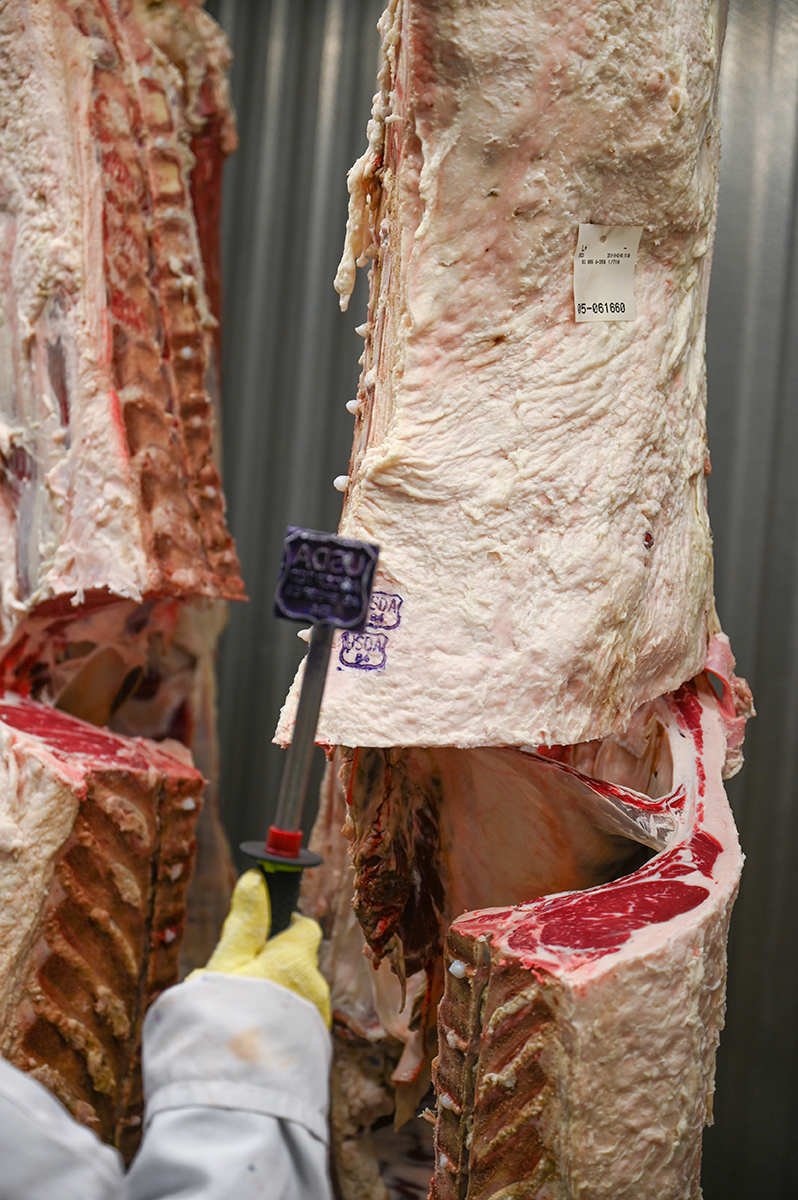
The first, a subtle rewording, adjusts the fat thickness limit from “less than 1 inch” to read “1 inch or less.” It might sound the same, but that precise language allows USDA graders more accurate measurements. Camera grading calculates fat thickness to several decimal places and that provides consistency and clarity when dealing with fractions of an inch.
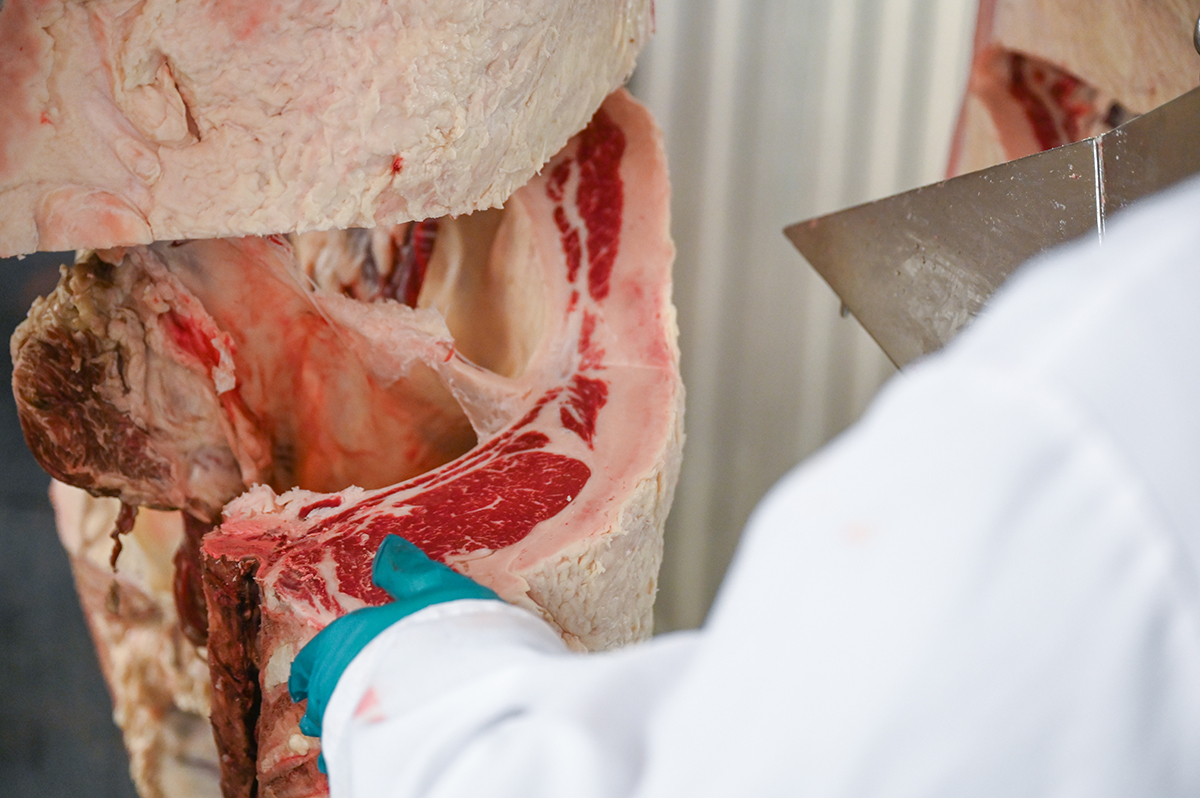
The second change allows packers with an “extended licensing agreement” to box beef from some primals that met all quality specifications, but exceed the ribeye area, up to 19-square inches.
Ribs, ribeyes, strip loins and short loins from these carcasses will be excluded from the brand.
“This is not an expansion of the ribeye area to 19-square inches, but rather capitalizing on other parts of the carcass that are practically unaffected by that limit,” says Clint Walenciak, CAB director of packing.
The move allows foodservice and retail partners to access CAB briskets, tenderloins, short ribs and end meats for roasts and ground beef from those carcasses that fall in the 16- to 19-square include ribeye. The exclusion of larger ribeyes, ribs, strip and short loins, maintains brand-quality plate presentations and thicker cuts for the key middle-meat items. Box quality, consistency and center-of-the-plate steak presentation standards remain the same.
“I don’t want to overstate the magnitude of the expanded specification, but it is one small step in one big direction,” Clark says. “This is exciting for the future of the brand and for our partners on all fronts.”
Their research shows the size differentiation of cuts entering the box from the carcasses with a larger ribeye will have little to no impact on the size or weight of the box.
“The expanded product specification is voluntary for packers, and may be incorporated when timing is right to satisfy customer demand on a plant-by-plant basis,” Walenciak says.
Until a packer implements this change, its impact on premiums and discounts is uncertain.
Cattlemen should not take their eye off of ribeye size, Walenciak says. While this innovation creates potential access to additional high-quality cattle, demand pressure for 10 to 16 square-inch ribeyes remains.
Next Friday, the packing team will evaluate data again, searching for new clues on how to make the best even better.
It’s a team effort to crunch the numbers, balance the science and calculate the scope of possible adjustments. Never sacrificing quality, the ongoing process can evolve the specifications if that raises the standard, says Bruce Cobb, CAB executive vice president of production.
“Making those cattle more valuable, these specification expansions help the brand gain strength and footprint on the market path to two billion pounds of supply annually,” he says.
The focus remains on fulfilling demand and creating economic incentives for cattlemen and all supply chain partners.
“We are working toward a vision where this brand supplies more of the best that Angus cattlemen create,” Cobb says. “This is one small step forward to creating an ever-better beef production system.”
Progress is a process that happens one dataset, conversation and cup of coffee at a time.
The 10 Science-based Specifications:
To earn the Certified Angus Beef ® logo, Angus-influenced cattle with a predominantly solid black coat must pass its 10 quality standards:
Marbling
Maturity
3. 30 months of age or younger – ensures superior color, texture and tenderness
Consistent sizing
Three specifications ensure thicker steaks and consistent plate presentations:
Plate presentation
Quality appearance and tenderness
*Up to 19 square inches for ribeye area is acceptable for tenderloin, brisket, thin meat, chuck and round cuts at approved plants. Rib, ribeye, strip loin and short loin are excluded from this option.
You may also like
$100,000 to Future Beef Leaders
Interest in quality beef production continues to grow. This year, the Colvin Scholarship Fund awarded $100,000 to 24 students across the country, helping them continue their education and prepare for careers that will contribute to the strength and advancement of the beef industry.
From Data to Dollars
The journey to produce high-quality beef presents market volatility and management challenges. But today, there are data, technology, tools and partners to identify the best value and how to attain it. At the 2026 Feeding Quality Forum, each speaker added to the same message on Aug. 4 and 5 in Amarillo, TX.
Curiosity Changed the Beef Industry
Dr. Del Miles built a career on asking better questions to inform smarter decisions. Throughout his career, he challenged assumptions, advanced science-based management and helped cattle feeders prevent problems before they started. His influence reaches beyond feedyards, shaping the way veterinarians, researchers and cattlemen think about herd health.