
Information to Opportunity
Feeding Quality Forum speakers said the new era of quality requires turning data into value-driven opportunities.
by Morgan Boecker
August 27, 2026
“What got you here isn’t going to get you there,” said Pete Anderson, director of research at Midwest PMS, at the 2026 Feeding Quality Forum.
The journey to produce high-quality beef presents market volatility and management challenges. But today, there are data, technology, tools and partners to identify the best value and how to attain it.
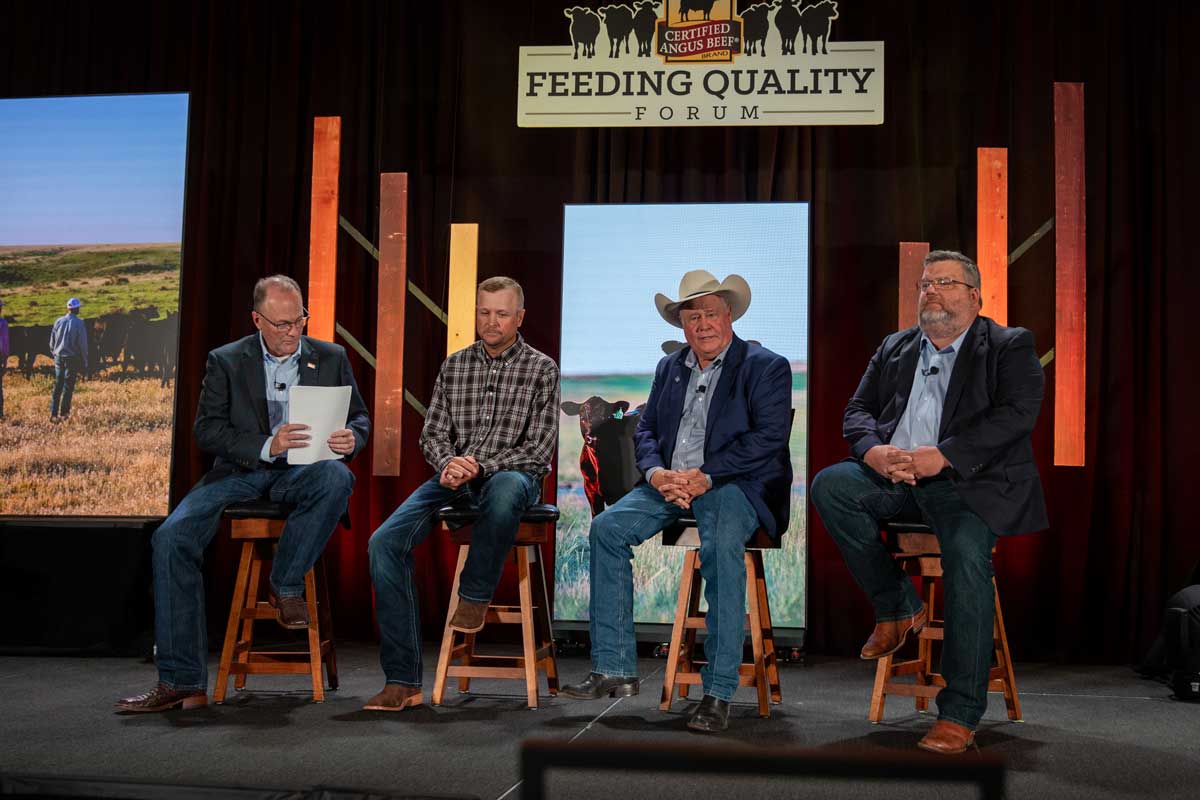
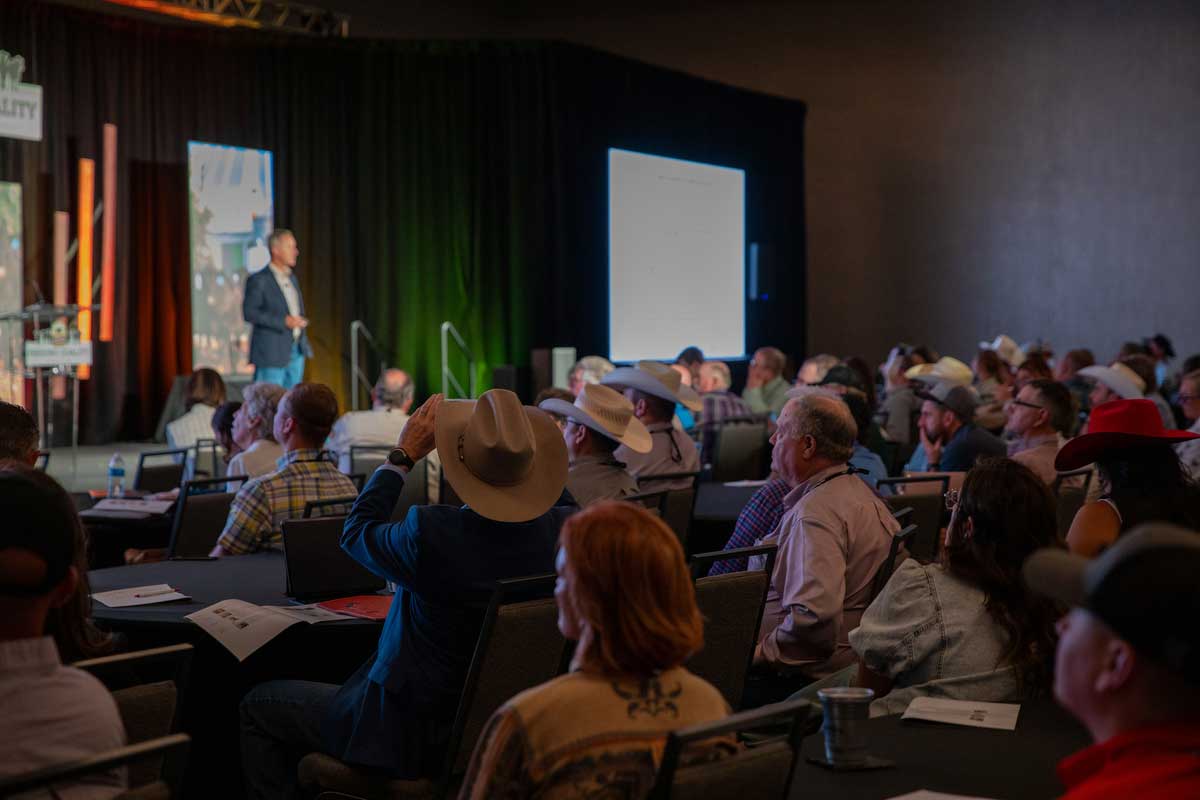
Each speaker added to the same message on Aug. 4 and 5 in Amarillo, TX. Hosted by Certified Angus Beef (CAB), the event drew more than 230 cow-calf producers, feedyard managers, allied industry and academia for two days of learning, sharing and networking.
Low inventory, high prices, volatile markets
The old news: the U.S. cow herd is small — 86 million cattle today compared to 134 million 50 years ago.
Economists like Dan Basse, president of AgResource Company, doubt cow numbers will return to what they were, for many reasons. The silver lining for producers is that cattle markets have trended bullish since 2019, without an end in sight — yet.
“This is a market that’s got some gray hairs,” Basse said. “As we look at cattle, let’s remind ourselves that this is not a youthful market that is ready to charge even higher.”
Cattle cycles are being stretched. Past bull markets for cattle averaged 48 to 59 months in a rally phase, Basse said. This one is around 75 months.
“We are in this period where we’re going to be extremely volatile within a very high price range,” Basse said. “Fed cattle are projected to bring $260 per hundredweight (cwt.) in the top and $210, $205 per cwt. on the bottom. And we are going to whip back and forth repeatedly between those price levels.”
With the Mexican border open, 80,000 to 90,000 feeder cattle could be brought into the U.S. on an annual basis. Basse expects to see effects on fed cattle supplies in the second half of 2027.
Data-driven business
Cattle are worth a lot, making each decision important. Good decisions are based on good data.
“You really have to sit down with pen, paper and calculator to know what your numbers are,” said Mark Sorensen, relationship manager at Rabo AgriFinance.
The ranch is a business, and he suggested that cattlemen should think like businessmen and understand what it costs to produce a pound of beef in their operation. With limited resources, it requires producing more with less.
Another metric to consider tracking is calves weaned per cow exposed, said Texas rancher James Henderson, Bradley 3 Ranch.
“You better manage best cost and understand if you spend more money here, what’s the return on the other side?” Henderson said.
Another key to good management is to understand the kind of cattle you have.
Brian Walt, W6 Cattle in Kansas, has used GeneMax® DNA tests since 2018 to select replacement heifers, bringing loads of home-raised steers and heifers to average 90% Prime.
“As we move forward to expand this herd, it’s the shortcut to get a better set of cows faster,” the commercial rancher said.
With better cows come better calves. That’s where value-based marketing finds its footing. Enrolling calves in programs like AngusLink® helps differentiate calves on sale day. The commercial program evaluates and communicates a group of calves’ genetic potential to buyers like Spencer Smith, Capstone Beef partner.
“Do I bid one more time or do I quit there?” Smith said. “[Genetic Merit Scorecard scores] certainly give us confidence when we’re trying to buy calves.”
At the feedyard, DNA tests allow feeders to more accurately sort cattle and manage them individually, said Tom Fanning, general manager at Pratt Feeders Group.
“Think about your herd genetics as a map,” Fanning said. “And DNA is the route that you want to take to get to your objective. And there are a lot of different weight points when you’re on that course.”
The goal is to optimally reach the ultimate endpoint, so each animal fully expresses its genetic potential.
Modern health approach
None of this matters if the cattle don’t stay alive until harvest.
“The largest economic impact would be death loss,” said Levi Berry, Smith Cattle Company’s general manager, adding that strengthening cattle immune systems sets them up for success in every sector.
In addition to vaccination protocols, one answer may lie within the gut. Research reveals the hindgut is the largest contributor to immunity, said Jeff Heldt, beef technical lead for Selko USA.
Learning from human health, the company is researching phyto-complexes, such as capsicum, clove, garlic, black pepper, turmeric and cinnamon, as feed additives to improve host health. These natural, plant-based supplements improve gut health for better nutrient absorption, immunity and overall performance, both at the feedyard and ranch.
“These are to be viewed as additive to whatever production systems we put them in,” Heldt emphasized, noting they should not replace modern medicine such as vaccines or antibiotics.
This becomes even more relevant for the beef-on-dairy population of fed cattle. These calves come from a variety of backgrounds and understanding how they have been handled and raised sets them up for success, or failure, said Taylor Engle, consulting veterinarian and partner at Four Star Veterinary Service.
“You have to meet them where they’re at,” Engle said. “Whenever we see failures or big challenges, we always expect cattle to meet us where we’re at. But the variation of how they’re raised is the biggest hurdle.”
He said cattle feeders who receive beef-on-dairy calves should ask questions about confinement variables, how far they were trucked, what ages they were moved and how they were fed. For example, a calf raised on a water nipple must learn how to drink from a water trough.
However, the year-round availability of beef-on-dairy calves offers efficiency advantages, such as scheduling shipments throughout the year, Berry said.
More accurate measures
Feedyard management and profitability require precision to efficiently add pounds.
With fewer cattle and low feed costs, markets have supported making cattle bigger and feeding them longer. Every day on feed adds $2 to $3, Anderson said.
“Profitability increases until the incremental cost of gain exceeds sale price,” Anderson said. “And right now I’m telling you that will virtually never happen.”
Red meat yield defines the number of saleable pounds of a beef carcass at the packing plant. Bigger cattle come with more fat, and not always the good kind.
The yield grade equation was developed in 1960 and was 91% accurate at the time at defining carcass cutability. But cattle composition, genetics and management have changed, making the equation as-is only 36% accurate today, said Nick Hardcastle, Cargill senior director of beef grading and meat science technical lead.
Hardcastle is a member of the Red Meat Yield Working Group, with a goal to accurately assess and value red meat yield. Testing new technology, such as sizeR™, that measures a carcass at chain speed has proven both accurate and repeatable.
Scrutiny on how carcasses are valued is another layer of the discussion. Depending on marketing arrangements, the carcass cutout makes Prime cattle significantly more valuable. That is until quality meets cutability.
“That doesn’t mean we need more Select beef,” Hardcastle said. “It just means when you get more subprimals in a box, it’s worth a whole lot more than buying a bunch of fat at a $3 per pound loss.”
Packers need high-quality carcasses, with more marbling and less backfat.
New era for quality
“If you don’t have quality, if you only have commodity, breakeven is about as good as you can do unless you buy them really cheap,” Anderson said. “But if you have quality, then you have opportunity.”
With an average of 85% Choice, the money is in hitting premium programs like CAB, Prime and others that require higher marbling levels, he said.
“Prime has become more valuable as we got more of it because now we know we have it,” Anderson said.
With a reliable supply of Prime, restaurants and grocery stores can buy and promote with confidence. And consumers love it, too.
Restaurants like Evie Mae’s Pit Barbecue have built comeback customers by offering CAB® Prime. No other product offers the quality and consistency of fabrication, said Arnis Robbins, Evie Mae’s owner.
“Competitors bring us product all the time,” Robbins said. “And we have never found a product that compares anywhere close to what we get consistently through Certified Angus Beef ® Prime brisket.”
As restaurant owners face high input costs, too, offering a higher quality product that ensures the best eating experience for just a little more money is an easy sell, said BJ Johnson, director of sales for Buckhead Meat of Atlanta.
“It’s an emotional connection now because they see that this product is going to perform week in, week out, day in, day out,” Johnson said. “And if I can base my business off that, I can go worry about something else in the restaurant.”
Roughly 60% of all beef consumed is ground beef, said Carson Rogers, CAB director of product services. All beef that goes in a grinder to make CAB® ground beef must come from a carcass that meets all brand carcass specifications.
As the ground beef category continues to gain traction, the brand has found opportunities to offer product extensions, such as CAB® Natural, CAB® grass-fed and CAB® Prime, for consumers who value those attributes, Rogers said.
Caviness Beef Packers added CAB to its product offering nearly six years ago for more than its premium nature.
“What drew us to CAB was the trust,” said Trevor Caviness, president of Caviness Beef Packers. “And that trust comes from high-quality, consistent products.”
Decisions start today
Changing the genetics of the cow herd takes time.
“If we as seedstock producers are not thinking about where we need to be six or seven years from now, we’re already behind,” Henderson said.
While there’s talk about hitting the maximum for beef demand, it remains strong, Basse assured. That’s encouraging for farmers and ranchers.
“We’re in the business of producing a consumer product,” Henderson said. “And we need to understand how we can do that most cost-effectively and produce something that somebody wants to buy.”
If you’re interested in learning more on similar hot topics, mark your calendar for the 2027 Feeding Quality Forum in Kearney, Neb., Aug. 3 and 4. Find more information at FeedingQualityForum.com.
Feeding Quality Forum was made possible by AngusLink®, BEEF®, Cattlemen’s Education Series sponsored by National Corn Growers’ Association, Caviness Beef Packers, Cotton Seed, Diamond V®, Drovers, Elanco™, Feed Lot®, Rabobank, Select Sires Inc., and Selko®.
You may also like
Jett Stream to Prime
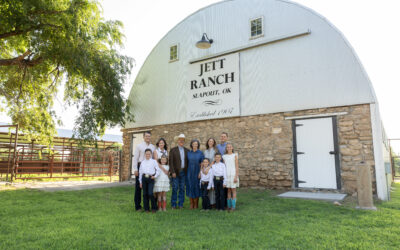
In the Oklahoma Panhandle, four generations built a herd defined not by the odds against it, but by standards never lowered. That commitment drove decades of genetic and management improvements, taking Jett Ranch from struggling to reach Prime to more than 70% Prime today, and earned the ranch the 2026 CAB Commercial Commitment to Excellence award.
Nebraska Feedyard Recognized for Excellence
Motivation starts the feed truck before sunrise, keeps going through adversity and drives pursuit of the next goal.
It has more than fueled daily routines for Terry Beller. It’s helped his family and crew build the multigenerational Beller Feedlot into one long-known for customer service and high-quality beef.
The Capstone Approach to Modern Cattle Feeding
Taking aim without a target is like fishing without bait. It just doesn’t work. The cattle market lures with premiums for targets hit, but the bar keeps rising. Getting better in this dynamic setting takes detailed feedback. Capstone Beef provides that to its commercial customers with report cards that track progress and reveal needed change.