The Power of Curiosity
Feedyard veterinarian honored at Certified Angus Beef’s Feeding Quality Forum.
by Briley Richard, freelancer for Certified Angus Beef
September 2026
Curiosity cures the cattle.
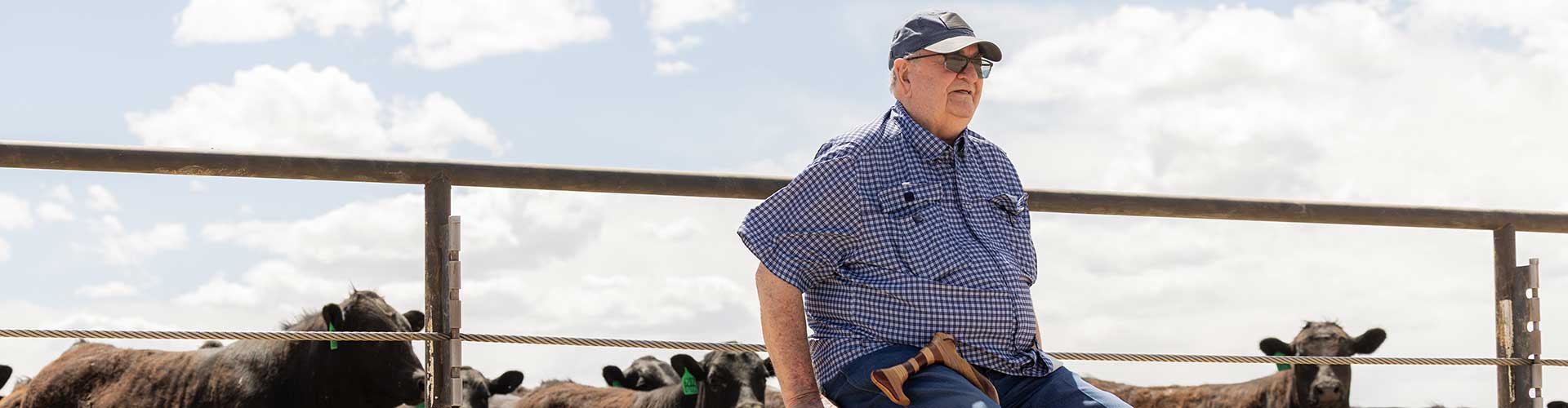
Dr. Del Miles built a career on asking better questions to inform smarter decisions. Throughout his career, he challenged assumptions, advanced science-based management and helped cattle feeders prevent problems before they started. His influence reaches beyond feedyards, shaping the way veterinarians, researchers and cattlemen think about herd health.
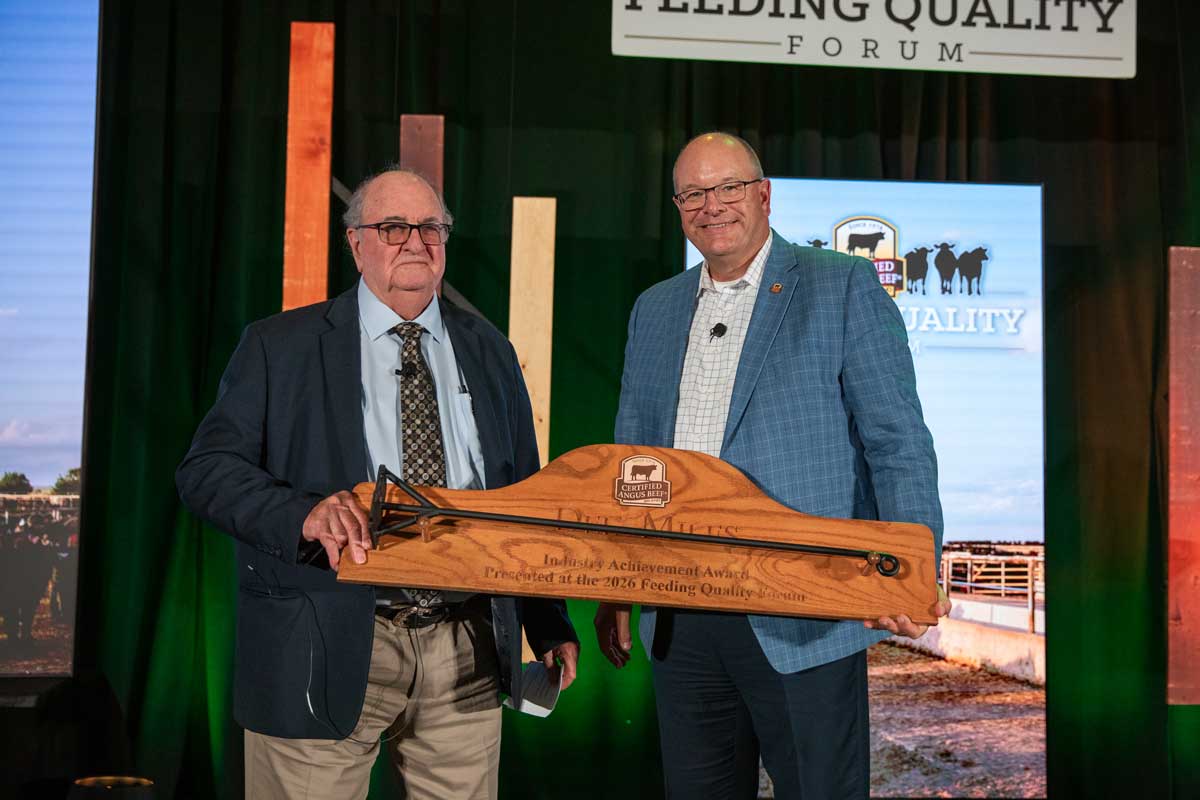
In recognition of decades spent advancing cattle health, mentoring veterinarians and serving the beef industry, Miles received the 2026 Certified Angus Beef (CAB) Industry Achievement Award at Feeding Quality Forum in Amarillo, TX, Aug. 4.
From farm calls to feedyards
Miles’ initial interest in veterinary medicine came at his father’s recommendation, who encouraged him to tag along with their local veterinarian on-farm calls. They diagnosed problems and helped producers through their herd’s toughest challenges. Those early experiences sparked a lifelong interest in animal health and the science behind keeping them well.
To no surprise, Miles obtained his Doctor of Veterinary Medicine from the University of Missouri and returned right back home to work in a small animal practice. He enrolled at Kansas State University to pursue a master’s degree in pathology, then spent several years in field research and technical services for a private animal health company.
Each career move sharpened his perspective, but none felt like the place where he could make the greatest impact. After pushing off a lingering interest in feedyard cattle, he caved.
Dr. Bob Hummel recruited him to Greeley, CO, working one on one with feedyard managers. There, Miles immersed himself in feedyard medicine for a few years before gaining the confidence to establish his own practice.
Building a better model
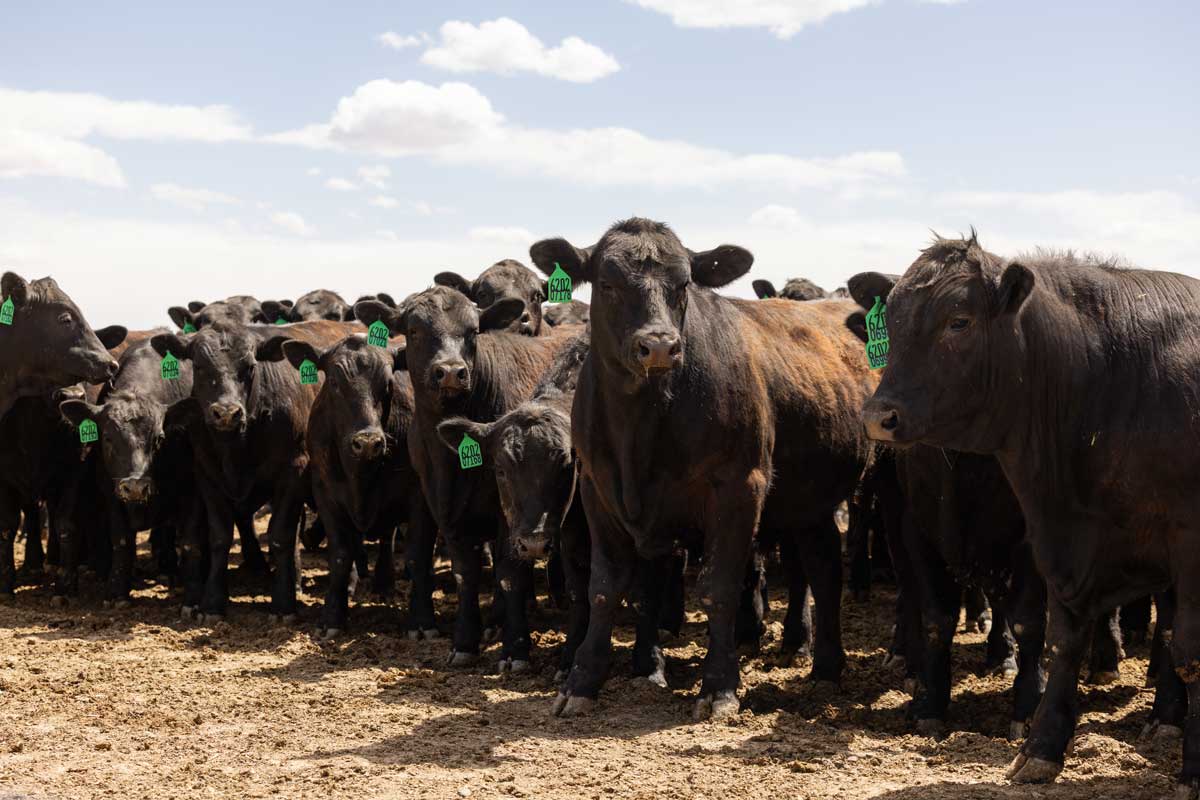
Miles struck out on his own in 1984, founding Veterinary Research and Consulting Services (VRCS). The business followed a model similar to the one nutritionists use when working with feedyards.
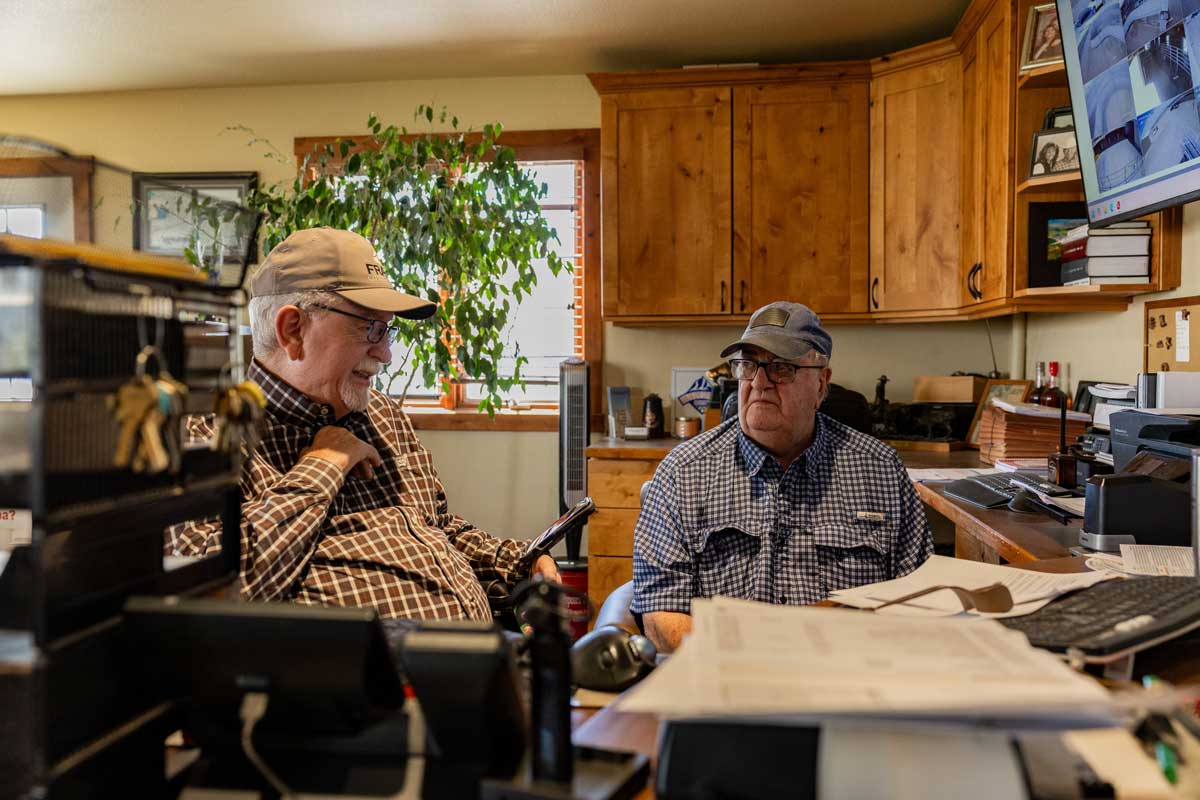
“I’d spend the entire day at the feedyard,” Miles says. “We’d develop the processing program, the treatment programs, train the pen riding crew, train the doctoring crew, necropsy the dead [ones], then write a report.”
Having spent time in the animal health industry, Miles understood the importance of maintaining an objective approach to veterinary recommendations. He purposefully built VRCS as a consulting model centered on research, results and what made the most sense for the producer, not what product was easiest to promote.
“I decided I didn’t want to make decisions based upon four-color ads and testimonials,” Miles says. “That’s when we started doing evidence-based medicine centered on research trials to prove that the products we were recommending were cost effective.”
Though he envisioned VRCS as a one-man operation serving a handful of feedyards until retirement, the demand for his consulting approach quickly grew, as did his time spent on the road. Spending weeks away from home and working seven days a week became unsustainable.
In the late 1980s, he began recruiting associate veterinarians, marking the beginning of a team built around a shared philosophy of preventative herd health, producer education and practical management decisions.
Proving the process
Miles’ commitment to evidence-based medicine quickly became his reputation. Feedyard managers trusted him to dig deeper, ask the questions others wouldn’t and find true solutions.
One conversation with a feedyard manager changed the way Miles approached treatment decisions. At the time, using multiple antibiotics to treat sick cattle was common practice.
When asked how he knew his recommended treatment protocol was the best solution, he answered, “I don’t, but we’ll do a study and figure it out.” For Miles, not having the answer was never the problem. Not searching for one was.
The VRCS team conducted a controlled study comparing treatment protocols, and the results showed the single-drug treatment outperformed the combination. The results not only saved the feedyard money, but supported Miles’ belief that the best recommendations come from research rather than routine.
Cost effectiveness remained at the center of Miles’ consulting philosophy. He challenged the idea that every problem could be solved with another treatment and instead focused on the management practices that prevented problems before they started.
“Everybody wants to fix the problem with a needle,” Miles says. “You’re not going to get it done.”
From bunk management and cattle handling to reducing stress during receiving, Miles and the VRCS team studied a multitude of factors influencing cattle health and performance. Many of those questions did not have a company funding the research, so VRCS conducted the work themselves.
Standing the test of time
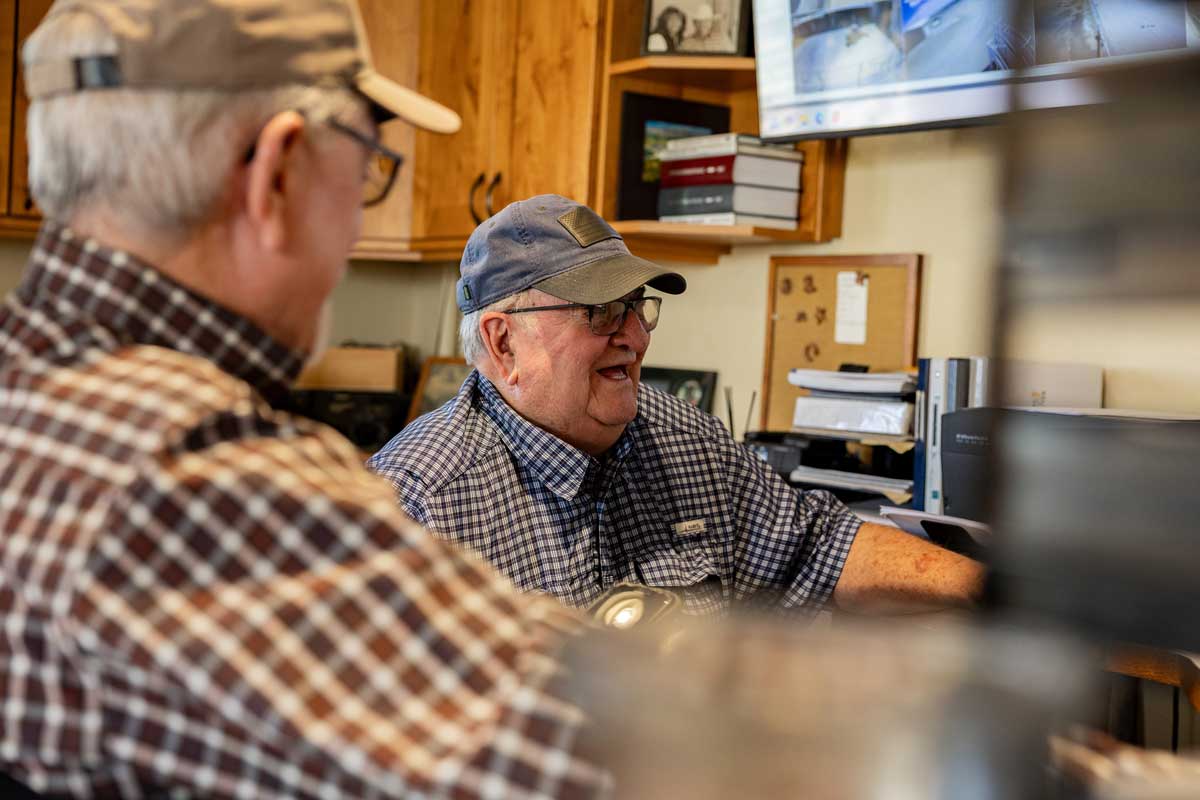
As VRCS grew, the principles behind it remained the same, though the technology greater.
When Miles began consulting, index cards housed every record. Today, computerized records allow the team to analyze individual animal data in minutes, giving feedyards a clearer picture of what is working and what isn’t.
While tools have evolved, the practice of using information to make better decisions for both the cattle and the people responsible for them remains.
Though Miles built his career around cattle health, the people have always been what kept him invested. From CEOs to pen riders, he holds a deep respect for all the people who keep the industry moving forward. No one’s out to get you, all are working toward the same goal.
“It’s highly competitive, but it’s the greatest integrity-laced business out there,” Miles says. “Millions of dollars are traded every day based upon a man’s or woman’s word. It’s not signed contracts. It’s a great industry.”
The impact of asking why
Longtime VRCS colleague and fellow Industry Achievement Award recipient, Dr. Bob Smith, says Miles’ influence stems from more than scientific contributions alone.
“I think he’s a whole package,” Smith says, nodding to Miles’ convictions for evidence-based medicine, research and integrity. “The way that he has conducted his practice and his professional life could be an example for all of us.”
Despite decades spent influencing how the industry approaches cattle health, Miles says he is “no different than the other veterinarians out there,” a reflection of his humility toward his role and the large-scale impact of his work.
Smith says Miles’ systems-based approach, looking beyond a single treatment or immediate challenge, helped shape the way the industry thinks about cattle health today and forevermore.
“A legacy to me is what you’ve done, what you’ve accomplished, what contributions that you’ve made and the influence on those people who are coming behind us that will replace us and what you’ve done to try to improve the future,” Smith says.
And Miles’ legacy, much like his curiosity, is not defined only by the answers he sought, but by the questions he inspired others to ask.
This story was originally published in the Angus Journal.
You may also like
Jett Stream to Prime
In the Oklahoma Panhandle, four generations built a herd defined not by the odds against it, but by standards never lowered. That commitment drove decades of genetic and management improvements, taking Jett Ranch from struggling to reach Prime to more than 70% Prime today, and earned the ranch the 2026 CAB Commercial Commitment to Excellence award.

Nebraska Feedyard Recognized for Excellence
Motivation starts the feed truck before sunrise, keeps going through adversity and drives pursuit of the next goal.
It has more than fueled daily routines for Terry Beller. It’s helped his family and crew build the multigenerational Beller Feedlot into one long-known for customer service and high-quality beef.
The Capstone Approach to Modern Cattle Feeding
Taking aim without a target is like fishing without bait. It just doesn’t work. The cattle market lures with premiums for targets hit, but the bar keeps rising. Getting better in this dynamic setting takes detailed feedback. Capstone Beef provides that to its commercial customers with report cards that track progress and reveal needed change.