
MARKET UPDATE
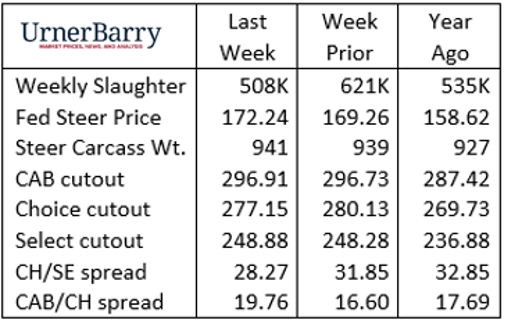
Last week’s holiday-disrupted cattle harvest schedule proved to yield a very small total for the week with an estimated 508,000 head, down 5.6% on the same week a year ago. That suggests packers will need to fill their inventory due to this week’s shortened slaughter from Monday’s holiday.
Further evidence of spotmarket, fed cattle demand came through in a sharp uptick in fed cattle values. Last week’s fed steer price average of $172.24/cwt. was $2.98/cwt. higher than the week prior. The last week of the year often culminates in a brief, bullish fed cattle market and last week’s action adds confirmation to the trend.
Live cattle futures this Tuesday were also much higher as February becomes the front month on the CME board. The February contract was higher by more than $3.25/cwt. by mid-afternoon with April more than $2.00/cwt. higher. Given the recent depression in spot market fed cattle prices it appears to many market observers that a short-term bottom has been marked after a seven-week spiral dropping spot market values $16/cwt.
Carcass cutout values were mixed in last week’s report in what could be summarized as a sideways market. CAB tenderloin prices are rapidly retreating from their lofty record-highs with last week’s $17.40/lb. wholesale price down 7% from the high in late November. Ribeye prices were also a bit lower last week but have only adjusted 2% from their December highs.
Many of the end meat cuts pulled to dramatically lower prices in December as is the seasonal tendency. Last week’s summary showed price stabilizing or slightly higher with the expectation for modestly firmer values in January. Consumer demand following the holidays tends to favor roasts as winter weather develops just as holiday spending hits home for many households with additional buildup of consumer credit card debt.
Carcass Quality Set to Climb Seasonally
With the arrival of the new year the beef market will rapidly adjust to changes in consumer buying habits. This will remove demand pressure from ribs and tenderloins, realigning the contribution of these most valuable beef cuts to a smaller percentage of carcass value. This expected shift seasonally tends to combine with rising carcass quality grade trends through March, narrowing price spreads between USDA quality grades and CAB branded product.
In the past 5 years the Choice/Select spread has peaked at an average of $22/cwt. in early November, remaining in a range between $20 and $25/cwt. through the first week in December. This November/December timeline has defined the annual widest Choice/Select spread in the average 5-year data, although brief departures to even wider spreads can be noted in other months in given years. The largest CAB cutout premium over USDA Choice followed a similar fourth quarter high in 2022 but has been more common in the low supply/high demand period of early June in other recent years.
The first quarter of 2024 promises to deliver higher average carcass quality grades, particularly as carcass weights remain record-large. The latest confirmed data places steer carcasses at 941 lb. for the week of December 11th, the record so far. The slowed pace of slaughter has yet to show any sustained increases as well. Unless this changes front-end cattle supplies will continue to be elevated along with average days on feed.
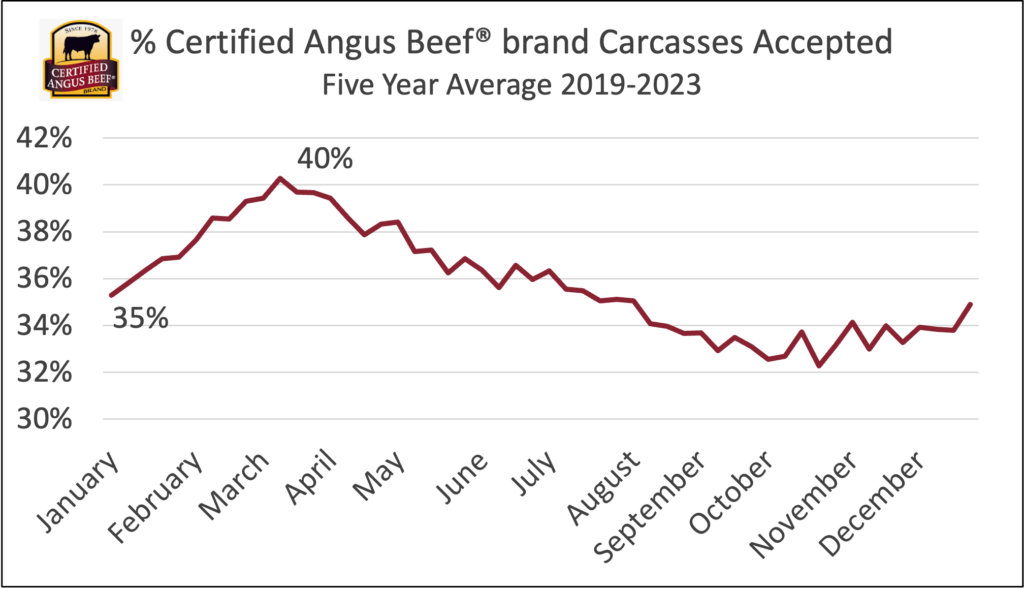
These factors should couple with the typical seasonal pattern in the first quarter to track carcass quality to their highest annual levels by March. In March of 2023 CAB carcass certification topped out at 41% of eligible cattle, very near the record of 41.5% set in the same month of 2021. While we won’t predict another record-high this year, the above trends are, so far, aligned to position the share of quality carcasses near the top of the historical range by the end of Q1.
Read More CAB Insider
Record Weights Support Fed Cattle Decline
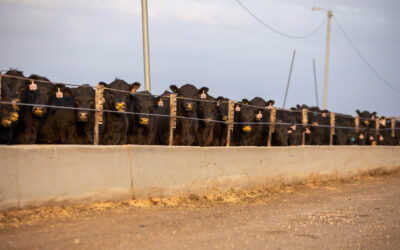
Escalating fed cattle weights simply cannot be overlooked in the beef supply equation. Finished cattle weights, harvest throughput and feedlot currentness don’t have the same relationship today as they did just a few years ago.
Strong Sales Amidst Fewer Carcasses
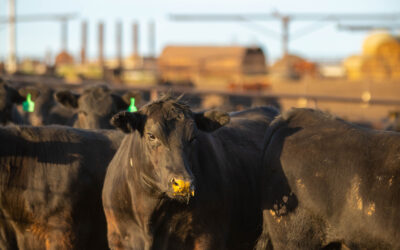
Increasingly smaller annual fed cattle supplies have been a constraint since peak harvest levels for the current cycle topped harvest volume in 2022. Subsequent years have meant historic profitability to the cattle sector, yet growth in Certified Angus Beef ® sales have largely been achieved through the diligent work of downstream brand partners.
Price Spreads Widen, Robust Quality
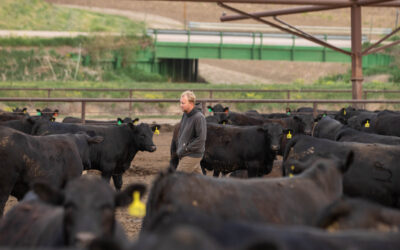
The boxed beef market posted massive year-over-year increases beginning in April 2025. The remainder of the 2025 market featured an average 19.9% increase in the USDA Comprehensive Cutout (all grades, all delivery periods). The pattern largely remained intact as the first five months of 2026 recorded a 14.8% annual price jump for the period.