Nice to Meat Ya: George Falb
“I picked up a package of Certified Angus Beef, and it hit me. That’s where I wanted to be working,” says our current value-added products manager. “I had spent my entire life in agriculture and I missed it dearly.”
 Working as a real estate agent was just a temporary bridge between two jobs that required attention to detail, analytical thinking and a hint of perfectionism.
George grew up on a beef research farm, watching his dad “monitor everything.” Then early in his own career, he served as a quality assurance director for a specialized feed manufacturer that served the competition horse and pet food industries.
“We were very innovative working with processes and changing the ways the industry did things,” George says, noting he did everything from managing the lab that closely monitored feed ingredients to supervising the customer service team. Twenty years at that job came to a close as buyouts and mergers became common.
But all that experience carefully tracking what went in and out of the plant was the perfect preparation for this assignment he holds today.
George works with a small team—Brett Erickson, Mark Gwin, Erin Mohler and Janet Cermely—to carry out the mission of bringing the best beef to the quick-serve category. Just last year, that was 22.1 million pounds worth of premium beef and helped the brand achieve an eighth year of record sales.
“If we’re going to be in these different categories, we want to be the best,” he says.
When a new processor wants to get licensed to process the Certified Angus Beef ®brand, George checks on their certifications and paperwork—food safety protocols are the first hurdle they must pass. Then he does an on-site review.
“It’s very important to us that they have grade-level segregation—that it’s segregated in a way that’s never mixed,” he says. If something says it’s made with CAB, it must be made only with CAB—generic Choice is not good enough.
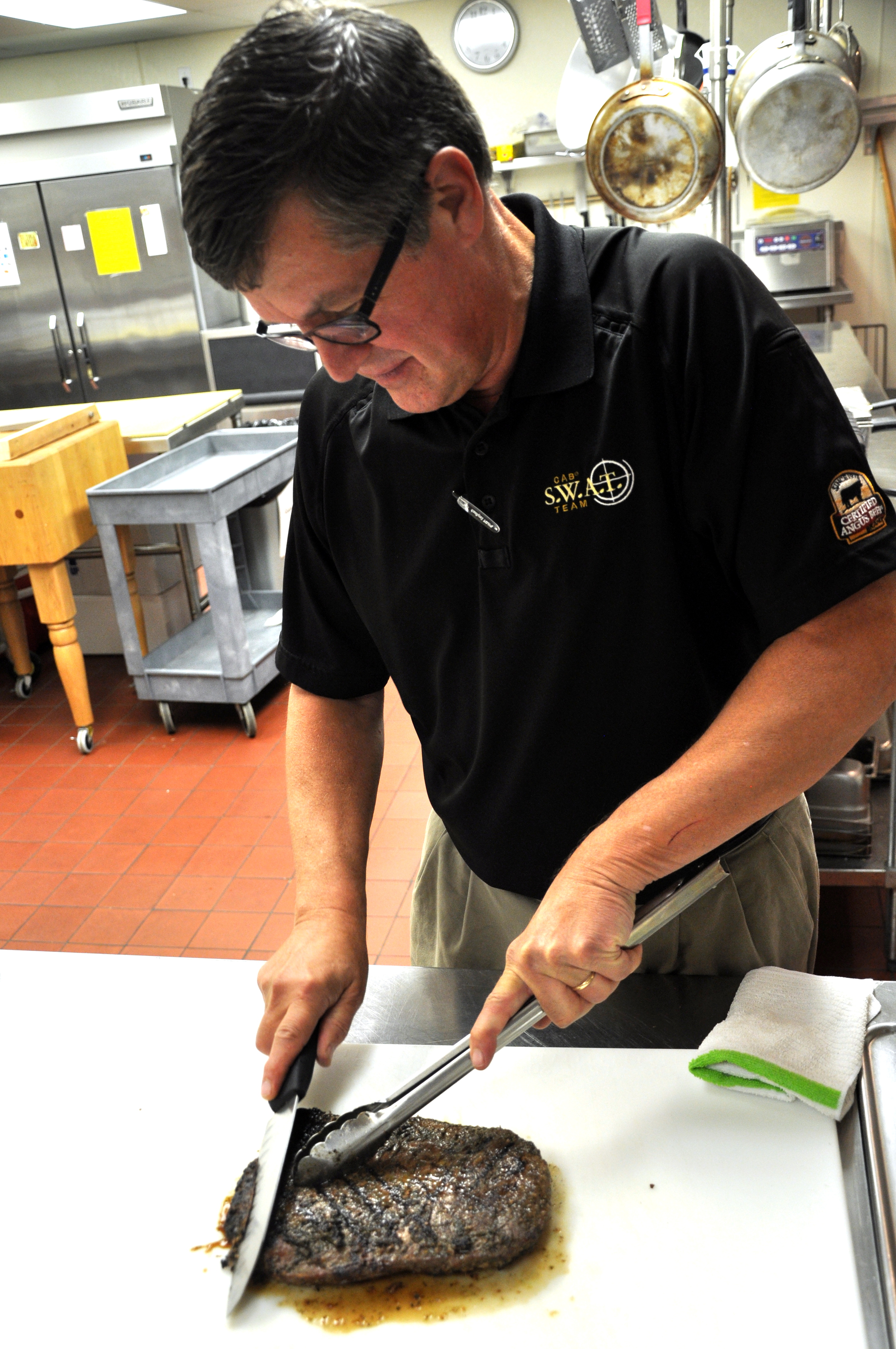 When an existing partner wants to introduce a new product, first it must pass the test. A sample and processing specifications are sent to the CAB offices, where a panel evaluates the item for taste, flavor, juiciness and appearance. It could take several rounds of feedback and tweaks before it’s perfected and approved.
“We’ve got customers who are loyal to CAB because of consistency and quality of the product,” George says. We have to give them that every time.
We don’t want “easy to prepare” associated with “lackluster flavor.” We don’t want “heat and serve” to be interchangeable with “tough and dry.” And you don’t either.
As an industry, we spent many years giving up freezer space to other proteins. Chicken is often seen as the easy-to-cook option, and we’re, er, people like George are working to change that.
When it’s 5:30 p.m. and a consumer is making a choice between chicken nuggets or a beef fajita kit, I know which one you hope they pick. George wants the same.
May your bottom line be filled with black ink,
Miranda
PS–Read about some other neat people in the beef business, by catching the rest of our “Nice to Meat Ya” series:
- Introduction: Nice to Meat Ya
- Day 1: Ashley Pado
- Day 2: Scott Redden
- Day 3: Jesse Stucky
- Day 4: Bridget Wasser
- Day 5: Amanda Barstow
- Day 6: Josh Moore
- Day 7: Ruth Ammon
- Day 8: Bill Tackett
- Day 9: Dan Chase
- Day 10: Danielle Foster
- Day 11: Eric Mihaly
- Day 12: Jennifer Kiko
- Day 13: Mark Morgan
- Day 14: Meg and Matt Groves
- Day 15: Rod Kamph
- Day 16: Jonnie Schreffler
- Day 17: Brent Eichar
- Day 18: Alberto Diaz
- Day 19: Larry Kuehn
- Day 20: Bob Boliantz
- Day 21: David Livingston
- Day 21: Danny Harris
You may also like
Eye on the Target
Regardless of a producer’s goal, each genetic decision takes you a step closer or further from achieving it. Targeting the Brand is a tool for cattlemen pursuing quality gains, helping commercial producers know and best leverage the value of their Angus cattle on sale day.
Defining the Margins of Quality
Driven by genetic selection and improved management, carcass quality has advanced significantly, most notably through more marbling. Yet, with nearly two-thirds of Angus-type carcasses falling short of brand standards, understanding why is critical to balance the economic incentives of added weight against CAB® product size and consistency requirements.
Brand Production Beyond Borders
Domestic or international, the objective has remained clear over the years: to access additional CAB® carcasses to support growing domestic and international demand, without compromising product quality and consistency, brand integrity, and value to Association members.