DNA: feedlot strategies
by Miranda Reiman
November 3, 2011
Recently, animal scientist John Wagner and his team set out to answer one question: “Is there potential application for DNA technology in the feedlot?”
The research completed by Colorado State University (CSU) says, “Yes.”
“We know precious little about the cattle when we go into a feeding situation with them,” Wagner says. “We all know that millions of dollars have been spent to map the bovine genome and tools have been developed to help with selection of breeding stock.”
Yet adoption of DNA technology has been somewhat limited to purebred producers.
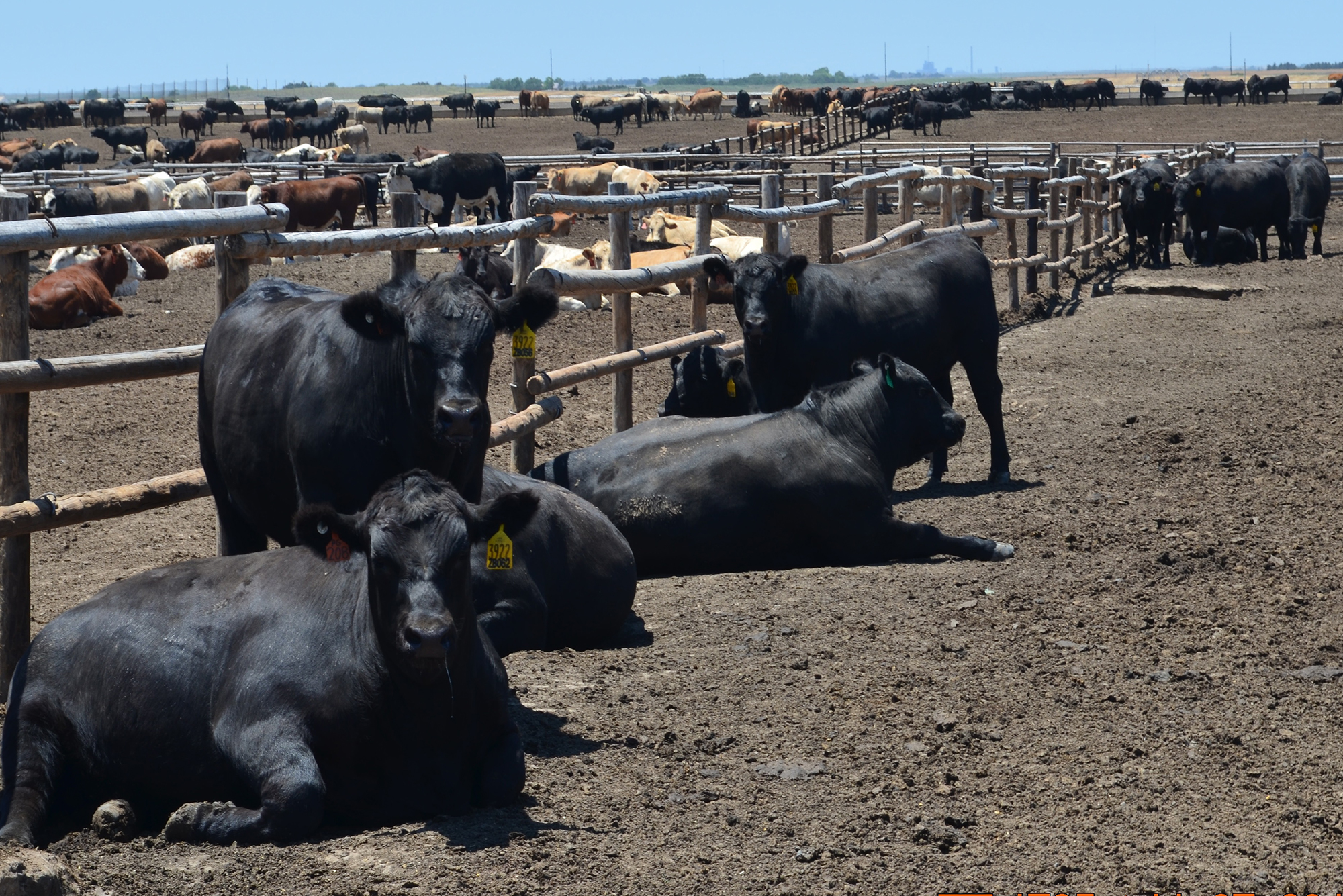
The CSU team collected DNA from 1,100 yearling steers, selected 360 of them based on results and then sorted those into one of four groups: low tenderness with low marbling, low tenderness with high marbling, high tenderness with low marbling, or high tenderness with high marbling.
Harvest results showed the accuracy of the DNA forecast.
The group that was predicated as lower quality had an average marbling score of 437. That’s compared to a 464 score for the high marbling group.
“That’s almost a third of a quality grade,” says Larry Corah, vice president of supply for Certified Angus Beef LLC (CAB). “That’s significant when you look at the value difference between grading Choice over Select or premium Choice versus Choice.”
That high marbling group graded 80% Choice and higher, while only 64% of the low marbling group met that threshold.
‘This proves that DNA technology works to sort cattle into predictable outcome groups,” Corah says.
The low and high tenderness groups backed that up. Using the industry standard Warner-Bratzler shear force test, the low tenderness group had a higher score, 3.92, compared to more desirable 3.59 rating for the high tenderness group.
Wagner suggests the biggest limitations to widespread use right now are turnaround time and cost, but some producers might already be set up to easily implement it.
“There are some producers who are on a revaccination program or who are doing a delayed implant program,” he says, noting that they could get samples upon receiving and re-sort cattle during that second trip through the chute.
He envisions a point in time when there will be chute-side tests.
“That would have been unheard of several years ago, but I think the sky’s the limit as far as what technology will be available to us in the future,” Wagner says.
Another key will be reaping a reward for the investment.
“You’d have to get some kind of value-based marketing program to receive benefits,” he says.
Corah suggests it might help determine which cattle are sold on a grid rather than a flat, live price. It could also assist with management decisions made on a pen-by-pen basis.
Wagner says feedlot-oriented DNA test applications aren’t limited to feeders. Cow-calf operators might be able to use the technology as a marketing tool.
“They could test cattle and put together packages of high-marbling or high-tenderness calves,” he says. Of course they’d face the same issues of time and money, and would also need to be rewarded for that extra information.
“It’s an exciting age, to think of all we can learn about cattle before harvest,” says Corah, who expects to see more commercial-level DNA tests made available in 2012. “This just shows DNA is one more tool that producers can add to their toolbox.”
The research was funded in part by the by The Beef Checkoff and commissioned by the industry’s Joint Product Enhancement Committee. Merck Animal Health and Merial Limited also provided financial support.
You may also like
$100,000 to Future Beef Leaders
Interest in quality beef production continues to grow. This year, the Colvin Scholarship Fund awarded $100,000 to 24 students across the country, helping them continue their education and prepare for careers that will contribute to the strength and advancement of the beef industry.
From Data to Dollars
The journey to produce high-quality beef presents market volatility and management challenges. But today, there are data, technology, tools and partners to identify the best value and how to attain it. At the 2026 Feeding Quality Forum, each speaker added to the same message on Aug. 4 and 5 in Amarillo, TX.
Curiosity Changed the Beef Industry
Dr. Del Miles built a career on asking better questions to inform smarter decisions. Throughout his career, he challenged assumptions, advanced science-based management and helped cattle feeders prevent problems before they started. His influence reaches beyond feedyards, shaping the way veterinarians, researchers and cattlemen think about herd health.