True grit with a grin
I’ve never tossed the word around lightly. Like there are only so many available slots and I have 10 for a lifetime.
This summer I met Richard Tokach on his Angus ranch near St. Anthony, N.D. I shook his hand and I knew he had it.
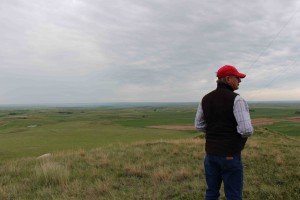 North Dakota summers aren’t quite like its winters but as I stood atop the highest point of the family’s expansive land, I could picture it. The bitterness of the cold, the surprise of sudden storms, the helplessness that’s felt when man battles the elements.
You can see it in Richard, too. A cowman proud of what he’s accomplished and humbled by the lessons learned along the way.
“There’s certainly a lot more good times in the cattle business than the other side,” Richard says with a grin. “Otherwise there wouldn’t be any cattle ranchers.”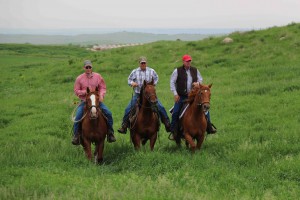
Richard and his brother Brad were born into the Angus world when their great-grandfather homesteaded the place in 1898. Nine years between them, the oldest and youngest of the Tokach boys partner in the seedstock operation their father, Dick, set in motion.
Marketing to customers young and old, the Tokaches boast in their cows’ ability to support a calf with little assistance. There’s no creep feeding at the ranch. Look out over the herd and you’ll notice a familiar toughness shared by their keeper.
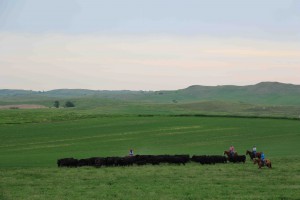 “We can have cattle that survive a blizzard up here at 20 or 30 below, and the same cattle can stand 110 or 115 heat in the summer, and yet produce a great, high-quality product,” Richard says.
He’ll credit that to the genetics of the breed.
“Our job as seedstock producers is to multiply the better genetics, the superior genetics and pass them on to our customers and consumers.”
Adding on to their father’s foundation, the men took a herd of 225 in 1979 to 750 by the time Richard’s son Ben decided he, too, would accept the responsibility of generational cowman.
“I always say if you’re not growing or expanding, you’re going backward,” Richard says, “Every year we try to make our cattle better.”
That’s music to my CAB ears – an entire symphony when you hear longtime brand partner Terry Beller, Beller Feedlot, Lindsay, Neb., share that a recent closeout of Tokach culls achieved 85% CAB or CAB brand Prime.
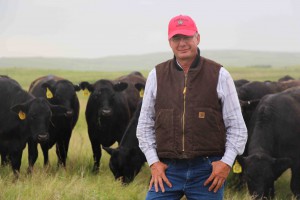 “We’re producing a product that other people are going to eat and we keep that in mind every day,” Richard says. “Every step we take along the way has been to make sure that we produce something quality.”
Through storm or celebration, it seems that’s the attitude that will endure another century in the business.
Thanks for allowing me to tell your story,
Laura
You may also like
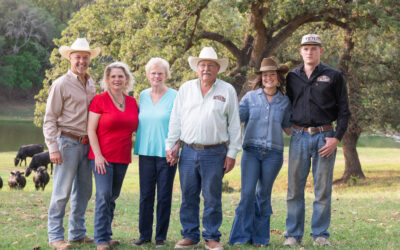
Texas Ranch Received CAB Ambassador Award
Visitors to 2 Bar C Ranch near Luling, Texas, often describe the quiet first. That peace reflects low-stress cattle care, seedstock bred for the whole beef chain and a family that opens its gates, earning the 2026 CAB Ambassador Award.
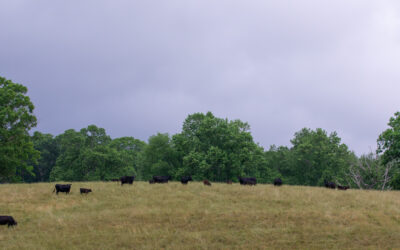
Built For the Long Haul
Thirty-one inches of rain in 48 hours tested Biltmore Estate’s 130-year commitment to remain a profitable, working agricultural estate. Through Hurricane Helene recovery and high-quality Angus genetics, Biltmore stewards its land, livestock and community, earning the 2026 CAB Sustainability Award.
Jett Stream to Prime
In the Oklahoma Panhandle, four generations built a herd defined not by the odds against it, but by standards never lowered. That commitment drove decades of genetic and management improvements, taking Jett Ranch from struggling to reach Prime to more than 70% Prime today, and earned the ranch the 2026 CAB Commercial Commitment to Excellence award.