Surprise!

That’s what a Montana rancher told me when talking about the first carcass data he ever got back.
“I got tired of trying to sell them. I wasn’t willing to accept generic price when I thought I had something better,” Stan Pelton said. “I soon learned.”
Those first calves graded 20% Choice, and motivated him to continue feeding cattle for the next two decades. It also spurred the rancher to adopt an AI plan to infuse the best genetics more quickly. Today he sells loads above 90% Choice, with more than half of those reaching the upper two-thirds of that grade.

A visit to a Wyoming ranch earlier this summer illustrated the other end of the surprise spectrum. When the Dee Johnson decided to retain ownership 5 years ago, he knew it was a risk. He’d been buying “top dollar” bulls, but had no way of knowing how those genetics performed beyond weaning. And then he got the call from his cattle feeder.
“You can’t believe what you’ve got,” the yard manager told him. The inaugural retained ownership load went better than 90% Choice and earned branded premiums. “Don’t change a thing.”
The bulls were working, the cows were working, but that producer didn’t want them in a holding pattern. His first data just served as benchmark that he’s been building on ever since. And yes, they’re still getting better.

Not all surprises are apparent right away. When an Iowa cattleman got his first carcass report on cattle finished with a local farmer-feeder, it was interesting, but not all that informative.
“Under the marbling, we had all the different scores and, well, I didn’t understand them,” Lyle Gossling told me. Denotations like “AB10” and “AB20” could have just as well been a product code or carcass locator number.
So months down the road when the producer asked a custom feedyard manager to explain the packer data, he got quite a shock.
“He broke it down and said, ‘Those are exceptional cattle and that’s Prime on the carcasses.’”
 His goal now? To move the whole herd into the “AB” (abundant marbling) category.
I’m lucky to chat with cow-calf producers all across the country, and many of them followed in the tradition of selling weaned calves before transitioning to retained ownership at some point. Rarely do I hear, “That’s exactly what I expected my data to look like.”
But they almost always tell me—regardless of how positive or negative the surprise—it was worth it.
Gossling said, “If I’m going to pay that kind of money for genetics, I wanted to make sure ‘it’ was in there. And it was in there in spades.”
There is power in knowing how your product performs. Why do you think companies beg for online reviews or restaurants incentivize you to complete post-visit surveys? The information they learn from feedback helps them make systems improvements, marketing tweaks and generally get better at giving their customers what they expect.
Most cattlemen I know want to do just that. Maybe it’s time to get a little vulnerable and try feeding some cattle. Just brace yourself for a few surprises along the way.
May your bottom line be filled with black ink,
Miranda
You may also like
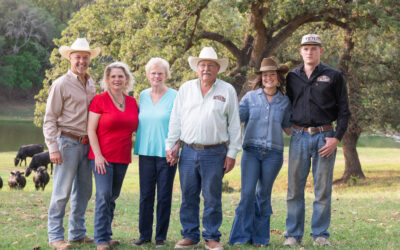
Texas Ranch Received CAB Ambassador Award
Visitors to 2 Bar C Ranch near Luling, Texas, often describe the quiet first. That peace reflects low-stress cattle care, seedstock bred for the whole beef chain and a family that opens its gates, earning the 2026 CAB Ambassador Award.
Built For the Long Haul
Thirty-one inches of rain in 48 hours tested Biltmore Estate’s 130-year commitment to remain a profitable, working agricultural estate. Through Hurricane Helene recovery and high-quality Angus genetics, Biltmore stewards its land, livestock and community, earning the 2026 CAB Sustainability Award.
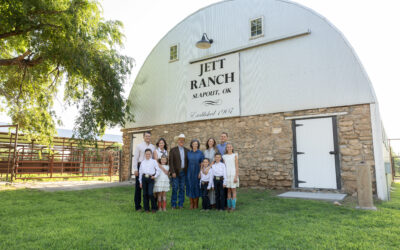
Jett Stream to Prime
In the Oklahoma Panhandle, four generations built a herd defined not by the odds against it, but by standards never lowered. That commitment drove decades of genetic and management improvements, taking Jett Ranch from struggling to reach Prime to more than 70% Prime today, and earned the ranch the 2026 CAB Commercial Commitment to Excellence award.