Success in the Flesh
Recently a group of 22 high schoolers visited the plant, and walked out with a brighter perspective of the industry they already love.
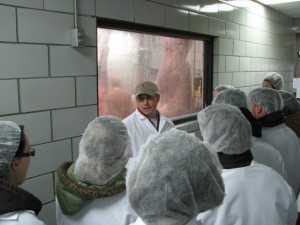
Accompanied by CAB meat scientist Dr. Phil Bass, the local tech class toured the plant and took a close look at the carcass results of cattle they fed while enrolled in their high school course.
“They have already chosen to have a career in agriculture, so it’s just really neat to see such a young group of folks with determination, ready to go in and grow the agricultural community,” Bass said.
After exploring the live side, students made their way to the cooler to see if their own animals met CAB’s specifications.
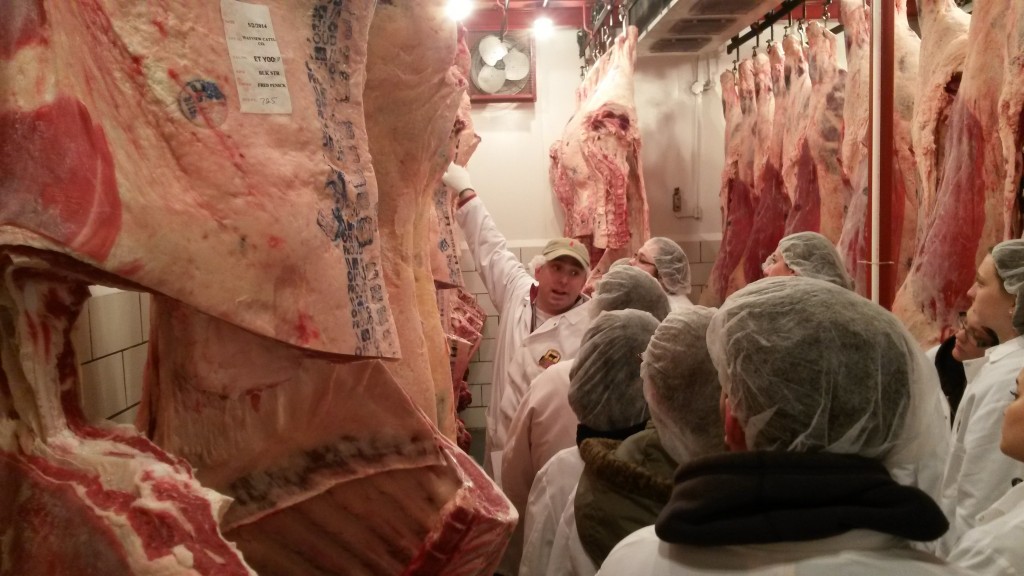
“We started out looking at the harvest process,” Bass said. “We explained everything that goes on, all of the food safety measures and humane handling things, all the steps that it takes to turn a live animal into a carcass.”

More than the fun, more than the camaraderie was the honor of educating the future generation, Bass said of his main takeaway.
“I love visiting with students who don’t realize all the different avenues that you can take with an animal science or agriculture background,” Bass said. “You can go into food science or the production side. It’s more than just being a veterinarian.”
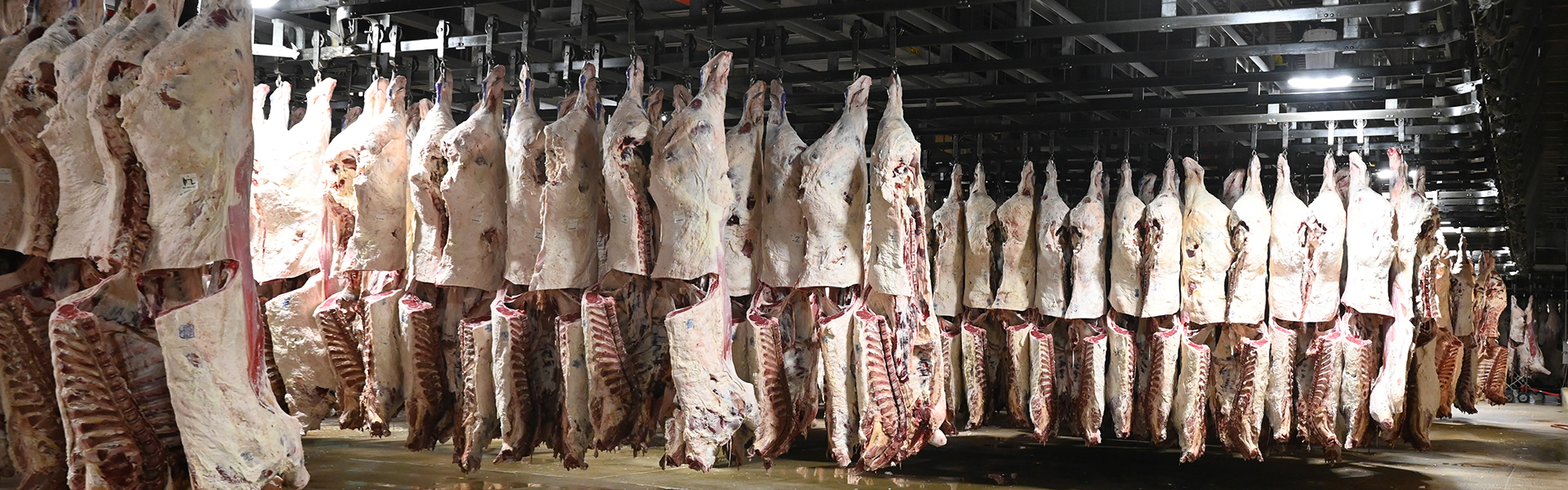
Amidst the rows of carcasses, students were engaged, willing and ready to listen and learn. Challenged with the task of stumping Bass, they asked their fair share of questions from, “What do packers do with the udders” to “How many cuts of meat come off of each animal.”
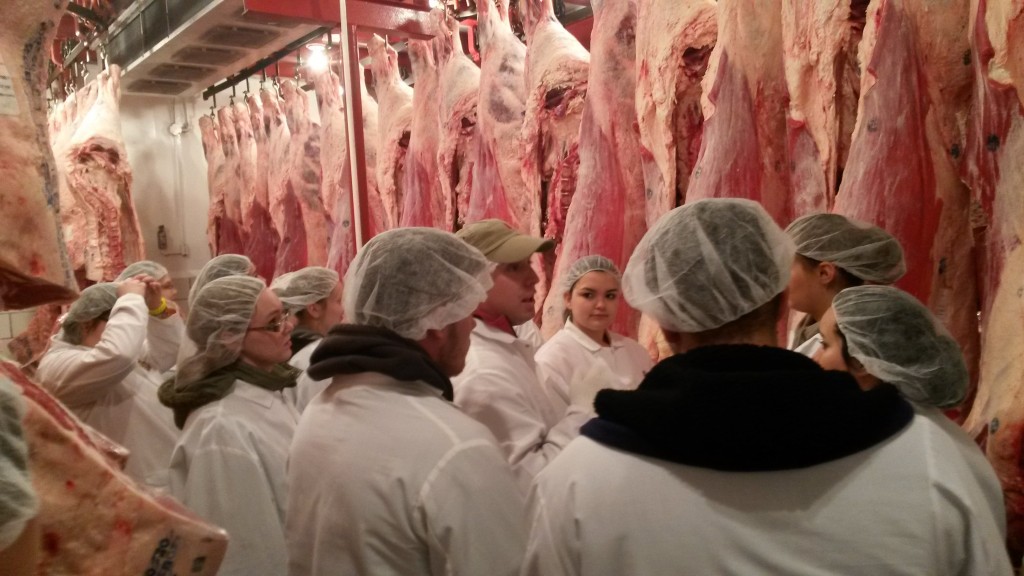
Asked whether any students wanted to follow in his footsteps, Dr. Phil chuckled and said indeed, many were inquiring about which colleges to attend.
As far as agriculture is concerned, I say the future looks bright.
Thanks for allowing me to tell your story,
Laura
You may also like
Eye on the Target
Regardless of a producer’s goal, each genetic decision takes you a step closer or further from achieving it. Targeting the Brand is a tool for cattlemen pursuing quality gains, helping commercial producers know and best leverage the value of their Angus cattle on sale day.
Defining the Margins of Quality
Driven by genetic selection and improved management, carcass quality has advanced significantly, most notably through more marbling. Yet, with nearly two-thirds of Angus-type carcasses falling short of brand standards, understanding why is critical to balance the economic incentives of added weight against CAB® product size and consistency requirements.
Brand Production Beyond Borders
Domestic or international, the objective has remained clear over the years: to access additional CAB® carcasses to support growing domestic and international demand, without compromising product quality and consistency, brand integrity, and value to Association members.