It isn’t REALLY Angus, is it?
April 13, 2011
On the road last weekend, on a personal trip, to Marysville, Kan., for a spring beef show. My wife and I have three kids, all in 4-H, and all show cattle. It is a lot of work, but we enjoy doing it. I know there are those in the audience who thought we could be nailed for child abuse, as my 8-year-old daughter, who weighs all of about 45 pounds and skinny as a rail, was at the halter of an 1,100 lb. steer!
What they don’t know is we had him broke to halter and lead a year ago and he’s just a big puppy. You want to build confidence and ability in a kid, get them to showing livestock. I was very proud of her! And she got called back for finals in showmanship!
I’m in the stands myself, watching another class, when I hear a conversation behind me. Now, keep in mind, I’m wearing a cap that has our logo on the side, albeit conspicuously small. One of the conversationalists was taking about Certified Angus Beef, and how it wasn’t “really Angus, heck they let crossbreds in the program!” If I had a dime for every time I had to explain how CAB works, I’d be nothing short of a multi-millionaire!
Since it was the weekend, I was tired and not in the mood for an “educational moment,” I passed. Besides, I do not normally butt in on other people’s conversations! So, here is my reply to him and all others who wonder about how CAB really works.
The mission of Certified Angus Beef LLC is to: “Increase demand for registered Angus cattle through a specification-based, branded-beef program to identify consistent, high quality beef with superior taste.” It is our job to help Angus seedstock producers sell Angus bulls to any cow-calf producer, straightbred or commercial crossbred.
In turn, these resulting, black-hided calves MAY qualify for the brand, if they meet all ten carcass specifications. It is not just a black hide. Truth be known, back when the program was founded, how many other black-hided breeds were there? Really? The answer is NONE. So, it was easy to put an “A” stamp on the black-hided carcass (done at hide removal) and be relatively certain the cattle were Angus.
Today, how many other breeds are now black-hided? MANY! Why did they open their books and allow percentage cattle in……to get the black hide, to POSSIBLY earn more premiums for their breed of cattle (a rising tide floats all boats).
But, the real kicker comes in here: At the grading stand, the cattle must meet these ten specifications, and the one in which most fall short of is the marbling. The marbling score must qualify for average or high USDA Choice or Prime to make the grade. Low Choice cattle will not earn the stamp. Select and Standard cattle do not earn the stamp. Currently, only about 24% of black-hided cattle can reach that level of marbling and product consistency.
Since Angus cattle have the genetic propensity to marble well, the higher percentage Angus the cattle are, the greater the chance the cattle have to qualify. We know that from our database, and from the Iowa Tri-County Steer Carcass Futurity program too. (Read: Abstract – 2010 Midwest ASAS Meeting – Effect of Hide Color and Percentage Angus on Feedlot Performance and Carcass Traits)
So, now, think back to our mission: to “increase demand for registered Angus cattle……” more Angus bulls sold, to increase the number of black-hided calves, which can drive the supply……in fact we have feedyards that have CAB acceptance rates as high as 85%; more than three times the national average. And they are being REWARDED for this through packer premiums (yes, they are real) for CAB and CAB Prime! That is the financial incentive for having black-hided calves!
Now, you might say, “So what? I sell my calves at weaning, and I don’t care how they grade!” OK, well, that’s like sticking your head in the sand, as consumer demand for high-quality grading beef (some other branded programs, not just CAB, have high quality grade standards as well) has risen over the past several years, and in case you hadn’t noticed, high-percentage Angus calves bring more money at the sale barn, and we have the data to prove that. It feeds back through the system.
The CAB brand grew 17% last year, and we are in a great market for the product. Consumers love the brand, love the product, and producers get paid more to produce it. What more information do you need?
Yes, there are cattle that are not 100% Angus that qualify for the brand; but the lower percentage Angus the calves are, the less chance they have to earn the stamp. I’d like to know your thoughts on this. Actually, I love telling the story of CAB, because I believe in it. The integrity of the brand, the people that work for CAB, and the producers, packers, and consumers who stand behind it and understand it, make me proud to be a part of the team!
You may also like
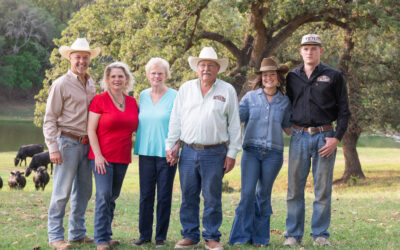
Texas Ranch Received CAB Ambassador Award
Visitors to 2 Bar C Ranch near Luling, Texas, often describe the quiet first. That peace reflects low-stress cattle care, seedstock bred for the whole beef chain and a family that opens its gates, earning the 2026 CAB Ambassador Award.
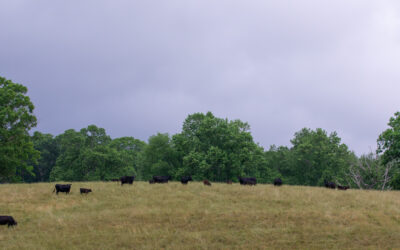
Built For the Long Haul
Thirty-one inches of rain in 48 hours tested Biltmore Estate’s 130-year commitment to remain a profitable, working agricultural estate. Through Hurricane Helene recovery and high-quality Angus genetics, Biltmore stewards its land, livestock and community, earning the 2026 CAB Sustainability Award.
Jett Stream to Prime
In the Oklahoma Panhandle, four generations built a herd defined not by the odds against it, but by standards never lowered. That commitment drove decades of genetic and management improvements, taking Jett Ranch from struggling to reach Prime to more than 70% Prime today, and earned the ranch the 2026 CAB Commercial Commitment to Excellence award.