
How to get them to pay more for that rib eye
June 28, 2011
Over on the Beef Daily Blog yesterday, Amanda asks, “How much will you pay for that rib eye?” That caught my attention for two reasons:
First, because we get all our meat as freezer beef, pork and chicken from my parents or my in-laws, we get a pretty darn good discount. I often think of how high our grocery bill would be if we tacked on all the meat we consume in a week and I wonder how much I would pay. Would my supper selections be different?
And two, because working for Certified Angus Beef LLC, I’m keenly aware at the price difference between a high-quality product and a commodity one.
A large portion of our staff works on the beef side of the business– that’s from the packing plants forward, so as a whole we spend quite a bit of time analyzing how much people will pay for beef. (Specifically how much of an emphasis they’ll put on quality and how much more they’ll pay for that extra flavor and tenderness.)
So I thought I’d tackle (most of) these questions one-by-one:
- “What’s your take on this supply and demand issue?”
I’m not an economist, but I can say that in Macroeconomics 101 we learned that decreased supply at a constant demand meant higher prices. And it’s our goal to build demand, right? So if we’re successful that means even higher prices. We need to be cognizant of that because if we’re asking consumers to pay more, it’d better be worth it. (Quality counts!)
- “The size of the national cattle herd continues to dwindle,which means fewer calves to fill feedlots. How will this impact live-cattle prices,both in the short and long term?”
Definitely not qualified (i.e. I don’t own a crystal ball) to have an opinion on this one, next question please :-).
- “At what point will feedlots throw in the towel and shut their doors, or packers?”
It’s already happening, as Gary noted in his “Ghost Yards” post, but there is a ray of hope. Feedyards that focus on customer service and efficiency while exercising marketing prowess will succeed.
Standing for something (do I hear that quality word buzzing again?) and differentiating yourself from the competition are first steps.
- “How much will consumers be willing to pay for our product?”
Our whole brand works on the idea that people will pay more for CAB than commodity Choice because of its consistency, flavor, etc. If restaurants and retailers can charge more for it, they can afford to pay more from the distributor. The packer charges them more, so they send those premiums back through to feedlots, cow-calf and ultimately Angus seedstock producers. That’s a long way to say we really care about this question.
Earlier this year Dillon Feuz, Utah State University, spoke at the 2011 Arkansas Beef Quality Conference. (I’d really encourage you to check out his entire presentation here.)
He emphasized how essential keeping a quality focus is to beef demand.
“For years, we were convinced we needed to keep producing commodity beef,” he said. If consumers didn’t like it, that was their problem and demand was on a downward spiral.
Today, he said, “Even though demand has fallen off some, we’ve maintained price.” That’s because the industry has done a better job of addressing consumer needs.
He presented research that showed consumers can taste the difference between upper 2/3 Choice and Select and they’re willing to pay more for higher quality.
Whew, that’s a little job security for me & the folks who work on my team!
May your bottom line be filled with black ink,
Miranda
You may also like
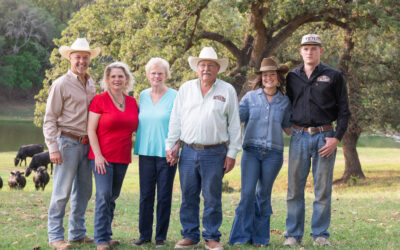
Texas Ranch Received CAB Ambassador Award
Visitors to 2 Bar C Ranch near Luling, Texas, often describe the quiet first. That peace reflects low-stress cattle care, seedstock bred for the whole beef chain and a family that opens its gates, earning the 2026 CAB Ambassador Award.
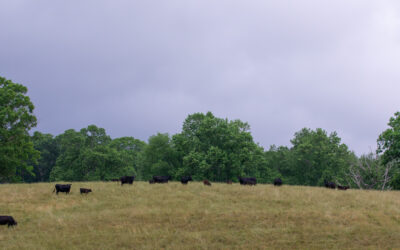
Built For the Long Haul
Thirty-one inches of rain in 48 hours tested Biltmore Estate’s 130-year commitment to remain a profitable, working agricultural estate. Through Hurricane Helene recovery and high-quality Angus genetics, Biltmore stewards its land, livestock and community, earning the 2026 CAB Sustainability Award.
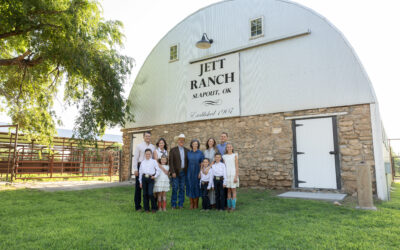
Jett Stream to Prime
In the Oklahoma Panhandle, four generations built a herd defined not by the odds against it, but by standards never lowered. That commitment drove decades of genetic and management improvements, taking Jett Ranch from struggling to reach Prime to more than 70% Prime today, and earned the ranch the 2026 CAB Commercial Commitment to Excellence award.