Getting there fast
“I’m calling because I read your story.”
To a journalist, calls like that can generally go one of two ways: either someone wants more information or they want you to know you got it wrong.
But this particular call I got recently brought me back in time, to my visit to Hugh and Shandi Bradley’s Cut Bank, Mont., place last May.

The phone call was from a Nebraska cattleman who read my story, “Getting there fast,” and that sparked his interest in DNA technology.
“Yes! Yes! Yes,” I silently cheered. That’s why we write these stories, to show successes, so that others might apply something and find the same.
In our “Footsteps Worth Following” series, I shared how Hugh ended up back on the ranch, but here’s the story of his herd:
In 2012, after buying an HD50K-tested bull and wanting to learn more about what that meant, he “stumbled upon” commercial DNA testing.
“I wanted a picture of my cows and my calf crop, because we were never able to get any of that data back,” Bradley says of the cattle that usually sell on video auction. “This was a way for me to get a better picture of what’s going on.”

The first results were disappointing. In 2014, his average GeneMax focus score was 30 out of a possible 100. By last summer, 61 tested steers had a 74.1 average. Sorting off the bottom few, the rest were qualified for marketing through the Top Dollar Angus program.
The cattleman credits part of that jump to using the GeneMax Advantage on replacement heifers. By his third round, Hugh decided to make his first cuts on those hard numbers and then follow-up with visual appraisal.
“There’s been some awful good calves that went down the road, that we really liked, but they didn’t have the score,” he says.
At $17/head for steers (GeneMax Focus) and $44 for heifers, some are skeptical of Hugh’s use of the technology.

“Last year, that was the cost of one replacement heifer,” he says. “Instead of going out and buying replacements, I’m keeping my own, trying to get the genetics I want with the bulls I’m buying so I can keep my own replacements.”
It’s been nine months or so since I was in Montana and met the couple and son Walker (daughter Olivia was in school that day.), but I still remember details. Walker brought a toy animal along to the ranch, because it needed to see “the vet,” grandpa Guy Bradley. Riding through the pastures, the youngster chose a 4-wheeler tour with grandpa over the pickup.

It’s easy to look into the future and imagine Walker running his own cattle on the ranch, with the Glacier National Park in the distance, Montana’s big sky squarely overhead.
Maybe that’s what Hugh is thinking, too, when he says, “I’m trying to better everything in a shorter amount of time.”
If he can inspire others to do the same, all the more reason for me to cheer him on from here.
May your bottom line be filled with black ink,
Miranda
You may also like
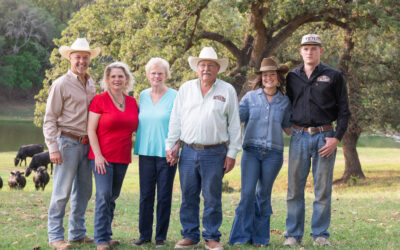
Texas Ranch Received CAB Ambassador Award
Visitors to 2 Bar C Ranch near Luling, Texas, often describe the quiet first. That peace reflects low-stress cattle care, seedstock bred for the whole beef chain and a family that opens its gates, earning the 2026 CAB Ambassador Award.
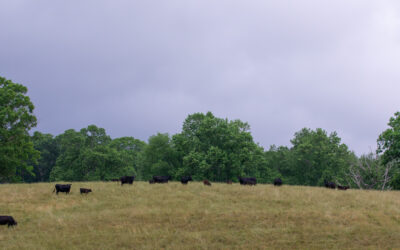
Built For the Long Haul
Thirty-one inches of rain in 48 hours tested Biltmore Estate’s 130-year commitment to remain a profitable, working agricultural estate. Through Hurricane Helene recovery and high-quality Angus genetics, Biltmore stewards its land, livestock and community, earning the 2026 CAB Sustainability Award.
Jett Stream to Prime
In the Oklahoma Panhandle, four generations built a herd defined not by the odds against it, but by standards never lowered. That commitment drove decades of genetic and management improvements, taking Jett Ranch from struggling to reach Prime to more than 70% Prime today, and earned the ranch the 2026 CAB Commercial Commitment to Excellence award.