Dysfunctional advice: the result of this Monday’s myth
March 21, 2011
When looking at a cow, you might ask yourself these questions.
Does she look “ruined”? Does she look dysfunctional? Ok, so maybe you can’t tell much about cowherd function just by glancing at one picture, but it’s a place to start. I visited Schiefelbein Farms near Kimball, MN, a few years ago and I can vouch that the females looked nice. What’s better than good looks? They work. But a main focus of the registered Angus operation is carcass quality.
Meet Don Schiefelbein.
He, along with his seven brothers and his dad, buy back customer calves, feeding several thousand each year. So they care a thing or two about the end product. In fact, the year I visited, one group of 45 head that didn’t make the cut as breeding stock made 89% Certified Angus Beef ®,including five CAB Primes.
So where am I going with all of this?
Well,to me it’s just one of hundreds of real-life examples that bust this myth we hear from both industry professionals and ranchers alike:
Myth—Selecting for high-quality cattle will ruin your cowherd.
Fact—Selection for marbling has no negative effect on cowherd function. That’s not just me saying this. Some of you may know Twig Martson, of the University of Nebraska-Lincoln. He looked at the data a few years ago when he was at Kansas State. His research review shows there is a slightly positive correlation between marbling and preweaning gain from milk. It also says you can select for marbling and heifer pregnancy, because there there’s no correlation between the two. Bonus!
It doesn’t stop there: the same review says backfat and marbling are not related in Angus populations. Marston says, “That implies a breeder can match both marbling and ‘doability’ to a particular management system.”
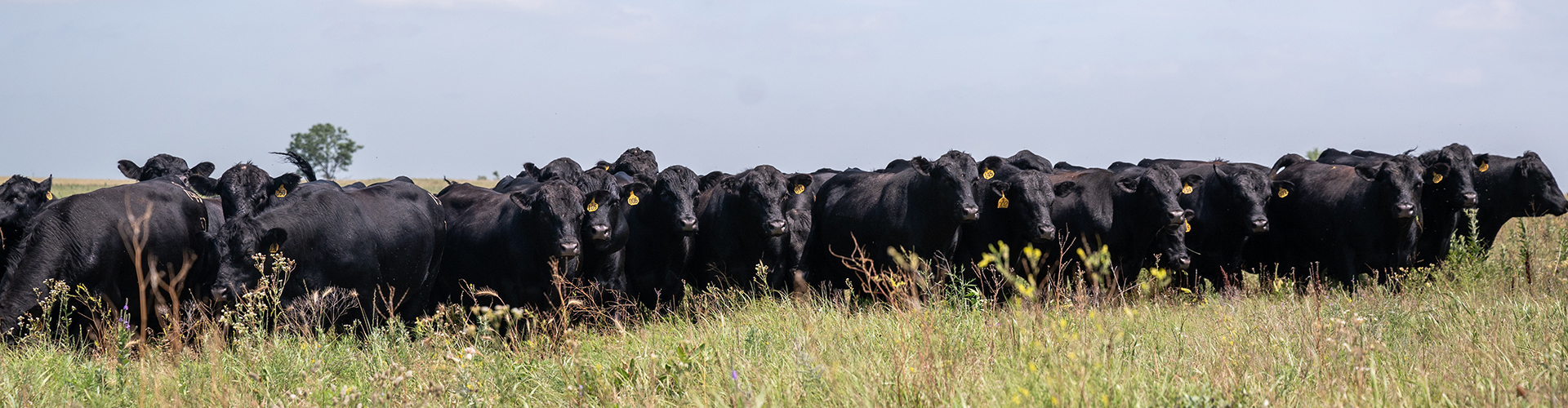
At Schiefelbein Farms they match it all while producing calves that look like this:
I’ve visited with many ranchers from all over the country and I seem notice those with the best carcasses data tend to have the best cows. My take is that they’re paying attention to all the numbers (related to both the cowherd and their progeny) in the quality equation, and that pays off in more way than one!
May your bottom line be filled with black ink,
–Miranda
PS—If you have any success stories of including maternal function and carcass quality in your herd goals, send me an e-mail. Who knows, maybe I’ll get to visit your place and check it out for myself!
You may also like

Texas Ranch Received CAB Ambassador Award
Visitors to 2 Bar C Ranch near Luling, Texas, often describe the quiet first. That peace reflects low-stress cattle care, seedstock bred for the whole beef chain and a family that opens its gates, earning the 2026 CAB Ambassador Award.

Built For the Long Haul
Thirty-one inches of rain in 48 hours tested Biltmore Estate’s 130-year commitment to remain a profitable, working agricultural estate. Through Hurricane Helene recovery and high-quality Angus genetics, Biltmore stewards its land, livestock and community, earning the 2026 CAB Sustainability Award.

Jett Stream to Prime
In the Oklahoma Panhandle, four generations built a herd defined not by the odds against it, but by standards never lowered. That commitment drove decades of genetic and management improvements, taking Jett Ranch from struggling to reach Prime to more than 70% Prime today, and earned the ranch the 2026 CAB Commercial Commitment to Excellence award.