Permission to straightbreed
Each day my farm radio reminds me that the bull sale season is in full swing. I hear several seedstock suppliers advertising as “the perfect cross to complement an Angus program,” and they might be right. That is, if you are looking to crossbreed.
They imply you’re missing out if you don’t.
But year after year, our team visits intelligent, strategic-minded ranchers who are not only making money with straight Angus, but who are making more money with a single breed than they say they could in a more complicated program.
Need some proof? Let me re-introduce you to our past four Commercial Commitment to Excellence Award winners:
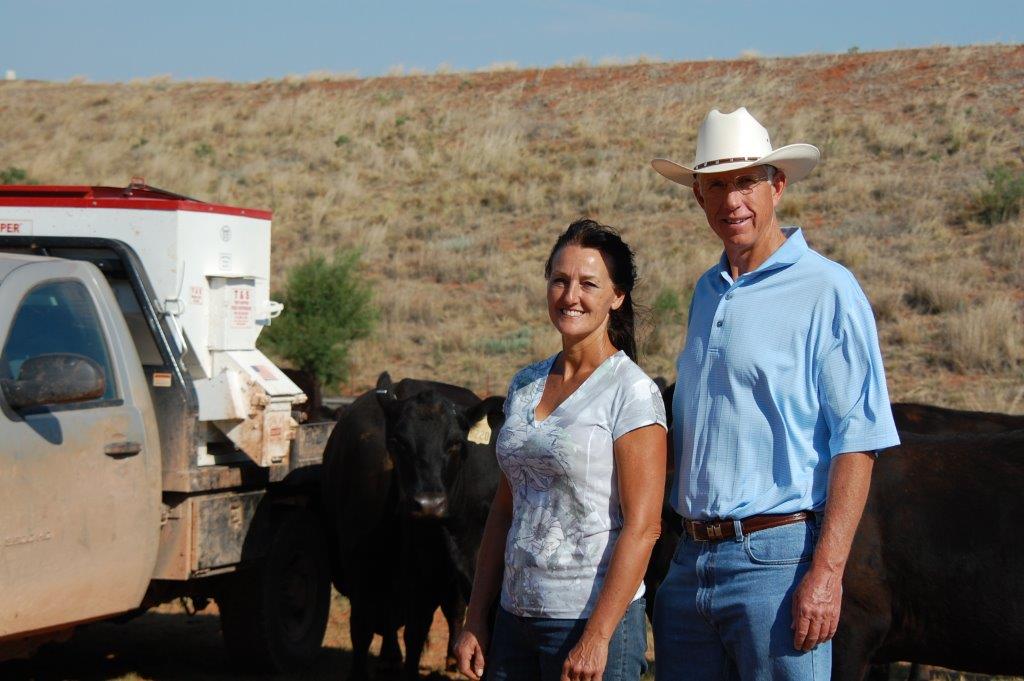
1—When Jimmy and Tracy Taylor took ownership of the family ranch in Oklahoma, they had one major goal in their genetic selection: “simply to sell the most pounds of beef at weaning.”
“Over time, we began to see there is more security for our ranch and for the whole industry if we reoriented to give the consumer a better eating experience,” Jimmy says. “We changed with the incorporation of registered Angus bulls to a goal of producing the best steak we can possibly make.” Those first Angus-cross calves arrived in 2006, and when they won CAB honors in 2011, they were reaching nearly 60% brand acceptance.
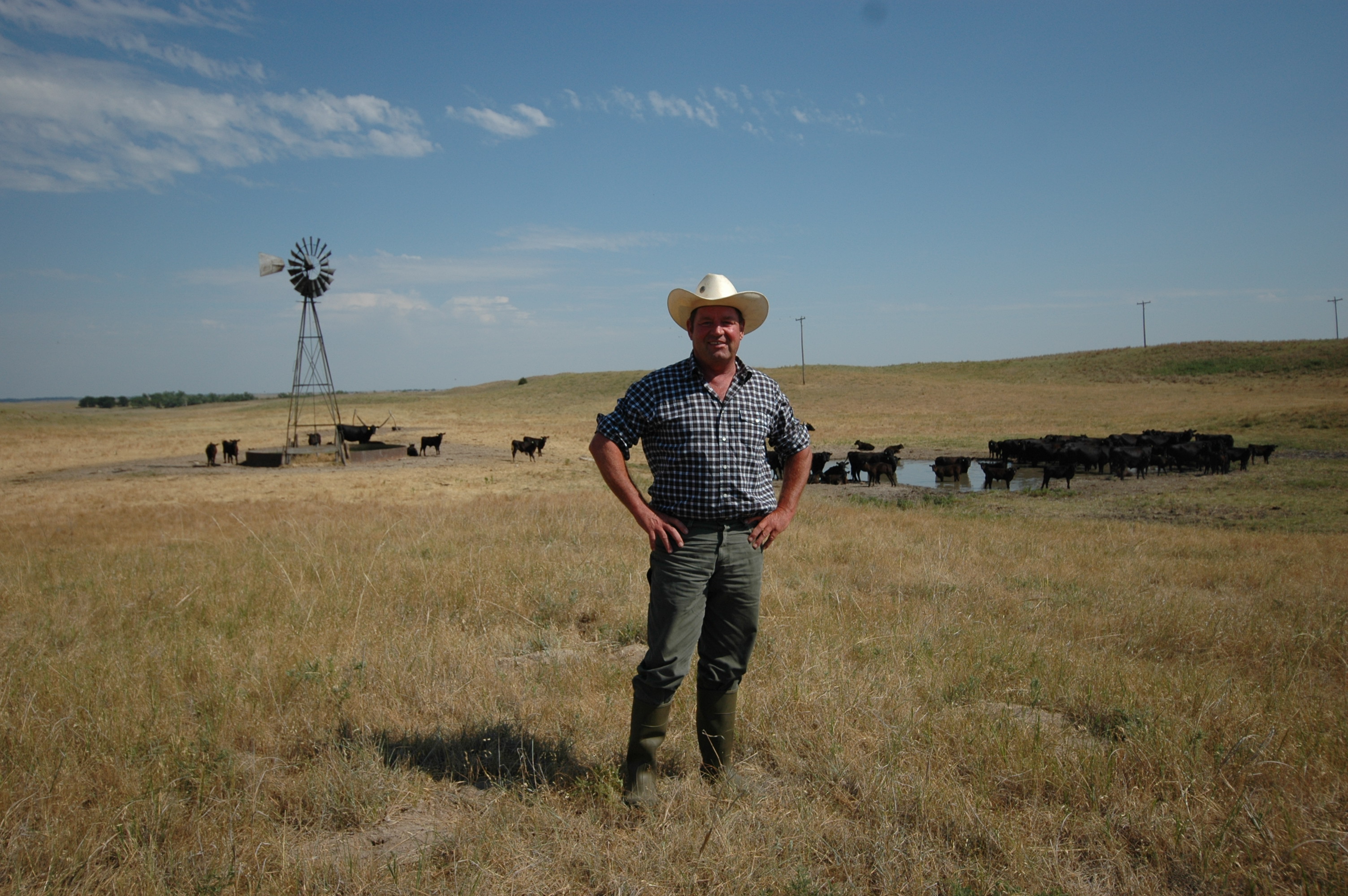
2-“When we talk about revolutionary things that changed our business, we talk about center-pivot irrigation, distillers grains and the introduction of EPDs to help us pick Angus bulls,” says Con Zutavern, of Dunning, Neb.
His family gradually incorporated Angus genetics, going straightbred in 1988.
Birthweight started as the main trait of importance, but as the sole suppliers to their own feedlot, their selection breezes right past common ones like weaning weights to instead emphasize overall growth and carcass traits.
“We’re looking at the dollar-beef ($B) Values, and we don’t want cattle that are too fleshy. Because selling on a grid you don’t want a bunch of yield grade 4s,” says brother Zak Zutavern.
His son Adam adds, “We’ve been trying to keep a count on the wilder cattle and watch disposition. Looking at Angus EPDs, you can basically get anything you want.”

3- Joe Mayer, of Guymon, Okla., fed cattle most of his of life, even owning some interest in a feedlot. “We fed a lot of cattle, and all kinds, but that was back before grids and none of that mattered. When you actually got paid for what you produced instead of one-price-fits-all, I started worrying,” he says.
But worry without action is a futile act.
That’s why he started buying Angus bulls two decades ago with goals of creating uniform performance and quality in calves that would be profitable to feed for the emerging value-based grid markets.
Sensitive to charges that he should be crossbreeding, Mayer says, “I’d love to, if anyone could show me the data relevant to my herd that some non-Angus bull will make more money here.”

4–“In every aspect, from mothering ability to raising pounds to having less health problems to being a better product when it hits the plate, I’ve thought [Angus] was the most productive breed out there,” says Dee Johnson, who we honored just last year.
For the Wyoming producer, it starts with phenotypic evaluation. If bulls are “deep-ribbed,” with good feet and structure, backed up with “the right muscle structure in the hind quarters,” then he’ll open up the catalog and check out birth weights and expected progeny differences (EPDs) for milk, ribeye and marbling.
He matches selection criteria to resources on his ranch that averages 13 inches of rainfall a year. Dee doesn’t emphasize high weaning weights because, “we’d have to tie a bucket of corn on every animal out here to realize some of those numbers.” Instead fertility and final feedlot results–which recently showed 80% CAB acceptances—dictate his program.
—
Not only are these ranchers true stockman, they’re also smart businessmen. They’re not blindly in love with a breed for the sake of hide color or history. They follow the money and for several years (in many cases 20 or more) it’s led them in the same direction.
We’re not surprised, but are certainly delighted, to know that’s Angus.
For specific tips as you head to this season’s sales, read this post from Mark: Bull buying made simple.
Happy bull shopping and may your bottom line be filled with Black Ink,
Miranda
You may also like
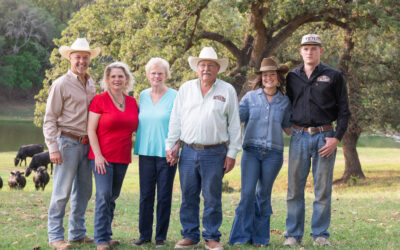
Texas Ranch Received CAB Ambassador Award
Visitors to 2 Bar C Ranch near Luling, Texas, often describe the quiet first. That peace reflects low-stress cattle care, seedstock bred for the whole beef chain and a family that opens its gates, earning the 2026 CAB Ambassador Award.
Built For the Long Haul
Thirty-one inches of rain in 48 hours tested Biltmore Estate’s 130-year commitment to remain a profitable, working agricultural estate. Through Hurricane Helene recovery and high-quality Angus genetics, Biltmore stewards its land, livestock and community, earning the 2026 CAB Sustainability Award.
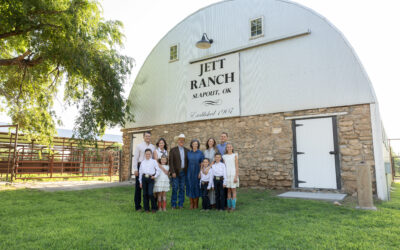
Jett Stream to Prime
In the Oklahoma Panhandle, four generations built a herd defined not by the odds against it, but by standards never lowered. That commitment drove decades of genetic and management improvements, taking Jett Ranch from struggling to reach Prime to more than 70% Prime today, and earned the ranch the 2026 CAB Commercial Commitment to Excellence award.