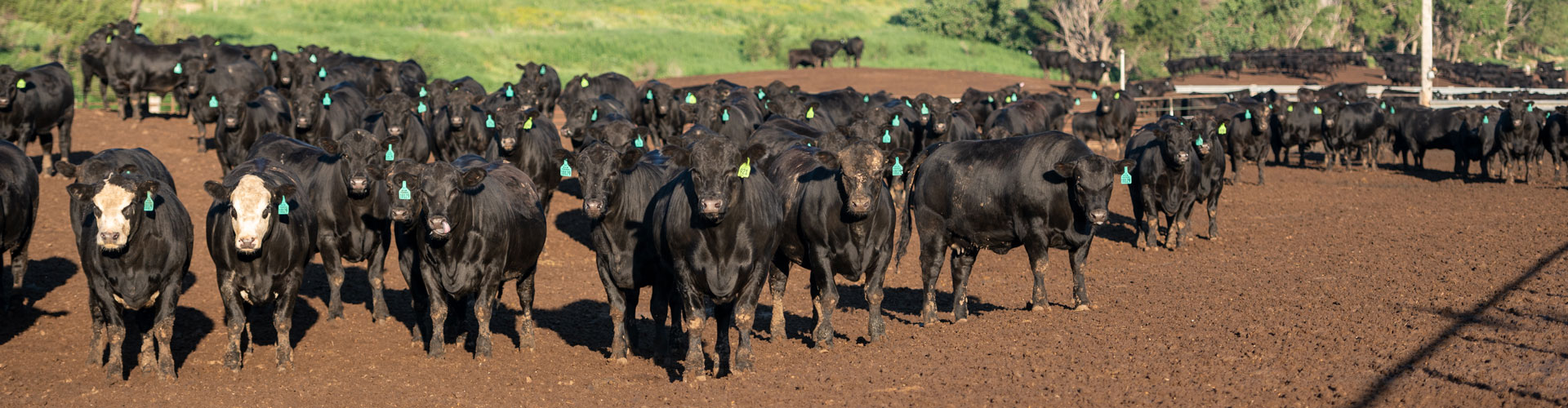
Feed Conversion and Profitability

I’ve been preaching this one a while. Not saying that I have any more insightfulness or that I’m brighter than anyone else out there…
But there is one thing I DO know, and that is we have high calf prices (if you’re buying to put on feed) and we have high corn prices (if you’re buying corn to put in those cattle), and the feedlot sector has been sustaining some horrible losses during the last 15-18 months. What’s the solution?
You can argue that (1) corn prices are likely headed lower and (2) maybe feeder cattle will get cheaper (that’s a hard one to swallow, though). Despite those factors, I cannot imagine there is a big future in positive, large margins in the feeding industry anytime soon. Granted, things look better if you’re the rancher who created those calves and know they can gain and grade. But if both (corn and feeder cattle) remain high, the cattle feeder is going to have to focus on getting more with less…..that is, in this example, dry matter conversion.
Shawn Walter, from Professional Cattle Consultants, has summed up some cost of gains as related to dry matter feed conversion.
Let’s make assumptions on a 700 lb. steer:
- Final weight = 1350 lb.; pounds to gain = 650 lb.
- Ration DM cost/ton = $375.00
- If average DM conversion was 6.0 lb./1.0 gain, feed cost of gain would be near $113.00/cwt.
- 6.0 vs. 5.4 in DM feed conversion is a 10% improvement.
Can we do it? I think we can.
If feed conversions (DMC) were 5.4/1.0, feed cost of gain would be $101.00/cwt.
On 650-weights, the difference in costs would be $78.00. Let’s assume both steers had the same feedlot “in” price. So, it’s a pure $78/head in savings.
Or worse: what if the DMC was 6.8? Whoa! Cost of gain has now risen to $128.00/cwt. That’s a $175.00 difference between him/her and the calf that converted at 5.4!

Now, I know there has been a lot of talk and a lot of lip service given to feed efficiency. But to be honest, the industry has not paid enough attention to this particular trait. I’m a realist, so I know that we are never going to make cattle as biologically efficient as a chicken, a fish, or a pig. But we can get better. We’re going to have to, to survive.
Maybe it’s time we took a closer look at $EN (Cow Energy Value) and RADG (Residual Average Daily Gain) values in the Angus breed……both measures of efficiency from the cow side and the feedlot side, respectively. Maybe, just maybe, we need to take a much more disciplined effort on genetic selection for these important factors.
Remember when we used to think we couldn’t get a low birth weight sire whose calves wouldn’t grow? Now we have low BW sires with high YW EPDs. I believe they’re out there……we just have to find them and propogate those genetics…..all while keeping an eye on quality, calving ease, docility and other dollar indices.
We do have those aforementioned tools that will improve efficiency. But think what we could do with genetic selection AND those tools, like them or not. We could improve the efficiency of the animal both biologically to a certain extent, and enhance that with safe, approved, cost-effective growth promotants.
Next time, I’m going to take a look at another factor that we need to work on……dressing percent…….and I don’t mean with the aid of beta agonists!
~Gary
You may also like
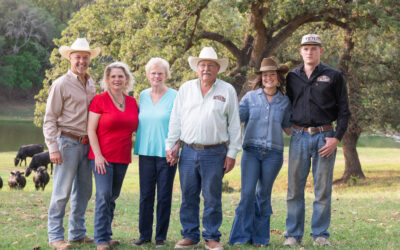
Texas Ranch Received CAB Ambassador Award
Visitors to 2 Bar C Ranch near Luling, Texas, often describe the quiet first. That peace reflects low-stress cattle care, seedstock bred for the whole beef chain and a family that opens its gates, earning the 2026 CAB Ambassador Award.
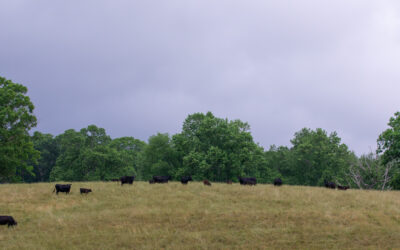
Built For the Long Haul
Thirty-one inches of rain in 48 hours tested Biltmore Estate’s 130-year commitment to remain a profitable, working agricultural estate. Through Hurricane Helene recovery and high-quality Angus genetics, Biltmore stewards its land, livestock and community, earning the 2026 CAB Sustainability Award.
Jett Stream to Prime
In the Oklahoma Panhandle, four generations built a herd defined not by the odds against it, but by standards never lowered. That commitment drove decades of genetic and management improvements, taking Jett Ranch from struggling to reach Prime to more than 70% Prime today, and earned the ranch the 2026 CAB Commercial Commitment to Excellence award.