A straight fence
If you have a love for all things agricultural, you must have an appreciation for a good, straight fence. Just like straight rows of corn, cotton, soybeans, or milo, there is a sense of pride and accomplishment in something that has been well done……and, as my father always told me, a job worth doing is worth doing right! The problem becomes, you’re going to have to look at that fence for many, many years; the corn crop will be harvested this fall and you’ll get another shot at straight rows next spring! If the fence isn’t straight, you’re going to have to spend a lot of time, money, and effort in making it right or else look at it for 25 years!
A good fence begins with big, heavy, stout end and corner posts, set deeply into the ground and tamped in, perhaps with rock. Using a level will help ensure these foundation posts are perpendicular to the ground; likewise the brace post(s), the braces themselves (the longer the better) and brace wires. You must know the topography of the ground you’re fencing and lining up the other end (my problem!) so that the fence pulls straight. You can get away with a little more on the line posts, but if you don’t have the end/corner/brace post foundation, all is lost. Most of the success of a fence begins and ends here and they probably make up 50% of the fence, in terms of strength and longevity.

Then you’re going to unroll the top wire, tie it off, stretch it out, and tie off the other end. You use this as a guide to align your line posts. Your foundation (the end and brace posts) will help you in your endeavor for a straight fence. After that, it becomes academic; you unroll the second, third, fourth, and fifth (sixth?) wire and clip or steeple them to the line posts. Pretty soon, things are looking good!
I would argue that the cowherd is very similar to the corner and brace posts in a good fence. You must have a good foundation cowherd to be successful. They account for half of your genetics, just like the posts, and if you don’t have that right, you’re not probably going to have as much success. If you look out across your cowherd and resulting calves, and you like what you see (a straight fence), then it becomes much easier to live with. But, if you’re looking out across a crooked fence; one with sagging wires, one with uneven spacing of posts, you’re not going to be very satifsfied.
Sire selection is the other 50% of your genetics, and while you must be astute in the evaluation of possible sires, you can change them every year, like the crop rows, if you are unsatisfied. But the cows, they’re going to be around a while, so you better make sure you get it right there!

Think of the bulls, then, as the line posts; you use them to make the resulting calves as uniform and consistent as you can. If you don’t like them, you can uncouple them from the fence and put in new ones. Your calves are the wires; lined up with the help of the end and corner posts and the line posts; they support them in terms of quality and value to the fence. You are building equity in your land by having good fences; you are building equity in your cowherd by making the correct genetic decisions.
You know, we are the Angus people here, and so we’re going to try to steer you this way. But a good set of Angus females is a great foundation to start with. Using good Angus bulls is a great way to propogate those genetics that will gain, grow, grade, and satisfy the consumer demand for high quality beef. Then you can look with pride at those Angus cows and calves, and be happy with your “straight fence”.
Next week, I’m off to Minnesota, to visit some folks up there with my friend Vern Frey. Maybe I’ll have another “on the road” blog for you then! Adios!
You may also like
Texas Ranch Received CAB Ambassador Award
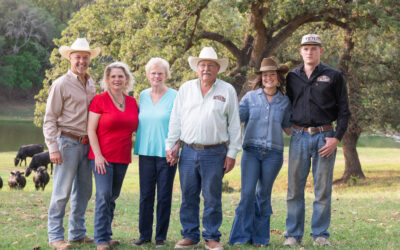
Visitors to 2 Bar C Ranch near Luling, Texas, often describe the quiet first. That peace reflects low-stress cattle care, seedstock bred for the whole beef chain and a family that opens its gates, earning the 2026 CAB Ambassador Award.
Built For the Long Haul
Thirty-one inches of rain in 48 hours tested Biltmore Estate’s 130-year commitment to remain a profitable, working agricultural estate. Through Hurricane Helene recovery and high-quality Angus genetics, Biltmore stewards its land, livestock and community, earning the 2026 CAB Sustainability Award.
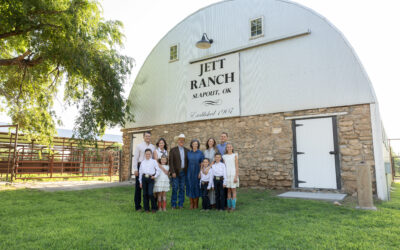
Jett Stream to Prime
In the Oklahoma Panhandle, four generations built a herd defined not by the odds against it, but by standards never lowered. That commitment drove decades of genetic and management improvements, taking Jett Ranch from struggling to reach Prime to more than 70% Prime today, and earned the ranch the 2026 CAB Commercial Commitment to Excellence award.