Two valid pathways to profit
I am a proud Jackrabbit, and I owe a lot of my education to the hard working, down-to-earth, practical professors at South Dakota State.
But I think many would agree when I say there are things you learn from a book, and even from hands-on labs, and then there are things you can only learn on the job.
You might have similar experience: I listened with great interest to many animal science lectures on the wonders of modern crossbreeding. I wrote essays on the benefits of heterosis. And at that time we were just feeding out some cattle at home, so I ate up all of this information, thinking of how I’d apply it to my herd some day.
Well, my cowherd is still in the “someday” category, but when I get to that point I might just brush off those animal science notes to see how a little time “out in the country” has changed my perspective.
My professors were tactful, presenting facts and data when talking breeding strategies. But “out here” I’ve learned not everybody follows that prescribed road. I’ve heard several forms of this one:
Myth: If you straightbreed your cattle, you’re a fool who ignores the “free lunch.”
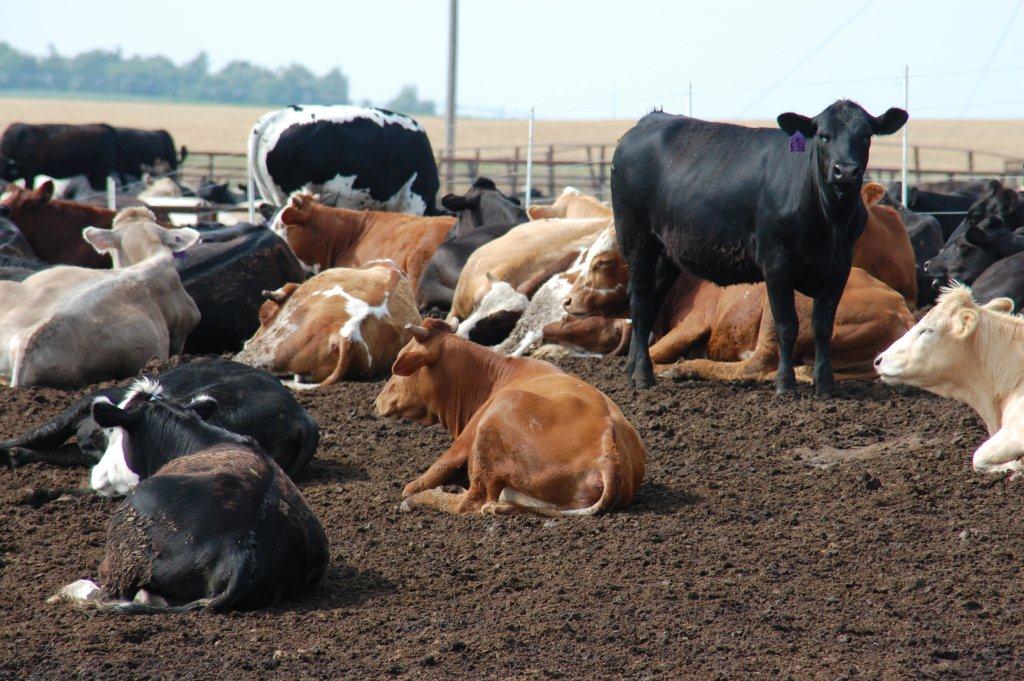
Fact: Crossbreeding has merits. Straightbreeding has merits. It’s not a one-size-fits-all business and there are some good sound reasons why 70% of this nation’s cowherd is Angus, and around 50% of cow-calf producers say their operations are predominately British.
We recently asked animal scientist Nevil Speer to dig into this phenomenon. You can read his white paper or coverage of it BEEF Magazine.
*Please don’t stop reading. Real producers will weigh in below.*
Speer makes points like this:
- Crossbreeding allows producers to take advantage of breed complementarity, he says, “However, differences between breeds have lessened over time, and the concept may be at odds with value-based strategies to improve cow families by stacking traits to rise above averages.”
- The very consideration of implementing crossbreeding can be somewhat daunting. Many operations would rather forego such effort if production can be maintained while also ensuring relative absence of problems.
- The Angus breed caught up with Continentals in terms of growth and performance, so you just couldn’t get the boost you were used to getting in crossbreeding—plus the premiums,” he notes. “As the business environment has shifted, the sole pursuit of heterosis is no more tenable than single-trait selection for any genetic trait.”
I really like numbers, facts, proof, but then there’s a bunch more to learn from those who practice straightbreeding. They have options and they’re choosing to straightbreed.
In this video, check out why Johnie Hubach went straight Angus:

And I talk to LOTS of producers like Johnie each year, but one couple really sticks with me.
My very first story trip, knocked this fresh-out-of-college grad back into my rightful place. With years of get-your-hands-dirty experience, Myron and Kay Beatty told me why they turned to straight Angus and called it “the best decision we ever made.”
They sold bred heifers and fed their calves out and wanted the best combination of maternal and terminal in the same package.
Feeder Terry Beller said they had it just right: “They seem to have the cattle that do it all. They gain, they grade, and they’re consistent. They work on the ranch, too.”
Now somebody who mastered all that doesn’t seem like a fool to me.
May your bottom line be filled with black ink,
Miranda
You may also like

Texas Ranch Received CAB Ambassador Award
Visitors to 2 Bar C Ranch near Luling, Texas, often describe the quiet first. That peace reflects low-stress cattle care, seedstock bred for the whole beef chain and a family that opens its gates, earning the 2026 CAB Ambassador Award.
Built For the Long Haul
Thirty-one inches of rain in 48 hours tested Biltmore Estate’s 130-year commitment to remain a profitable, working agricultural estate. Through Hurricane Helene recovery and high-quality Angus genetics, Biltmore stewards its land, livestock and community, earning the 2026 CAB Sustainability Award.
Jett Stream to Prime
In the Oklahoma Panhandle, four generations built a herd defined not by the odds against it, but by standards never lowered. That commitment drove decades of genetic and management improvements, taking Jett Ranch from struggling to reach Prime to more than 70% Prime today, and earned the ranch the 2026 CAB Commercial Commitment to Excellence award.