
Running the race
July 2011
I am not a runner in the truest sense of the word. I DO, however, run on a regular basis early in the morning before heading off to work. I do this about three days per week, and probably should do more. I’ve run in 2 mile, 5K, 10K, and 5-mile races, and one-half marathon. I do it primarily to stave off pounds (which are harder to depart with these days) and heart disease (which runs rampant on both sides of the family!) rather than for trophies or medals, but it’s fun to compete. There’s a 2-mile fun run at Burdick, KS in which the whole family has run at least one time. Even Grace, who was six at the time, ran in it! You should have seen the sheer look of determination in her eyes as she approached the finish line. Alas,I lost the race to my best friend in high school, Ronnie Anderson, who has weathered both age and body shape better than I!
They say that the human mind and spirit can push the body to do things one would ordinarily not think possible. My goal was to eventually run in a marathon; at least once in my life, just to stay I’ve done it. Karol, my wife and voice of reason says, “maybe you should think about doing a half marathon first”. So, I began training for that during the winter and early spring and completed the race in April. After running it, I thought I could probably have run the whole thing. Wish I had now, but that will have to be a goal for another day. So, I began training for a full marathon that fall.
It was going OK until I made some mistakes: I took a long run on a too-hot Sunday morning in August (yes, after Mass!). I didn’t stay hydrated well enough. I got burned out and just couldn’t take another step. I was EXHAUSTED! I quit running for a month and never did run that marathon. My preparation was not what it should have been, at least from the standpoint of weather and care for my body. I failed that next step.
Running a race, particularly a long one, takes preparation, determination, stamina, and intestinal fortitude (guts). At the end of the race, you feel exhilaration! You’ve run the race. Placing is secondary; any way to me it is. You’ve succeeded in your goal of finishing the race.
Feeding your calves in a retained ownership program is a lot like running a marathon. You’ve engineered the genetics (preparation); you’ve wintered the cows, vaccinated the calves, and weaned them (determination); you’ve talked the banker into extending the loan so you can feed the cattle out (stamina), and sent your calves to a distant feedlot location and put them in the trust and care of a person you may not have ever met, but talked to by phone (guts). You receive carcass information, feedlot performance via a closeout statement, and got the check (exhilaration). You’ve moved onto the next step.
Now, what do you do with the information you have in your hand? Can you trace the carcass data back to an individual ear tag number that identifies each calf to dam and sire? I would argue that what we call “group data”, while it has its own merits, really doesn’t mean much since you can’t tie it back to the parentage of each individual calf. Let’s say your data says your calves graded 75% USDA Choice, 15% CAB (included in the Choice figure); 20% Select, and 5% Standards. You also had 20% of the calves that were Yield Grade 4 and 5 (big discounts). It is going to be impossible to tell what that means or how to interpret it. Did the older cows’ calves all grade Standard? Did one sire throw all the calves that made CAB? Were the sire of the YG 4 and 5 calves the same one and was it because they had small ribeyes, too much fat cover, or both? Did the earlier born (oldest) calves have a disproportionately larger share of Choice-grading carcasses?
The producers we see that have the most success in the feedlot in a retained ownership scenario are those who get individual I.D. carcass data (what we call “tag transfer, detailed data”). They are basing dam and sire culling decisions on the calves’ feedlot performance and carcass data. Assuming you catch a weaning weight on individual calves, you can back-calculate from the hot carcass weight how the calves performed individually in the feedlot as well.
Your next step is to gather the right information and use it to complete your race.
Let’s see……. where are my shoes! Till next time, adios!
You may also like
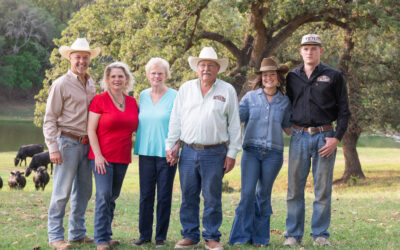
Texas Ranch Received CAB Ambassador Award
Visitors to 2 Bar C Ranch near Luling, Texas, often describe the quiet first. That peace reflects low-stress cattle care, seedstock bred for the whole beef chain and a family that opens its gates, earning the 2026 CAB Ambassador Award.
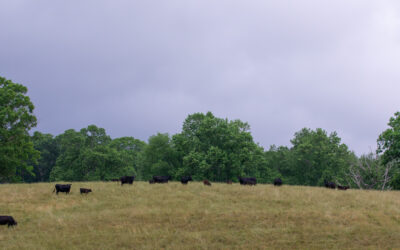
Built For the Long Haul
Thirty-one inches of rain in 48 hours tested Biltmore Estate’s 130-year commitment to remain a profitable, working agricultural estate. Through Hurricane Helene recovery and high-quality Angus genetics, Biltmore stewards its land, livestock and community, earning the 2026 CAB Sustainability Award.
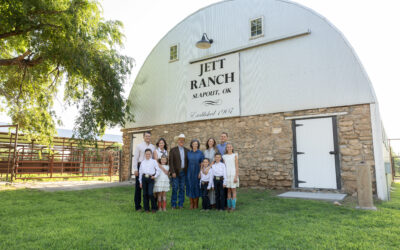
Jett Stream to Prime
In the Oklahoma Panhandle, four generations built a herd defined not by the odds against it, but by standards never lowered. That commitment drove decades of genetic and management improvements, taking Jett Ranch from struggling to reach Prime to more than 70% Prime today, and earned the ranch the 2026 CAB Commercial Commitment to Excellence award.