Hot, dry, early
It’s been hot. I saw 109° yesterday. It’s been dry. I can hardly keep up with watering my garden, so I can only imagine what the irrigated farmers feel like around here.
We’ve only had 1.47 inches of rain since May 1. (We’d normally have around 8 in. during that timeframe). Here’s the “percent of normal” graph from the National Weather Service for the month of May:
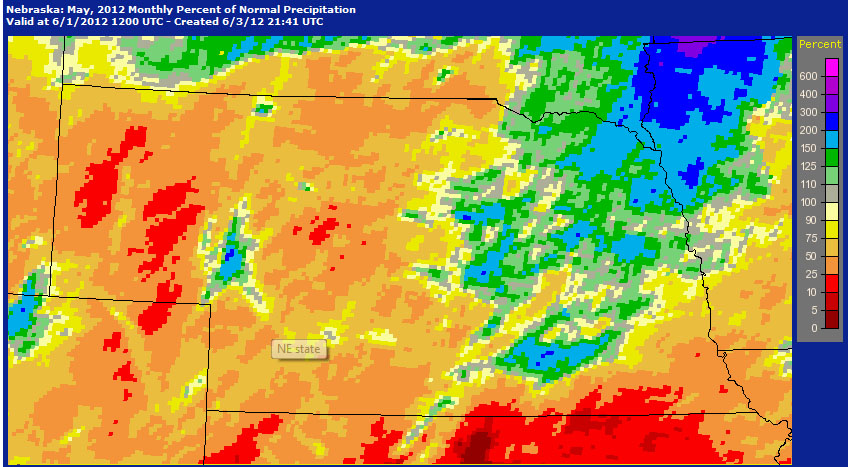

- This graphic from Weather.com is a little tough for this “glass is half full” gal to make rosey!

And the worst of it is that there are probably people reading this and saying, “That’s more than what we’ve gotten!”
When I went out on a story trip a month ago, I thought it looked like August then.

So, what’s a cow-calf producer to do? I’ve heard several folks on ag radio talking about early weaning. Just this morning Aaron Berger from the University of Nebraksa-Lincoln told listeners to “get creative” when it comes to meeting cows nutritional requirements and I just saw this article, “Early calf weaning may prove beneficial this year,” on Drover’s CattleNetwork last week.
It’s a popular, proven strategy to mitigate the effects of drought, but did you know early weaning could also improve carcass quality? Not exactly a rain cloud, but it is a silver lining!
In 2009, I interviewed a bunch of experts for my three-part series on early weaning. One of them started out, “It’s too good to be true. That’s what many producers think when they’re told they can sell heavier, higher-quality calves while reducing cow costs with one simple management strategy.”
To read the what, how and whys of early weaning check out those articles that include information from the likes of Nebraska’s Ivan Rush, K.C. Olson of K-State and Steve Loerch in Ohio.
- Think Early <–This tells all the potential advantages.
- When sooner is better <–This talks about the systems it might work best for.
- Early weaning pays <–Walks you through the economics (of course, this is based on ’09 numbers, so keep that in mind)
In 2010, we did a series of articles with tips and tricks of the trade, from those who have successfully implemented early weaning. Read those stories to hear about things like revamping bunks and adjusting diets for smaller rumens.
- Wean early without working overtime <–Marketing and facilities ideas for early weaning
- Food for Thought <–Nutritional considerations
- Calf health at half the age <–Pretty self-explanatory, but it talks about health plans for these younger animals
Being forced to switch up management is not fun or easy, and it probably doesn’t help to know that you’re not the only one in this hard place. But hopefully those articles give you a few things to think about.
In the meantime, I’ll be praying for rain….
May your bottom line be filled with black ink,
Miranda
PS—If you need some resources to help as you “sharpen your pencil,” Berger mentioned UNL’s drought site and as I clicked around it looked like there were some pretty helpful articles and tech bulletins. You might want to check it out.
You may also like
Texas Ranch Received CAB Ambassador Award
Visitors to 2 Bar C Ranch near Luling, Texas, often describe the quiet first. That peace reflects low-stress cattle care, seedstock bred for the whole beef chain and a family that opens its gates, earning the 2026 CAB Ambassador Award.
Built For the Long Haul
Thirty-one inches of rain in 48 hours tested Biltmore Estate’s 130-year commitment to remain a profitable, working agricultural estate. Through Hurricane Helene recovery and high-quality Angus genetics, Biltmore stewards its land, livestock and community, earning the 2026 CAB Sustainability Award.
Jett Stream to Prime
In the Oklahoma Panhandle, four generations built a herd defined not by the odds against it, but by standards never lowered. That commitment drove decades of genetic and management improvements, taking Jett Ranch from struggling to reach Prime to more than 70% Prime today, and earned the ranch the 2026 CAB Commercial Commitment to Excellence award.