Like father, (not necessarily) like son
Always have, hopefully always will, so when it comes to spending time with most cattlemen, I naturally slip into the role of student.
And it’s a good thing. There’s so much to learn, so many tales to tell.
Listening does a life well, I say, particularly when you’re young.

I was on a whirlwind tour of California when I stopped by to visit a coworker’s brother near La Grange. In addition to an extensive stocker operation, I knew their family had run commercial cattle for years.
What I didn’t know was how they run them – on shared land, oftentimes with shared management – but the cattle, they don’t mix.

“Our motto has always been that we don’t want to fail because of someone else’s miscalculations,” Paul Houret explains.
It’s over the phone because the man who started it all, the head of Houret Cattle Company, doesn’t live in California anymore. He took his motto and not only applied it, he lives by it.
Paul moved to Lakeview, Ore., and runs the northern unit. It’s actually his son, Tom, who takes care of its southern sister.

But Tom does more than care for it. He buys his own bulls, he pays his own help. The decisions, they’re all his to make.
So that’s what got me thinking about the young thing. I’d like to say it’s more common to step onto a ranch and see someone as young as Tom making all the calls. I will say it’s refreshing and motivating and made me look in the mirror, if only figuratively.

So here’s how it works: Paul and Tom, each with their own Angus herds, calve on irrigated land in the late summer, yielding a 250-pound (lb.) suckling calf in time for California’s winter rain. Instead of weaning come May, the pairs will ship to Paul in Oregon for the summer grass and wean in July before calving starts again, weighing nearly 800 lb., going on feed 45 to 60 days later.
The point is to maximize natural feed resources and grow a big calf. In California, a calf by its mother’s side will gain 2.5 to 3 lb. a day before the green grass dries, another 3 to 3.5 lb. daily in the north.
“There’s very little supplement. We’ll feed a little hay in the fall and maybe some liquid protein but, as a rule, we don’t mix feed,” Tom says. No cake or creep. “They make a living just on the grass.”

As for Tom and Paul, they make a living on the Angus cattle. Together and separate.
Thanks for allowing me to tell your story,
Laura
PS – Be on the lookout for a full story on Tom and Paul in an upcoming edition of the Angus Journal.
You may also like
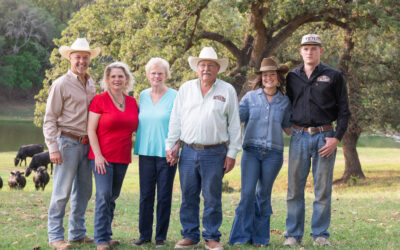
Texas Ranch Received CAB Ambassador Award
Visitors to 2 Bar C Ranch near Luling, Texas, often describe the quiet first. That peace reflects low-stress cattle care, seedstock bred for the whole beef chain and a family that opens its gates, earning the 2026 CAB Ambassador Award.
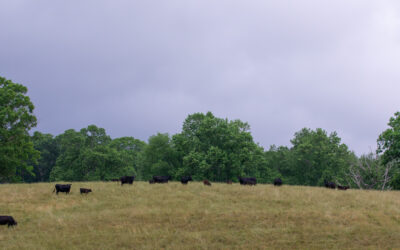
Built For the Long Haul
Thirty-one inches of rain in 48 hours tested Biltmore Estate’s 130-year commitment to remain a profitable, working agricultural estate. Through Hurricane Helene recovery and high-quality Angus genetics, Biltmore stewards its land, livestock and community, earning the 2026 CAB Sustainability Award.
Jett Stream to Prime
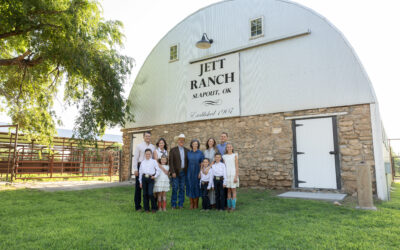
In the Oklahoma Panhandle, four generations built a herd defined not by the odds against it, but by standards never lowered. That commitment drove decades of genetic and management improvements, taking Jett Ranch from struggling to reach Prime to more than 70% Prime today, and earned the ranch the 2026 CAB Commercial Commitment to Excellence award.