Maternal instincts, predictable cattle
 Some may take offense to comparing a herd of kids to fresh calves or a mom’s eye to maternal instincts, but I don’t think it’s out of line to say ‘fetal programming’ had a role in how each Loseke kid is developing a passion for the beef business.
All four were riding feedlot pens in utero; June jokes they came out of the womb ready to get to work. They cut their first teeth on steak and one even celebrated a young birthday with a steak-shaped, strawberry red cake. Family vacations involve road trips down far-away ranch roads and photos of all six standing in mountain pastures.
From her kitchen table, June recounts the vacations to me, and in the same breath, recalls the cattle that made the journey from those Montana ranches to their feedyard near Columbus, Neb., that year. She and Ryan discuss the pen they were in, the market prices they got, how they fed, any health issues they had and how quickly June caught it.

“I think it’s the maternal side of her,” Ryan laughs. “She just knows. I honestly think she can identify a calf the day before it’s sick.”
“It’s just like being a student of your kids. You can’t discipline all four of these kids the same. You have to know them each individually,” June says. “It’s not just a black steer or another animal in another bunk line.”
Looking at Christmas cards on their farm refrigerator, we get back to following the calves I came to ask about: pen No. 4, full of Bruce Keaster’s heaviest steer calves and the first of three shipments from the Belt, Mont., family we introduced earlier this year. The March-born calves that weighed 675 on arrival in late October now lack only about 100 pounds of Ryan’s target finish of 1,400 pounds at 14 months of age.
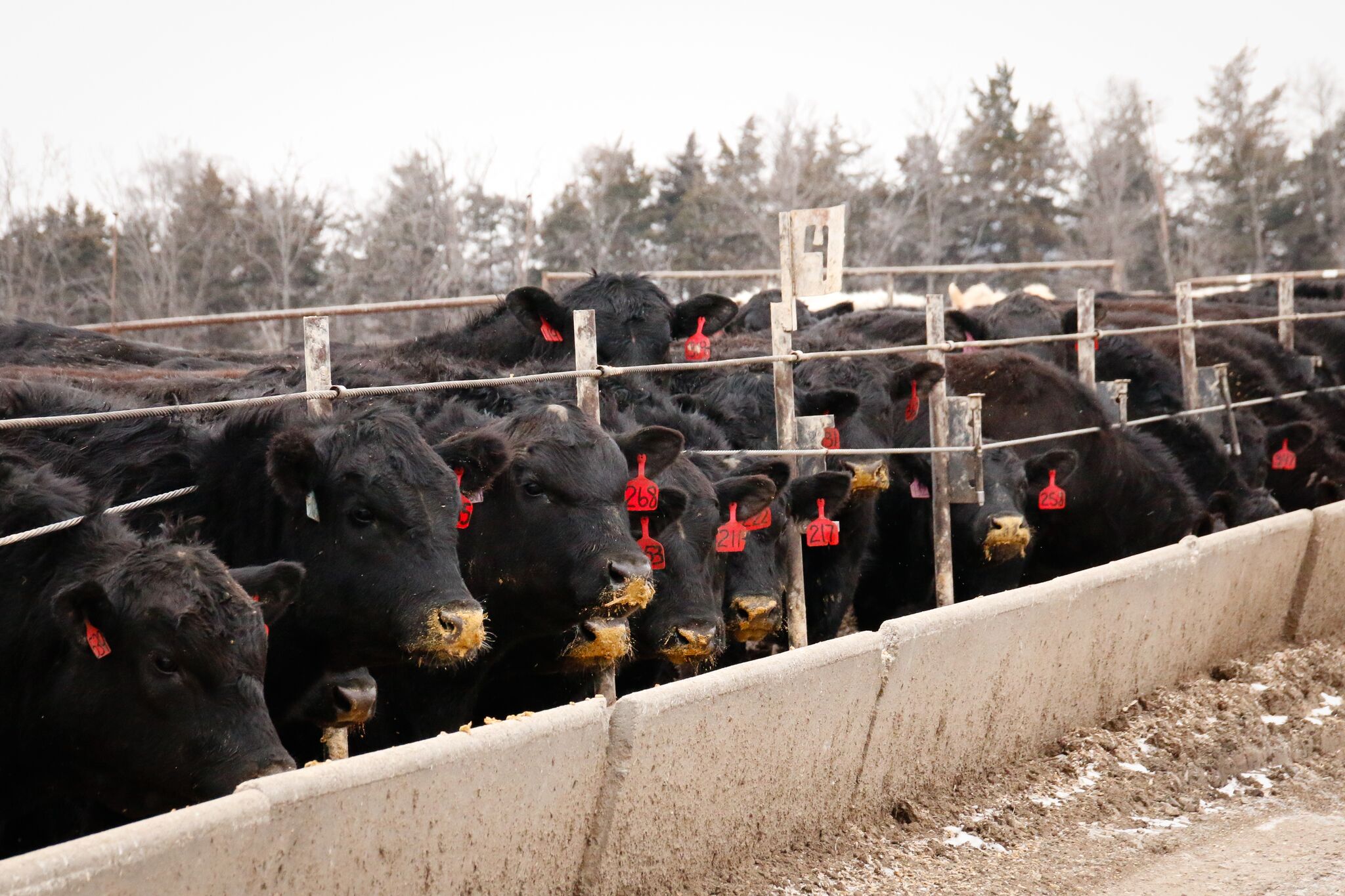
At 147 days on feed, this pen experienced zero death loss, and less than 10% of the entire nearly 500 head were treated for health issues since their arrival.
“Bruce has done a good job of setting them up to perform well when they get here from a health standpoint and from a genetic standpoint,” Ryan says. “It’s more about management than anything you can find in a bottle.”
Now, they’re talking marketing and Ryan’s watching the Choice-Select spread to decide if he’ll sell on a grid. That day, there was an $8.03 premium for cattle that grade Choice over Select, just below the threshold he likes to see to balance the potential for marbling premiums with potential for yield grade discounts.
“It’s iffy. But having their consistency gives me the confidence to know we could grid them when the market’s right,” Ryan says.
Either way, their 20-year history gives the feeders confidence.
“When we get paid by the pound, Bruce’s steers just plain hang a heavier carcass. They’re not just deep in their rib, they’re wide across the front. If we put a saddle on those cattle, the cinch would have to be extra-long,” June smiles.
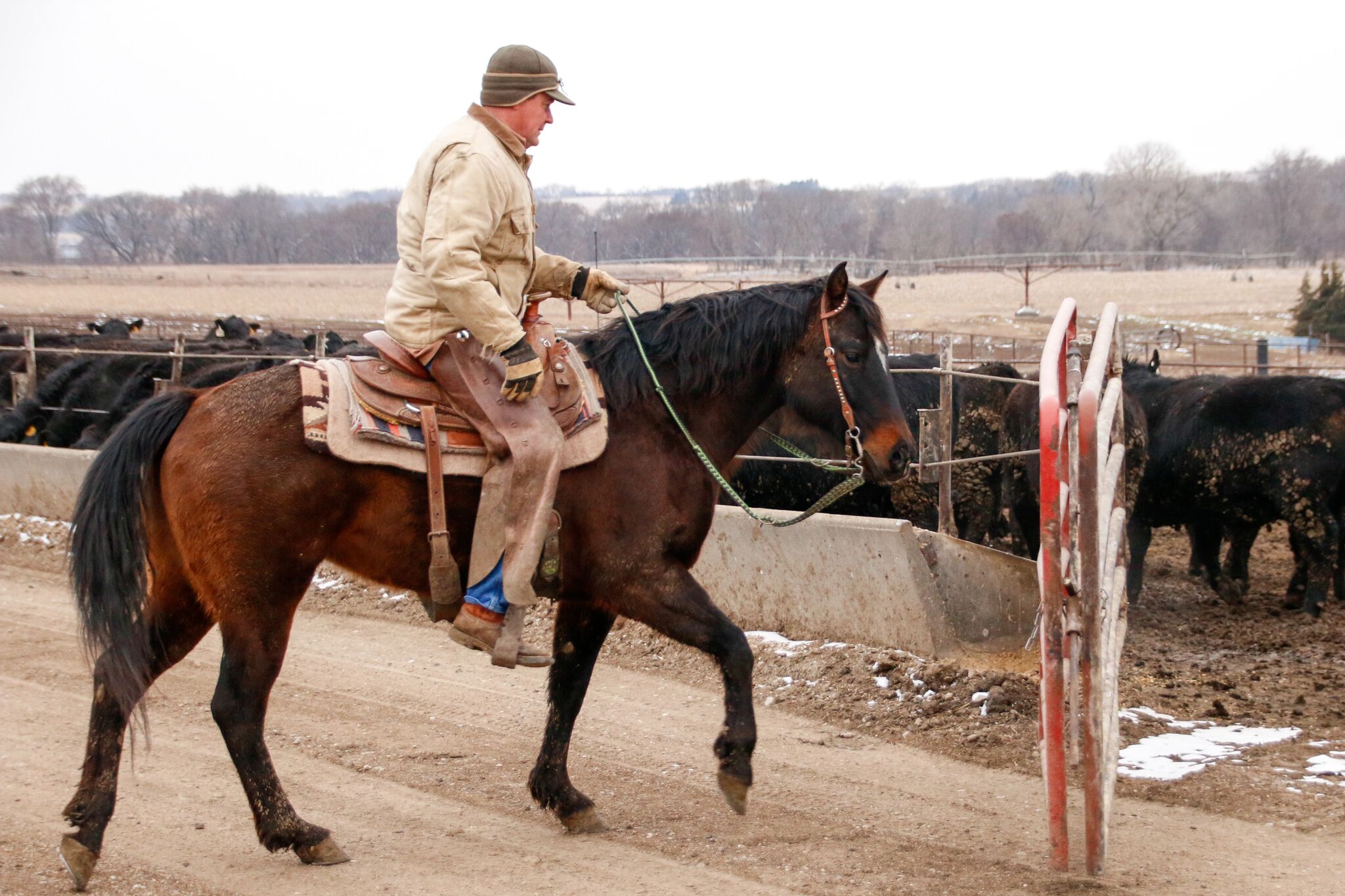
She pulls a cinch tight on Flash, the horse Bruce sent back to Nebraska on a cattle truck one year. He’s one of Ryan’s favorites.
“At his height, it’s hard to find a horse where Ryan’s feet aren’t dragging the ground from the saddle,” June says.
Of course, Bruce knows that – it’s just another way they take care of each other, along with predictable cattle, transparent management and an understood fairness that they’re both in this for the long haul.
“We sleep better knowing that’s the relationship with them, and I think they do, too,” June says.
Until next time,
Laura
 Laura Nelson is based in Big Timber, Montana, where she writes, captures images and tells farming and ranching stories. She’s a former CAB Industry Information Specialist who became passionate about the brand and the pursuit of high-quality beef while working at the company headquarters in Ohio. Then wide open spaces, small-town living and those beautiful Crazy Mountains wooed her back west.
PS – To catch up on our first installments about these calves, er, now steers from Montana, visit our previous ‘Following the Calves’ posts: Keaster family checks in, Friends and neighbors 1,000 miles away, and The Golden Rule in the Golden Triangle.
Travel to ranches in Oklahoma and South Dakota, too!
You may also like
Texas Ranch Received CAB Ambassador Award
Visitors to 2 Bar C Ranch near Luling, Texas, often describe the quiet first. That peace reflects low-stress cattle care, seedstock bred for the whole beef chain and a family that opens its gates, earning the 2026 CAB Ambassador Award.
Built For the Long Haul
Thirty-one inches of rain in 48 hours tested Biltmore Estate’s 130-year commitment to remain a profitable, working agricultural estate. Through Hurricane Helene recovery and high-quality Angus genetics, Biltmore stewards its land, livestock and community, earning the 2026 CAB Sustainability Award.
Jett Stream to Prime
In the Oklahoma Panhandle, four generations built a herd defined not by the odds against it, but by standards never lowered. That commitment drove decades of genetic and management improvements, taking Jett Ranch from struggling to reach Prime to more than 70% Prime today, and earned the ranch the 2026 CAB Commercial Commitment to Excellence award.